




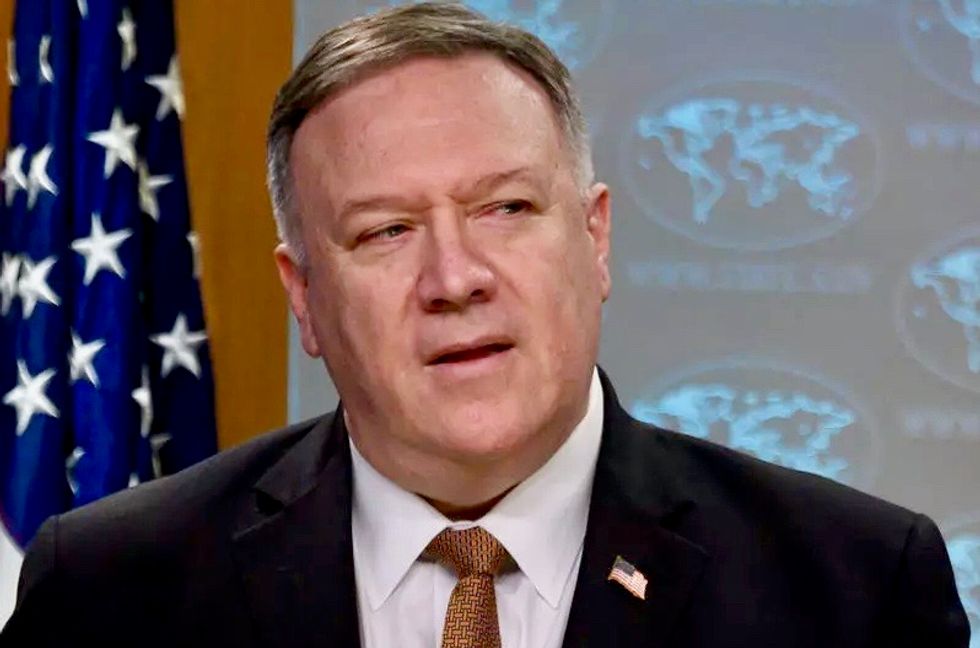
In 2019, the U.S. State Department approved more than $8 billion in arms sales to countries in the Middle East — and according to an inspector general report released this week, the State Department did not fully take into consideration the risk of civilian tragedies. Moreover, Politico journalists Jacqueline Feldscher and Nahal Toosi are reporting, an unredacted copy of the report “raised questions about Secretary of State Mike Pompeo’s assertions that an emergency situation existed, allowing him to greenlight the sales over congressional objections.”
The report was released in redacted form on Tuesday, August 11, but Politico has obtained an unredacted copy.
Feldscher and Toosi note that members of Congress “asked the inspector general to investigate the transfer of military equipment to Saudi Arabia, the United Arab Emirates and Jordan after Pompeo, in May 2019, cited threats from Iran and used emergency authorities to transfer the weapons. The move short-circuited lawmakers, who had blocked some of the transfers for more than a year over concerns that the U.S.-made equipment could be used to kill civilians.”
According to Feldscher and Toosi, the State Department IG determined that “on a technical level, Pompeo carried out his use of emergency authorities in accordance with the legal regulations, which give him considerable discretion in, among other things, determining what counts as an emergency. Yet the IG also said the Department ‘did not fully assess risks and implement mitigation measures to reduce civilian casualties and legal concerns.’”
The unredacted version of the IG report, Feldscher and Toosi point out, offers a more detailed “timeline” on the arms sales.
“For instance,” they write, “an unredacted timeline shows that State Department staffers proposed using emergency authorities on April 3, 2019, that drafts of the emergency certification were circulated 20 days later, and that it wasn’t until May 4 that Pompeo directed that the emergency be certified by May 24. The report released online, however, said Pompeo briefed Congress on Iranian threats on May 21, approved the paperwork two days later, and then certified that the emergency authorization was transmitted to Congress the next day. In essence, the public version gives the impression that Pompeo moved quickly on an urgent issue, whereas the unredacted version shows a much longer timeframe of deliberation and action — undermining the argument that an emergency existed at all.”
