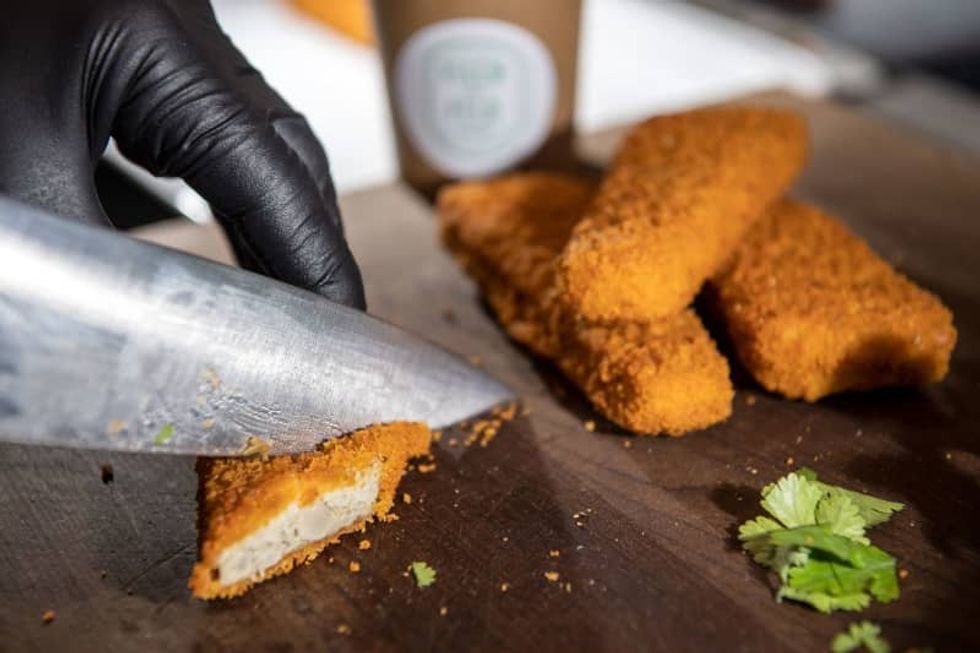
Will we know the difference, biting into a fish finger sandwich, if the filling didn't come straight from the ocean but from a lab instead?
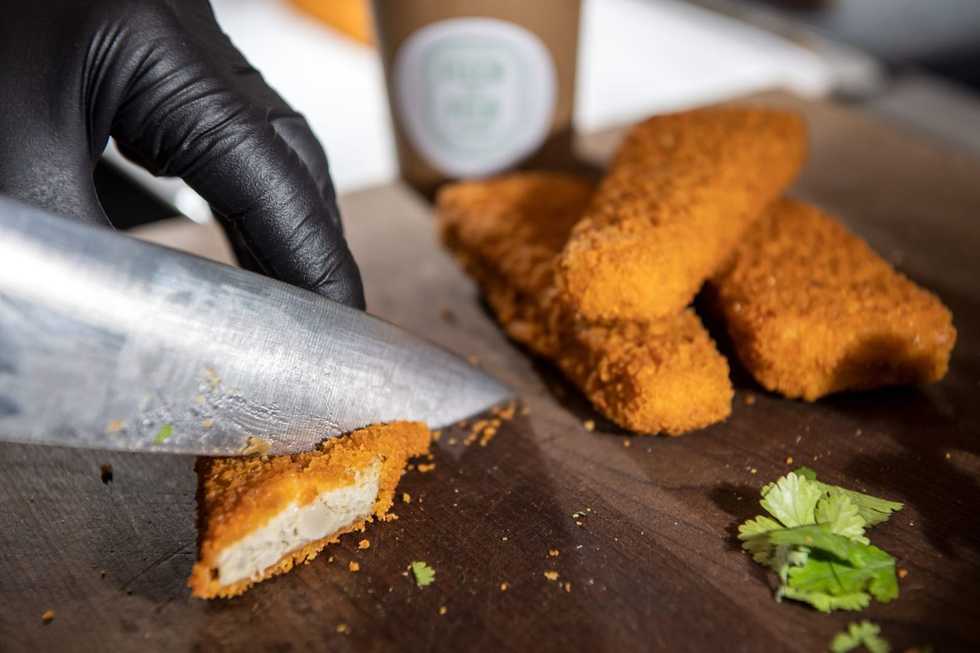
Fish fingers created by scientists will soon hit our dinner tables, according to a German start-up whose product is ready to go to market.
The products made by Bluu Seafood are going through the approval processes now, says the company's vice-president Hans-Georg Höllerer. Bluu Seafood's first fish products could be available in Europe by 2025.
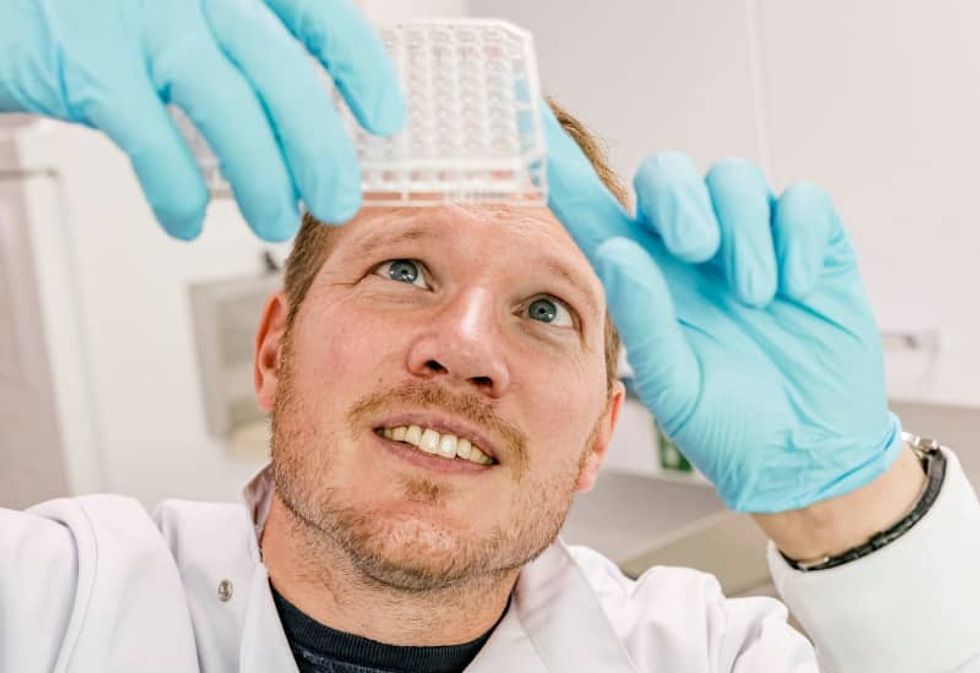
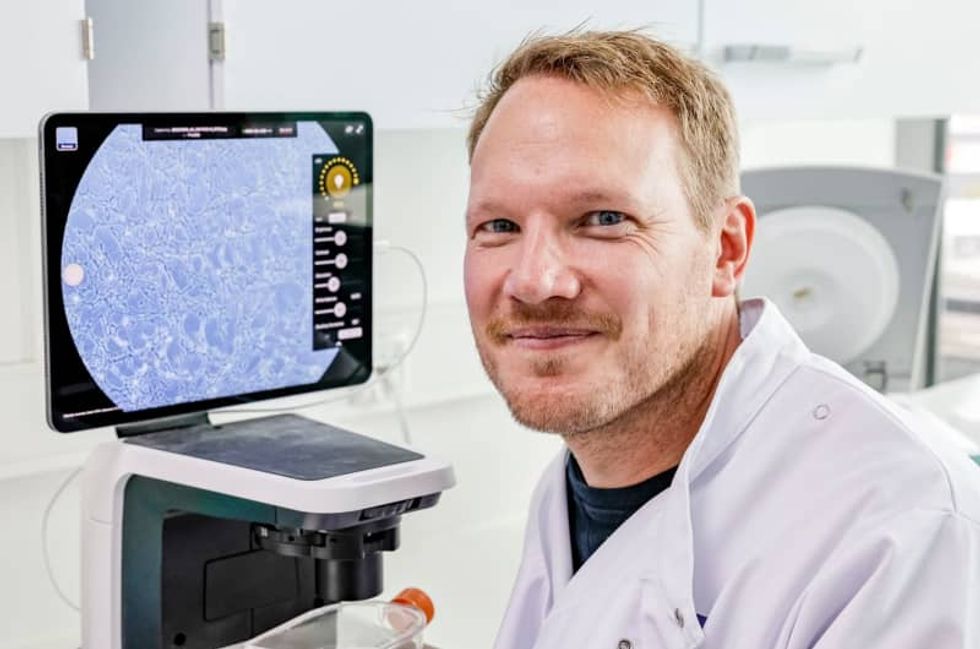
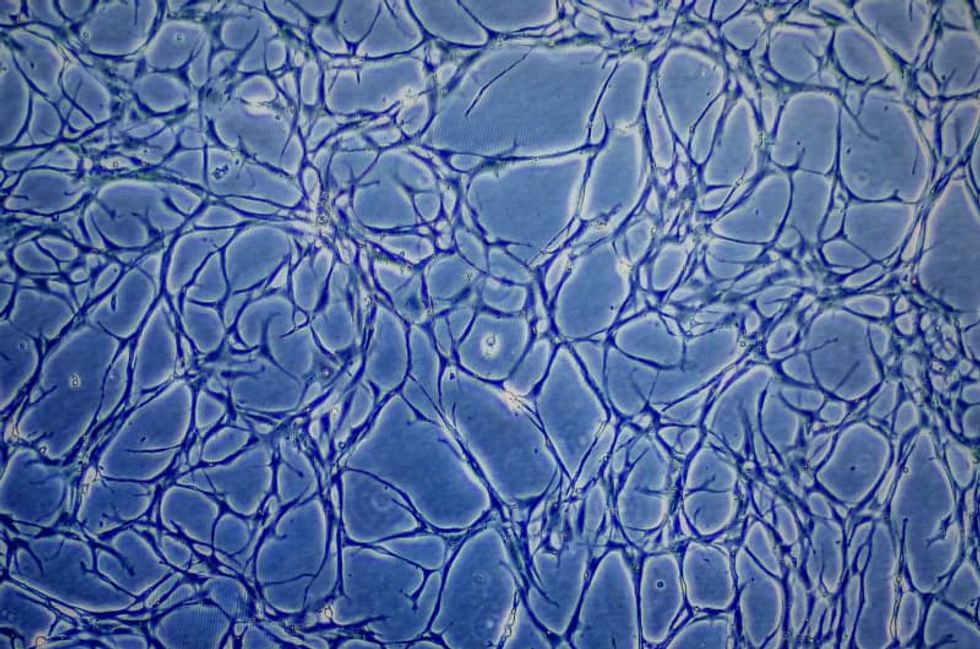
"We take stem cells from the tissue of living trout or salmon and let them mature into muscle cells in a nutrient solution," explains Höllerer.
These are then anchored in a bioreactor on a scaffold of collagen - protein - or polysaccharides - long chains of carbohydrate molecules. "That creates a structure of muscle fibres that can be enriched with plant proteins and formed into fish balls or fish fingers," Höllerer says.
The company starts with biopsy, removing tissue from live or freshly slaughtered fish, in a "unique process," says Höllerer.
"Since we create an immortal cell line, the cells can grow and divide indefinitely. So we can produce any amount of product without having to kill new fish," he says.
The cultured fish is also free of microplastics, drugs or heavy metals, unlike fish caught in the wild or grown at fish farms.
The company was founded in 2021 as a spin-off of the Fraunhofer Development Centre for Marine and Cellular Biotechnology (EMB) in Lübeck, in northern Germany.
The centre has spent years working on cultivating cell-based foodstuffs, among other things, said facility chief Charli Kruse. "We developed the first patent on meat-like cell-based foods here back in 2004," he says.
"Cultivating fish cells is no more difficult than cultivating mammalian cells. There is just more experience with them," Kruse says.
Currently, production is still on a laboratory scale, according to Bluu Seafood founder and boss Sebastian Rakers. But the plan is to set up a production facility in Germany by the end of 2022, "where several hundred kilogrammes of biomass can be cultivated per month," he says.
For now work is still under way to optimize processes to reduce production costs. "At the moment, the production of one kilogramme of biomass still costs about €100 [$104], about half of which is for the growth solution for the cells," Rakers says.
"We want to reduce these costs to about €1 per kilo in the next five years."
The company is expecting its first products to be approved and launched in 2023. They expect to start out in Singapore, as the regulatory approval process is the most developed there, says Höllerer.
"Beyond that, we will also apply for approval in the US, Britain and the EU," he said.
There are several other companies in the US and Asia working on making cell-based fish and seafood products.
Cell-based fish farming has critics, too, such as fisheries biologist Rainer Froese of the Kiel-based Helmholtz Centre for Ocean Research Geomar.
"Nature has already grown wild fish completely free of charge, which we would only have to harvest sustainably," he says. In his view, it would be sustainable to catch about 20% of the available wild fish per year.
The trouble is that these days, 40% to 60% is harvested, according to Froese.
In a 2018 study published in the Marine Policy industry journal, Froese and his colleagues at the Geomar Institute say more than 5 million tonnes more fish could be caught annually in Europe on a permanent basis if fishing became more sustainable.
He dismisses the idea that the new approach could work on a larger scale.
"In my opinion, cell-based fish will remain a niche product; you certainly can't feed the world with it," says Froese.