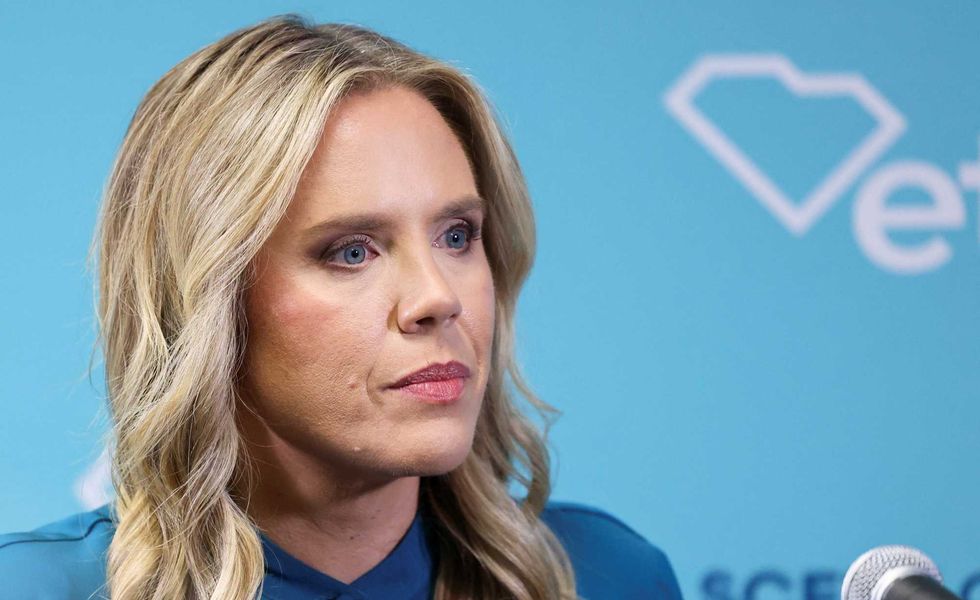
US Senate candidate Democrat Annie Andrews speaks with the media following a US Senate debate ahead of the election, in Columbia, South Carolina, US, October 11, 2026. REUTERS/Sam Wolfe

By the time national Republicans realized South Carolina’s Senate race was in play, Democrat Annie Andrews had already quietly built a lead she never gave up.
Andrews defeated Republican Sen. Darline Graham on Tuesday, becoming the first Democrat to win a Senate race in the state since 1998, and internal campaign details shared with Semafor after her victory show how she pulled it off largely under the radar.
As soon as Graham won the GOP nomination in August to replace her late brother, Sen. Lindsey Graham, Andrews launched more than $5 million in advertising, and she had the airwaves mostly to herself. Graham was struggling to raise money, and Republicans were focused on races they considered more competitive, as most people in both parties still saw South Carolina as a pipe dream for Democrats.
On Oct. 5, the Andrews campaign got a poll showing her up 3 points. Instead of trumpeting it, the campaign kept that poll, and every subsequent one showing her ahead, under wraps. Strategist Chas Goldman told Semafor they didn’t want to draw national Republicans’ attention before she peaked.
The plan worked. Republican money did eventually pour in, but too late to save Graham in the home state of Sen. Tim Scott, chair of the National Republican Senatorial Committee.
Andrews swamped Graham in fundraising, raising more than $25 million to Graham’s roughly $2 million. She also worked to exploit Republican resentment over President Donald Trump’s endorsement of Graham in a crowded primary, reaching out to supporters of Rep. Ralph Norman and former Gov. David Beasley.
Beasley went on to cut a joint ad with former Democratic Gov. Jim Hodges, and Norman’s son publicly warmed to Andrews.
She ran an ad with her Republican father aimed at Lindsey Graham loyalists, and teamed with Rep. Jim Clyburn and other Black leaders to boost turnout.
“For 18 months, she traveled all 46 counties, earning voters’ trust one conversation at a time,” campaign manager Brexton Isaacs said.
Graham ran roughly 100,000 votes behind Republican Gov.-elect Alan Wilson, while Andrews outran her own party’s gubernatorial nominee by 4 points.
Former Gov. Mark Sanford, who lost to Graham in the primary, called the result “a Waterloo moment for Trump.”
“This is a person who said: ‘Close your eyes and pretend you’re voting for me.’ OK, they did,” Sanford said. “They just didn’t like Darline as a candidate and felt it had been forced down their throats by Trump, and then they’re like: ‘We’re not doing this.’”
Andrews had seen it coming back in September.
“I’ve been gifted with what is frankly an incredibly weak opponent,” she told Semafor at the time. “I’m ready.”
Report typos and corrections to corrections@rawstory.com.
For customer support contact support@rawstory.com.