




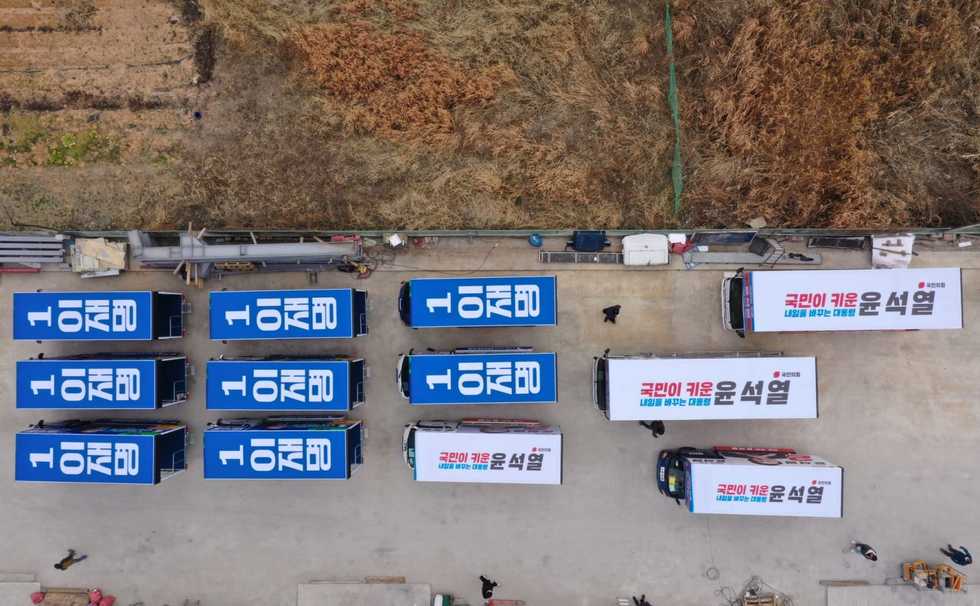
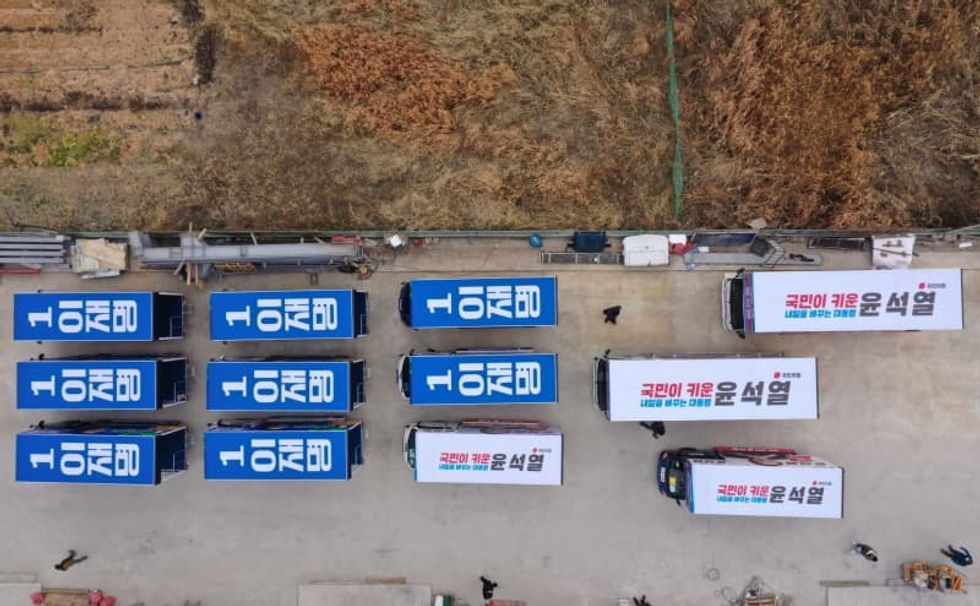
Campaigning officially kicked off in South Korea on Tuesday some three weeks before the presidential election.
On March 9, South Koreans will elect a successor to social-liberal President Moon Jae In, who cannot stand for re-election after five years in office.
According to recent polls, it could be a close race between the candidate of the ruling Democratic Party of Korea (DPK), Lee Jae Myung, and the conservative candidate of the opposition People Power Party (PPP), Yoon Suk Yeol.
A total of 14 candidates have registered for the election.
For Asia's fourth-largest economy, the presidential election has enormous significance.
Under the country's presidential system, almost all important decisions go through the head of state. In principle, the president could even rule against a majority of the opposition in parliament.
The DPK currently has a majority in the National Assembly.
The next president is due to take office in May.
At the start of his official street campaign, former provincial governor Lee stressed the importance of establishing "national harmony" and reconciling conflicting opinions and ideals.
His main opponent, former attorney general Yoon, called on citizens to pass judgement on the "incompetent liberal government" and bring about a change of power.
During the official campaign period, advertising in newspapers or on television is allowed, as well as campaign speeches on radio and television, among other things.
The election comes during another tense period on the Korean peninsula. South Korea's isolated neighbour conducted a series of missile tests in January, including the launch of a medium-range missile capable of carrying nuclear weapons.
UN resolutions prohibit North Korea from testing such missiles.
