A spine-chilling logic hides behind Trump's rushed underground Mar-a-Lago fortress
Just how many protective bunkers does one alleged president need?
If you’re Donald J. Trump, the answer is evidently at least two.
The question, of course, is why?
And here we’d all been led to believe that Trump’s hideous ballroom project was really all about the “military component” section of his White House monstrosity. It’s purportedly why the Supreme Court decided, in its infinite corrupt wisdom, to allow the mad-rush construction on it to continue “for now.”
(As an aside, you ever notice how the court’s shadow docket always grants Trump the go-ahead to proceed on whatever the hell he’s involved in “for now?” The thing is, “for now” has thus far always turned into “for good,” as the Supreme Court's majority never seems to return to address their emergency decisions. So very interesting. But I digress.)
It was just this past Sunday that The Washington Post published an exclusive detailing how federal officials had in fact built a highly formidable bunker buried more than 60 feet beneath the very same White House that Trump now calls home – the one he’s done his best to deface and destroy, both physically and spiritually.
This facility was apparently secretly completed during the Obama administration and is designed to withstand a nuclear blast. As noted in the Post article, it was conceived to ensure that “the president and his team have a secure command center to run the country in times of extreme duress.”
Huh. Imagine that. The thing Trump has been so obsessed about actually sounds more like a backup to what’s already been there for more than a decade. So, I mean, just how much security does one dude need?
It begs the follow-up question: exactly who is Trump so damn afraid of that he would need something so much bigger (more gold-encrusted?) than the bunker/military complex that was built for Obama?
Oh wait, that’s right. If it was for Obama, Trump needs to exceed it. We might see it as the presidential equivalent of penis envy. He’s always coming up short, particularly in comparison to a man who is so much greater in every respect that it’s essentially incalculable.
But back to that fear question. The usual collection of terrible totalitarian types are already Trump’s pals, at least publicly. You know, those renowned iron-fisted rulers like Vladimir Putin, Kim Jong Un, Viktor Orban and Xi Jinping. So, it doesn’t seem to be them he’s afraid of.
Who, then?
Oh wait. I think it must be us.
Yes, the American people seem to be who Trump believes he needs such massive protection from. The White House has argued that drone technology has created vulnerabilities that the first bunker (let’s call it “Archie Bunker” just for kicks) wasn’t designed to address.
Let’s assume Trump is fearful that the majority of the United States population that can’t stand the sight of him might get its hands on some of those drones and start firing them at him in some sort of organized uprising.
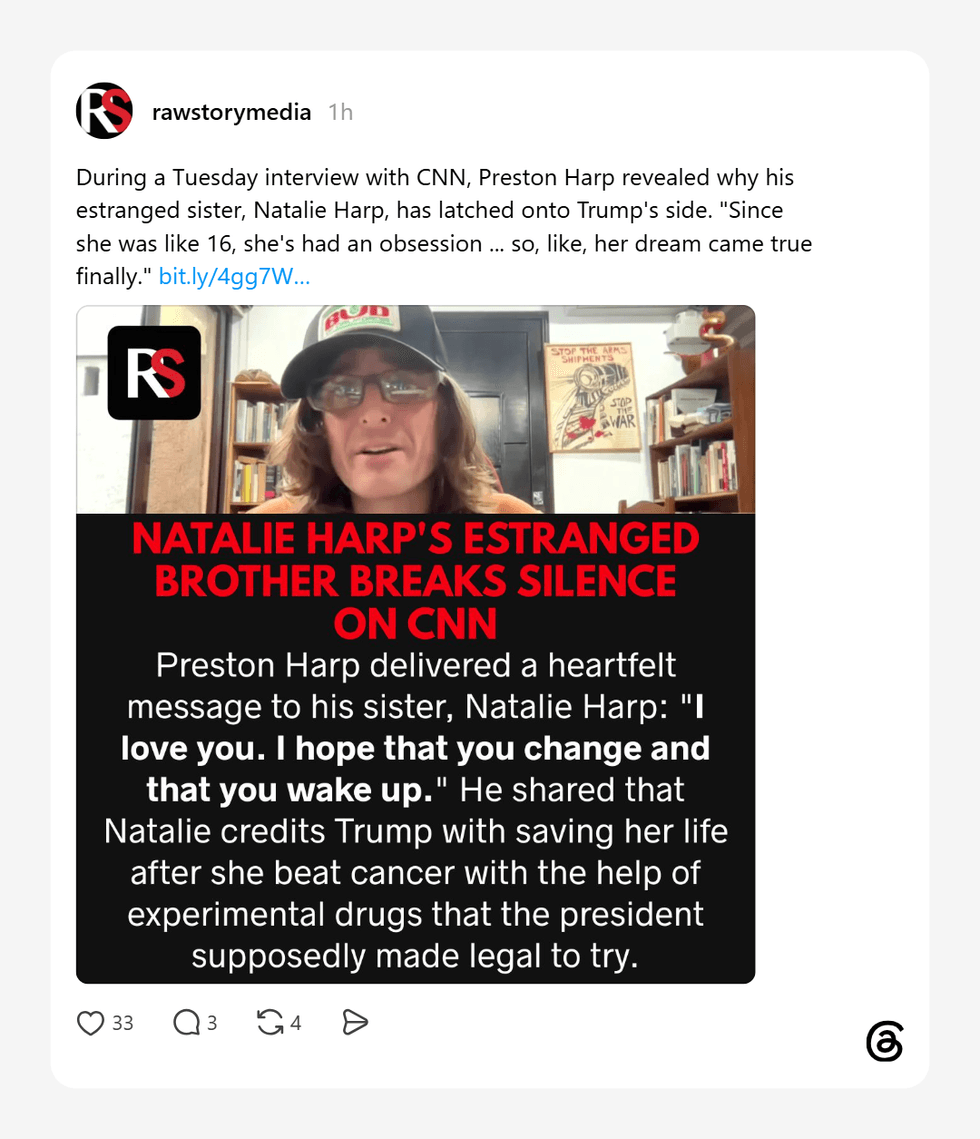
If you’re Trump, you might think you need the bigger space not to hide out in but to set up actual residence inside. Then, you would need not a mere underground fortress protected against attack but a palace. He would require it to house his staff, his family, his defenders, some soldiers, certainly Natalie Harp. Natalie would merit her own wing.
What could spark the need for Trump to hole up in such a facility for months on end, perhaps years? Well, for the sake of argument, suppose that he orders House Speaker Mike Johnson to completely hold off on seating newly elected Democratic representatives after the midterms. And the people take to the streets.
Think this is far-fetched? Think again. It is, in fact, entirely fetched.
Already, the Republican-controlled Congress has refused to function except as Trump’s rubber stamp. The will of the courts is consistently ignored and/or subverted – except for the Supreme Court, naturally, because they’re already in the tank for their master.
The only reason Trump would require a facility that could function as a below-ground Mar-a-Lago is that he needed a spot to hide out for a while without sacrificing any of the creature comforts he so demands. At the very least, it will need its own McDonald’s Bunkerland.
We are all living through the first presidential administration in American history that is bound by no accountability or rule of law. If you’re Trump, the one way to be sure that you remain invulnerable to eviction is to barricade yourself inside a place that can survive any amount of assault.
You think that a man who refuses to acknowledge his defeat in the 2020 Election will allow a little thing like term limits to dictate his power base? Not bloody likely. From what I can see, as has long been speculated, Trump has no intention of allowing any of his current level of authority to be usurped – and that includes refusing to leave in January 2029.
But before that, the accelerated/manic construction schedule of the current ballroom/bunker points to a desire to use it around the midterms and make sure it’s at least habitable on some level by possibly November, or year’s end at the latest.
I’m trying to reassure myself that there will have to be a way to stop Trump if the above is his goal of the moment, but I’m coming up empty. He’s already got immunity. And tens of thousands of ICE goons at his beck and call. And a militia of the pardoned Jan. 6 felons on some sort of slush fund payroll. And a paralyzed Republican Congressional base.
Can we really count on our conventional military to oppose this potential nightmare scenario? I wouldn’t bet my life on it. Would you?
What I don’t want to hear is that I’m ridiculously catastrophizing. I don’t believe that for a moment. What I do think is that our president isn’t rushing to finish a shiny new bunker because he’s concerned that future generations should have it as an option.
It is always, as ever, only about him.
(Ray Richmond is a longtime journalist/author and an adjunct professor at Chapman University in Orange, CA.)