White House adviser Kellyanne Conway on Monday announced some of the coronavirus safety measures that will be taken at President Donald Trump's upcoming rally in Tulsa.
Conway told reporters at the White House that the Trump campaign will conduct temperature checks in addition to distributing hand sanitizer and face masks to attendees.
She said that the measures are "recognition that there are guidelines in place that should be followed."
Republican National Committee Chairwoman Ronna McDaniel told Fox News on Monday that face masks would be "optional" at the rally. But White House economic adviser Larry Kudlow has said that attendees should "probably" wear masks.
A Republican Congressman just announced he and his family have COVID-19, which he called the "Wuhan Flu," a disparaging as well as inaccurate moniker for the deadly coronavirus that has killed nearly 118,000 Americans to date.
"I wanted to let you know that all 3 members of our household: Wrenzie, our son Lucas, and I all have the Wuhan Flu. We are all on the mend and doing fine," Congressman Tom Rice of South Carolina said on Facebook.
"Lucas got it last Sunday," writes Rep. Rice, who co-sponsored a bill to kill ObamaCare. "He was tested on Tuesday and received the results Friday. By Wednesday he had gotten really sick with a high fever and really bad cough. He turned the corner Saturday, and did not have fever yesterday. He’s still weak but getting stronger- moving around and eating a little."
Rice says his bout with COVID-19 lasted just four days – he does not say he was tested. "The only bad thing is I have completely lost sense of taste and smell" Rice says. "CAN’T TASTE BACON!!!"
His wife, he notes, is in worse shape than he is but "hasn’t quit moving."
Curiously, he says "our household is DONE WITH CORONAVIRUS! We are finishing our quarantine and looking forward to seeing you all again," despite his son first appearing ill just "last Sunday."
Rice is the eighth member of Congress to announce they have been infected.
"America: Do not listen to President Trump on any medical advice."
The FDA on Monday rescinded its emergency authorization of the drug hydroxychloroquine to treat Covid-19, a decision critics saw as a rebuke to President Donald Trump, whose repeated and ill-informed promotion of the drug has flown in the face of safety recommendations, sound science, and public health.
"Do not listen to President Trump on any medical advice," tweeted Senate Minority Leader Chuck Schumer (D-N.Y.) in response to the ruling.
The agency said in a letter (pdf) on hydroxychloroquine and chloroquine phosphate after finding it was not "reasonable to believe that the known and potential benefits of these products outweigh their known and potential risks."
Trump's repeated touting of the drug—and then his claim that he was using it himself as a preventative treatment—has drawn criticism from public health experts, especially as studies have shown the drug's potential harm to Covid-19 patients.
As Politicoreported, Trump's advocacy for the drug presented problems:
The administration's focus on the malaria medicines in the early months of the pandemic deepened a divide between the White House and its health agencies. Several administration officials told POLITICO they felt the drugs got outsized attention while FDA scrambled for solutions in March. Other current and former Health and Human Services officials later said that the emergency authorities and White House demands cast a shadow on FDA as it struggled to remain independent.
HuffPost reporter Melissa Jeltsen noted the disconnect between the agency's promotion of the drug before Mondays reversal and how it treats reproductive medications.
"Pretty insane that the FDA gave emergency authorization for hydroxychloroquine, but declined to change the dispensing rules on abortion medication," tweeted Jeltsen, "which meant women all over the U.S. had to travel 100s of miles to pick up drugs taken at home."
New of the FDA announcement came hours after Republican National Committee chairwoman Ronna McDaniel toldFox News that attendees of the president's first rally in months scheduled for Tulsa Saturday would not be required to wear masks despite the close quarters the 19,000 expected attendees will face at the Bank of Oklahoma Center.
"The American people can make decisions for themselves," said McDaniel, "we're all pretty informed about Covid at this point."
"According to the poll, 46 percent of likely voters say they would back [Democrat Theresa] Greenfield if the election were held today, and 43 percent say they would back Ernst," the Register reported over the weekend.
In April, Ernst claimed that everything in Iowa was going well with respect to COVID-19.
“Iowa has fared pretty well. We are a very rural state, but some of the restrictions that have been put in place by our governor have worked quite well,” Ernst said during the radio interview. “We are of course saddened by the deaths that we have had, but we have not been hit nearly as hard as some of the more metro areas or coastal areas. We have had a couple of recent outbreaks at some of our meat processing facilities — because they are essential workers they continue going into work and being with each other every day — but overall Iowa has done very well through the pandemic.”
"The coronavirus has caused an agricultural tsunami that's ripped through Iowa and the nation. Markets have been disrupted as schools, restaurants and hotels have shuttered, and meatpacking plants are slowing or closing as about 10,500 workers — including 1,650 in Iowa — have tested positive for COVID-19," said the report.
"At the current prices, you're losing money everywhere," said Iowa Soybean Association board president Tim Bardole.
At the same time, corn prices have dropped about 15 percent since March when states began shutting down to prevent the spread of COVID-19. Soybeans have fallen 8 percent, hog prices are down by 33 percent and cattle has dropped 21 percent.
“Looking around the city of Dubuque, our new jobs are in fast food," said Louie Meier, who worked at the John Deere factory for years. "We lost a manufacturing plant; Flexsteel shut down this year; and some of our other manufacturing plants that are non-union, those workers haven’t been getting raises in years. There are lots of opportunities to get work in Dubuque if you can survive on $12 an hour. Going from making over $20 an hour to making $12 an hour, it’s putting a lot of Iowans in precarious situations.”
Pence's visit is supposed to be an official White House visit, but it is expected to have political overtones. Trump beat his Democratic challenger Hillary Clinton in 2016 in Iowa by 10 points, but as of June 9, a poll showed Trump and Vice President Joe Biden dead-even.
Rep. Val Demings (D-FL), a contender for Joe Biden's vice-presidential running mate, criticized Gov. Ron DeSantis during the Monday episode of "The View" for trying to avoid coverage of the uptick in COVID-19 cases in the state.
Co-host Sunny Hostin noted that the state has come under fire for the accuracy and transparency of the numbers when a scientist who created the coronavirus reporting dashboard was fired for refusing to make changes to the data to support reopening. Hostin wondered if Demings, like many others, are concerned about the truthfulness of the Florida numbers.
"The surgeon general here in Florida declared a public health emergency on March 1, yet it wasn't until April 3 that the governor issued a state-at-home order," Demings said of DeSantis. "We have had some issues with our response to COVID-19. We know the story about the analyst who was fired, she says because she was being honest about what she was reporting. We certainly see the numbers in Florida, and while they are better than originally predicted, I believe a lot of that is because individuals took responsibility on their own to shelter in place and practice the CDC guidelines."
Demings went on to say that there are some questions about the accuracy of the numbers coming out of Florida nursing homes and other numbers reported.
"Were they accurate?" she asked. "And so we're still keeping an eye on that. We're still trying to make sure as we reopen Florida, and it's unbelievable, but as the numbers rise, prepare for the Republican National Convention. We're still keeping an eye on the numbers to make sure that we are doing everything that we can to give individual families and others accurate information so that they can protect themselves during this very critical time."
In the next segment, she expanded on the RNC convention in Jacksonville and whether they are ready to handle the huge influx of people coming to the city.
"It boils down to, do you have the ability to put the people that you represent first?" she asked. "And as we continue to see numbers go up in Florida, why on Earth would you push to have the convention here and bring tens of thousands of people here and expose them, risk their health? The health, safety and well-being of the American people is the president of the United States' No. 1 responsibility. But obviously he does not know that and does not understand that."
The CARES Act was introduced in March to help soften the economic blow to Americans after lockdowns were implemented across the country to help stem the spread of coronavirus. But as the economic fallout from the pandemic worsens, some are calling for a second round of stimulus checks.
According to CBS News, there could be another round of financial relief, but it faces hurdles.
"The proposed $3 trillion Health and Economic Recovery Omnibus Emergency Solutions, or HEROES, Act would authorize another round of stimulus payments for most U.S. households," CBS News reports. "While the bill was passed by the Democrat-controlled House last month, it still must get through the Republican-controlled Senate."
The HEROES Act offers a bigger payment than the Coronavirus Aid, Relief and Economic Security Act. This time around, each member of a household, including children would receive $1,200. "The income thresholds would remain the same, meaning that single taxpayers earning less than $75,000 and married taxpayers earning a total of $150,000 would receive the full payments. For instance, a family of four whose parents earn less than $150,000 would receive $4,800," CBS News reports.
Each family would be capped at $6,000 under the HEROES Act.
White House economic adviser Larry Kudlow faced questions from Fox News on Monday over his claim that there would be no "second wave" of COVID-19 even though some states are seeing a record number of cases.
"Friday morning, you said on Fox News Channel -- and I remember it so clearly -- you said no second wave, and you said it again," Fox New host Sandra Smith reminded Kudlow. "Since then, we have received new data points."
Smith pointed out that states are seeing "COVID spikes across the country."
"I understand the growing concerns," Kudlow replied. "And we're going to have these concerns for a while. But I've been in touch with our health experts each of the last four or five days, including this morning. These are relatively small bumps. They're there. I'm not denying it."
The economic adviser suggested that the spike in new cases is because "we are testing at a hundred times what we were a few months ago."
"I think it's something we have to get used to," he continued. "I think it's controllable."
Fox News host Ed Henry pressed: "How can you say again as you did a moment ago, 'We're not shutting the economy down again?' Nobody is wishing for this. But, God forbid the health experts go to the president and say, 'Look, we're fearful this is going the wrong way and there could be tens of thousands of more people dying.' You're saying the president still will not shut down the economy?"
"The president is absolutely disinclined to shut down the economy," Kudlow insisted. "I think shutting down the economy could be worse for our health than not shutting it down."
He went on to compare the coronavirus pandemic to a hurricane or "bad snow storm."
"Hardship, heartbreak, yes," Kudlow remarked. "But when it passes, people return back to their work."
Republican National Committee Chairwoman Ronna McDaniel on Monday revealed that supporters will not be required to wear masks at President Donald Trump's upcoming Tulsa rally.
McDaniel spoke to Fox News after Trump claimed on Twitter that 'almost 1,000,000' supporters had registered to attend the rally even though the venue holds 19,000 people.
"Why keep accepting the registrations if it's first come, first serve?" Fox News host Sandra Smith noted. "There's just over 19,000 seats available. What do you plan to do with all these people?"
"There will be events outside, there will be screens," McDaniel explained. "I think they're going to expand into the convention center for more capacity. But yeah, we want everybody to be engaged and come."
"This is obviously happening in COVID-19 times," Smith pointed out. "Oklahoma is seeing an uptick in cases right now. And the editorial board on the major newspaper is saying this morning, wrong time, wrong place, please reconsider."
"We're talking about an uptick in cases not just there but nationwide," the Fox News host added. "Should people wear masks while attending the event?"
"You know the difference between how Republicans have been handling this and Democrats is Democrats are saying we're going to shut down our states, we're not going to allow you to make decisions for yourself and your own health," McDaniel opined. "And I think we're far enough along now that if people have underlying conditions, they're not going to go to a rally like this, people will bring masks if they feel like it's necessary."
The Republican chairwoman complained that African-Americans have been allowed to protest during the pandemic while the Trump campaign receives criticism for holding a rally.
"Thousands and thousands of people -- especially with the African-American community that has been disproportionally affected by this -- and you saw Democrat mayors and Democrat out there with these protesters, not talking about PPE," McDaniel said.
"It's funny that now that we're having a Trump rally and we're bringing people out to celebrate their nominee for their party, all this scrutiny is coming upon this," she remarked.
"Masks are not required at the event?" Smith pressed.
"I'm not planning the event," McDaniel replied. "But I think masks will be optional and people will be able to wear them if they bring them or want them. You know, the American people can make decisions for themselves. We're all pretty informed about COVID at this point."
On Sunday, White House economic adviser Larry Kudlow said attendees of the Trump rally should "probably" wear masks.
The previous pandemics to which people often compare COVID-19 – the influenza pandemic of 1918, the Black Death bubonic plague (1342-1353), the Justinian plague (541-542) – don’t seem that long ago to archaeologists. We’re used to thinking about people who lived many centuries or even millennia ago. Evidence found directly on skeletons shows that infectious diseases have been with us since our beginnings as a species.
Bioarchaeologistslikeus analyze skeletons to reveal more about how infectious diseases originated and spread in ancient times.
How did aspects of early people’s social behavior allow diseases to flourish? How did people try to care for the sick? How did individuals and entire societies modify behaviors to protect themselves and others?
Knowing these things might help scientists understand why COVID-19 has wreaked such global devastation and what needs to be put in place before the next pandemic.
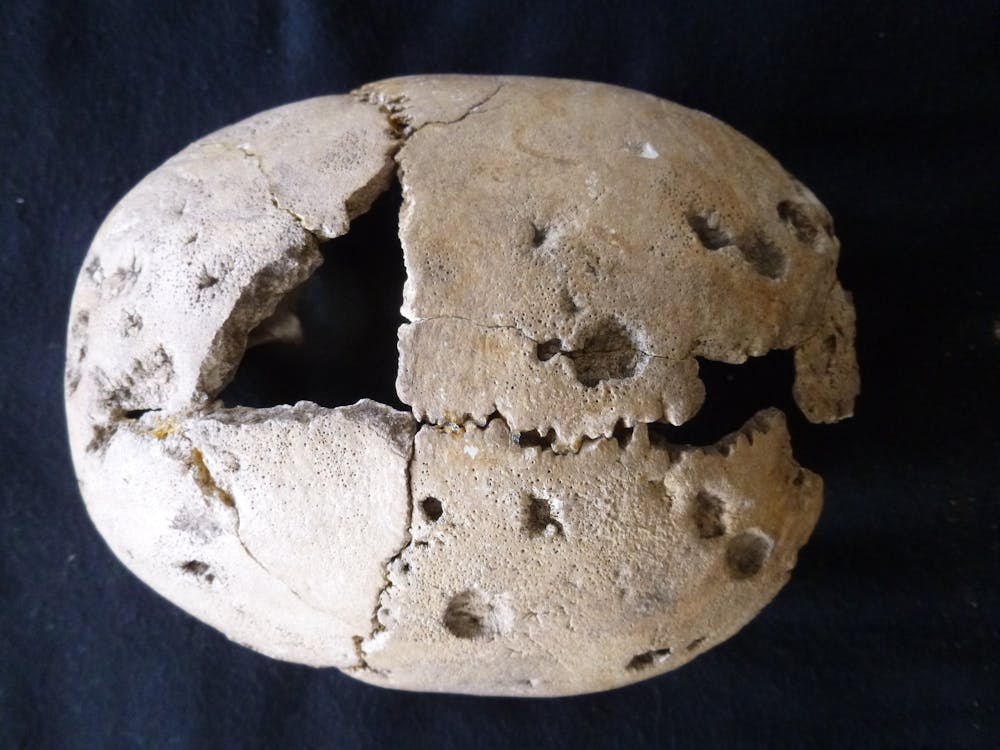
These round lesions are pathognomonic signs of syphilis.
How can bioarchaeologists possibly know these things, especially for early cultures that left no written record? Even in literate societies, poorer and marginalized segments were rarely written about.
In most archaeological settings, all that remains of our ancestors is the skeleton.
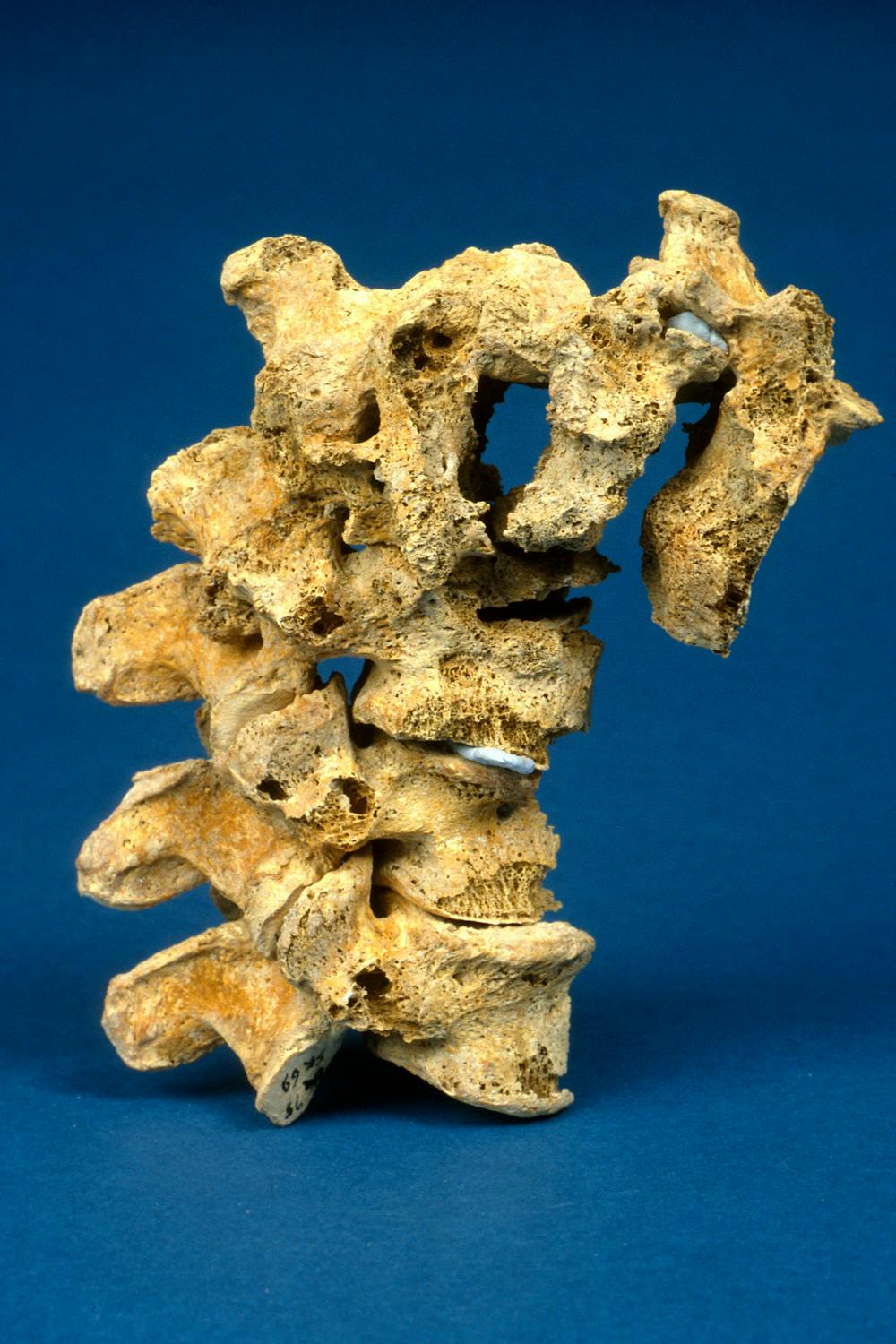
Tuberculosis leaves telltale markings in the spine.
For some infectious diseases, like syphilis, tuberculosis and leprosy, the location, characteristics and distribution of marks on a skeleton’s bones can serve as distinctive “pathognomonic” indicators of the infection.
Most skeletal signs of disease are non-specific, though, meaning bioarchaeologists today can tell an individual was sick, but not with what disease. Some diseases never affect the skeleton at all, including plague and viral infections like HIV and COVID-19. And diseases that kill quickly don’t have enough time to leave a mark on victims’ bones.
To uncover evidence of specific diseases beyond obvious bone changes, bioarchaeologists use a variety of methods, often with the help of other specialists, like geneticists or parasitologists. For instance, analyzing soil collected in a grave from around a person’s pelvis can reveal the remains of intestinal parasites, such as tapeworms and round worms. Genetic analyses can also identify the DNA of infectious pathogens still clinging to ancient bones and teeth.
Bioarchaeologists can also estimate age at death based on how developed a youngster’s teeth and bones are, or how much an adult’s skeleton has degenerated over its lifespan. Then demographers help us draw age profiles for populations that died in epidemics. Most infectious diseases disproportionately affect those with the weakest immune systems, usually the very young and very old.
Ground penetrating radar shows mass graves from the small Aboriginal settlement of Cherbourg in Australia, where 490 out of 500 people were struck down by the 1918-1919 influenza pandemic, with about 90 deaths.
We can find out what infections were around in the past through our ancestors’ remains, but what does this tell us about the bigger picture of the origin and evolution of infections? Archaeological clues can help researchers reconstruct aspects of socioeconomic organization, environment and technology. And we can study how variations in these risk factors caused diseases to vary across time, in different areas of the world and even among people living in the same societies.
How infectious disease got its first foothold
Human biology affects culture in complex ways. Culture influences biology, too, although it can be hard for our bodies to keep up with rapid cultural changes. For example, in the 20th century, highly processed fast food replaced a more balanced and healthy diet for many. Because the human body evolved and was designed for a different world, this dietary switch resulted in a rise in diseases like diabetes, heart disease and obesity.
From a paleoepidemiological perspective, the most significant event in our species’ history was the adoption of farming. Agriculture arose independently in several places around the world beginning around 12,000 years ago.
Prior to this change, people lived as hunter-gatherers, with dogs as their only animal companions. They were very active and had a well balanced, varied diet that was high in protein and fiber and low in calories and fat. These small groups experienced parasites, bacterial infections and injuries while hunting wild animals and occasionally fighting with one another. They also had to deal with dental problems, including extreme wear, plaque and periodontal disease.
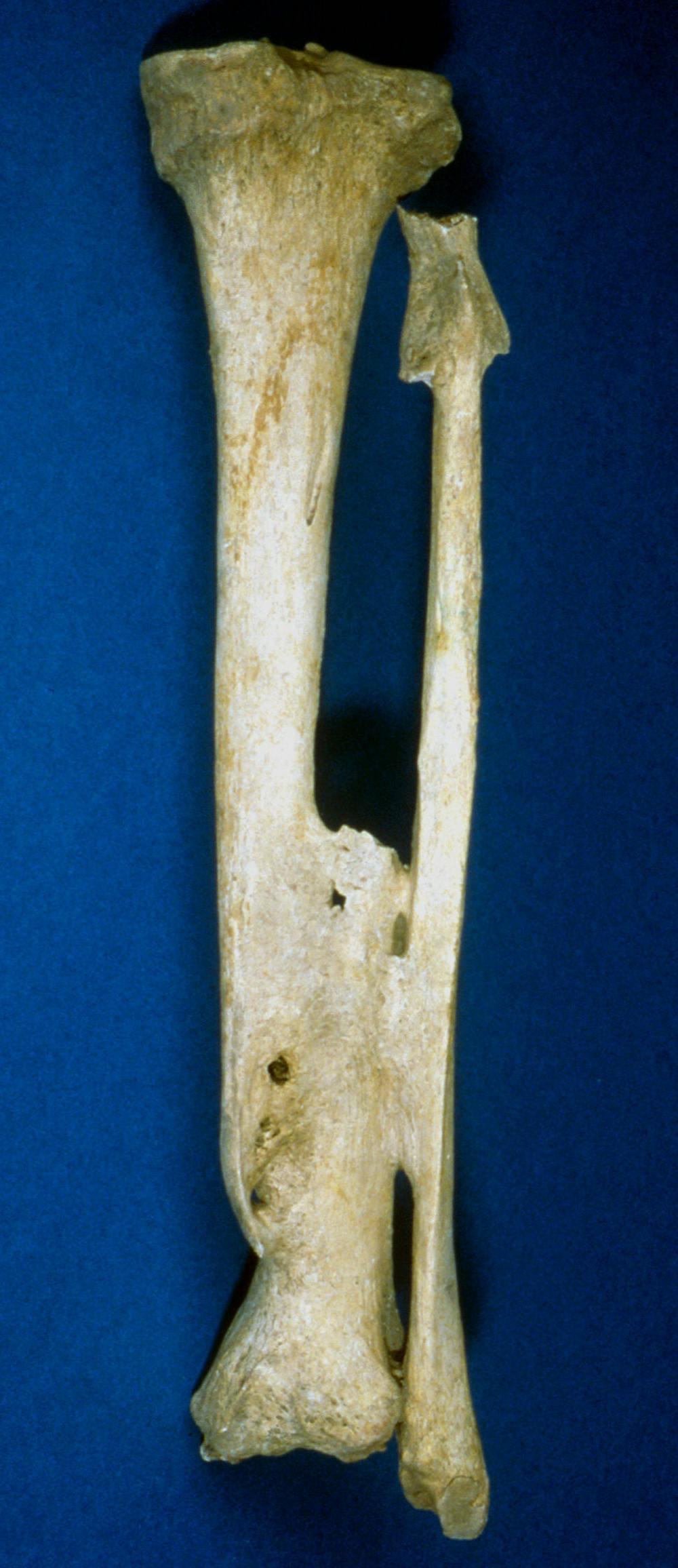
A healed fracture of the lower leg bones from a person buried in Roman Winchester, England.
One thing hunter-gatherers didn’t need to worry much about, however, was virulent infectious diseases that could move quickly from person to person throughout a large geographic region. Pathogens like the influenza virus were not able to effectively spread or even be maintained by small, mobile, and socially isolated populations.
The advent of agriculture resulted in larger, sedentary populations of people living in close proximity. New diseases could flourish in this new environment. The transition to agriculture was characterized by high childhood mortality, in which approximately 30% or more of children died before the age of 5.
And for the first time in an evolutionary history spanning millions of years, different species of mammals and birds became intimate neighbors. Once people began to live with newly domesticated animals, they were brought into the life cycle of a new group of diseases – called zoonoses – that previously had been limited to wild animals but could now jump into human beings.
Add to all this the stresses of poor sanitation and a deficient diet, as well as increased connections between distant communities through migration and trade especially between urban communities, and epidemics of infectious disease were able to take hold for the first time.
Globalization of disease
Later events in human history also resulted in major epidemiological transitions related to disease.
For more than 10,000 years, the people of Europe, the Middle East and Asia evolved along with particular zoonoses in their local environments. The animals people were in contact with varied from place to place. As people lived alongside particular animal species over long periods of time, a symbiosis could develop – as well as immune resistance to local zoonoses.
At the beginning of modern history, people from European empires also began traveling across the globe, taking with them a suite of “Old World” diseases that were devastating for groups who hadn’t evolved alongside them. Indigenous populations in Australia, the Pacific and the Americas had no biological familiarity with these new pathogens. Without immunity, one epidemic after another ravaged these groups. Mortality estimates range between 60-90%.
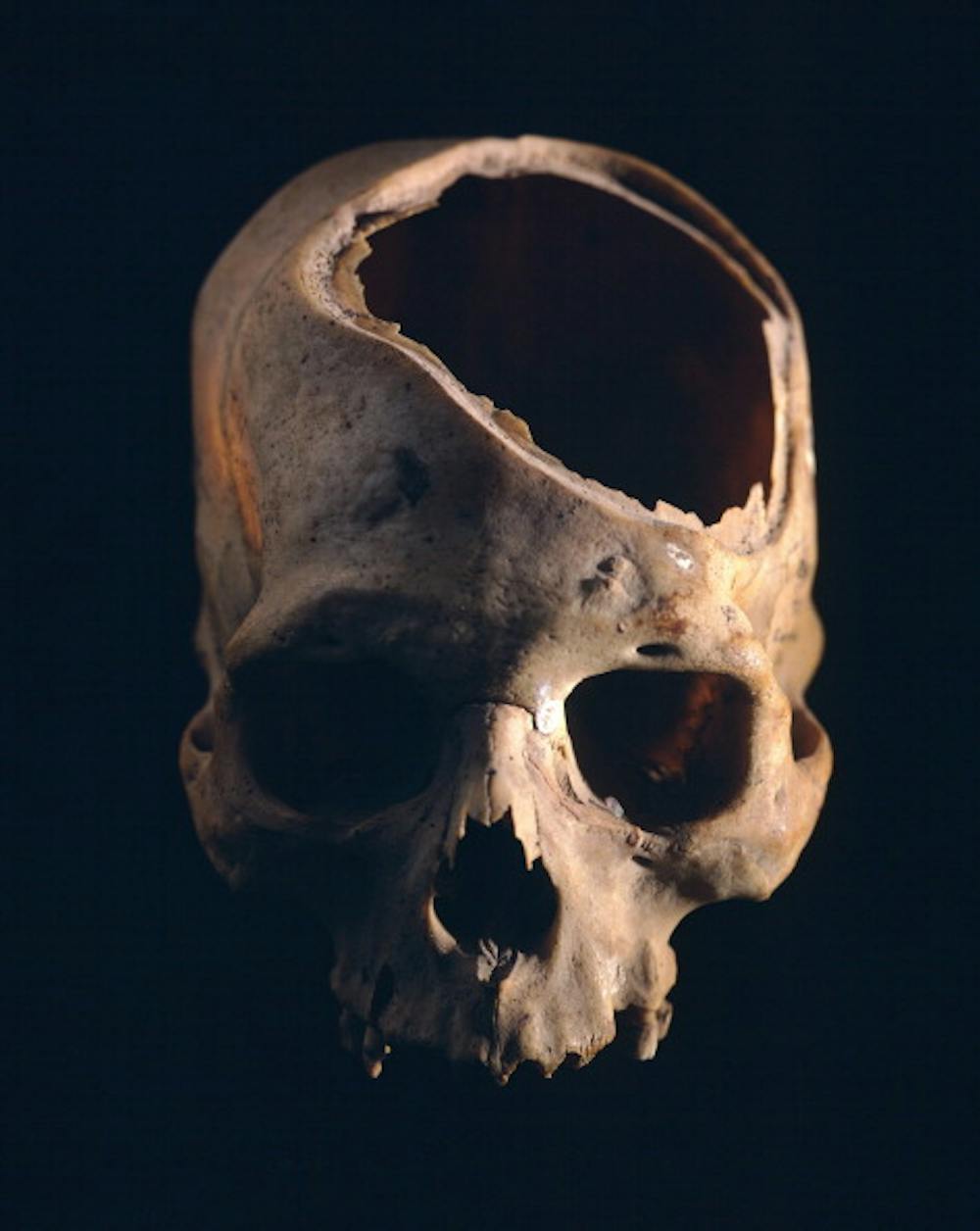
This skull of a person who lived more than 2,600 years ago in Peru shows evidence of a surgery, maybe to treat a head wound.
The study of disease in skeletons, mummies and other remains of past people has played a critical role in reconstructing the origin and evolution of pandemics, but this work also provides evidence of compassion and care, including medical interventions such as trepanation, dentistry, amputation and prostheses,
Other evidence shows that people have often done their best to protect others, as well as themselves, from disease. Perhaps one of the most famous examples is the English village of Eyam, which made a self-sacrificing decision to isolate itself to prevent further spread of a plague from London in 1665.
A tuberculosis sanatorium in São Paulo, Brazil, in the late 1800s.
In other eras, people with tuberculosis were placed in sanatoria, people with leprosy were admitted to specialized hospitals or segregated on islands or into remote areas, and urban dwellers fled cities when plagues came.
As the world faces yet another pandemic, the archaeological and historical record are reminders that people have lived with infectious disease for millennia. Pathogens have helped shape civilization, and humans have been resilient in the face of such crises.
Americans venturing out to salons and gyms after weeks sheltering in place will have to learn a new ritual: signing away their right to sue.
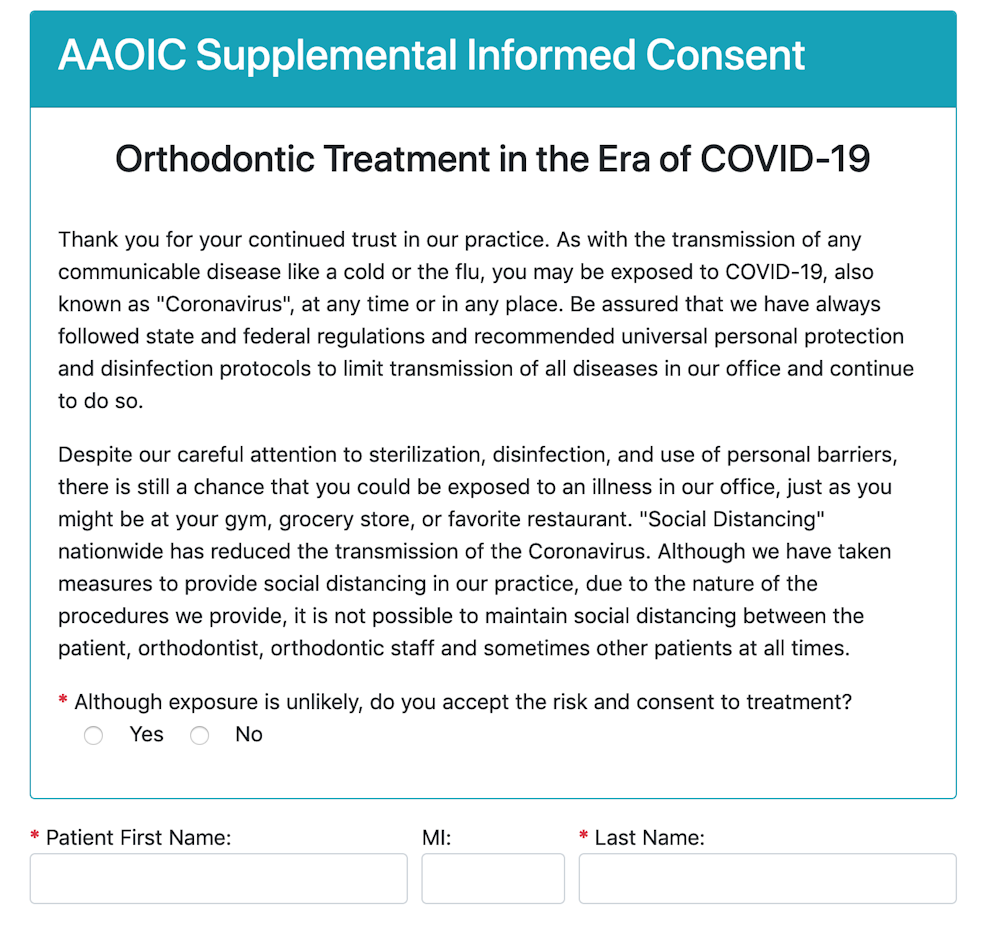
My local YMCA now asks anyone wishing to use its gym to sign a waiver. My child’s dentist requires patients to accept the risk of contracting COVID-19. And my law students taking the bar exam have to give up their right to sue – before they’re allowed to file lawsuits.
This seems to be happening anywhere there’s prolonged time indoors or close personal contact. Want a haircut? Sign a waiver. Summer camp? Waiver. Church? They’re being considered. Even President Donald Trump is requiring people attending his rallies to agree to “assume all risks related to exposure to COVID-19.”
Maria Trysla, CEO of online waiver company Smartwaiver, told me her company starting seeing requests for COVID-19 waivers in early May. And they were coming from industries that aren’t in the habit of using waivers, like nail salons, day spas and even some restaurants.
Should you think twice before signing one of these waivers? Absolutely – though you’re unlikely to have much choice. These waivers tend to be presented on a take-it-or-leave it basis, which raises questions about how well they will hold up in court.
But they also raise the question of who is best able to manage the health risks associated with COVID-19 as the economy reopens. The legal risk shouldn’t just be shifted over to customers. Instead, it should be a shared responsibility.
The law of waivers
Waivers are unusual legal creatures because they sit at the intersection of two different areas of law – torts and contracts.
Tort law is the law of negligence and defines what we owe to each other in everyday life. Texting while driving, for example, is considered grossly negligent.
Conversely, taking reasonable precautions to protect customers from hazards like the coronavirus – such as social distancing measures – would tend to protect businesses from tort liability. That may be is why law firms are recommending health precautions, rather than waivers, as a first line of defense.
The author was asked to assume the risk of COVID-19 infection before taking her child to the dentist.
Contract law, on the other hand, is about a compact between two or more people in which you agree to some form of bargained exchange.
A waiver is a contract that puts tort law out of reach. In a typical waiver, you agree that you will not sue another person or business for negligent behavior or acknowledge that certain activities are inherently dangerous and you “assume the risk” of injury or death. These sort of waivers may be familiar if you’ve ever gone skiing or taken your kids to a trampoline park.
Waivers are a matter of state law, which vary widely, and there is no single federal law governing them. Some states approach waivers with a “freedom of contract” stance, on the notion that people should have the freedom to agree to whatever they like.
But there are limits on what companies can waive away. Courts generally decline to enforce waivers when the conduct was egregious, like intentional harms or cases involving gross negligence. A court will also sometimes invalidate a waiver if it considers the agreement too one-sided or harmful to the public. For example, the Oregon Supreme Courtinvalidated a waiver printed on an injured snowboarder’s lift ticket, noting the public interest in ensuring ski hills design their jumps with safety in mind.
In other words, signing a waiver is taking a gamble with your legal rights. You might be able to wiggle out of it later, but you might be stuck with it.
Either way, businesses may be hoping that a waiver will deter customers from even trying to sue if they get sick. And if businesses think they are legally bulletproof, they may take fewer health precautions.
A problem of shared risk
A waiver is like a contractual hot potato – you’re passing a legal risk to someone else without really addressing the underlying danger. However, a contractual approach to safety hazards can fairly allocate legal risks with the goal of making everyone safer.
American jurist Guido Calabresi argued that legal risks should be borne by the party who could avoid them at least cost – what he called the “cheapest cost avoider.” Some responsibility to manage infection fairly belongs with the customer, who can most easily prevent the spread of coronavirus to workers and others by staying home if they have symptoms or wearing a mask if they do not. And indeed, some of the waiver forms I reviewed contained reasonable language like this.
Other risks are beyond the customer’s control, such as a store’s sanitation practices or social distancing measures. The risks associated with adopting these types of health precautions should remain with the business.
So “assume the risk” language in a contract might be fair if the business also promises to adopt its own reasonable measures. A naked waiver that simply passes the buck to the customer is not.
It’s no secret that businesses consider the legal risks of COVID-19 unbearable and are lobbying for immunity legislation from the federal government.
The reality is that these risks are unbearable for everyone – businesses, consumers and especially workers. And the best way for the law to help is to encourage each of us to adopt health measures that protect those around us.
"This is the worst public health crisis we've faced—and it has come at a time when we have the worst government in the world."
Brazil is now second only to the United States in terms of both Covid-19 cases and deaths, and its daily death toll is the highest in the world—conditions that public health officials within and beyond the South American country continue to partly blame on far-right President Jair Bolsonaro's "reckless" response to the pandemic.
As of Sunday afternoon, Brazil—home to an estimated 211 million people—had more than 850,500 confirmed Covid-19 cases and over 42,700 deaths, according to the Johns Hopkins global tracker. Journalists have repeatedly pointed out that the nation's official numbers are likely too low due to insufficient testing.
"This is the worst public health crisis we've faced—and it has come at a time when we have the worst government in the world," Daniel Dourado, a public health expert and lawyer from the University of São Paulo, told the Guardian. Dourado, who believes thousands of Brazilians could have been saved by a better government response, said, "The country is adrift."
Bolsonaro has faced months of criticism for downplaying the threat posed by the virus—dismissing it as a "little flu," refusing to wear a face mask or engage in social distancing, and challenging city and state lockdown restrictions that aimed to stop its spread. As the New York Timesreported Saturday, the president has also come under fire for "his promotion of unproven remedies" such as the anti-malaria drugs chloroquine and hydroxychloroquine.
"Decisions are being made not based on evidence and empirical data but rather on anecdotal reports," Denise Garrett, a Brazilian-American epidemiologist who worked at the Centers for Disease Control and Prevention for more than 20 years, told the Times. "Bolsonaro invested a huge amount of money into an action that has not been proven to be effective at the expense of increasing testing and contact tracing."
As the death toll continued to grow in São Paulo—Brazil's biggest city and a Covid-19 hot spot—the municipal funeral service announced Friday that it would begin digging up the bones of people who died at least three years ago, placing them in numbered bags, and temporarily storing them in large metal containers before sending the remains to several cemeteries to make space for new bodies.
Reporting on the conditions in São Paulo Saturday, the Associated Pressnoted that "some health experts are worried about a new surge now that a decline in intensive care bed occupancy to about 70% prompted Mayor Bruno Covas to authorize a partial reopening of business this week. The result has been crowded public transport, long lines at malls, and widespread disregard for social distancing."
Adenilson Costa, one of the workers who was exhuming remains in a blue protective suit at São Paulo's Vila Formosa cemetery on Friday, told the AP that "with this opening of malls and stores we get even more worried... This isn't over." Costa, who knows multiple people who have died from the virus, added: "People say nothing scares gravediggers. Covid does."
Drauzio Varella—a 77-year-old oncologist and broadcaster famous for his decades of public health activism—told the Guardian that "Brazil's situation is so worrying and so unique because if you look at the path the epidemic took—from China, through Asia, and then Europe and on to the U.S., Brazil was its first encounter with a country suffering from the kind of severe social inequality ours does."
"We are seeing this play out now in a country where 13 or 14 million people live in precarious conditions and great poverty," said Varella, who has previously criticized Bolsonaro's handling of the crisis. "The biggest problem we are seeing across Brazil right now is the epidemic spreading through the outskirts of cities and their rundown centers where you have tenements and the homeless live."
Although Covid-19 cases and deaths in the country have mostly been concentrated in cities, the Washington Postreported Friday that "Indigenous leaders say nearly 230 Indigenous people have already died, many in Brazil's most isolated reaches, and they expect that number to rise."
The Post detailed how the Kokama people in Brazil's Alto Solimões region, where "the only hope for advanced care is a plane ride to the faraway state capital of Manaus," are struggling to battle the virus with little help from any level of government:
The first Indigenous person in Alto Solimões to test positive for the novel coronavirus was infected by a government doctor who'd carried the disease back with him from vacation. Officials then ignored Indigenous requests that pandemic aid be delivered to them, leaving people no alternative than to leave the isolation of the forest to travel to cities and wait in lines to collect the $120 stipend. Dozens... returned to their villages coughing and feverish. The coronavirus soon ripped through the population. "The $120 of death," people now call the aid.
But the government didn't flood the villages with medical equipment, meal rations, coronavirus tests, and health professionals. Instead, it all but abandoned them, according to nine indigenous leaders, a review of official complaints and government officials who spoke on the condition of anonymity. With little guidance on how to proceed, and less medical equipment, the communities have been left to treat their sick and dying with herbal teas, lemon syrups and other traditional medicines.
"Help from the government? We've received nothing, nothing, nothing," said Sinésio Tikuna Trovão, leader of the Tikuna people. "We need oxygen. We need equipment. Our medicinal plants cure only some of the symptoms... We need more doctors to teach us. It isn’t easy. We need rapid tests."
Officials from the Amazonas state healthcare system and the federal Special Secretary for Indigenous Health "defended their responses—and blamed other agencies for any failings" in the region, according to the Post. Indigenous peoples in others states such as Pará and Roraima have "begun complaining the government had abandoned them, too."
Meanwhile, the United States, with a population of about 332 million people, remains the global leader in both confirmed Covid-19 cases and deaths. As of Sunday afternoon, over 2,090,000 people in the U.S. had confirmed cases and over 115,000 people had died.
Michael Osterholm, director of the Center for Infectious Disease Research and Policy at the University of Minnesota, told "Fox News Sunday" the impacts of ongoing protests against police brutality and easing lockdown restrictions, in terms of the cases, are not yet clear.
"I think that what we have here today is, we're not sure what's happening. We have 22 states where we have cases increasing, eight where it's level, and 21 states where its decreasing," he said. "We just have to be humble and say we're in an unsure moment right now."
Restaurant and cafe owners in Paris cheered their chance to get back to business Monday after the government said they could once again open their dining rooms, three months after being shut to blunt the coronavirus outbreak.
The sooner-than-expected reopening for the Paris region was announced by President Emmanuel Macron late Sunday, shortly before officials reported just nine COVID-19 deaths in the previous 24 hours -- the lowest figure since March.
"The bulk of the epidemic is behind us," Health Minister Olivier Veran said Monday, though he cautioned that "this doesn't mean we can stop fighting the virus."
"It's going to be a party," Stephane Manigold, owner of four Paris restaurants, including the two-starred Maison Rostang, told AFP.
"We were waiting for the president's speech. Our teams are ready, and they're eager to get back to work," he said.
Manigold made headlines last month after successfully suing his insurer, the French giant Axa, to pay around 70,000 euros ($79,000) in compensation for the lost business.
Insurers have argued that most contracts do not cover nationwide administrative shutdowns, but restaurants say their livelihoods are on the line, and have called on the government to intervene.
Even in the rest of France, where restaurants were allowed to fully reopen on May 11, owners have had to remove tables to ensure at least one metre (3.3 feet) between diners.
Didier Chenet, head of the GNI association of independent hotel and restaurant owners, estimates the social distancing rules have cut capacity by at least half.
"Being able to finally get back to work across all of France does bring a sigh of relief," he said.
But unless the government lifts the one-metre rule, he said, "a recovery will be very slow, with economic conditions that are not viable for our businesses," he said.
'Can't open in a day'
Foreign tourists, the key ingredient for success at Paris restaurants in particular, are also not expected to arrive in pre-COVID numbers anytime soon, even as the EU begins to tentatively open up borders within the bloc.
With French employers still being urged to have employees work from home whenever possible, lunch crowds also remain far from what they were before the outbreak, Chenet said.
And Manigold said that restaurants will need some time to restock and get their employees back -- the French state has been paying the bulk of their salaries since the lockdown to avoid layoffs, a colossal financial effort.
"At best we'll open two restaurants on Wednesday, and the others next week," he said.
"One day maybe politicians will understand that you can't just open a restaurant in a day. They could have avoided the abruptness," he said.
Macron said Sunday that the government had mobilised 500 billion euros to ease the coronavirus blow to the economy, including more than six billion euros in state-backed loans to restaurants, hotels and cafes.
He also announced that all students below high school grades must return to class next Monday, a relief for parents who have been juggling work and school from home.
Hygiene rules will be relaxed, with teachers now able to welcome more than 15 children per class, Education Minister Jean-Michel Blanquer said Monday.
In a May 5 interview with PBS's Judy Woodruff, Arkansas Gov. Asa Hutchinson (R) bragged about how his state had never shutdown the way others did. While most states did mandate a stay-at-home order, Arkansas residents stayed home themselves and took precautions similar to the rest of the country. Now, however, things aren't looking good for the state.
Texas Arizona, North Carolina, South Carolina, Florida and Arkansas are all experiencing spikes in COVID-19 cases after grand reopenings over Memorial Day weekend.
On May 5, Hutchinson claimed that he wasn't doing the reopening all at one time so that he could look at the data and ensure that each phase of reopening was responsibly done. A little over one month later, it has become clear that it was an empty promise.
If Hutchinson was consulting the data and forming his decisions off of them, he wouldn't be moving to Phase 2.
"On Friday, the state reported that there were 731 new cases, a record increase," the Daily Beast reported. "Those numbers brought the cumulative total there to 11,547, of which 3,764 were active. At last count, 176 people had died from the virus."
In March, Arkansas diagnosed its first coronavirus case and has had "super-spreader" clusters and events in the subsequent months, however, it's only now that they are experiencing such a large uptick in cases.
"It's part of a broad pattern in the U.S. of resurgent infections that are sweeping across many states," the Daily Beast quoted public health expert William Haseltine, from the Harvard Medical School. "We're about to see hospital systems in states like Arkansas ... begin to experience what we did in New York, with facilities being overwhelmed by this epidemic."