A series of four experiments has revealed that the same artwork is preferred less and perceived as less creative and awe-inducing when participants are told that it is made by artificial intelligence (AI). These effects were stronger among individuals who believe that creativity is a uniquely human characteristic. The study was published in Computers in Human Behavior. Artificial intelligence is a term used to describe computer systems that are able to perform tasks normally requiring human intelligence. These tasks include visual perception, speech recognition, translation between languages, ...
Scientists are so alarmed by a new study on ocean warming that some declined to speak about it on the record, the BBC reported Tuesday.
"One spoke of being 'extremely worried and completely stressed,'" the outlet reported regarding a scientist who was approached about research published in the journal Earth System Science Data on April 17, as the study warned that the ocean is heating up more rapidly than experts previously realized—posing a greater risk for sea-level rise, extreme weather, and the loss of marine ecosystems.
Scientists from institutions including Mercator Ocean International in France, Scripps Institution of Oceanography in the United States, and Royal Netherlands Institute for Sea Research collaborated to discover that as the planet has accumulated as much heat in the past 15 years as it did in the previous 45 years, the majority of the excess heat has been absorbed by the oceans.
In March, researchers examining the ocean off the east coast of North America found that the water's surface was 13.8°C, or 24.8°F, hotter than the average temperature between 1981 and 2011.
The study notes that a rapid drop in shipping-related pollution could be behind some of the most recent warming, since fuel regulations introduced in 2020 by the International Maritime Organization reduced the heat-reflecting aerosol particles in the atmosphere and caused the ocean to absorb more energy.
But that doesn't account for the average global ocean surface temperature rising by 0.9°C from preindustrial levels, with 0.6°C taking place in the last four decades.
The study represents "one of those 'sit up and read very carefully' moments," said former BBC science editor David Shukman.
Lead study author Karina Von Schuckmann of Mercator Ocean International told the BBC that "it's not yet well established, why such a rapid change, and such a huge change is happening."
"We have doubled the heat in the climate system the last 15 years, I don't want to say this is climate change, or natural variability or a mixture of both, we don't know yet," she said. "But we do see this change."
Scientists have consistently warned that the continued burning of fossil fuels by humans is heating the planet, including the oceans. Hotter oceans could lead to further glacial melting—in turn weakening ocean currents that carry warm water across the globe and support the global food chain—as well as intensified hurricanes and tropical storms, ocean acidification, and rising sea levels due to thermal expansion.
A study published earlier this year also found that rising ocean temperatures combined with high levels of salinity lead to the "stratification" of the oceans, and in turn, a loss of oxygen in the water.
"Deoxygenation itself is a nightmare for not only marine life and ecosystems but also for humans and our terrestrial ecosystems," researchers from the Chinese Academy of Sciences, the National Center for Atmospheric Research, and the National Oceanic and Atmospheric Administration said in January. "Reducing oceanic diversity and displacing important species can wreak havoc on fishing-dependent communities and their economies, and this can have a ripple effect on the way most people are able to interact with their environment."
The unusual warming trend over recent years has been detected as a strong El Niño Southern Oscillation (ENSO) is expected to form in the coming months—a naturally occurring phenomenon that warms oceans and will reverse the cooling impact of La Niña, which has been in effect for the past three years.
"If a new El Niño comes on top of it, we will probably have additional global warming of 0.2-0.25°C," Dr. Josef Ludescher of the Potsdam Institute for Climate Research told the BBC.
The world's oceans are a crucial tool in moderating the climate, as they absorb heat trapped in the atmosphere by greenhouse gases.
Too much warming has led to concerns among scientists that "as more heat goes into the ocean, the waters may be less able to store excess energy," the BBC reported.
The anxiety of climate experts regarding the new findings, said the global climate action movement Extinction Rebellion, drives home the point that "scientists are just people with lives and families who've learnt to understand the implications of data better."
Japanese startup ispace inc said its attempt to make the first private moon landing had failed after losing contact with its Hakuto-R Mission 1 (M1) lander, concluding it had most likely crashed on the lunar surface.
"We lost communication, so we have to assume that we could not complete the landing on the lunar surface," founder and Chief Executive Takeshi Hakamada said on a company live stream.
It was the second setback for private space development in a week after SpaceX's Starship rocket exploded spectacularly minutes after soaring off its launch pad.
A private firm has yet to succeed with a lunar landing. Only the United States, the former Soviet Union and China have soft-landed spacecraft on the moon, with attempts in recent years by India and a private Israeli company ending in failure.
Shares in ispace, which delivers payloads such as rovers to the moon and sells related data, were untraded Wednesday morning but indicated to fall by their daily limit. The stock made its debut on the Tokyo Stock Exchange just two weeks ago and had doubled in value since then.
Japan's top government spokesperson Hirokazu Matsuno said that while the mission went unaccomplished, the country wants ispace to "keep trying" as its efforts were significant to the development of a domestic space industry.
Japan, which has set itself a goal of sending Japanese astronauts to the moon by the late 2020s, has had some recent setbacks. The national space agency last month had to destroy its new medium-lift H3 rocket upon reaching space after its second-stage engine failed to ignite. Its solid-fuel Epsilon rocket also failed after launch in October.
Brakes on a ski slope
Four months after launching from Cape Canaveral, Florida, on a SpaceX rocket, the M1 lander appeared set to autonomously touch down at about 12:40 p.m. Eastern time (1640 GMT Tuesday), with an animation based on live telemetry data showing it coming as close as 90 meters (295 feet) from the lunar surface.
By the expected touchdown time, mission control had lost contact with the lander and engineers appeared anxious over the live stream as they awaited signal confirmation of its fate which never came.
"Our engineers will continue to investigate the situation," Hakamada said. "At this moment, what I can tell you is we are very proud of the fact that we have already achieved many things during this Mission 1."
The lander completed eight out of 10 mission objectives in space that will provide valuable data for the next landing attempt in 2024, he added.
Roughly an hour before planned touchdown, the 2.3 meter-tall M1 began its landing phase, gradually tightening its orbit around the moon from 100 km (62 miles) above the surface to roughly 25 km, travelling at nearly 6,000 km/hour (3,700 mph).
At such velocity, slowing the lander to the correct speed against the moon's gravitational pull is like squeezing the brakes of a bicycle right at the edge of a ski-jumping slope, Chief Technology Officer Ryo Ujiie has said.
The craft was aiming for a landing site at the edge of Mare Frigoris in the moon's northern hemisphere where it would have deployed a two-wheeled, baseball-sized rover developed by the Japan Aerospace Exploration Agency, Tomy Co Ltd 7867.T and Sony Group Corp 6758.T. It also planned to deploy a four-wheeled rover dubbed Rashid from the United Arab Emirates.
The lander was carrying an experimental solid-state battery made by Niterra Co Ltd 5334.T among other devices to gauge their performance on the moon.
The mission was insured by Mitsui Sumitomo Insurance Co, an MS&AD Insurance Group 8725.T unit, and ispace said it may receive some compensation.
NASA just admitted a big scientific “oopsie” — and the ripple effect has left experts scratching their heads over Earth’s annual Geminid meteor shower. The mistake involves the tail of Phaethon, an asteroid long assumed to be the source of meteors showering Earth each December. Closer analysis of Phaethon by a team of scientists revealed its tail isn’t dusty at all. Instead, it’s sodium gas, NASA revealed in a Tuesday news release. So if the tail of the asteroid is gas, not dust, where are the dazzling Geminid meteors coming from? Scientists aren’t sure. The only thing NASA knows for sure is “...
New research casts doubt on the belief that heightened materialism leads to reduced life satisfaction. The results of the study suggest that the negative association between materialism and life satisfaction observed in past research might not be due to materialism itself causing lower life satisfaction, but rather because people who tend to be more materialistic also tend to have certain stable characteristics that are linked to lower life satisfaction. The findings have been published in the Journal of Consumer Psychology. “I started researching this topic during my PhD under supervision of ...
Physicists believe most of the matter in the universe is made up of an invisible substance that we only know about by its indirect effects on the stars and galaxies we can see.
We’re not crazy! Without this “dark matter”, the universe as we see it would make no sense.
But the nature of dark matter is a longstanding puzzle. However, a new study by Alfred Amruth at the University of Hong Kong and colleagues, published in Nature Astronomy, uses the gravitational bending of light to bring us a step closer to understanding.
Invisible but omnipresent
The reason we think dark matter exists is that we can see the effects of its gravity in the behavior of galaxies. Specifically, dark matter seems to make up about 85% of the universe’s mass, and most of the distant galaxies we can see appear to be surrounded by a halo of the mystery substance.
But it’s called dark matter because it doesn’t give off light, or absorb or reflect it, which makes it incredibly difficult to detect.
So what is this stuff? We think it must be some kind of unknown fundamental particle, but beyond that we’re not sure. All attempts to detect dark matter particles in laboratory experiments so far have failed, and physicists have been debating its nature for decades.
Scientists have proposed two leading hypothetical candidates for dark matter: relatively heavy characters called weakly interacting massive particles (or WIMPs), and extremely lightweight particles called axions. In theory, WIMPs would behave like discrete particles, while axions would behave a lot more like waves due to quantum interference.
It has been difficult to distinguish between these two possibilities – but now light bent around distant galaxies has offered a clue.
Gravitational lensing and Einstein rings
When light traveling through the universe passes a massive object like a galaxy, its path is bent because – according to Albert Einstein’s theory of general relativity – the gravity of the massive object distorts space and time around itself.
As a result, sometimes when we look at a distant galaxy we can see distorted images of other galaxies behind it. And if things line up perfectly, the light from the background galaxy will be smeared out into a circle around the closer galaxy.
This distortion of light is called “gravitational lensing”, and the circles it can create are called “Einstein rings”.
By studying how the rings or other lensed images are distorted, astronomers can learn about the properties of the dark matter halo surrounding the closer galaxy.
Axions vs WIMPs
And that’s exactly what Amruth and his team have done in their new study. They looked at several systems where multiple copies of the same background object were visible around the foreground lensing galaxy, with a special focus on one called HS 0810+2554.
Multiple images of a background image created by gravitational lensing can be seen in the system HS 0810+2554. Hubble Space Telescope / NASA / ESA
Using detailed modelling, they worked out how the images would be distorted if dark matter were made of WIMPs vs how they would if dark matter were made of axions. The WIMP model didn’t look much like the real thing, but the axion model accurately reproduced all features of the system.
The result suggests axions are a more probable candidate for dark matter, and their ability to explain lensing anomalies and other astrophysical observations has scientists buzzing with excitement.
Particles and galaxies
The new research builds on previous studies that have also pointed towards axions as the more likely form of dark matter. For example, one study looked at the effects of axion dark matter on the cosmic microwave background, while another examined the behavior of dark matter in dwarf galaxies.
Although this research won’t yet end the scientific debate over the nature of dark matter, it does open new avenues for testing and experiment. For example, future gravitational lensing observations could be used to probe the wave-like nature of axions and potentially measure their mass.
A better understanding of dark matter will have implications for what we know about particle physics and the early universe. It could also help us to understand better how galaxies form and change over time.
Many animals live in groups. One of the main benefits of this is shared knowledge. This information can help animals tackle problems such as where to find food and mates, how to follow migration routes and how to avoid predators.
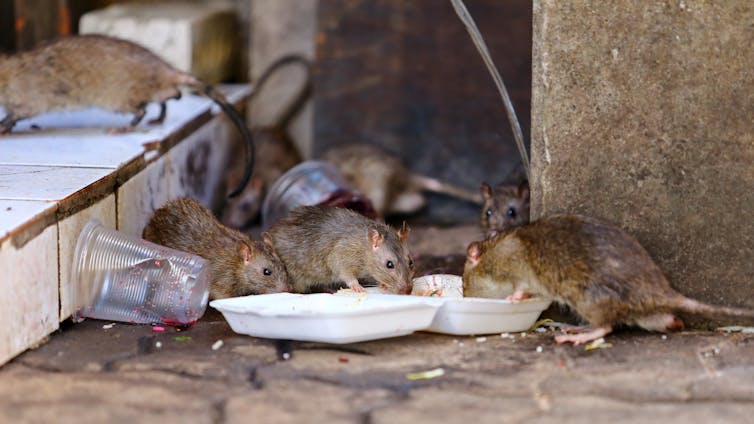
Other animals in the group are valuable sources of information. Rats, for example, learn which kinds of food are safe to eat by smelling it on the breath of other members of their colony. While Indian mynah birds learn about new predators through the distress calls of their companions.
These animals increase their chance of survival by following, copying and learning from each other. Learning from others in this way is what behavioral scientists call “social learning”.
But many other animals prefer to spend their lives alone. Do these animals have to figure these problems out for themselves?
This is what I set out to discover in a recent review of the literature on social learning in solitary animals. It would appear that living alone is no barrier to learning from others. There are dozens of examples of social learning in solitary species of insect, octopus, fish, shark, lizard, snake, turtle and tortoise.
Social lives
This shouldn’t come as a surprise. Solitary animals are not necessarily cut off from social contact. In fact, many live in rich social worlds awash with calls and scent cues from other animals – they also come into contact (and sometimes clash) with these animals regularly.
Just as those that live in groups acquire valuable knowledge from others, solitary animals can too.
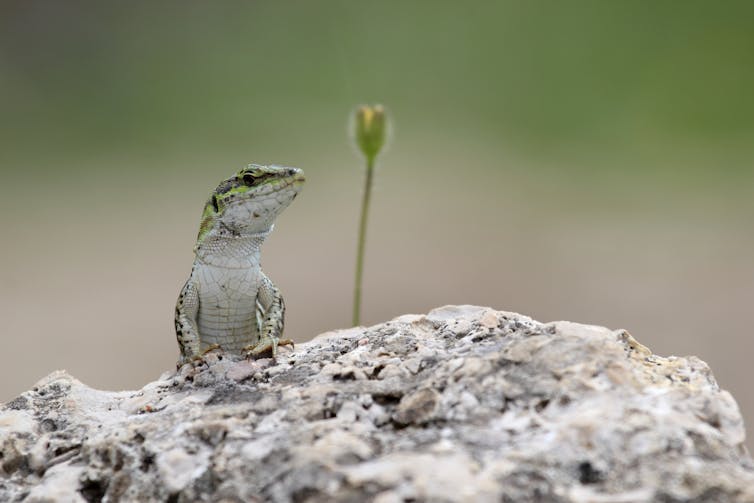
One study found that wood crickets can learn to be wary by observing the behavior of other crickets that had recently encountered predatory spiders. Other research revealed that South America’s red-footed tortoises can watch other tortoises to learn how to navigate around a barrier. And Italian wall lizards, a species native to southern and central Europe, copied trained lizards to learn which lid to remove to access a food reward.
The Italian wall lizard. MattiaATH/Shutterstock
Social learning can explain how behavior can spread through animal populations. Some species of grazing mammal, for example, share migration routes between critical feeding and breeding habitats. Understanding how social learning arises and develops can thus inform conservation and species management.
Social learning is also a key part of human culture. Understanding how animals share knowledge offers insights into how our own minds develop. But we still know comparatively little about the role natural selection and the early exposure to social cues play in shaping social learning.
Some animals learn better than others
Sharing knowledge is an important mechanism across the natural world, and many solitary animals are capable of it. But which animals pick up social cues the best? Most group-living animals will be exposed to social information more frequently than solitary animals, so may become more attuned to it either through natural selection or through experience.
Some scientists argue that social learning is the same as other kinds of learning at the cognitive level, except that the source of information happens to be another animal rather than some inanimate feature of the environment. However, it is possible that the sense organs and brain regions that are involved in gathering and processing social information may have been selected over many generations to be more attentive to social cues.
Research employs statistical techniques to look for evidence of natural selection among groups of related animals to see if factors such as living in groups are linked with other adaptations, like those related to cognition. One study that was conducted on primates showed that a measure of social learning was related to the size and complexity of their social groups.
Similar approaches could be applied to family trees that contain both group-living and solitary animal species (like behaviorally diverse groups of fish and insects) in the future. This would allow scientists to see if grouping not only affects how well an animal learns socially, but also the sensory and neural hardware behind it.
Early exposure
The amount of social exposure that an animal receives early on in its life may also affect how well it learns from others later on. The rats that learn about new foods from their den-mates do so by associating the smell of recently eaten foods with compounds that the rats breathe out. They acquire this skill as pups and learn to pair food odour with the smell of their mother’s breath as she grooms them.
Remarkably, research finds that rats with inattentive mothers who groom them less as pups do not pick up the same ability to learn about foods from the breath of others.
By contrast, little is known about the importance of social exposure in young solitary animals.
Yet, while restricting social exposure might be unethical for animals that live in groups, this will not be the case for solitary species where limited social interaction is the norm. In experiments that manipulate early exposure to social cues, these solitary species can widen scientific understanding of how animals pick up the associations that lead to social learning.
PHILADELPHIA — As a primary care physician at Jefferson Health, Greg Jaffe helps his patients navigate diabetes and high blood pressure, flu shots and annual checkups — standard fare for a family medicine practitioner. But for many of his patients, he also oversees a type of care that most of his colleagues in primary care won't take on: addiction treatment. Jaffe had no intention of treating patients for addiction when he became a doctor. But in 2021, he began running a small, once-a-week clinic at Jefferson that prescribed patients buprenorphine, an opioid-based addiction medication. After p...
Researchers In Italy were curious if sadism and grandiose narcissism may be related and what traits may facilitate this relationship. Their findings indicate that malicious envy and narcissistic rivalry are the characteristics that connect sadism to grandiose narcissism. The research has been published in Personality and Individual Differences. Sadism refers to the tendency to derive pleasure from the suffering of others. It has been identified as a component of the “dark tetrad” along with Machiavellianism, psychopathy, and narcissism. The tendency to take control of others is a key characterist...
Young adulthood is often associated with exciting developments in intimacy and relationships, but research showing increased sexual dysfunction among the 18-25 age group has emerged in recent years. A study published in The Journal of Sex Research explores how sexual dysfunction in young adulthood may be related to anxious attachment, avoidant attachment, and childhood victimization. Sexual difficulties are often thought of as something that occurs in old age, but current research shows over 75% of young adults report experiencing some form of sexual dysfunction. Some forms of dysfunction have...
The United Arab Emirates' Hope space probe on Monday revealed Mars' smaller moon Deimos in unprecedented detail, shedding new light on the origin of the mysterious lumpy satellite.
The probe, the Arab world's first interplanetary mission, has been orbiting Mars for two years, regularly flying past Deimos and its big sibling moon Phobos.
It came within 110 kilometres (68 miles) from Deimos, a rocky object the shape of a bean just 12 kilometres wide, according to the Emirates Mars Mission (EMM).
The probe -- named "Al-Amal", Arabic for "Hope" -- sent back to Earth the most precise images and observations of the moon ever captured, using instruments that measure the infrared and ultraviolet wavelengths.
It also observed for the first time the far side of the moon, revealing regions whose compositions have never been studied, the mission said.
The probe could also prompt new debate over how exactly the strange moons ended up in the Martian orbit.
"We are unsure of the origins of both Phobos and Deimos," the EMM's science lead Hessa Al Matroushi said in a statement.
One leading theory is that the two moons were once asteroids passing by when they were unexpectedly captured into the orbit of Mars.
But Al Matroushi said that "our close observations of Deimos so far point to a planetary origin".
Christopher Edwards, a scientist in charge of one of the probe's instruments, said that "both of these bodies have infrared properties more akin to a basaltic Mars" than an asteroid.
That could mean the rocky bodies were once part of Mars, and were potentially shot out into orbit by a massive impact.
Mission extended
UAE Prime Minister Sheikh Mohammed bin Rashid Al Maktoum tweeted that the probe "refutes" the theory that the moon was once an asteroid.
Instead it showed that the moon was once part of Mars then "separated from it millions of years ago," similar to how our own Moon is thought to have once been part of Earth, he said.
The UAE Space Agency announced that it was extending the mission for another year, during which Hope will continue to fly past Deimos and collect more data.
The probe launched in 2020 and arrived in Mars' orbit in 2021.
It has an unparalleled view of Deimos because it orbits at a greater distance than other Mars missions, aiming to get a comprehensive image of the red planet's weather dynamics.
That makes it much closer to the wide orbit of Deimos, which spins some 23,000 kilometers from Mars.
The UAE is also planning to land an uncrewed rover on the Moon next year.
Life existed without human beings for more than 99.9% of Earth’s history. Yet we often ignore the achievements of species that preceded us by billions of years.
I explore the concept of nonhuman civilizations in my new book, Biocivilizations, which retells the story of life acknowledging the contributions of other species. Bacteria, plants, fungi, insects, birds, whales and other species demonstrate language, engineering, science, medicine, agriculture and more. These are all elements of civilization that we associate with humans.
Speaking nature’s language
Whales communicate with each other using a series of sound clicks called codas. Sperm whales seem to announce themselves using a unique click sequence, or name. By pooling their acoustic datasets, an international team of 27 researchers studying Pacific Ocean sperm whales identified seven sperm whale vocal clans, each with their own dialect and identity codas. Now, scientists from around the world are collaborating as part of the Cetacean Translation Initiative to use powerful AI algorithms and decode the language of sperm whales.
Plants communicate with each other using hormones such as jasmonate, which redirects resources from growth to repairing damage. They release hormones into the air when in distress, such as when insects attack them. Neighboring plants then pick up on the signal and respond by preparing for attacks – for example, by releasing toxins to ward off the insects.
Meanwhile, bacteria have been “talking” to each other for billions of years by exchanging chemical messages via hormone-like molecules called autoinducers. They use these chemicals to synchronize action. For example, bacteria may only invade a cell if enough neighbouring bacteria are releasing autoinducers. This is called quorum sensing.
Bacteria also communicate with the cells of other species, including ours. Recent research showed certain chemicals that bacteria release influence the development of our brains, allowing the brain tissue to mature properly. Studies into premature babies have shown the relationship between gut bacteria and human cells are crucial for cognitive development.
Skilled engineers
Our planet also reverberates with construction noise. It is a permanent building site where bacteria, insects and humans alike create cities.
The engineering skills of honeybees are so sophisticated that a honeybee expert and a group of engineers used an algorithm inspired by honeybees to resolve internet traffic problems. They copied the process bees use to distribute foragers searching a floral field for nectar.
Bacteria are skilled engineers too. In one study, scientists used powerful microscopes and time-lapse imaging to record the city-building skills of a bacterial species that lives in human mouths, Streptococcus mutans. Bacteria produce their own building materials when they settle at a new site, normally a hard surface. These materials include carbohydrates, proteins and even DNA secreted by their tiny bodies. The building material is carefully distributed so that the village structure acquires a three-dimensional shape.
Some of these bacteria-settlers remain stationary and meld themselves to the surface that the village is built on, enhancing its structural stability. Bacteria can also move within villages and divide their bodies to increase the population. Villages grow, join together and form bacterial cities and megacities – much like modern London is a collection of former villages and towns.
Arguably, bacteria were also the first practitioners of medicine. Viruses invade bacteria and hijack their cellular machinery to make copies of themselves – a process which kills the bacteria. So, three billion years ago, bacteria became “epidemiologists” to defend themselves.
Bacterial bodies produce enzymes that attack and kill virus DNA, a technique known as Crspr. It can target a section of DNA, bind to it and turn the gene off. Scientists only recently discovered this system, and in future hope to use it for cancer treatments and to cure genetic conditions. It has already been used to make COVID-19 detection tests.
Some people think of ants as tiny insects barely worth thinking about. But ants from the species Megaponera analis, found in sub-Saharan Africa, are talented surgeons. These warrior ants specialize in raiding termite nests. The larger ants, majors, break termites’ defensive mud barriers, then their smaller colleagues, minors, rush through these openings to pull termites out of the nest.
After the raids, the ants form orderly columns again and majors carry dead termites back to the ant nest. But entomologists noticed that some majors also transport injured ants, while others treat their comrades’ wounds with antimicrobial chemicals secreted by fellow ants’ glands.
The ants also use their powerful mandibles to remove termites that are clinging to warrior ant bodies by their teeth, and to stitch wounds. These ant surgeons were so effective that patients were spotted on the battlefield the next day.
Successful farmers
Farming in the way humans know it is planting, protecting and harvesting crops for nourishment. Research shows that the soil fungus Morchella crassipes also does this to the bacteria Pseudomonas putida for its carbon, which the soil fungus needs to grow.
In turn, ambrosia beetles transport fungus spores in a pouch-like structure in their gut to tunnels bored into trees. Ambrosia fungi produce asexual fruit only in the presence of the beetles. This fruit is their sole food source, and the beetles even remove “weed” fungus.
So, these tiny beings were all farmers millions of years before humans had even thought of it.
Human civilization is the most recent addition to an ever-changing landscape of ancient societies. Learning to value nonhuman civilizations may help reveal the ancient wisdom of species that preceded us. In so doing, this newly discovered wisdom could help us resolve the environmental crisis caused by our civilization.
Over the past year or so, generative AI models such as ChatGPT and DALL-E have made it possible to produce vast quantities of apparently human-like, high-quality creative content from a simple series of prompts.
Though highly capable – far outperforming humans in big-data pattern recognition tasks in particular – current AI systems are not intelligent in the same way we are. AI systems aren’t structured like our brains and don’t learn the same way.
AI systems also use vast amounts of energy and resources for training (compared to our three-or-so meals a day). Their ability to adapt and function in dynamic, hard-to-predict and noisy environments is poor in comparison to ours, and they lack human-like memory capabilities.
Our research explores non-biological systems that are more like human brains. In a new study published in Science Advances, we found self-organising networks of tiny silver wires appear to learn and remember in much the same way as the thinking hardware in our heads.
Imitating the brain
Our work is part of a field of research called neuromorphics, which aims to replicate the structure and functionality of biological neurons and synapses in non-biological systems.
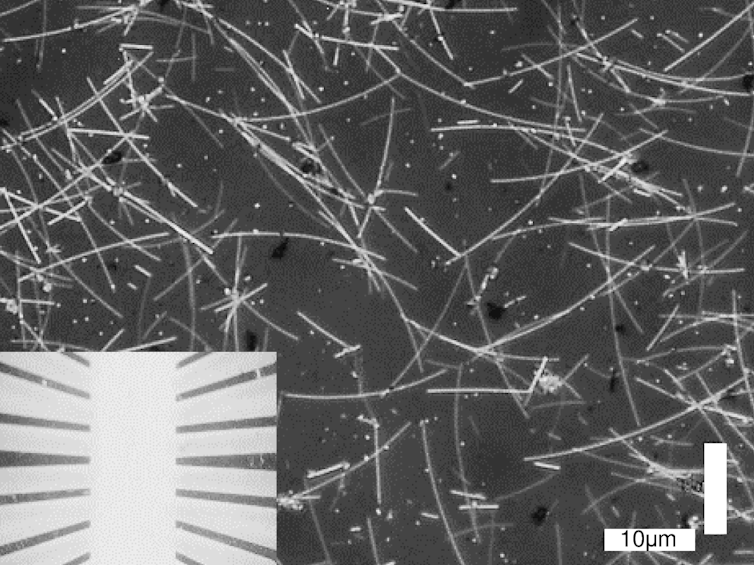
Our research focuses on a system that uses a network of “nanowires” to mimic the neurons and synapses in the brain. These nanowires are tiny wires about one thousandth the width of a human hair. They are made of a highly conductive metal, such as silver, typically coated in an insulating material like plastic.
Left: microscope image of silver nanowire networks, from our Science Advances paper. Right: strengthened and pruned (weakened) pathways in nanowire networks.
Nanowires self-assemble to form a network structure similar to a biological neural network. Like neurons, which have an insulating membrane, each metal nanowire is coated with a thin insulating layer.
When we stimulate nanowires with electrical signals, ions migrate across the insulating layer and into a neighbouring nanowire (much like neurotransmitters across synapses). As a result, we observe synapse-like electrical signalling in nanowire networks.
Learning and memory
Our new work uses this nanowire system to explore the question of human-like intelligence. Central to our investigation are two features indicative of high-order cognitive function: learning and memory.
Our study demonstrates we can selectively strengthen (and weaken) synaptic pathways in nanowire networks. This is similar to “supervised learning” in the brain. In this process, the output of synapses is compared to a desired result. Then the synapses are strengthened (if their output is close to the desired result) or pruned (if their output is not close to the desired result).
We expanded on this result by showing we could increase the amount of strengthening by “rewarding” or “punishing” the network. This process is inspired by “reinforcement learning” in the brain.
We also implemented a version of a test called the “n-back task” which is used to measure working memory in humans. It involves presenting a series of stimuli and comparing each new entry with one that occurred some number of steps (n) ago.
The network “remembered” previous signals for at least seven steps. Curiously, seven is often regarded as the average number of items humans can keep in working memory at one time.
When we used reinforcement learning, we saw dramatic improvements in the network’s memory performance.
In our nanowire networks, we found the formation of synaptic pathways depends on how those synapses have been activated in the past. This is also the case for synapses in the brain, where neuroscientists call it “metaplasticity”.
Synthetic intelligence
Human intelligence is still likely a long way from being replicated.
Nonetheless, our research on neuromorphic nanowire networks shows it is possible to implement features essential for intelligence – such as learning and memory – in non-biological, physical hardware.
Nanowire networks are different from the artificial neural networks used in AI. Still, they may lead to so-called “synthetic intelligence”.
Perhaps a neuromorphic nanowire network could one day learn to have conversations that are more human-like than ChatGPT, and remember them.