"Zendaya leaving gates of Central Park," Kashtanova entered into Midjourney, an AI program similar to ChatGPT that produces dazzling illustrations from written prompts. "Sci-fi scene future empty New York...."
From these inputs and hundreds more emerged "Zarya of the Dawn," an 18-page story about a character resembling the actress Zendaya who roams a deserted Manhattan hundreds of years in the future. Kashtanova received a copyright in September, and declared on social media that it meant artists were entitled to legal protection for their AI art projects.
It didn't last long. In February, the U.S. Copyright Office suddenly reversed itself, and Kashtanova became the first person in the country to be stripped of legal protection for AI art. The images in "Zarya," the office said, were “not the product of human authorship.” The office allowed Kashtanova to keep a copyright in the arrangement and storyline.
Now, with the help of a high-powered legal team, the artist is testing the limits of the law once again. For a new book, Kashtanova has turned to a different AI program, Stable Diffusion, which lets users scan in their own drawings and refine them with text prompts. The artist believes that starting with original artwork will provide enough of a "human" element to sway the authorities.
"It would be very strange if it's not copyrightable," said the 37-year-old artist of the latest work, an autobiographical comic.
A spokesperson for the copyright office declined to comment. Midjourney also declined to comment, and Stability AI did not respond to requests for comment.
SMASHING RECORDS
At a time when new AI programs like ChatGPT, Midjourney and Stable Diffusion seem poised to transform human expression as they smash records for user growth, the legal system still hasn't figured out who owns the output -- the users, the owners of the programs, or maybe no one at all.
Billions of dollars could hinge on the answer, legal experts said.
If users and owners of the new AI systems could get copyrights, they would stand to reap huge benefits, said Ryan Merkley, the former chief of Creative Commons, a U.S. organization that issues licenses to allow creators to share their work.
For example, companies could use AI to produce and own the rights to vast quantities of low-cost graphics, music, video and text for advertising, branding and entertainment. "Copyright governing bodies are going to be under enormous pressure to permit copyrights to be awarded to computer-generated works," Merkley said.
In the U.S. and many other countries, anyone who engages in creative expression usually has immediate legal rights to it. A copyright registration creates a public record of the work and allows the owner to go to court to enforce their rights.
Courts including the U.S. Supreme Court have long held that an author has to be a human being. In rejecting legal protection for the "Zarya" images, the U.S. Copyright Office cited rulings denying legal protection for a selfie snapped by a curious monkey named Naruto and for a song that the copyright applicant said had been composed by "the Holy Spirit."
One U.S. computer scientist, Stephen Thaler of Missouri, has maintained that his AI programs are sentient and should be legally recognized as the creators of artwork and inventions that they generated. He has sued the U.S. Copyright Office, petitioned the U.S. Supreme Court and has a patent case before the U.K. Supreme Court.
Meanwhile, many artists and companies that own creative content fiercely oppose granting copyrights to AI owners or users. They argue that because the new algorithms work by training themselves on vast quantities of material on the open web, some of which is copyrighted, the AI systems are gobbling up legally protected material without permission.
Stock photo provider Getty Images, a group of visual artists and owners of computer code have separately filed lawsuits against owners of AI programs including Midjourney, Stability AI and ChatGPT developer OpenAI for copyright infringement, which the companies deny. Getty and OpenAI declined to comment.
Sarah Andersen, one of the artists, said granting copyrights to AI works "would legitimize theft."
'HARD QUESTIONS'
Kashtanova is being represented for free by Morrison Foerster and its veteran copyright lawyer Joe Gratz, who is also defending OpenAI in a proposed class action brought on behalf of owners of copyrighted computer code. The firm took on Kashtanova's case after an associate at the firm, Heather Whitney, spotted a LinkedIn post by the artist seeking legal help with a new application after the "Zarya" copyright was rejected.
"These are hard questions with significant consequences for all of us," Gratz said.
The Copyright Office said it reviewed Kashtanova's "Zarya" decision after discovering the artist had posted on Instagram that the images were created using AI, which it said was not clear in the original September application. On March 16, it issued public guidance instructing applicants to clearly disclose if their work was created with the help of AI.
The guidance said the most popular AI systems likely do not create copyrightable work, and "what matters is the extent to which the human had creative control."
'COMPLETELY BLOWN'
Kashtanova, who identifies as nonbinary and uses "they/them" pronouns, discovered Midjourney in August after the pandemic largely shut down their work as a photographer at yoga retreats and extreme-sports events.
"My mind was completely blown," the artist said. Now, as AI technology develops at lightning speed, Kashtanova has turned to newer tools that allow users to input original work and give more specific commands to control the output.
To test how much human control will satisfy the copyright office, Kashtanova is planning to submit a series of copyright applications for individual images chosen from the new autobiographical comic, each one made with a different AI program, setting or method.
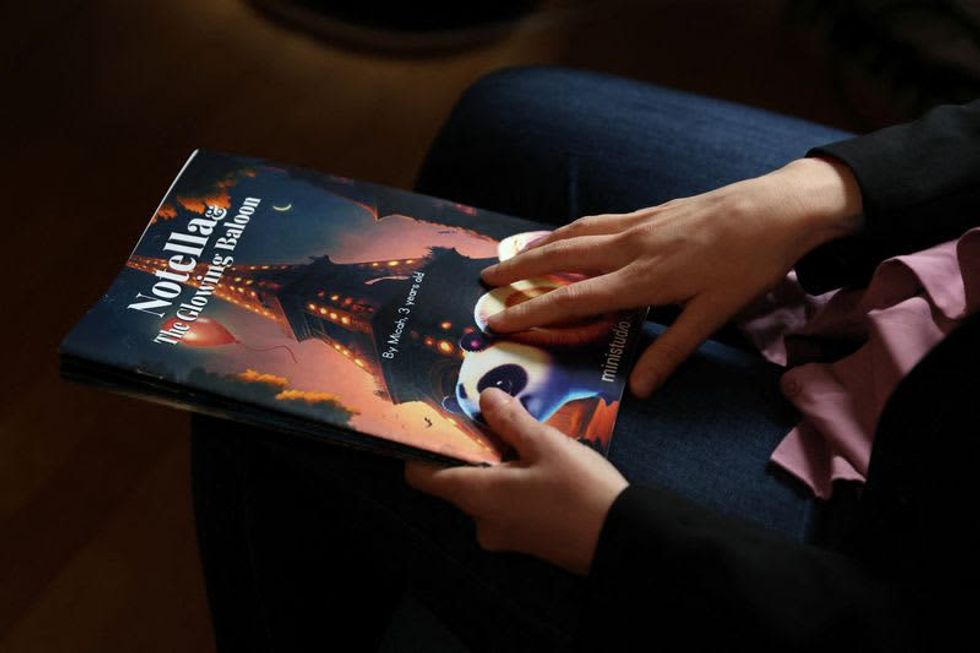
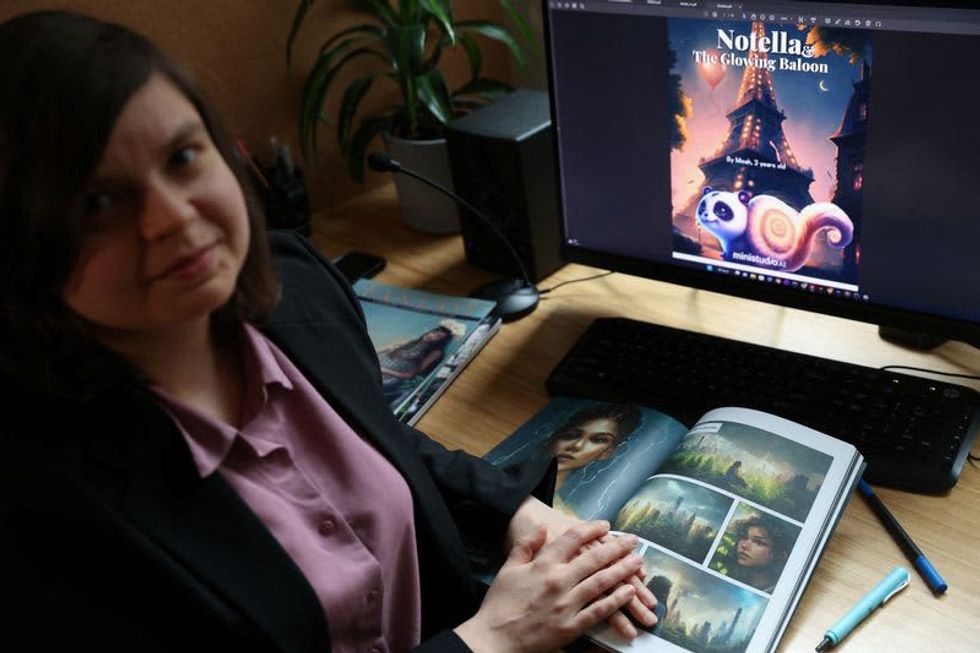
The artist, who now works at a start-up that uses AI to turn children's drawings into comic books, created the first such image a few weeks ago, titled "Rose Enigma."
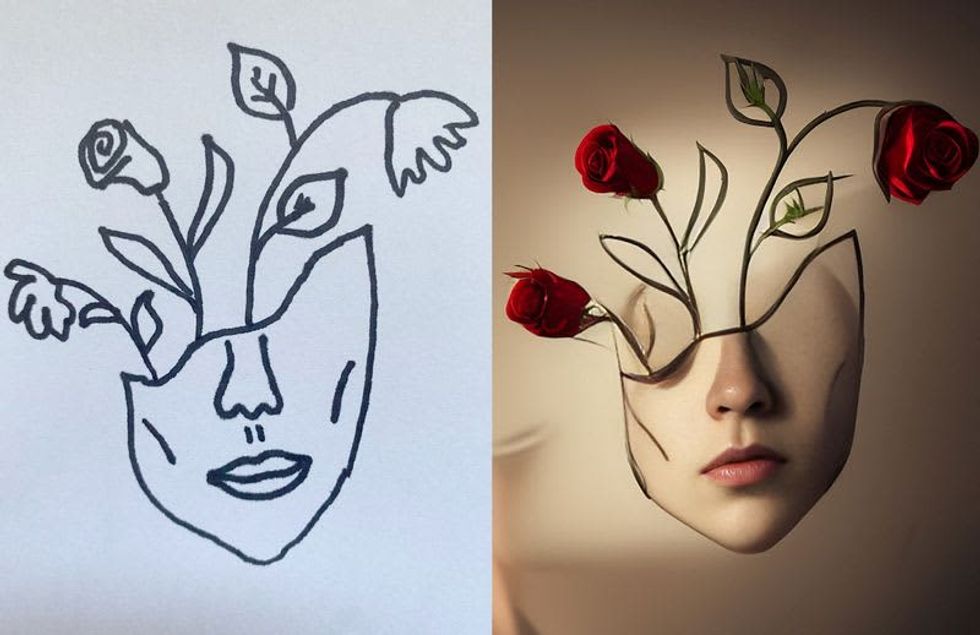
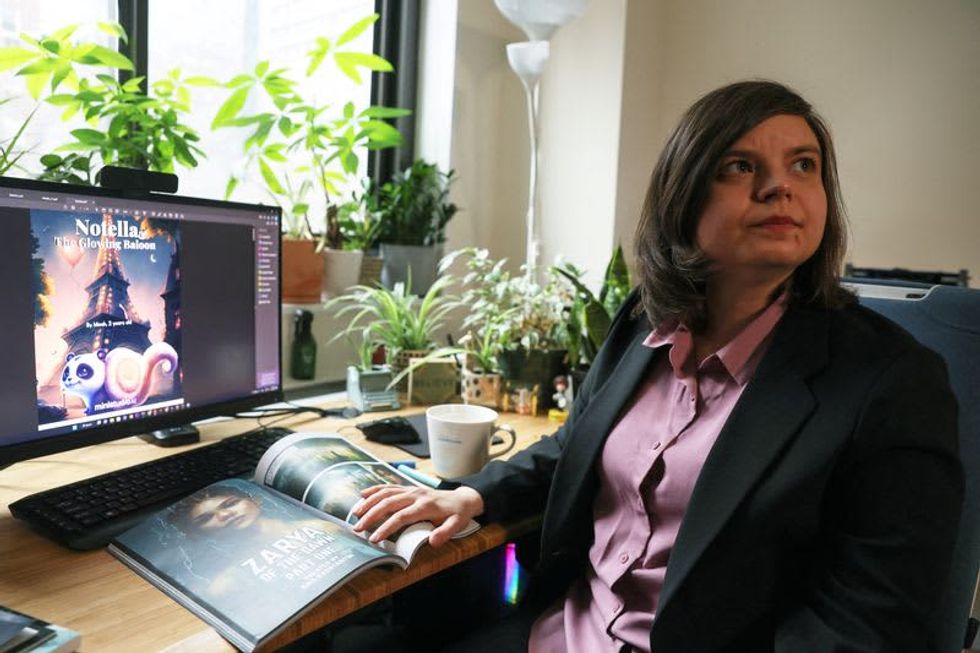
Sitting at a computer in their one-bedroom Manhattan apartment, Kashtanova demonstrated their latest technique: they pulled up on the screen a simple pen-and-paper sketch they had scanned into Stable Diffusion, and began refining it by adjusting settings and using text prompts such as "young cyborg woman" and "flowers coming out of her head."
The result was an otherworldly image, the lower half of a woman's face with long-stemmed roses replacing the upper part of her head. Kashtanova submitted it for copyright protection on March 21.
The image will also appear in Kashtanova's new book. It's title: "For My A.I. Community."
(Reporting By Tom Hals and Blake Brittain; editing by Noeleen Walder, Amy Stevens and Claudia Parsons)