“Natural gas is foundational to America’s clean energy future,” she started, before proceeding to tell the audience about the nation’s 2.6 million miles of pipelines that deliver gas to 187 million Americans and 5.5 million businesses. “These customers are depending on our energy every day,” she said. “So as we look to the clean energy future, the most practical, realistic way to achieve a sustainable future where energy is clean, safe, reliable, resilient, and affordable, is to ensure that includes natural gas.”
The statement, with its head-scratching, circular logic, may sound aimed at an audience of oil and gas industry executives, or perhaps an earnings call. But the seats were filled with utility commissioners — the state-level public servants who regulate gas, electric, water, and telecommunications companies. The panel was the centerpiece event for the annual meeting of the National Association of Regulatory Utility Commissioners, or NARUC. And Greene was hardly the only industry representative there to lecture on the bright future for natural gas.
The conference provided a glimpse into the collegial relationship utility regulators have with the companies they are charged with regulating on behalf of the public, and the way the natural gas industry is working that relationship to shape how the country moves toward its climate goals. Public utility commissioners hold significant sway over the storied clean energy future. They help decide what energy infrastructure gets built, and when. If a utility wants to raise rates to invest in new power plants, transmission lines, or pipelines, it’s up to these powerful panels to determine whether such multimillion-dollar, long-lived projects are necessary, and how much a company can profit off of them. That means commissioners are not only shaping the energy transition, but determining what it means for utilities and their bottom lines.
At the time of the conference, the industry was scrambling to adapt to new circumstances. President Biden had signed the Inflation Reduction Act into law in August, making hundreds of billions of dollars in subsidies available for clean energy over the coming decade and threatening some utility business models that rely on fossil fuels. Electric companies were staring down the prospect of having to reevaluate the cost assumptions underpinning their capital spending plans, which in many cases include building new natural gas power plants. Natural gas companies faced an existential crisis. The growing push to electrify buildings, and new federal and state incentives that support the shift, could lead to greatly reduced demand for their product. In 2022, U.S. shipments of electric heating systems called heat pumps outnumbered those of gas furnaces for the first time.
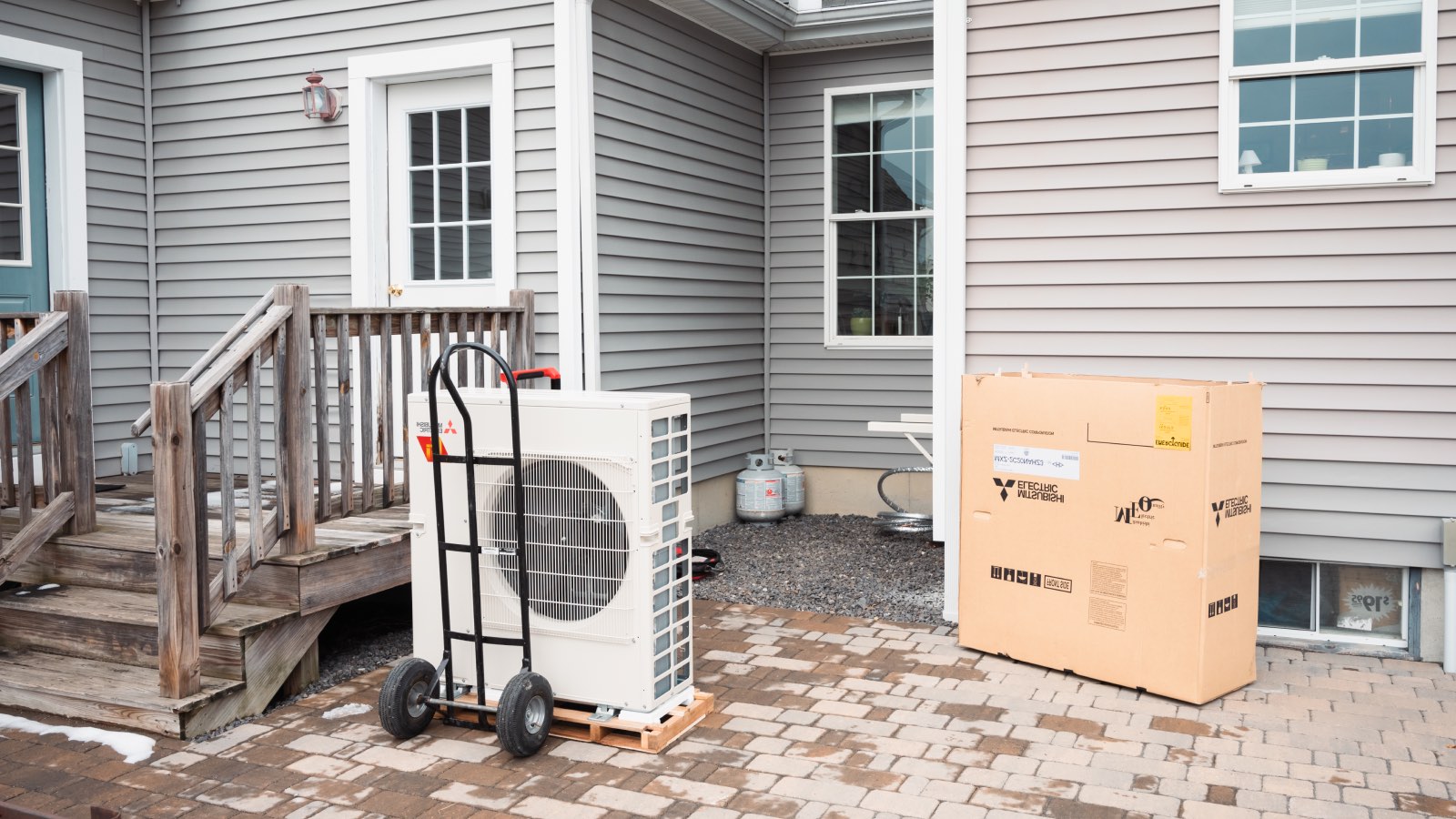 In 2022, U.S. shipments of electric heating systems called heat pumps outnumbered those of gas furnaces for the first time. Tristan Spinski for The Washington Post via Getty Images
Some commissions that once approved natural gas projects without hesitation were now bringing more scrutiny to proposals following new state policies requiring rapid reductions in greenhouse gas emissions. A handful had even launched investigations into the future of natural gas, tribunals where gas companies were being put on the stand to show how they could evolve to comply with state climate goals. Plus, soaring natural gas prices related to Russia’s invasion of Ukraine were highlighting the risks of continuing to rely on the fuel.
All of that was surely on utility executives’ minds when they sent a small army of missionaries to the NARUC meeting. The annual conference is hosted by and for utility commissioners, and the sessions in November covered a range of topics, from how to make sure funding from the Inflation Reduction Act benefits low-income customers to planning for the expansion of electric vehicle charging and clean energy storage systems. Those were in addition to at least half a dozen sessions about natural gas. On the conference attendee list, commissioners were outnumbered by people from the gas and electric companies they regulate.
The lobbying effort began almost immediately upon arrival; the conference Wi-Fi password was “committed2clean,” a marketing slogan used by the Edison Electric Institute, the largest trade organization for electric utilities. (Regina Davis, the assistant executive director for NARUC, said the group had the opportunity to set the password as a top sponsor of the conference, and that the organization “did not hear of any complaints concerning the password.”) The American Gas Association, Edison’s counterpart for gas utilities, also sponsored the conference, though they shared the bill with a number of other trade groups that represent renewable energy and nuclear companies.
Industry executives sat on panels and threw parties. The four-day event’s theme was “Connecting the Dots: Innovative/Disruptive Technology and Regulation,” and company representatives worked to convince regulators that they are innovating and disrupting — but that ultimately, the energy systems of the future should look a lot like the energy systems of today.
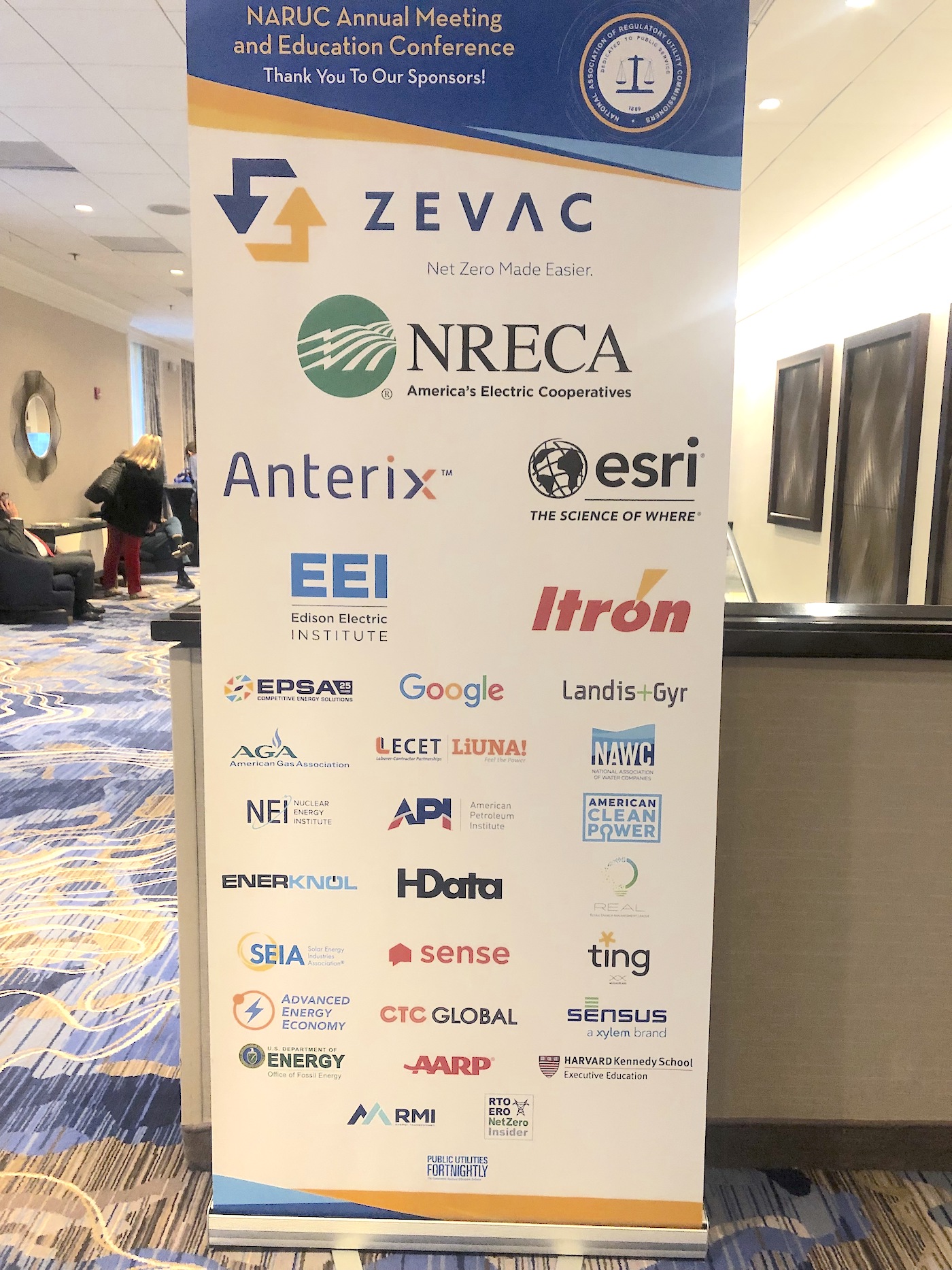 The Edison Electric Institute and the American Gas Association, the largest trade organizations for electric utilities and gas utilities, respectively, were among the sponsors of the conference. Emily Pontecorvo / Grist
“One hundred and eighty seven million Americans use natural gas in their homes today, that’s more people than voted in Tuesday’s election,” Karen Harbert, the executive director of the American Gas Association, said during a discussion about investor expectations and natural gas. “We’re growing one customer every minute of every day.”
Industry representatives like Harbert often linked the idea that natural gas is essential to a clean energy future with another, seemingly conflicting point — that companies plan to replace natural gas with lower-carbon fuels down the line. The industry is investing in reducing methane emissions from leaking infrastructure in the near term, Harbert said, but “also innovating and delivering new technologies and new fuels through our existing 2.7 million miles of pipeline.”
Harbert and other speakers described using those pipelines to deliver increasing amounts of “renewable natural gas,” a label for methane diverted from landfills and animal feedlots, as well as hydrogen, a gaseous fuel that does not produce CO2 when burned. But she noted that such efforts to cut emissions are “not cheap” and told commissioners utilities “need to be able to get rate recovery on some of the innovation that we are investing in.” In other words, customers should help pay for this experimentation.
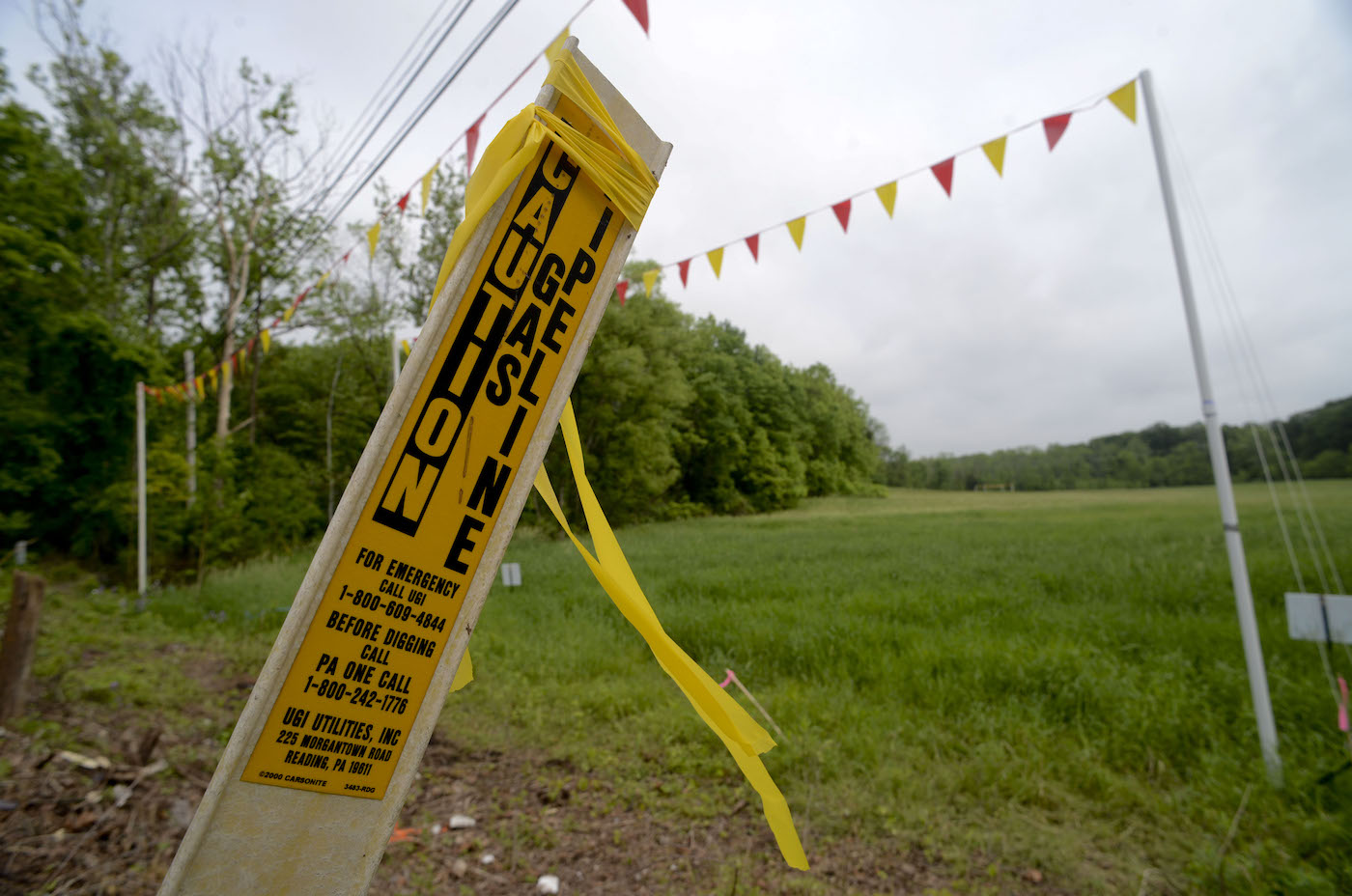
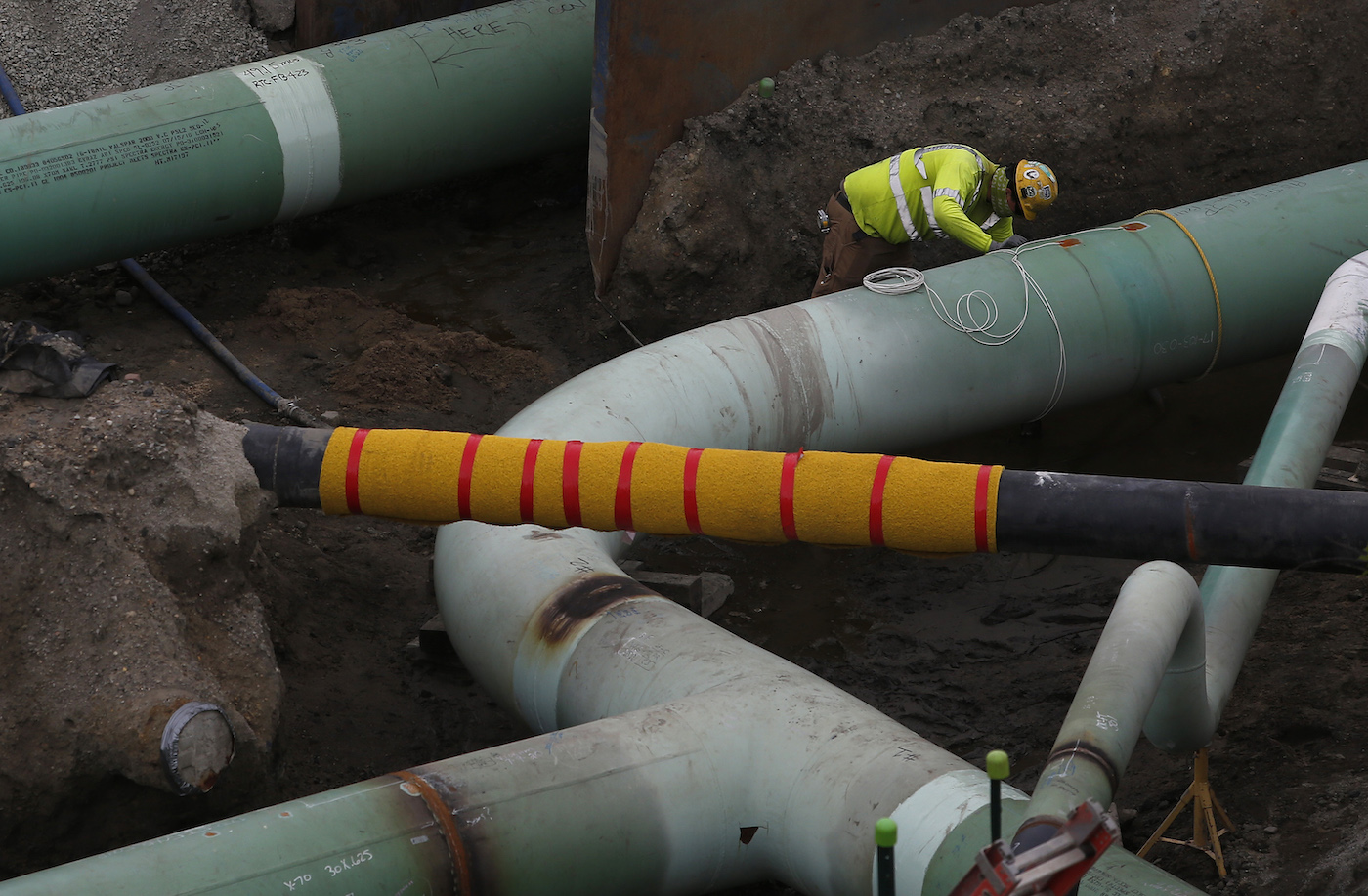
The gas industry claims to be “innovating and delivering new technologies and new fuels through our existing 2.7 million miles of pipeline.”
Left: MediaNews Group/Reading Eagle via Getty Images Right: Jessica Rinaldi/The Boston Globe via Getty Images
During most of the sessions focused on natural gas, none of the panelists chimed in to acknowledge that continuing to burn natural gas will worsen climate change, whether or not methane leaks are reduced. Left unsaid were the reasons many environmental justice and clean energy groups remain skeptical of plans to pursue renewable natural gas and hydrogen, including concerns that they could cost more than other options and perpetuate pollution without meaningfully reducing emissions.
“We respectfully and vehemently disagree with the characterization that our meetings are not open to varied perspectives,” Davis, the NARUC spokesperson, told Grist. “We make a concerted effort to invite diverse perspectives and include representation from consumer/environmental and other constituencies relevant to NARUC’s membership.”
Davis highlighted, among other events, one unique panel that brought critical questions about the future of natural gas to the fore. It featured participants in a series of workshops held in 2021 by the clean energy research nonprofit RMI, which is known for its building electrification advocacy, and National Grid, a gas and electric utility that operates in Massachusetts and New York. They brought together staff from other energy companies and environmental groups — those typically pitted against each other in utility commission proceedings — in an attempt to build trust and find common ground.
The goal was to discuss some of the many potential challenges to cutting emissions from the natural gas system. For example, as homeowners who can afford to switch to electric appliances do so, the shrinking pool of remaining natural gas customers could be left footing the bill for maintaining 2.7 million miles of pipelines, as well as any experiments with lower-carbon fuels that gas companies pump through them.
“There are so many questions and challenges that are unclear, and even controversies and conflicts about what the vision is for the path forward,” Mike Henchen, a principal at RMI, said during his opening remarks about the project. “We wanted to work across that difference in a collaborative, constructive way to see what we have in common and where we can find guiding principles.”
But the panel’s optimistic title, “Teamwork Makes the Dream Work,” did not exactly bear out. Henchen spoke candidly about tensions during the workshops, noting that even words like “transition” had been unexpectedly loaded. He said the participants decided not to examine data together because each interpreted it differently, and it only served to highlight divisions. Ultimately, many points of agreement came down to boilerplate principles like “affordability” and “comprehensive system planning.”
Still, Henchen was proud of the work as a starting place. He contrasted it with the discussions about natural gas that pervaded the conference. “I see words like, ‘natural gas is an unstoppable workhorse,’ and that ‘the industry has reduced its carbon footprints,’” he said. “These kinds of talking points, I feel like we need to get past them.” He looked out at the commissioners in the audience and asked for their help. “This transition is underway, the path is not yet written, and I look forward to your leadership in helping us move it forward.”
But while commissioners will undoubtedly be key players in this transition, another session — a commissioner-led discussion about soaring winter energy costs for consumers — indicated that many of these officials don’t exactly see themselves as being in a position of power.
The conversation began with a bit of recent history from Eric Blank, the chair of the Colorado Public Service Commission. First, he said, the price of natural gas shot up when the pandemic began to wind down, driving up gas and electricity bills. It spiked again after Russia invaded Ukraine. And costs incurred during a brutal 2021 ice storm were piling on top of high gas prices, while people in Colorado were also still paying for system upgrades their utilities had made over the last decade.
“People are hurting, and we’re struggling to figure out what to do. I’m looking forward to seeing if anyone has any solutions,” Blank said, letting out a laugh that suggested he didn’t have high expectations.
Utility commissioners generally have a mandate to secure reliable services for residents and businesses at “just and reasonable” rates. What counts as “just and reasonable,” a standard phrase written into many state laws, is often debated. But it was clear the commissioners felt that between inflation and the war, forces out of their control were putting it out of reach.
Few offered Blank solutions. Instead, the session began to resemble group therapy. Abigail Anthony, a commissioner in Rhode Island, said her state had some programs to help low-income residents, but most customers there were going to see a 45 percent increase this winter. “Nothing prepares people for seeing that.”
“It’s gonna be an ugly time for ratepayers in Georgia,” said Georgia Public Service commissioner Tim Echols, who worried aloud about his reelection in 2023. “We just approved another six natural gas plants. We haven’t hedged as much as you guys have,” he said. “I wish we had.”
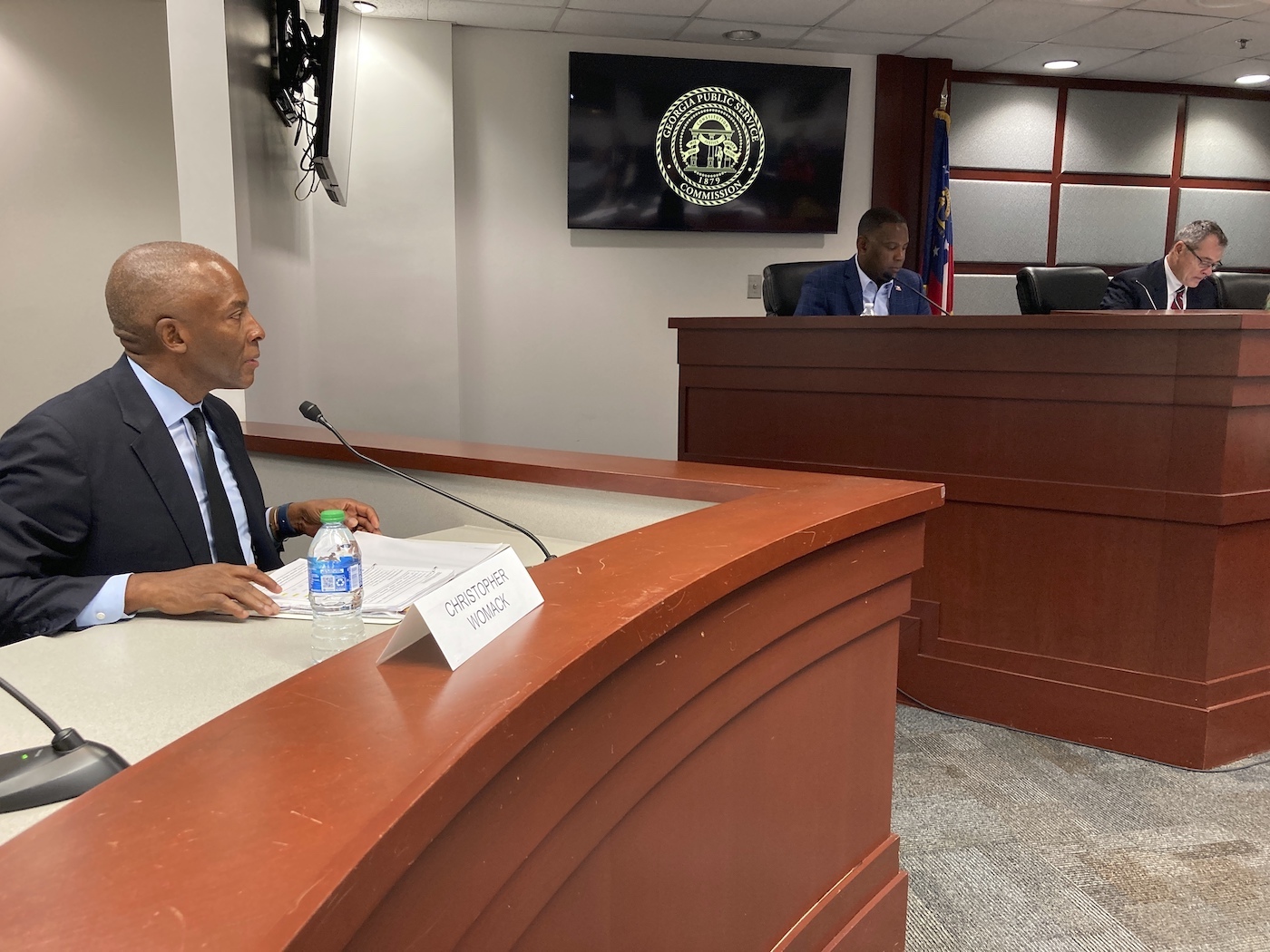 If a utility wants to raise rates to invest in new infrastructure, it’s up to commissioners to determine how much it can profit. Here, Georgia Power CEO Chris Womack answers questions before the Georgia Public Service Commission in 2022. AP Photo/Jeff Amy
Michael Richard, a commissioner in Maryland, nodded toward his state’s renewable energy goals as a potential future lifeline. “That may not have a lot of impact or benefits for this coming year,” he said, “But as we look to increasing electrification and renewable energy in the state, that hopefully will begin to have some positive impact on prices.”
As the commissioners in the room resigned themselves, however reluctantly, to the price volatility of an energy system that’s hooked on natural gas, just outside the room, powerful forces were working to keep it that way. According to David Pomerantz, the executive director of the nonprofit Energy and Policy Institute, these two stories were related.
“I think they’re wrong that there’s not that much they can do,” he told Grist. “It sort of reflects what I would call a failure of imagination in the regulatory community. That’s a hallmark of regulatory capture.”
The Energy and Policy Institute acts as a watchdog of utilities, and has documented the many scandalous ways they try to maintain a grip on regulators and policymakers, such as by offering them bribes or supporting advocacy organizations that appear independent but are backed by corporate interests. But here he was alluding to a more subtle form of influence: the way utilities control the information environment that commissions operate in, creating an atmosphere where it feels like they are the only ones with the answers.
For example, rate cases, in which utilities lay out their capital spending plans and request rate increases, are hard to engage in, let alone follow, without expertise. Many states have a consumer advocate’s office that weighs in; in many cases, nonprofit advocacy groups attend hearings, submit comments, and hire experts to help them analyze utility proposals. But utilities hold tightly onto the system data that underlie those proposals, limiting the ability of commissioners or outside parties to question them or offer credible alternatives. When utilities claim a proposal is good or bad for safety or reliability, it’s hard for anyone else to claim otherwise.
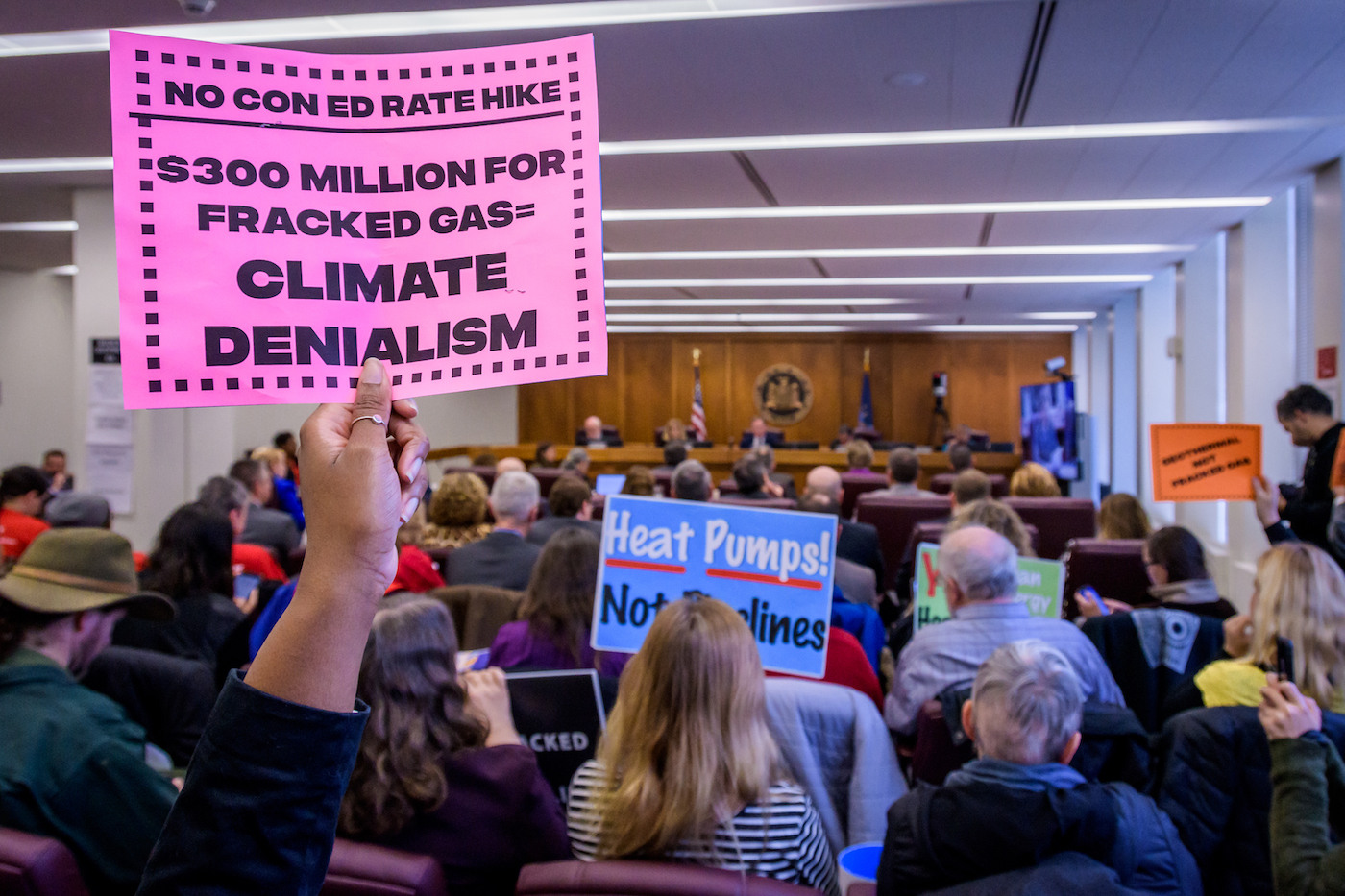 In many cases, nonprofit advocacy groups attend hearings, submit comments, and hire experts to help them analyze utility proposals. But utilities hold tightly onto the system data that underlie those proposals. Erik McGregor/LightRocket via Getty Images
Pomerantz also said too many commissions are reactive, rather than proactive. “They don’t see themselves as setting policy. Their job is to take the cases that are handed to them by the utilities and adjudicate them, right?” he said. “But then the utility’s leading the dance on everything and the commission is just following. It doesn’t have to be that way.”
Davis, the NARUC spokesperson, stressed that commissioners are always looking for ways to increase affordability. “Passing through the commodity cost of natural gas to ratepayers is basically required by U.S. and state constitutional principles and is anything but a symptom of regulatory capture,” she told Grist. “State regulators do not have the luxury or freedom to simply be imaginative at will.”
But Pomerantz offered one possible solution, noting that commissions could require utilities’ shareholders to pay some of the cost of fuel for electricity generation, rather than passing 100 percent of it onto customers, which would not only improve affordability but create an incentive to transition away from fossil fuels. One commission in Hawaii has already implemented a program like this.
To be fair, commissioners occupy an awkward position in the energy transition. They are not technically policymakers, though some commissioners are democratically elected. “In a nutshell, commissions must implement the policies of their states,” said Davis. “Any overreach in their authority will likely result in an action by the courts.” That means they must maintain the appearance of being nonpartisan implementers of the law. But within that implementation lie all kinds of decisions that resemble policy, with major implications for how swiftly, and justly, the transition plays out.
At NARUC’s annual meeting, the utilities were, in one very real sense, leading the dance. The American Gas Association regularly throws a party for the commissioners during the conference. The invitation for the “Big Easy Bash” stated, in three places, that the event was not sponsored by NARUC, nor was it “part of the 2022 NARUC Annual Meeting and Education Conference agenda” — though it did advise attendees to bring their NARUC meeting badge to gain entry.
The party was held at the House of Blues, a concert venue around the corner from the conference building. Bartenders passed out free drinks while a cover band roused the crowd with decade-hopping hits like “September” by Earth, Wind, and Fire, and “Ride Wit Me” by Nelly. As everyone on the dance floor threw their hands in the air shouting, “Hey, must be the money!” TV screens around the venue cycled through an American Gas Association presentation. The slides contained statements like, “Somewhere in the U.S. a home or business is signing up for natural gas service at this moment,” and “America’s natural gas utilities are committed to reducing greenhouse gas emissions through smart innovation” under headings like “Natural Gas is Essential for Improving our Environment.”
Once upon a time, there may have been a stronger case for the deference commissions show utilities, said Pomerantz. A decade or two ago, the utilities had technical tools and expertise that no one else did. That’s no longer the case.
“Utilities might have a monopoly on the distribution grid, but they don’t have a monopoly on ideas and information,” he said. “So it’s great for them to have a healthy relationship with regulators, but regulators should also have healthy relationships with a host of other parties who also have good ideas, and who frankly aren’t motivated by, you know, profits.”
* Correction: This article originally misstated Kim Greene’s role within Southern Company.
This article originally appeared in Grist at https://grist.org/regulation/how-the-naural-gas-industry-cozies-up-to-public-utility-commissioners/.
Grist is a nonprofit, independent media organization dedicated to telling stories of climate solutions and a just future. Learn more at Grist.org.