New York City announced an astounding spike in COVID-19 cases, putting them over 103,000 cases in the city and over 7,000 deaths, said the New York Post.
New York had plateaued last week and officials were hoping the spread of the virus had slowed and social-distancing was working. Over the weekend, however, things got worse.
The 4,900+ spike comes as Mayor Bill de Blasio said that they will absolutely not bring classes back in session term.
Meanwhile, Florida's Gov Ran DeSantis is letting parents decide if they want to keep children out of classes. Dr. Anthony Fauci told Florida that it could mean that children would get infected if they re-open.
British Prime Minister Boris Johnson said his personal battle with the coronavirus "could have gone either way" and said there was "no question" doctors saved his life, speaking in a candid video message after leaving hospital Sunday.
The UK leader checked into hospital a week ago and spent three days in intensive care after he was diagnosed with COVID-19 at the end of March, the most high-profile leader to come down with the virus.
Dressed in a suit and tie, Johnson thanked his doctors and vowed to help Britain defeat the virus as the country's death toll topped 10,000 Sunday -- a grim milestone only a handful of countries have passed.
"I hope they won't mind if I mention in particular two nurses who stood by my bedside for 48 hours when things could have gone either way," said Johnson, referring to the state-run National Health Service (NHS) staff who cared for him at London's St Thomas' Hospital.
He said he was discharged after "a week in which the NHS has saved my life, no question", and officials said he would now convalesce at Chequers, the country estate of British prime ministers, on the advice of his medical team.
"The reason in the end my body did start to get enough oxygen was because for every second of the night they were watching and they were thinking and they were caring and making the interventions I needed," he said of the medical staff.
He added that Britain "will defeat this coronavirus and defeat it together" as he implored citizens to maintain a nationwide lockdown imposed three weeks ago.
But the country is now seeing daily death tolls to match those previously seen in Europe's hardest-hit nations Italy and Spain, after recording nearly 1,000 fatalities on Friday and Saturday. There were 737 new deaths reported Sunday.
With 10,612 fatalities, Britain now has the world's fifth highest death toll -- behind the US, Italy, Spain and France -- but the actual figure may be higher as the count does not include those who have died in care centres or at home.
"Today marks a sombre day in the impact of this disease as we join the list of countries who have seen more than 10,000 deaths related to coronavirus," Britain's Health Minister Matt Hancock said.
Britain's tally of confirmed cases has climbed to over 84,000, thought to be only a fraction of the true number of infections as testing has been limited.
- 'Dark times' -
It is unclear how quickly Johnson will be able to return to work, with Foreign Secretary Dominic Raab currently deputising for him.
Johnson's pregnant fiancee Carrie Symonds, who also suffered from coronavirus symptoms in recent weeks, also thanked his "magnificent" health staff.
"I will never, ever be able to repay you and I will never stop thanking you," she said on Twitter, adding she felt "incredibly lucky".
"There were times last week that were very dark indeed. My heart goes out to all those in similar situations, worried sick about their loved ones."
His father Stanley Johnson also praised the medical team.
"I realise now -- I think the whole country realises -- how close he came to a crisis situation," he said.
It remains uncertain when Britain might be able to lift stringent social distancing measures rolled out on March 23.
The lockdown order is set for a formal review next week and is likely to remain in place until at least the end of the month.
Queen Elizabeth II urged Britons to keep staying home, in what is believed to be her first pre-recorded Easter address, released by Buckingham Palace on Saturday evening.
"By keeping apart we keep others safe," the 93-year-old monarch said. "We know that coronavirus will not overcome us."
Her resolute comments came a week after a rare televised address to the nation in which she told people to unite to beat COVID-19.
Meanwhile, the government has been forced to defend its patchy rollout of personal protective equipment (PPE) for medical staff.
"We are making sure we get the equipment to the front line," senior minister Alok Sharma said on Sunday, noting a "squeeze on supply" amid a "huge global demand for PPE".
So far 19 NHS staff have died from COVID-19, Hancock said this weekend, but added that a lack of PPE was not to blame.
A senior doctor pleaded on social media last month with Johnson for better protection against the disease. The doctor since died.
Conservative Washington Post columnist Jennifer Rubin issued a challenge to wealthy business owners and friends of President Donald Trump demanding that people get back to work: You first.
In her Sunday column, Rubin cited Ryan Williams, "the head of the previously well-respected and now crackpotish Claremont Institute," calling on people to join the "resistance" against coronavirus and go back to life as usual.
"President Trump imagines he alone will decide when to reopen the country for business, although he has no constitutional, statutory or practical ability to do so," Rubin explained. "He insists, contrary to the advice of public health officials, that we can get back to work regardless of whether we have the capacity to test millions of Americans."
Friday, Vice President Mike Pence said that there should be "widespread testing" and "therapeutics" for most people who have the disease, the problem is that now free testing is no longer available and most people driving hours to testing sites are being informed they either can't have the test because they don't have symptoms or the test will cost $300 or more.
During an interview with CNN, CDC director Robert Redfield said that they need to understand the spread of the virus better, "strengthen public health infrastructure, prepare hospitals and other medical facilities, and foster a belief among Americans that it’s the right time to do this," Bloomberg News cited.
Meanwhile, "Fox & Friends" weekend host Jedediah Bila revealed that she was diagnosed with COVID-19. It's unclear if she was given hydroxychloroquine, given her network is continuing to hawk it as a miracle drug.
"They do this despite warnings from Anthony Fauci of the National Institute of Allergy and Infectious Diseases that 'there are other studies that show that doesn’t work at all,'" cited Rubin. "If you do want to use it, he cautioned, 'I would want to do it under the auspices of a clinical trial, a well-controlled clinical trial. I have to say there is not definitive evidence that it works. And we are not quite sure yet of the toxicities because you’re using it in a different disease and you’re using it at a much higher dose.'"
Rubin explained that for every one of Trump's "sycophantic rich friends," and "irresponsible and uninformed voice" demanding everything reopen, there are just as many, if not more, respected, rational, experts who are warning against it.
"Let me suggest a simple test for those arguing for a quick return to business as normal absent a robust testing, contact tracing and quarantine program: You go first," Rubin suggested. "Trump should cease requiring everyone who comes into his orbit to submit to a covid-19 test. After all, if it’s not important enough for all of us to have the same protection, he should feel perfectly comfortable re-engaging with those of unknown health status."
As for hydroxychloroquine, if Fox News thinks that it's a miracle drug, they should start clinical trials.
Corporate overlords and people like "Treasury Secretary Steven Mnuchin who push for a May reopening of the economy should be the first on the factory floors (shake every returning worker’s hand), the first to ride public transportation to and from work, and the first to pay social calls at nursing homes," Rubin said.
"Among the COVID-19 deniers, the maniacal capitalists and the Trump campaign cheerleaders, there is far too much eagerness to expose others to dangers that I suspect they would be entirely unwilling to undertake themselves," Rubin closed. "They should abide by a single Golden Rule of public health: Do not advocate for others what you are unwilling to do yourself. Maybe if forced to consider the risk to their own health and lives, they will act with greater care."
President Donald Trump and his army of sycophants in the right-wing media have been asserting that the U.S. economy needs to reopen in early May, and many health experts have been warning that a premature end to social distancing could lead to thousands of preventable deaths. But even when stay-at-home orders are eventually lifted by individuals states, it is entirely possible that some Americans will continue to practice social distancing voluntarily just to be on the safe side — as the coronavirus pandemic might have a long-lasting impact on them psychologically. And Steven Taylor, a psychology professor at the University of British Columbia, is among those who believes that from a mental health standpoint, many people won’t be going back to normal anytime soon.
In an article for the Guardian, Taylor argues that the coronavirus pandemic could leave psychological scars on people all over the world. That trauma, according to Taylor, will be a form of PTSD: post-traumatic stress syndrome.
One need only take a look at figures reported by John Hopkins University in Baltimore to understand why Taylor predicts long-lasting coronavirus anxiety. As of early Friday morning, April 10, Hopkins was reporting that the pandemic had killed more than 97,000 people worldwide — including over 18,200 in Italy, 16,600 in the United States, 15,800 people in Spain and 12,200 in France.
“Based on the hallmarks of previous pandemics,” Taylor explains in The Guardian, “some of my predictions about coronavirus have proved eerily correct. I imagined that we’d see growing anxiety, racism, panic-buying, the proliferation of conspiracy theories, and sporadic instances of looting and theft — but also, altruism and generosity, as people reached out to the physically isolated with offers of help.”
Taylor notes that previous outbreaks, including the SARS epidemic, “suggest that a public health emergency can have lasting effects on the psychology of a population.” But COVID-19 has turned out be much deadlier than SARS, and Taylor points to “ongoing research” he has conducted with fellow psychologist Gordon Asmundson as an indication of how much PTSD the COVID-19 pandemic is likely to inflict in the months or years to come.
“While 75% of respondents seem to be coping well,” Taylor explains, “25% have developed what we’ve called COVID stress syndrome. These people have intense fears about becoming infected; they worry about the social and economic impact of COVID-19. They have coronavirus nightmares and persistently check the internet for news related to COVID-19, which may further heighten their anxieties.”
Taylor adds that research suggests that “10% of people affected by coronavirus — possibly more — will develop psychological disorders during or after this pandemic. And that includes those who haven’t actually been infected by COVID-19.
“It’s likely that even those who aren’t infected with coronavirus could also develop psychological symptoms,” Taylor asserts. “Isolation and confinement, even if only for a few weeks, can cause lasting anxiety. People quarantined for prolonged periods in cramped accommodation, sharing a bedroom with multiple occupants, or trapped at home in an abusive or coercive relationship, may be especially vulnerable to developing PTSD symptoms during and after the outbreak.”
The coronavirus crisis of 2020 has turned out to be the deadliest pandemic since the Spanish flu outbreak of 1918 more than 100 years ago. As deadly as the Spanish flu was, it didn’t bring an end to social gatherings in the United States; that pandemic was followed by the Roaring 1920s and the era of flappers, bootleggers, speakeasies, Al Capone, jazz bands and F. Scott Fitzgerald’s “The Great Gatsby.” The wild jazz parties depicted in various adaptions of “The Great Gatsby” were hardly an example of social distancing.
But technologically, much has changed since then. There was no internet in the late 1910s or the Roaring 1920s.
Taylor observes, “We’re living through the first global pandemic in the digital age, where the internet has made it possible to withdraw from the outside world…. Risk-averse, digitally connected people could continue retreating to the safety of home. As a result of COVID-19, some people will become fastidious germophobes, striving to avoid touching ‘contaminated’ surfaces or shaking hands.”
According to John Hopkins University, more than 1.6 million people have been infected with COVID-19 worldwide. And on Friday morning, April 10, that included 466,299 people in the U.S.
“The future implications of coronavirus are still uncertain,” Taylor notes. “But based on what we know from previous outbreaks, we can predict that this pandemic will have profound psychological effects on the people living through it.”
At several points in the history of our planet, increasing amounts of carbon dioxide in the atmosphere have caused extreme global warming, prompting the majority of species on Earth to die out.
In the past, these events were triggered by a huge volcanic eruption or asteroid impact. Now, Earth is heading for another mass extinction – and human activity is to blame.
I am an Earth and Paleo-climate scientist and have researched the relationships between asteroid impacts, volcanism, climate changes and mass extinctions of species.
My research suggests the current growth rate of carbon dioxide emissions is faster than those which triggered two previous mass extinctions, including the event that wiped out the dinosaurs.
The world’s gaze may be focused on COVID-19 right now. But the risks to nature from human-made global warming – and the imperative to act – remain clear.
The current rate of CO2 emissions is a major event in the recorded history of Earth.
EPA
Past mass extinctions
Many species can adapt to slow, or even moderate, environmental changes. But Earth’s history shows that extreme shifts in the climate can cause many species to become extinct.
For example, about 66 million years ago an asteroid hit Earth. The subsequent smashed rocks and widespread fires released massive amounts of carbon dioxide over about 10,000 years. Global temperatures soared, sea levels rose and oceans became acidic. About 80% of species, including the dinosaurs, were wiped out.
And about 55 million years ago, global temperatures spiked again, over 100,000 years or so. The cause of this event, known as the Paleocene-Eocene Thermal Maximum, is not entirely clear. One theory, known as the “methane burp” hypothesis, posits that a massive volcanic eruption triggered the sudden release of methane from ocean sediments, making oceans more acidic and killing off many species.
So is life on Earth now headed for the same fate?
Comparing greenhouse gas levels
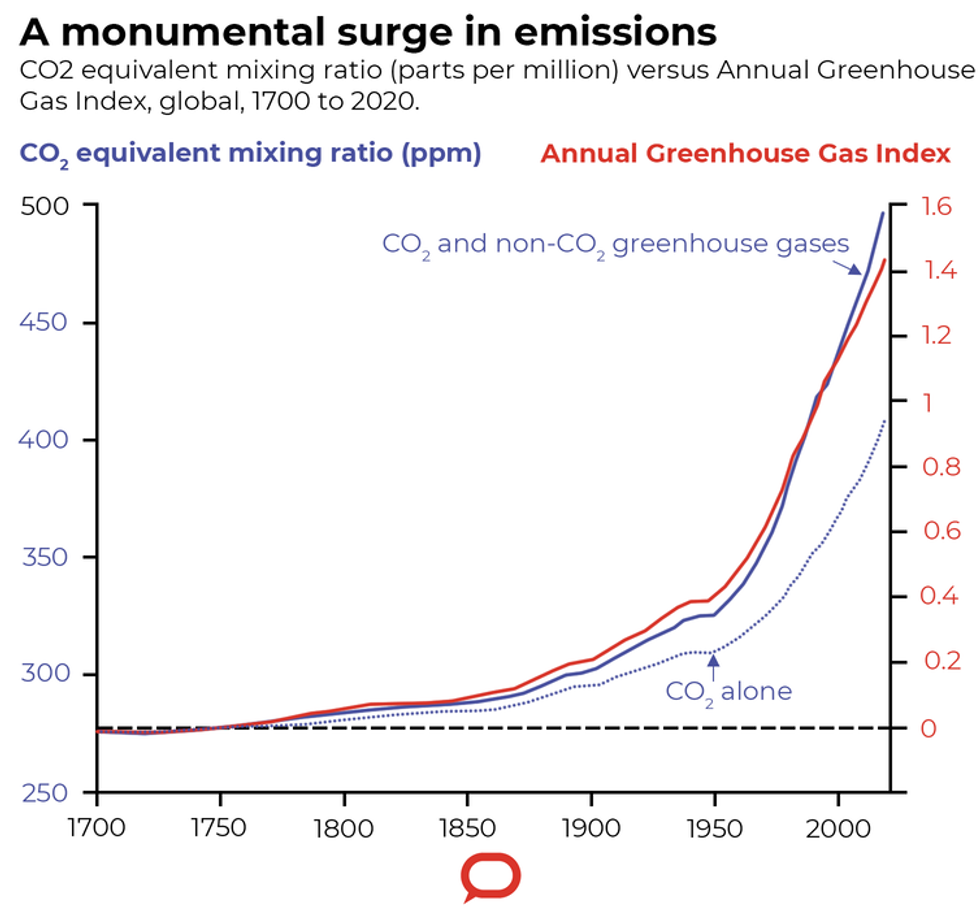
Before industrial times began at the end of the 18th century, carbon dioxide in the atmosphere sat at around 300 parts per million. This means that for every one million molecules of gas in the atmosphere, 300 were carbon dioxide.
Using carbon records stored in fossils and organic matter, I have determined that current carbon emissions constitute an extreme event in the recorded history of Earth.
My research has demonstrated that annual carbon dioxide emissions are now faster than after both the asteroid impact that eradicated the dinosaurs (about 0.18 parts per million CO2 per year), and the thermal maximum 55 million years ago (about 0.11 parts per million CO2 per year).
An asteroid wiped out the dinosaurs 66 million years ago.
Shutterstock
The next mass extinction has begun
Current atmospheric concentrations of carbon dioxide are not yet at the levels seen 55 million and 65 million years ago. But the massive influx of carbon dioxide means the climate is changing faster than many plant and animal species can adapt.
A major United Nations report released last year warned around one million animal and plant species were threatened with extinction. Climate change was listed as one of five key drivers.
The report said the distributions of 47% of land-based flightless mammals, and almost 25% of threatened birds, may already have been negatively affected by climate change.
Many researchers fear the climate system is approaching a tipping point - a threshold beyond which rapid and irreversible changes will occur. This will create a cascade of devastating effects.
A shift in climate zones is also causing the tropics to expand and migrate toward the poles, at a rate of about 56 to 111 kilometres per decade. The tracks of tropical and extra-tropical cyclones are likewise shifting toward the poles. Australia is highly vulnerable to this shift.
Uncharted future climate territory
Research released in 2016 showed just what a massive impact humans are having on the planet. It said while the Earth might naturally have entered the next ice age in about 20,000 years’ time, the heating produced by carbon dioxide would result in a period of super-tropical conditions, delaying the next ice age to about 50,000 years from now.
During this period, chaotic high-energy stormy conditions would prevail over much of the Earth. My research suggests humans are likely to survive best in sub-polar regions and sheltered mountain valleys, where cooler conditions would allow flora and fauna to persist.
Earth’s next mass extinction is avoidable – if carbon dioxide emissions are dramatically curbed and we develop and deploy technologies to remove carbon dioxide from the atmosphere. But on the current trajectory, human activity threatens to make large parts of the Earth uninhabitable - a planetary tragedy of our own making.
Because it is a new virus, many questions remain unanswered about the COVID-19 coronavirus — and a lot more research and analysis will need to be conducted. One question is: can someone who has recovered from COVID-19 be reinfected, or would that person develop an immunity to it? Medical experts can’t say for sure yet, though many have been hopeful that immunity would arise naturally.
But Dr. Jeong Eun-Kyeon, director of South Korea’s Centers for Disease Control and Prevention, believes that COVID-19 might reactivate in someone who has been considered cured, Bloomberg News reported Thursday.
In a briefing on Monday, April 6, South Korea’s CDC reported that 51 people who had been considered cured of COVID-19 tested positive again. A patient in South Korea is considered cured if that person tests negative two times during a 24-hour period.
“While we are putting more weight on reactivation as the possible cause, we are conducting a comprehensive study on this,” Bloomberg News quotes Jeong as saying. “There have been many cases when a patient, during treatment, will test negative one day and positive another.”
In South Korea, widespread testing has been credited for the country’s relatively low infection and mortality rates with COVID-19. According to researchers at John Hopkins University in Baltimore, COVID-19 had claimed 204 lives as of early Thursday afternoon, April 9 — compared to 17,669 in Italy, 15,238 in Spain, 14,831 in the U.S. or 10,869 in France at that time.
Bloomberg News reporter Kyunghee Park explains, “South Korea was one of the earliest countries to see a large-scale coronavirus outbreak, but the country has seen just 200 deaths and a falling new case tally since peaking at 1189 on February 29. One of the world’s most expansive testing programs and a tech-driven approach to tracing infections has seen Korea contain its epidemic without lockdowns or shuttering businesses.”
Global warming will cause "catastrophic" biodiversity loss across the world if greenhouse gas emissions aren't curbed, with some ecosystems liable to collapse as soon as 2030, according to new research into where and when die-offs may occur.
Earth has never in human history warmed so quickly or uniformly as currently, but a variety of factors affect temperatures in individual regions, with significant seasonal and geographic variation.
Scientists predict that at the current level of manmade carbon emissions, Earth is on course to heat up to four degrees Celsius by 2100.
Instead of looking at global trends, researchers in Britain, the United States and South Africa looked at more than 150 years of climate data and cross-referenced that with the spread of more than 30,000 species of birds, mammals, reptiles and fish.
They then divided the globe into 100 square kilometre (39 square mile) segments, and modelled the temperature trends and effects this would have on wildlife in a given area.
Writing in the journal Nature, they concluded that under emissions as usual -- known as the RCP8.5 scenario -- up to 73 percent of species will experience unprecedented warming with potentially disastrous effects for populations.
Alex Pigot, from University College London's Centre for Biodiversity and Environment, said that the models showed that animal populations were liable to collapse once they cross a temperature "horizon" -- being exposed to heat they're not evolved to handle.
"As we pass this threshold we expect the risk of local extinction to increase substantially," Pigot told AFP.
"It's not a slippery slope, but a series of cliff edges, hitting different areas at different times," he said.
The models change dramatically according to each emissions pathway.
For example, at 4C of warming 15 percent of all animals could see extreme heat that could cause "irreversible damage" to regional ecosystems.
But at 2C of warming -- the cap aimed for in the Paris climate agreement -- that figure dropped to two percent, according to the models.
The researchers predicted that such unprecedented temperature events will begin before 2030 in tropical oceans.
Recent phenomena such as the mass bleaching of the Great Barrier reef suggest this is already occurring in places, the team said, adding that higher latitudes would see similar events by 2050.
Coral reefs occupy a tiny percentage of the oceans but support as much as a quarter of all marine life.
Earth has already heated more than 1C since the Industrial Revolution and planet-warming greenhouse gas emissions from the burning of fossil fuels are climbing annually.
The United Nations says humanity needs to slash emissions 7.6 percent annually by 2030 in order to limit warming to 1.5C -- the more ambitious aim of the Paris accord.
"As we approach 2C of global warming, there is an alarming escalation in the risks of these abrupt biodiversity losses, providing strong evidence for the need to hold warming below 2C," said Pigot.
A handful of hospitals have started clinical trials to test a new treatment for the coronavirus.
Hospitals in Boston, Alabama, Louisiana, Sweden and Austria are testing nitric oxide, a gas that relaxes blood vessels and could improve breathing, on patients with mild to moderate symptoms of COVID-19.
“It’s a gas that typically is used in babies with high lung pressure,” said Dr. Pankaj Arora, who is helping to administer the trial at the University of Alabama at Birmingham. “It’s FDA-approved for use in babies with high lung pressure, and we use it in some of our adult patients. In cardiology, we use it in our adult patients when the pulmonary pressures, pressures in the lungs, are very high.”
The molecule, which is not the same as nitrous oxide or laughing gas, is already used to treat heart disease, erectile dysfunction and respiratory illness.
“We have tremendous confidence this therapy will alter the devastating effects of COVID-19 but we must test it," Dr. Keith Scott, principal investigator at Louisiana State University Health in Shreveport. "If results show promise, and since this gas is already FDA approved, widespread use could begin immediately.”
The treatment has shown promise on COVID-19 patients in Italy, and a second trial at Massachusetts General Hospital examines whether the gas can mitigate the onset of the virus for health care workers constantly exposed to coronavirus patients.
UAB's trial builds on research conducted during the SARS epidemic in 2002-2003, when doctors found the gas improved lung function and also showed some anti-virus properties.
“The current [coronavirus] is quite similar to the one which was there in 2002-2003, and back then they tested this gas in patients of SARS and found that they were doing exceptionally well,” Dr. Vibhu Parcha, who is also administering UAB's trial, “and they further tested it and they found that this gas was also causing prevention of the growth of the virus.”
The new coronavirus’s ability to wreak havoc in the lungs is raising a lot of concerns and questions from my asthma patients. They already know how it feels to have trouble breathing. Now, they are wondering what risks they face amid this new pandemic.
Some worry that their asthma inhalers could increase their risk of COVID-19 infection. Others are asking if nebulizers are safe, and if they can use expired inhalers.
Here are answers to some of the common questions I’m hearing as an allergist.
Do people with asthma face a higher risk of severe illness if they get COVID-19?
There’s a lot we still don’t know about COVID-19 and how it affects asthma patients.
Based on the data we have so far, asthma does not appear to increase the risk of acquiring COVID-19. However, the Centers for Disease Control and Prevention does list “chronic lung disease or moderate to severe asthma” under groups at higher risk for severe illness if they get COVID-19.
It’s important to understand what “severe illness” means.
One complication from COVID-19 is acute respiratory distress syndrome, a severe lung disease that results from damage to the alveoli, the air sacs of the lungs. When COVID-19 patients require ventilators, it’s often for acute respiratory distress syndrome. We don’t know very much about the risk factors for developing acute respiratory distress syndrome or how to treat the specific type of inflammation that drives this condition, but there is no evidence that asthma is a risk factor for developing acute respiratory distress syndrome if infected with COVID-19.
In contrast to acute respiratory distress syndrome, asthma is a chronic condition that we know a lot about. It is characterized by airway inflammation, mucous production and airway spasm. Respiratory viruses, including strains of coronavirus that cause the common cold, can trigger asthma symptoms, and it’s likely that COVID-19 could do the same. Even though asthma is also an inflammatory condition, in contrast to acute respiratory distress syndrome, we have very effective treatments for asthma.
At the first onset of respiratory symptoms, asthma patients should follow their individualized asthma action plan and contact their health care provider to see if additional treatments are necessary to prevent symptoms from worsening.
Can I keep using steroid medications?
A few patients have told me they stopped their inhaled corticosteroid medication because they were concerned that the steroids would suppress their immune systems. That’s exactly what asthma doctors don’t want to hear.
Asthma controller therapies reduce the frequency and severity of everyday asthma symptoms as well as asthma attacks. Stopping asthma controllers can increase the likelihood of a severe asthma attack when exposed to a trigger, such as a virus or allergen. An asthma attack, even if unrelated to COVID-19, may result in an emergency room visit, which can then increase risk of exposure to COVID-19.
For patients with COVID-19, the messages about corticosteroids can be confusing. In SARS and MERS, as well as emerging studies on COVID-19, corticosteroids have not been shown to have a survival benefit. The World Health Organization and the CDC recommend that corticosteroids not be used routinely to treat viral pneumonia or ARDS due to COVID-19.
However, if a patient has an asthma attack, regardless of whether the trigger is COVID-19, corticosteroids are usually effective and should be used.
Are nebulizers OK to use at home?
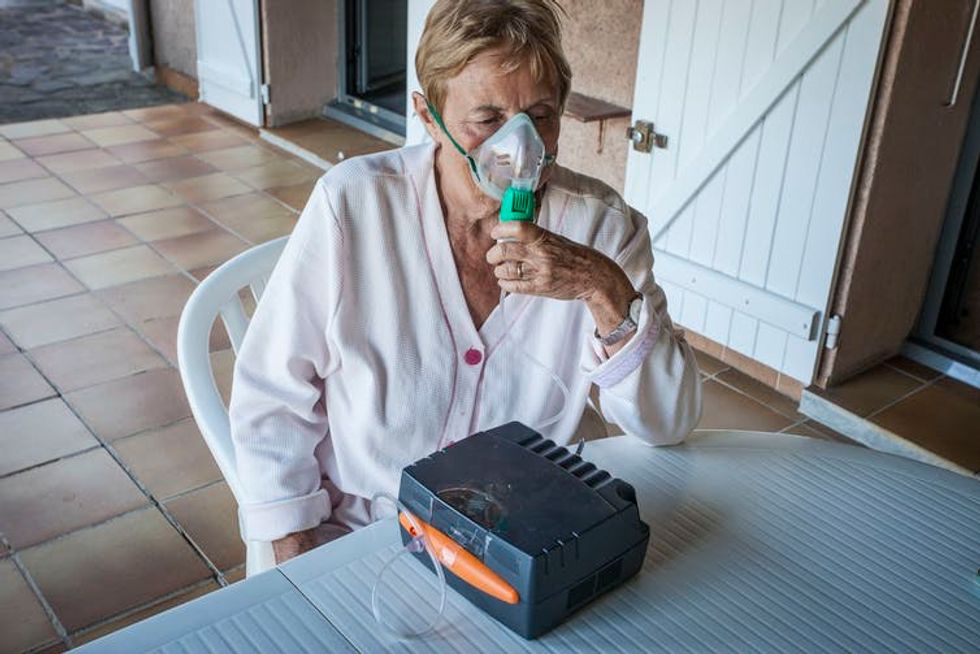
Sometimes patients have difficulty using handheld inhalers and instead use nebulizers, which turn liquid medicine into a mist. Particularly when the patient is experiencing severe asthma symptoms, nebulizers can be more effective at delivering medication slowly into the airways.
The current concern about nebulizers is that if they are used by a patient with a respiratory infection, the nebulizer could aerosolize droplets containing virus, allowing the virus to stay in the air longer. Hospitals and other facilities are being advised to reduce their use of nebulizers to reduce spread of the new coronavirus.
Nebulizers turn liquid medication into a mist that the asthma patient inhales. The way they work has raised concerns that nebulizers could spread coronavirus.
If an asthma patient finds that nebulized therapy is more effective than inhalers, the nebulizer should be used in a room that is isolated from other household members.
What can I do if my pharmacy runs out of albuterol rescue inhalers?
Some parts of the country are experiencing shortages of albuterol inhalers, in part because hospitals are using them more for COVID-19 patients. If the pharmacy is out of stock, patients have some options:
Albuterol handheld inhalers are marketed under various names, and not all are in short supply. It’s worth asking the pharmacist if another formulation is available.
Nebulized albuterol is widely available and may be an alternative if the user takes the recommended precautions.
Check with mail order or other local pharmacies.
Ask your physician whether other rescue inhalers, such as levalbuterol or ipratropium, would be appropriate. Your physician may also suggest other alternatives.
If necessary, patients can use albuterol that has expired. In general, medications are thought to be safe one year after their expiration date, but they are not guaranteed to have the same potency.
What else should I do to stay healthy?
Asthma care is individualized, and I recommend that asthma patients check in with their health care providers to make sure they are using daily controller medications correctly have a plan in place in case asthma symptoms worsen. Keep a 30-day supply of your usual medications, but don’t stockpile medications, which can lead to shortages.
At this point, most people are aware of the CDC’s recommendations on how to protect yourself, including social isolation, hand hygiene and disinfecting surfaces. I would add one more – pay attention to your mental health, too.
When I asked one patient whether she had experienced asthma symptoms recently, her response was that she was hyperventilating at times just sitting and watching the news. She knew it was time to turn off the TV.
It’s a stressful time. Getting good sleep and being kind to yourself and others is more important than ever.
Long maligned as job-stealers and aspiring overlords, robots are being increasingly relied on as fast, efficient, contagion-proof champions in the war against the deadly coronavirus.
One team of robots temporarily cared for patients in a makeshift hospital in Wuhan, the Chinese city where the COVID-19 outbreak began.
Meals were served, temperatures taken and communications handled by machines, one of them named "Cloud Ginger" by its maker CloudMinds, which has operations in Beijing and California.
"It provided useful information, conversational engagement, entertainment with dancing, and even led patients through stretching exercises," CloudMinds president Karl Zhao said of the humanoid robot.
"The smart field hospital was completely run by robots."
A small medical team remotely controlled the field hospital robots. Patients wore wristbands that gathered blood pressure and other vital data.
The smart clinic only handled patients for a few days, but it foreshadowed a future in which robots tend to patients with contagious diseases while health care workers manage from safe distances.
- Checkup and check out -
Patients in hospitals in Thailand, Israel and elsewhere meet with robots for consultations done by doctors via video conference. Some consultation robots even tend to the classic checkup task of listening to patients' lungs as they breathe.
Alexandra Hospital in Singapore will use a robot called BeamPro to deliver medicine and meals to patients diagnosed with COVID-19 or those suspected to be infected with the virus in its isolation wards.
Doctors and nurses can control the robot by using a computer from outside the room, and can hold conversations with the patient via the screen and camera.
The robot reduces the number of "touch points" with patients who are isolated, thereby reducing risk for healthcare workers, the hospital's health innovation director Alexander Yip told local news channel CNA.
Robotic machines can also be sent to scan for the presence of the virus, such as when the Diamond Princess cruise ship cabins were checked for safety weeks after infected passengers were evacuated, according to the US Centers for Disease Control.
Additionally, hospitals are turning to robots to tirelessly rid room, halls and door handles of viruses and bacteria.
US firm Xenex has seen a surge in demand for its robots that disinfect rooms, according to director of media relations Melinda Hart.
Xenex's LightStrike robots have been used in more than 500 healthcare facilities, with the number of deployed bots rising due to the pandemic, Hart said.
"We are getting requests from around the world," Hart said.
"In addition to hospitals, we're being contacted by urgent care centers, hotels, government agencies and pharmaceutical companies" to disinfect rooms.
Shark Robotics in France began testing a decontamination unit about a month ago and has already started getting orders, according to co-founder Cyril Kabbara.
- Worth the price? -
The coronavirus pandemic has caused robotics innovation to accelerate, according to Lesley Rohrbaugh, the director of research for the US Consumer Technology Association.
"We are in a time of need for some of this technology, so it seems like benefits outweigh costs," Rohrbaugh said.
Artificial intelligence, sensors and other capabilities built into robots can push up prices, as can the need to bolster high-speed internet connections on which machines often rely, according to Rohrbaugh.
Innovations on the horizon include using drones equipped with sensors and cameras to scan crowds for signs of people showing symptoms of coronavirus infection.
A team at the University of South Australia is working on just that, in collaboration with Canadian drone maker Draganfly.
"The use will be to identify the possible presence of the virus by observing humans," said university professor Javaan Singh Chahl.
"It might form part of an early warning system or to establish statistically how many people are afflicted in a population."
His team is working on computer algorithms that can spot sneezing or coughing, say in an airport terminal, and remotely measure people's pulses and temperatures.
A three-man crew blasted off to the International Space Station on Thursday, leaving behind a planet overwhelmed by the coronavirus pandemic.
Anatoly Ivanishin and Ivan Vagner of Russia's Roscosmos space agency and NASA's Chris Cassidy launched at 08:05 GMT from Russia's Baikonur Cosmodrome in Kazakhstan, where COVID-19 has caused changes to pre-launch protocol.
The crew told ground control that they were "feeling fine" just before they successfully entered orbit, NASA TV reported. They are expected to dock with the ISS at 14:15 GMT.
Under usual circumstances, the departing crew would have faced questions from a large press pack before being waved off by family and friends.
Neither were present this time round because of travel restrictions imposed over the virus, although the crew did respond to emailed questions from journalists in a Wednesday press conference.
Cassidy, 50, admitted the crew had been affected by their families not being unable to be in Baikonur for their blastoff to the ISS.
"But we understand that the whole world is also impacted by the same crisis," Cassidy said.
Astronauts routinely go into quarantine ahead of space missions and give a final press conference at Baikonur from behind a glass wall to protect them from infection.
That process began even earlier than usual last month as the trio and their reserve crew hunkered down in Russia's Star City training centre outside Moscow, eschewing traditional pre-launch rituals and visits to the capital.
Roscosmos said on Tuesday that cosmonaut Oleg Skripochka would fly to Russia from the cosmodrome rather than from the usual staging post of Karaganda airport when he returns to Earth from the ISS later this month.
NASA has not yet confirmed travel plans for Andrew Morgan and Jessica Meir, who will be departing the ISS along with Skripochka on April 17.
- Tips on self-isolation -
The ISS typically carries up to six people at a time and has a livable space of 388 cubic meters (13,700 cubic feet) -- larger than a six-bedroom house according to NASA.
Those dimensions will sound enviable to many residents of Earth, more than half of whom are on various forms of lockdown as governments respond to COVID-19 with drastic measures.
But residents of the ISS frequently feel lonely and crave home comforts.
In recent weeks, astronauts and cosmonauts on the ISS and on Earth have been sharing tips on coping with self-isolation.
In a piece for the New York Times last month, NASA's Scott Kelly said his biggest miss during almost a year in space was nature -- "the color green, the smell of fresh dirt, and the feel of warm sun on my face".
While recommending fresh air walks for those still able to enjoy them, Kelly also said there was nothing wrong with people spending more time in front of a screen during isolation.
During his time aboard the ISS he "binge-watched Game of the Thrones -- twice" and enjoyed frequent movie nights with crewmates, he wrote.
Two-time cosmonaut Sergey Ryazanskiy has become the face of a 10-week challenge that will see participants post videos of themselves completing physical exercises as part of a competition aimed at both youth and adults.
The initiative that Roscosmos is backing aims "to support people in a situation of isolation, instil a healthy lifestyle and thoughts through regular sports, without going out in public places", Ryazanskiy said in a video promoting the "Cosmos Training" challenge.
The launch of Ivanishin, Vagner and Cassidy marks the first time a manned mission has used a Soyuz-2.1a booster to reach orbit, after Roscosmos stopped using the Soyuz-FG rocket last year.
The newer boosters have been used in unmanned launches since 2004.
The upgraded rocket relies on a digital flight control system rather than the analogue equipment used in prior Soyuz models.
The International Space Station -- a rare example of cooperation between Russia and the West -- has been orbiting Earth at about 28,000 kilometers per hour (17,000 miles per hour) since 1998.
The Times explained that genomes show the link to those who came down with the virus back in February.
President Donald Trump has been celebrating his decision to shut down some travel from China, though not all travel. A whopping 430,000 people have traveled from China to the United States since the coronavirus crisis.
"There were 1,300 direct flights to 17 cities before President Trump’s travel restrictions. Since then, nearly 40,000 Americans and other authorized travelers have made the trip, some this past week and many with spotty screening," the Times reported.
Yet, the president didn't stop flights from Europe until March 11, over a month after his soft-shutdown of flights from China.
“People were just oblivious,” said Adriana Heguy, a member of the team at the N.Y.U. Grossman School of Medicine.
As labs around the world race to develop a vaccine, my colleagues and I are trying to find a better way to deliver it than the standard, cringe-inducing shot.
I am an immunologist and dermatologist, and my colleagues and I have been working on vaccines against the very related coronaviruses that cause MERS and SARS. We were able to use the resources and systems we had already developed to very rapidly create a vaccine candidate for this new SARS-CoV-2 coronavirus that we have tested in mice.
Called the PittCoVacc vaccine, it is a simple protein vaccine that is made from a small piece of one of the virus’s proteins, much like some of the flu vaccines that are now on the market.
There are currently many groups around the world working to develop a vaccine. What’s different with our design is the way the vaccine is delivered to people. Rather than inject the vaccine via a traditional shot, we use a small patch which has hundreds of small needles. We hope this delivery device will be simpler to produce in large numbers and administer to people.
Band-Aid with ‘microneedles’
Like traditional vaccines, our vaccine uses a small piece of the virus as an antigen, or “target” to stimulate the body’s immune response to make antibodies that recognize and bind to that target on the virus.
In this case, the target is from the virus’s S1 spike protein. This is the critical part of the virus that recognizes a protein receptor on our own human cells - and works much like putting the virus’s key in our own cells’ lock. Once the spike protein attaches to our cells, it enables the virus to enter our cells and cause the infection.
Our team at the University of Pittsburgh hopes that the antibodies our patients make after receiving the vaccine will bind to this key, and block it from fitting into the lock. That would prevent the infection.
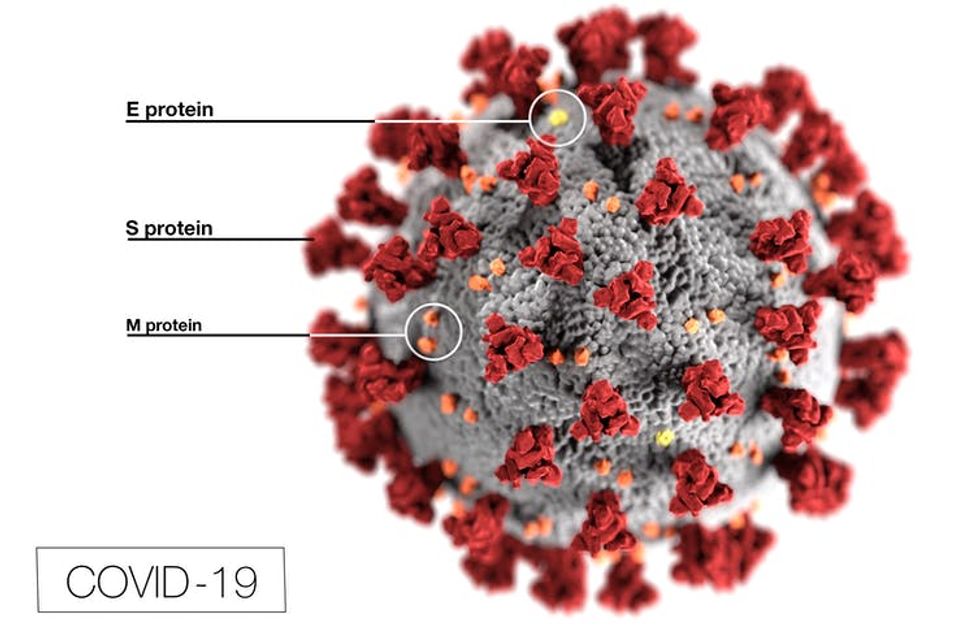
A novel coronavirus, named severe acute respiratory syndrome coronavirus 2 (SARS-CoV-2), is covered in spike proteins (S) that allow it to infect human cells.
Using a simple protein antigen is common in vaccine design. What is new in this vaccine is the way we deliver that antigen: through a new delivery platform called a dissolvable microneedle array.
This is like a Band-Aid, but with hundreds of small needles, roughly the width of a human hair and just over half a millimeter in length. In this case, the microneedles are made out of a sugar-like substance mixed with the antigen.
When the vaccine patch is stuck on the skin, the microneedles poke into the skin and dissolve, releasing the antigen without causing pain or bleeding. This delivers the vaccine to a region of the skin that has specialized “scout” cells known as dendritic cells that recognize foreign invaders, and carry that information to the body’s immune system factories where antibodies are made.
Our team of Pitt and UPMC scientists hope to be able to test this vaccine in people very soon. Our next step is to obtain approval from the Food and Drug Administration to start these clinical trials. The entire clinical testing process can take a year to 18 months in normal times. But there is nothing about this pandemic that is “normal.” Very intelligent and hard-working scientists at the FDA are doing their best to assure that a vaccine which is both safe and effective will be available as soon as possible. Safety is everyone’s primary concern.
The advantage of our microneedle delivery system is that it is relatively straight forward to make and uses very little antigen. That means that production can be scaled up very quickly. In addition, unlike most vaccines that need to be kept cold from when they are made until they are given to the patient, this vaccine does not require this “cold chain” and can be distributed and stored at room temperature like Band-Aids. Cutting out this cold chain – a goal researchers have been pursuing for years – reduces cost and should facilitate global vaccine distribution.
Of course, we never know how well a vaccine will work until it’s tested in patients, but progress with this vaccine and others like it give us a reason for hope.