Measles, the contagious childhood disease that is once more on the rise globally, is more harmful than previously thought.
A new analysis of 77 unvaccinated children from the Netherlands carried out by an international team of researchers led by scientists at Harvard has found that the virus erases the body's memory of previous pathogens -- effectively wiping its immunity memory.
The virus eliminated between 11 and 73 percent of the children's protective antibodies, blood proteins responsible for "remembering" previous encounters with disease, the team wrote in the journal Science on Thursday.
This left some of the children with immunity close to that of a newborn baby.
"It sort of resets your immune system back to sort of a more naive state," Harvard epidemiologist and coauthor Michael Mena told AFP.
In order to rebuild their defenses, they will need to be exposed to numerous pathogens as they were in their infancy, he added.
AFP /Measles
To validate their result, the team then carried out experiments on macaque monkeys, with the animals losing 40-60 percent of their protective antibodies.
"The virus is much more deleterious than we realized, which means the vaccine is that much more valuable," said study coauthor and Howard Hughes Medical Institute Investigator Stephen Elledge.
Rubin replied by saying that “the problem right now is that everything — everything from academia, to public utilities, to politics, everything that goes woke, that buys into this ridiculous progressive ideology that cares about what contractors are LGBT, or how many black firemen we have, or white this or Asian — that everything that goes that road eventually breaks down.”
Carlson agreed with Rubin, who said that this is “not how freedom is supposed to operate” and compared it to people asking about the “gender or sexuality” of the people who came to put out a fire in their home. He also cited the preemptive blackouts occurring in California. Rubin blamed the problem on the fact that California does not have “enough clear thinking, say, more libertarian or conservative-minded people in California to fight what the progressives are doing to the state.”
Carlson agreed, adding that “if you can’t keep the lights on and you can't keep the place from burning down, you've reached the point where there is no kind of lying about it anymore. Like it's falling apart. It's a disaster. It's not civilized anymore.”
There is no evidence that the incidents with PG&E had anything to do with the demographic composition of their employees, despite Carlson’s and Rubin’s assertions. There is also no evidence that PG&E’s technical issues were the primary factor behind the California wildfires. Global warming, however, has been a major contributor to the fires.
As climatologist Kevin Trenberth told Salon earlier this week, “the increases in carbon dioxide and other greenhouse gases by human activities create extra heating. While it is small on a daily basis, it is always in the same direction. And in dry conditions, it accumulates so that plants dry out faster and wilt, and wild fire risk increases on the time scale of a month."
Carlson has long been a critic of what he describes as “identity politics,” telling Salon earlier this year that “I would never make the case that racism doesn't exist, or it's not a factor. Of course it does and it is. But in the end, our racial differences or sex differences are immutable differences that can't be fixed. They can't be changed.”
He added, “They're set at birth, so it's not only counterproductive, but in my opinion, it is an intentional diversion away from conversations about things that we could potentially change, like tax rates.”
Swedish climate activist Greta Thunberg on Tuesday refused to accept an environmental award, saying the climate movement needed people in power to start to "listen" to "science" and not awards.
The young climate activist, who has rallied millions to her "Fridays for Future" movement, was honoured at a Stockholm ceremony held by the Nordic Council, a regional body for inter-parliamentary cooperation.
Thunberg had been nominated for her efforts by both Sweden and Norway and won the organisation's annual environment prize.
But after it was announced, a representative for her told the audience that she would not accept the award or the prize sum of 350,000 Danish kroner (about $52,000 or 46,800 euro), the TT news agency reported.
She addressed the decision in a post on Instagram from the United States.
"The climate movement does not need any more awards," she wrote.
"What we need is for our politicians and the people in power start to listen to the current, best available science."
While thanking the Nordic Council for the "huge honour," she also criticised Nordic countries for not living up to their "great reputation" on climate issues.
"There is no lack of bragging about this. There is no lack of beautiful words. But when it comes to our actual emissions and our ecological footprints per capita... then it’s a whole other story," Thunberg said.
Still only 16 years old, Thunberg rose to prominence after she started spending her Fridays outside Sweden's parliament in August 2018, holding a sign reading "School strike for climate".
A whale shark's mouth might not seem like the most hospitable environment for a home, but Japanese researchers have found there's no place like it for a newly-discovered shrimp-like creature.
The tiny inhabitants -- dubbed podocerus jinbe -- are a variety of gammaridea, a species known for their hardy ability to live in environments ranging from high mountains to the deep sea.
But lead researcher Ko Tomikawa, an associate professor at Hiroshima University, said he was "surprised" to find them living in the mouth of an animal.
"This creature, which is usually 3-5 centimetres long, is amazing because they can live in so many different kinds of environment," Tomikawa told AFP.
"But I didn't expect we would find one inside the mouth of a whale shark."
Gammaridea are a type of crustacean, a group that includes water fleas
The researcher said the new variety has a brown-coloured body of about five millimetres long and hairy legs, which help catch organic substances for food.
Whale sharks are known as jinbe zame in Japanese, inspiring their newly discovered residents' name.
And Tomikawa said there were some good reasons the species might choose such an unexpected location.
"The mouth of the whale shark is probably a good habitat because fresh seawater, which is necessary for them to breath comes in regularly, and food flows in too," he said.
"And it also provides a safe place without any predators."
The new variety was discovered after Tomikawa was contacted by an aquarium in southern Okinawa prefecture curious to know what appeared to be living in a whale shark there.
About a thousand of the creatures were found inside the gills of the shark's mouth, he said.
Russian scientists tracking migrating eagles were forced to start a crowdfunding campaign after their birds wandered into Iran and foreign text messages from their tracking devices depleted the project's budget.
Scientists rang the alarm earlier this month when several endangered steppe eagles transmitting coordinates via Russian mobile numbers wandered into the roaming zone after spending the summer in an area without mobile coverage.
"These beasts were out of range in Kazakhstan all summer and now once they reached the super expensive Iran and Pakistan, they are spewing out hundreds of text messages with their locations," wrote Igor Karyakin of the Russian Raptors Research and Conservation Network.
Scientists this week launched a campaign called "Top up the eagle's mobile" to keep the research going with the public's help after taking out a loan to pay for the text messages costing 49 rubles each ($0.77) instead of the usual price of 2 to 15 rubles.
"They really left us penniless, we had to take out a loan to feed the tracker device," Karyakin wrote Friday. Bird lovers, however, have already contributed enough to last through the year.
"People are still sending money so there is hope we can keep the eagle sim cards running until they come back from their faraway journeys in early summer to Russia, where mobile connectivity is not so expensive," he wrote.
Steppe eagles breed in southern Russia and Kazakhstan, and spend their winter in Africa and India.
They have experienced rapid decline due to the spread of farming land across their territory and are vulnerable to wind turbines, according to Bird Life International.
Scientists have reported successfully training the rodents to drive tiny cars in exchange for tasty bits of Froot Loops cereal, and found that learning the task lowered their stress levels.
The study not only advances our understanding of how sophisticated rat brains are, but could one day help in developing new non-pharmaceutical forms of treatment for mental illness, senior author Kelly Lambert of the University of Richmond told AFP on Wednesday.
Lambert said she had long been interested in neuroplasticity -- how the brain changes in response to experience and challenges -- and particularly wanted to explore how well rats that were housed in more natural settings ("enriched environments") performed against those kept in labs.
She and colleagues modified a robot car kit by adding a clear plastic food container to form a driver compartment with an aluminum plate placed on the bottom.
A copper wire was threaded horizontally across the cab's front to form three bars: left, center and right.
When a rat placed itself on the aluminum floor and touched the wire, the circuit was complete and the car moved in the direction selected.
Seventeen rats were trained over several months to drive around an arena 150 centimeters by 60 centimeters made of plexiglass, with the researchers establishing that the animals could indeed be taught to drive forward as well as steer in more complex navigational patterns.
As she had suspected, Lambert found that the animals kept in so-called "enriched environments" performed far better than their lab rat counterparts, but "it was actually quite shocking to me that they were so much better," she said.
The rats' feces was collected after their trials to test for the stress hormone corticosterone as well as dehydroepiandrosterone, which counters stress.
All rats that underwent training had higher levels dehydroepiandrosterone, indicating a more relaxed state, which could be linked to the satisfaction of gaining mastery over a new skill, referred to as "self-efficacy" or "agency" in humans.
What's more, rats that drove themselves showed higher levels of dehydroepiandrosterone as compared to those who were merely passengers when a human controlled the vehicle, meaning they were less stressed -- something that will be familiar to nervous backseat drivers.
The biggest takeaway for Lambert was the potential new avenues of treatment the work opened up for people suffering from mental health conditions.
"There's no cure for schizophrenia or depression. We're behind," she said. "And we need to catch up and I think we need to look at different animal models and different types of tasks and really respect that behavior can change our neurochemistry."
ProPublica is a Pulitzer Prize-winning investigative newsroom. Sign up for The Big Story newsletter to receive stories like this one in your inbox.
At the beginning of October, my kids’ preschool informed me that it might be closed the next day because of rolling blackouts — a radical new effort by our local power utility in Northern California to avoid sparking wildfires. The water company, faced with the shutdown of its pumps, asked us to fill our bathtubs before the cutoff. On the advice of experts, my car was backed into the driveway for a quick escape, its hatch packed with 7 gallons of water and a go-bag including leather gloves, breathing masks, spare clothes, headlamps and emergency food.
The National Weather Service was predicting 55-mile-an-hour winds, with 10% humidity. It was like living inside a ticking time bomb. And so, in a desperate attempt to avoid detonation, the utility decided to haul almost 800,000 households backward through time into premodernity, for days at a stretch. Around Silicon Valley, residential areas adjacent to some of the most technologically advanced corporations in the world — the offices of private space-exploration companies, internet search engines, electric vehicle manufacturers — would forgo basic electricity.
The blackouts solved nothing, of course. De-energizing the electrical grid is a bludgeon: imprecise, with enormous potential for collateral damage as people deal with a darkened world. It doesn’t even eliminate fire risk. What it largely does is shift responsibility away from Pacific Gas & Electric, the state’s largest utility company, whose faulty transmission lines had been found to have caused some of the most destructive wildfires on record.
In fact, cutting power can exacerbate some fire risks. In a blackout, more people rely on home generators, many of which have been installed without permits and might be no less faulty than the utility’s own equipment. Detours and gridlock force more cars into vulnerable places. (Sparks off roadways are another top cause of wildfire.) The blackout makes it harder for the public to respond to fire emergencies even as it does little to prevent all the other factors that cause them — from careless barbecues to tossed-out cigarette butts to plain old arson. One of the state’s most serious fires so far this year was ignited by burning garbage.
But a mandatory blackout does have one radically positive effect. By suddenly withdrawing electrical power — the invisible lifeblood of our unsustainable economic order — PG&E has made the apocalyptic future of the climate crisis immediate and visceral for some of the nation’s most comfortable people. It is easy to ignore climate change in the bosom of the developed world. But you can’t fail to notice when the lights go out.
Only once the blackouts began to take effect did local agencies and governments seem to begin to grasp their rippling effects and implications. As the city of Oakland prepared to lose power, its Police Department — already strained by understaffing and rampant corruption — called back its off-duty officers and put its investigative units into uniform in the hopes of managing a city in the dark. Transportation officials prepared to close four tunnels that make up one of the Bay Area’s major highway arteries, effectively walling off thousands of people from their jobs in downtown Oakland and San Francisco.
As the lights went out across the region, the economies of whole towns and small cities ground to a halt. Grocery stores and gas stations closed, air conditioning was shut off and cell towers faltered — even as the cellphones themselves, now many households’ only means of communication, slowly began to lose battery power. People whose lives depended on home medical equipment faced life-threatening emergencies, and cars — without operating gas pumps — risked running out of fuel. My own town sat on the edge of an arbitrary boundary. The lights stayed on, but the mood was ominous.
And it ought to be. In the American West, our climate will only get hotter and drier, our wildfires worse. Every year more places are going to burn, and we will, repeatedly, be horrified by the losses. But we should not be shocked by them. The blackouts have laid bare the uncomfortable fact that the infrastructure we’ve built and maintained over the course of many decades isn’t matched to the threats we face in our rapidly unfolding climate emergency.
The safest way to proceed under such circumstances — on an annual basis, every time the thermometer kicks up and the winds begin to blow — is probably not simply to forgo the use of one of civilization’s most elementary and essential innovations. Significantly lowering emissions, reducing waste, managing our landscape and fortifying our communities would all do much more to save lives. But it’s hard to imagine that even deep-blue California will make sufficient progress on the climate-adapting steps we’ve long been implored to take.
At least mandatory blackouts force a glimpse into this new reality. They’re like a thin wedge opening our minds to the fact that even here, in the heart of one of the wealthiest regions of a state that is (we are often reminded) by itself the world’s fifth-largest economy — one that is shepherding into existence some of the nation’s most enlightened and aggressive climate-adaptation policies — deep and unpredictable consequences are unavoidable. Perhaps if blackouts were mandated in your community, your neighbors might awaken to this eerie truth as well.
What kicked off the Earth’s rapid cooling 12,800 years ago?
In the space of just a couple of years, average temperatures abruptly dropped, resulting in temperatures as much as 14 degrees Fahrenheit cooler in some regions of the Northern Hemisphere. If a drop like that happened today, it would mean the average temperature of Miami Beach would quickly change to that of current Montreal, Canada. Layers of ice in Greenland show that this cool period in the Northern Hemisphere lasted about 1,400 years.
This climate event, called the Younger Dryas by scientists, marked the beginning of a decline in ice-age megafauna, such as mammoth and mastodon, eventually leading to extinction of more than 35 genera of animals across North America. Although disputed, some research suggests that Younger Dryas environmental changes led to a population decline among the Native Americans known for their distinctive Clovis spear points.
Conventional geologic wisdom blames the Younger Dryas on the failure of glacial ice dams holding back huge lakes in central North America and the sudden, massive blast of freshwater they released into the north Atlantic. This freshwater influx shut down ocean circulation and ended up cooling the climate.
Some geologists, however, subscribe to what is called the impact hypothesis: the idea that a fragmented comet or asteroid collided with the Earth 12,800 years ago and caused this abrupt climate event. Along with disrupting the glacial ice-sheet and shutting down ocean currents, this hypothesis holds that the extraterrestrial impact also triggered an “impact winter” by setting off massive wildfires that blocked sunlight with their smoke.
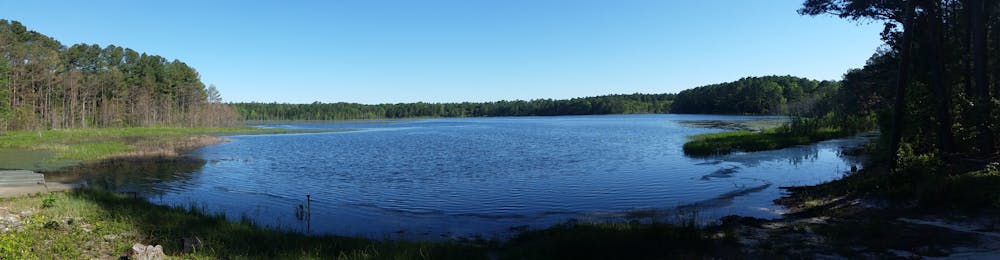
The evidence is mounting that the cause of the Younger Dryas’ cooling climate came from outer space. My own recent fieldwork at a South Carolina lake that has been around for at least 20,000 years adds to the growing pile of evidence.
A collision from space would leave its mark on Earth.
Around the globe, scientists analyzing ocean, lake, terrestrial and ice core records have identified large peaks in particles associated with burning, such as charcoal and soot, right at the time the Younger Dryas kicked in. These would be natural results of the cataclysmic wildfires you would expect to see in the wake of Earth taking an extraterrestrial hit. As much as 10% of global forests and grasslands may have burned at this time.
Looking for more clues, researchers have pored through the widely distributed Younger Dryas Boundary stratigraphic layer. That’s a distinctive layer of sediments laid down over a given period of time by processes like large floods or movement of sediment by wind or water. If you imagine the surface of the Earth as like a cake, the Younger Dryas Boundary is the layer that was frosted onto its surface 12,800 years ago, subsequently covered by other layers over the millennia.
In the last few years, scientists have found a variety of exotic impact-related materials in the Younger Dryas Boundary layer all over the globe.
In the southeastern United States, there are no ice cores to turn to in the quest for ancient climate data. Instead, geologists and archaeologists like me can look to natural lakes. They accumulate sediments over time, preserving layer by layer a record of past climate and environmental conditions.
White Pond is one such natural lake, situated in southern Kershaw County, South Carolina. It covers nearly 26 hectares and is generally shallow, less than 2 meters even at its deepest portions. Within the lake itself, peat and organic-rich mud and silt deposits upwards of 6-meters thick have accumulated at least since the peak of the last ice age more than 20,000 years ago.
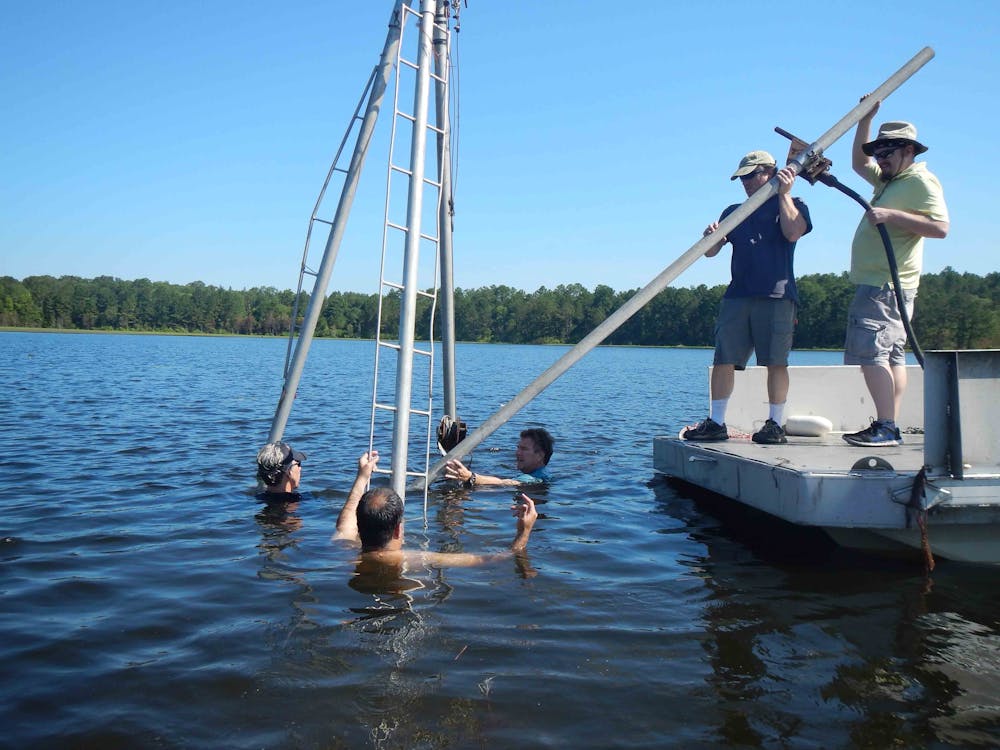
Collecting sediment cores from White Pond in 2016.
So in 2016, my colleagues and I extracted sediment from the bottom of White Pond. Using 4-meter-long tubes, we were able to preserve the order and integrity of the many sediment layers that have accumulated over the eons.
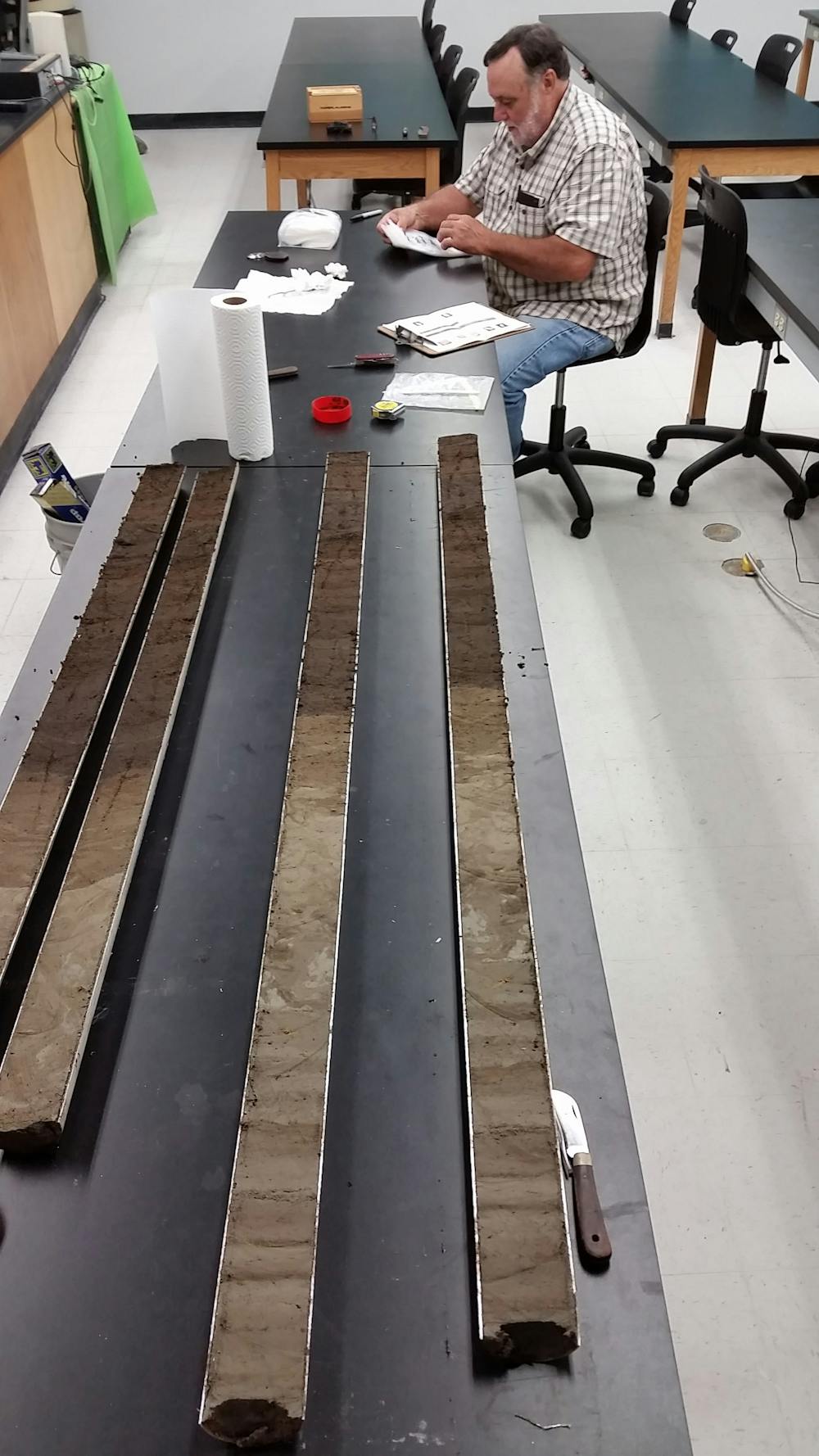
The long sediment cores are cut in half in order to extract samples for analysis.
Based on preserved seeds and wood charcoal that we radiocarbon dated, my team determined there was about a 10-centimeter thick layer that dated to the Younger Dryas Boundary, from between 12,835 and 12,735 years ago. That is where we concentrated our hunt for evidence of an extraterrestrial impact.
We were particularly looking for platinum. This dense metal is present in the Earth’s crust only at very low concentrations but is common in comets and asteroids. Previous research had identified a large “platinum anomaly” – widespread elevated levels of platinum, consistent with a global extraterrestrial impact source in Younger Dryas layers from Greenland ice cores as well as across North and South America.
Most recently, the Younger Dryas platinum anomaly has been found in South Africa. This discovery significantly extends the geographic range of the anomaly and adds support to the idea that the Younger Dryas impact was indeed a global event.
Volcanic eruptions are another possible source of platinum, but Younger Dryas Boundary sites with elevated platinum do not have other markers of large-scale volcanism.
More evidence of an extraterrestrial impact
In the White Pond samples, we did indeed find high levels of platinum. The sediments also had an unusual ratio of platinum to palladium.
Both of these rare earth elements occur naturally in very small quantities. The fact that there was so much more platinum than palladium suggests that the extra platinum came from an outside source, such as atmospheric fallout in the aftermath of an extraterrestrial impact.
My team also found a large increase in soot, indicative of large-scale regional wildfires. Additionally, the amount of fungal spores that are usually associated with the dung of large herbivores decreased in this layer compared to previous time periods, suggesting a sudden decline in ice-age megafauna in the region at this time.
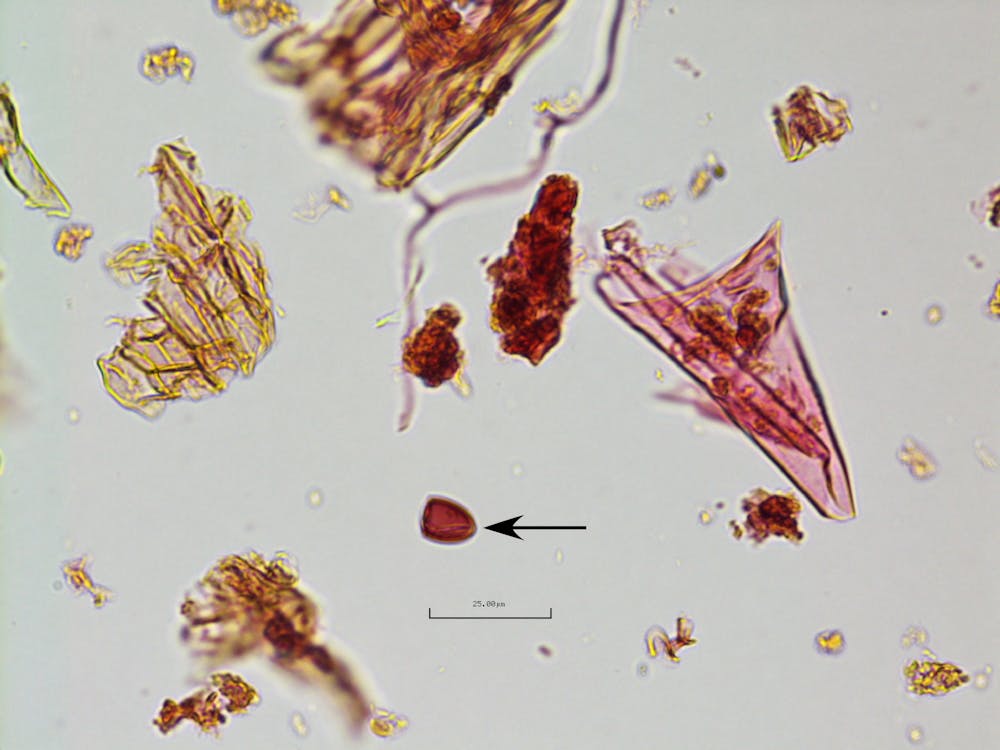
Photomicrograph of Sporormiella – fungal spores associated with the dung of megaherbivores – from White Pond.
While my colleagues and I can show that the platinum and soot anomalies and fungal spore decline all happened at the same time, we cannot prove a cause.
The data from White Pond are, however, consistent with the growing body of evidence that a comet or asteroid collision caused continent-scale environmental calamity 12,800 years ago, via vast burning and a brief impact winter. The climate change associated with the Younger Dryas, megafaunal extinctions and temporary declines or shifts in early Clovis hunter-gatherer populations in North America at this time may have their origins in space.
A White Pond sediment core is like a timeline of the stratigraphic layers. What researchers found in each layer provides hints of climate and environment at that time.
Shutterstock.com/Allen West/NASA/Sedwick C (2008) PLoS Biol 6(4): e99/Martin Pate/Southeast Archaeological Center, CC BY-ND
Christopher R. Moore, Archaeologist and Special Projects Director at the Savannah River Archaeological Research Program and South Carolina Institute of Archaeology and Anthropology, University of South Carolina
Are we alone in the universe? It comes down to whether intelligence is a probable outcome of natural selection, or an improbable fluke. By definition, probable events occur frequently, improbable events occur rarely – or once. Our evolutionary history shows that many key adaptations – not just intelligence, but complex animals, complex cells, photosynthesis, and life itself – were unique, one-off events, and therefore highly improbable. Our evolution may have been like winning the lottery … only far less likely.
The universe is astonishingly vast. The Milky Way has more than 100 billion stars, and there are over a trillion galaxies in the visible universe, the tiny fraction of the universe we can see. Even if habitable worlds are rare, their sheer number – there are as many planets as stars, maybe more – suggests lots of life is out there. So where is everyone? This is the Fermi paradox. The universe is large, and old, with time and room for intelligence to evolve, but there’s no evidence of it.
Could intelligence simply be unlikely to evolve? Unfortunately, we can’t study extraterrestrial life to answer this question. But we can study some 4.5 billion years of Earth’s history, looking at where evolution repeats itself, or doesn’t.
Evolution sometimes repeats, with different species independently converging on similar outcomes. If evolution frequently repeats itself, then our evolution might be probable, even inevitable.
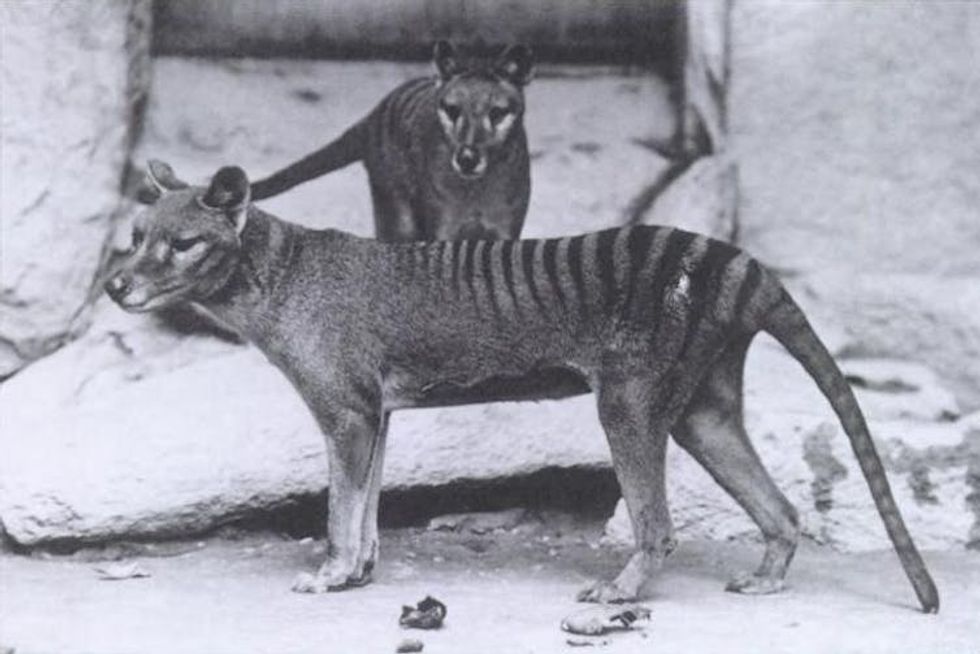
The wolf-like thylacine.
Wikipedia
And striking examples of convergent evolution do exist. Australia’s extinct, marsupial thylacine had a kangaroo-like pouch but otherwise looked like a wolf, despite evolving from a different mammal lineage. There are also marsupial moles, marsupial anteaters and marsupial flying squirrels. Remarkably, Australia’s entire evolutionary history, with mammals diversifying after the dinosaur extinction, parallels other continents.
Other striking cases of convergence include dolphins and extinct ichthyosaurs, which evolved similar shapes to glide through the water, and birds, bats and pterosaurs, which convergently evolved flight.
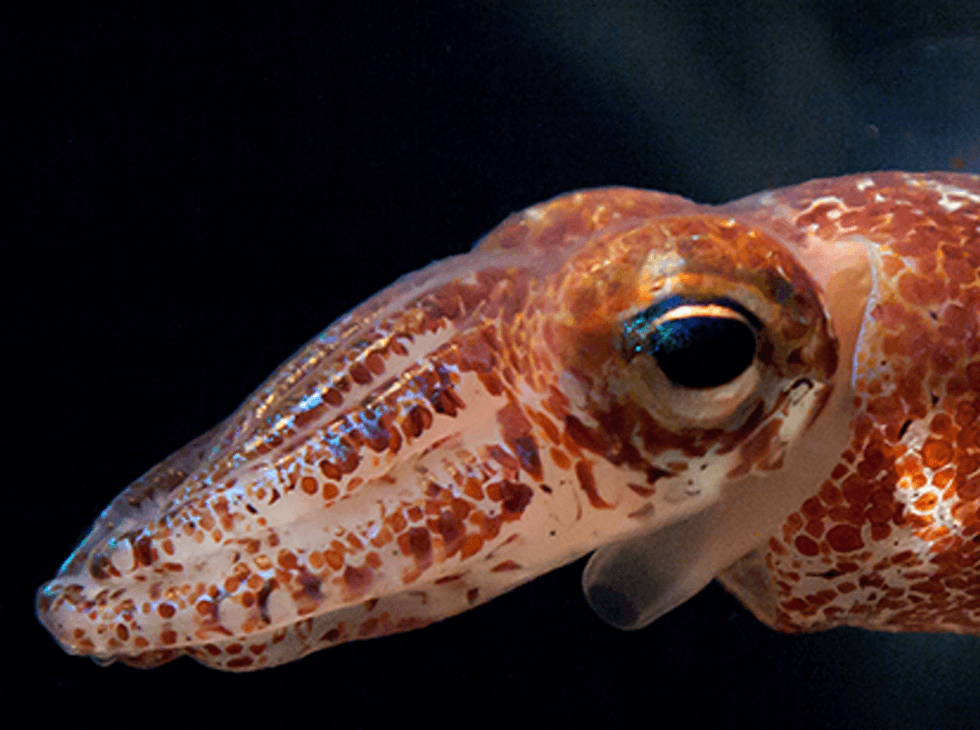
Squid eye.
PLoS Biology
We also see convergence in individual organs. Eyes evolved not just in vertebrates, but in arthropods, octopi, worms and jellyfish. Vertebrates, arthropods, octopi and worms independently invented jaws. Legs evolved convergently in the arthropods, octopi and four kinds of fish (tetrapods, frogfish, skates, mudskippers).
Here’s the catch. All this convergence happened within one lineage, the Eumetazoa. Eumetazoans are complex animals with symmetry, mouths, guts, muscles, a nervous system. Different eumetazoans evolved similar solutions to similar problems, but the complex body plan that made it all possible is unique. Complex animals evolved once in life’s history, suggesting they’re improbable.
Surprisingly, many critical events in our evolutionary history are unique and, probably, improbable. One is the bony skeleton of vertebrates, which let large animals move onto land. The complex, eukaryotic cells that all animals and plants are built from, containing nuclei and mitochondria, evolved only once. Sex evolved just once. Photosynthesis, which increased the energy available to life and produced oxygen, is a one-off. For that matter, so is human-level intelligence. There are marsupial wolves and moles, but no marsupial humans.
The vertebrate skeleton is unique.
Smithsonian Institution
There are places where evolution repeats, and places where it doesn’t. If we only look for convergence, it creates confirmation bias. Convergence seems to be the rule, and our evolution looks probable. But when you look for non-convergence, it’s everywhere, and critical, complex adaptations seem to be the least repeatable, and therefore improbable.
What’s more, these events depended on one another. Humans couldn’t evolve until fish evolved bones that let them crawl onto land. Bones couldn’t evolve until complex animals appeared. Complex animals needed complex cells, and complex cells needed oxygen, made by photosynthesis. None of this happens without the evolution of life, a singular event among singular events. All organisms come from a single ancestor; as far as we can tell, life only happened once.
Curiously, all this takes a surprisingly long time. Photosynthesis evolved 1.5 billion years after the Earth’s formation, complex cells after 2.7 billion years, complex animals after 4 billion years, and human intelligence 4.5 billion years after the Earth formed. That these innovations are so useful but took so long to evolve implies that they’re exceedingly improbable.
An unlikely series of events
These one-off innovations, critical flukes, may create a chain of evolutionary bottlenecks or filters. If so, our evolution wasn’t like winning the lottery. It was like winning the lottery again, and again, and again. On other worlds, these critical adaptations might have evolved too late for intelligence to emerge before their suns went nova, or not at all.
Imagine that intelligence depends on a chain of seven unlikely innovations – the origin of life, photosynthesis, complex cells, sex, complex animals, skeletons and intelligence itself – each with a 10% chance of evolving. The odds of evolving intelligence become one in 10 million.
Photosynthesis, another unique adaptation.
Nick Longrich
But complex adaptations might be even less likely. Photosynthesis required a series of adaptations in proteins, pigments and membranes. Eumetazoan animals required multiple anatomical innovations (nerves, muscles, mouths and so on). So maybe each of these seven key innovations evolve just 1% of the time. If so, intelligence will evolve on just 1 in 100 trillion habitable worlds. If habitable worlds are rare, then we might be the only intelligent life in the galaxy, or even the visible universe.
And yet, we’re here. That must count for something, right? If evolution gets lucky one in 100 trillion times, what are the odds we happen to be on a planet where it happened? Actually, the odds of being on that improbable world are 100%, because we couldn’t have this conversation on a world where photosynthesis, complex cells, or animals didn’t evolve. That’s the anthropic principle: Earth’s history must have allowed intelligent life to evolve, or we wouldn’t be here to ponder it.
Intelligence seems to depend on a chain of improbable events. But given the vast number of planets, then like an infinite number of monkeys pounding on an infinite number of typewriters to write Hamlet, it’s bound to evolve somewhere. The improbable result was us.
In a recent study, I was able to show how your political orientation can influence how you pronounce certain words.
How members of America’s two parties view the country – and its place in the world – might explain this phenomenon.
A tale of two presidents
You may have noticed President Donald Trump has a unique way of saying the names of foreign places.
For example, he’s pronounced “Tanzania” as “tan-zay-nee-uh,” as opposed to “tan-zuh-nee-uh,” and “Namibia” as “nam-bee-uh” instead of “na-mih-bee-uh.”
At the other end of the spectrum, President Barack Obama was a “stickler” for saying foreign words in a way that more closely mimicked the pronunciation of native speakers. He was even thanked for it: Pakistanis reportedly expressed appreciation to the White House for his pronunciation of “Pakistan” as “pock-ee-stahn,” rather than using a pronunciation like “pack-iss-stan.”
My own research has found that this pronunciation difference isn’t relegated to presidents. Speakers who identify as Democrats are likelier to use these kinds of pronunciations of foreign words than those who identify as Republicans.
A speech pattern emerges
In my study, I had participants read random sentences out loud, some of which included the names of foreign places, and others that included English words borrowed from foreign languages.
Then I asked them questions about their political identities, views and opinions. I compared their responses to these questions with their pronunciations.
I found that, when compared with Republicans, Democrats are more likely to pronounce
“Iraq” as “ear-rock,” rather than “eye-rack”
“Chile” as “chee-lay,” rather than “chill-ee”
“Muslim” as “moose-limb,” rather than “muzz-lum”
“spiel” as “shpeel,” rather than “speel”
“foyer” as “foy-ay,” rather than “foy-er.”
In each case, Democrats pronounced the words in ways that mimicked the way native speakers would say them. For example, pronouncing “spiel” – which comes from German – as “shpeel” more closely replicates how the word is said in Germany.
In social psychology, however, this ideological bent can have multiple dimensions.
Someone who’s more “ardently nationalist” might believe that diversity makes it more difficult for a nation to have a shared identity. They’re also more likely to believe their nation is superior to others.
This difference may explain the political pronunciation pattern: In my study, Democrats usually scored lower on a nationalism scale. And this score correlated with speakers’ pronunciations, too.
So Democrats are often more receptive and accommodating to foreign people and cultures. And the way they pronounce foreign words reflects this attitude.
Perhaps that’s why Obama was thanked for pronouncing “Pakistan” more like how Pakistanis do. It wasn’t for anything specifically political. The Pakistanis simply reacted in the way someone who hears their name spelled or pronounced the way they prefer would react; they heard it as a sign of respect.
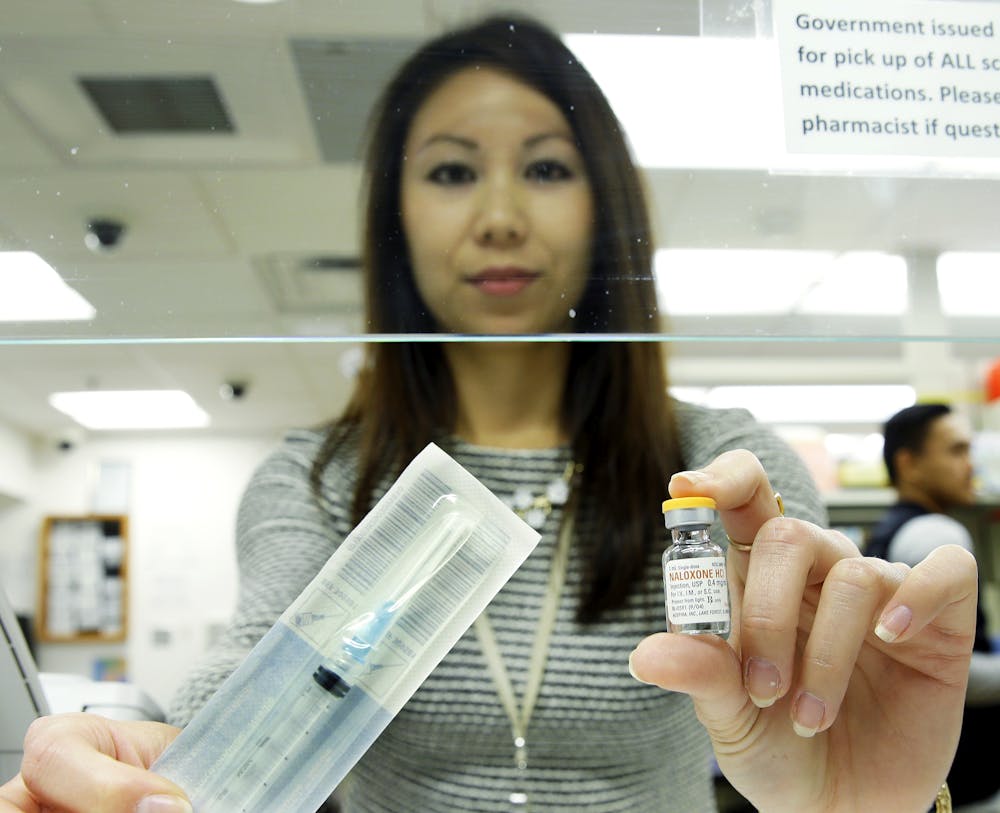
Available as an injection or nasal spray, naloxone can be administered by anyone trained to do so - assuming, that is, that someone has it on hand at the scene of the overdose.
As opioid-related deaths have soared, there’s been an increase in programs working to get naloxone into the community. Health centers like Prevention Point Pittsburgh, for example, train people likely to witness overdose on how to recognize the signs and give them free naloxone.
However, the most recent available data suggest that relatively few communities with high rates of opioid-related deaths actually have such programs.
Even emergency medical personnel, or EMS, may not have naloxone when they need it.
One impediment to increased naloxone access is the argument that reviving overdose victims will encourage opioid use.
Naloxone critic Dr. Harold Jonas, founder of the website Sober.com, has warned health care providers that naloxone creates a safety net, making people think “they don’t need treatment for substance abuse and … continue using at will.”
The fear that life-saving interventions encourage reckless behavior – a concern historically used to oppose everything from condoms to seat belts – is called “moral hazard.”
Often, politicians combine moral hazard with budgetary arguments to oppose broader naloxone distribution.
The prices of some naloxone products have been rising. Between 2009 and 2016, naloxone manufactured by Amphastar almost doubled in price, from US$20.34 to $39.60 per dose.
In 2017, the city of Middletown, Ohio, spent almost $35,000 on naloxone administered by EMS in 966 opioid overdose calls – up from $11,000 and 532 calls in 2016.
Since the opioid crisis disproportionately hurts low-income communities like Middletown, our team of health policy and epidemiology researchers at the University of Michigan conducted a study to determine whether naloxone is a good use of the scarce resources available to reduce opioid-related deaths.
We analyzed the cost-effectiveness of giving naloxone to three different groups: laypeople, police and firefighters and EMS.
When all three groups have naloxone, it costs about $16,000 per year of “high-quality” year of life saved. We accounted for quality of life as well as quantity, since problematic substance use increases the risk of hepatitis, HIV and other health serious illnesses.
As life-saving interventions go, $16,000 per high-quality year of life is an excellent deal. The public defibrillators used to revive people in cardiac arrest come out to around $53,797. And a breakthrough class of new cancer drugs run $100,000 to $150,000 per high-quality year of life saved.
Naloxone actually saves society money when we take the lost economic productivity from fatal overdoses into account, we found. Hard-hit communities may see naloxone as an expense – but they’re actually saving the city money by keeping more of its workforce alive.
This finding holds even when we add in a city’s criminal justice costs associated with opioid use.
Naloxone would remain cost-effective even if the “moral hazard” concerns were true. We found that overdose rates would have to rise 20% for lay distribution of naloxone to cease being cost-effective – a large margin of error for an unsubstantiated worry.
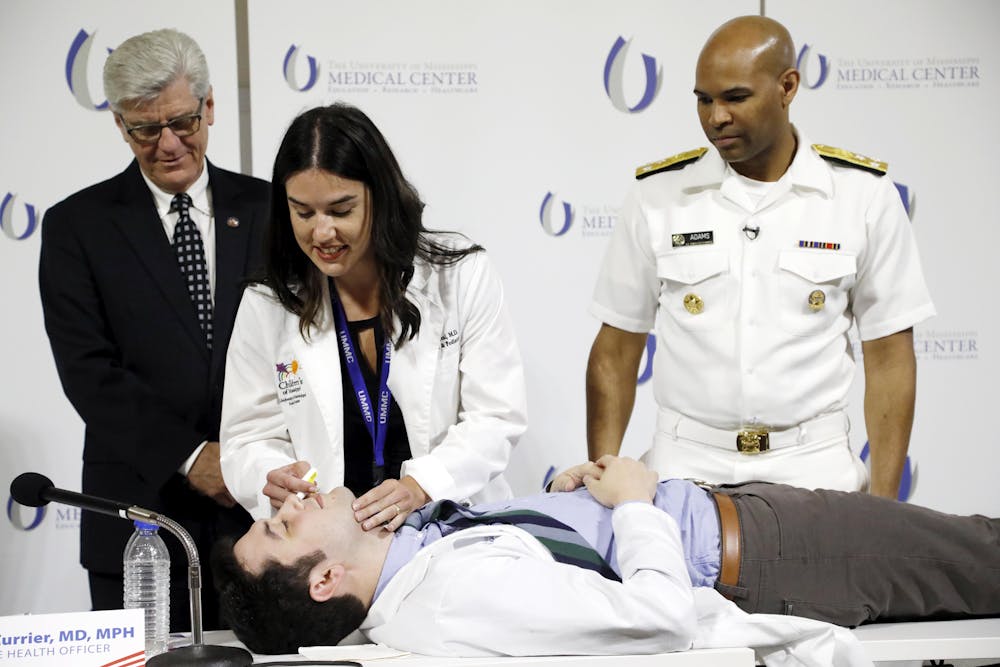
Surgeon General Jerome Adams, right, directs a session on naloxone administration, Jackson, Mississippi, May 17, 2018.
Our research determined that the most cost-effective strategy is to distribute naloxone to all three groups: laypeople, police and firefighters, and EMS.
If low-income communities can’t afford that much naloxone, however, the next-best scenario is to give the medicine to laypeople plus at least one first responder group – either police and fire or EMS.
Getting naloxone into lay hands is so critical because many overdose witnesses hesitate to call 911 due to fear of arrest, stigma or loss of government benefits like subsidized housing. No matter how many first responders have naloxone, the victims in those cases cannot benefit from it. They need someone close by, like another person using opioids, to revive them.
But emergency responders should have naloxone as well since overdose witnesses may not always have naloxone or be able and willing to use it.
Sometimes, a single naloxone dose can save two lives.
In 2018, clinicians in North Carolina treated a pregnant patient who had recently overdosed. Friends had used naloxone to reverse the overdose, allowing her to enter treatment for substance use.
A few months later, she gave birth to a healthy baby.
US astronauts Christina Koch and Jessica Meir on Friday became the first all-female pairing to carry out a spacewalk -- a historic milestone as NASA prepares to send the first woman to the Moon.
"It symbolizes exploration by all that dare to dream and work hard to achieve that dream," Meir said after the 7-hour, 17-minute spacewalk to replace a power controller on the International Space Station.
The mission was originally planned for earlier this year but had to be aborted due to a lack of properly fitting spacesuits, leading to allegations of sexism.
Koch and Meir began the walk with standard safety checks on their suits and tethers, before making their way to the repair site on the station's port side, as the sunlit Earth came into view.
In a call to reporters just a few minutes before, NASA administrator Jim Bridenstine emphasized the symbolic significance of the day.
"We want to make sure that space is available to all people, and this is another milestone in that evolution," he said.
"I have an 11-year-old daughter, I want her to see herself as having all the same opportunities that I found myself as having when I was growing up."
- Suit flub -
NASA/AFP / HO This undated combination photo obtained from NASA shows astronauts Christina Koch (L) and Jessica Meir
The first all-female spacewalk was supposed to take place in March but was canceled because the space agency had only one medium-sized suit. A male-female team performed the required task at a later date.
The failure by traditionally male-dominated NASA to be adequately prepared was denounced in some quarters as evidence of implicit sexism.
When Koch and Meir had been outside the space station for about five hours, President Donald Trump reached them in a video call and told them they had made history.
"You are very brave, brilliant women," Trump said.
"You represent this country so well," the president added. "We are very proud of you."
Meir, a 42-year-old marine biologist who was recruited by NASA in 2013, answered by paying tribute to female pioneers of the past.
"We don't want to take too much credit because there have been many other female spacewalkers before us," she said.
AFP / JIM WATSON US President Donald Trump (C), Vice President Mike Pence (L), Advisor to the President Ivanka Trump (3rd R) and NASA Administrator Jim Bridenstine (2nd R) speak to NASA astronauts Christina Koch and Jessica Meir during the first all-woman spacewalk
"There's been a long line of female scientists, explorers, engineers and astronauts. We have followed in their footsteps, to get to where we are today."
After the call, the astronauts got back to their repair work.
"That is a view," one of them -- it was not clear which -- said at one point, as the earth was lit up in bright light from the sun.
Koch, an electrical engineer who is leading the mission, was carrying out her fourth spacewalk and was hooked up to the station's robotic arm.
Meir, making her first spacewalk, carefully made her way using handles.
The two were working to replace a faulty battery charge/discharge unit, known as a BCDU.
The station relies on solar power but is out of direct sunlight for much of its orbit and therefore needs batteries. The BCDUs regulate the amount of charge that goes into them.
The current task was announced Monday and is part of a wider mission of replacing aging nickel-hydrogen batteries with higher-capacity lithium-ion units.
- Artemis -
The US sent its first female astronaut into space in 1983, when Sally Ride took part in the seventh space shuttle mission, and has now had more women astronauts than any other country.
But the first woman in space was Soviet cosmonaut Valentina Tereshkova in 1963, followed by compatriot Svetlana Savitskaya in 1982, who was also the first woman spacewalker two years later.
NASA acting associate administrator Ken Bowersox said he hoped that an all-female spacewalk would soon be a "routine" matter that would not require celebration.
Asked why it had taken so long -- Meir is the 14th US woman spacewalker -- he said men's added height provided an advantage.
"There have been a lot of spacewalks where very tall men were the ones that were able to do the jobs because they were able to reach and do things a little bit more easily," he said.
Democratic presidential hopeful Kamala Harris said the spacewalk was more than historic.
"It's a reminder that for women, even the sky doesn't have to be the limit," she tweeted.
NASA plans to return to the Moon by 2024 for the first time since the Apollo landings of 1969-1972. The new mission is named Artemis, after the twin sister of Apollo in Greek mythology.
The mission will likely see the first woman set foot on the lunar surface, perhaps as part of a male-female combination, as the space agency looks ahead to a crewed Mars expedition in the 2030s.
While many people love colorful photos of landscapes, flowers or rainbows, some biomedical researchers treasure vivid images on a much smaller scale – as tiny as one-thousandth the width of a human hair.
To study the micro world and help advance medical knowledge and treatments, these scientists use fluorescent nano-sized particles.
Quantum dots are one type of nanoparticle, more commonly known for their use in TV screens. They’re super tiny crystals that can transport electrons. When UV light hits these semiconducting particles, they can emit light of various colors.
That fluorescence allows scientists to use them to study hidden or otherwise cryptic parts of cells, organs and other structures.
I’m part of a group of nanotechnology and neuroscience researchers at the University of Washington investigating how quantum dots behave in the brain.
Common brain diseases are estimated to cost the U.S. nearly US$800 billion annually. These diseases – including Alzheimer’s disease and neurodevelopmental disorders – are hard to diagnose or treat.
Nanoscale tools, such as quantum dots, that can capture the nuance in complicated cell activities hold promise as brain-imaging tools or drug delivery carriers for the brain. But because there are many reasons to be concerned about their use in medicine, mainly related to health and safety, it’s important to figure out more about how they work in biological systems.
Quantum dots as next-generation dyes
Researchers first discovered quantum dots in the 1980s. These tiny particles are different from other crystals in that they can produce different colors depending on their size. They are so small that that they are sometimes called zero-dimensional or artificial atoms.
The most commonly known use of quantum dots nowadays may be TV screens. Samsung launched their QLED TVs in 2015, and a few other companies followed not long after. But scientists have been eyeing quantum dots for almost a decade. Because of their unique optical properties – they can produce thousands of bright, sharp fluorescent colors – scientists started using them as optical sensors or imaging probes, particularly in medical research.
Tubes of quantum dots emit bright, colorful light.
Scientists have long used various dyes to tag cells, organs and other tissues to view the inner workings of the body, whether that be for diagnosis or for fundamental research.
The most common dyes have some significant problems. For one, their color often cannot survive very long in cells or tissues. They may fade in a matter of seconds or minutes. For some types of research, such as tracking cell behaviors or delivering drugs in the body, these organic dyes simply do not last long enough.
Quantum dots would solve those problems. They are very bright and fade very slowly. Their color can still stand out after a month. Moreover, they are too small to physically affect the movement of cells or molecules.
Those properties make quantum dots popular in medical research. Nowadays quantum dots are mainly used for high resolution 3D imaging of cells or molecules, or real-time tracking probes inside or outside of animal bodies that can last for an extended period.
But their use is still restricted to animal research, because scientists are concerned about their use in human beings. Quantum dots commonly contain cadmium, a heavy metal that is highly poisonous and carcinogenic. They may leak the toxic metal or form an unstable aggregate, causing cell death and inflammation. Some organs may tolerate a small amount of this, but the brain cannot withstand such injury.
How quantum dots behave in the brain
My colleagues and I believe an important first step toward wider use of quantum dots in medicine is understanding how they behave in biological environments. That could help scientists design quantum dots suitable for medical research and diagnostics: When they’re injected into the body, they need to stay small particles, be not very toxic and able to target specific types of cells.
We looked at the stability, toxicity and cellular interactions of quantum dots in the developing brains of rats. We wrapped the tiny quantum dots in different chemical “coats.” Scientists believe these coats, with their various chemical properties, control the way quantum dots interact with the biological environment that surrounds them. Then we evaluated how quantum dots performed in three commonly used brain-related models: cell cultures, rat brain slices and individual live rats.
We found that different chemical coats give quantum dots different behaviors. Quantum dots with a polymer coat of polyethylene glycol (PEG) were the most promising. They are more stable and less toxic in the rat brain, and at a certain dose don’t kill cells. It turns out that PEG-coated quantum dots activate a biological pathway that ramps up the production of a molecule that detoxifies metal. It’s a protective mechanism embedded in the cells that happens to ward off injury by quantum dots.
Quantum dots are also “eaten” by microglia, the brain’s inner immune cells. These cells regulate inflammation in the brain and are involved in multiple brain disorders. Quantum dots are then transported to the microglia’s lysosomes, the cell’s garbage cans, for degradation.
Quantum dots encounter different conditions in a cell, a slice of brain, or a live animal.
But we also discovered that the behaviors of quantum dots vary slightly between cell cultures, brain slices and living animals. The simplified models may demonstrate how a part of the brain responds, but they are not a substitute for the entire organ.
For example, cell cultures contain brain cells but lack the connected cellular networks that tissues have. Brain slices have more structure than cell cultures, but they also lack the full organ’s blood-brain barrier – its “Great Wall” that prevents foreign objects from entering.
What’s the future for quantum dots?
Our results offer a warning: Nanomedicine research in the brain makes no sense without carefully considering the organ’s complexity.
That said, we think our findings can help researchers design quantum dots that are more suitable for use in living brains. For example, our research shows that PEG-coated quantum dots remain stable and relatively nontoxic in living brain tissue while having great imaging performance. We imagine they could be used to track real-time movements of viruses or cells in the brain.
In the future, along with MRI or CT scans, quantum dots may become vital imaging tools. They might also be used as traceable carriers that deliver drugs to specific cells. Ultimately, though, for quantum dots to realize their biomedical potential beyond research, scientists must address health and safety concerns.
Although there’s a long way to go, my colleagues and I hope the future for quantum dots may be as bright and colorful as the artificial atoms themselves.




 AFP /Measles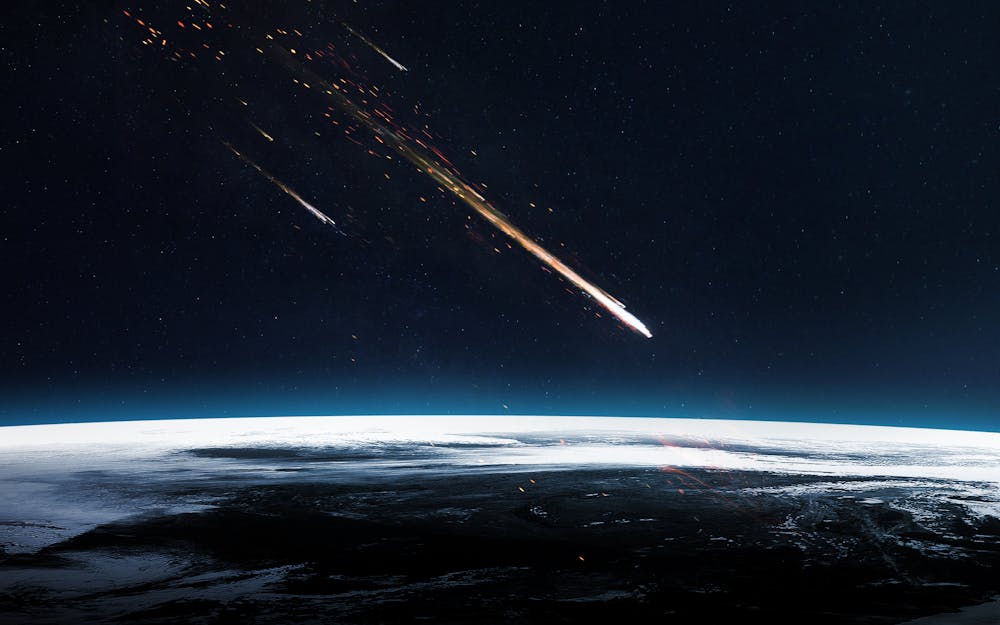







 NASA/AFP / HO
  AFP / JIM WATSON