Rep. Jared Huffman (D-MO) -- chairman of the House Subcommittee on Water, Oceans, and Wildlife (WOW) -- scolded a witness this week for making a career out of trolling scientists.
The confrontation came during a WOW hearing on Wednesday.
One Republican witness, Marc Morano, argued that Democrats were wrong to pursue climate change solutions.
"What it means is people are going to be paying higher energy costs for absolutely no benefit," Morano told the committee. "Even if you believe -- and you shouldn't -- every claim made by the United Nations or Al Gore, the Green New Deal [and] the UN Paris Agreement will have the temperature difference in 100 years that's imperceptible."
Later in the hearing, Huffman called out Morano, noting that he has a degree as a political scientist.
“I don’t know what inspires someone to make a career of trolling scientists or monetizing contrarian ideology on the YouTube and TED Talk circuit," the chairman told Morano. "But it’s just a very different kind of conversation than the science-based conversation I think many of us would like to try to have.”
In an interview with EOS, Huffman condemned Republicans on the committee for stacking the hearing with anti-science witnesses.
“There’s a narrative around here [in Congress] that Republicans are coming around on science and climate. Look no further than the witnesses they continue to dredge out of the fever swamp for these subcommittee hearings, and you’ll see that they’ve got a long way to evolve,” he explained to the publication. “This is shadowy stuff, and we see it week after week: instead of scientists, people from these junior varsity think tanks that they keep dredging up. Apparently, witnesses from QAnon and Infowars... were unavailable, and so this is what we get.”
For years scientists have tried to reconcile the fungal fossil record with estimates from analyses of fungal DNA. But some of their key morphological characters – that is, the shapes they take – can only be established via microscopic and chemical analyses. That includes the complex networks of microscopic thread-like filaments and cell walls made of chitin, which are also not visible to the naked eye. The effort seemed hopeless, until now.
Corentin Loron, a graduate student at the University of Liege in Belgium and colleagues, discovered microscopic, fossilized specimens of a fungus called Ourasphaira giraldae in shale rock from the Grassy Bay Formation in the Northwest Territories of Canada. Given that Ourasphaira is found on 1,000- to 900-million-year-old rocks, the new fossil pushes back the origin of fungi by half a billion years.
A very revealing fossil
But how did Loron deduce that these fossils are fungi? While most of us are quite familiar with the large reproductive structures of some fungi, such as mushrooms, most of us are less familiar with the fungal network of microscopic thread-like filaments that makes up their “bodies.”
Microscopical analyses of Ourasphaira show that it formed a network just like those made by modern fungi; and chemical analyses show that the cell walls of these microfossils contain chitin, again just like modern fungi.
The implications of this discovery are twofold.
First, the fossil singlehandedly reconciles DNA-based and paleontological estimates of fungal origins, pushing back the origin of Opisthokonta, a supergroup comprising fungi, animals and their single-celled relatives to at least a billion years ago. And second, the fossil gives us clues about the environments where the first fungi lived. Ourasphaira was found in a shale, a type of rock that forms at the muddy bottom of lakes and rivers. Since this particular shale appears to have been formed as a result of sedimentation from a shallow-water estuary, it may be the first fungi evolved where rivers met the seas a billion years ago.
It’s one more clue that helps fill in the picture on how life on earth evolved and one more step toward bringing this fascinating group of organisms to the limelight.
By Antonis Rokas, Cornelius Vanderbilt Chair in Biological Sciences and Professor of Biological Sciences and Biomedical Informatics, Vanderbilt University
Whenever I talk about my research on how parents come to decide to reject vaccines for their children, my explanations are met with a range of reactions, but I almost always hear the same questions.
What is wrong with those parents?
Are they anti-science?
Are they anti-expert?
Are they simply ignorant or selfish?
Are they crazy?
The year is not half over, and the number of measles cases has now exceeded highs not seen since the U.S. was declared measles-free in 2000. Given the indisputably large role unvaccinated individuals are playing in it, parents who reject vaccines are increasingly vilified. Some people call to have these parents arrested or punished. Many are asking states to tighten laws that make exemptions to school enrollment without vaccines too easy.
Others dismiss these “Whole Foods moms” as harming others and call for them to be socially ostracized.
As a sociologist, I have spent most of a decade talking to parents, pediatricians, policymakers, lawyers and scientists to understand competing views of vaccines. In my research, I find that parents who reject vaccines – by which I mean mostly mothers – work hard to make what they see as an informed decision to do what they think is best for their children. They also want to make a decision that best aligns with their belief system.
Experts, at least of their own kids
Many “anti-vax” parents see themselves as experts on their own children, as best able to decide what their children need and whether their child needs a particular vaccine, and better qualified than health experts or public health agencies to decide what is best for their family.
These decisions are inarguably not in the best interests of the community and indisputably increase risk to others who may be the most vulnerable to the worst outcomes of infection. And although no one can predict how someone will respond to measles infection, children under age five and adults over 20 are most likely to suffer the most serious complications.
The parents who choose to reject vaccines introduce risk to many, including their own children and others. This makes it easy for many people to see them with contempt.
Yet, their decisions also provide an opportunity for all of us to consider how we all may make choices that align with our own goals, but risk the health, and lives, of those in our communities.
Exhibit A: Flu shots
Vaccination rates for influenza are very low compared to measles, and flu kills far more people.
“I totally believe in vaccines. I just don’t get flu shots.”
I hear statements like this all the time from people who consider themselves committed to vaccines and public health. Their statement is not surprising since fewer than 45% of Americans, and fewer than 37% of adults 18-64 without a high-risk health condition, get a flu shot despite recommendations that almost everyone over six months of age should.
Influenza causes more deaths than any other vaccine-preventable disease. The Centers for Disease Control and Prevention estimates that in the 2018-2019 season, between 36,400 and 61,200 people died from influenza, of which 109 were children.
The same people who question the motives of parents who reject vaccines often confidently tell me why they didn’t get a flu shot this year, even as they understand that flu can kill. They insist they don’t need it. They contend they are healthy. They have good nutrition. They can handle infection should they become sick. They won’t be one of the 500,000-600,000 people
hospitalized this year for influenza-related illness. Some say that the vaccine doesn’t always work anyway, so why bother.
These reasons for rejecting a flu vaccine are the exact same reasons parents offer for why they reject vaccines for their children. After all, they insist, their children won’t be the ones devastated by infection. They are healthy. They eat well. They don’t need those vaccines, either.
Exhibit B: Antibiotics
When a person takes an antibiotic but doesn’t need it, bacteria become resistant.
Beyond vaccines, it turns out many of us are actively contributing to a different kind of public health nightmare: antibiotic resistance. The CDC estimates that each year at least 2 million people are infected with antibiotic-resistant bacteria, and at least 23,000 people die as a result.
One of the major causes is unnecessary antibiotic use. One study suggests that at least 30% and as many as 50% of antibiotics are prescribed unnecessarily.
So why do so many of us jeopardize community health and place others at risk by taking medications that probably won’t help us anyway? Often, those affected by a cold, sore throat, ear infection, cough or bronchitis feel frustrated that their symptoms are interfering with daily life and making them miserable. Surely, there must be some chance an antibiotic will help, the thinking seems to go, so why not try?
As it turns out, people do. Studies show that people frequently store unused antibiotics, borrow them from family and friends, use antibiotics intended for animals and decide without medical advice whether to take them. From my perspective, this do-it-yourself approach to disease management is not dissimilar to the efforts parents with whom I spoke describe going through to manage risk without vaccines.
Yet, the dangers to others are clear. Research shows that every day of unnecessary antibiotic use contributes to antibiotic resistance, which is increasingly devastating the ability to treat actual bacterial infections.
Room for improvement
There are many ways to support community health and ways we could all do better. For example, monitoring of air quality outside of schools shows elevated levels of benzene, formaldehyde, acetaldehyde and toxins during the hour coinciding with parents picking up their children.
All parents who aim to support children in their community, including those who condemn vaccine hesitance, could protect children’s lungs and reduce children’s risk of developing asthma, respiratory problems and other adverse health effects in one simple way: Turn off your engine in front of schools. Limiting a vehicle’s idling time can dramatically reduce these pollutants and children’s exposure to them. This is an easy way to protect kids, yet some parents insist they need their climate-controlled car or personal convenience, despite the harms it creates.
As the measles continues to spread, we will need to have hard conversations about what we should expect of ourselves and each other.
But as we do, we should take a hard look at how each of us may be undermining community health in myriad ways beyond vaccination. Before embracing calls to publicly sanction or socially shun those who reject vaccines, we could all work to create a stronger culture of public health in which we strive to do better for the most vulnerable among us, even at personal inconvenience.
The unexpected culprit that could throw a wrench in the world’s efforts to stop climate change? Runaway methane levels. Researchers monitoring air samples have noticed an alarming observation: Methane levels are on the rise and no one’s quite sure why.
NOAA’s Earth System Research Laboratory scientists have been analyzing air samples since 1983. Once a week, metal flasks containing air from around the world at different elevations find their way to the Boulder, Colorado, lab. The scientists look at 55 greenhouse gases, including methane and its more-famous climate villain, CO2.
You might know methane as the stuff of cow farts, natural gas, and landfills. It’s also an incredibly potent greenhouse gas, absorbing heat 25 times more effectively than CO2. While the rise of carbon dioxide has been stealingthespotlight as of late, methane levels have also been on the incline.
Methane levels, not surprisingly, have been steadily rising since the Industrial Revolution. Things picked up in 1980 and soon after, the NOAA scientists began consistently measuring methane. Levels were high but flattened out by the turn of the millenium. So when levels began to increase at a rapid rate in 2007, and then even faster in 2014, scientists were baffled. No one’s best guesses came close to predicting current methane levels of around 1,867 parts per billion as of 2018. This means studies evaluating the effects of climate change and action plans to address them, like the Paris Climate Agreement, may be based on downplayed climate crisis forecasts.
So what’s the big deal? Carbon dioxide emissions are relatively well understood and can be tracked to various human activities like transportation and electricity, which means policies can be enacted to target and lower emissions. Pinning down the source of methane, on the other hand, is a little more complicated.
“The really fascinating thing about methane,” Lori Bruhwiler, a NOAA research scientist, told Undark, “is the fact that almost everything we humans do has an effect on the methane budget, from producing food to producing fuel to disposing of waste.”
As if things weren’t complicated enough, a study published in AGU100 distinguished microbe-produced methane from fossil fuel methane — historically the more abundant one — and found that “natural” methane had taken the lead. This unexpected result might explain the upticks in methane levels that do not seem correlated with human activity. Of course, it could also be any number of human-made causes, including warming temperatures freeing up the gas and more frequent floods amplifying the methane output of wetlands.
Natural methane or not, this finding doesn’t exonerate anyone. The study’s authorsmade that clear in their concluding remarks.
“If the increased methane burden is driven by increased emissions from natural sources,” they wrote, “and if this is a climate feedback—the warming feeding the warming—then there is urgency to reduce anthropogenic emissions, which we can control.”
Curbing methane could be a powerful tool in our upcoming climate fight. Since the greenhouse gas is relatively short lived, only around 12 years, versus the 20 to 200 years of CO2, and is more effective at trapping heat than carbon dioxide, addressing methane emissions could be effective as a short-term climate remediation tool. The first step? Bringing more attention to methane so we can figure out where it comes from and nip it in the bud.
Vaccination against measles should be mandatory for children before they start school in order to prevent future outbreaks of the resurgent disease, according to new analysis released Friday.
The World Health Organization says cases of measles -- a highly contagious viral infection that causes rashes and fever that can prove fatal -- surged 300 percent in 2018.
While many new cases occurred in countries undergoing unrest or conflict, several developed nations registered significant rises in infections -- a phenomenon experts attribute to creeping "vaccine resistance".
Despite a widely effective, almost universally available vaccine costing pennies, more and more parents are willingly putting their children in harm's way due in part to a fraudulent scientific paper published over 20 years ago that subsequently fed conspiracy theories about plots to spread the disease.
Filippo Trentini and colleagues from the Bruno Kessler Foundation looked at seven rich nations and used computer modelling to examine several different vaccination scenarios between now and 2050.
They found that in nearly all countries surveyed, current immunisation programmes will be insufficient to maintain "safe" levels of immunity among populations.
The WHO says the number of unvaccinated individuals in a given country should not exceed 6-8 percent of the population in order to avoid widespread outbreaks.
AFP / John SAEKI Measles resurgence
"This is a complex phenomenon and it may have various causes depending on the region," Trentini told journalists.
"In high-income countries, for example, it may be attributable to vaccine resistance and to the clustering of unvaccinated people in specific groups of the population."
- Threshold breached -
Under current vaccination programmes, the study found that Britain, the United States, Ireland, Australia and Italy would surpass safe levels of people susceptible to measles by 2050.
Indeed, the models showed that the proportion of unvaccinated people in Italy -- home to several recent outbreaks -- may already be over the 7.5 percent "safety" threshold.
In Britain the unvaccinated rate of 3.7 percent was expected to rise to 8 percent by mid-century under the current national approach.
"It's a very difficult task to forecast future epidemics," said Trentini.
"The results suggest routine programmes with current coverage levels are not enough to maintain the high immunity level required in the next decades."
The authors of the study, published in the journal BMC Medicine, stressed however that mandatory vaccinations of school children -- such as has been implemented in France and Italy in recent years -- would only be effective in conjunction with better public health awareness.
"There are some immunity gaps in Europe among adults," said Piero Poletti, report co-author.
"These countries would certainly benefit from the introduction of vaccinations at school entry on top of current immunisation programmes."
Sonia Saxena, professor of primary care at Imperial College London, welcomed the research but cautioned that mandatory vaccinations might have "unintended consequences".
"It risks disenfranchising parents and carers, as well as risking a rise in unvaccinated children being excluded from school," she said.
"The most important message for parents is that for (the measles vaccine), two doses by age 2 is the thing to remember. If everyone did this they would protect their child and also the whole community from outbreaks of measles," added Saxena, who was not involved in the study.
The Y chromosome may be a symbol of masculinity, but it is becoming increasingly clear that it is anything but strong and enduring. Although it carries the “master switch” gene, SRY, that determines whether an embryo will develop as male (XY) or female (XX), it contains very few other genes and is the only chromosome not necessary for life. Women, after all, manage just fine without one.
What’s more, the Y chromosome has degenerated rapidly, leaving females with two perfectly normal X chromosomes, but males with an X and a shrivelled Y. If the same rate of degeneration continues, the Y chromosome has just 4.6m years left before it disappears completely. This may sound like a long time, but it isn’t when you consider that life has existed on Earth for 3.5 billion years.
The Y chromosome hasn’t always been like this. If we rewind the clock to 166m years ago, to the very first mammals, the story was completely different. The early “proto-Y” chromosome was originally the same size as the X chromosome and contained all the same genes. However, Y chromosomes have a fundamental flaw. Unlike all other chromosomes, which we have two copies of in each of our cells, Y chromosomes are only ever present as a single copy, passed from fathers to their sons.
This means that genes on the Y chromosome cannot undergo genetic recombination, the “shuffling” of genes that occurs in each generation which helps to eliminate damaging gene mutations. Deprived of the benefits of recombination, Y chromosomal genes degenerate over time and are eventually lost from the genome.
Chromosome Y in red, next to the much larger X chromosome.
National Human Genome Research Institute
Despite this, recent research has shown that the Y chromosome has developed some pretty convincing mechanisms to “put the brakes on”, slowing the rate of gene loss to a possible standstill.
For example, a recent Danish study, published in PLoS Genetics, sequenced portions of the Y chromosome from 62 different men and found that it is prone to large scale structural rearrangements allowing “gene amplification” – the acquisition of multiple copies of genes that promote healthy sperm function and mitigate gene loss.
The study also showed that the Y chromosome has developed unusual structures called “palindromes” (DNA sequences that read the same forwards as backwards – like the word “kayak”), which protect it from further degradation. They recorded a high rate of “gene conversion events” within the palindromic sequences on the Y chromosome – this is basically a “copy and paste” process that allows damaged genes to be repaired using an undamaged back-up copy as a template.
Looking to other species (Y chromosomes exist in mammals and some other species), a growing body of evidence indicates that Y-chromosome gene amplification is a general principle across the board. These amplified genes play critical roles in sperm production and (at least in rodents) in regulating offspring sex ratio. Writing in Molecular Biology and Evolution recently, researchers give evidence that this increase in gene copy number in mice is a result of natural selection.
On the question of whether the Y chromosome will actually disappear, the scientific community, like the UK at the moment, is currently divided into the “leavers” and the “remainers”. The latter group argues that its defence mechanisms do a great job and have rescued the Y chromosome. But the leavers say that all they are doing is allowing the Y chromosome to cling on by its fingernails, before eventually dropping off the cliff. The debate therefore continues.
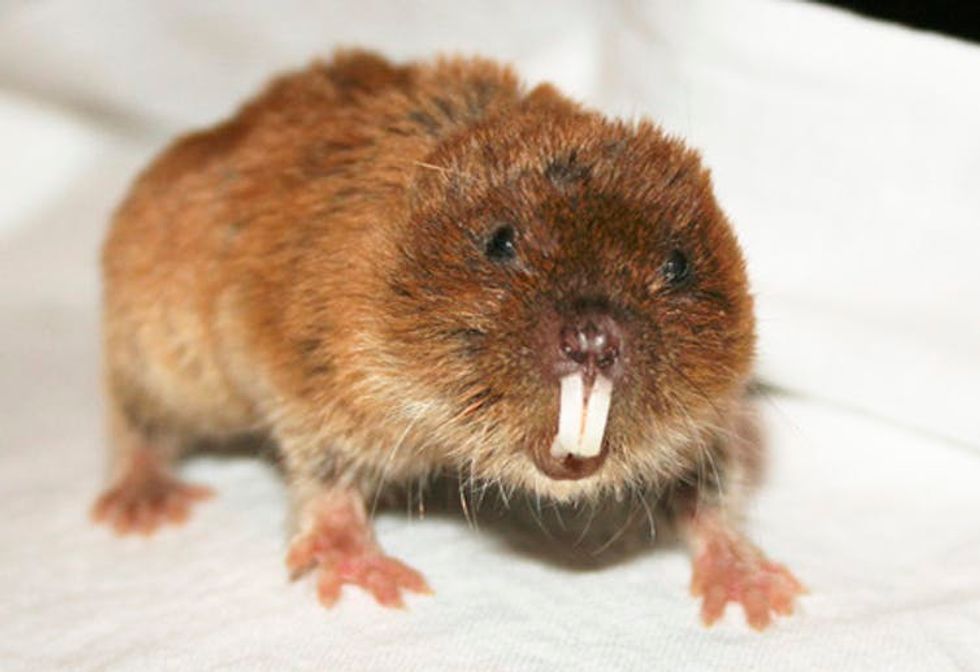
A leading proponent of the leave argument, Jenny Graves from La Trobe University in Australia, claims that, if you take a long-term perspective, the Y chromosomes are inevitably doomed – even if they sometimes hold on a bit longer than expected. In a 2016 paper, she points out that Japanese spiny rats and mole voles have lost their Y chromosomes entirely – and argues that the processes of genes being lost or created on the Y chromosome inevitably lead to fertility problems. This in turn can ultimately drive the formation of entirely new species.
The demise of men?
As we argue in a chapter in a new e-book, even if the Y chromosome in humans does disappear, it does not necessarily mean that males themselves are on their way out. Even in the species that have actually lost their Y chromosomes completely, males and females are both still necessary for reproduction.
In these cases, the SRY “master switch” gene that determines genetic maleness has moved to a different chromosome, meaning that these species produce males without needing a Y chromosome. However, the new sex-determining chromosome – the one that SRY moves on to – should then start the process of degeneration all over again due to the same lack of recombination that doomed their previous Y chromosome.
However, the interesting thing about humans is that while the Y chromosome is needed for normal human reproduction, many of the genes it carries are not necessary if you use assisted reproduction techniques. This means that genetic engineering may soon be able to replace the gene function of the Y chromosome, allowing same-sex female couples or infertile men to conceive. However, even if it became possible for everybody to conceive in this way, it seems highly unlikely that fertile humans would just stop reproducing naturally.
Although this is an interesting and hotly debated area of genetic research, there is little need to worry. We don’t even know whether the Y chromosome will disappear at all. And, as we’ve shown, even if it does, we will most likely continue to need men so that normal reproduction can continue.
Indeed, the prospect of a “farm animal” type system where a few “lucky” males are selected to father the majority of our children is certainly not on the horizon. In any event, there will be far more pressing concerns over the next 4.6m years.
UN Secretary General Antonio Guterres raised concerns Thursday that a concrete dome built last century to contain waste from atomic bomb tests is leaking radioactive material into the Pacific.
Speaking to students in Fiji, Guterres described the structure on Enewetak atoll in the Marshall Islands as "a kind of coffin" and said it was a legacy of Cold War-era nuclear tests in the Pacific
"The Pacific was victimised in the past as we all know," he said, referring to nuclear explosions carried out by the United States and France in the region.
In the Marshalls, numerous islanders were forcibly evacuated from ancestral lands and resettled, while thousands more were exposed to radioactive fallout.
The island nation was ground zero for 67 American nuclear weapons tests from 1946-58 at Bikini and Enewetak atolls, when it was under US administration.
The tests included the 1954 "Bravo" hydrogen bomb, the most powerful ever detonated by the United States, about 1,000 times bigger than the atomic bomb dropped on Hiroshima.
Guterres, who is touring the South Pacific to raise awareness of climate change issues, said Pacific islanders still needed help to deal with the fallout of the nuclear testing.
"The consequences of these have been quite dramatic, in relation to health, in relation to the poisoning of waters in some areas," he said.
"I've just been with the President of the Marshall Islands (Hilda Heine), who is very worried because there is a risk of leaking of radioactive materials that are contained in a kind of coffin in the area."
The "coffin" is a concrete dome, built in the late 1970s on Runit island, part of Enewetak atoll, as a dumping ground for waste from the nuclear tests.
Radioactive soil and ash from the explosions was tipped into a crater and capped with a concrete dome 45 centimetres (18 inches) thick.
However, it was only envisaged as a temporary fix and the bottom of the crater was never lined leading to fears the waste is leaching into the Pacific.
Cracks have also developed in the concrete after decades of exposure and there are concerns it could break apart if hit by a tropical cyclone.
Guterres did not directly address what should be done with the dome but said the Pacific's nuclear history still needed to be addressed.
"A lot needs to be done in relation to the explosions that took place in French Polynesia and the Marshall Islands," he said.
"This is in relation to the health consequences, the impact on communities and other aspects.
"Of course there are questions of compensation and mechanisms to allow these impacts to be minimised."
Researchers in Germany have unearthed a new species of flying dinosaur that flapped its wings like a raven and could hold vital clues as to how modern-day birds evolved from their reptilian ancestors.
For more than a century and a half since its discovery in 1861, Archaeopteryx -- a small feathered dinosaur around the size of a crow that lived in marshland around 150 million years ago -- was widely considered to be the oldest flying bird.
Palaeontologists from Ludwig-Maximilians University (LMU) in Munich and the University of Fribourg examined rock formations in the German region of Bavaria, home to nearly all known Archaeopteryx specimens.
They came across a petrified wing, which the team initially assumed to be the same species. They soon found several differences, however.
"There are similarities, but after detailed comparisons with Archaeopteryx and other, geologically younger birds, its fossil remains suggested that we were dealing with a somewhat more derived bird," said lead study author Oliver Rauhut from LMU's Department of Earth and Environmental Sciences.
They called the new bird-like dinosaur Alcmonavis poeschli -- from the old Celtic word for a nearby river and the scientist who discovered the fossil, excavation leader Roland Poeschl.
The study, published in the journal eLife Sciences, said Alcmonavis poeschli was "the most bird-like bird discovered from the Jurassic".
As well as being significantly larger than Archaeopteryx, the new specimen had more notches in its wing bones that pointed to muscles which would have allowed it to actively flap its wings.
Significantly, this "flapping" trait found in Alcmonavis poeschli is present in more recent birds, but not in Archaeopteryx.
"This suggests that the diversity of birds in the late Jurassic era was greater than previously thought," Rauhut said.
The discovery is likely to fuel debate among dinosaur experts over whether birds and dinosaurs developed the ability to flap their wings from earlier gliding species.
"Its adaptation shows that the evolution of flight must have progressed relatively quickly," said Christian Foth, from the University of Fribourg, and a co-author of the research.
Hawaiian "super corals" that have recovered despite living in warm and acidic water offer a glimmer of hope that dying reefs across the world could be saved, a new study says.
The research suggests that the gloomiest climate change picture of a world without the kaleidoscope underwater habitats could still be avoided, according to lead author Christopher Jury.
"It's unfortunately but inevitably true that things are going to get worse for reefs over the next 20-30 years, but that doesn't mean it's unstoppable," said Jury, a postdoctoral researcher at the Hawaii Institute of Marine Biology.
"We can still turn this thing around and end up getting back to better than what we have today within a reasonable timeframe," he told AFP.
Coral reefs cover less than one percent of the ocean bed but support around 30 percent of all known marine life.
But they are suffering, with stressors including the warmer and more acidic oceans caused by climate change, as well as other human-made pressures including pollution and overfishing.
The UN's intergovernmental panel on climate change warned last year that just 1.5 Celsius (2.7 Fahrenheit) of global warming could see 70-90 percent of Earth's coral reefs vanish.
But Jury's research shows that it is possible for coral to survive and even thrive in waters that are warmer and more acidic than where coral usually lives.
- Rapid recovery -
He studied coral reefs in Hawaii's Kane'ohe Bay that were devastated between the 1930s and 1970s by urbanization, dredging, coastal development and the discharge of sewage.
By the early 1970s, shallow coral cover across the bay had decreased by more than 70 percent on average, and by more than 95 percent in the southern bay, nearest the sewage output.
But in the late 1970s, the sewage was diverted and the coral began to recover rapidly.
AFP/File / PATRICK BAZ Jury studied reefs in Hawaii's Kane'ohe Bay devastated by urbanization, dredging, coastal development and the discharge of sewage
That happened despite the fact that Kane'ohe Bay has warmer and more acidic waters than are typically found in the area.
In fact, the conditions in the bay are what other parts of Hawaii could see in the decades ahead if climate change continues apace. And those conditions are not usually favorable for coral.
But in Kane'ohe Bay, simply removing the sewage output allowed the coral to recover to between 50-90 percent cover, "among the highest reported for any reefs in the Hawaiian Islands," says the study published Wednesday in Proceedings of the Royal Society B: Biological Sciences journal.
The key, said Jury, was that the coral populations in Kane'ohe Bay "naturally harbor a lot of 'super corals', which can thrive in moderately warmer, more acidic conditions."
So once the sewage pollution was removed, those "super corals" swiftly "came in and drove the reefs to a rapid recovery."
- 'Glimpse into the future' -
These corals appeared to be naturally able to survive in a climate that is usually hostile.
The recovery was a combination of both growth in remaining coral but also "recruitment", where larval coral floating along like seeds in the wind find a suitable environment and "settle".
Jury said it appeared that the larval coral came from both the bay but also other areas in Hawaii and that so-called "super corals" likely exist in many other places.
But elsewhere, under conditions that are cooler and less acidic, these corals don't thrive.
AFP/File / EMILY IRVING-SWIFT The UN warned last year that just 1.5 Celsius of global warming could see 70-90 percent of Earth's coral reefs vanish
"Our thinking is that this bay is giving us a glimpse into the future where the corals that are at a disadvantage today have the advantage tomorrow," Jury said.
It is too early to say whether these "super corals" could recolonize devastated reefs elsewhere, and Jury stressed that the findings were not cause for complacency.
"Even the very tough corals from Kane'ohe Bay die under the temperatures they'll see in a few decades if we don't substantially reduce climate change," he warned.
And the survival of "super corals" also depends on reducing other stressors, like pollution.
"If we take the necessary steps now then we will begin to see this reestablishment by corals during our lifetime, and our children and grandchildren will be able to witness the recovery of coral reefs during theirs because we make the decision that reefs are worth saving," he said.
Four new species of crustaceans. Samples of rock from the seafloor. Plastic pollution.
That's what American explorer Victor Vescovo found when he descended seven miles underwater to the Mariana Trench in the Pacific Ocean—the deepest dive in human history. The plastic Vescovo found at the bottom of the trench is a grim reminder that human refuse is everywhere on the planet.
Vescovo and his team announced they had made the journey to the bottom of the trench on Monday. Along with the dive depth record, Vescovo holds the distinction of being the first person to dive to the trench more than once.
According to the BBC, Vescovo's team collected samples from the sea floor for further study.
The scientists now plan to test the creatures they collected to see if they contain microplastics, a recent study found this was a widespread problem, even for animals living in the deep.
Reaction to Vescovo's accomplishment was tempered by his discovery of the plastics.
"Our waste is finding its way into the planet's most remote environments," BBC science correspondent Rebecca Morelle said.
The Science Channel listed off all the life found on the sea floor—and plastic.
It's "a travesty that even at our ocean's deepest reaches, humanity's garbage is having an impact," said TV host Rachel Rudwall.
A far-reaching lawsuit filed Friday by the attorneys general of more than 40 states accused some of the nation's largest generic drug manufacturers of conspiring to inflate prices, in some cases by over 1,000 percent.
"We have hard evidence that shows the generic drug industry perpetrated a multi-billion dollar fraud on the American people," Connecticut Attorney General William Tong, whose state led the probe into the companies' practices, said in a statement.
"We have emails, text messages, telephone records, and former company insiders that we believe will prove a multi-year conspiracy to fix prices and divide market share for huge numbers of generic drugs," said Tong.
The suit names 20 major drug manufacturers—including Pfizer, Teva, Novartis, and Mylan—as well as more than a dozen senior executives, who the complaint accuses of deleting evidence after the states began their investigation in 2014.
"The industrywide scheme affected the prices of more than 100 generic drugs," the New York Times reported Saturday, "including lamivudine-zidovudine, which treats H.I.V.; budesonide, an asthma medication; fenofibrate, which treats high cholesterol; amphetamine-dextroamphetamine for ADHD.; oral antibiotics; blood thinners; cancer drugs; contraceptives; and antidepressants."
Americans pay far more for prescription drugs than the people of any other industrialized nation. Alluding to this fact, Colorado Attorney General Phil Weiser—who joined the multi-state lawsuit—tweeted on Saturday: "If you are angry about rising drug prices, you should be. Particularly because a major cause of price increases is illegal collusion by generic drug companies."
As the Washington Post reported, the 465-page lawsuit accuses drug company executives of "coordinating consistently to obstruct" government investigations into drug prices, including after Rep. Elijah Cummings (D-Md.) and Sen. Bernie Sanders (I-Vt.) launched a probe into generic drug pricing in 2014.
"Apparently unsatisfied with the status quo of 'fair share' and the mere avoidance of price erosion, Teva and its co-conspirators embarked on one of the most egregious and damaging price-fixing conspiracies in the history of the United States," states the complaint.
Marking International Mother's Day, thousands of moms took to the streets in London and across the world Sunday to demand transformative action on behalf of Mother Earth and their children, whose futures are under threat from the global climate crisis.
"Business as usual—toxic pollution in our streets and our schools—is fueling a crisis that is making our kids sick and it is families in the deprived areas that are paying the heaviest price," Rosamund Kissi-Debra, whose daughter died from an asthma attack linked to air pollution, said during a rally on Sunday. "We need to do everything necessary to clean up our air and create a safer future for all our children."
The Mother's Day climate demonstration in London was organized by Mothers Rise Up, a U.K.-based advocacy group led by mothers inspired by the youth climate strikes that have spread across the globe.
Climate marches also took place in Australia, Spain, the Netherlands, the Czech Republic, and other nations on Sunday.
Ahead of Sunday's demonstrations, Mothers Rise Up published an open letter by over 100 parents calling on the governments of the world to confront the climate crisis with bold action "before it's too late."
"We are terrified at what the growing climate crisis means for our children and millions of children across the globe—many of whom are already suffering because of the extreme droughts, floods, and storms that are increasingly the norm in our rapidly over-heating world," the letter reads.
"We are inspired by the young people who are striking for climate action, but we can't leave it to our children to fix the mess that past generations have created," the parents wrote. "On the 12th of May—International Mother's Day—mums, dads, grandparents and families will be taking to the streets in London and beyond to demand that action. Together with worried parents across the globe we are calling on governments to declare a climate emergency."
Taking up the case of Massachusetts General internist Dr. Monique Tello, the Boston Globe reports that anti-vaxx activists are attacking doctors who have called out their conspiracy theories by posting fake reviews on social media.
According to the report, Tello urged parents to get their children -- and themselves -- vaccinated despite what they hear from the anti-vaxxers claim on children's health forums or social media platforms.
Her comments immediately made her a target.
Following her online advice, she was on the receiving end of over 100 negative reviews and one-star ratings on widely-viewed doctor rating websites.
According to Tello, none of the bad reviews came from patients she has seen, and she had to threaten a lawsuit to get the bogus reviews pulled -- despite the damage the smears had already done to her reputation.
The Globe notes this is just the latest in the war between the anti-science vaccine conspiracists -- who continue to use a debunked study linking the measles, mumps, rubella (MMR) vaccine to autism -- and doctors who are assuring the public to vaccinate their kids and protect them from measles and chickenpox outbreaks that are ravaging communities.









 AFP / John SAEKI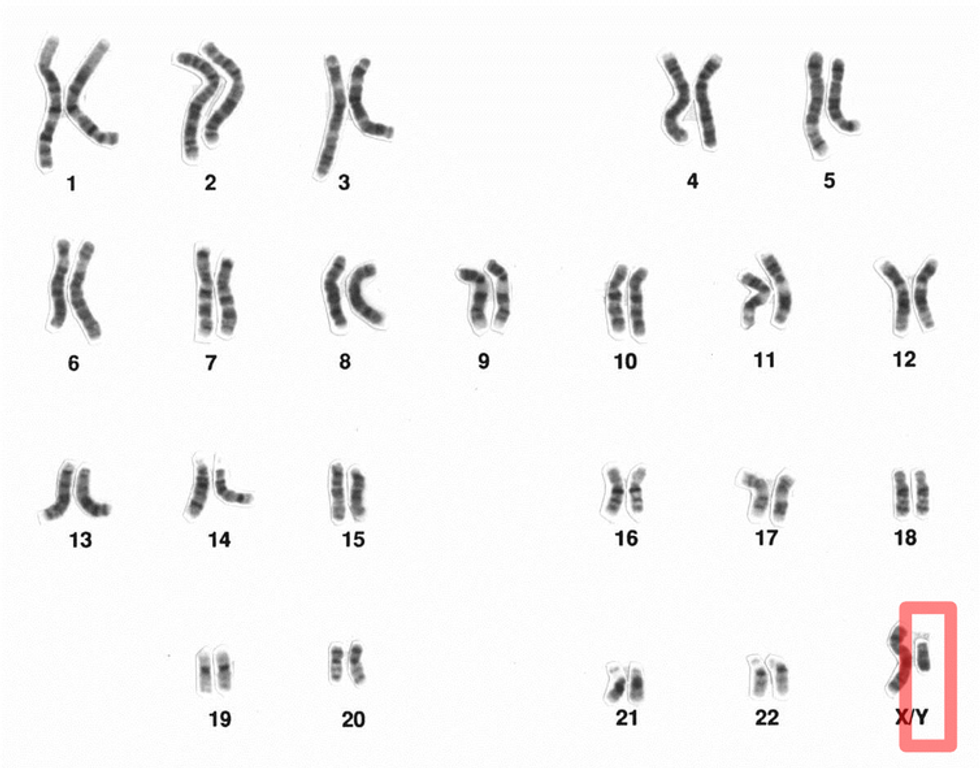

 AFP/File / PATRICK BAZ
  AFP/File / EMILY IRVING-SWIFT