Parents exasperated by their children constantly ignoring pleas to stop picking their noses, may have finally found an argument to break the habit: it might give you pneumonia.
Pneumococcus, the bacteria that causes pneumonia -- a lung condition that can prove deadly if untreated -- is known to spread through airborne droplets, often from the coughs and sneezes of infected individuals.
British scientists said Thursday they had proved for the first time that the disease-causing bacteria can be transmitted manually via the nose and hands.
In a trial, the results of which were published in the European Respiratory Journal, a group of adult volunteers had the bacteria applied to their hands.
They were then given the unenviable choice of four tasks: "wet sniff," "dry sniff", "wet poke", and "dry poke" designed to mimic everyday actions that see people touch or rummage around inside their noses.
"This study has shown that the hands can spread this bacteria as well and objects like mobile phones or children's toys could also be adding to the spread of this bacteria," Victoria Connor, a clinical research fellow at the Liverpool School of Tropical Medicine and Royal Liverpool Hospital, told AFP.
Globally, pneumonia kills an estimated 1.3 million infants under five each year, and Connor said although the trial was conducted with adults, the main lesson was for parents of young children.
"It might not be realistic to get children to stop picking, poking and rubbing their noses," she said.
"But for parents... ensuring good hand hygiene and cleaning of toys or surfaces would likely reduce transmission, and reduce the risk of developing pneumococcal infection such as pneumonia."
Participants in the study were just as likely to get the bacteria in their noses whether they were exposed to wet or dry pneumococcus samples, said the researchers.
But the total amount transmitted was higher in the "wet sniff" and "wet poke" groups, suggesting that the process of drying out may kill some of the bacteria.
As Hurricane Michael made landfall Wednesday, one news crew began to hear a haunting soundtrack to the horror of Mother Nature they watched outside.
Weather Channel Meteorologist Matt Reagan posted a video of a hotel sink in Panama City Beach Wednesday afternoon as the hurricane moved north across the Florida panhandle.
Reagan, who grew up in Florida, isn't new to hurricanes, but he tweeted that he's never seen anything like this happen before.
During a 2015 storm, AccuWeather posted another strange phenomenon, waves in toilets.
You can watch the creepy video below:
This video from storm chaser Reed Timmer shows what was happening outside with the stunning power of the water being blown inland.
It may be hard to fathom, but the human body is occupied by large collections of microorganisms, commonly referred to as our microbiome, that have evolved with us since the early days of man. Scientists have only recently begun to quantify the microbiome, and discovered it is inhabited by at least 38 trillion bacteria. More intriguing, perhaps, is that bacteria are not the most abundant microbes that live in and on our bodies. That award goes to viruses.
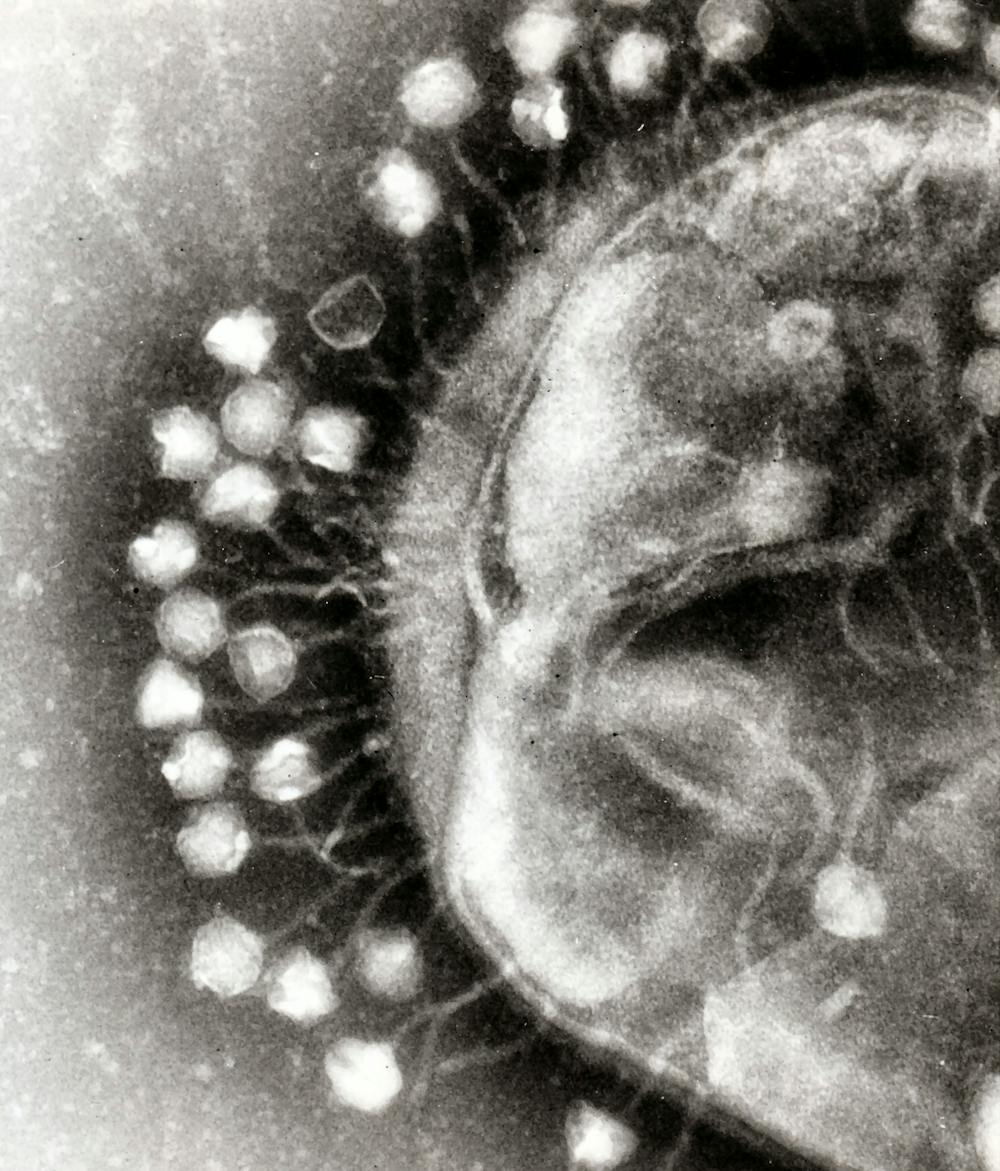
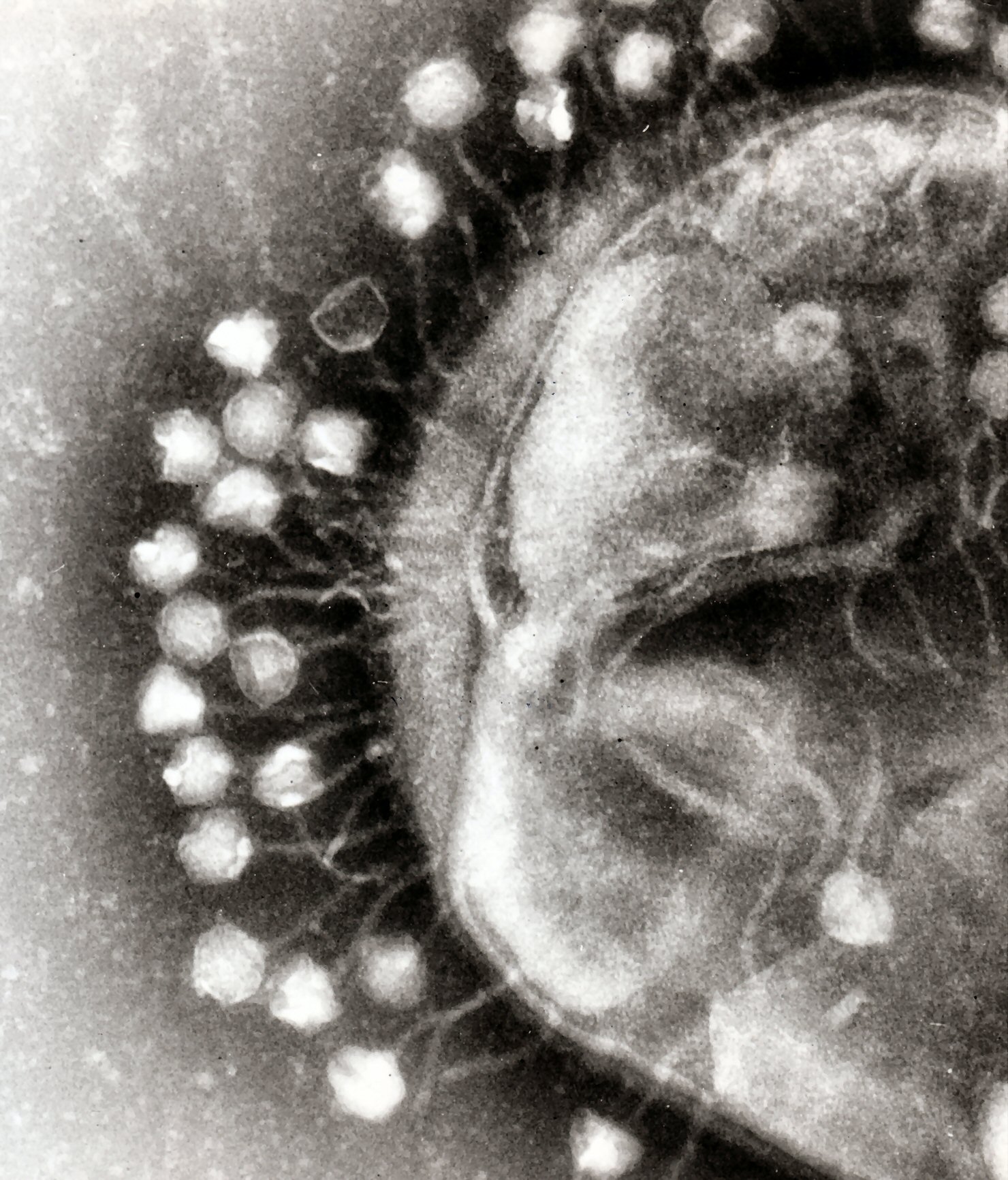
Transmission electron micrograph of multiple bacteriophages attached to a bacterial cell wall.
It has been estimated that there are over 380 trillion viruses inhabiting us, a community collectively known as the human virome. But these viruses are not the dangerous ones you commonly hear about, like those that cause the flu or the common cold, or more sinister infections like Ebola or dengue. Many of these viruses infect the bacteria that live inside you and are known as bacteriophages, or phages for short. The human body is a breeding ground for phages, and despite their abundance, we have very little insight into what all they or any of the other viruses in the body are doing.
I am a physician-scientist studying the human microbiome by focusing on viruses, because I believe that harnessing the power of bacteria’s ultimate natural predators will teach us how to prevent and combat bacterial infections. One might rightly assume that if viruses are the most abundant microbes in the body, they would be the target of the majority of human microbiome studies. But that assumption would be horribly wrong. The study of the human virome lags so far behind the study of bacteria that we are only just now uncovering some of their most basic features. This lag is due to it having taken scientists much longer to recognize the presence of a human virome, and a lack of standardized and sophisticated tools to decipher what’s actually in your virome.
The 411 on the virome
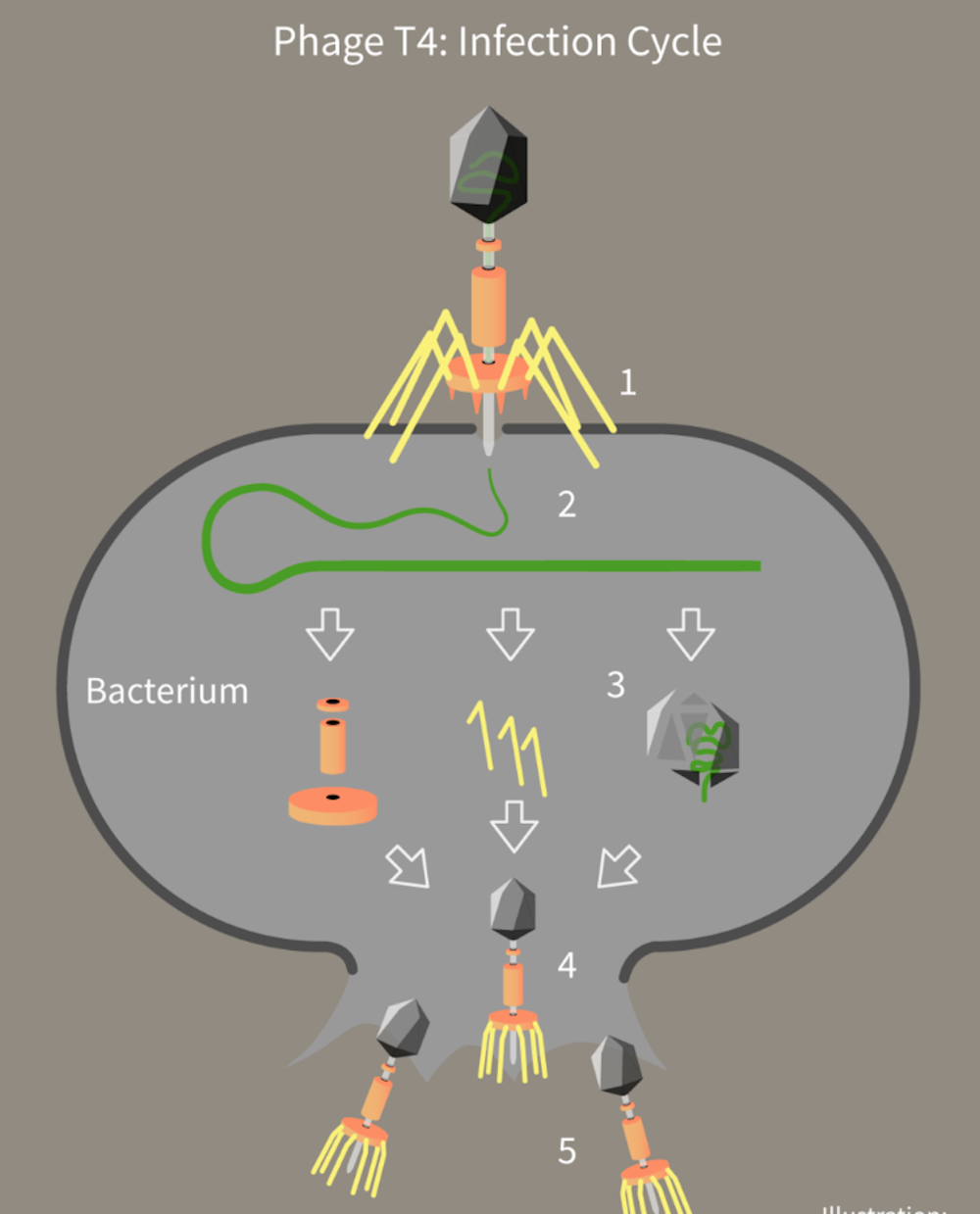
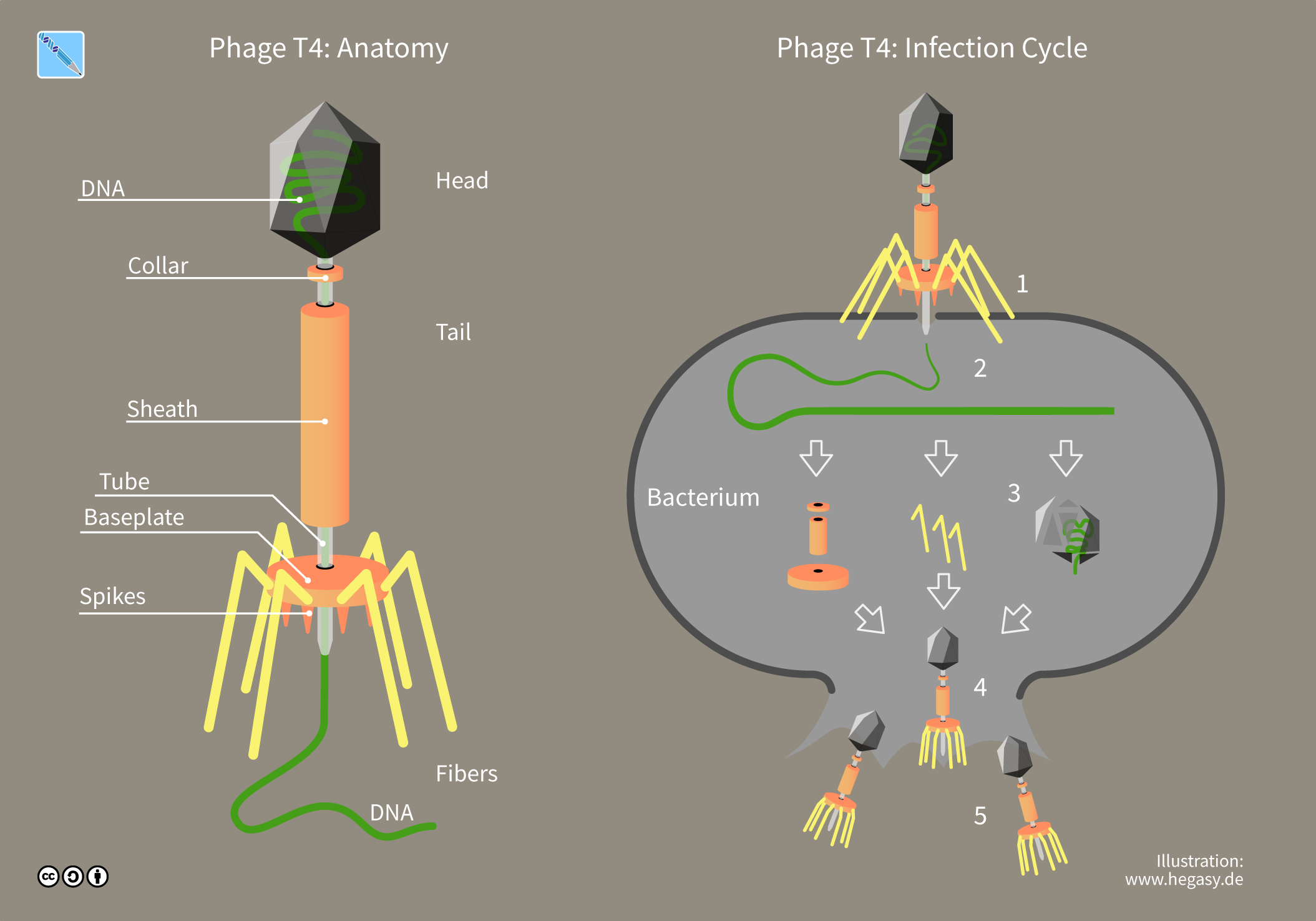
Here’s a few of the things we have learned thus far. Bacteria in the human body are not in love with their many phages that live in and around them. In fact they developed CRISPR-Cas systems – which humans have now co-opted for editing genes – to rid themselves of phages or to prevent phage infections altogether. Why? Because phages kill bacteria. They take over the bacteria’s machinery and force them to make more phages rather than make more bacteria. When they are done, they burst out of the bacterium, destroying it. Finally, phages sit on our body surfaces just waiting to cross paths with vulnerable bacteria. They are basically bacteria stalkers.
A virus called a bacteriophage infects bacteria and inserts its genetic material into the cell. The bacterium ‘reads’ the genetic instructions and manufactures more viruses which destroy the bacterium when they exit the cell.
It’s clear that there’s a war being fought on our body surfaces every minute of every day, and we haven’t a clue who’s winning or what the consequences of this war might be.
Viruses may inhabit all surfaces both inside and outside of the body. Everywhere researchers have looked in the human body, viruses have been found. Viruses in the blood? Check. Viruses on the skin? Check. Viruses in the lungs? Check. Viruses in the urine? Check. And so on. To put it simply, when it comes to where viruses live in the human body, figuring out where they don’t live is a far better question than asking where they do.
Viruses are contagious. But we often don’t think about bacterial viruses as being easily shared. Researchers have shown that just living with someone will lead to rapid sharing of the viruses in your body. If we don’t know what the consequences are of the constant battle between bacteria and viruses in our body, then it gets exponentially more complicated considering the battle between your bacteria and their viruses that are then shared with everyone including your spouse, your roommate, and even your dog.
Viruses keeping us healthy?
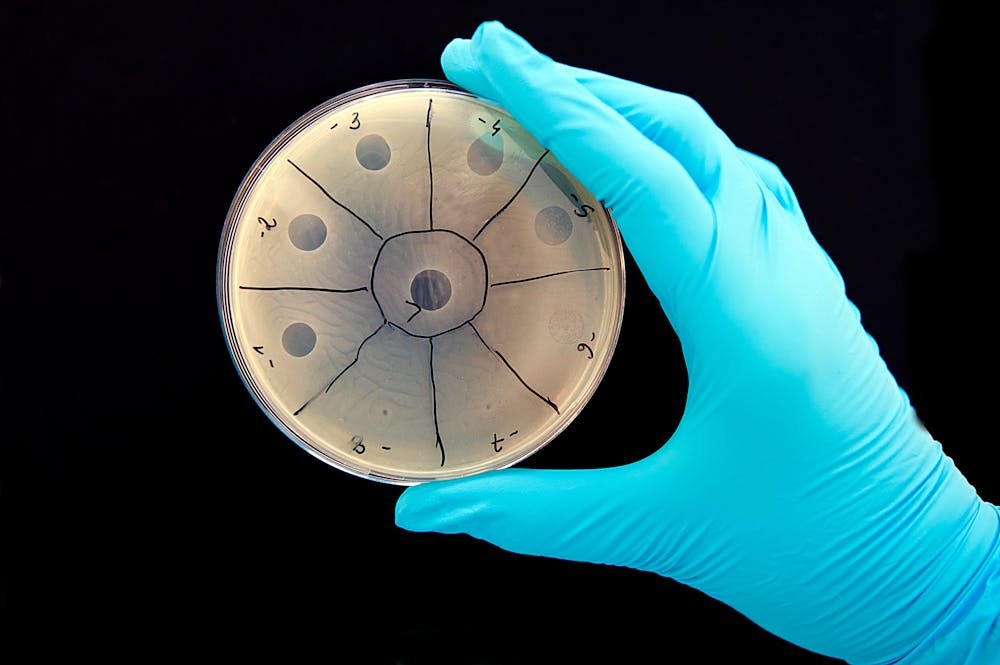
Viruses destroy the bacterium when they burst out of the cell. Here, the clear circles reveal where the bacteriophage have killed the bacteria.
Ultimately, we need to know what all these viruses in the human body are doing, and figure out whether we can take advantage of our virome to promote our health. But it’s probably not clear at this point why anyone would believe that our virome may be helpful.
It may seem counterintuitive, but harming our bacteria can be harmful to our health. For example, when our healthy bacterial communities are disturbed by antibiotic use, other microbial bad guys, also called pathogens, take advantage of the opportunity to invade our body and make us sick. Thus, in a number of human conditions, our healthy bacteria play important roles in preventing pathogen intrusion. Here’s where viruses come in. They’ve already figured out how to kill bacteria. It’s all they live for.
So the race is on to find those viruses in our viromes that have already figured out how to protect us from the bad guys, while leaving the good bacteria intact. Indeed, there are recent anecdotal examples utilizing phages successfully to treat life-threatening infections from bacteria resistant to most if not all available antibiotics – a treatment known as phage therapy. Unfortunately, these treatments are and will continue to be hampered by inadequate information on how phages behave in the human body and the unforeseen consequences their introduction may have on the human host. Thus, phage therapy remains heavily regulated. At the current pace of research, it may be many years before phages are used routinely as anti-infective treatments. But make no mistake about it; the viruses that have evolved with us for so many years are not only part of our past, but will play a significant role in the future of human health.
The Hubble space telescope, which has been in orbit since 1990, is currently out of action because of a gyroscope failure, the US space agency said Monday.
"Mission experts are taking steps to return Hubble to great science," the National Aeronautics and Space Administration (NASA) said in a tweet.
It said Hubble went into "safe mode" on Friday because of the failure of another of the six gyroscopes used to orient the telescope.
Hubble is currently down to two working gyroscopes and needs at least three for optimal operations but it can continue to provide observations with just one functioning gyroscope.
Dr. Rachel Osten, the deputy head of the Hubble mission, said it had been a "very stressful weekend."
"First step is to try to bring back the last gyro, which had been off, and is being problematic," Osten said on Twitter
ESA/AFP/File / A. Simon, J. DePasquale This handout photo from the European Space Agency shows observations of the planets Mars and Saturn made with the Hubble Space Telescope
"We knew it was coming," Osten added. "The gyro lasted about six months longer than we thought it would (almost pulled the plug on it back in the spring).
"We'll work through the issues and be back," she promised.
Hubble has made numerous outstanding observations of the cosmos since it was deployed in 1990.
The James Webb Space Telescope, the successor to Hubble, is scheduled to be launched in March 2021.
A critical report from the United Nations scientific panel on climate change warns the dire consequences of humans not working to combat climate change are closer on the horizon than expected.
The panel of scientists convened by the UN warned world leaders that the climate crisis would reach the beginning of the end earlier than expected. Food shortages will begin as wildfires rage even worse than this past summer. Coral reefs will likely also be gone by 2040 due to the temperature increase.
The report “is quite a shock, and quite concerning,” The New York Times quoted Bill Hare, an author of previous IPCC reports and a physicist with Climate Analytics, a nonprofit organization. “We were not aware of this just a few years ago.” The report was part of the research funded by the 2015 Paris agreement pact.
Greenhouse gas emissions are likely to continue, at least in the United States under the current administration's policies. The atmosphere will then warm as much as 2.7 degrees, which is above preindustrial levels. It will intensify droughts and poverty while waters creep into the coastlines. Overall, it is estimated to cost $54 trillion.
The only way to stave off the crisis is by making dramatic changes in the next year or two.
President Donald Trump has said he plans on withdrawing from the Paris Treaty and his administration is working to reduce environmental protections that helped keep not only the land safe but Americans as well.
According to The Times, the report was authored and edited by 91 scientists from 40 countries. They examined more than 6,000 scientific studies to calculate the findings.
Sporting a trendy brown bob, a humanoid robot named Erica chats to a man in front of stunned audience members in Madrid.
She and others like her are a prime focus of robotic research, as their uncanny human form could be key to integrating such machines into our lives, said researchers gathered this week at the annual International Conference on Intelligent Robots.
"You mentioned project management. Can you please tell me more?" Erica, who is playing the role of an employer, asks the man.
She may not understand the conversation, but she's been trained to detect key words and respond to them.
A source of controversy due in part to fears for human employment, the presence of robots in our daily lives is nevertheless inevitable, engineers at the conference said.
The trick to making them more palatable, they added, is to make them look and act more human so that we accept them into our lives more easily.
AFP / GABRIEL BOUYSErica the robot has been trained to detect key words and respond to them
In ageing societies, "robots will coexist with humans sooner or later", said Hiroko Kamide, a Japanese psychologist who specialises in relations between humans and robots.
Welcoming robots into households or workplaces involves developing "multipurpose machines that are capable of interacting" with humans without being dangerous, said Philippe Soueres, head of the robotics department at a laboratory belonging to France's CNRS scientific institute.
- Human, but not too human -
As such, robots must move around "in a supple way" despite their rigid mechanics and stop what they are doing in case of any unforeseen event, he added.
That's why people are choosing "modular systems shaped like human bodies" which are meant to easily fit into real-world environments built for humans.
GETTY IMAGES NORTH AMERICA/AFP/File / CHIP SOMODEVILLAAtlas, a humanoid robot made by Boston Dynamics, can run on different types of surfaces
For instance Atlas, a humanoid robot made by Boston Dynamics, can run on different types of surfaces.
In Madrid, Marc Raibert, founder of the US firm, played a video showing Atlas doing a backflip.
In a sign of fears over the potential future uses for these humanoids, Amnesty International has accused Atlas, financed by an agency of the US Department of Defense, of being a "killer robot" made for future warfare.
Another example of humanoids presented in Madrid is Talos, a robot made by Spanish company Pal Robotics shown testing his stability on a balance board.
While it may not be the only form used for those coming into contact with humans, "it's easier for people to accept the robots when they have human-like faces because people can expect how the robots will move, will react," said Kamide.
AFP / JOEL SAGETJapanese researcher Masahiro Mori's "uncanny valley" theory, which he developed in the 1970s, states that we react positively to robots if they have physical features familiar to us but they disturb us if they start looking too much like us
That's comforting, but it also has its limits.
Japanese researcher Masahiro Mori's "uncanny valley" theory, which he developed in the 1970s, states that we react positively to robots if they have physical features familiar to us but they disturb us if they start looking too much like us.
"You can't ever make a perfect human face" and this imperfection provokes a feeling of "rejection" among humans, said Miguel Salichs, a professor at the robotics lab of Madrid's Carlos III University.
As such, he chose to fashion his robot Mini Maggie into a small cartoon animal.
- 'Understand humans' -
In Japan, robots like Erica are already used as receptionists.
AFP / ARUN SANKARResearchers have to think hard about the human form and how humans interact to develop robots that look like them
But for one of their makers, Hiroshi Ishiguro, a professor at Osaka University, humanoids are above all "a very important tool to understand humans".
Researchers have to think hard about the human form and how humans interact to develop robots that look like them.
"We understand the humans by using robots, the importance for example of eye gazing," said Ishiguro, who has also made robots that look like dead celebrities, or "moving statues".
He believes that humanoids are best to improve interactions between robots and humans.
"The human brain that we have has many functions to recognise humans. The natural interface for the humans is the humans," said Ishiguro.
For Jurgen Schmidhuber, president of artificial intelligence start-up NNAISENSE, robots -- be they humanoid or not -- will be part of our future.
They won't just imitate humans but will solve problems by experimenting themselves thanks to artificial intelligence without "a human teacher," he believes.
The UN's 195-nation climate science body plunged deep into overtime Saturday to finalise a report outlining stark options -- all requiring a global makeover of unprecedented scale -- for avoiding climate chaos.
Working through the night, the closed-door huddle in rain-soaked Incheon, South Korea, was to convene a plenary later in the day to hammer through a "Summary for Policymakers."
Can humanity cap global warming at 1.5 degrees Celsius (2.7 degrees Fahrenheit)? What will it take and how much will it cost? Would climate impacts be significantly less severe than in a 2C world?
The Intergovernmental Panel on Climate Change (IPCC) was tasked with these questions by the framers of the landmark 2015 Paris Agreement, which calls for halting the rise in temperatures to "well below" 2C -- and 1.5C if possible.
That aspirational goal -- tacked on to the treaty at the last minute -- caught climate scientists off-guard.
"Our understanding of 1.5C was very limited, all but two or three of the models we had then were based on a 2C target," said Henri Waisman, a senior researcher at the Institute for Sustainable Development and International Relations in Paris, and one of the report's 86 authors.
Based on more than 6,000 peer-reviewed studies, the 20-page bombshell will make for grim reading when it is released on Monday.
"Leaders will have nowhere to hide once this report comes out," said Jennifer Morgan, Executive Director of Greenpeace International, and an observer at the talks.
- 'Negative emissions' -
At current rates of greenhouse gas emissions, Earth will zoom past the 1.5C signpost around 2040, and as early as 2030.
After only one degree of warming, the world has seen deadly storms engorged by rising seas and a crescendo of heatwaves, drought, flooding and wild fires made more intense by climate change.
Without a radical course change, we are headed for an unliveable 3C or 4C hike.
And yet, humanity has avoided action for so long that any pathway to a climate-safe world involves wrenching economic and social change "unprecedented in terms of scale," the report said.
"Some people say the 1.5C target is impossible," said Stephen Cornelius, WWF-UK's chief adviser for climate change, and a former IPCC negotiator.
"But the difference between possible and impossible is political leadership."
The report is set to lay out four scenarios that could result in Earth's average surface temperature stabilising at 1.5C.
The most ambitious -- dubbed the "low energy scenario" -- would see a radical drawdown in energy consumption coupled with a rapid shift away from fossil fuels and a swift decline in CO2 emissions starting in 2020.
It would not require a temporary "overshoot" of the 1.5C threshold, and does not depend on sucking vast quantities of CO2 out of the air, known as carbon dioxide removal, or "negative emissions."
A second pathway emphasises the need for changing our consumption patterns -- eating less meat, travelling less, giving up cars, etc. -- along with an overhaul of agricultural and land-use practices, including the protection of forests.
- Running interference -
The final scenario compensates for a "business-as-usual" economy and lifestyle by allowing a large overshoot of the 1.5C target.
It also calls for burning a lot of biofuels and capturing the emitted CO2, a system known by its acronym, BECCS. Indeed, an area twice the size of India would have to be planted in biofuel crops.
This "P4" plan also assumes that some 1200 billion tonnes of CO2 -- 30 years' worth of emissions at current rate -- will be socked away underground.
Signficantly, and for the first time, the UN panel quantified changes in the use of coal, oil and gas.
For the low-energy demand pathway, for example, coal consumption would drop 78 percent by 2030, and 97 percent by mid-century. Oil would decline by 37 and 74 percent, respectively, and gas by 25 and 74 percent.
The pathway of least resistance, by contrast, would still see nearly a doubling of oil use by 2030, and a 37 jump in gas.
Coal is a big loser in all the scenarios.
The US delegation -- the first since Donald Trump took office to work on an IPCC report -- did not throw a monkey wrench into the process, as many here had feared.
"The United States is quite constructive, though I don't think they want that said out loud," said on delegate who asked not to be named.
Besides special reports, the IPCC has issued five major Assessment Reports that serve as the scientific foundation for UN climate talk. The next one is due in 2022.
One of the 2018 Nobel Prizes in physics went to Donna Strickland, a major accomplishment for any scientist. Yet much of the news coverage has focused on the fact that she’s only the third female physicist to receive the award, after Marie Curie in 1903 and Maria Goeppert-Mayer 60 years later.
Though biochemical engineer Frances Arnold also won this year, for chemistry, the rarity of female Nobel laureates raises questions about women’s exclusion from education and careers in science. Female researchers have come a long way over the past century. But there’s overwhelming evidence that women remain underrepresented in the STEM fields of science, technology, engineering and math.
Studies have shown those who persist in these careers face explicit and implicit barriers to advancement. Bias is most intense in fields that are predominantly male, where women lack a critical mass of representation and are often viewed as tokens or outsiders.
When women achieve at the highest levels of sports, politics, medicine and science, they serve as role models for all of us, especially for girls and other women. But are things getting better in terms of equal representation? What still holds women back in the classroom, in the lab, in leadership and as award winners?
Good news at the start of the pipeline
Traditional stereotypes hold that women “don’t like math” and “aren’t good at science.” Both men and women report these viewpoints, but researchers have empirically disputed them. Studies show that girls and women avoid STEM education not because of cognitive inability, but because of early exposure and experience with STEM, educational policy, cultural context, stereotypes and a lack of exposure to role models.
For the past several decades, efforts to improve the representation of women in STEM fields have focused on countering these stereotypes with educational reforms and individualprograms that can increase the number of girls entering and staying in what’s been called the STEM pipeline – the path from K-12 to college to postgraduate training.
These approaches are working. Women are increasingly likely to express an interest in STEM careers and pursue STEM majors in college. Women now make up half or more of workers in psychology and social sciences and are increasingly represented in the scientific workforce, though computer and mathematical sciences are an exception. According to the American Institute of Physics, women earn about 20 percent of bachelor’s degrees and 18 percent of Ph.D.s in physics, an increase from 1975 when women earned 10 percent of bachelor’s degrees and 5 percent of Ph.D.s in physics.
More women are graduating with STEM Ph.D.s and earning faculty positions. But they go on to encounter glass cliffs and ceilings as they advance through their academic careers.
In addition to issues related to the gender pay gap, the structure of academic science often makes it difficult for women to get ahead in the workplace and to balance work and life commitments. Bench science can require years of dedicated time in a laboratory. The strictures of the tenure-track process can make maintaining work-life balance, responding to family obligations, and having children or taking family leave difficult, if not impossible.
Universities, professional associations, and federal funders have worked to address a variety of these structural barriers. Efforts include creating family-friendly policies, increasing transparency in salary reporting, enforcing Title IX protections, providing mentoring and support programs for women scientists, protecting research time for women scientists, and targeting women for hiring, research support and advancement. These programs have mixed results. For example, research indicates that family-friendly policies such as leave and onsite child care can exacerbate gender inequity, resulting in increased research productivity for men and increased teaching and service obligations for women.
People haven’t done a good job updating their mental images of what a scientist looks like since Wilhelm Roentgen won the first physics Nobel in 1901.
All of us – the general public, the media, university employees, students and professors – have ideas of what a scientist and a Nobel Prize winner looks like. That image is predominantly male, white and older – which makes sense given 97 percent of the science Nobel Prize winners have been men.
This is an example of an implicit bias: one of the unconscious, involuntary, natural, unavoidable assumptions that all of us, men and women, form about the world around us. People make decisions based on subconscious assumptions, preferences and stereotypes – sometimes even when they are counter to their explicitly held beliefs.
Research shows that an implicit bias against women as experts and academic scientists is pervasive. It manifests itself by valuing, acknowledging and rewarding men’s scholarship over women’s scholarship. Implicit bias can work against women’s hiring, advancement and recognition of their work. For instance, women seeking academic jobs are more likely to be viewed and judged based on personal information and physical appearance. Letters of recommendation for women are more likely to raise doubts and use language that results in negative career outcomes.
Implicit bias can affect women’s ability to publish research findings and gain recognition for that work. Men cite their own papers 56 percent more than women do. Known as the “Matilda Effect,” there is a gender gap in recognition, award winning and citations. Women’s research is less likely to be cited by others and their ideas are more likely to be attributed to men. Women’s solo-authored research takes twice as long to move through the review process. Women are underrepresented in journal editorships, as senior scholars and lead authors, and as peer reviewers. This marginalization in research gatekeeping positions works against the promotion of women’s research.
Women scientists are afforded less of the respect and recognition that should come with their accomplishments. Research shows that when people talk about male scientists and experts, they’re more likely to use their surnames and more likely to refer to women by their first names. Why does this matter? Because experiments show that individuals referred to by their surnames are more likely to be viewed as famous and eminent. In fact, one study found that calling scientists by their last names led people to consider them 14 percent more deserving of a National Science Foundation career award.
Female physics laureate No. 3
Strickland winning a Nobel Prize as an associate professor in physics is a major accomplishment; doing so as a woman who has almost certainly faced more barriers than her male counterparts is, in my view, monumental.
When asked what it felt like to be the third female Nobel laureate in physics, Strickland noted that at first it was surprising to realize so few women had won the award: “But, I mean, I do live in a world of mostly men, so seeing mostly men doesn’t really ever surprise me either.”
Seeing mostly men has been the history of science. Addressing structural and implicit bias in STEM will hopefully prevent another half-century wait before the next woman is acknowledged with a Nobel Prize for her contribution to physics. I look forward to the day when a woman receiving the most prestigious award in science is newsworthy only for her science and not her gender.
Mary K. Feeney, Associate Professor and Lincoln Professor of Ethics in Public Affairs and Associate Director of the Center for Science, Technology and Environmental Policy Studies, Arizona State University
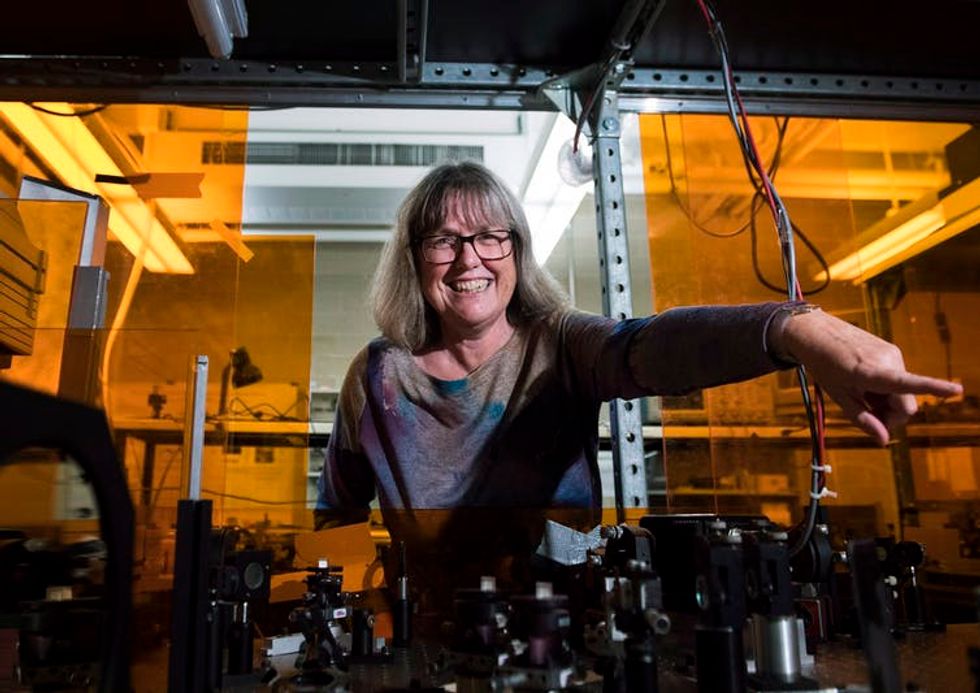
Donna Strickland, an associate professor at the University of Waterloo in Canada, was awarded the 2018 Nobel Prize in physics. The third woman to have ever been awarded this prize in 117 years, she shares it with Arthur Ashkin and Gérard Mourou.
Women make up 27 per cent of full professors in the academy as a whole, and in science, technology, engineering and math, that number is much lower. For racialized and Indigenous women in all fields, the numbers go down even further.
The rank of full professor offers more pay, more prestige and more opportunities to be selected for senior leadership roles within a university.
A 2018 report from the Canadian Association of University Teachers also concluded that, despite talk by universities and colleges of a commitment to inclusive institutions, progress on equity has been exceptionally slow.
The twins of sexism and racism
The reasons why so few women get Nobel Prizes and achieve full professorship, and even fewer who are racialized or Indigenous do, are interconnected.
It’s the twins of sexism and racism. As political scientist Malinda Smith shows, there are a number of factors — she calls them the “dirty dozen” — that normalize gender and racial biases. This results in a tiny demographic (white, male) as the predictable winners in a rigged game.
Examples of the “dirty dozen” include white male students receiving more opportunities to network. Then there are the reference letters. While female students might have better grades, it is more likely in letters of reference that their professors will talk about them as having potential or being hard workers, compared to white men who are cast as brilliant.
On top of that, workload concerns leave women less time for research. For example, women, particularly if racialized or Indigenous, are more likely to get sessional work, with significantly lower pay scales, higher teaching loads and little time for research.
Finally, tenure-track women are less likely to get competitive research funding, and when they do, they often earn less money than men.
To become a full professor, one needs to apply and be evaluated by committees repeatedly — first for a tenure-track position, then for tenure and promotion — usually with an impressive portfolio of research funding and peer-reviewed publications. This is a portfolio that requires extensive research time, collaborations and support to achieve.
Women scientists are victims of a systemic inequity that impacts us all.
A reward system biased towards men
I have just completed a research project on the role of the Nobel Prize in university rankings and the impact on equity. The study found that influential university rankings judge institutions based on the number of articles published by faculty and staff in top-ranked journals.
It found that this reward system is biased towards men.
Noble Prize winner Donna Strickland in her lab. Strickland co-invented a method of generating high-intensity, ultra-short optical pulses which has a variety of applications, including corrective laser eye surgery.
THE CANADIAN PRESS/Nathan Denette)
Men are more likely to publish other men in top-ranked health and science journals. The role of sexism in terms of who gets published and what gets published isn’t considered when deciding who and what is ranked as world-class.
The majority of decision-makers who create or accept the metrics used to decide who and what is world-class are white and male — including ranking advisories, university leaders, top journal editors and adjudication committees for major awards. Sexism and racism are reinforced and normalized through these feedback loops.
This Boys Club impacts women when they go up for promotion at research-intensive universities, because how they are deemed worthy or unworthy is largely based on how many publications they have in top-ranked journals, awards and, depending on the field, the research funding that they bring in.
Science as the heroic man
All the talk of equity over the last 30 years has really been a distraction from talking about how little progress has actually been made. Not because women, racialized and Indigenous scholars are less productive or doing less innovative work, but because of sexism and racism.
By promoting and accepting this ranking as legitimate, universities reinforce a sexist and racist metric as the way to determine the quality of a university and what counts in the wider academic systems.
The Nobel as an indicator of world-class research maintains the illusion that science is conducted by the heroic man and — very, very rarely — a woman. Men are represented as toiling away to make great discoveries.
What is left out is the reality of science as a collaborative effort — with women most likely not receiving credit for their work. What is left out is that the Nobel is decided by a few men.
White men decide who is world-class
In the case of the Nobel, a few (mainly Swedish and Norwegian) white men ultimately decide who is best in the fields of physics, medicine, chemistry, advocating for world peace and literature.
The Nobel adjudication committees mirror society. Predominately white men decide on who and what is world class, and based on these decisions, who to invite into the club.
Once in a while someone who isn’t part of the demographic gets in, but the status quo remains intact.
What Strickland achieved is impressive. But it isn’t a sign that the patriarchy is being smashed.
This is a corrected version of a story originally published Oct. 4, 2018. The earlier story said the Nobel Prize for literature was cancelled in 2018 because of allegations of rape against a former committee chair. The allegations were against the husband of a committee member, not a member of the committee.
There are many rational reasons that motivate consumers to spend US$65 billion annually on household cleaning products. But non-rational mechanisms are nevertheless still at work in the cleaning products market, as in all others.
Advertisements for domestic hygiene products usually follow the same simple yet powerful structure: the threat of bacterial contamination looms large, but anti-bacterial gels, soaps, fluids, powders or foams can offer protection against it. We are encouraged to think of bacteria as entities that threaten our secluded, sovereign cleanliness. This has led us to a limited, and dangerous relationship with bacteria.
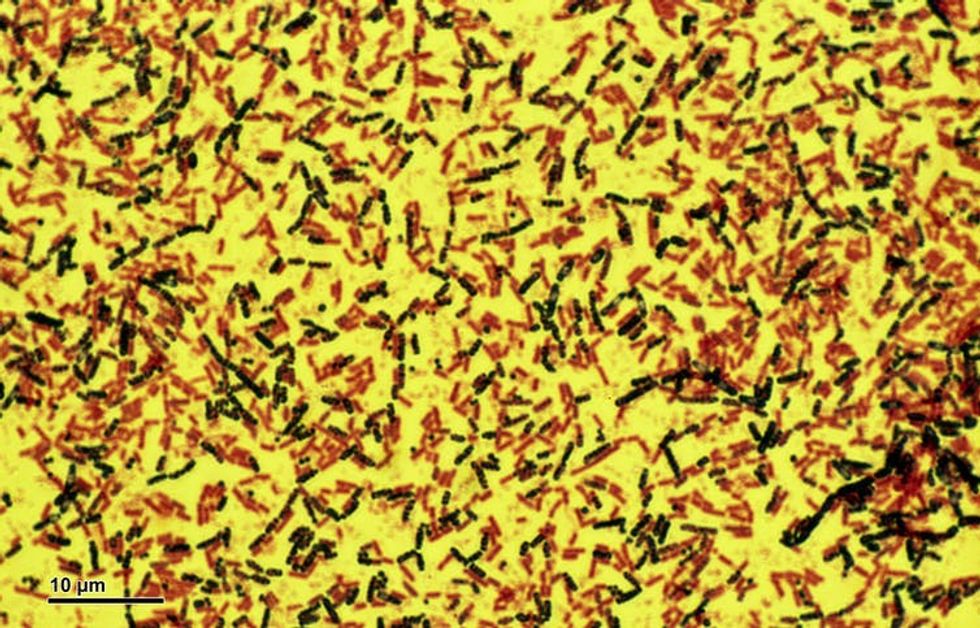
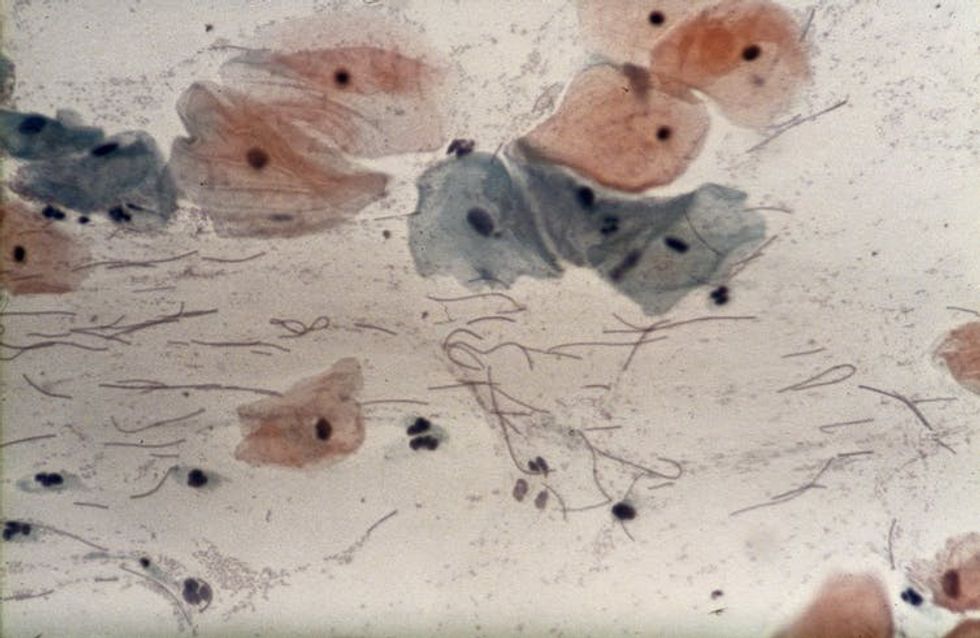
Consider how bacteria is portrayed visually. Although it is possible to take photographs of bacteria – and there are some great pictures out there – these images are generally found only in scientific and medical contexts. For the rest of us, bacteria do not appear in a realist way. Instead, they come to us through the filter of advertisements for antibacterial products.
And it’s quite a filter. Our analysis of advertising images of bacteria from 1848 to the present day finds four broad conventions. Understanding these conventions shows how our relationship with this essential dimension of earth’s biome is subject to the aims and desires of the manufacturers of cleaning products.
1. Cute bacteria
First, bacteria are cute. They are small, vulnerable and toy-like. Their eyes are big and their limbs are tiny. This is strange, considering that advertisements for bacterial products are persuading us to kill these beings by the billion.
But cuteness can have a strange effect on the viewer. Sure, we want to touch, hold and even protect the thing that is cute, like a soft toy. But the cute object evinces a range of minor negative affects: helplessness, pitifulness and excessive availability. These in turn summon a set of complex secondary reactions: of resentment at being emotionally manipulated, contempt for the weakness of cute objects, and disgust at the cheapness of cute things. To judge something as cute can accompany a desire to touch, clasp, dominate and destroy it; in other words, it is something both pleasurable and disgusting.
It is small wonder, then, that the objects that are most often rendered as cute in consumer aesthetics – women, technology and children – are the ones that have been regarded as inherently dangerous and in need of control. And the uncomfortable truth is that this cuteness often places them as objects below ethical consideration, with the result that we feel no remorse in eliminating them.
2. Overpopulated bacteria
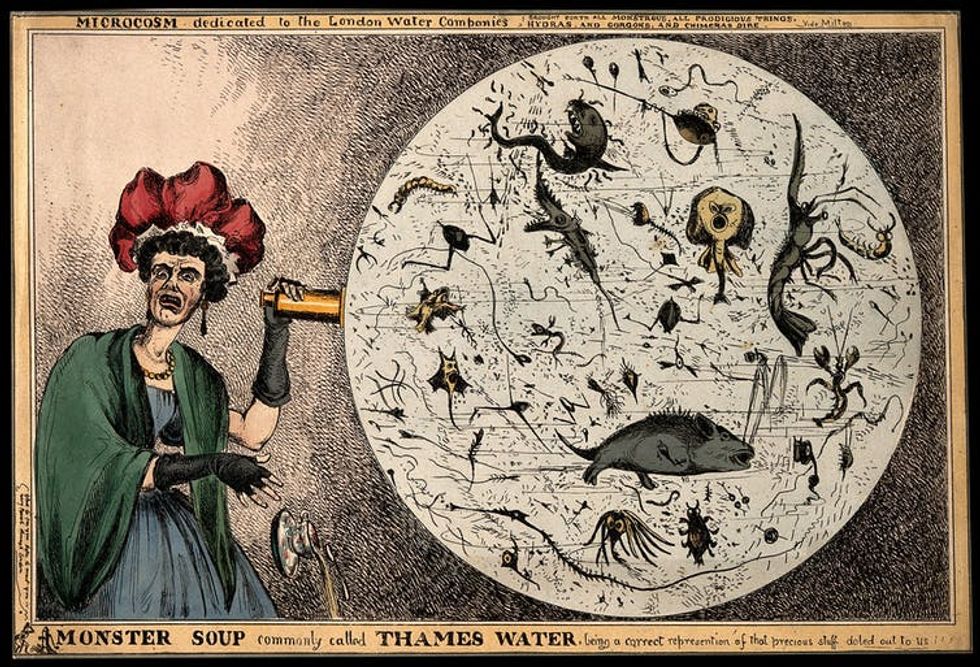
Second, bacteria don’t come in ones and twos. They flourish in their billions. This can be terrifying and it can awaken fears of overpopulation. Perhaps this is no coincidence – after all, the massive urban population growth of the 19th century was accompanied by a revulsion at the new bacteriological knowledge that we gained thanks to the microscope.
This sketch of a woman horrified at the contents of her magnified tea dates from a period of exponential population growth in London, the dawn of Malthusian economics, a time when the Thames was an open sewer. The cramming full of many life forms into tiny spaces was an uncanny microcosm of the imagined, and feared, socioeconomic order.
This anxiety-laden pairing of overpopulation and bacterial proliferation continues to be provoked in visualising contemporary bacteria. Bacteria live in obscene proximity to each other, their intimacy an affront to the force of modernity, anathema to the grid of science and civic control. This historical confluence of factors means that bacteria became, and continue to be, a channel for fears about overpopulation, immigration and the corruptive influence of living too closely with millions of others.
3. Poor bacteria
Third (and this is a closely related factor) bacteria often seem to live in squalor and poverty. Their skin is slimy, their teeth and skin are unhealthy, and their clothes are ill-fitting and dirty. They are criminal.
This makes for a drastic contrast with the consumer, the person who uses antibacterial products. While “they” are lower-class, grimy and slothful, the antibacterial person is middle-class, reassuringly clean, and busy in her or his daily life.
4. Sexual bacteria
Fourth, bacteria seem to have no regard for “proper” sexual roles and behaviours. People who fail to use antibacterial products are associated with promiscuous, non-reproductive sexual behaviours.
One 2010 ad visualised a woman in a red dress lying asleep in a dark alley on a pile of binbags, with the tagline “Don’t Go to Bed Dirty”. This is arguably a conflation of sexual promiscuity with bacterial promiscuity, at odds with the ideal of a bleach-white nuclear family.
Another depicts bacteria treated with anti-bacterial as stereotypical homosexuals with the tagline “germs just can’t reproduce”. Yet another shows the archetypal besuited middle-class man surrounded by the traces of bacterial others who have been at the toilet cubicle before him, including a transvestite. And let’s not forget of course the long history of war propaganda warning soldiers on leave to avoid sexual contact with women, who were equated with bacterial disease.
Why it matters
This sketch of the ways that bacteria appear in popular culture is also a sketch of ourselves. What our research demonstrates is that bacteria are a kind of vehicle for fears of what we might be, and of aspects of ourselves and our society that we find it difficult to confront directly.
Unfortunately, this has disastrous consequences for our planet and for the things that live on it, which of course includes us and bacteria. We’re stuck together: there are about five million trillion trillion of them on this planet; if every one of them were a penny, the stack would stretch a trillion light years. They are a complex, ancient entity.
But the visual vocabulary of fear, disgust and dread that has been so effective at selling antibacterial products for well over a century has brought us to an ecological dead end. Our overuse of antibiotics is the most obvious evidence of the failure of the demonise-and-destroy approach that antibacterial thinking produces, leading to a market failure that some experts posit is bigger than climate change.
A totally new understanding of bacteria as a realm that we must live within, from which it is foolhardy to think we can escape, is needed. An important step in that direction is describing the destructive ways of thinking about bacteria that have stepped in between us and these necessary cohabitants of our planet.
The three 2018 Nobel Prize winners for chemistry were recognized for inventing fast and reliable methods for “hacking” evolution – techniques that have transformed scientific research and have already led to better drug treatments, greener and more efficient chemical manufacturing processes, and more economical biofuels.
Thanks to these inventions, what nature takes millennia to do, can now be performed by chemists in weeks or less. What’s more, these prize-winning methods form what I regard as a final proof for the molecular basis for Charles Darwin’s theory of evolution.
The Nobel Prize in chemistry was split between Frances H. Arnold and George P. Smith and Sir Gregory P. Winter; the latter two received the
other half. I will admit my bias toward Frances H. Arnold whose technology the Nobel Committee recognized – on the directed evolution of enzymes, which are proteins that catalyze chemical reactions – because much of my own work has been built on it. Smith and Winter also used evolution to fast-track the development of proteins and antibodies with desirable properties. They harnessed the power of viruses to exponentially increase the scale of directed evolution envisioned by Arnold and expanded it to the development of protein-based therapeutics like Humira for chronic pain.
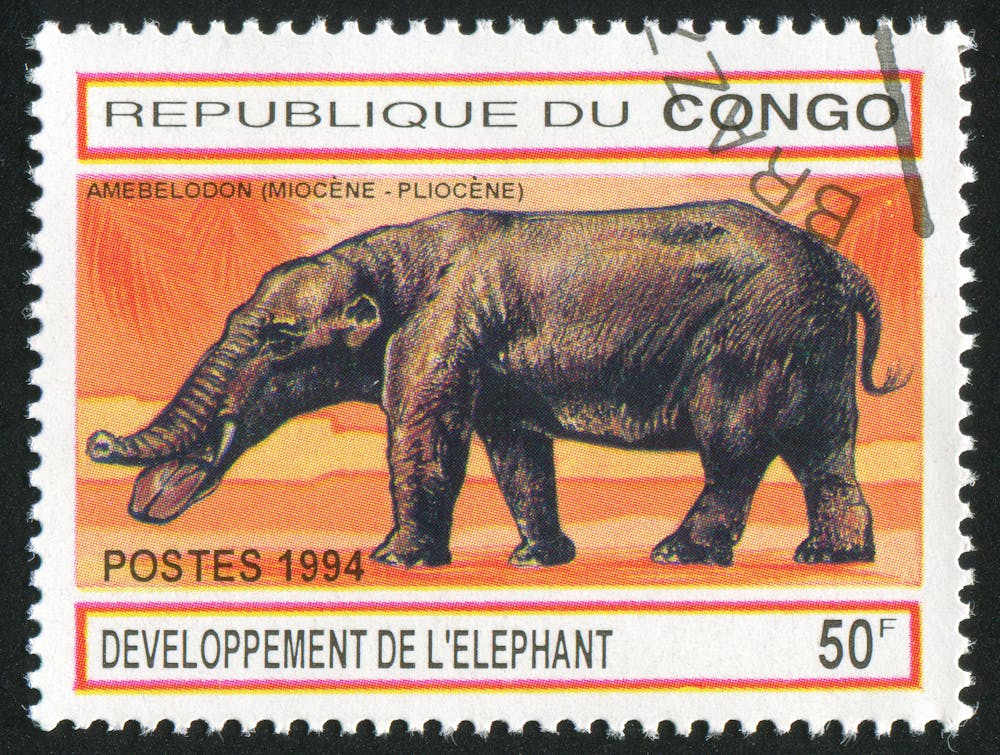
A stamp printed by Congo, shows an early ancestors of the modern elephant.
To explain it simply, both methods generate a broad variety of proteins in the lab and then use un-natural selection – that is, selecting the protein with the most desirable qualities – and then mutating this new protein in the lab to make it better and better. In that way, it’s a molecular version of evolution. Darwinian evolution created the modern elephant’s trunk from a stubby nose by the repeated processes of natural genetic mutation and survival of the fittest; directed evolution creates new enzymes from natural occurring ones by iterative cycles of mutation and selection.
Survival of the fittest - molecules
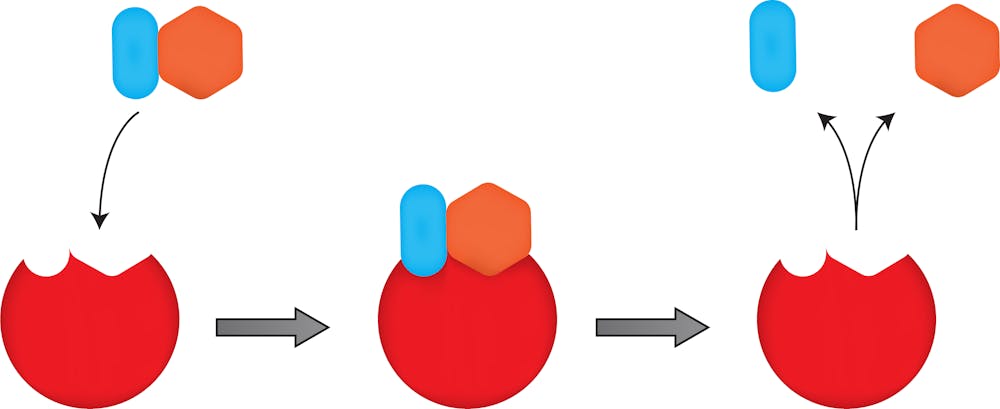
In high school biology, we learn about the “lock-and-key” concept of enzymes. In this model, enzymes, which are nature’s biocatalysts that speed up chemical reactions, are the “locks” evolved to connect with a natural target molecules – the “keys” – to complete a specific chemical reaction.
If you want an enzyme to do something new, something unnatural, like selectively insert an oxygen atom into a molecule to manufacture a valuable drug, you are unlikely to find that enzyme in nature.
The lock (red) and key (blue-orange) model of an enzyme. In nature, enzymes that fit only one key take millions of years to evolve. Arnold figured out how to speed up the evolution of the enzymes to perfectly match the target she was trying to alter.
Arnold’s approach is to take an enzyme from nature and then transform it – through laboratory evolution – into one that performs the reactions that interest her. She does this by taking the gene that encodes the enzyme and putting it through the biological equivalent of an error-prone Xerox copier, which then duplicates the gene millions of times but inserts mutations randomly throughout.
Arnold then took these millions of poorly copied genes and inserted each one into a different bacterium. This collection of bacteria is called a gene library. Because each of the genes is mutated in a different way, the enzyme each bacterium produces when it is fed and grows will be slightly different. The challenge is to find the bacterium that carries the enzyme with the most desirable qualities.
For example, say you have an industrial process that requires an enzyme that works at high temperatures, but the natural enzyme falls apart under these extreme conditions. You would make thousands of random copy mutants, test them each to see if they perform at a high temperature, pick the winners and repeat the process with the winner. That’s an iterative process of mutation and selection, just like natural evolution.
Frances Arnold, George Smith and Gregory Winter won the 2018 Nobel Prize for chemistry.
It is not unlike what it took to breed wolves into miniature dachshunds over the last tens of thousands of years. In this case, sexual reproduction is used by breeders to create gene variations and then selected traits they wanted, over many generations to arrive at the various dog breeds. Arnold figured out how to do that on a single-enzyme scale. In this way, the enzyme lock ends up changed to fit a new molecular key.
One of the first examples Arnold demonstrated as proof of concept was a little scary. She started with an enzyme responsible for drug resistance that chews up penicillin drugs and forced it to evolve to chew up a newer generation of penicillins, in this case, a more advanced antibiotic.
In this way she sped up the evolutionary clock for antibiotic resistance in a test tube. Since then, the same principle of directed evolution has been adopted to create enzymes with many useful new functions, for instance to evolve enzymes to make biofuels and drugs. Drugs now made using enzymes generated by directed evolution include the blockbuster cholesterol lowering drug atorvastatin (lipitor) and the diabetes drug sitagliptin (Januvia).
Evolution with help from viruses
Arnold shares the Nobel Prize with Smith and Winter, who invented ways to attach or “display” proteins and antibodies of interest on the surface of special virus particles, called bacteriophage. Using viruses rather than bacteria, as Arnold had done, was a different approach for identifying a gene that encoded a protein with particularly valuable qualities. This method is particularly useful for finding proteins that bind to a target protein, such as the target of a drug.
Each virus in a phage library displays a different protein on its surface. The viruses expressing the most desirable proteins are identified through several complex steps. The “winning” viruses then go through multiple cycles of mutation and testing and selection to yield proteins that fit and bind perfectly to their target.
The advantage of using viruses to display the proteins with the desired properties miniaturizes the selection process and allows you to process millions of mutated genes to find the one that best fits the job, as compared to only thousands of mutated genes using bacteria.
This technology has had the greatest impact on antibody therapies. Antibodies are molecules our immune system uses to bind and kill pathogens and naturally clear dying cells. But scientists are increasingly using them to bind to drug targets to treat various diseases. Adalimumab (Humira) is an example of a therapeutic antibody used in treatment of rheumatoid arthritis.
With each subsequent generation, the antibodies evolve and and better fit their target protein. With each generation, the fit between antibody and target grows stronger and more specific.
From single enzymes to evolving concerts of enzymes
I started off my own career in chemical synthesis, which is developing ways to make chemicals atom by atom in a round-bottomed flask. This is challenging work and I came to realize that organisms makes complex chemicals seemingly effortlessly as they grow, so I wanted to learn how to adapt nature’s enzyme catalysts – the tools that life uses to do chemistry – to synthesize useful unnatural molecules.
Around the mid-1990s, Arnold’s research showed me that we could ultimately use this nature-inspired method of directed evolution to improve the function of single enzymes to get them to perform chemistry they could not do naturally, millions of times faster, and get them to perform chemistry we could not do by any means.
I wondered: If doing a single biotransformation, converting A to B, is a powerful thing, could we find a way to generate pathways to connect three, four or even five or more steps, converting steps A to E and beyond in a single test tube? If one biocatalyst is a good thing, how about a molecular assembly line inside of cells for a non-natural molecule such as an AIDS drug. We called our pathway directed evolution technique bioretrosynthesis, because we start with the last step and work to the first.
In a paper published in Nature Chemical Biology, we described how we reverse engineered a five-step molecular production line to synthesize the AIDS drug Didanosine using Arnold’s bacterial method.
Currently this drug is made using chemical processes and is very expensive. Our proof of principle showed the cost could be lessened by using a starting material that is 30-fold less expensive and using enzymes created through directed evolution to do the hard work.
One of the most exciting things to me about this Nobel breakthrough is that it provides a direct proof of Darwin’s theory of evolution, at the molecular scale, from gene to physical trait. This theory, supported by the observations of gradual changes in the fossil record over geological timescales, can now be witnessed in the lab over the course of just a few weeks to make incredibly useful tools that benefit humanity.
Frances Arnold, after she received the news learning she won the Nobel Prize for chemistry, explains how she mimics nature and began using evolution to design powerful proteins.
NASA expressed doubts Wednesday over a theory floated in Russia that a tiny hole that caused an air leak on the International Space Station was the result of sabotage.
The breach detected on August 29-30 in a Russian space craft docked at the orbiting station was not the result of a manufacturing defect, according to the Russian space agency, which says it is investigating the possibility that it was drilled maliciously.
But NASA, the US space agency, countered in a statement that ruling out defects "does not necessarily mean the hole was created intentionally or with mal-intent."
Russian space agency Roscosmos immediately launched an investigation into the hole, and its chief official Dmitry Rogozin went on television days later to say it could have been the result of foul play either back on Earth or by astronauts in space.
"Where it was made will be established by a second commission, which is at work now," said Rogozin, a former Russian deputy prime minister who was placed under US sanctions over the Ukraine crisis in 2014.
The Russian daily Kommersant reported that an investigation at home was probing the possibility that US astronauts deliberately drilled the hole in order to get a sick colleague sent back home -- something Russian officials later denied.
"NASA and Roscosmos are both investigating the incident to determine the cause," NASA said on Wednesday.
ISS astronauts are planning a spacewalk in November to gather more information on the hole, which was quickly sealed.
An astronaut and cosmonaut are due to travel to the ISS on October 11 aboard a Russian Soyuz MS-10 spacecraft from the Baikonur Cosmodrome in Kazakhstan.
NASA Administrator Jim Bridenstine plans to meet Rogozin - their first in-person encounter -- when he attends the launch.
The six-person ISS crew includes two Russians, two Americans and a German representing the European Space Agency.
Bacterial infections remain a major threat to human and animal health. Worse still, the catalogue of useful antibiotics is shrinking as pathogens build up resistance to these drugs. There are few promising new drugs in the pipeline, but they may not prove to be enough. Multi-resistant organisms – also called “superbugs” – are on the rise and many predict a gloomy future if nothing is done to fight back.
The answer, some believe, may lie in using engineered bacteriophages – a type of viruses that infects bacteria. Two recent studies, both published in the journal Nature Biotechnology, show a promising alternative to small-molecule drugs that are the mainstay of antibiotics today.
From basic to synthetic biology
Every living organism has evolved simple mechanisms to protect itself from harmful pathogens. This innate immune system can be a passive barrier, blocking anything above a certain size, or an active response that recognises foreign molecules – such as proteins and DNA – then kills them.
In bacteria, an important component of the immune system is composed of a family of proteins, which is tased specifically with breaking down foreign DNA. Each bug produces a set of these proteins that chew the genetic material of viruses and other micro-organism into pieces while leaving its own genome intact.
In vertebrates, a more advanced mechanism – called the adaptive immune system – creates a molecular memory of previous attacks and prepares the organism for the next wave of infection. This is the principle on which vaccines are built. Upon introduction of harmless pathogen fragments, the adaptive immunity will train specialist killer cells that later allow a faster and more specific response upon contact with the virulent agent.
Crisp news
Until recently, people thought bacteria were too simple to possess any sort of adaptive immunity. But in 2007 a group of scientists from the dairy industry showed that bacteria commonly used for the production of cheese and yogurts could be “vaccinated” by exposure to a virus. Two years earlier, others had noticed similarities between repetitive sections in bacterial genomes and the DNA of viruses. These repetitive sequences – called CRISPR for “clustered regularly interspaced short palindromic repeats” – had been known for 20 years but no one could ever explain their function.
With both these observations it quickly became clear that bacteria were introducing viral DNA fragments into their own genome to protect themselves from later attacks. But it took another five years to get the whole picture.
In 2012, a German team identified all the pieces and showed how exactly bacteria transcribe viral DNA into a short RNA – usually the messenger molecule – which guides the DNA-cutting protein called Cas9 and tells it where to chop off viral DNA.
This could have been just one more interesting scientific observation, but in an era of synthetic biology, natural functions can quickly become designers tools. Within two years, many laboratories demonstrated that, by tailoring the short RNA guide, any gene could be cut out from a chromosome using the CRISPR-Cas9 system.
Since that breakthrough, hundreds of scientists have used it to manipulate the genome of bacteria, yeast, worms, crops, fruit flies, zebrafish, mice, rats, or even human cells. Although there are limitations, a procedure that used to take months using previous technologies – such as breeding or genome editing – can now be done in a few weeks.
Bacterial immunity, rewired
Now two teams of scientists, one led by Timothy Lu of the Massachusetts Institute of Technology and the other by Luciano Marriffini of Rockefeller University, each used the CRISPR-Cas9 system to generate their own version of a prototype technology that turns a bacteria’s defence mechanism into a self-destructing weapon. The main idea behind their work was to use genetic engineering to rewire the bacteria’s immunity to produce “boomerang” antibiotic targets only bugs carrying specific genes.
To do this, their teams built an artificial CRISPR-Cas9 system – that could cut out specific genes – by assembling pieces in the lab before reintroducing it back into bacteria using viruses. Once injected into the bug, the guide RNA recruits the Cas9 protein to target genes that endow the bug antibiotic resistance or other harmful properties by embedding viral DNA. After those genes are removed, the superbug either dies or turns into an harmless one.
Although the method still needs improving to become useful for treatment, its ability to specifically kill pathogens has significant potential because it can limit their spread to other bacteria.
Fighting antibiotic resistance would not be the only application for these engineered viruses. Current small-molecule antibiotics also end up killing other healthy bacteria in our body. The new method would the harmless bugs intact, and thus minimise side-effects of antibiotics use.
In the past few years, the role of friendly microbes living in the human gut has become clearer. Imbalance in the diversity of species and their relative abundance may influence the development of certain conditions – including depression, diabetes and obesity. In this context, engineered viruses that would restore or shape the microbiota (or flora) could greatly improve health.





 ESA/AFP/File / A. Simon, J. DePasquale
  AFP / GABRIEL BOUYS
 GETTY IMAGES NORTH AMERICA/AFP/File / CHIP SOMODEVILLA
 AFP / JOEL SAGET
 AFP / ARUN SANKAR






_Airborne_microbes.jpg)