A businessman who operated pain clinics in the US states of Ohio and Michigan pleaded guilty Monday to a $150 million scheme to fraudulently distribute millions of doses of highly-addictive opioid medications.
Mashiyat Rashid, CEO of Tri-County Wellness Group, pleaded guilty to one count of conspiracy to commit health care fraud and wire fraud, and one count of money laundering, the US Justice Department said.
The 38-year-old allegedly fueled a lavish lifestyle of luxury clothes and exotic automobiles by creating a massive fraud scheme to illegally prescribe 4.2 million doses of opioid medications such as oxycodone to patients, including addicts.
The investigation was part of an initiative by President Donald Trump's administration to crack down on medical professionals who unscrupulously distribute the dangerous drugs to addicted patients for profit.
Such proliferation of prescription drugs helps fuel a massive opioid painkiller and heroin epidemic that has killed tens of thousands of Americans.
Last week, prosecutors unveiled charges against five New York doctors, a pharmacist and their associates.
"The Department of Justice has made ending the opioid crisis a top priority and taken historic new steps to stop the spread of addiction," Attorney General Jeff Sessions said in a statement.
"Today's guilty plea helps us bring the defendant to justice and reduce the supply of illegal drugs flowing into our communities."
Rashid agreed to forfeit more than $51 million, as well as properties prosecutors considered ill-gotten gains, such as various real estate holdings. He is scheduled to be sentenced in April.
The CEO owned and operated numerous pain clinics, laboratories and other health care facilities.
Twelve others, including seven doctors, have also pleaded guilty in the case.
The US opioid epidemic has led to the first drop in life expectancy over two consecutive years since the early 1960s, American statisticians say.
In 2017, a record 71,568 people died from overdose deaths, far more than traffic accidents and gun-related deaths, according to the US Centers for Disease Control and Prevention.
The crisis is rooted in decades of overprescription of OxyContin and other addictive painkillers, leading to more than two million people becoming addicted.
In recent years, addicts have been forced to turn to heroin and the cheaper, far more potent fentanyl as authorities have cracked down on prescription painkiller sales.
Our society seems to have accepted that gaining weight is an inevitable consequence of growing up in a place with easy access to calories and where physical activity plays a declining role in our professional and private lives. Aging just makes weight loss even more difficult.
In the short term, the consequences of excess weight seem remote or unimportant; a problem of aesthetics, a minor limitation in mobility. But it may eventually lead to higher rates of diabetes and heart disease, and present a significant challenge for enjoying an active lifestyle.
My own work and that of my collaboratorshereandintheU.K. shows that obesity is more than just some more fat under the skin – it is a true modification of our metabolism. It alters the way we process nutrients and modifies the chemical reactions that sustain our existence. Our most recent work, published in Cell Metabolism, examined the consequences of obesity on our metabolism. My colleagues and I undertook this project because we recognized that there are many types of obesity – each one has different consequences for each person’s health. This is what we call disease “heterogeneity.” If we understand heterogeneity, we can personalize obesity treatments, hopefully with more success.
My obesity, my metabolome
We are a team of researchers with different backgrounds including medicine, technology and the analysis of complex data. We studied close to 2,500 obese people with two powerful new technologies: We sequenced the entire genome of each study participant, and we analyzed more than 1,000 blood chemicals, or metabolites. This collection of metabolites is what we now call the “metabolome” and includes well-known compounds such as glucose and uric acid, as well as tongue twisters such as 1-stearoyl-2-dihomo-linolenoyl-GPC.
We included the genome analysis to understand how an individual’s genes predisposes him or her to obesity. We chose the metabolome to capture in real time the impact of having excess weight. Many of the study participants were followed for more than 10 years; this enabled the assessment of long-term consequences of our observations.
The surprising and disturbing news is that the levels of many hundreds of unique metabolites are affected by changes in weight. Some of these changes were expected: Fats or lipids – including cholesterol – rise rapidly with increasing weight. However, we also observed changes for other types of metabolites and body processes: protein and carbohydrate metabolism, energy production and hormone concentrations.
The overall picture was that weight dramatically perturbs the body’s metabolism. The good news is that the alterations can be reversed with weigh loss.
The healthy obese and the unhealthy skinny
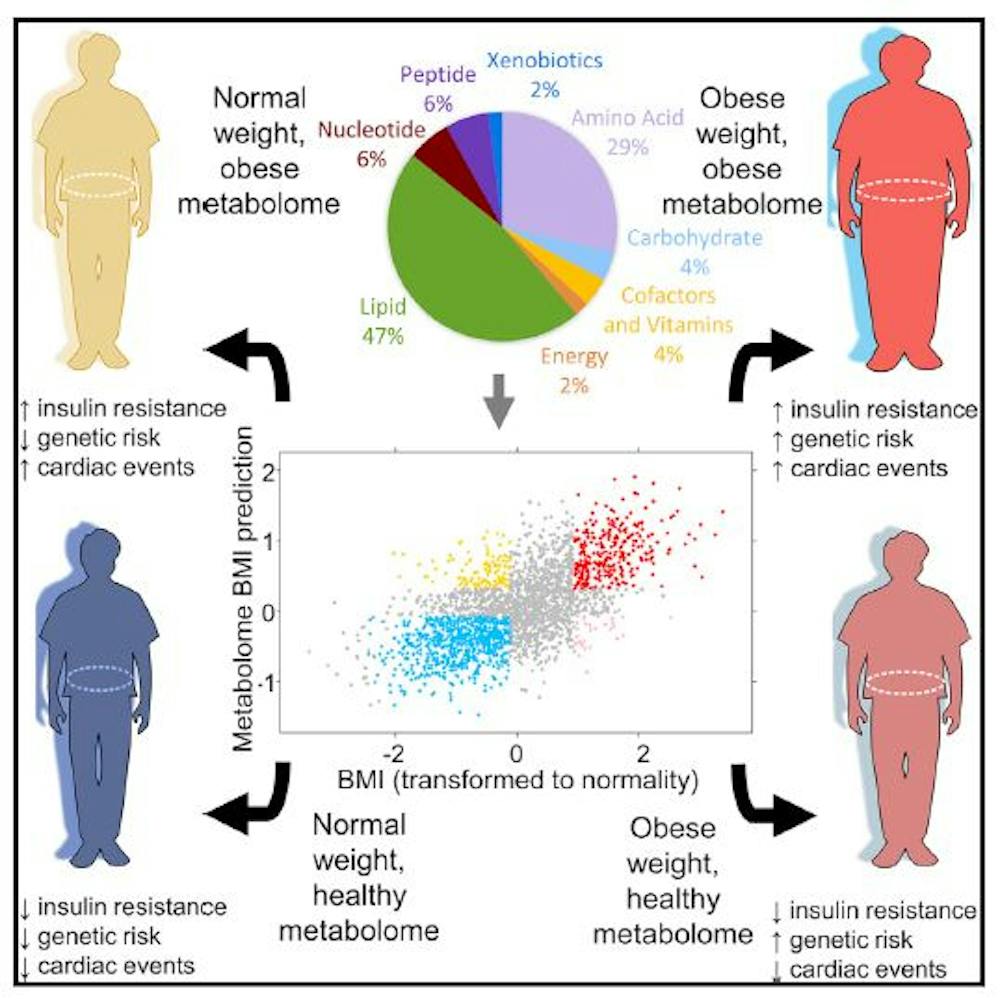
This graphical abstract shows that the metabolome captures clinically relevant types of obesity and is a better health predictor than genetic risk.
A second and fundamental observation was that the metabolic alterations carried more health consequences than the mere physical aspect: Some of the participants had what we labeled as an “obese” metabolome despite having a normal weight. On the other hand, some obese individuals had a pretty normal metabolome that was similar to those individuals with a healthy body mass index.
It is not clear to us how an obese person could have a normal metabolome. We do not know whether it is their genes or environment that are responsible for keeping this group of individuals more healthy. That will take more research to figure out.
Because we had medical information at the time that the metabolic analyses were performed and we had long-term follow up data, we could see the consequences of abnormal metabolism.
Those obese individuals who suffered the greatest deregulation of the metabolism developed diabetes, heart disease and hypertension. These same participants were also the ones that accumulated fat tissue inside the abdomen and in the liver – the “bad” locations – as opposed to just adding it under the skin of the waist or buttocks. Thus, physical obesity was important – but how the excess weight uniquely affected the inner workings of each individual was a more accurate measure of overall health.
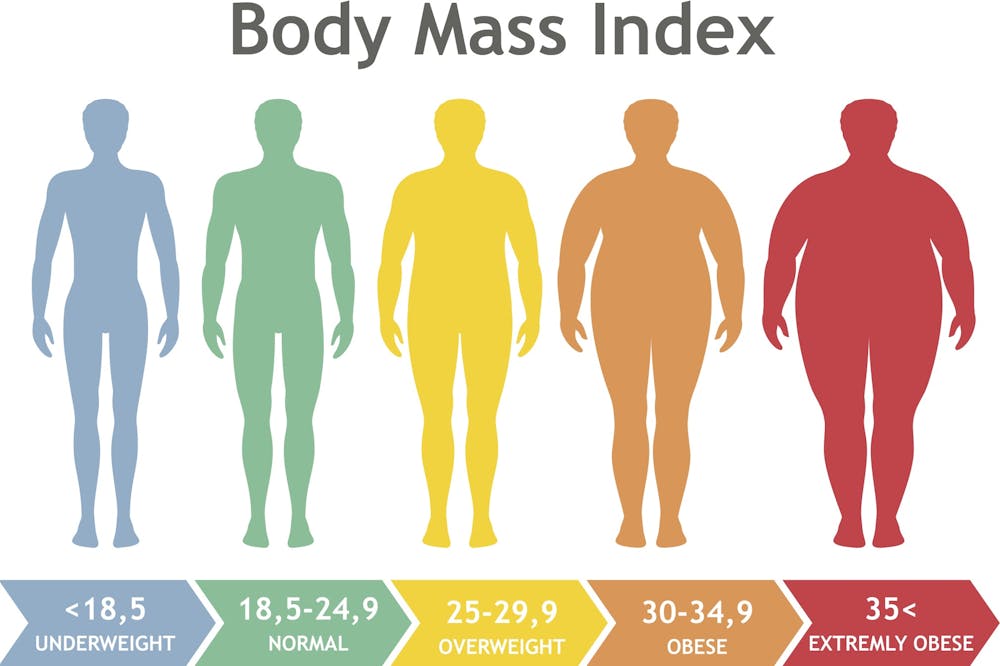
Body mass index vector illustration from underweight to extremely obese. BMI may not be an accurate reflection of whether an individual is in good or poor health.
It may be tempting to think of obesity as the consequence of genes – inherited from our parents. It is true, but the impact of our genes pales in comparison to the overwhelming impact of high caloric intake and sedentary lives.
There was one exception. We identified a few very obese individuals who had changes in a gene that controls appetite – the so-called melanocortin-4 receptor (MC4R). These patients had a genetic mutation that made them permanently hungry and led them to eat more than they needed. There is great hope that this particular type of obesity will be soon treated with specific drugs. As expected, this form of obesity severely disrupted the metabolism of the affected person.
We see all the time that science provides new understanding on important health problems that seems to fade once the news cycle is over. But after the hype comes the incubation of new strategies that may eventually find their place in medical practice.
Specific to research in obesity, I believe that bringing attention to the important changes in the metabolism provides a sense of urgency to the field. This work also provides a new way to measure the harmful impacts of obesity and to screen populations to identify those who could benefit from participation in clinical trials of new drugs. This includes individuals who are skinny and have an unhealthy metabolome, but are unaware of their state of health and would benefit from early intervention.
Have you ever seen a picture of a mother dog caring for an unusual baby, like a kitten? This sort of animal adoption story is an example of a phenomenon known as alloparenting: care provided to offspring that are not genetically related.
We humans may toss around the phrase “It takes a village to raise a child,” but there are cases in the animal world where this is more literally true. Naked mole-rats, wrinkly mammals of the East African desert, offer an example of the whole “village” cooperating to raise offspring.
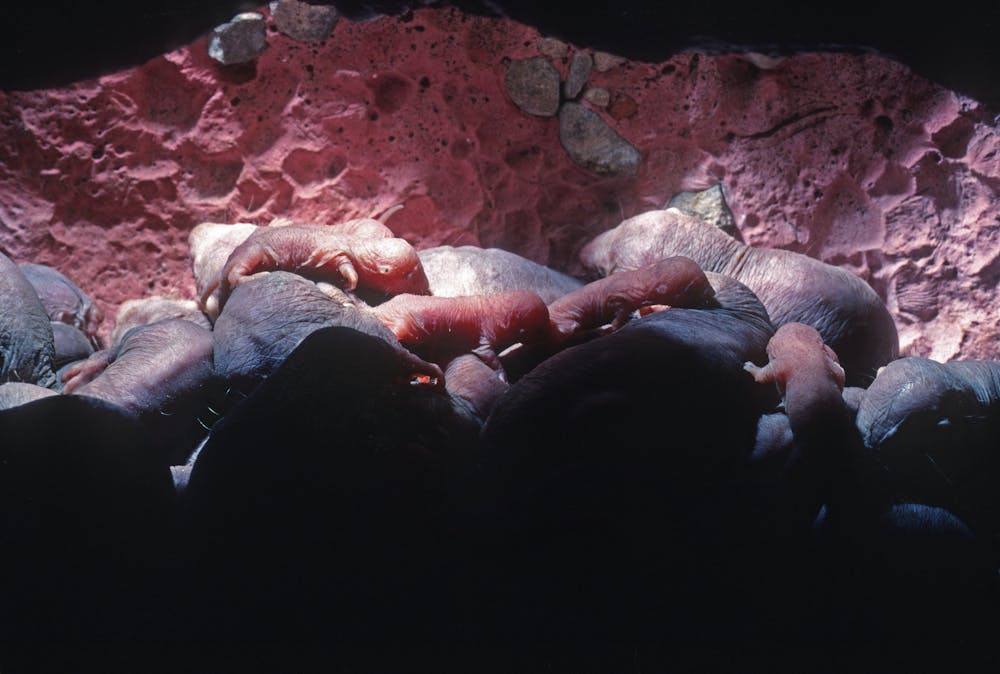
Each individual naked mole-rat has a specific job. Like in a honeybee hive, a naked mole-rat colony has one queen, whose job it is to reproduce. There are just a few sexually reproductive males, who mate with the queen. All the others, both male and female, are either soldiers that protect the colony or workers that forage for food, dig tunnels and care for the queen’s offspring, known as pups.
Until now, no one had a physiological explanation for why naked mole-rat workers care for pups that aren’t their own. Normally when a mom gives birth, estrogen levels are high and progesterone levels drop, resulting in maternal behaviors such as feeding or grooming. In many unusual adoption stories, like that of the mother dog caring for a kitten, the adoptive mom will have recently given birth to her own offspring – meaning her hormone levels have left her primed and ready to care for offspring, even those that aren’t her own.
But female naked mole-rat workers have lower levels of these hormones because their reproductive organs never mature. How, then, could the naked mole-rat workers be such great parents? The answer to this question involves a web of workers, queens, hormones and poop-eating.
Sending a message…via poop?
As a biologist, I’m interested in understanding how chemicals in the body can cause changes in behavior. In my lab I study the role of neurotransmitters, the brain’s chemical messengers, in vocal communication.
Recently, researchers in Japan noticed that worker naked mole-rats were faster to respond to pup calls and spent more time in the area where the calls originated after a queen gave birth. Naked mole-rats can vocalize to communicate, but their hearing is poor.
It looked like something about the queen’s reproductive stage was affecting the workers’ behavior. But what was going on? It’s unlikely they were communicating solely through vocalizations due to their poor hearing. Could there be some kind of chemical communication at play?
Naked mole-rats eat roots and tubers…and also feces.
Since naked mole-rats commonly eat poop to get any leftover nutrients, the researchers wondered whether the queen’s pregnant poop might contain a chemical that, when eaten, would affect the workers’ behaviors. Maybe pooped-out estrogen from the queen is a way for her to communicate with the workers, preparing them for parenthood.
They designed a series of experiments to investigate whether eating a pregnant queen’s estrogen-rich poop would make female workers more responsive and attentive parents to the colony’s pups.
Untangling the estrogen connection
First, the researchers fed worker naked mole-rats poop from pregnant and nonpregnant queens. They wanted to see if there would be differences in how the two groups of workers responded to pup calls. And indeed, naked mole-rats that ate the pregnancy poop were more responsive and attentive parents than those fed regular queen poop.
Then the researchers turned their attention to what was in the poop itself. The pregnant queen’s poop had high concentrations of estrogen and progesterone – two hormones commonly associated with parental behaviors. And during the queen’s pregnancy, workers had higher concentrations of estrogen in their own poop, too.
To be sure the increases in workers’ estrogen levels stemmed from the hormones in the pregnancy poop, and not just from being around a pregnant queen, the researchers mixed up a batch of “artificial poop.” They formulated the poop with estrogen and progesterone concentrations similar to what they’d found excreted by the pregnant queen. Sure enough, workers’ estrogen concentrations rose after they dined on this poop cocktail. Now the researchers were confident that the estrogen was transferring from the queen to the workers via her pregnant poop.
The research team then wanted to nail down the connection between the hormones and the behavior. So, they fed workers either normal nonpregnant queen poop, or nonpregnant queen poop supplemented with estrogen. Workers that ate the estrogen-enhanced poop showed levels of responsiveness and attentiveness to pup calls similar to those that had originally inspired the researchers to pursue these experiments.
It’s important to note that this study was carried out in a colony of naked mole-rats born and raised in the lab. It would be interesting to repeat this set of experiments in the field, and see if estrogen in poop causes the same behavioral changes in wild naked mole-rat workers.
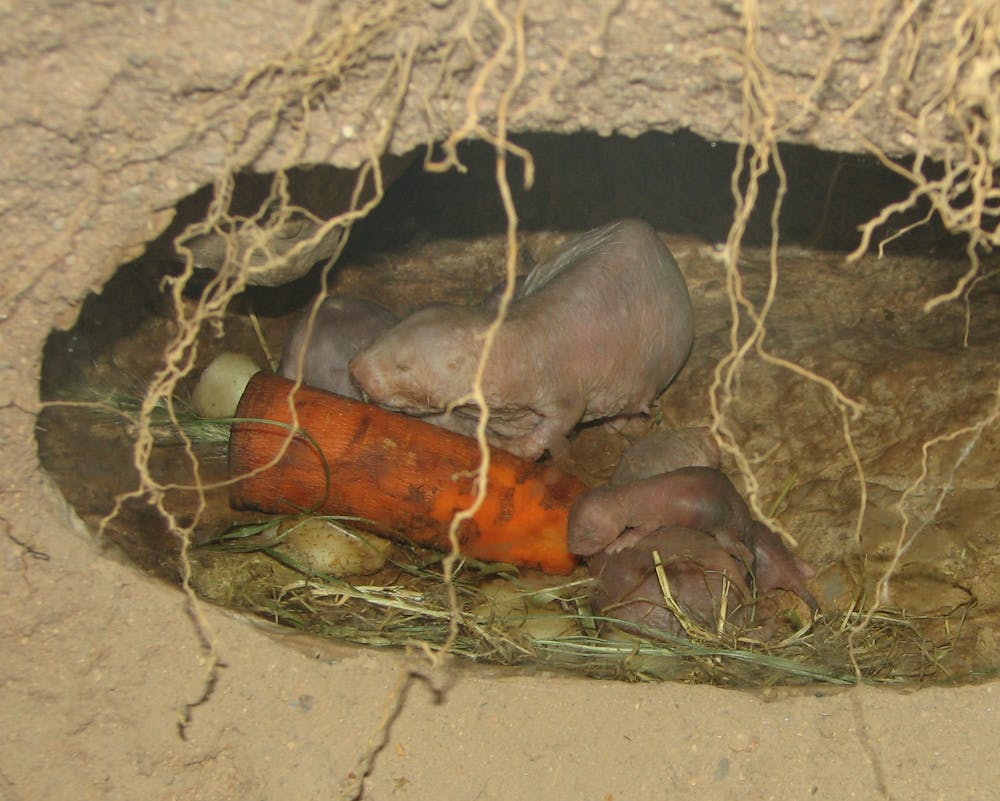
Part of good parenting for naked mole-rats is keeping the pups warm and safe.
Estrogen in poop: Multiple layers of communication
The changes in the behavior of workers after ingesting estrogen-laden poop suggests that the hormone not only served as a way to make the naked mole-rats better parents, but also as a way for the queen to communicate with her workers. In this way, the estrogen in the queen’s poop works on two levels: It gives workers a heads-up about the queen’s pregnant state and also improves the workers’ response to pup communications.
Many studies on chemical communication between mammals focus on pheromones: odor signals secreted by other individuals that affect one’s own behavior. Scientists have primarily regarded estrogen as a hormone that affects the behavior of the individual producing it. However, this study provides insight into how estrogen produced by others can not only be a means of communicating, but also a factor that influences one’s own behaviors.
The Spanish flu virus infected a third of the world’s population 100 years ago and claimed the lives of up to 100m people. The virus continued to evolve and its descendants went on to cause all subsequent flu pandemics, leading to the 1918 pandemic flu to be called the “mother of all flu pandemics”. The US army predicts that if a similar flu virus emerged today, it would kill 2.8m people in the US alone or six times more than the 1918 flu. How can a virus be so deadly?
Flu viruses are tiny particles that can enter the cells of a bird or mammal, such as a human. Viruses do this because they have no resources of their own and need to steal components and energy from our cells to copy themselves. They also constantly mutate and mix their genetic information to adapt to our cells.
To protect us from infection and disease, our immune system can detect flu and fight back in several ways. For instance, specialised proteins look for genetic material of the virus inside our cells and trigger signals to warn neighbouring cells that a virus is present.
If necessary, the immune system will even force infected cells to self-destruct to prevent the virus from spreading. Antibodies can also neutralise viral proteins in our airways or “flag” viruses for destruction by specialised immune cells. This is why we use vaccines: to show our immune system the viral proteins of potential future infections so that our bodies are prepared for them.
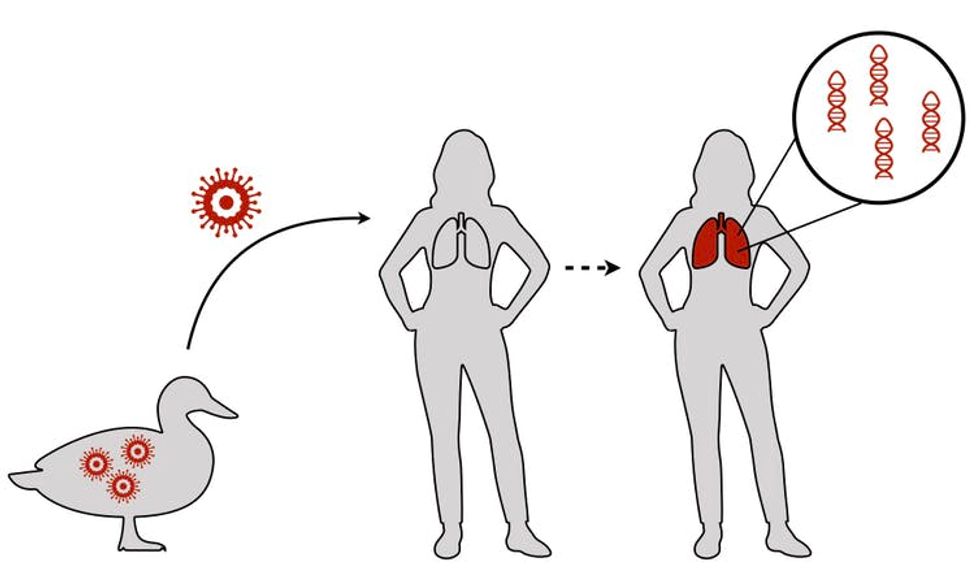
Our immune system also plays an important role in the severity of infections with pandemic flu and bird flu. Most of the seasonal flu viruses that we encounter have become well adapted to us as hosts over time and copy themselves relatively undetected by our immune system. But flu viruses can also “jump” between animals, such as from birds to humans. This means that we can suddenly be faced with a type of flu, such as an H5N1 bird flu, that we have never seen before and that is not adapted to our cells.
Our immune system detects these viruses and launches a violent counterattack, or “cytokine storm”, which is so strong that our lungs fill up with white blood cells, fluid and blood, and we effectively drown.
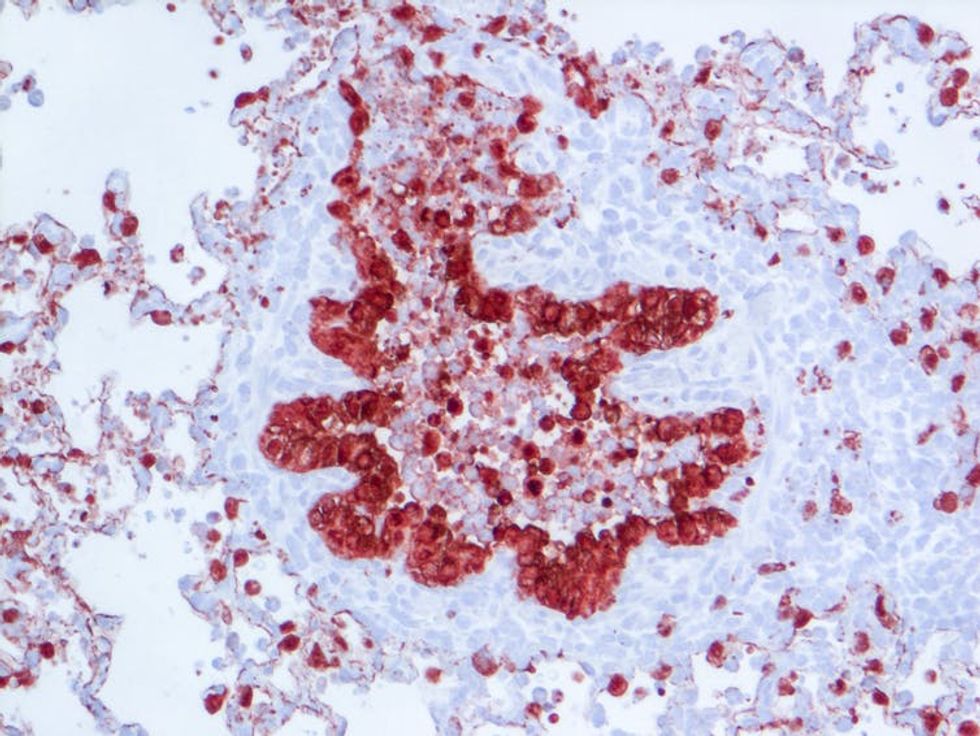
Bronchiole of a lung infected with the 1918 flu virus. Infected cells are stained red. Note the lack of airspace inside the bronchiole due to white blood cell infiltration.
Jurre Siegers and Debby van Riel, Erasmus Medical Centre.
Spotting viral garbage
We roughly know which viral and cellular proteins contribute to the destructive response. But why it is initiated by pandemic and avian flu viruses is far from clear. In our recent study, we looked at what the immune system “senses” when the genetic information of flu viruses is copied. We found that it focuses strongly on tiny “faulty” molecules of genetic viral information. So our immune system sees viral “garbage”, while the normal genome of the virus remains undetected.
The Spanish flu virus and the H5N1 bird flu make more faulty genomes in human lung cells than a virus that is adapted to these cells. Also, when you take the enzyme that copies the genome of a harmless flu virus and change it to make it similar to the enzyme of the Spanish flu virus, this engineered enzyme immediately starts making more faulty molecules and overstimulating the immune response. The original enzyme does not.
Dangerous flu viruses make a molecule that causes disease when these viruses get inside our cells. We think this is because they have not had enough time to adapt and are copying themselves incorrectly. This idea is supported by other recent observations and may be important for diseases caused by other emerging viruses, such as Ebola.
Flu viruses that ‘jump’ from another animal, such as a bird, cause severe disease in the lungs. During these infections, the virus produces molecules called mini viral RNAs that trigger strong immune responses.
A century after the Spanish flu pandemic, we are finally in a position to better understand what makes pandemic and bird flu viruses deadly. This will help us look for ways to neutralise the harmful molecule and be ready if a new pandemic strikes.
CBS News recently spoke to a group of so-called Flat Earthers who believe that the scientific community has pulled off a great hoax by claiming that the world is in the shape of a globe.
In a segment that aired on CBS Sunday Morning, reporter Brook Silva-Braga interviewed a group of people who are trying to prove that the world is flat and that a wall of ice around the perimeter is containing all of the sea water.
"Probably most people who hear about it will laugh at it, think we're idiots," Flat Earth believer Patricia Steere told CBS News. "We're not idiots. We're intelligent people from all walks of life and all ages."
According to Steere, photos of the Earth from space are "completely and utterly false." She believes that the Sun and the Moon are "probably about the same size." And she said that photos of astronauts are always "completely fake."
"We didn't go to the Moon," Steere explained. "And we don't have a rover on Mars. And we didn't do a fly-by of Pluto. And we've never been to space! Period."
"It's a giant game of chess and, we -- all of us in humanity -- are the pawns," she added. "Part of the whole fodder thing is keeping us locked down, not knowledgable about who we are, who we really are as people and what we're capable of."
But national security expert Tom Nichols told CBS News that the Flat Earth trend is part of a bigger problem.
"People have lost faith in experts," he said. "We've developed a kind of reverse snobbery that says, if you have a great deal of education, if you're at a well-known institution, by definition, you must be a liar."
"Younger people will say, 'The internet is a big library,'" he continued. "That's wrong. The internet is a big dumpster. There's no guarantee that anything you find on it is true."
Silva-Braga also spoke to Flat Earther Michael Hughes, who shot himself 6,000 feet high in a rocket to prove the Earth has no curvature.
"I just want people to question everything," Hughes said. "Question what your congressman's doing, your city council, question what really happened during the Civil War, what happened during 9/11."
Hughes vowed to take another rocket trip to the edge of space.
"I expect to see a flat disc up there," he insisted.
The number of climate-related disasters around the world is growing rapidly, humanitarians warned Friday, urging more efforts to prepare and build resilience to looming changes on a warming planet.
Climate shocks are already driving displacement, causing many to go hungry and are sparking or exacerbating conflicts around the globe, humanitarian workers said, cautioning that the situation is quickly deteriorating.
Speaking on the sidelines of a conference in Geneva on the impact of climate change on humanitarian situations around the globe, he cautioned that such “shocks” were “getting more frequent and more severe.”
Friday’s conference was aimed at unpacking the humanitarian implications of the findings in a landmark UN climate report this week, which warned drastic action was needed to prevent Earth from hurtling towards an unbearable rise in temperature.
The Intergovernmental Panel for Climate Change (IPCC) said the globe’s surface has already warmed one degree Celsius (1.8 degrees Fahrenheit) -- enough to lift oceans and unleash a crescendo of deadly storms, floods and droughts and is on track toward an unliveable 3C or 4C rise.
‘Pressure cooker’
Gernot Laganda, who heads the World Food Programme’s climate and disaster risk reduction division, pointed out that climate shocks are already “significant drivers of displacement”, forcing 22.5 million people to leave their homes each year.
Speaking to journalists in Geneva, he also decried the “increasingly distractive interplay between conflict and climate disasters.”
He pointed out that the world’s 10 most conflict-affected countries, including Syria, Yemen and the Democratic Republic of Congo, are also impacted by extreme weather events, creating a so-called “pressure-cooker” effect.
Laganda pointed to projections that if the planet warms just 2C, 189 million more people than today will become food insecure.
“And if it is a four-degree warmer world ... we’re looking beyond one billion more,” he said, adding that this “is a very, very strong argument for early and decisive climate action.”
Sy meanwhile said humanitarians had already seen a dramatic increase in climate and weather-related crises.
“In the 1970s, we used to be dealing with 80 to 100 severe weather-related shocks and hazards” each year, he said, contrasting that to last year, when the number was around 400 -- “four times more.”
While acknowledging that climate-related shocks would likely keep climbing, Sy emphasised that it was not inevitable that such shocks and hazards should “become a disaster.”
“We need to be better prepared with early warning and with early alert,” he said, also stressing the importance for IFRC of continuously having volunteers on the ground in affected communities to help them to adapt to climate change.
The organisation counts some 70 million volunteers around the world, so when climate-linked shocks and hazards hit, they “find us already there,” he said.
A spectacular supernova explosion, more than a billion times brighter than our sun, marked the birth of a neutron star orbiting its hot and dense companion. Now these two dense remnants are destined to spiral into each other in about a billion years, eventually merging and yielding some of the heaviest known elements in the universe.
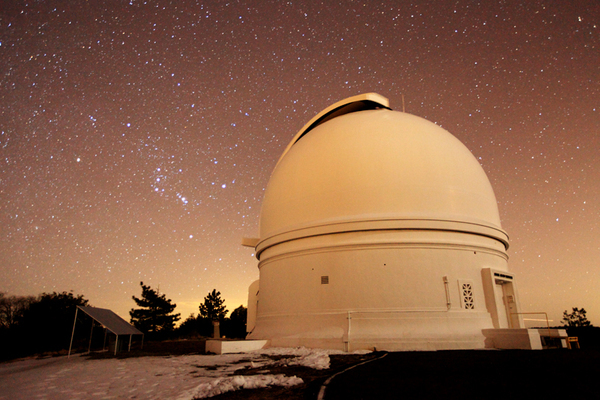
The explosion occurred in a galaxy similar to our own Milky Way, nearly 920 million light years away. A small telescope at Palomar observatory in California detected the first photons from the supernova – named “iPTF 14gqr” – just hours after the explosion, when it was more than 10 times hotter than the surface of our sun. As the brightness of the supernova evolved during the next two weeks, an international team of astronomers used the data to trace the origin of the explosion to a massive star with a radius 500 times that of the sun.
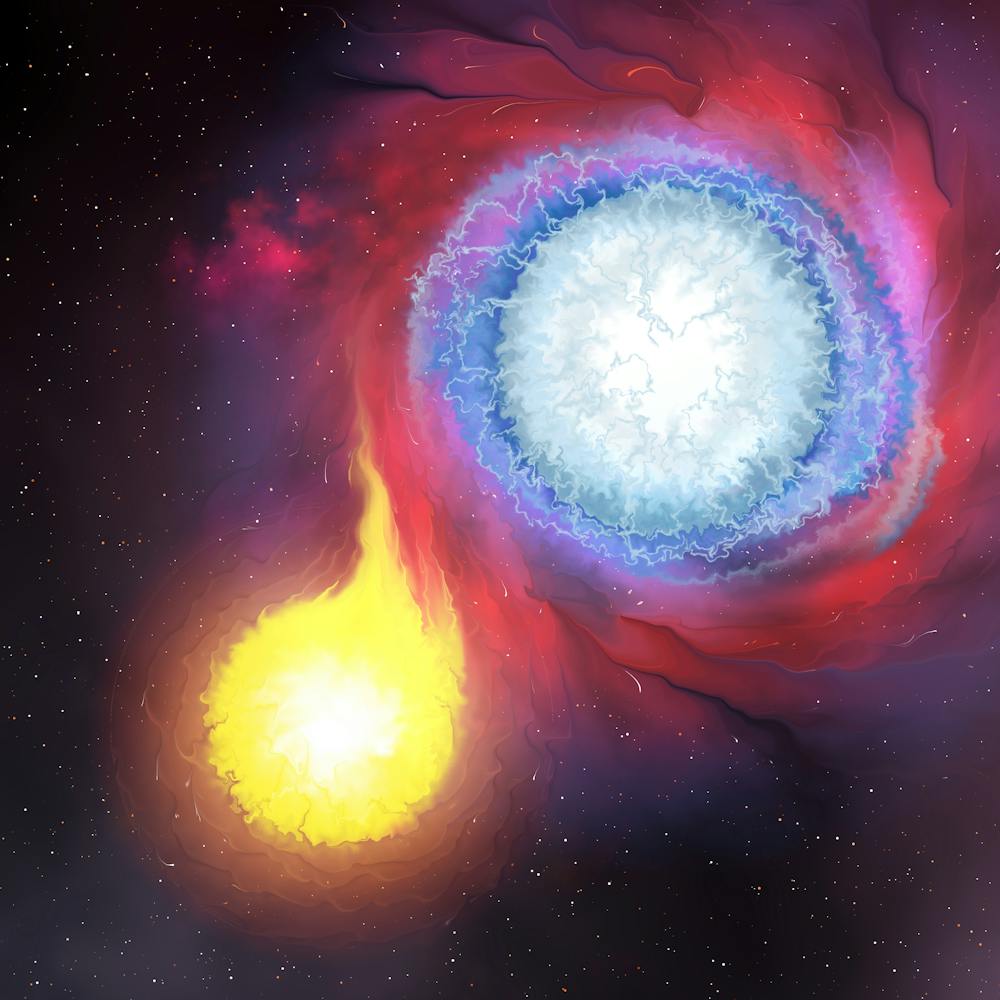
But it wasn’t just the giant size of the star that made this discovery particularly noteworthy. What was unusual was that the star also seemed to be the lightest of all known exploding giant stars. This massive star had been robbed of nearly all of its mass, perhaps by a dense orbiting partner. When it exploded, it left behind a newborn neutron star that continued to orbit its companion.
The three panels represent moments before, during, and after the faint supernova iPTF14gqr, visible in the middle panel, appeared in the outskirts of a spiral galaxy located 920 million light years away. The massive star that died in the supernova left behind a neutron star in a very tight binary system. These dense stellar remnants will ultimately spiral into each other and merge in a spectacular explosion, giving off gravitational and electromagnetic waves.
Understanding the formation of binary star systems in which two super dense stars orbit each other has always been a puzzle. These fleeting supernovae that yield these dense binary star systems are both rare and difficult to find, because they quickly appear and disappear in the sky – about five times faster than a typical supernova.
This first observation of a “ultra-stripped” supernova, which my colleagues and I detail in a new study, not only provides insights into the formation of these systems but also reveals the final stages in the lives of these unique massive stars that have been plundered of all of their mass before they die.
Solving a longstanding mystery
Stars born with more than eight times the mass of the sun quickly run out of fuel and succumb to gravity at the end of their lives – collapsing in on themselves and exploding in a supernova. When this happens, all of the star’s outer layers – a few times the mass of the sun – are scattered.
A binary star system is composed of two stars orbiting each other. Here the larger blue star is absorbing the other smaller secondary star.
When I started working with my advisor, Mansi Kasliwal, as a new graduate student, I decided to study supernovae that quickly fade in brightness. Mining the database of events discovered by iPTF, I came across iPTF 14gqr, a quickly fading supernova that was discovered more than a year before but whose true physical nature remained mysterious.
The data were puzzling because our preliminary models suggested this supernova was caused by the death of a giant massive star, yet the explosion in itself was quite wimpy. It ejected only a fifth of the mass of the sun, while its energy was only a tenth of a typical supernova. Where was all the missing matter and energy?
The clues indicated that the exploding star must have been stripped of nearly all of its original mass before the explosion. But what could have stolen so much matter from this giant star? Perhaps an unseen binary companion?
I started reading up about rare binary star scenarios, when I first came across the idea of “ultra-stripped supernovae.”
As two massive stars orbiting each other, the more massive star explodes first, leaving a rapidly spinning neutron star behind. This neutron star steals most of the material from its neighbor until the second star explodes in an ‘ultra-stripped’ supernova. What is left behind is a binary neutron star system.
Ultra-stripped supernovae
When a massive star has a dense and nearby binary companion star, the intense gravitational pull of the companion can rob its unsuspecting neighbor of nearly all its mass before it explodes – hence the term “ultra-stripped.”
The ultra-stripped supernova leaves behind a neutron star, a rapidly spinning dense stellar corpse containing a bit more than the mass of the sun crammed into a region the size of downtown Los Angeles. This neutron star is trapped in a tight orbit around its companion. The companion is possibly another neutron star, or even a white dwarf or a black hole that was formed from a massive star that died several million years before its companion.
Such binary systems have been an important field of astrophyiscal investigation for several decades. We have directly observed many such systems in our own galaxy with optical and radio telescopes. The first indirect detection of gravitational waves came from observations of a double neutron star system. More recently, the first merger of a double neutron star system was detected both by advanced LIGO and in electromagnetic waves in 2017, giving astronomers unique insights into the workings of gravity and the origin of heavy elements in the universe.
Two dense neutron stars orbiting each other as they gradually spiral in and merge. The merger produces a ‘kilonova’ explosion, which was directly detected for the first time in 2017.
Yet, it has long remained a mystery how binary stars form. We know that neutron stars are formed in supernova explosions. But, in order to get binary neutron stars, you need a binary of two massive stars to begin. However, it requires a precise balance of forces to make sure that the binary neutron stars remain stable enough to survive the two violent explosions that create the system.
Several lines of indirect evidence suggest they are formed in a very rare class of weak ultra-stripped supernova explosions. But these faint explosions had so far escaped direct detection. This first observational evidence for an ultra-stripped supernova opens up an opportunity for understanding the formation of tight neutron star binary systems.
Scanning the heavens for infant explosions
The iPTF used the 48-inch Samuel Oschin telescope at Palomar observatory.
Our supernova was spotted during the intermediate Palomar Transient Factory (iPTF) survey. The automated iPTF survey used a large camera mounted on a 1-meter-sized telescope to take photos of the sky every night and scan for “new stars.” A search priority was hunting for infant supernovae and pinpointing the origin.
Whenever a new star is found, the survey robot immediately alerts on duty astronomers located in a completely different time zone to follow up. This strategy together with a global network of telescopes allowed us to catch several exploding stars in action and understand what they looked like just before they exploded. In fact, finding a rare ultra-stripped supernova moments after the explosion was a lucky coincidence!
This single event has provided us with the first insight into the mass and energy released in such explosions, the life cycle of massive stars, and the formation of binary stars. Yet, there is a lot more to be learned from a larger sample of these events.
With the Zwicky Transient Facilty– the successor of iPTF that can scan the skies 10 times faster – and a global network of telescopes called GROWTH, we hope to witness more ultra-stripped explosions, beginning a new episode in our understanding of these unique star systems.
Lysergic acid diethylamide was labelled a "problem child" by the man who discovered its hallucinogenic properties in 1943: as it turns 75, the drug known as LSD may now be changing its image.
The late Swiss chemist Albert Hofmann famously learned of LSD's psychedelic effects when he inadvertently took a small dose while doing lab work for pharmaceutical company Sandoz.
He wanted the drug to be medically researched, convinced it could be a valuable psychiatric tool and lead to a deeper understanding of human consciousness.
But through the 1960s, LSD became synonymous with counterculture and anti-authority protests.
By the early 1970s, it had been widely criminalised in the West, prompting Hofmann to publish his 1979 memoir, "LSD: My Problem Child".
AFP / Fabrice COFFRINI Late Swiss chemist Albert Hofmann learned of LSD's psychedelic effects when he inadvertently took a small dose while doing lab work for the pharmaceutical company Sandoz
The book, in which Hofmann sought to reassert LSD's potential medical benefits, is featured in an exhibition at the Swiss National Library in the capital, Bern, to mark 75 years since the discovery.
Hofmann died in 2008 at the age of 102 but he likely would have been pleased by a series of recent developments.
After decades as a medical outcast, LSD has attracted renewed clinical interest and there has been evidence that it can help treat anxiety and depression.
Such developments were what Hofmann was hoping for at the time of writing "My Problem Child".
"If we can better understand how to use it, in medical practice related to meditation and LSD's ability to promote visionary experiences under certain circumstances, then I think that this 'problem child' could become a prodigy," he wrote.
- Experimental research -
He had discovered LSD while working with a fungus called ergot, which attacks cereal grains like rye and had previously been used for a variety of medical purposes. At the time, Sandoz was using it to make migraine medication.
Hofmann unknowingly created LSD when he combined the main active agent in ergot -- lysergic acid -- with diethylamide. After accidentally ingesting a trace of LSD, he began to feel strange and later on deliberately took larger amounts to better understand the drug's effects.
AFP / Fabrice COFFRINI Hofmann discovered LSD while working with a fungus called ergot, which attacks cereal grains like rye and had previously been used for a variety of medical purposes
In a bestselling book published in May entitled "How to Change Your Mind", the renowned American author Michael Pollan notes that LSD was the subject of widespread experimental research through the 1950s and 1960s and attracted the interest of leading psychiatrists.
But the situation changed.
"When Hofmann published his book in 1979, LSD was completely prohibited. There was no research," said Hannes Mangold, curator of the National Library exhibit called "Problem Child LSD turns 75."
"What's interesting is that for the last 10-15 years, research has once again been authorised and LSD as medicine has re-emerged."
- '1950s crowdsourcing' -
A non-profit organisation that has been at the forefront of driving the new wave of research is the California-based Multidisciplinary Association for Psychedelic Studies (MAPS) in Santa Cruz.
AFP / Fabrice COFFRINI The California-based Multidisciplinary Association for Psychedelic Studies (MAPS) has been at the forefront of driving a new wave of research into LSD
MAPS receives mostly private funding from large and small donors to support medical research into controlled substances.
Brad Burge, director of strategic communications at MAPS, told AFP that the organisation had raised nearly $30 million (26 million euros) for further research to build on a Phase II LSD study which, he said, found positive indications that the drug can successfully treat anxiety.
MAPS funded the Swiss psychiatrist Peter Gasser to conduct the Phase II study, which was published in 2014 and was the first controlled study of LSD in more than four decades.
"We kind of brought it full circle, back there (to Switzerland)," Burge said.
He said that in the early years following Hofmann's discovery, Sandoz had sent out batches of LSD to any interested researcher, hoping someone would define a clear, marketable purpose for the drug.
"It was 1950s crowdsourcing," Burge said.
- Richard Nixon -
AFP / Fabrice COFFRINI By the early 1970s, LSD had been widely criminalised in the West
In 1970, the administration of former US president Richard Nixon listed LSD as a "Schedule 1" narcotic, a classification given to drugs that Washington considers highly dangerous with no medical benefit.
MAPS and others have argued that the decision was more about politics than public health as Nixon was interested in cracking down on various groups with which LSD had -- accurately or not -- become linked, including hippies and opponents of the Vietnam war.
But the effect of the Schedule 1 designation was to bring serious research on LSD to a halt, both in the United States and among foreign laboratories worried about American reprisals, Burge said.
Mangold told AFP that the LSD research landscape was effectively dormant for nearly four decades and only began to change following a 2006 conference in the Swiss city of Basel to mark Hofmann's 100th birthday.
- A 'comeback' ?-
Scientists from numerous countries left the Basel symposium resolved to pursue new research and asked their regulatory authorities for permission to work with LSD, Mangold said.
AFP / Fabrice COFFRINI Hannes Mangold, curator of the National Library exhibition on LSD turning 75, said that "for the last 10-15 years, research has once again been authorised and LSD as medicine has re-emerged"
Burge said that a key finding of the Phase II MAPS trial was that none of the 12 patients who participated had adverse reactions.
Given the risks of taking a powerful psychotropic in an unsupervised context, proving that LSD could be safely administered by medical professionals was essential to advancing further research, he said.
In the study, Gasser focused on patients diagnosed with life-threatening diseases, who participated in LSD-assisted psychotherapy during which they were guided in confronting anxieties and painful experiences while under the influence.
The qualitative results of the study showed participants experienced a reduction in anxiety, but found that further research was needed to define model medical uses for LSD.
"It's still early, but it is now conceivable that LSD could make a comeback as a (therapeutic) drug," Mangold said.
Two astronauts who survived the mid-air failure of a Russian rocket will fly again and are provisionally set to travel to the International Space Station (ISS) in spring of next year, the head of Russia’s space agency said on Friday.
Dmitry Rogozin, the head of Russian space agency Roscosmos, was speaking a day after Russian cosmonaut Alexei Ovchinin and American Nick Hague made a dramatic emergency landing in Kazakhstan after the failure of the Soyuz rocket carrying them to the orbital ISS.
Thursday’s accident was the first serious launch problem experienced by a manned Soyuz space mission since 1983, when a crew narrowly escaped before a launch pad explosion. Russia is now under pressure to prove its space program is safe or face losing lucrative fees to carry U.S. astronauts into space.
Moscow has suspended all manned space launches until it finds out what went wrong and Rogozin has ordered a state commission to investigate. Russia’s Investigative Committee has also opened a criminal investigation.
Sergei Krikalev, a senior Roscosmos official, said on Friday that Russia may also delay a planned unmanned cargo shipment by a Progress spacecraft to the ISS. Unmanned cargo launches carry food and other supplies to the ISS and use the same rocket system as the Soyuz. Russia says there is enough food on board to last until April.
Three people are now aboard the space station: a German, a Russian and an American. They were due to return to Earth in December, but may now be stuck there at least until January.
VALVE FAILURE
Roscosmos chief Rogozin on Friday posted a picture on Twitter of himself seated next to the two astronauts involved in Thursday’s accident, saying they had arrived in Moscow. Both men escaped unscathed and feel fine, Roscosmos has said.
Thursday’s mishap occurred as the first and second stages of the Russian rocket separated shortly after the launch from Kazakhstan’s Soviet-era Baikonur cosmodrome.
The Interfax news agency on Friday cited a source familiar with the Russian investigation as saying that an important valve had failed to open due to a faulty firing cartridge. That in turn had hindered the separation of the first stage of the rocket from its second stage.
NASA has relied on Russian rockets to ferry astronauts to the space station since the United States retired its Space Shuttle program in 2011, although the agency has announced plans for a test flight carrying two astronauts on a SpaceX commercial rocket next April.
NASA officials now must decide how or whether to maintain a U.S. presence on the $100 billion orbital research laboratory.
Space is an area of cooperation between the United States and Russia at a time of fraught relations. Asked about the mishap, President Donald Trump told reporters at the White House he was “not worried” that American astronauts have to rely on Russia to get into space.
Rogozin tweeted shortly before Thursday’s failed launch that he had signed a contract to send the first astronaut from the United Arab Emirates to the ISS. Interfax cited a source on Friday a saying that was now likely to be delayed by six months.
Writing by Andrew Osborn; Editing by Christian Lowe and Peter Graff
The two-man crew of a Soyuz rocket made a successful emergency landing Thursday after an engine problem on lift-off to the International Space Station, in a major setback for the beleaguered Russian space industry.
US astronaut Nick Hague and Russian cosmonaut Aleksey Ovchinin were rescued without injuries in Kazakhstan.
"The emergency rescue system worked, the vessel was able to land in Kazakhstan... the crew are alive," the Russian space agency Roscosmos said in a tweet.
The pair are in contact with ground control, the space agency said.
Over the past few years the Russian space industry has suffered a series of problems including the loss of a number of satellites and other spacecraft.
The rocket was launched was from the Baikonur cosmodrome in Kazakhstan at 0840 GMT.
"The launch had a problem with the booster (rocket) a few seconds after the first stage separation and we can confirm now that the crew has started to go into ballistic descent mode," the voiceover on a NASA livestream from mission control in Houston said.
The NASA commentator later said the crew was in good condition and communicating with rescue workers after landing east of the Kazakh city of Zhezkazgan.
The descent was sharper than usual meaning the crew was subjected to a greater G-force, but they have been prepared for this scenario in training, the commentator said.
A source in the Russian space agency told AFP that rescue workers had reached the crew.
- 'Thank God' -
The Kremlin confirmed the men had survived. Russian presidential spokesman Dmitry Peskov told journalists: "Thank God the cosmonauts are alive".
Roscosmos's online stream of the launch cut out shortly after lift-off.
Former military pilots Ovchinin and Hague were set to join Alexander Gerst of the European Space Agency, NASA's Serena Aunon-Chancellor and Sergey Prokopyev of Roscosmos following a six-hour flight.
The International Space Station -- a rare point of cooperation between Moscow and Washington -- has been orbiting the Earth at roughly 28,000 kilometres per hour since 1998 and will mark its 20th birthday in November.
Hague was born in the same year the United States and the Soviet Union launched their first joint space mission, the Apollo-Soyuz, or Soyuz-Apollo mission in 1975.
Dmitry Rogozin, a firebrand nationalist politician who this year was appointed by President Vladimir Putin to head Roscosmos, said on Twitter he had ordered a state commission to probe the accident.
Rogozin was flying to the scene of the emergency landing, the space agency said.
As a researcher who works on fruit flies, I often get asked how to get them out of someone’s kitchen. This happens to fly researchers often enough that we sit around fly conferences (these actually exist) and complain about getting asked this question.
Meanwhile, we watch the same fruit flies buzz around our beers instead of discussing pithy and insightful questions about the research that we’re pursuing.
But I get it: Fruit flies are annoying. So, fine, here’s how we get rid of them in my lab: We build a trap. It’s not perfect, but it’s OK.
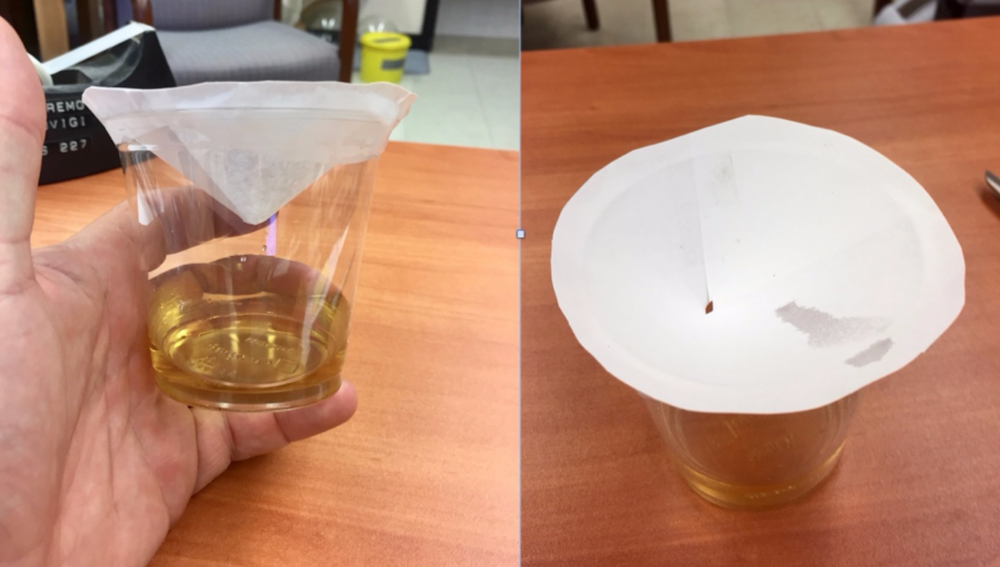
1. Take a small jar (we use small canning jars) and pour in cider vinegar to about two centimetres deep.
2. “Cap” the jar with a funnel. You can use a plastic funnel if you have one, but a makeshift paper one works well.
3. Tape the funnel in place so there are no gaps for the flies to crawl out.
Thomas Merritt, who researches fruit flies, shows you how to kill them.
(Thomas Merritt), Author provided
Flies fly in and can’t find their way out. Every day or two, replace the vinegar.
Instead of vinegar, you can also use beer or wine, but I prefer to drink one of these while making the traps.
There is actually a little science behind the trap. Fruit flies — at least Drosophila melanogaster, the most common fly buzzing around your bananas — are attracted to aging fruit, rotting fruit in particular. They lay their eggs there and the larvae hatch and feed on the soft, overripe flesh.
To find that fruit, flies use their sense of smell, what we call their olfactory system. What they are sensing, smelling, are things like acetic acid — the molecule that gives vinegar its pungent punch. So, you could bait your trap with fruit, but vinegar jumps right to the chase and lures them in.
The flies flying around your kitchen likely came from outside. Drosophila melanogaster are originally an African species, but they’ve spread across the globe. We call them a “cosmopolitan” species — they’re found wherever people are.
Where flies come from and why we research them
The story of how they’ve adapted to so many different environments (like, for example, the tip of Florida or even northern Ontario, where I live) is an interesting one and a hot topic of currentresearch. The flies that buzz around my fruit bowl, at least in the summer and fall, likely came from a local population. I’ve actually done work on flies we collected from the composter in my backyard.
Interestingly, the combination of a tropical species, a cool day and a warm house is likely why there seem to be more flies in the fall. As the temperature outside goes down (and even on cool summer nights where I live), the flies come inside where it’s warm. Where do the flies go in the winter? We actually don’t know. We know they can’t freeze and live, so our best guess is they hide away in basements waiting for warm weather. There’s actually a name for this idea. We call it the “Root Cellar Hypothesis.”
A trap Thomas Merritt made from a plastic cup, a sheet of printer paper, and about a quarter cup of cider vinegar.
(Thomas Merritt), Author provided
The second question that I, and every other fly researcher, get asked is: Why flies? Good question. The first answer is: Because they’re small. Seriously.
Much of the research I do involves asking how individuals, or small groups of individuals, are similar and different. Asking this question is best done with thousands of individuals. An average experiment in my lab can involve tens of thousands of flies. Imagine doing this kind of work on zebras. That’s a lot of zebras. It also helps that flies grow quickly, reproduce constantly and are super easy (usually) to keep in the lab.
The second reason why we research flies is because they are strikingly similar to humans — or any other animal on our planet. Because life on Earth shares a common ancestry, we have all evolved in complex and interwoven paths from a common ancestor. We share much of our genetics and almost all of our biochemistry.
Sixty to 80 per cent of genes found in humans are found in flies, and essentially all our biochemistry and metabolism is identical. So when we ask a question using flies, we can answer a question that interests us about humans.
It is this relatedness, and the ease of working with them in the lab, that have led to research on flies being the foundation of no less than four Nobel Prizes.
Ironically, as I type this there is literally a fruit fly — Drosophila melanogaster — walking the lip of my coffee cup. The little devils are everywhere.
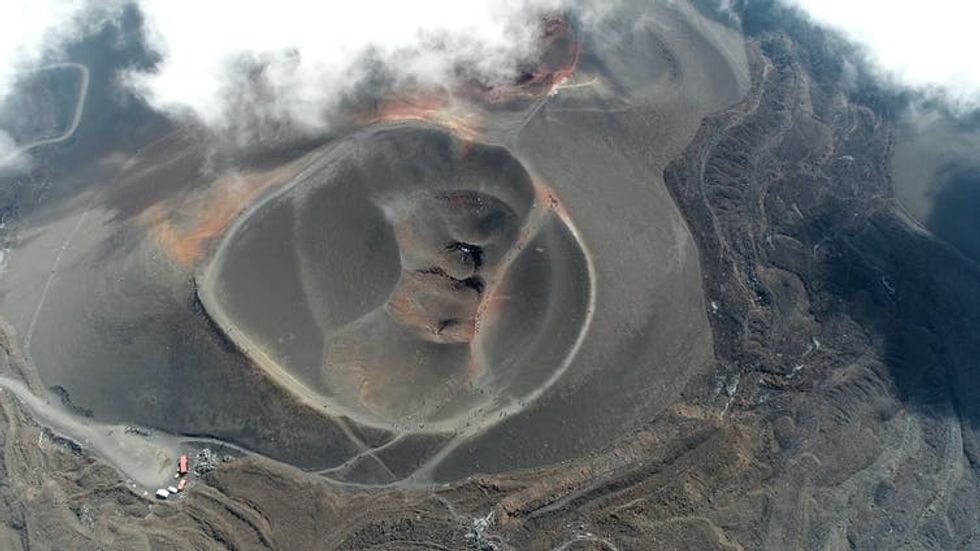
The southeast flank of Mount Etna in Sicily is sliding towards the sea at a rate of several centimetres a year. This might not sound like much, but the kind of stress that this movement creates inside volcanoes can cause devastating landslides. If, one day, Etna’s movement significantly increases then it could have serious consequences.
With this in mind, scientists such as myself have been studying Etna to try to better understand what’s going on. Now research published in Science Advances presents strong evidence that Etna’s slide isn’t caused by pressure from magma inside the volcano, as previously thought. Instead, it’s likely caused by gravity pulling on Etna’s lower underwater slopes, far from the summit. The researchers emphasise that this means Etna is more susceptible to catastrophic collapse than had previously been realised, and that the same might be true of other coastal and island volcanoes.
My colleagues and I first calculated the speed of Etna’s movement earlier this year, showing that the entire edifice slid downslope at an average of 14 millimetres a year between 2001 and 2012. But the whole volcano is also expanding outwards from the summit in all directions, meaning its total annual movement towards the sea is several centimetres.
The new research looks for the first time at what is happening at the underwater foot of the volcano, 1,200 metres below sea level and 12 kilometres from the shoreline. Data from five underwater transponders gathered between April 2016 and July 2017, showed the underwater slope remained stable for a year but then slid four centimetres in one eight-day period before finally stabilising again.
The data shows that the amount of movement is smallest at the summit and biggest at the foot of the volcano. But if movement was caused by the magma inside Etna then the biggest movement would occur near the volcanic centre. The researchers also found that the sea floor movement 12 kilometres from the shore is focused along a single geological fault. But near the coast, the strain is divided between two fault systems.
This all suggests that the movement began offshore and spread towards the summit. There were no associated earthquakes during the eight-day episode, indicating that the movement wasn’t caused by seismic activity. Instead, it’s likely to be the effects of gravity pulling on the volcano.
Etna is expanding outwards from the summit and sliding towards the sea.
For the past 50 years, the science of volcano movements has been dominated by the idea that most volcanoes have a shallow magma chamber that expands as it fills with magma before an eruption. This causes the walls of the chamber to eventually fracture and allows magma to escape from the side of the volcano. Measuring the volcano’s surface movement would allow you to calculate the depth of the magma chamber. It is this kind of model that is usually used to explain expanding volcanoes.
But many scientists including myself have found that while some well-studied volcanoes in Hawaii, Iceland and elsewhere fit this kind of model, other volcanoes contradict it. This suggests there are other factors that explain volcano movement and can affect eruptions.
In the 1990s, volcanologist Andrea Borgia suggested that the steadily increasing amount of lava and volcanic rock deposited near the top of tall volcanoes caused their summits to subside and their slopes to spread outwards. This idea has gained ground as volcanoes around the world provide us with more and more geological evidence, which the new research paper adds to.
Etna’s uncertain future
So what does this mean for Etna? We can say with certainty that catastrophic collapse, in which an entire sector of a volcano slides off in a gigantic landslide, has occurred on the downslope side of other gravitationally sliding volcanoes. The devastation caused by such events, which occur worldwide about four times a century, means that the possibility has to be taken seriously.
Unfortunately, we don’t yet have enough detailed knowledge of the build-up to such events to make meaningful predictions about specific volcanoes. So while the authors of the latest paper argue that because Etna’s slide is caused by gravity it makes a collapse more likely, we still can’t give an indication of when or even if this will actually happen.
The “Lancet Commission” report by 28 global specialists in psychiatry, public health and neuroscience, as well as mental health patients and advocacy groups, said the growing crisis could cause lasting harm to people, communities and economies worldwide.
While some of the costs will be the direct costs of healthcare and medicines or other therapies, most are indirect - in the form of loss of productivity, and spending on social welfare, education and law and order, the report’s co-lead author Vikram Patel said.
The wide-ranging report did not give the breakdown of the potential $16 trillion economic impact it estimated by 2030.
“The situation is extremely bleak,” Patel, a professor at Harvard Medical School in the United States, told reporters.
He said the burden of mental illness had risen “dramatically” worldwide in the past 25 years, partly due to societies ageing and more children surviving into adolescence, yet “no country is investing enough” to tackle the problem.
“No other health condition in humankind has been neglected as much as mental health has,” Patel said.
The World Health Organization (WHO) estimates that around 300 million people worldwide have depression and 50 million have dementia. Schizophrenia is estimated to affect 23 million people, and bipolar disorder around 60 million.
The Lancet report found that in many countries, people with common mental disorders such as depression, anxiety and schizophrenia routinely suffer gross human rights violations - including shackling, torture and imprisonment.
Richard Horton, editor-in-chief of the medical journal the Lancet, which commissioned the report, said it highlighted the “shameful and shocking treatment of people with mental ill health around the world”.
It called for a human rights-based approach to ensure that people with mental health conditions are not denied fundamental human rights, including access to employment, education and other core life experiences.
It also recommended a wholesale shift to community-based care for mental health patients, with psychosocial treatments such as talking therapies being offered not just by medical professionals but also by community health workers, peers, teachers and the clergy.
The report was published ahead of a first global ministerial mental health summit in London this week.










 AFP / Fabrice COFFRINI
  AFP / Fabrice COFFRINI
  AFP / Fabrice COFFRINI
  AFP / Fabrice COFFRINI
  AFP / Fabrice COFFRINI