BERNARDS -- What is believed to be the oldest white oak tree in the country, one that has called Basking Ridge home for more than 600 years, is now dramatically showing signs of age and causing concern. The tree is located beside the Basking Ridge Presbyterian Church, where it already stood for nearly 300 years before…
It’s easy to forget the power of what is on our dinner plate.
Between the Instagram post, or the quick fix meal, the snack at our desk or the breakfast on the run – it’s not a surprise we might overlook the incredible potential in our food. What and how we eat, and the systems that produce it.
Our food is more than simply a source of calories – or even a labour of love. As our global community faces some serious and time-bound health challenges, what’s being served is a world of opportunities.
Let me share with you just six reasons why.
Wealth
In 2015, the global community through the United Nations, unveiled the Sustainable Development Goals. A road-map for equitable development and planet-wide prosperity by 2030, it’s an ambitious, holistic and truly global blueprint for prioritisation and action on a wide range of issues.
Outlined in 17 Goals and 169 Targets, Goal 2 focuses specifically on food: end hunger, achieve food security and improved nutrition, and promote sustainable agriculture. But as momentum builds for the realisation of these Goals, governments and civil society are increasingly realising the importance of food and food systems in achieving ambitions far beyond Goal 2. In fact it is suggested that between 12 and 15 of the 17 Goals will only be fully achieved through investment and action on food and food systems.
Ending poverty requires adequate nutrition for those poorest, while 500 million people on this planet continue to earn a living from smallholder farming. Water and sanitation are deeply linked to food production methods and farming systems. Resilient, inclusive cities will not only require healthy urban food systems, but are also a platform for achieving them. The list goes on.
In short, many now argue that Sustainable Development will only be possible through a focus on ending malnutrition – reshaping our food and diets, and the systems and environments that produce and influence them.
Wisdom
We all seem to be blindly focused on economic growth as the sole measure for communal success. We talk about knowledge economies and knowledge-intensive sectors. Something we almost always overlook though, is that education attainment and economic productivity are both linked to adequate, good food.
Poor nutrition is associated with reduced cognitive function in individuals, delayed school enrolment, impaired concentration, increased illness and absenteeism and early school drop-out – one reports suggests that malnutrition can result in up to 20% lower earning capacity by adulthood. Compared to healthy children, worldwide, children who go without adequate food for long periods are 19% less likely to be able to read, and 12% less likely to write simple sentences by the age of eight, decreasing an individual’s ability to take advantage of development resources and poverty alleviation opportunities.
Conversely, the education of girls improves gender equity, empowerment and maternal and child health outcomes – including better nutrition in the following generation.
In short, knowledge economies require knowledge diets – and healthy food systems. If we want economic growth and sustained social and economic development, then we need to invest in the systems and environments that support nutrition.
Weight
While food offers a world of solutions, it also presents some serious challenges for global health. According to the Global Burden of Disease Study, food is a leading risk factor for deaths and disability worldwide.
In fact in 2014, more than 1.9 billion adults worldwide, 18 years and older, were overweight, while more than 600 million were obese. 462 million were underweight. In the same year, 41 million children under the age of five were overweight or obese but 159 million were affected by stunting, resulting from chronic undernutrition. While 50 million children were wasted. In low- and middle-income countries, almost five million children continue to die of undernutrition-related causes every year yet simultaneously these same populations now witness a rise in childhood overweight and obesity – increasing at a rate 30% faster than in richer nations.
The food system, what we eat and very importantly the environment in which we eat it – including the pervasive advertising and commodified urban food systems – have an enormous impact on the health and well-being of our global populations.
Waste
When it comes to food, it is not just about what we grow and do eat – it’s also about what we grow and don’t eat. An estimated one in three mouthfuls of food is wasted in this world every day. The same world where just under half a billion people continue to be underweight. In poorer nations, this waste generally occurs pre-market and can be part-solved by simple technologies in transport, packaging and refrigeration. In wealthier countries, the majority of waste occurs after market and in our homes. This is where buying less but more frequently, avoiding impulse buys and taking measures to reduce the “buy one get one free” that incentivise over-purchasing, is all key.
Weather
Finally, we cannot talk about the power of food and not mention climate change. Today, the food systems of the world account for up to 31% of global greenhouse gas emissions – more than all sea, air and land transport combined. The way we grow, process, transport, market, consume and waste food is a major concern for our planet’s health. And therefore our health too.
Reaching far beyond methane from cows, it’s also about run-off from chemical fertilisers that cause damage to water bodies, a reliance of fossil fuel-intensive methods, deforestation and replacement with monoculture agriculture, salinification of soils resulting for poor farming practices and overfishing of our oceans – the links are numerous. These are all linked to the climate and have an enormous impact on the local and global ecology.
Combined with the fact that we waste one-third of what we grow and very often live in food environments conducive to over-consumption, there is a great deal of room for small individual changes to have drastic, positive, collective effects.
We’re all in this
Finally, food is a really big deal because most of us love it – and all of us need it. Regardless of our political persuasions, our demographics, or our personal beliefs, food is something we all share. More than this, food is something that we all have ownership in and engage with at least three times every day.
The sad news is that it is a major driver of harm and disease, but the good news is that it is also an unparalleled opportunity for collective action. Small changes across 7.4 billion dinner plates will add up very quickly.
In a world where the problems can sometimes seem out of reach, and beyond comprehension, food is also our connection back to the very real issues we all face together.
Our food offers each of us an important seat at the solutions dining table. Let’s be sure to recognise the power in what we’re being served.
Connect with me on Twitter via @SandroDemaio. Let’s keep the discussions going.
By itself, concrete is a very durable construction material. The magnificent Pantheon in Rome, the world’s largest unreinforced concrete dome, is in excellent condition after nearly 1,900 years. And yet many concrete structures from last century – bridges, highways and buildings – are crumbling. Many concrete structures built this century will be obsolete before its end.
Given the survival of ancient structures, this may seem curious. The critical difference is the modern use of steel reinforcement, known as rebar, concealed within the concrete. Steel is made mainly of iron, and one of iron’s unalterable properties is that it rusts. This ruins the durability of concrete structures in ways that are difficult to detect and costly to repair.
While repair may be justified to preserve the architectural legacy of iconic 20th-century buildings, such as those designed by reinforced concrete users like Frank Lloyd Wright, it is questionable whether this will be affordable or desirable for the vast majority of structures. The writer Robert Courland, in his book Concrete Planet, estimates that repair and rebuilding costs of concrete infrastructure, just in the United States, will be in the trillions of dollars – to be paid by future generations.
Steel reinforcement was a dramatic innovation of the 19th century. The steel bars add strength, allowing the creation of long, cantilevered structures and thinner, less-supported slabs. It speeds up construction times, because less concrete is required to pour such slabs.
Reinforced concrete competes against more durable building technologies, like steel frame or traditional bricks and mortar. Around the world, it has replaced environmentally sensitive, low-carbon options like mud brick and rammed earth – historical practices that may also be more durable.
Early 20th-century engineers thought reinforced concrete structures would last a very long time – perhaps 1,000 years. In reality, their life span is more like 50-100 years, and sometimes less. Building codes and policies generally require buildings to survive for several decades, but deterioration can begin in as little as 10 years.
Many engineers and architects point to the natural affinities between steel and concrete: they have similar thermal expansion characteristics, and concrete’s alkalinity can help to inhibit rust. But there is still a lack of knowledge about their composite qualities – for example, in regard to sun-exposure-related changes in temperature.
The many alternative materials for concrete reinforcement – such as stainless steel, aluminium bronze and fibre-polymer composites – are not yet widely used. The affordability of plain steel reinforcement is attractive to developers. But many planners and developers fail to consider the extended costs of maintenance, repair or replacement.
There are technologies that can address the problem of steel corrosion, such as cathodic protection, in which the entire structure is connected to a rust-inhibiting electric current. There are also interesting new methods to monitor corrosion, by electrical or acoustic means.
Fundamentally, however, none of these developments can resolve the inherent problem that putting steel inside concrete ruins its potentially great durability.
The environmental costs of rebuilding
This has serious repercussions for the planet. Concrete is the third-largest contributor to carbon dioxide emissions, after automobiles and coal-fuelled power plants. Cement manufacturing alone is responsible for roughly 5% of global CO₂ emissions. Concrete also makes up the largest proportion of construction and demolition waste, and represents about a third of all landfill waste.
Recycling concrete is difficult and expensive, reduces its strength and may catalyse chemical reactions that speed up decay. The world needs to reduce its concrete production, but this will not be possible without building longer-lasting structures.
Rebar reclamation: an expensive job.
Anna Frodesiak/Wikimedia Commons
In a recent paper, I suggest that the widespread acceptance of reinforced concrete may be the expression of a traditional, dominant and ultimately destructive view of matter as inert. But reinforced concrete is not really inert.
Concrete is commonly perceived as a stone-like, monolithic and homogeneous material. In fact, it is a complex mix of cooked limestone, clay-like materials and a wide variety of rock or sandy aggregates. Limestone itself is a sedimentary rock composed of shells and coral, whose formation is influenced by many biological, geological and climatological factors.
This means that concrete structures, for all their stone-like superficial qualities, are actually made of the skeletons of sea creatures ground up with rock. It takes millions upon millions of years for these sea creatures to live, die and form into limestone. This timescale contrasts starkly with the life spans of contemporary buildings.
Steel is often perceived to be inert and resilient too. Terms such as “Iron Age” suggest an ancient durability, although Iron Age artefacts are comparatively rare precisely because they rust. If construction steel is visible, it can be maintained – for instance, when the Sydney Harbour Bridge is repeatedly painted and repainted.
However, when embedded in concrete, steel is hidden but secretly active. Moisture entering through thousands of tiny cracks creates an electrochemical reaction. One end of the rebar becomes an anode and the other a cathode, forming a “battery” that powers the transformation of iron into rust. Rust can expand the rebar up to four times its size, enlarging cracks and forcing the concrete to fracture apart in a process called spalling, more widely known as “concrete cancer”.
Concrete cancer: not pretty.
Sarang/Wikimedia Commons
I suggest that we need to change our thinking, to recognise concrete and steel as vibrant and active materials. This is not a case of changing any facts, but rather of re-orientating how we understand and act on those facts. Avoiding waste, pollution and needless rebuilding will require thinking well beyond disciplinary conceptions of time, and this is especially true for the building and construction industries.
The collapsed civilisations of the past show us the consequences of short-term thinking. We should focus on building structures that stand the test of time – lest we end up with hulking, derelict artefacts that are no more fit for their original purpose than the statues of Easter Island.
Around a third of the population have trouble sleeping, including difficulties maintaining sleep throughout the night. While night time awakenings are distressing for most sufferers, there is some evidence from our recent past that suggests this period of wakefulness occurring between two separate sleep periods was the norm.
Throughout history there have been numerous accounts of segmented sleep, from medical texts, to court records and diaries, and even in African and South American tribes, with a common reference to “first” and “second” sleep. In Charles Dickens' Barnaby Rudge (1840), he writes
He knew this, even in the horror with which he started from his first sleep, and threw up the window to dispel it by the presence of some object, beyond the room, which had not been, as it were, the witness of his dream.
Anthropologists have found evidence that during preindustrial Europe, bi-modal sleeping was considered the norm. Sleep onset was determined not by a set bedtime, but by whether there were things to do. Historian A. Roger Ekirch’s book At day’s close: night in times past describes how households at this time retired a couple of hours after dusk, woke a few hours later for one to two hours, and then had a second sleep until dawn.
During this waking period, people would relax, ponder their dreams or have sex. Some would engage in activities like sewing, chopping wood or reading, relying on the light of the moon or oil lamps.
Ekirch found references to the first and second sleep started to disappear during the late 17th century. This is thought to have started in the upper classes in Northern Europe and filtered down to the rest of Western society over the next 200 years.
Interestingly, the appearance of sleep maintenance insomnia in the literature in the late 19th century coincides with the period where accounts of split sleep start to disappear. Thus, modern society may place unnecessary pressure on individuals that they must obtain a night of continuous consolidated sleep every night, adding to the anxiety about sleep and perpetuating the problem.
Biological basis
Less dramatic forms of bi-phasic sleep are evident in today’s society, for example in cultures that take an afternoon siesta. Our body clock lends itself to such a schedule, having a reduction in alertness in the early afternoon (the so-called “post-lunch dip”).
In the early 1990s, psychiatrist Thomas Wehr conducted a laboratory experiment in which he exposed a group of people to a short photoperiod – that is, they were left in darkness for 14 hours every day instead of the typical eight hours – for a month.
It may be that our bodies prefer sleeping in two phases.
It took some time for their sleep to regulate but by the fourth week a distinct two-phase sleep pattern emerged. They slept first for four hours, then woke for one to three hours before falling into a second four-hour sleep. This finding suggests bi-phasic sleep is a natural process with a biological basis.
Pros and cons
Today’s society often doesn’t allow for this type of flexibility, thus we have to conform to today’s sleep/wake schedules. It is generally thought a continuous seven to nine-hour unbroken sleep is probably best for feeling refreshed. Such a schedule may not suit our circadian rhythms however, as we desynchronise with the external 24-hour light/dark cycle.
To successfully maintain a split sleep schedule, you have to get the timing right – that is commencing sleep when there is a strong drive for sleep and during a low circadian point in order to fall asleep quickly and maintain sleep.
Some of the key advantages of a split sleep schedule include the flexibility it allows with work and family time (where this flexibility is afforded). Some individuals in modern society have adopted this type of schedule as it provides two periods of increased activity, creativity and alertness across the day, rather than having a long wake period where sleepiness builds up across the day and productivity wanes.
In support of this, there is growing evidence suggesting naps can have important benefits for memory and learning, increasing our alertness and improving mood states. Some believe sleep disorders, like sleep maintenance insomnia, are rooted in the body’s natural preference for split sleep. Therefore, split sleep schedules may be a more natural rhythm for some people.
Implications for shift work
Split sleep schedules have recently begun to emerge as a potential alternative to continuous night shift work. Working at night has the combined problems of prolonged wakefulness (often working eight to 12 hour shifts) and circadian misalignment (working at a time of night when you would normally be asleep). Shift workers frequently complain of fatigue and reduced productivity at work and they are at increased risk for chronic disease such as obesity, type 2 diabetes and heart disease.
Some industries have employed schedules with shorter, but more frequent sleep opportunities on the premise that the drive for sleep will be less with reduced time. For example, six hours on/six hours off, four hours on/eight hours off, and eight hours on/eight hours off, limit time on shift and reduce extended periods of wakefulness. Split sleep/work schedules divide the day into multiple work/rest cycles so employees work multiple short shifts, broken up with short off-duty periods every 24 hours.
Split-shift schedules that maintain adequate sleep time per 24 hours may be beneficial for sleep, performance and safety. A number of recent studies have found split sleep provides comparable benefits for performance to one big sleep, if the total sleep time per 24 hours was maintained (at around seven to eight hours total sleep time per 24 hours).
However, as might be expected, performance and safety can still be impaired if wake up and start work times are in the early hours of the morning. And we don’t know if these schedules afford any benefits for health and reduce the risk for chronic disease.
While the challenges of night shift work cannot be eliminated, the advantage of some split shift schedules is that all workers get at least some opportunity to sleep at night and do not have to sustain alertness for longer than six to eight hours.
Although we aspire to have consolidated sleep, this may not suit everyone’s body clock or work schedule. It might in fact be a throwback to a bi-model sleep pattern from our pre-industrial ancestors and perhaps work well in a modern industrial setting.
Climate scientists this week expressed alarm after "unprecedented" data showed the Northern Hemisphere Jet Stream crossing the Equator.
In a column on Tuesday, environmental blogger Robert Scribbler noted that the Northern Hemisphere Jet Stream had merged with the Southern Hemisphere Jet Stream.
"It’s the very picture of weather weirding due to climate change. Something that would absolutely not happen in a normal world," he wrote. "Something, that if it continues, basically threatens seasonal integrity."
"Like many extreme events resulting from human-forced climate change — this co-mingling of upper level airs from one Hemisphere with another is pretty fracking strange," Scribbler explained. "Historically, the Tropics — which produce the tallest and thickest air mass in the world — have served as a mostly impenetrable barrier to upper level winds moving from one Hemisphere to another. But as the Poles have warmed due to human-forced climate change, the Hemispherical Jet Streams have moved out of the Middle Latitudes more and more. "
"That’s bad news for seasonality," he continued. "You get this weather-destabilizing and extreme weather generating mixing of seasons that is all part of a very difficult to deal with ‘Death of Winter’ type scenario."
University of Ottawa climate scientist Paul Beckwith called the new behavior "unprecedented."
"Our climate system behaviour continues to behave in new and scary ways that we have never anticipated, or seen before," Beckwith observed. "Welcome to climate chaos. We must declare a global climate emergency."
In a YouTube video, Beckwith said that the jet stream behavior signaled "massive hits to the food supply" and "massive geopolitical unrest."
The estimated annual health care costs related to obesity are over $210 billion, or nearly 21 percent of annual medical spending in the United States. Americans spend $60 billion on weight loss products each year, trying everything from expensive meal replacement products to do-it-yourself programs on the latest cell phone apps. We gather weight loss advice, voluntarily or involuntarily, from news outlets, social media and just about everyone.
Americans have known for 15 years that obesity is an epidemic; the surgeon general declared it so in 2001.
Despite intense efforts to prevent and treat obesity, however, studies published June 7 in the Journal of the American Medical Association showed that 35 percent of men, 40 percent of women, and 17 percent of children and adolescents are obese. Even more worrisome, the rates continue to rise among women and adolescents.
In fact, experts predict that this generation of children may be the first in 200 years to have a shorter life expectancy than their parents, likely due to obesity.
So what is our society doing wrong? Clearly, what doctors and policy makers have been doing for the last 15 years to address this epidemic is not working.
Weight loss myths have broad appeal
An article from 2013 in the New England Journal of Medicine (NEJM) identified common myths surrounding obesity from popular media and scientific literature. The authors defined myths as ideas that are commonly held, but go against scientific data. Could these myths be keeping us from treating obesity effectively? As family physicians who treat overweight patients every day, we believe they do. Not only can these myths discourage people, they also provide misinformation that can prevent people from reaching their weight loss goals.
You might be surprised to hear some of these myths:
Myth 1: Small changes in your diet or exercise will lead to large, long-term weight changes.
Unfortunately, this is not true. In weight loss, two plus two may only equal three instead of four. Small changes simply do not add up since physiologically, your body tries to stay the same weight. This doesn’t mean that making small healthy choices don’t matter, because even small things you do to stay healthy matter. It just means you are not likely to meet your weight loss goals by just taking one less bite. It’s likely going to take bigger changes in your diet and exercise.
Myth 2: Setting realistic goals when you are trying to lose weight is important because otherwise you will feel frustrated and lose less weight.
Patients often come in with ambitious goals for weight loss, and we as family physicians nearly always say- go for it! (within safety and reason). There is no evidence that shooting for the stars leads to frustration. If anything, aiming for a larger goal may lead to better weight-loss outcomes.
Myth 3: Losing a lot of weight fast doesn’t keep weight off as well as losing a few pounds slowly.
Again, studies have shown that losing a larger amount of weight fast in the beginning (maybe while you are super motivated) has been associated with lower weight in the long-term. There just isn’t evidence to go “slow and steady” when it comes to weight loss.
Finally, to our favorite one:
Myth 4: Having sex one time burns about as many calories as walking a mile.
Sorry to disappoint, but for an average sexual encounter (lasting 6 minutes!), an average man in his 30s burns just 20 calories. And as the NEJM articles further explains, this is just 14 more calories than just sitting and watching TV. So if the thought went through your head that sex may be your exercise for the day, you should think again.
Myths take hold
As family physicians, we were curious to know if our own patients in clinic might believe in these myths. Maybe in the few short years since the NEJM paper was published, this information has permeated through popular media, and corrected itself. Everyone must know these basic facts about obesity, right?
To figure this out, we conducted a study of over 300 people in the waiting room of our diverse academic family medicine clinic. People who participated in our survey had an average age of 37, were mostly female (76 percent), had at least some college education (76 percent), and were a mix of non-Hispanic black (38 percent) and non-Hispanic white (47 percent).
The grand majority of people we surveyed still believed these myths (Myth 1: 85 percent, Myth 2: 94 percent, Myth 3: 85 percent, Myth 4: 61 percent)! Even more interestingly, there were no differences in what people believed across gender, age, or educational levels. These myths were pervasive.
How can we expect people to lose weight if most do not know the basics of weight loss? We didn’t need to go far before we realized that these myths are still found in popular media. In some cases, physicians themselves may fall victim to these myths.
Of course, healthcare providers should only give evidence-based advice to patients about weight loss in order to optimize their chance of success. Studies have shown that when primary care doctors provide advice on weight loss, patients are more likely to attempt to change their behaviors related to weight. However, even giving better and more advice may not be enough.
The first step is to acknowledge that patients are likely influenced by the myths that are so easily found online and among the advice given by friends and family. This means patients must be particularly savvy consumers of health information and to seek out information from reputable sources. This also means that educating and empowering overweight patients is only one part of the solution. Informing those - friends, family, and also the media - who influence overweight patients is also important if we want to change the trajectory of obesity in the U.S.
If we don’t translate the research on obesity into practice, we cannot expect this problem to improve in our lifetime. We will only have a chance if we use what we know about weight loss and drop these myths.
Padded bras for kindergarteners with growing breasts to make them more comfortable? Sixteen percent of U.S. girls experiencing breast development by the age of 7? Thirty percent by the age of 8? Clearly something is affecting the hormones of U.S. girls—a phenomenon also seen in other developed countries. Girls in poorer countries seem to be spared—until they move to developed countries.
No scientists dispute that precocious or early-onset puberty is on the rise but they do not agree on the reasons. Is it bad diets and lack of exercise that cause growing obesity? Is it soft drinks themselves, even when not linked to obesity? Is it the commonchemicals known as endocrine disrupters that exert estrogen-like effects (and also cause obesity)? Is it the many legal, unlabeled hormones used in the U.S. to fatten livestock? Some researchers even believe precocious puberty could be triggered by sociological factors like having no father in the home or even stress.
Puberty in girls is defined by three things: breast development (thelarche), appearance of pubic hair (pubarche) and the onset of menstrual periods (menarche), the latter coming last. In the 1700s, girls did not menstruate until age 17 or 18, and 100 years ago the average age when a girl got her first period was 16-17.
“The reason why weight matters is because when the body senses it has extra calories, enough to sustain a pregnancy, the fat tissues release a signal into the bloodstream,” reports KATU 2 News. “That signal then travels to the brain, telling it that sexual development is a 'go.' Doctors see the opposite happen in girls who suffer from anorexia. When the body is starved of calories, the first thing it does is shut down sex hormones.”
Leptin, a protein produced by fatty tissue and believed to regulate fat storage in the body, is also a factor. Fat children have high levels of the protein leptin, which through a complicated chain involving the hypothalamus and pituitary gland, can stimulate the release of the three main hormones in puberty: hypothalamic gonadotropin-releasing hormone, luteinizing hormone and follicle-stimulating hormone which encourage puberty.
What’s Wrong With Precocious Puberty?
There are many reasons precocious puberty is undesirable.
“Girls with earlier maturation are at risk for lower self-esteem and higher rates of depression. They are more likely to be influenced by older peers and more deviant peers, and initiate intercourse, substance use, and other norm-breaking behaviors at younger ages,” writes Frank M. Biro in the journal Pediatrics. “The biologic impact of earlier maturation includes greater risk of several cancers, including breast, ovarian, and endometrial cancer, as well as obesity, hyperinsulinemia, and hypertension.”
Finally, precocious puberty usually means reduced stature through accelerated growth and accelerated bone maturation that stops sooner than girls who mature later.
“The early occurrence of puberty shortens the duration of pre-pubertal growth in a fashion that is not compensated for by an increase in peak amplitude,” says a paper in the Oxford journal. In historical studies, “there was a negative correlation between the age of onset of precocious puberty and adult height, confirming the poor height prognosis of the most severe and early cases.”
Meat—Especially Hormone-Raised Meat—May Be a Factor
A 2010 study in Public Health Nutrition of 3,000 girls found that girls who ate eight portions of meat a week by age three, and 12 portions of meat a week by age seven were likely to have an early start of menstruation. In fact, the girls were 75 percent more likely to have begun their periods by the age of 12 if they were eating a high-meat diet when they were seven years old. Not mentioned in the study, led by Imogen Rogers from the University of Brighton, was whether the meat had been grown with livestock hormones, a practice that also raises concerns.
“We have always had access to junk food, but never in human history have we been the subjects of such an intense ingestion of chemicals and hormones,” writes Christina Pirello on the Huffington Post. “Dr. Andrew Weil states that more than two-thirds of the cattle raised in the U.S. are given hormones, usually testosterone and estrogen to boost growth. According to Cornell, there are actually six hormones commonly used in meat and dairy production: estradiol and progesterone (natural female sex hormones); testosterone (natural male sex hormone); zeranol, trenbolone acetate and melengesterol (synthetic growth promoters that make animals grow faster).”
Pirello urges people to eat more produce and avoid hormone-fed meat, noting, “If hormones can make an animal fat, what do you think will happen to us?” AlterNet has covered the wide use of the drug ractopamine in livestock production, which also produces unnatural weight gain.
More than a decade ago, milk made by giving cows genetically modified recombinant bovine growth hormone (rBGH) was thought to be linked to precocious puberty. The persistence of food safety advocates has largely driven rBGH, originally made by Monsanto, out of the milk supply.
While some suspect soy, which has some estrogen-like actions, could be another precocious puberty culprit, “a recent longitudinal study by our colleagues in the NIH-funded Breast Cancer and the Environment Research Program (BCERP) suggests that soy intake might even delay pubertal onset in girls,” write Julianna Deardorff and Louise Greenspan, authors of The New Puberty: How to Navigate Early Development in Today's Girls. Also, “There is epidemiologic evidence that women who consume soy as young girls have lower breast cancer risk,” the authors write.
Endocrine Disrupters: A New and Dangerous Factor
While meat and obesity have been around for a long time, endocrine-disrupting toxins found in everyday products like hand soap, shampoos, cosmetics, cleaning products and of course plastics have not. From carpets, couches and food containers to thermal receipts given at gas stations, chemicals that mimic estrogen and change our hormonal balance are now everywhere.
A 2012 Centers for Disease Control and Prevention study found dichlorobenzene, a solvent used in mothballs, solid block toilet bowl deodorizers and air fresheners is linked to precocious puberty, reported Lindsey Konkel of Environmental Health News. Dichlorobenzene is a common indoor contaminant. Nationwide tests found dichlorobenzene residue in 98 percent of people tested, Konkel writes. The chemical passes to the fetus in the womb and is widely found in breast milk.
Precocious puberty has been linked to other common endocrine disrupters.
“Adolescent girls with high levels of brominated flame retardants had their first periods earlier than other girls in a 2011 study,” writes Konkel. “Also, girls prenatally exposed to other, now-banned flame retardants called PBBs began to menstruate at a younger age, according to one study of Michigan women who in 1973, while pregnant, ate food contaminated with the chemicals. In-the-womb exposure to the banned insecticide DDT was associated with early menarche in a study of mothers and daughters in the Great Lakes region in the 1970s and 1980s.”
Even puberty in animals has been affected by these chemicals, says Konkel.
Though tea tree oil and lavender are thought to be “natural,” they have also been linked to precocious puberty.
Unpredictable Households Could Play a Role
Emotional stress in a girl’s family with high levels of conflict can “jump-start” precocious puberty, write Greenspan and Deardorff.
“So does early sexual abuse. A girl who grows up without her biological father is twice as likely to get her period before age 12 compared with a girl reared with her father in the home. The effects of fathers may or may not be linked to stress, but a father’s presence in the home does seem to matter when it comes to puberty.”
Some have even suggested that stressed-out single mothers, having to provide the only paycheck while caring for their children, are more likely to feed girls fattening and processed food that is linked to precocious puberty.
Precocious Puberty Treated Through Lifestyle Changes
While there are drug treatments doctors can give to girls exhibiting precocious puberty that will block the effects of the soaring hormones, prevention is clearly preferable. Certainly a “green household,” with as few endocrine disrupting chemical products as possible is a good start, as is a “green diet” without excess chemicals, hormones and calories.
Scientists may have identified a second patient in the United States infected with bacteria carrying the mcr-1 "superbug" gene, which makes bacteria highly resistant to a last-resort class of antibiotics.
The gene is believed to have been found in a sample of E. coli bacteria from a patient in New York. The finding follows the discovery late last month of a patient in Pennsylvania who had a urinary tract infection caused by E. coli that carried the gene.
The finding was to be published on Monday in Antimicrobial Agents and Chemotherapy, a journal of the American Society for Microbiology. But editors at the journal said they decided to withhold it from publication because the study authors wanted to verify whether the data were accurate.
The findings initially were provided to Reuters and other media outlets under embargo. The journal subsequently emailed Reuters and other publications asking to refrain from publication. Reuters did not see that email.
Journal spokeswoman Aleea Khan said the publication expected the authors to confirm the results within a week.
The mcr-1 gene makes bacteria resistant to colistin, an antibiotic used to treat multi-drug-resistant infections, including carbapenem-resistant enterobacteriaceae or CRE, which U.S. health officials have dubbed a "nightmare" bacteria.
What is concerning about the mcr-1 gene is that bacteria have the capability to share resistance genes. U.S. officials are worried that the mcr-1 gene may find its way into CRE bacteria, potentially creating bacteria resistant to virtually all types of antibiotics.
Scientists have been tracking the mcr-1 gene's movement around the globe since it was discovered last year in people and pigs in China.
The possibility of another U.S. finding of mcr-1 comes as part of a global effort called the SENTRY Antimicrobial Surveillance Program, led by Mariana Castanheira of JMI Laboratories based in North Liberty, Iowa.
Researchers tested 13,525 Escherichia coli and 7,481 Klebsiella pneumoniae strains from patients collected last year from hospitals in the Asia-Pacific region, Latin America, Europe and North America. Of these, 390, or 1.9 percent, were resistant to colistin, and 19 of these isolates tested positive for the mcr-1 gene. These data are now being checked for accuracy.
For the study, samples carrying the gene came from 10 countries and included some from each region. Only one came from the United States. It involved a New York patient infected with E. coli whose name and condition were not disclosed.
In the first U.S. case, bacteria that carried the "superbug" gene were resistant to colistin but susceptible to a number of other antibiotics, making the infection treatable. Data pertaining to the second suspected case are being reviewed.
To keep track of the spread of this resistance gene in the United States, the Centers for Disease Control and Prevention has disclosed plans to expand laboratory capacity to seven or eight regional laboratories, plus add capacity to laboratories in each U.S. state as well as seven cities or territories.
In the United States, antibiotic resistance causes at least 2 million illnesses and 23,000 deaths annually.
(This article corrects headline and story throughout to reflect that journal decided not to publish study on Monday because data were being verified for accuracy)
(Reporting by Julie Steenhuysen; Editing by David Gregorio)
In the spring of 2012, when I was living near the coastal village of Sechelt, on British Columbia’s picturesque Sunshine Coast, I began hearing a humming sound, which I thought were float planes.
The noise usually started later at night, between 10 and 11 p.m. My first clue that something unusual was happening came with the realization that the sound didn’t fade away, like plane noises typically do. And the slightest ambient noise – exhaling audibly, even turning my head quickly – caused it to momentarily stop. One night after the sound started I stepped outside the house. Nothing.
I was the only person in the house who could hear it; my family said they didn’t know what I was talking about.
Naturally, I assumed something in the house was the culprit, and I searched for the source in vain. I even ended up cutting the power to the entire house. The sound got louder.
While I couldn’t hear the sound outdoors, I could still hear it in my car at night with the windows closed and the ignition off. I drove for miles in every direction, and it was still there in the background when I stopped the car. I was able to rule out obvious sources: industrial activity, marine traffic, electric substations and highway noise.
When I searched on the internet for “unusual low-frequency humming noise,” I soon realized that others had conducted the same search. I was part of the small fraction of people who can hear what is called the “Worldwide Hum” or, simply, the “Hum.”
The questions motivating me and thousands of others were the same: “What’s causing this? Can it be stopped?”
One geoscientist’s theory
The classic description of the Hum is that it sounds like a truck engine idling. For some, it’s a distant rumbling or droning noise. It can start and stop suddenly or wax and wane over time. For others, the Hum is loud, relentless and life-altering.
I eventually came across one of the few serious papers on the topic. It was written in 2004 by geoscientist David Deming (who’s also a Hum hearer).
Deming began by describing the standard history: The Hum was first documented in the late 1960s, around Bristol, England. It first appeared in the United States in the late 1980s, in Taos, New Mexico.
He then examined the competing hypotheses for the source of the Hum. Many have pointed to the electric grid or cellphone towers. But this theory is dismissed on two grounds: cellphones didn’t exist in the 1960s, and the frequency emitted by both cell towers and the electric grid can be easily blocked by metal enclosures.
He wondered whether mass hysteria was to blame, a psychological phenomenon in which rumor and “collective delusions” lead to the appearance of physical ailments for which there’s no medical explanation. The fact that so many people have researched the Hum on their own, using a search engine – rather than hearing about it from some other person – moves the conversation away from delusion and hysteria spread by word of mouth.
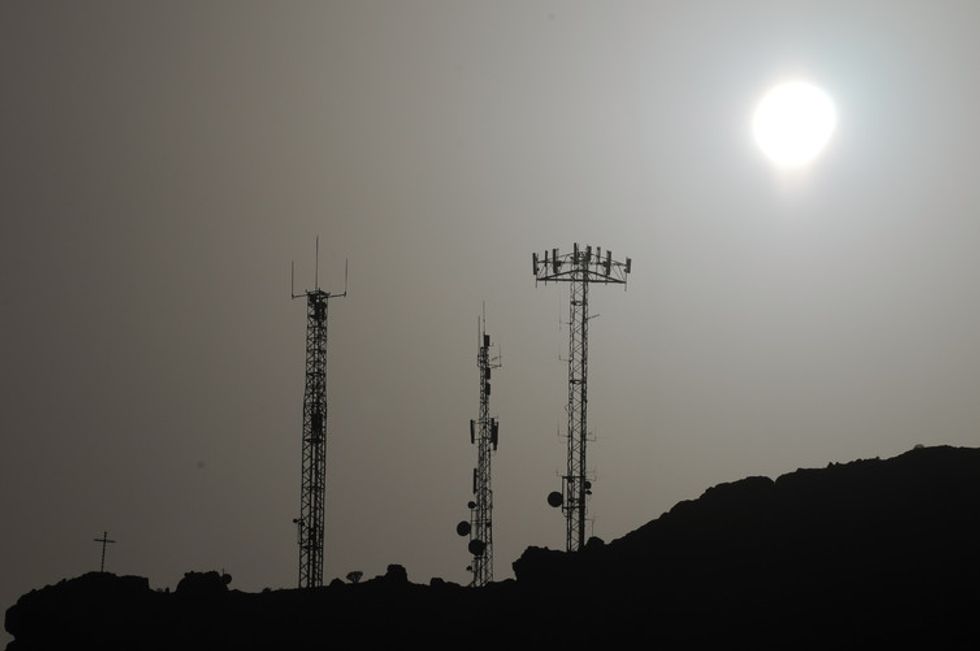
Some have dismissed cellphone towers as a potential source.'Cell Towers' via www.shutterstock.comDeming looked at the High Frequency Active Auroral Research Program (HAARP), an isolated military compound in Alaska that uses radio waves to study outer space and for testing advanced communication techniques – and a favorite focus of conspiracy theorists, who have accused the facility of acts ranging from mind control to weather control. He studied the possibility of otoacoustic emissions, which are naturally occurring sounds caused by the vibration of hair cells in the ear.
Deming eventually fingered Very Low Frequency (VLF) radio waves (between 3 kHz and 30 kHz) as the most likely culprit. The world’s military powers use massive land-based and airborne transmitters on these frequencies in order to communicate with submerged submarines. Radio waves at these frequencies can penetrate up to a solid inch of aluminum.
In the paper, Deming proposes a simple and elegant experiment for testing this hypothesis. Hum hearers randomly enter three identical-looking boxes. The first box blocks VLF radio signals, the second box is an anechoic (soundproof) chamber and the third box is the control.
He left the experiment for others to pursue, and while there are some practical difficulties with the design, Deming’s overall concept has motivated the experiments I am currently conducting.
A disciplined inquiry begins
A plethora of pseudoscience and wild conspiracy theories has the potential to drown out the serious work in this area. I’ve encountered seemingly serious people who have argued that the Hum is caused by tunneling under the earth, the electronic targeting of specific individuals, aliens and mating fish.
Given the need for disciplined inquiry into the phenomenon, in late 2012 I started The World Hum Map and Database Project. The database gathers, documents and maps detailed and anonymous information from people who can hear the Hum. It provides raw data for research in a strictly moderated and serious forum for research and commentary, while providing a sense of community for people whose lives have been negatively affected by the Hum.
Most people have some experience with how disruptive some types of noises can be, which is why there are often noise ordinances in many cities and towns, especially at night. There are many sufferers who dread the nighttime because of how loud and relentless the Hum can be. The Hum database is replete with descriptions of desperate people who have been tormented by the noise for years. The phrase “driving me crazy” is all too common. (I feel fortunate that, in my case, the Hum is more of a curiosity than it is an irritant.)
The project also aims to validate and normalize the phenomenon by discussing it alongside other widely reported auditory phenomena, such as tinnitus, a relatively common medical condition that causes people to hear high-pitched squealing tones. Those who experience tinnitus and also the Hum report the two as being completely different in character.
The latest update of the Hum Map, from June 6, presents roughly 10,000 map and data points, and we’ve already made some notable findings.
For example, we’ve found that the mean and median age of Hum hearers is 40.5 years, and 55 percent of hearers are men. This goes against the widely repeated theory that the Hum mainly affects middle-aged and older women.
Interestingly, there are eight times as many ambidextrous people among hearers as there are in the general population. As more data are collected from Hum hearers, I hope that specialists in demographics and inferential statistics will be able to generate more detailed results.
The goals of the research
The historical record of the Hum is crucial, because if the current version as narrated by Deming is correct, many theories can immediately be ruled out. After all, cellphones and HAARP didn’t exist until decades after the Worldwide Hum was first documented in England in the late 1960s. I currently have a researcher digging into the Times of London digital archive to search for mentions of the Hum going back to the 18th and 19th centuries. If convincing examples are found, then the direction of my research will shift dramatically because all modern technologies could be ruled out.
In my view, there are currently four hypotheses for the source of the world Hum that survive the most superficial scrutiny.
The first hypothesis – argued by Deming and the one I’m currently pursuing – is that the Hum is rooted in Very Low Frequency (VLF) radio transmissions. It’s increasingly accepted now that the human body will sometimes experience electromagnetic (EM) energy and interpret it in a way that creates sounds. This was established for high-frequency EM energy by the American neuroscientist Alan Frey in his infamous “microwave hearing” experiments, which showed that certain radio frequencies can actually be heard as sounds.
Today, there are biophysical models that predict and explain the impact VLF EM energy has on living tissue. I have designed and built a VLF radio blocking box that should be able to test whether VLF radio frequencies are a prerequisite for generating the Hum.
The second hypothesis is that the Hum is the grand accumulation of low-frequency sound and human-generated infrasound (sounds with audio frequencies below roughly 20 Hz and which can be felt more than they can be heard). This includes everything from highway noise to all manner of industrial activity.
The third is that the Hum is a terrestrial or geological phenomenon that generates low-frequency sounds or perceptions of those sounds. For example, there is a well-documented history of animals predicting earthquakes and taking action to save themselves. From an evolutionary perspective, there may be survival value in having members of a population highly sensitive to some types of vibrations. When it comes to the Hum, some humans may have a similar physiological mechanism in place.
The fourth is that the Hum is an internally generated phenomenon, perhaps rooted in a particular anatomical variation, genetic predisposition or the result of toxicity and medication.
The Hum is now the subject of serious media coverage and, increasingly, scientific scrutiny. The overall goal of my project and the people who contribute to it is to find the source of the Hum and, if possible, stop it.
If the Hum is man-made, then my task is to raise public awareness and advocate turning away from the technologies that are causing it. If the source is exogenous and natural, there’s the possibility that there may be no escape from it, apart from masking it with background sounds.
Of course there is the remote possibility that one of the more exotic explanations will prove to be correct. But, as in all science, it seems best to start with what we know and is plausible, as opposed to what we don’t know and is implausible.
In a recent interview at the Code Conference in California, technology entrepreneur Elon Musk suggested we are living inside a computer simulation. On first hearing, this claim seems far-fetched. But could there be some substance to Musk’s thinking?
As founder of a number of high-profile companies, such as Tesla and Space X, Musk’s business interests lie firmly in leading technologies.
Key to his claim is that computer games have evolved rapidly over the past 40 years to the point that, inside the next few years, they will be fully immersive, with a computer-generated and controlled world seamlessly merged with the physical world. In other words, we are on the verge of experiencing augmented reality (AR) combined with artificial intelligence. The end result is that what is real and what is simulated could become indistinguishable from one another. In his own words:
If you assume any rate of improvement at all, then the games will become indistinguishable from reality, even if that rate of advancement drops by a thousand from what it is now. Then you just say, okay, let’s imagine it’s 10,000 years in the future, which is nothing on the evolutionary scale.
So given that we’re clearly on a trajectory to have games that are indistinguishable from reality, and those games could be played on any set-top box or on a PC or whatever, and there would probably be billions of such computers or set-top boxes, it would seem to follow that the odds that we’re in base reality is one in billions.
The idea that humans live in a reality controlled by external bodies, whether computers or otherwise, has been around for a while. This has been a question explored by philosophers and even physicists over the centuries. The philosopher Nick Bostrom drew the same conclusion in 2003.
The similarities between the arguments put forward by Musk and Bostrom go further than proposing we are part of a larger computer simulation, though. Both consider the development of artificial intelligence (AI) to be a dangerous field of technology. According to Musk, the result of progress in AI research and development will be the end of civilisation. Bostrom takes a similar standpoint should appropriate risk assessment not be carried out on development projects.
Fact or fiction?
But is this just paranoia? The claims carry more than a passing resemblance to science fiction movies, such as The Matrix and 2001: A Space Odyssey, but are Musk and Bostrom voicing valid causes for concern?
The case that we are not living in a simulation is strongly supported by resource arguments. Consider the sheer computing power needed to run such a simulation. A simulation system would need to manage all the entities in the world and all their interactions. This would require a vast amount of processing. Further support can be found in arguments relating to quantum mechanics – to run a truly lifelike simulation of a city, with all its trillions of interactions, would require a city-sized computer. This makes the case for our existence in a simulation very unlikely.
Even if a machine existed that could simulate our existence then there would be a high probability that we would experience so-called “realism imperfections”. These bugs in the simulation would be seen or heard due to glitches in the model. For example, stars may or may not exist when viewed through telescopes of varying magnification. Such errors would be inevitable in a simulation of this scale, but they have never been observed by humans.
Machines that use self-learning, super intelligent software are still very distant from the current state of the art, and systems that do make use of AI operate in very tightly defined fields. Current systems learn to optimise their performance within specific domains of work – not to take over the world.
For example, neural networks, which are sometimes referred to as electronic models of the brain, are used to predict changes in stock markets. These systems can be trained using existing data from stock trading to learn and identify patterns in live data streams that may indicate that something will happen. The result of this is that traders can take action to mitigate any negative outcomes.
Equally, there are systems that are developed using AI techniques to alleviate workloads by applying programmed rules and facts. These are known as knowledge-based systems. While the human users of these systems may not realise that they are interacting with a machine – such as Jill the online tutor of AI, which answers questions and provides feedback to students on an AI course – they are also developed to work on or within well-defined problems or domains.
Taking the restrictive fields in which AI-type systems are developed, the danger of civilisation coming to an end because of the creation of AI would seem to be very small. Indeed, AI is used largely to support human decision-making and action rather than to replace it.
Alternative Reality
There are elements of Musk’s thinking, however, that seem considerably more likely to happen in the near future.
One of these is the development of technology to aid human-machine interfaces. As everyday life becomes increasingly reliant on connected devices, the way in which we use them is constantly changing. Our desire to access data and communicate has driven the evolution of wearable technology.
Musk claims that we will become pets to AI should we not develop effective brain-computer interfaces. However, the father of wearable technology and AR, Steve Mann, promotes combining both technologies to benefit society. This carries more substance as much work in the area is focused on assistive medical systems. For example, one area of research looks at the creation of brain implants to harness electrical signals in the brain and stimulate movement in paralysed limbs.
Rest assured, however, that we are probably not living in a computer simulation and that the claims made by Musk are outlandish. There are, however, some elements of his thinking that do hint at technology developments in the future.
Future developments in AR and related technology will move us towards a world that is more connected. In these augmented realities we will have seamless access to data and digital representations projected into the physical world. AI techniques will help us understand the data; making decisions that are informed by computers. But while augmented, these realities will still be built on and in the real world.
The Solar Impulse 2 landed in Spain Thursday after completing a 71-hour flight from New York in the first "magical" solo transatlantic crossing in a solar-powered airplane.
Applause broke out as the experimental plane set down at Seville airport in southern Spain just before 7:40 am (0540 GMT) where a team was on the ground to welcome Swiss pilot and adventurer Bertrand Piccard.
"It is so fantastic!", Piccard told the plane's mission control centre in Monaco in remarks broadcast online as the plane, which took off from New York on Monday, touched down.
Exhilarated, the 58-year-old told AFP he had thought a lot about aviation pioneer Charles Lindbergh, the first man to fly solo across the Atlantic, during the 6,765-kilometre (4,200-mile) flight.
"I met him when I was 11, we were both at the Apollo 12 take-off, and for me Lindbergh is one of these heroes who did what no one thought was possible," Piccard said by phone.
With the success of this challenging crossing, Solar Impulse has completed the 15th leg of a round-the-world trip aimed at promoting clean, renewable energy.
It set out on March 9, 2015, in Abu Dhabi, and has flown across Asia and the Pacific to the United States with the sun as its only source of power -- able to fly through the night with energy stored in its 17,000 photovoltaic cells.
- 'Magical experience' -
The voyage marks the first solo transatlantic crossing of a plane with only solar power -- a trip close to Piccard's heart as he had crossed that same ocean in 1999 on the first non-stop air balloon circumnavigation of the globe without fuel.
"Good morning Seville! Do you have a lot of direct flights from NYC?" he tweeted with a wink shortly before coming in to land, when he was treated to a surprise acrobatic display put on by the Spanish air force.
Piccard got little sleep during the near three-day journey, surviving on short catnaps.
He experienced what he described as "a long night of turbulence" but was also treated to sightings of whales and icebergs, and even spotted a commercial plane flying past him.
"I just tried to soak in this magical experience -- when you fly without any noise or fuel, it's magic," he said.
Piccard said he had been guided by a group of engineers and meteorologists who had enabled him to face challenges and pass through clouds as if "through the eye of a needle."
Solar Impulse is being flown on its 35,400-kilometre trip round the world in stages, with Piccard and his Swiss compatriot Andre Borschberg taking turns at the controls of the single-seat plane.
Borschberg piloted a 8,924-kilometre flight between Japan and Hawaii that lasted 118 hours, smashing the previous record for the longest uninterrupted journey in aviation history.
After the Atlantic crossing, Borschberg is due to fly to Egypt, and Piccard will make the final journey back to Abu Dhabi in early July.
- Like sci-fi -
No heavier than a car but with the wingspan of a Boeing 747, Solar Impulse typically travels at a mere 48 kilometres per hour (36 miles per hour), although its flight speed can double when exposed to full sunlight.
Borschberg and Piccard say they want to raise awareness of renewable energy sources and technologies with their project.
"When you fly in a plane like this, you have the impression of being in a science fiction story," Piccard said.
"You look at the sun above you, and then you realise that the sun is providing the necessary energy to run the four electric engines and charge the batteries, spend the night flying and continue the next day.
"At the same time it's not science fiction, it's the present, it's today," he added.
"When you see what can be done with this clean energy, you think 'why is it not used more everywhere'?"
When the first dinosaur bone was described in 1676, it was thought to come from an elephant or perhaps a giant. Over a century later, scientists realised such fossils came from a creature they named Megalosaurus, portrayed as a sort of stocky, overgrown lizard. Then, in 1842, leading anatomist Richard Owen recognised Megalosaurus as part of a whole new group of animals, which he named Dinosauria, or “Terrible Lizards”.
Since then, around 700 different dinosaur species have been described, with more foundeverymonth. Our ideas about dinosaurs have also changed radically. The dinosaurs we know today are very different from the ones in the books you may have read as a child.
Myth 1: Dinosaurs were all big
The name dinosaur tends to evoke images of giants – and certainly many were very large. Tyrannosaurus rex was around 12 metres long and weighed more than five tonnes, the size of an elephant, and it probably wasn’t even the biggest carnivore. Long-necked, plant-eating sauropods grew to titanic proportions. The enormous Argentinosaurus is known from just a few bones, but its size has been estimated at 30 metres in length and 80 tonnes in weight. That’s larger than any living land mammal and all but the largest whales. And dinosaurs are unique here. No other group of land animals before or since was able to grow as large.
But not all dinosaurs were giants. The horned dinosaur Protoceratops was the size of a sheep. Velociraptor was the size of a golden retriever and had to be scaled up for Jurassic Park to make it more terrifying. Recent years have seen an explosion in the number of small species discovered, such as the
cat-sized raptor Hesperonychus, the rabbit-sized plant-eater Tianyulong, and the quail-sized insect-eater Parvicursor. The smaller species were probably more common than their giant cousins. It’s just that the massive bones of a T. rex are more likely to have been preserved and a lot easier to spot in the field.
Myth 2: Dinosaurs were all scaly
When dinosaurs were first discovered, it seemed obvious that because they were related to crocodiles and lizards, they must have been scaly. And many dinosaurs – including duckbills, horned dinosaurs, sauropods, and armoured dinosaurs – do preserve scale impressions. But in the 1970s, palaeontologists began wondering if some dinosaurs might have been feathered, like their bird relatives.
This was considered wild speculation at the time, but in 1997 a small carnivorous dinosaur named Sinosauropteryx was found to be covered not with scales, but a soft, fuzzy down. Since then, feathers have been discovered on the plant-eating ornithopods, fanged heterodontosaurs, and many families of carnivorous dinosaurs including Tyrannosauridae- meaning that T. rex was probably covered in feathers, not scales.
Myth 3: Dinosaurs were all green and brown
Early paintings of dinosaurs favoured a drab palette, with monotone animals dressed in depressing shades of grey, green, and brown. If the Mesozoic era really was that dreary, no wonder they went extinct. But in reality the colours would have been much more vibrant, even garish. Studies of dinosaur scales and feathers have revealed traces of melanin, the same pigment that lends colour to lizard scales, bird feathers and our hair. Analyses show that dinosaurs came in a wide variety of colours including black, white, and ginger. A few show-offs even had an iridescent sheen to their feathers.
Not only that, but many dinosaurs were boldly patterned with spots and stripes, white bellies and dark backs. Some of these patterns probably evolved as camouflage, to help dinosaurs hide from predators and prey. But bright colours and conspicuous patterns would have served to draw the eye of potential mates, much like the tail of a peacock.
Myth 4: Dinosaurs were bad parents
Most reptiles simply bury their eggs and walk away, leaving their offspring to fend for themselves as best they can. This hands-off parenting is risky. A sea turtle must lay thousands of eggs over its lifespan to see a few grow up. Dinosaurs were once thought to use the same “lay ‘em and leave ‘em” strategy. We now know that’s wrong.
Living dinosaur relatives – birds and crocodiles – guard their eggs and their young, so it’s a reasonable assumption that the dinosaurs did as well. And there’s now evidence of this. When expeditions to the Gobi Desert found a dinosaur atop a clutch of eggs, it was assumed to have died while plundering the nest. It was named Oviraptor, or “egg thief”. But then more skeletons were found atop clutches of eggs, sitting on them like brooding birds. It turns out Oviraptor didn’t eat eggs —- it was guarding them.
Dinosaur extinction was long blamed on some failure of the dinosaurs themselves, a failure to adapt to the changing environment. In reality, dinosaurs were diverse for more than 100m years with fossils found in North and South America, Asia, Europe, Africa, and even Antarctica.
Although some argue this diversity was in decline, the fossils show that dinosaurs remained widespread, common and diverse until 66m years ago, when an asteroid struck the Earth in what is now Mexico. Debris from the impact blocked out the sun and plunged the world into darkness. The disappearance of the dinosaurs wasn’t fated – it was a cosmic accident. If the asteroid had deviated by a fraction of a fraction of a degree, dinosaurs would still rule the planet – and we wouldn’t.
Myth 6: Dinosaurs all became extinct
The asteroid wiped out the dinosaurs, almost. T. rex, Triceratops and the rest disappeared, but a handful of small feathered dinosaurs, probably less than a dozen species, survived. They were birds — small, flying cousins of T. rex and Velociraptor and the direct descendants of the carnivorous dinosaurs. And they not only survived but thrived, evolving into some ten thousand species of birds.
Scientists reported Wednesday that they witnessed in unprecedented detail a star being ripped to shreds and devoured by a dormant supermassive black hole.
The celestial feeding frenzy -- known as a tidal disruption event -- was detected from the high-energy, X-ray echoes emitted as debris from the hapless star swirled in a vortex near the black hole's centre.
The findings were published in the prestigious science journal Nature.
"Never before have we been able to see strong gravity effects from a dormant black hole," Erin Kara, a Hubble postdoctoral fellow at the University of Maryland, and lead author of the study, told AFP.
Black holes are regions in space-time where mass is collapsed into such a small area that gravity takes over completely, and nothing -- not even light -- can escape.
They cannot be seen, and are inferred from their influence on nearby objects.
Most of what astronomers know about so-called supermassive black holes -- found at the centre of galaxies -- comes from a relative handful that actively gather and consume matter.
Roughly 90 percent are dormant, only awakening from time to time to gulp down anything that passes too close.
When that happens to a star, it disappears in a swirling flash of energy and light.
- Slumbering giant -
"Most tidal disruptions don't emit much in the high-energy X-ray band," Kara explained.
Only three such episodes have ever been recorded, "and this is the first such event that has been caught at its peak".
The tell-tale signs from this particular slumbering giant, dubbed Swift J1644+57, were picked up by NASA's Swift satellite, the researchers reported.
Three more satellites -- one from the European Space Agency, another from Japan, and a third from NASA -- tuned in to the event, yielding a treasure-trove of "excellent data".
The fact that X-rays could be detected at all stems from the amplifying effect of the so-called accretion disk -- the doughnut-like swirl of matter falling into the black hole.
Scientists had previously thought X-rays generated in the death throes of a disintegrating star came from huge beams of particles already ejected by the black hole.
The new observations tell another story: "Actually, we can see this reverberation at work very close to the central black hole," Kara said.
Black holes that are dormant today played a key role in the evolution of galaxies, so seeing one in action may provide clues about the formation of the Universe, said co-author Chris Reynolds, a professor at the University of Maryland.
"If we only look at active black holes, we might be getting a strongly biased sample," he said in a statement.
One of the crucial unanswered questions about black holes, for example, is how fast they rotate, or spin. Knowing this would yield valuable clues on how they form and mature.
One theory suggests that black holes become dormant after they reach "maximal spin", in which case they should all be spinning at the same rate.
Another says black holes only grow by merging with each other, in which case spin rates would be more variable.