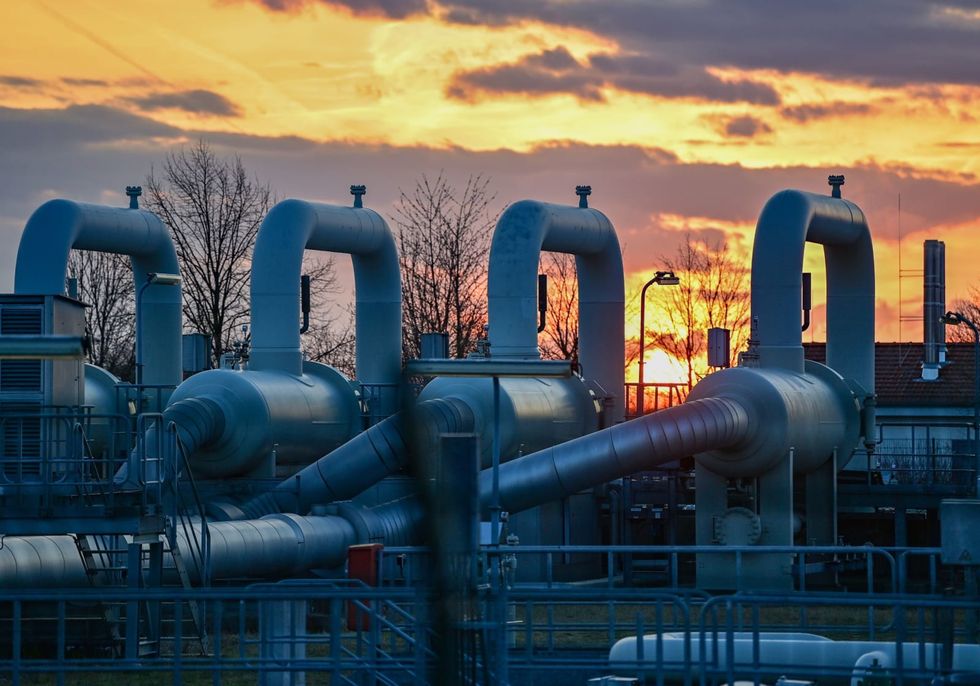
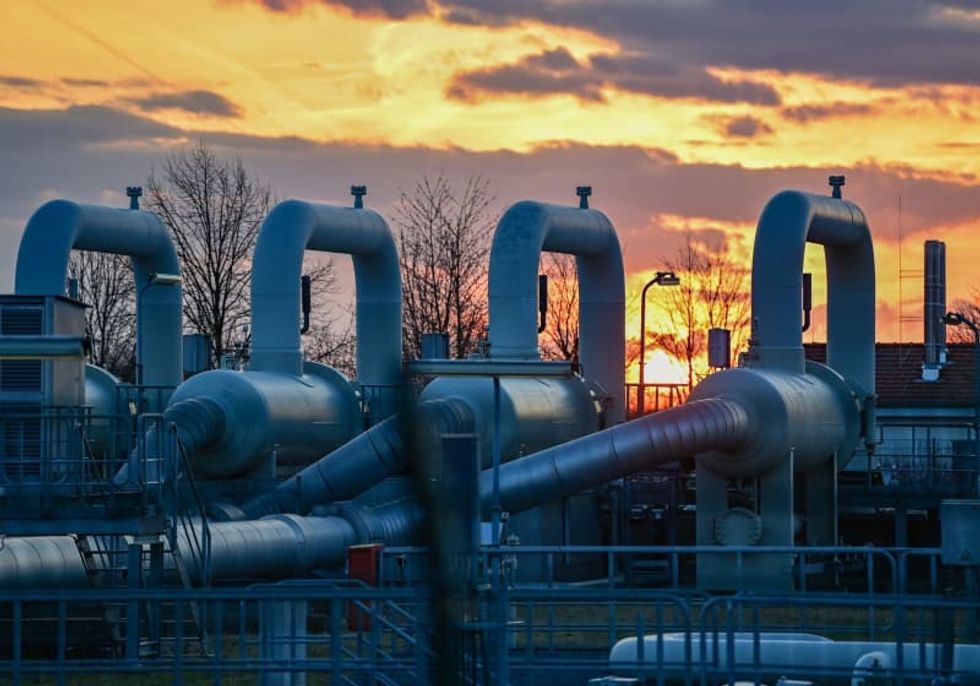
A general view of the facilities at the Mallnow natural gas compressor station of Gascade Gastransport GmbH. Patrick Pleul/dpa-Zentralbild/dpa

Any sanctions that cut off the westward flow of Russian gas need to be well-thought-through, otherwise those laying the sanctions might suffer more than those sanctioned, according to multiple German business and labour leaders.
The question of whether to lay an embargo on Russian fuel is tying Europe up into knots. On the one hand, few want to buy Russian oil and gas and funnel payments to a country that has attacked its neighbour, Ukraine.
But, on the other hand, most of Europe is unsure how it will heat its homes and power its economy without Russian fuel, which makes up a significant portion of the continent's fuel imports. Germany is particularly reliant on Russian gas to keep the lights on, with 50% of its gas originally from Russia.
In a joint statement, umbrella groups representing German employers and unions told dpa that they are worried that not enough care is being put into making sure that any sanctions are targeted, apply pressure properly and prevent harm to the economies implementing the sanctions.
"We don't see that in the current gas embargo debate," said Rainer Dulger, head of the Confederation of German Employers' Associations (BDA) and Reiner Hoffmann, head of the German Trade Union Confederation (DGB).
The two said current proposals would harm the German economy and employment levels more than it would those same factors in Russia, arguing that no gas means production stops, industrial slowdowns and loss of jobs.
The way to help Ukraine, they argued, is to make sure Germany has a stable economy and labour market.
But the gravity of the situation - the Russian invasion of Ukraine is nearing the two-month mark, with fears of intensified attacks soon in the east - has some saying all options and approaches have to be considered.
Variables like how quickly Germany can up its percentage of renewable energy or whether consumption can be slowed down and how quickly mean no one is really sure how the situation will play out.
Wolfgang Steigler, the general secretary of the economic council of the German centre-right opposition Christian Democrats, said there is even work to look into expanding German domestic gas production.
"We can't compensate fully for Russian imports with domestic gas production, but it would be an important building block towards greater independence."
The one thing most people agree on is that costs are going to go up. Verivox, a portal that compares energy prices, reported that it expects increases in the month's ahead.
"All gas providers in Germany are dealing with historically high prices," said Thorsten Storck, an analyst at Verivox. "The war in Ukraine and a possible gas delivery stop are exacerbating the situation further."
Report typos and corrections to corrections@rawstory.com.
For customer support contact support@rawstory.com.