It takes patience to spot a red-shanked douc. Despite their bright fur, the monkeys are skilled at hiding in the jungle of the Son Tra Peninsula in central Vietnam.
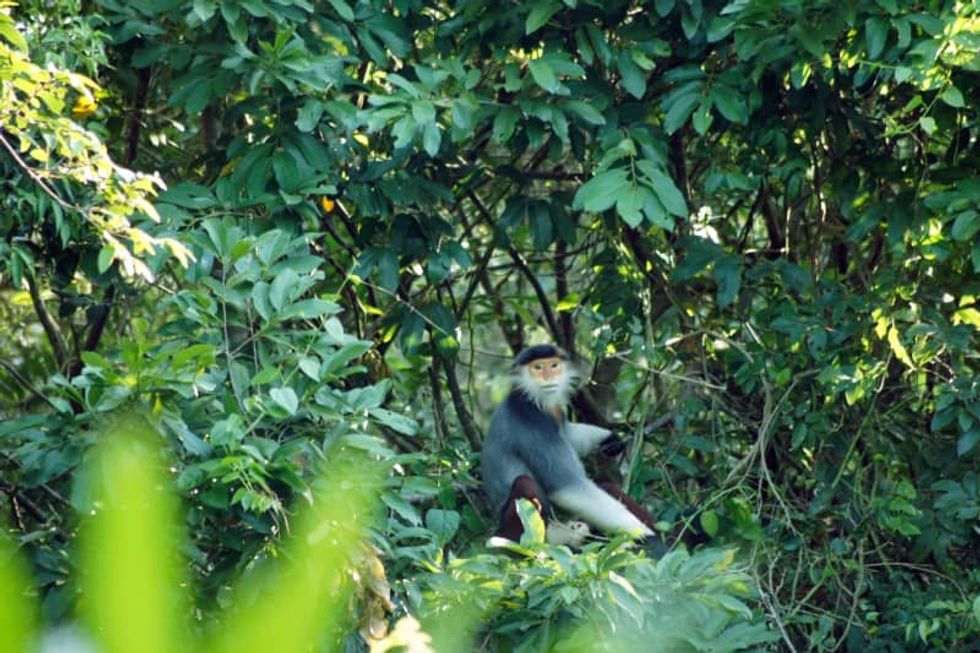
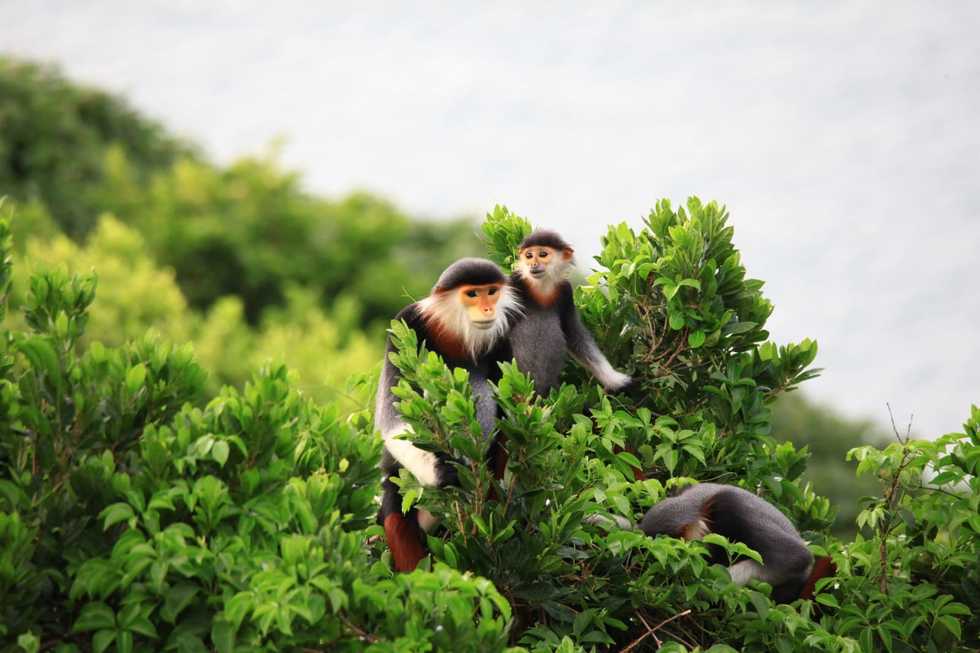
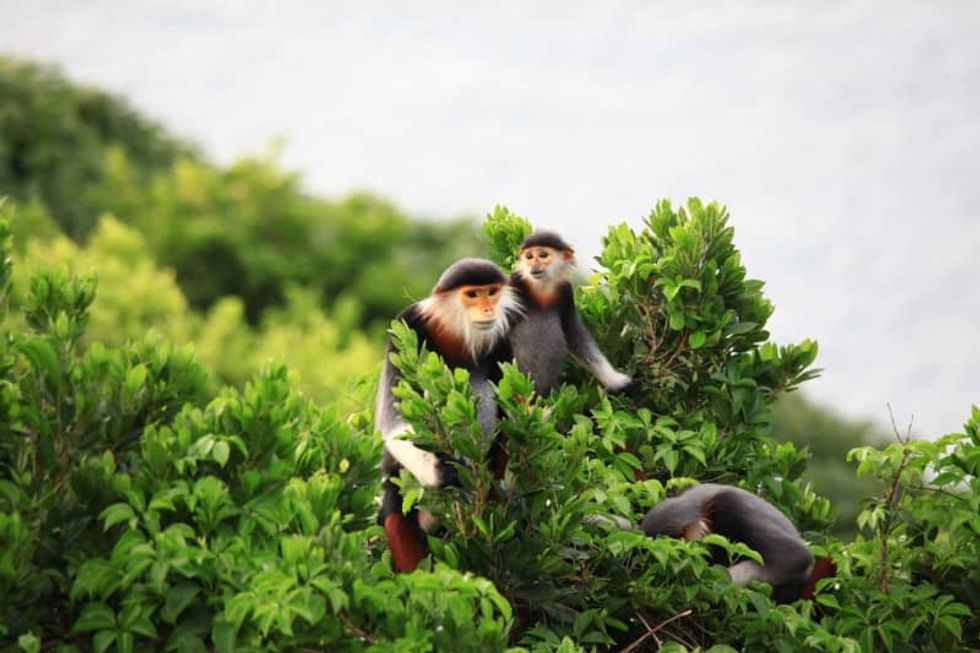
At last, a slender white tail dangles from a branch, followed by red-brown legs are visible, light arms, black hands and an orange face with a small white beard.
The red-shanked douc is one of the rarest and most beautiful primates in the world, known as "special monkey" to the locals of Son Tra.
There are only 2,000 of them worldwide, according to estimates, says British zoologist Anthony Barker. Most live in Vietnam or neighbouring Laos.
Barker works for the InterContinental Danang Sun Peninsula Resort to protect the monkeys in the rainforest surrounding the site. There are four bands, making up a total of 60 to 70 animals.
They share their habitat with macaques, bright sunbirds, squirrels, poisonous snakes and giant butterflies.
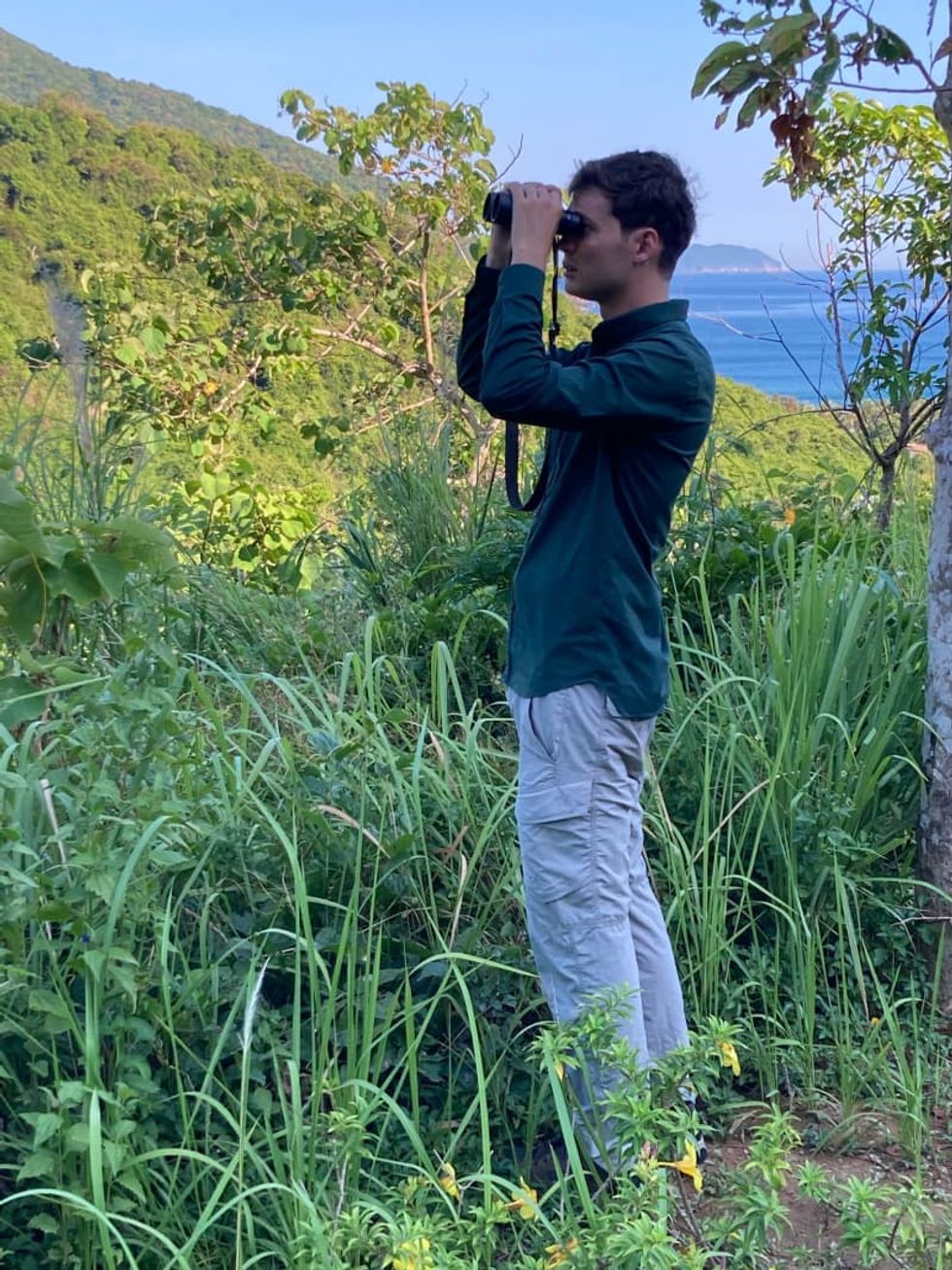
Barker peers through his binoculars at the monkeys' favourite spots. Sometimes he doesn't see one for days.
Other times, groups hang around for days at a time, coming close to the hotel rooms. The doucs are not shy or aggressive but seem indifferent. They gaze at people with a look that some say implies they know a secret they don't plan to share.
Encounters can be emotional. "People start crying when they first spot a douc," says Barker. "No wonder, because they are really unusual and very handsome," he says.
They're "like a wise Santa Claus," says Barker. Their green-blue eyelids have also led some to call the species the "make-up monkey," he says.
"Most visitors cannot believe that they have never heard of them."
One reason little is known about the monkeys is that they're almost impossible to domesticate.
That is partly due to their diet: The red-shanked douc (Pygathrix nemaeus) lives only in trees and mainly eats leaves. Unlike a zoo, the nature reserve in Son Tra is ideal, with its countless tropical almond and fig trees.
If caged, the monkeys lose their vibrant colour. "They get pale in captivity. It's probably like what happens to humans when they are not well," says Barker.
To improve life for the bands living near the resort, Barker and his team are building monkey bridges, rope ladders that hang over some of the walkways so the animals can to move from one area in the forest to another.
Red-shanked doucs are swift climbers and swing on branches before launching themselves into another tree.
As is often the case, humans are the greatest danger to the douc. Barker regularly checks the area near the resort for traps. He and his team have found two so far, he says.
Red-shanked doucs are mainly hunted for their meat, while their brains are used in traditional Asian medicine.
Some in Vietnam believe that eating a live douc will give them special powers, says Barker. "A hunter live-streamed a few years ago how he was eating a monkey while it was still alive," he recalls.
However, Vietnam's government has since introduced tough penalties to protect them better, Barker says.
The number of red-shanked doucs has been declining for decades due to the loss of natural habitat. During the Vietnam War, the populations were decimated by bombing and the use of defoliants. Meanwhile in a military base on Son Tra, the army shot them as target practice.
The International Union for Conservation of Nature (IUCN) has declared the red-shanked douc langur a critically endangered species, estimating that numbers have fallen by 80% over the past 36 years. The decline is expected to continue over the next three generations, the organization says.
In Son Tra, the red-shanked doucs seem unconcerned. Smaller monkeys play in the branches while their elders chew leaves in the sun.
There were recently two rare twin births. "Every time I see a monkey in the trees outside I stop everything and watch, it's miraculous," says marketing director John Hamilton, a Canadian based in Son Tra.
The doucs are particularly fond of playing near his home, he says. "They are really remarkable creatures."