



Videos apparently showing the shooting of surrendered Russian soldiers in Ukraine have prompted international investigations, and vows from Moscow to find those responsible.
A spokesperson for the UN human rights office in Geneva told dpa on Monday that it was aware of the reports.
"Allegations of summary executions of people 'hors de combat' should be promptly, fully and effectively investigated, and any perpetrators held to account," the spokesperson said, using a French term in international law meaning not in active combat or not able to perform combat duties in war.
The videos surfaced on social networks last week. They show several Russian soldiers - guarded by Ukrainians - lying down on the ground. Then gunshots can be heard. Another frame shows nearly a dozen dead bodies.
The pictures are said to have been taken in mid-November, when the Ukrainian army recaptured the village of Makiyivka in the Luhansk region in the east of the country.
According to experts consulted by the New York Times, the videos were authentic although much about the background to the images remains unclear.
Kiev argues that the killing of the Russians was an act of self-defence, as one of the enemy soldiers suddenly opened fire. The Ukrainians had returned fire and thus acted correctly, said Ukraine's human rights commissioner.
Kremlin spokesperson Dmitry Peskov said those responsible should be punished and that Moscow would itself search for the perpetrators.
Speaking on Monday, Peskov also confirmed that Moscow had no plans to carry out a second wave of mobilization of reservists for the war in Ukraine.
There are "no discussions" on this in the Kremlin, Russian news agencies reported him as saying.
Russia previously reported it completed its mobilization of 300,000 reservists at the end of October.
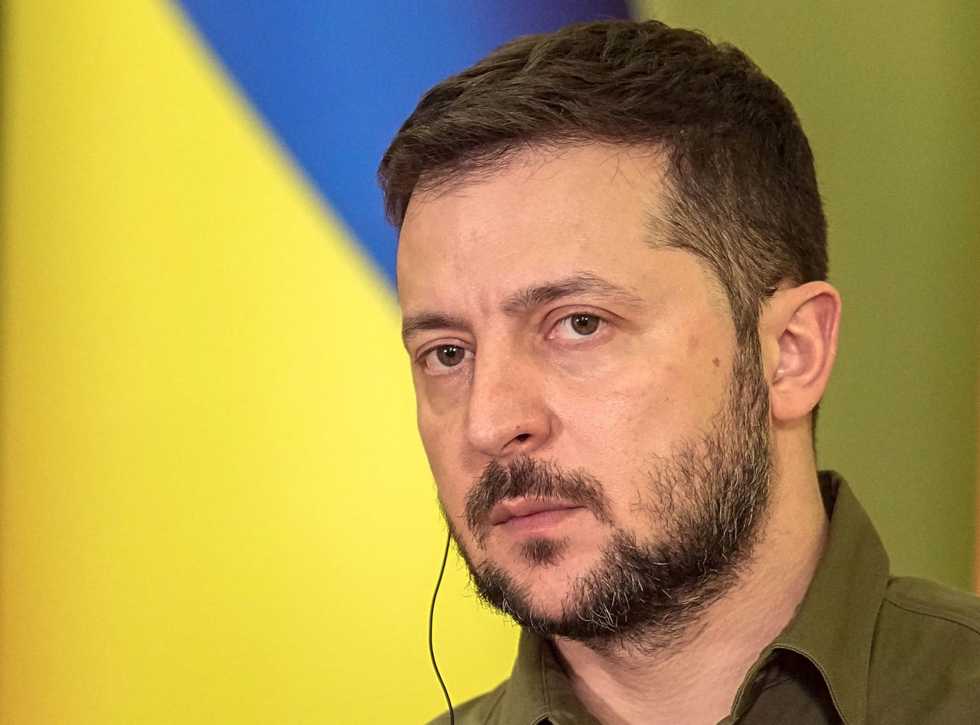
Some nine months after the Russian invasion, Ukrainian President Volodymyr Zelensky on Monday stressed the need for unity among democratic NATO countries against the Russian attack.
"I call on them to do everything to ensure that our community is never weakened," he said in a video address to a plenary session of the NATO Parliamentary Assembly in Madrid, according to a simultaneous translation.
Zelensky reiterated his country's desire to become a member of the EU and NATO.
The consequences of the Russian attacks for the Ukrainian civilian population are so severe that Russia should be branded a "terrorist state" by all parliaments, Zelensky said.
Russia has been targeting Ukrainian power facilities in recent weeks, leading to rolling power cuts and fears of a harsh winter for civilians.
On Monday Norway announced that it would give Ukraine the equivalent of almost €191 million ($196 million) to buy gas for the upcoming cold season.
Norwegian Finance Minister Trygve Slagsvold Vedum signed the agreement, which provides the funds via the European Bank for Reconstruction and Development.
On the ground in Ukraine, Russian forces are concentrating on defending the town of Svatove in the east of the country, according to British intelligence.
"As a significant population centre within Luhansk Oblast, Russian leaders will highly likely see maintaining control of Svatove as a political priority," according to the assessment posted on Twitter by the Ministry of Defence, intelligence sources.
A shortage of munitions and skilled personnel was still hampering Russian progress in the war, the minister said.
Meanwhile, an assessment by the International Atomic Energy Agency (IAEA) found that Ukraine's Zaporizhzhya nuclear power plant remains intact despite months of severe shelling, though the situation remained serious, especially due to widespread damage across the site.
"This is a major cause of concern as it clearly demonstrates the sheer intensity of the attack on one of the world's largest nuclear power plants," read a statement from IAEA director general Rafael Grossi.
