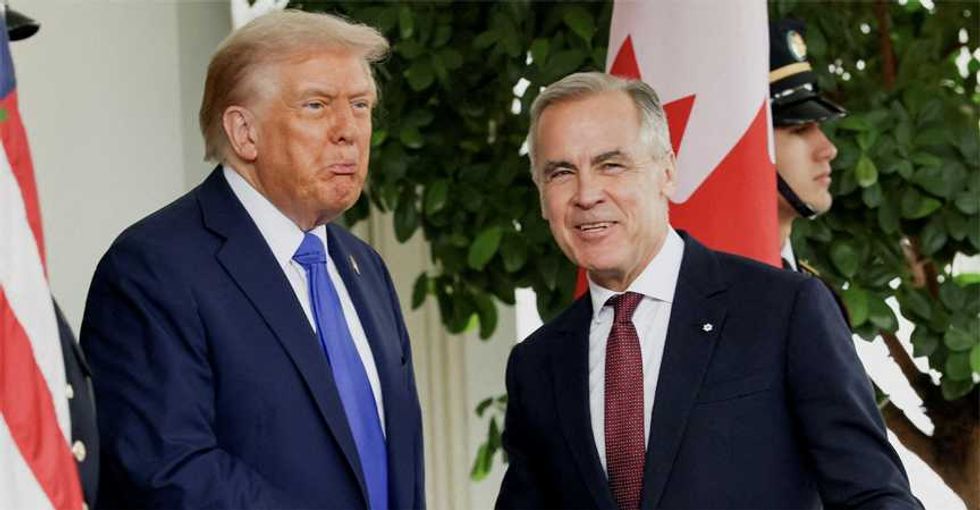
A deepening trade war between the United States and Canada is straining not just cross-border commerce but personal relationships in communities along the northern border, according to interviews with business owners and local officials in three border states.
In the border town of Blaine, Washington, business owner Gurdeep Bains told the New York Times that President Donald Trump's trade war has frayed personal relationships and upended businesses.
“It’s affected relationships – I can definitely tell you that,” said Bains, who runs a flower and gift shop and owns rental properties with his wife. “People got their tires slashed.”
Business owners in Blaine have realized that Canadians are spending less there and have tried to attract more customers from Seattle, and Bains said even his own relatives who live across the border have cut back on their visits.
“They’re upset,” Bains said. “It’ll never go back.”
Canada's retaliatory tariffs took effect Tuesday, raising the rate Canadian businesses pay on roughly 650 imported American products by 15 to 50 percent, after trade talks collapsed and the U.S. imposed a fresh 50 percent tariff on Canadian goods.
Prime Minister Mark Carney said last month Canada would not accept being treated "as a subsidiary" of the U.S., and Trump has since accused Canada of "Ripping Off" America and signed an order renaming Lake Ontario "Lake America."
An Ipsos survey from late August found two-thirds of Americans, including nearly half of Republicans, want the U.S. more open to compromise with Canada, and 46 percent blamed the U.S. for the dispute versus 12 percent who blamed Canada, though only about half said they were closely following it.
Business owners in Vermont and Washington described early signs of a rebound in Canadian visitors before the latest tariff escalation.
Dave Lane, who runs a vineyard and distillery in South Hero, Vermont, said his costs have already risen because of tariffs on imported glass bottles, and that some Canadians are again staying away.
Still, he remains optimistic given how intertwined the border region's culture is, pointing to Canadian flags displayed in Vermont homes and businesses and Burlington's brief renaming of a downtown street "Rue Canada" in solidarity last year.
The mood is different in North Dakota, a Trump-supporting state that sends about 80 percent of its exports to Canada.
Grand Forks Mayor Brandon Bochenski said farmers are feeling the pinch, but residents remain largely supportive of the president.
Barry Wilfahrt of the local chamber of commerce defended the administration's approach as an effort to rebalance trade deficits, adding: "Presidents and prime ministers come and go, but Canada will always be our neighbor."