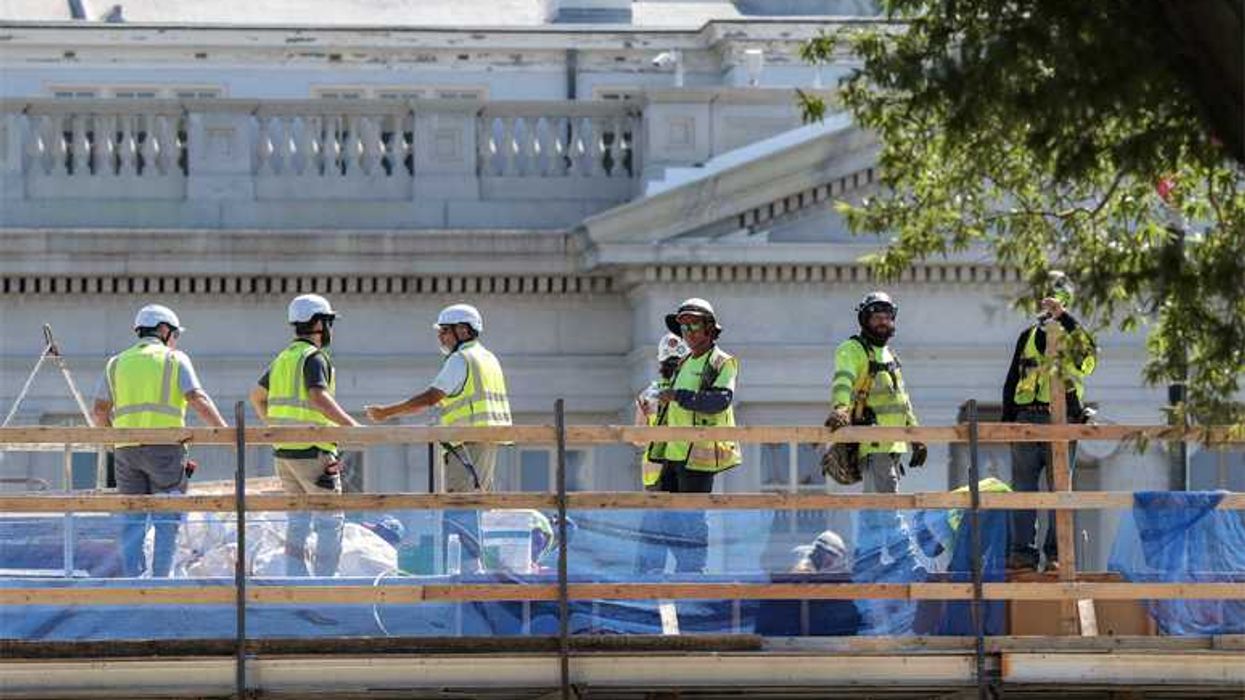
President Donald Trump's administration is moving to wall off yet another chunk of public space around the White House, further separating the embattled president from the people he governs, according to a new report.
Trump officials will present their latest plans Thursday to "permanently fence Lafayette Square," the public park across Pennsylvania Avenue from the White House, which has been opposed by locals, the Washington Post reported Thursday.
The National Capital Planning Commission is set to review the 79-page proposal, which would fence the entire eight-acre park with larger gates at its north and south entrances.
That has led to concerns about a controversial president removing himself further from the public.
Trump has backed the Secret Service's call to keep President's Park, the 82-acre expanse surrounding the White House, closed to the public "even though renovation work there wrapped up weeks ago." Lafayette Square itself has been shut for nearly eight months. Asked about the buildup, Trump said simply, "I just follow what they'd like to do."
The administration cites the assassination attempts against Trump in 2024 and April 2025, plus a May incident in which Secret Service officers fatally shot a man near a checkpoint, as justification.
But White House historian Ed Lengel isn't convinced that's the whole story.
"It's becoming a fortress now," he said. "They're going to say, 'There are threats on the president's life.' That's true enough, but that's just a pretext."
Preservation groups agree.
The National Trust for Historic Preservation, the Cultural Landscape Foundation and Washington residents are set to warn commissioners against the plan Thursday, the Post reported.
Retired NPR correspondent Pam Fessler put it bluntly in prepared testimony: "What we are really doing is putting another barrier between the America [sic] people and their government, when people most need to express their collective joy, or fear, anger or patriotism."