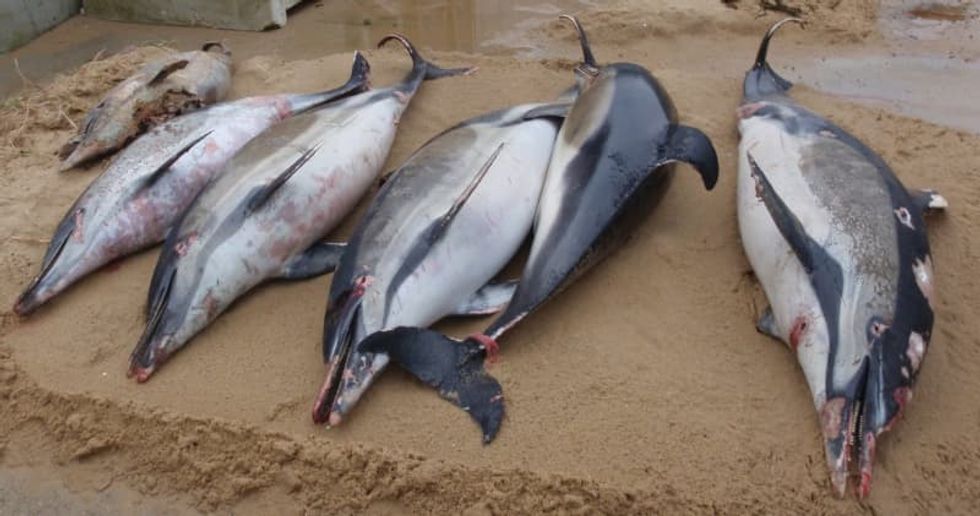
Some of the dolphins look like they are still alive and just wound up on the beach by accident.
Others are already in an advanced stage of decomposition, while still others are missing a tail fin.
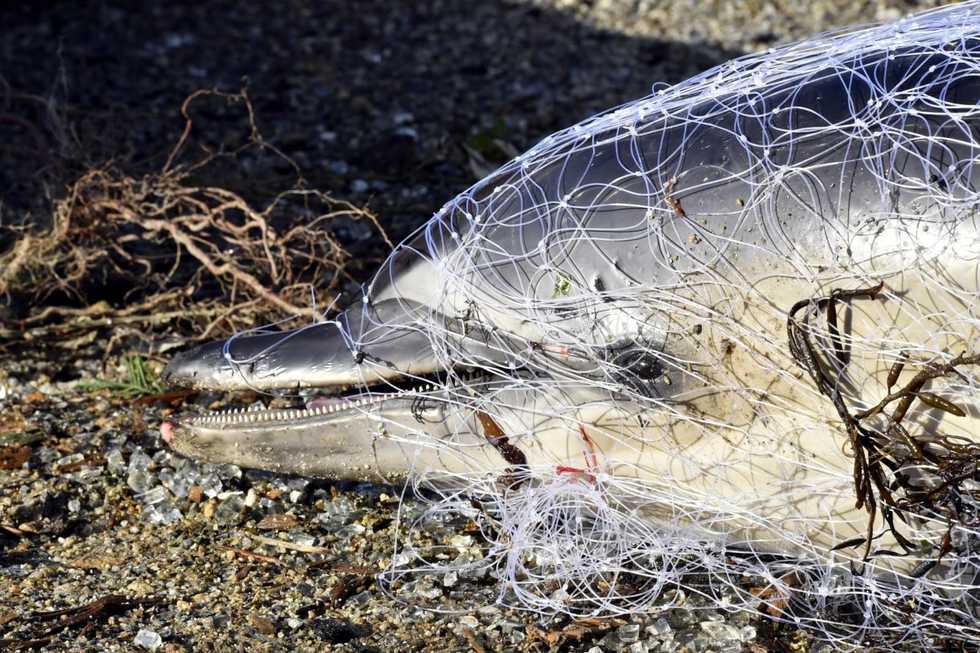
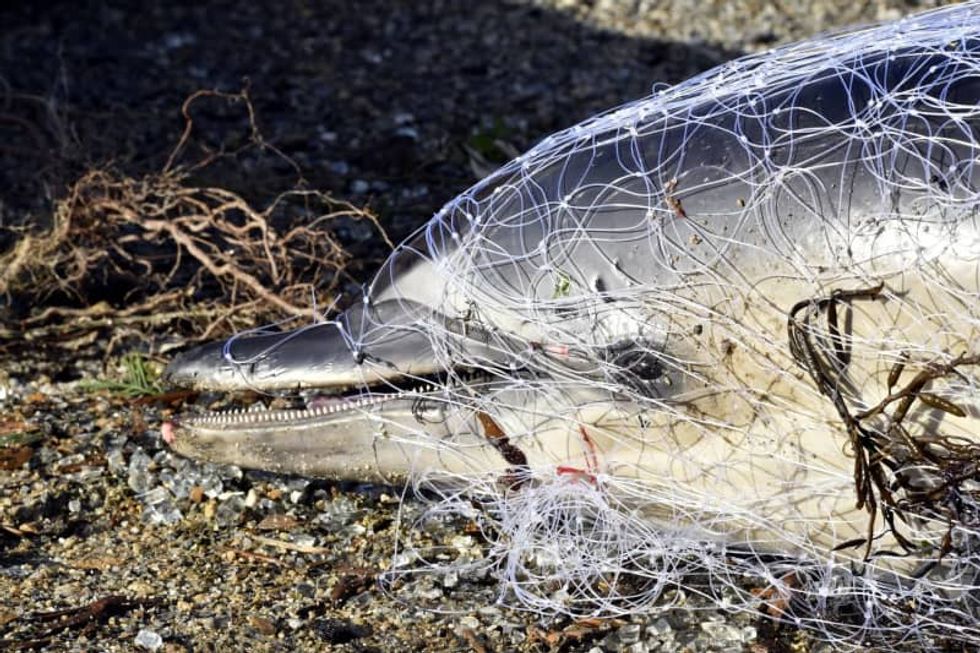
Some of the dolphin carcasses are marked by fine bloody lines that are clearly visible in the photographs taken by marine researchers.
Hundreds of the mammals wash up on France's shores every year, mostly on the Atlantic coast, mostly in winter.
More than 90 dead dolphins have appeared on French shorelines in the first one and a half months of 2022 alone. Some 1,100 carcasses are found annually, data shows from the past three years and scientists say these figures are bound to rise.
There is no doubt about what is killing the animals, says Hélène Peltier, a biologist at the Pelagis Marine Mammal Observatory. First and foremost, it's fishing.
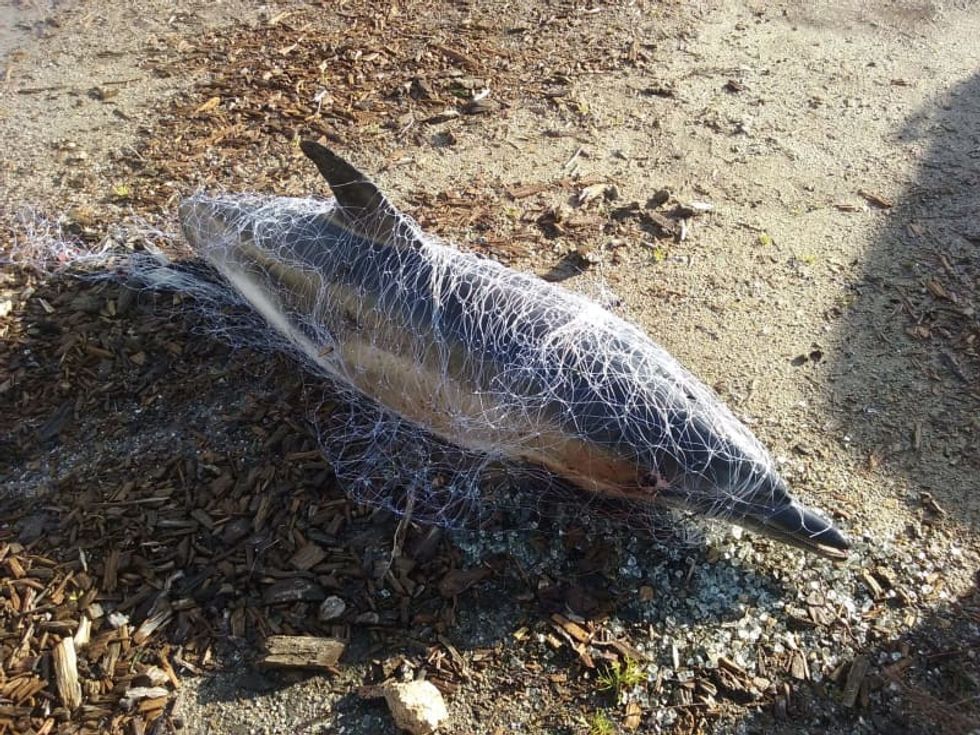
Of the carcasses that are washed up on France's shores, 90% showed traces of fishing gear, says Peltier, such as skin cuts caused by the fine yet strong threads of fishing nets.
Dolphins often end up in fishing nets as bycatch and drown when they are unable to swim to the surface for air.
Autopsies reveal haemorrhages caused by suffocation, Peltier says. The dolphins' lungs are very red and often full of foam from lung cells that have been destroyed.
Scientists can only estimate how many dolphins are dying like this as not all of their bodies will wash up on the shore. Pelagis suspects around 8,000 to 10,000 dolphins perish this way every year.
French environmental activists have long sought to raise awareness about the problem. "Near the coast, fishing boats cast out thousands of kilometres of nets every day," says Lamya Essemlali, chair of the marine protection organization Sea Shepherd France.
Sometimes, the boats are fishing in the same places as dolphins go hunting, meaning they are competing for perch and hake, for example. "The dolphins then wind up getting caught," says Essemlali.
Further out at sea, larger commercial vessels are out fishing and frequently harvest the food that dolphins rely on. That often means the mammals starve or are forced to come closer to the coastline, which is highly dangerous due to the numerous nets, says Essemlali.
The only solution to fix the situation in the near term would be to ban fishing in certain areas and during certain periods of the year, says Peltier.
She says other, more finely tuned measures are not really an option at the moment, as fishermen have been reluctant to work together with researchers over the past few years and have not shared enough information about their fishing methods and experiences with dolphins as bycatch.
The International Council for the Exploration of the Sea (ICES), a renowned European marine research organization, also supports the call for a temporary ban on all critical fishing activities in the north-eastern Atlantic, particularly the Bay of Biscay.
The ICES has suggested introducing a halt of fishing between December and March, and July and August, the months which are seeing "peaks of mortality" among dolphins.
But so far, the French government has fiercely opposed fishing bans. The Marine Ministry has not responded to dpa's request for comment.
Paris started introducing pingers in 2019, devices that are attached to fishing nets and emit an acoustic signal to keep the mammals away.
That does not go far enough, scientists say. Environmental and animal protection organizations submitted a petition with around half a million signatures to the European Commission in 2022.
They are hoping to increase the pressure on France and finally put an end to the wave of dolphins who die every winter.