South African scientists are working to resurrect the quagga, a sub-species of zebra that was hunted into extinction by colonialists.
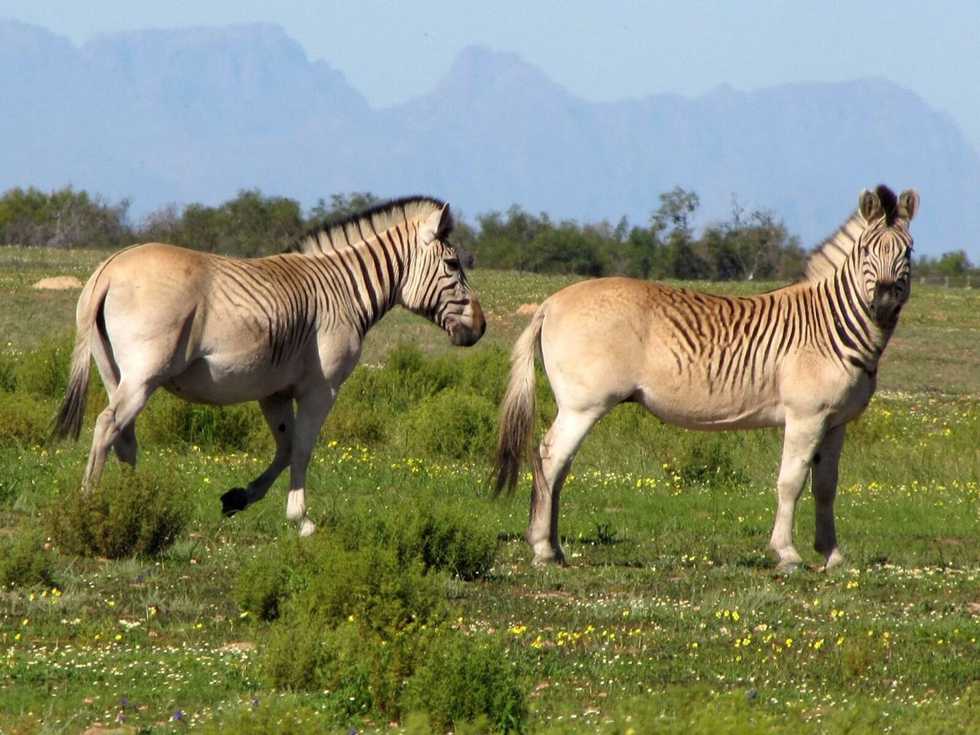
Quaggas look like a cross between a horse and a zebra but they don't have any stripes.
So the scientists have spent decades breeding the stripes away in zebras and their project is almost complete. "We now have a total population of over 100 animals within the Quagga Project," says March Turnbull, the project coordinator.
Large herds of quagga were still roaming South Africa's steppes at the end of the 17th century. But they were exterminated by European settlers who saw them as useless competitors for grazing land.
The world's last quagga died in an Amsterdam zoo in 1883.
That is, unless the breeding experiments work. "We are more optimistic than ever that we have made an important breakthrough toward the project goal," Turnbull says.
He says that goal will be achieved when there is a breeding herd of about 40 animals that look like quaggas.
So far, that applies to around 20 animals, even if their brown colour is still a little weak.
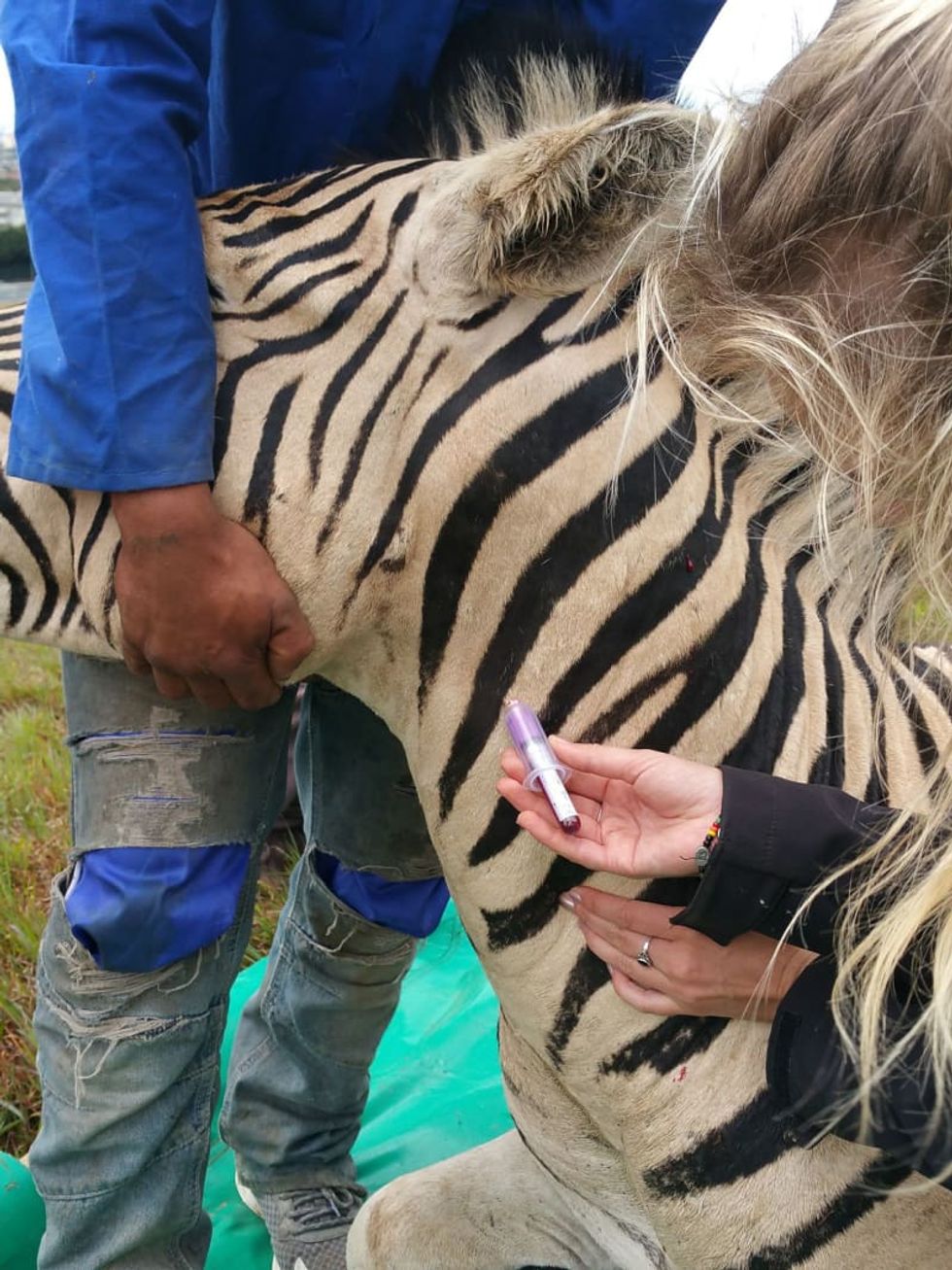
The team has been breeding quagga-like animals since 1987, through carefully selected crosses of zebras who have matching gene pools.
The project, briefly supported by South Africa's National Parks (SANParks) authority, fascinated many people but also led to a great deal of energetic debate and a fair amount of opposition.
Scientists are following the project with great interest and no little concern. The SANParks Nature Reserve Authority has since backed out, citing the risk of species mixing.
"It is certainly possible to 'breed away' a zebra's stripes - however, this does not result in a quagga, but merely in a zebra without stripes," says Johannes Kirchgatter, the Africa officer of the World Wide Fund for Nature (WWF) Germany.
Breeding an animal to look a certain way in visual terms does not make sense from a species conservation point of view, since it has little to do with the extinct animal, he says.
"If you introduce a replacement species, it must be scientifically justified and be supported by the appropriate research. And it would not be primarily about its appearance, but about its ecological function and adaptation."
At most, such actions could raise awareness of the irreplaceability and irretrievability of species, he says.
Even Turnbull admits that "evolution doesn't repeat itself."
He therefore doesn't call the animals, who are now in their sixth generation, quagga, but Rau quagga, a name relating to the German-born zoologist Reinhold Rau, considered the intellectual father of the project.
He found quagga DNA is essentially indistinguishable from the Burchell's zebra. "Reinhold was right," says Turnbull.
South Africa's quagga-like zebras are now split up into several herds, some of which also graze on game farms in the Western Cape Province around Cape Town, which conserve wildlife for ecotourism purposes.
Many farmers, Turnbull admits, also see financial promise in the potential gain in tourists eager to see the quagga-like zebras, unique in the world.
There are only 105 Rau quaggas located directly at the project, while the rest are with private breeders.
"The animals are really starting to look like quaggas now - it's just the brown colour that we need to continue to concentrate on," says Turnbull. "We want to breed zebras which would be indistinguishable from the originals if you dropped them into a 19th century herd of quagga," he describes the project's goal.
However at least one question remains. Why didn't quaggas have stripes back then, unlike zebras, their relatives, throughout the rest of Africa?
Scientists believe this may be due to the tsetse fly, for whose eyes zebras with stripes are virtually invisible.
The fact that quaggas didn't have stripes suggests that the pest was barely present in the quagga biotope, namely South Africa's Western Cape Province, rendering the stripes superfluous.