Top Stories Daily Listen Now
RawStory

World

Gunman arrested in Japan as doctor taken hostage dies

A Japanese gunman was arrested after he allegedly took a doctor hostage and shot him, police said Friday, with local media reporting that the victim had died from his wounds after the 11-hour standoff.

'Gun crime is rare in Japan, where the possession of firearms is strictly controlled, and residents reacted with shock to the attack in Fujimino, a city near Tokyo.

Keep reading... Show less

Photographing Bloody Sunday: the complex legacy of the Troubles’ most iconic images

On January 30 1972, dozens of photographers arrived in Derry, Northern Ireland, to cover a protest march against internment without trial. The day’s events turned violent when British paratroopers opened fire. The photographers ended up capturing on film one of the most significant events of the Troubles – Bloody Sunday.

In the early 1970s, war photography was burgeoning as a genre and a form of international activism. An international group of photographers made a living by travelling between the conflict hot spots of the world, including Vietnam, Biafra and Guatemala. From the late 1960s, Northern Ireland was one of the stop-offs, recorded in thousands upon thousands of images of running skirmishes between shaggy-haired men and the dark, hard shapes of British armour under a hail of bricks.

As the leaders of the January 30 demonstration reached the top of Westland Street and turned into the Bogside they were captured by Derry-born photographer Robert White. When armoured cars rolled into Rossville Street, French photographer Gilles Peress recorded the mounting tensions through thrown bricks and stones. Italian photographer Fulvio Grimaldi recorded confrontation across barbed wire, pointing guns matched by accusing fingers. As the British army started to fire, Colman Doyle recorded men and women scrambling for cover.

The first person shot that day was Jackie Duddy, a 17-year-old boxer, fatally wounded as he ran from a hail of British bullets. The image of Father Daly waving a handkerchief and leading a group of people carrying Duddy’s body through gunfire is one of the most reproduced of the Troubles, on murals, in history books and countless times in newspapers and on television. This scene was captured in dozens of images by the photographers named above and a BBC camera team.

These photographers testified that they intended to document state violence, and for their photographs to bear witness to human suffering. But this is not how the images were used. The photographs, rather than documents of solidarity, became a key part of the way the state “proved” the supposed guilt of the victims.

The photos played a central role in the ensuing enquiry chaired by Lord John Widgery, which sat for 17 days. Widgery pursued a line of questioning inspired by photographs of the wounded and dying, asking about what was in the hands and pockets of the dead, rather than the actions of those who had fired the shots.

When examining photographs of Duddy lying fatally wounded, Widgery asked about the object in the hand of a man standing nearby. In a series of photographs of Patrick Doherty shot as he scrambled for cover, Widgery asked why he had moved between images, speculating that someone could have removed a weapon from his body between frames. In a photograph of young men at the barricades, moments before Michael McDaid was shot in the back, Widgery focused attention on a man at the right side of the frame, asking if the object in his hands might have looked like a hand grenade to a solider under pressure.

When it was published, the Widgery report exonerated the soldiers who fired that day and put the blame instead on the march organisers. The photographs became one of a range of documents that enabled the final Widgery report to explore how 13 people died under the heading: “Were the deceased carrying firearms or bombs?”

The uses of these images reveal the paradoxes of the documentary tradition. These photographs were intended to generate a counter-archive, to record the violence of the British Army. Instead, they were used -— very literally -— to frame its victims. They recall Derry-born poet Seamus Heaney’s famous dictum: there is “no such thing as innocent bystanding”.

A new chapter

In the 50 years since Bloody Sunday, photography has taken on a new role in empowering survivors and making sense of their memories. The image of Father Daly leading Duddy’s wounded body through gunfire now stands, larger than life, on the end of a terrace in the Bogside. It was painted by a local artistic collective, the Bogside Artists, who aim to produce work which is “commemorative and in being so … is also curative”.

The feminist photographer Joanne O’Brien photographed family members of the deceased on the spot where their relatives had died. These portraits reframed Bloody Sunday not as the events of one afternoon but rather gruelling decades of campaigning, which fundamentally changed the lives of many in the community.

Again this year, on the 50th anniversary of Bloody Sunday, marchers will walk through Derry holding banners aloft painted with the faces of the dead. These close-cropped images of those who died have now taken on a talismanic importance for all those who have lived through and lived with the events of January 1972. Fluttering in the cold January wind against grey Derry skies, they are a reminder of the youth of those killed, and that their lives cannot be reduced to the events of the day they died.

Keep reading... Show less

COVID will dominate, but New Zealand will also have to face the ‘triple planetary crisis’ this year

As New Zealand’s government prepares to deal with a looming Omicron outbreak, this won’t be the only major issue it will have to tackle this year.

2022 will be important for environmental and climate action. Several key developments are expected throughout the year, both in New Zealand and internationally, focusing on climate change and biodiversity — and how these crises overlap with the impacts of the COVID-19 pandemic.

Keep reading... Show less

With male imperial descendants dwindling, will Japan’s leaders finally accept a female emperor?

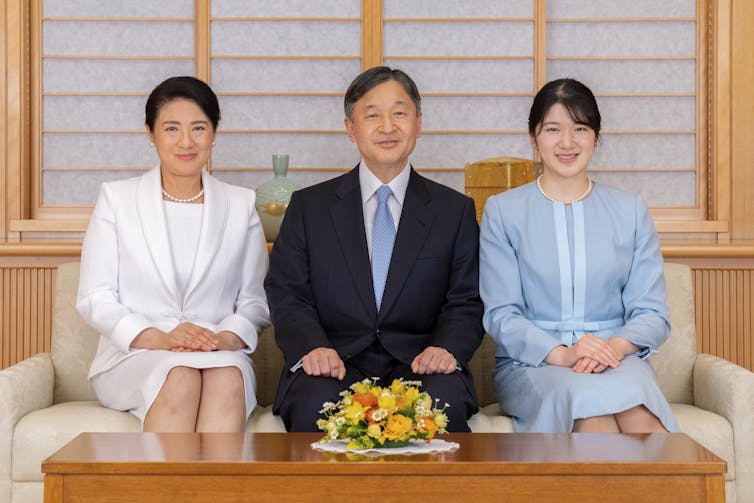
Princess Aiko, the only child of Japan’s Emperor Naruhito and Empress Masako, came of age last month as she turned 20. Despite her royal lineage, Aiko may never ascend to the throne.

Japanese consistently tell poll after poll they would be happy with a female emperor or an emperor descended from the female line. But Japanese imperial household law forbids this – and despite succession in the male line hanging by a thread, it doesn’t look like it’s changing anytime soon.

Keep reading... Show less

Russia could unleash disruptive cyberattacks against the US – but efforts to sow confusion and division are more likely

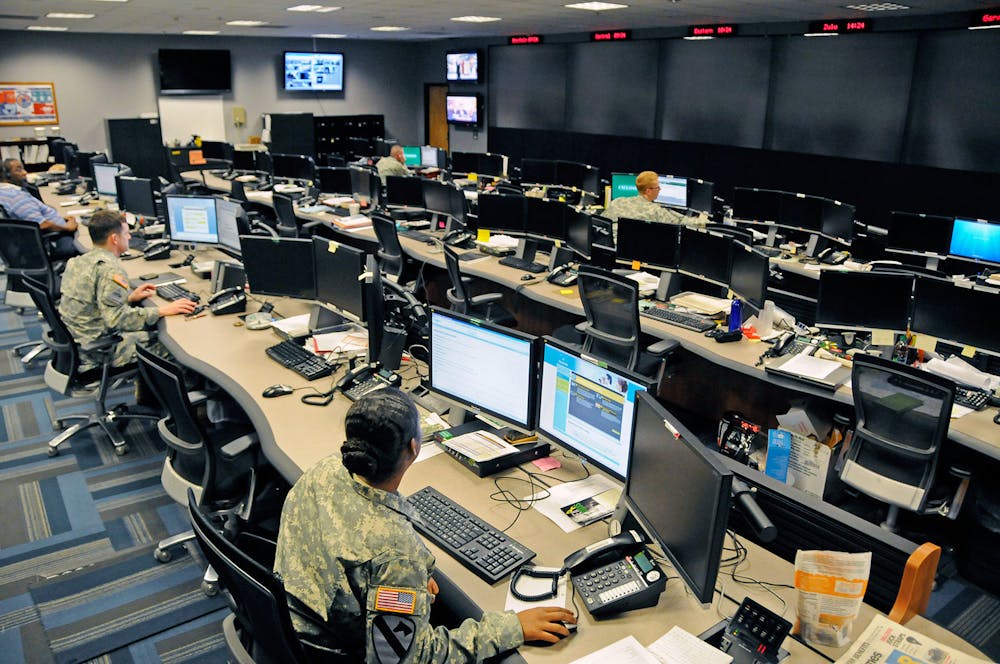
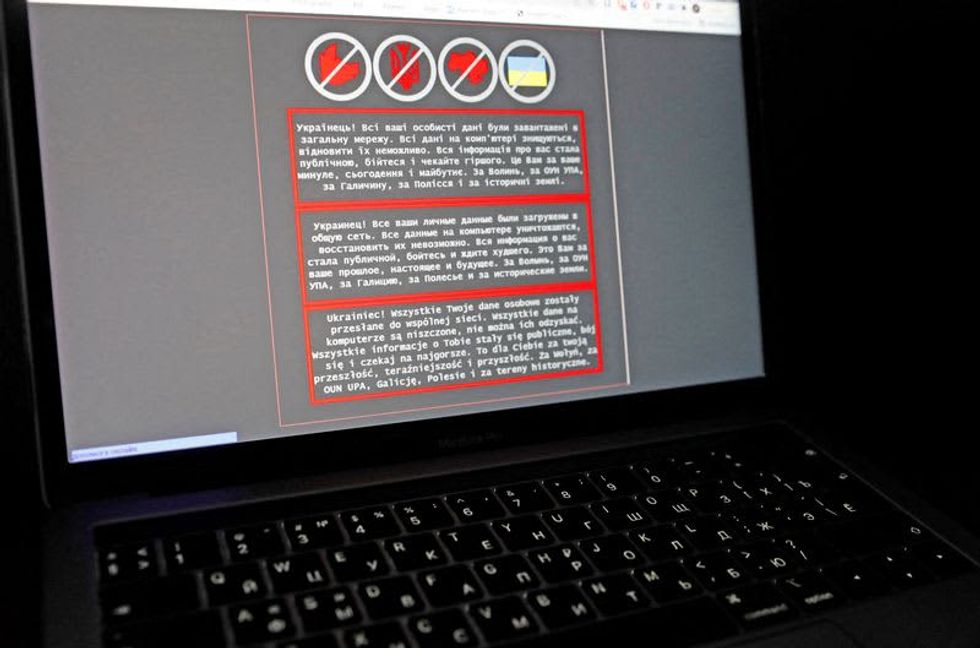
As tensions mount between Russia and the West over Ukraine, the threat of Russian cyberattacks against the U.S. increases. The Department of Homeland Security issued an intelligence bulletin on Jan. 23, 2022, warning that Russia has the capability to carry out a range of attacks, from denial-of-service attacks on websites to disrupting critical infrastructure like power grids.

“We assess that Russia would consider initiating a cyber attack against the Homeland if it perceived a US or NATO response to a possible Russian invasion of Ukraine threatened its long-term national security,” the DHS stated in the bulletin, which it sent to law enforcement agencies, state and local governments, and critical infrastructure operators.

Keep reading... Show less

Brace for Russian cyber attacks as Ukraine crisis deepens, Britain says

LONDON (Reuters) -Britain warned big business on Friday to bolster defences against possible Russian cyber attacks as Western fears deepened that President Vladimir Putin would order his troops to annex another part of Ukraine.

The United States, the European Union and Britain have repeatedly warned Putin against attacking Ukraine after Russia deployed around 100,000 troops near the border with its former Soviet neighbour.

Keep reading... Show less

Australia suffers deadliest day of pandemic, expands booster eligibility

SYDNEY (Reuters) - Australia suffered its deadliest day of the COVID-19 pandemic on Friday with nearly 100 deaths, but several large states said they expect hospital admissions to fall amid hopes that the latest wave of infections would begin to subside. Fuelled by the fast-spreading Omicron variant, infections exploded during the past four weeks, with around two million cases recorded. Up until then, Australia had counted just 400,000 cases since the pandemic first hit the country nearly two years ago. But steady hospitalisation rates in recent days have raised hopes that worst could be over....

Scientists think they know why there’s a bizarre geological blackout from about 1 billion years ago

Scientists use ice-core samples and soil samples, drilling down deep, to discover what was happening on the earth millions and millions of years ago. But about 1 billion years ago something strange happened, scientists can't find the data. Geological samples go from about 550-million-year-old rocks to layers of 1.7 billion-year-old rocks sitting atop each other. Now, scientists think they've discovered the missing discrepancy.

Previously, there were two theories about what happened before the Neoproterozoic era. "One suggests that tectonic activity associated with the assembly and breakup of the supercontinent Rodinia created the Unconformity, while another points to erosion from widespread glaciation during our planet’s 'Snowball Earth' phase some 700 million years ago," the report said.

Keep reading... Show less

Xiomara Castro to be sworn in as first woman president of Honduras

Xiomara Castro will be sworn in Thursday as the first woman president of Honduras, which is grappling with poverty, migration, drug trafficking and corruption, after apparently resolving a crisis in congress that threatened her leadership.

The 62-year-old leftist former first lady's inauguration will put an end to 12 years of right wing National Party rule.

Keep reading... Show less

Trudeau to isolate after Covid exposure

Canadian Prime Minister Justin Trudeau announced Thursday that he had been exposed to Covid-19 and would isolate for five days, in accordance with health rules for vaccinated people.

"Last night, I learned that I have been exposed to Covid-19," Trudeau tweeted. "My rapid test result was negative."

Keep reading... Show less

How three-quarters of French Jews survived the Holocaust, despite the Vichy regime

The fate of France’s Jews during World War II has become an unlikely topic of debate in the run-up to the French presidential election, exhumed by a revisionist candidate’s widely debunked claims that the Nazi-allied Vichy regime offered them protection. FRANCE 24 spoke to historian Jacques Sémelin, whose latest book sheds light on the real reasons some 200,000 French Jews survived the Holocaust.

Sémelin’s quest began more than a decade ago, following an interview with the late Simone Veil, the revered politician and Holocaust survivor who was recently inducted into the Panthéon of French heroes. During their conversation, back in 2008, Sémelin found he could offer no easy answer to the following question: “How is it that so many Jews were able to survive in spite of the Vichy government and the Nazis?”

Keep reading... Show less

Ukraine crisis is reminding NATO why it was formed in the first place

As Russian troops mobilize near Ukraine’s border and appear poised to invade, so the North Atlantic Treaty Organization (NATO) has assumed its traditional role as a bastion of European defense. That mission – the one for which Nato was founded way back in 1949 – is a short cut to alliance unity. The alliance’s stock in 2022 is higher now than it has been for several years.

Deep rifts between Europe and America during the Trump years had led some to fear that NATO’s days were numbered. But Joe Biden’s election seemed to mark a return to normalcy. In March 2021, two months into his presidency, America’s interim National Security Strategic Guidance described Nato as among America’s “greatest strategic asset[s]”.

Keep reading... Show less

Russia could unleash disruptive cyberattacks against the US – but efforts to sow confusion and division are more likely

As tensions mount between Russia and the West over Ukraine, the threat of Russian cyberattacks against the U.S. increases. The Department of Homeland Security issued an intelligence bulletin on Jan. 23, 2022, warning that Russia has the capability to carry out a range of attacks, from denial-of-service attacks on websites to disrupting critical infrastructure like power grids.

“We assess that Russia would consider initiating a cyber attack against the Homeland if it perceived a US or NATO response to a possible Russian invasion of Ukraine threatened its long-term national security,” the DHS stated in the bulletin, which it sent to law enforcement agencies, state and local governments, and critical infrastructure operators.

Keep reading... Show less