Australian summers are lengthening by a month or more while winters are getting shorter due to climate change, according to an analysis by a leading think tank released Monday.
The Australia Institute said large swathes of the country were experiencing an additional 31 days of summer temperatures each year compared to the 1950s.
While Sydney was just under the average with an extra 28 hot days a year, Melbourne added 38 warmer days since the middle of the 20th century.
In some regional areas ravaged by bushfires in recent months, such as the New South Wales town of Port Macquarie, residents are now experiencing seven more weeks of typical summer temperatures.
"Temperatures which were considered a regular three-month summer in the 1950s now span from early-to-mid-November all the way to mid-March," Australia Institute climate and energy program director Richie Merzian said.
"Summers have grown longer even in recent years, with the last five years facing summers twice as long as their winters."
Australia's capital, Canberra, lost 35 winter days while the city of Brisbane, in the country's east, lost 31 cooler days.
Merzian said global warming was making the country's summers increasingly dangerous, with less time in winter to carry out bushfire prevention work and extreme heat causing health and economic impacts.
"Extreme heat events are the most fatal of all natural hazards and have been responsible for more deaths in Australia than all other natural hazards put together," he said.
Australia's latest summer heralded a devastating bushfire disaster in which more than 30 people died, thousands of homes were destroyed and at least a billion animals perished.
The crisis led to renewed calls for the country's conservative government to cut the emissions contributing to global warming.
But while Prime Minister Scott Morrison belatedly acknowledged the link between the bushfire disaster and a warming planet, he has been reluctant to reduce the country's reliance on coal.
Renewables accounted for just six percent of Australia's primary energy mix in 2018, according to government figures, while the country is one of the world's largest fossil fuel exporters.
The global death toll from the new coronavirus epidemic surpassed 3,000 on Monday after dozens more died at its epicentre in China and cases soared around the world with a second fatality on US soil.
The virus has now infected more than 88,000 people and spread to over 60 countries after first emerging in China late last year.
South Korea, the biggest nest of infections outside China, reported nearly 500 new cases on Monday, bringing its total past 4,000.
A second person died in the northwestern US state of Washington as President Donald Trump, who has downplayed the risk of a major outbreak, faced criticism over his administration's preparedness to respond to the threat.
With fears of a pandemic on the rise, the World Health Organization urged all countries to stock up on critical care ventilators to treat patients with severe symptoms of the deadly respiratory disease.
The rapid spread of the coronavirus has raised fears over its impact on the world economy, causing global markets to log their worst losses since the 2008 financial crisis.
China's economy has ground to a halt with large swathes of the country under quarantine or measures to restrict travel.
Other countries have started to enact their own drastic containment measures, including banning arrivals from virus-hit countries, locking down towns, urging citizens to stay home and suspending major events such as football matches or trade fairs.
In a stark example of growing global anxiety, the Louvre -- the world's most visited museum -- closed on Sunday after staff refused to work over fears about the virus.
China reported 42 more deaths on Monday -- all in central Hubei province. The virus is believed to have originated in a market that sold wild animals in Hubei's capital, Wuhan.
The death toll in China alone rose to 2,912, but it is also rising abroad, with the second highest tally in Iran at 54, while the United States and Australia had their first fatalities from the disease over the weekend.
The WHO says the virus appears to particularly hit those over the age of 60 and people already weakened by other illness.
It has a mortality rate ranging between two and five percent -- much higher than the flu, at 0.1 percent, but lower than another coronavirus-linked illness, SARS, which had a 9.5 percent death rate when it killed nearly 800 people in 2002-2003.
But infections are also rising faster abroad than in China now, as the country's drastic measures, including quarantining some 56 million people in Hubei since late January, appear to be paying off.
- Cases soar abroad -
After an increase on Sunday, China's National Health Commission reported 202 new infections on Monday, the lowest daily rise since late January. There have been more than 80,000 infections in the world's most populous country.
By contrast, infections are soaring elsewhere.
Four more people died in South Korea, taking its toll to 22.
Infection numbers have surged in recent days and the country's central bank has warned of negative growth in the first quarter, noting the epidemic will hit both consumption and exports.
The figures are expected to rise further as authorities test more than 260,000 people associated with the Shincheonji Church of Jesus, a religious group often condemned as a cult that is linked to more than half the cases.
Infections nearly doubled over the weekend in Italy, Europe's hardest hit country with nearly 1,700 cases.
Rome said Sunday it would deliver 3.6 billion euros ($4 million) in emergency aid to sectors affected by the virus.
- US criticism -
In the United States, a man in his 70s with underlying conditions died on Saturday, health officials said Sunday, as New York reported its first case in a woman who had visited Iran.
It is the second death in both Washington state and King County.
The first victim was one of a handful with no known links to global hot zones to have contracted the virus -- indicating that the pathogen was now likely spreading in communities.
Vice President Mike Pence and Health Secretary Alex Azar defended the administration's handling of the virus, while seeking to reassure Americans and promising to make up for shortfalls in virus testing kits.
"We could have more sad news, but the American people should know the risk to the average American remains low," Pence told CNN.
"We will see more cases," Azar said. "But it's important to remember, for the vast majority of individuals who contract the novel coronavirus, they will experience mild to moderate symptoms."
Seoul's city government has asked prosecutors to press charges, including murder, against the founder of a secretive religious sect for failing to cooperate in containing the spread of the deadly coronavirus.
South Korea has seen a surge in the number of infections -- adding more than 4,000 cases in less than two weeks -- with around 60 percent of the national total linked to the Shincheonji Church of Jesus.
As officials try to track down and test more than 266,000 people associated with Shincheonji, the entity has been accused of submitting false lists of its members to authorities.
The Seoul City government said it had filed a legal complaint to prosecutors against 12 leaders of the sect -- including its founder, Lee Man-hee -- accusing them of homicide, causing harm and violating the Infectious Disease and Control Act.
"They did not take any action to encourage its members to actively cooperate with the health authorities to prevent further spread of the COVID-19," the city authorities said in a statement.
Seoul mayor Park Won-soon added on his Facebook page: "If they had actively taken early measures, we could have prevented the explosive rise of COVID-19 cases in Daegu and North Gyeongbuk province and the deaths of several people."
Under South Korean law prosecutors can make their own decision on whether to act on complaints filed to them, and Yonhap news agency reported that the Seoul City request had been assigned for investigation.
Shincheonji declined to comment, saying: "The most important thing for us now is disinfecting and our highest priority is to end the COVID-19 outbreak soon."
The outbreak among Shincheonji members began with a 61-year-old woman, who developed a fever on February 10 but attended at least four church services in Daegu -- the country's fourth-largest city and epicentre of its outbreak -- before being diagnosed.
The organisation has apologised on behalf of its members who have not answered survey calls but has insisted that it has been fully cooperating with the government to contain the virus.
Shincheonji, founded in 1984, proclaims Lee has donned the mantle of Jesus Christ and will take 144,000 people with him to heaven on the day of judgement.
But with more church members than available places in heaven, they are said to have to compete for slots and pursue converts.
The Xuda Shoes Company is usually bustling at this time of year, with workers having long returned from a Lunar New Year holiday in their hometowns to kick-start production of tens of thousands of shoes daily.
But China's coronavirus epidemic has changed all that.
Only about one-third of the roughly 1,000-strong workforce at Xuda's factory in the eastern export hub of Wenzhou are around, the rest blocked by virus-induced travel disruptions and safety measures.
Getting back to full annual capacity of seven million pairs of shoes could take several more weeks, company officials said.
The situation in Wenzhou, a trade entrepot for centuries and now a major producer of much of the world's shoes, eyeglasses and clothing, reflects the slow progress in fully reviving China's economy, the world's second-largest and an indispensable lynchpin of global growth.
China's economy remains rooted in manufacturing, much of that for export, and heavily reliant on countless labourers from the vast interior who had returned home in January for the most important Chinese holiday before the epidemic hit, killing more than 2,800 people and infecting around 80,000.
"Factories that want to restart are short of labour. Wenzhou's economy will definitely be impacted," Yang Wenjiang, a top manager with Xuda Shoes, told AFP during an interview at the factory.
AFP / NOEL CELIS Recent official data indicated Chinese manufacturing activity in February was the lowest on record
"If you don't have workers, you can't produce. If you can't restart, you can't fill orders."
The virus shut down provinces responsible for most Chinese economic output, including Zhejiang where Wenzhou is located.
With concern rising over the impact on global growth, the world is watching how quickly Chinese factories can be brought back online.
- Ghost town -
Adding to the unease, official data released Saturday indicated Chinese manufacturing activity in February was the lowest on record.
But you don't need numbers to convince anyone in Wenzhou.
The city is one of the worst-hit by the contagion, with 504 cases of coronavirus infections and one death as of Saturday, compared to 337 infections in far larger Shanghai up the coast.
Consequently, tough restrictions on residents' movement were imposed in Wenzhou and other major Zhejiang cities, with fear of outsiders further complicating the return of labourers.
The coastal city, with around three million people in its urban core, remains subdued, with scant road traffic and most businesses shuttered.
The western Shuangyu district, reached by a road called "Shoe Capital Avenue" in Chinese, is home to dozens of footwear factories several stories tall.
AFP / NOEL CELIS Wenzhou is among the worst-hit by the contagion, with 504 cases of coronavirus infections
But it resembles a ghost town, with most factories closed or barely operating, streets empty, and row upon row of supplier businesses shuttered and silent.
The short-staffing at Xuda allows ample room for workers to obey new factory requirements to spread out in the canteen at lunch to avoid potential virus transmission.
- Bringing them back -
Officials in Wenzhou and other Chinese manufacturing regions have begun offering tax relief, lower-interest loans and are chartering buses and trains to retrieve workers from their homes in less-developed provinces.
"When I first arrived back at my home, I heard the epidemic situation was serious, and I was worried I would not be able to leave again," said Wang Changwen, a 28-year-old Xuda worker who arrived back in Wenzhou last week from his hometown in Guizhou province aboard a company chartered bus.
More trickle back daily, but there is concern about reductions in worker salary remittances upon which many rural communities depend.
"My fellow villagers are worried. This has reduced income to the economy (of his village)," Wang said.
AFP / NOEL CELIS Most factories remain closed or barely operating in Wenzhou, with rows of supplier businesses shuttered and silent
Wenzhou businesses insist workforces are growing daily and the impact will be temporary, helped by the annual stockpiling of orders and supplies before the Lunar New Year to cushion the annual holiday disruption.
Wang Jin, co-owner of local eyewear manufacturer Azure Eyeglass Company, said his factory is nearing 50 percent normal capacity and hopes to be at 90 percent by late March.
"If we can control all of the negative impact to 15 percent (of annual revenues) we will be happy," said Wang, 43.
"Some of my supply-chain contractors are already in the same situation as us, trying to recover to 20 percent, 30 percent, 40 percent (of capacity). I think people are moving, not waiting."
With the virus spreading rapidly overseas, he fears longer-term foreign demand will be depressed and hopes cost savings from recent investments in automation will ease the blow.
China's government has released figures showing that a majority of auto factories and other major industries were running again.
Independent analyses, however, say only about one-third of the nation's factory workers had returned by late last week.
AFP / NOEL CELIS Independent analyses say only about one-third of China's factory workers had returned
Chris Schell, China manager for Stockholm-based Sourcing Allies, which helps buyers find Chinese manufacturers, said virus-related global fears over travelling could curtail potential trips by clients for months, impacting future orders and changing the "business culture" to one based more on electronic communications.
But he expects only a temporary impact as Beijing ramps up policy supports and as Chinese manufacturers continue a long-term climb up the value chain.
"This shouldn't be a very long-term thing for China," Schell said. "It's so set up for success already that one trip won't make it fall over."
China reported a fresh spike in coronavirus infections on Sunday, as President Donald Trump urged calm after the first death on US soil and Australia registered its first fatality.
The virus has spread to more than 60 countries around the globe, prompting the World Health Organization to raise its risk assessment to its highest level.
Worldwide, nearly 3,000 people have been killed and about 87,000 infected since the virus was first detected late last year in the central Chinese city of Wuhan.
China on Sunday reported 573 new infections, the highest figure in a week after a dip. All but three of them were in Hubei province, of which Wuhan is the capital.
While the numbers in China are still far lower than the huge daily increases reported during the first two weeks of February, COVID-19 has spread rapidly across borders, with South Korea, Italy and Iran emerging as hotspots.
AFP / NOEL CELIS The virus first emerged in China, where the economy has been battered by the epidemic
South Korea, which has the most infected people outside China, reported 586 new cases on Sunday, bringing its total to 3,736.
Australia reported the first death on its soil -- a 78-year-old man who had been evacuated from the coronavirus-stricken Diamond Princess cruise ship in Japan.
There are fears the disease could hammer the global economy, and stock markets last week plunged to their lowest levels since the 2008 financial crisis.
- First death on US soil -
Global attention turned to the United States on Saturday after the first fatality on American soil was confirmed.
AFP / Roberto SCHMIDT President Donald Trump said the United States is prepared to handle the coronavirus outbreak, and that there is 'no reason to panic at all'
"We've taken the most aggressive actions to confront the coronavirus," President Donald Trump said at a hastily arranged White House press conference.
"Our country is prepared for any circumstance... There is no reason to panic at all."
The fatality occurred in Washington state's King County, which includes Seattle, a city of more than 700,000 people, health officials said.
The victim was in his 50s and had "underlying health conditions," officials added, as they also announced a possible outbreak in a Washington state nursing home, where a health worker and a resident in her 70s were both confirmed sick with the virus.
Other residents and staff were "ill with respiratory symptoms or hospitalised with pneumonia of unknown cause," the Centers for Disease Control and Prevention (CDC) said.
AFP / Frederic J. BROWN The coronavirus outbreak has disrupted travel across the globe
The death and two confirmed Washington cases all involved patients who had not travelled overseas or come in contact with anyone known to be ill, indicating the virus was spreading in the US.
"We will see more cases," Health Secretary Alex Azar said at the White House.
"But it's important to remember, for the vast majority of individuals who contract the novel coronavirus, they will experience mild to moderate symptoms."
- France, Italy measures -
France cancelled gatherings of 5,000 people or more after 16 new cases were confirmed there on Saturday, bringing the country's total to 73.
AFP / FRANCK FIFE The coronavirus outbreak has impacted a number of major sports events, including top-level football matches in Europe
Sunday's Paris half-marathon and an agricultural symposium were among the events axed.
Italy, the hotspot of the outbreak in Europe, saw a jump in new cases on Saturday, with its number of infections exceeding 1,000 and the death toll jumping by eight to 29.
The outbreak forced the postponement of five matches in Italy's top-flight Serie A football league, including the heavyweight clash between champions Juventus and Inter Milan.
In Japan, just 200 people took part in Sunday's Tokyo marathon after it was reduced from a mass participation event of 38,000 runners to just elite athletes. And the sumo spring tournament which opens next Sunday will now be held behind closed doors due to the coronavirus.
In recent days, the epidemic has spread also to sub-Saharan Africa, while Qatar, Ecuador, Luxembourg and Ireland all confirmed their first cases on Saturday.
Governments around the world have scrambled to prevent the spread of the virus, from large-scale lockdowns of millions of people in China to flight bans and travel restrictions from disease hotspots.
Beijing's drastic steps include curbing the movement of people, temporarily closing factories across China and quarantining Hubei, a key industrial province where the virus first appeared.
South Korea's epidemic is centred in its fourth-largest city, Daegu, whose streets have been largely deserted for days, apart from long queues at the few shops with masks for sale.
The total in South Korea is expected to rise further as authorities screen more than 210,000 members of the Shincheonji Church of Jesus, a secretive entity often accused of being a cult that is linked to around half of the country's cases.
As the number of confirmed coronavirus cases across 61 countries hit 86,000 Saturday with nearly 3,000 deaths to date, the profile of those most at risk of dying is coming into focus, experts told AFP.
But the overall mortality rate remains uncertain, they said.
The World Health Organization raised its global risk assessment to its top level Friday, with the global health crisis edging closer to a pandemic.
Among those infected with the virus, older adults with preexisting heart conditions or hypertension face a sharply higher risk, according to preliminary statistics, including from a study covering more than 72,000 patients in China.
Among a subset of 44,700 infections confirmed through lab tests as of mid-February, more than 80 percent were at least 60 years old, with half over 70, said the study, that was published in the official China CDC Weekly.
Initial reports from outside China are similar, with the first 12 victims reported in Italy mostly in their 80s, and none under 60. Several had known heart problems.
Men in the China study were more likely to die than women by a margin of almost 3-to-2.
But whether that was due to behaviour -- notably that most men in China smoke, while few women do -- or biological factors, such as hormonal differences, is still unknown.
One striking finding from the China study is the near absence of cases among children.
The 10-19 age bracket comprised one percent of infections, and a single death. Children under 10 made up less than one percent, with no deaths reported.
"We are still trying to wrap our heads around the deficit of cases among those under 20," Cecile Viboud, an epidemiologist at the US National Institute of Health's Fogarty International Centre, told AFP in an interview.
"Is it because young children are less susceptible than adults, and thus simply don't get infected? Or if they do, that they have less disease?"
It is surprising infections of very young people are so low, she added, because they tend to be among the hardest hit by almost all respiratory infections -- whether viral or bacterial.
David Fisman, an epidemiologist at the University of Toronto, was also mystified.
"Where are the infected children???," he wrote in an email. "This is critical -- perhaps kids are not being tested because they have mild symptoms."
Another possible explanation is that children in China were out of school for the lunar new year holiday when the virus began to spread widely in January.
"But young children still live in households where they can be infected by their parents," Viboud noted.
A lower rate of infection among the youngest age groups was also seen during the 2002-03 outbreak of SARS, but was less marked.
SARS, which is also a coronavirus, broke out in Guangdong Province and killed 774 people out of 8,096 infected.
The death of 34-year old Wuhan doctor Li Wenliang in early February, along with several more health workers in their twenties sparked speculation they had died because of repeated exposure, or even sheer exhaustion.
Li's death sparked outrage in China because he had been muzzled by authorities for calling attention to the virus.
Cellphone video images on social networks showed nurses and doctors, unable to cope with the caseload, breaking down in hysterics.
"A more likely reason why young clinicians are getting infected is because they were operating outside their level of expertise and training," John Nichols, a professor in the department of pathology at the University of Hong Kong, told AFP.
"It is noble that the junior doctors pony up valiantly to help, but they most likely would not have had the necessary training in handling infectious patients."
The larger question of just how lethal COVID-19 is, remains unanswered.
The ratio of confirmed cases to deaths suggests a mortality rate of 3.4 percent, but several studies have concluded that up to two-thirds of infections in China and elsewhere have gone undetected, which would make the virus far less deadly.
"At the moment, we don't have a good understanding of the real mortality rate," Sharon Lewin, director of the Doherty Institute for Infection and Immunity at the University of Melbourne told Australian television.
"It is estimated at about two percent."
With SARS -- which killed nearly one in 10 patients -- early mortality figures turned out to be underestimates, in part because victims of the virus did not die quickly.
With the 2009 H1N1 influenza pandemic, however, the opposite happened, said Viboud.
"Within a few weeks of the outbreak, the mortality estimate declined first 10-fold, and then 100-fold, as we moved from severe pneumonia to getting all flu cases."
"Here, I think we are somewhere in the middle," she added, saying the current two percent mortality estimate could well decline.
The seasonal flu has an average mortality rate of about 0.1 percent but is highly infectious, with up to 400,000 people worldwide dying from it each year.
The China CDC study showed that COVID-19 was "mild" for more than 80 percent of confirmed cases.
The Vatican unseals the archives of history's most contentious popes on Monday, potentially shedding light on why Pius XII stayed silent during the extermination of six million Jews in the Holocaust.
Two hundred researchers have already requested access to the mountain of documents, made available after an inventory that took more than 14 years for Holy See archivists to complete.
Award-winning German religious historian Hubert Wolf will be in Rome on Monday, armed with six assistants and two years of funding to start exploring documents from the "private secretariat" of the late pope.
Wolf, a specialist on the relationship of Pius XII with the Nazis, is anxious to discover the notes of the his 70 ambassadors -- the pontiff's eyes and ears during his time as head of the Catholic Church between 1939 and his death in 1958.
There should also be records of urgent appeals for help from Jewish organisations, as well as his communications with the late US President Franklin D. Roosevelt.
The unsealed archives additionally cover a post-World War II era in which writers were censored and some priests hounded for suspected communist sympathies.
The Vatican first published the essentials covering the Holocaust four decades ago, an 11 volume work compiled by Jesuits.
But some crucial pieces are still missing, including the pope's replies to notes and letters -- for example, those about Nazi horrors.
The Jesuits already published "documents the pope received about the concentration camps, but we never got to see his replies," Wolf said in an interview.
"Either they do not exist, or they are in the Vatican," he told AFP.
Historians have already examined the 12 German years of Eugenio Pacelli, the future pope's real name which he used while posted there as the Holy See ambassador in 1917-1929
There, he witnessed the rise of Nazism, then returned to Rome to become the right-hand man of his predecessor Pius XI, elected in 1922.
Past archives have revealed exchanges in which he was alerted about the extermination of European Jews once he himself became the pope.
"There is no doubt that the pope was aware of the murder of Jews," Wolf said.
"What really interests us is when he learned about it for the first time, and when he believed that information."
On December 24, 1942, Pius XII delivered one of history's most debated Christmas radio messages.
Buried in its long text was a reference to "hundreds of thousands of people who, without any fault of their own and sometimes for the sole reason of their nationality or race, were doomed to death or gradual extermination".
Was his message -- delivered in Italian and aired just once, and which never explicitly mentioned either the Jews or Nazis -- heard and understood by German Catholics?
"The only ones who heard it were the Nazis," said Wolf, noting that the radio waves were scrambled and that the pope could have spoken German -- if he had really wanted to reach the German faithful.
"After the war, Pius XII told a British ambassador: 'I was very clear.' And the ambassador will say in reply: 'I did not understand you'," the historian said.
Those who rise to the pope's defence note that Pius XII was a former diplomat who was trained in prudence, anxious to remain neutral in time of war, and concerned about being able to shield Catholics from the unfolding devastation.
He simply could not be any more explicit, Pius XII's supporters say. Historians estimate the Church hid around 4,000 Jews in its Roman institutions during the war.
"Quite a few Jews were saved in convents," David Kertzer, an American historian who won the Pulitzer Prize for a book about the era, told AFP.
"But why were they murdered by people viewing themselves as Christians?"
For Kertzer, the reasons behind the "silence of the pope" are key.
"He wasn't happy about mass murder. He seemed upset. He knew by 1941," said Kertzer.
And yet "never uttered the word Jew".
Wolf, the German historian, added that Pius XII "remained very withdrawn after the war, saying nothing about the Holocaust".
He also never recognised the creation of the State of Israel in 1948.
According to the report, "The Trump administration is considering imposing entry restrictions at the U.S.-Mexico border to control the spread of the coronavirus in the United States, according to two U.S. Department of Homeland Security (DHS) officials."
Mexico is on the list along with "possible restrictions on the entry of travelers from South Korea, Italy and Japan" where there are considerably more cases being reported.
The plan, coming from members of Donald Trump's administration immediately drew scorn from Internet commenters that Canada has reported over a dozen cases -- yet no mention of limiting crossings at the northern border.
Happy February 29! It doesn’t come round very often, so make sure you enjoy it.
But why do we have these extra days? Well, if we didn’t, the seasons would gradually move around the calendar. Rather than midsummer in the southern hemisphere falling around December 21, it would arrive in January, then February, and so on. After a few centuries, the Australian summer would end up be in July!
But what exactly is a year? The simplest answer is the amount of time it takes for Earth to orbit the Sun. At school, we all learn that that is 365 days. Nice and simple, right?
There’s just one problem: there are several different definitions of a year.
The “sidereal year” is the classic classroom definition. It’s the time it takes Earth to complete one lap of the Sun and return to exactly the same place in its orbit, judged by the position of the Sun relative to the background stars.
But one sidereal year doesn’t take 365 days. Rather, it takes 365.256 days.
Then there’s another problem. In addition to spinning on its axis (which gives us day and night), our planet also wobbles. More accurately, Earth’s axis “precesses”, spinning around once every 26,000 years or so, like a wobbling spinning top.
The precession of Earth’s equinoxes causes the direction of the pole in the sky to shift, and the ‘first point of Aries’, the location of the vernal equinox, to move through the zodiacal constellations.
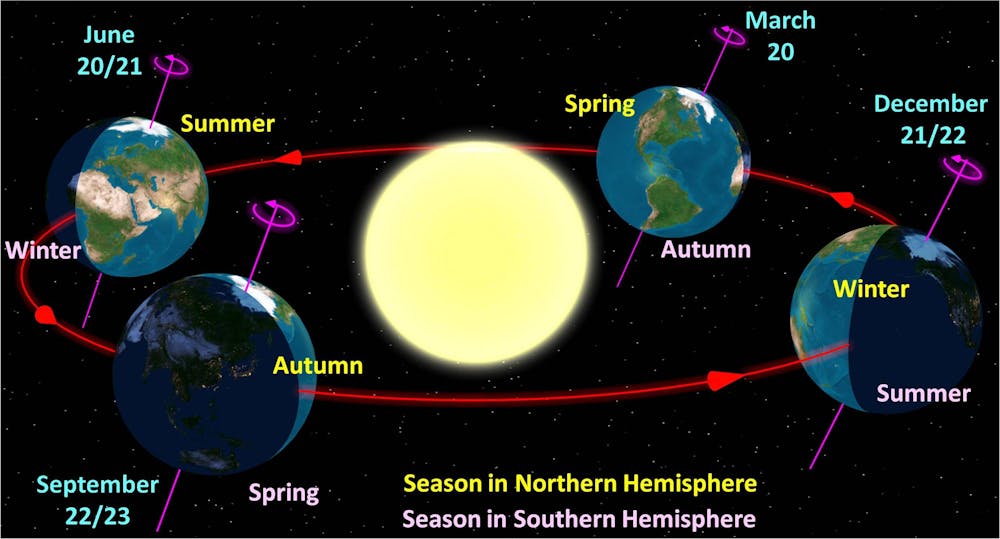
This is important because the direction in which Earth’s axis points is what controls the seasons. When the southern hemisphere points away from the Sun, we experience our southern winter while the northern hemisphere sees summer, and then vice versa.
But the precession (wobbling) of Earth’s axis means that in 13,000 years’ time, the directions would be the opposite of today. Today, the South Pole is angled towards the Sun during the southern midsummer, but in 13,000 years it would be tilted away (midwinter) at the same place in Earth’s orbit.
This means that, over thousands of years, the location at which we would experience midwinter or midsummer in Earth’s orbit would change. In other words, if we tied our calendar to the sidereal year, the seasons would still shift through the calendar!
The seasons on Earth are the result of the tilt of Earth’s axis. When we tilt towards the Sun we get summer, and when we tilt away we get winter.
Wikimedia Commons
The tropical year
Fortunately, we have another way to define a year that can fix this problem. Instead of measuring the exact time it takes to orbit the Sun, we can instead measure the time between the vernal equinox of one year and the next.
The vernal equinox is the point in Earth’s orbit where the Sun moves from the southern hemisphere of our sky to the northern one. Each year it falls on or around March 21.
The time between one equinox and the next is called the “tropical year”, and is slightly shorter than the sidereal year. It comes in at 365.24219 days.
This difference is pretty small (about 20 minutes), but it equates to the amount that Earth’s axis has precessed in that time - just under 1/26,000 of a full lap.
Leaping into the future
But what does all this have to do with leap years? Well, because the tropical year is not exactly 365 days long, the date of the vernal equinox (and midsummer, midwinter, and any other seasonal event you care to name) will gradually drift through the calendar. If every year had 365 days, those events would gradually fall later and later in the calendar - by 0.24219 days per year.
That doesn’t sound like much, but it would mount up. After 100 years, the dates of those events would be 24 days later. The calendar would fall out of alignment with the seasons.
To remedy this, we have leap years, in which we add a single day to the length of the year. If we take a single four-year period, and work out the average length of the year, we get 365.25 days, which is pretty close to the real thing. But it still isn’t close enough.
The Julian calendar
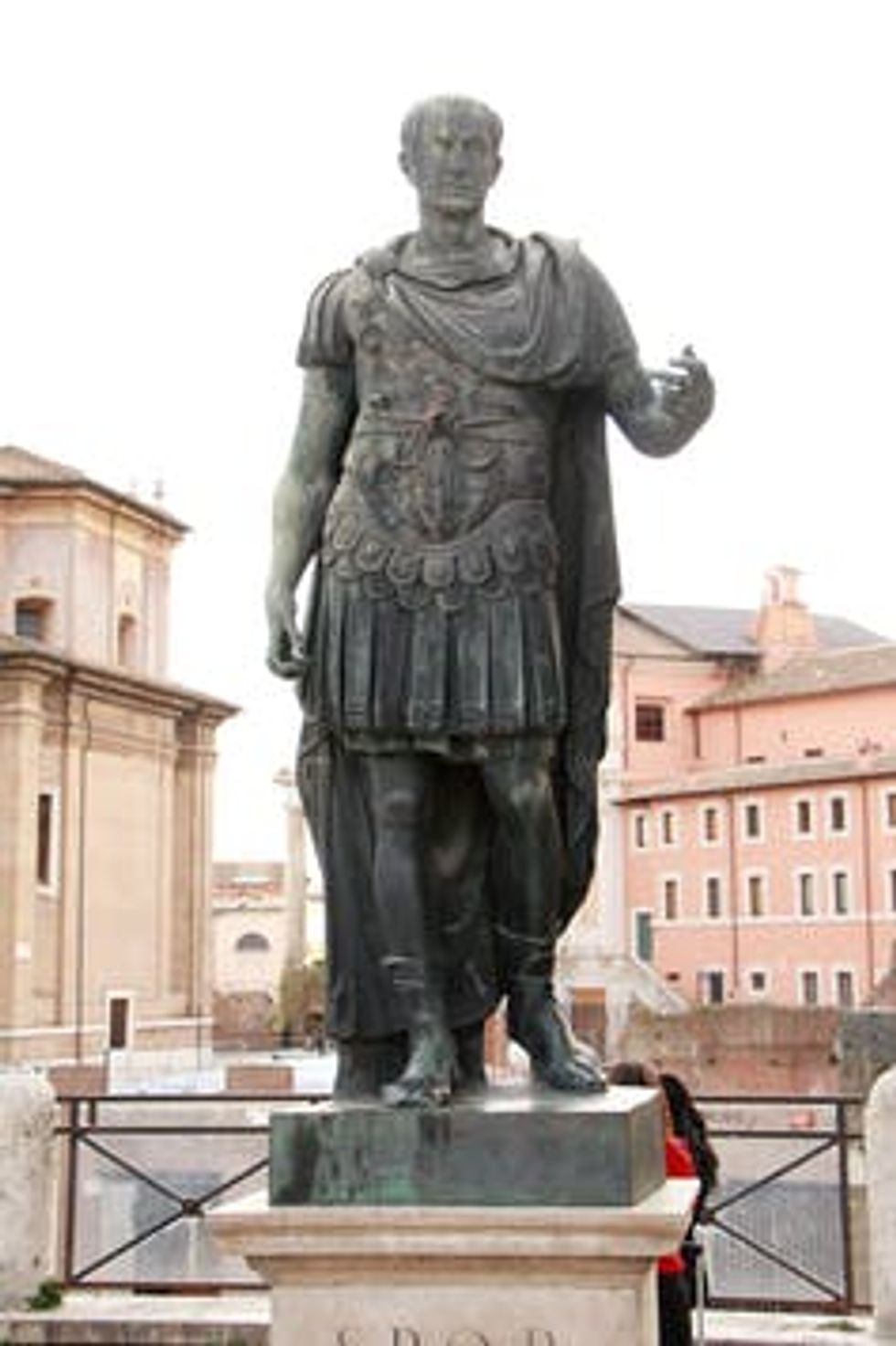
This approximation worked well enough for a long time. In 45BC, the predecessor to the modern calendar began. Known as the Julian calendar, it was introduced by Julius Caesar.
Julius Caesar introduced his new calendar in 45BC, a year before his death for presumably unrelated reasons.
Wikimedia Commons
The Julian calendar implemented a process of leap years: every fourth year, without fail, there would be an extra day at the end of February.
There were some problems implementing this new calendar - and for a few decades, leap years were incorrectly added every three years. Things were sorted out by 12AD, and from then on, every fourth year had a leap year.
But by the mid-1500s, errors were again beginning to mount. Remember that this approach gives an average year length of 365.25 days, whereas the true tropical year is 365.24219 days.
After one and a half millennia, this small difference had resulted in the dates for the solstices drifting by ten days through the calendar.
The Gregorian calendar
To fix this very slow drift, a new calendar was devised in the second half of the 16th century. Named after Pope Gregory XIII, the Gregorian calendar was released in 1582.
Pope Gregory XIII launched the Gregorian calendar in 1582 to fix a ten-day error that had built up in the 1627 years of the Julian calendar’s primacy.
Wikimedia Commons
It shifted the dates of the year, moving the solstices back to their intended place. It then tweaked the way leap years were handled, to ensure those dates didn’t drift again in the future.
The small change was that leap years that were ‘“century years” (years ending in 00) had to be divisible by both 100 and 400. If the year can be divided by 100, but not by 400, it’s not a leap year.
Let’s take the century years 1900 and 2000 as examples. 1900 is divisible by 100, but not by 400. So 1900 wasn’t a leap year.
By contrast, 2000 can be divided by both 100 and 400, so it remained a leap year, and is called a “century leap year”.
So at the end of the 19th century, the sequence of leap years went: 1892, 1896, 1904, 1908. But at the end of the 20th century, leap years continued without a break (1992, 1996, 2000, 2004).
What does this mean? In the old Julian calendar, there were 100 leap years in every 400 years. But in the Gregorian calendar, we have just 97 for every 400 years.
This gives a remarkably good fit to the length of the tropical year. The average length of one year in the 400-year Gregorian cycle is 365.2425 days. That is almost (but not quite) exactly one tropical year - in fact, the two differ by just 26.8 seconds.
In the distant future, we may live in places that require a very different calendar - but on Earth, the Gregorian calendar should be accurate for thousands of years to come!
Donald Davis
That’s close enough that we don’t have to worry about our seasons shifting in the calendar for thousands of years to come.
Beginning by warning of the "treachery of labels," Boot pointed out, "It has been heartening to see a steep reduction in violence over the past week — a U.S. precondition for signing the deal — but there is no agreement on a permanent cease-fire, much less a resolution of all the issues that divide the democratically elected Afghan government from the Taliban. What was signed on Saturday is an agreement to try to reach an agreement. To get even this far, the United States had to drop its long-standing demand for intra-Afghan negotiations to precede a U.S. troop drawdown."
However, he points out, what may follow will likely not be what was promised.
"The ugly scenario would look like South Vietnam," Boot explained. "The 1973 Paris Peace Accords brought an end to the U.S. military presence in South Vietnam, but North Vietnam began violating its terms at once. Two years later, the weakened state of South Vietnam was overrun by a North Vietnamese blitzkrieg. America’s abandoned allies had to flee or be consigned to brutal 'reeducation' camps."
"If I had to bet now, I would say that the 'ugly' scenario is the most likely and the 'good' scenario the least likely," he elaborated. "The 'bad' scenario — with the Taliban dominating an ostensibly democratic government at gunpoint — is in the middle in terms of probability. How bad it would be depends on whether the Taliban would try to enforce their medieval mores on city dwellers, as they did in the 1990s, or whether, like Hezbollah, they would now tolerate different social systems in different parts of the country. The odds are they will be as brutal as ever — though they have promised to be more progressive in the future."
According to the columnist, the real problem with the agreement as it now stands, is that it is designed more to please Donald Trump than it is to end the conflict.
"Trump’s aides thought he was committed to partnering with Kurdish forces in northern Syria to fight both Islamic State and Iranian power. They were caught off guard in December 2018 when the president announced a pullout<" Boot explained before warning, " Afghanistan could be Syria redux. Trump is plainly itching to leave, and could easily decide to pull out whether the Taliban are complying or not just so he will have something to brag about with voters. The deal with the Taliban at least offers a hope of peace — but, paradoxically, realizing its potential will require a more sustained U.S. troop presence than Trump is likely to tolerate."
The idea of giving everybody an unconditional, regular income has become increasingly popular in the last few years, partly because employment has become less secure and people fear that increasing automation may cause job losses across many sectors.
There are many arguments for and against basic income. Some are concerned with fairness and justice, but many are based on competing ideas about the potential effects. Some argue people would stop working and become dependent on payments, while others believe it would free people to spend time on useful activities like volunteering or caring, and that many wouldn’t work less because they wished to earn more or simply enjoyed it.
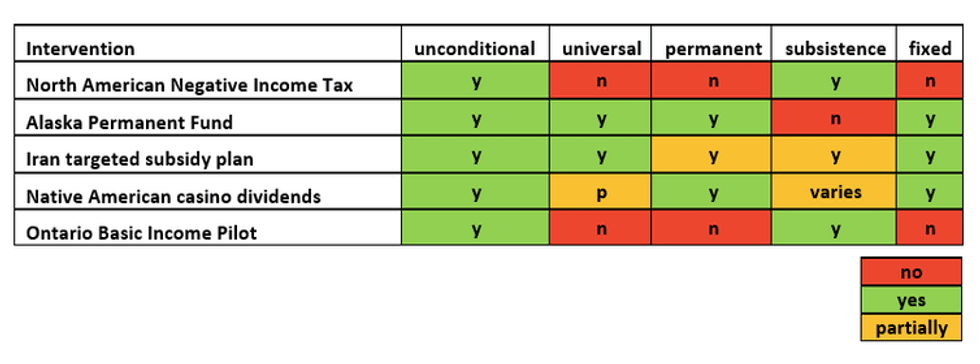
The only way to find out is to run pilot studies and measure the effects. To be sure that the effects are accurate, any study would have to meet as many of the criteria for a full basic income as possible: payments must be unconditional, cover the basic cost of living, and not be affected by other income. It is likely that effects would be different if basic income was universal and permanent, but pilot studies are usually small and short term.
People might be more likely to change the amount they work if the payments were not due to stop in two or three years. If everyone received payments, it could cause changes at a higher level. For instance, if people worked less, employers might have to increase wages. It is very difficult to measure these “spillover” effects if only a small number of people receive payments.
This means it is extremely challenging to design a study which could provide the evidence needed to decide whether basic income is a good idea. There are no programmes which meet all the criteria, but there are studies of schemes that meet some of them. We sought to find and objectively interrogate as many examples as we could. The programmes had to regularly give people money with no conditions attached, and meet at least one of the other criteria. They also had to be conducted in upper-middle or high-income countries.
Basic income-style schemes
We found eight programmes (or “interventions”) in North America and one in Iran (below). There were 27 studies on these, which included data on employment, education, health and social outcomes such as crime, as well as some evidence of spillover and higher-level effects. Some payments were universal and permanent, although not enough to cover basic living costs.
Basic income criteria met by the included programmes.
Author provided
Five large studies of Negative Income Tax (NIT) – where people earning below a certain threshold received payments – were conducted in North America in the 1970s. For three to five years, low-income families were given enough money to live on with no conditions, but payments were reduced if they earned money.
The Ontario Basic Income Pilot began in 2018 but was cancelled by the new provincial government in 2019.
The Alaska Permanent Fund (APF) has given all residents (including children) a share of the state’s oil dividends annually since 1982.
A number of Native American tribes pay all tribal members dividends from casinos run on reservation land. They are paid annually, and young people receive childhood payments as a lump sum when they finish high school.
In 2010, the Iranian government introduced universal monthly payments to compensate for the removal of fuel subsidies. Initially, they were enough to live on, but the value was very quickly reduced by inflation.
Looking at the evidence
There was evidence on labour market activity for all the initiatives. Effects on men were mostly quite small, although one Alaskan study found that annual hours worked reduced by 11%. Women with young children and single parents reduced their hours by up to 33%, but these studies were in countries with no maternity pay. Women and self-employed men in Iran increased the amount they worked. Participants in Canadian studies reported that flexibility, security and being able to work alongside health issues, education, or caring responsibilities without losing benefits were highly valued.
Effects on health were inconsistent, with some studies showing no effect on outcomes. However, several studies reported a large positive effects in terms of birth weight, hospital admissions, adult and child mental health and infant obesity. Evidence from some studies suggested that fewer worries about money and having enough to eat contributed to better health. In some studies where people received payments as large lump sums, there were increases in deaths and substance abuse.
There were some large increases in the proportion of teenagers completing high school and improved educational performance in the negative income tax studies and in a tribal dividend study. Divorce rates did not change in the NIT studies.
There was a similar finding in a tribal dividend study which also revealed large improvements in parent-child and parental relationships. Mothers of young children spent less time in paid work but more time at home. People also reported spending more time caring for other relatives. Parents and teenagers in a tribal dividend study committed less crime, while immediately after receiving annual payments in Alaska, property crime decreased but substance-abuse related crime increased.
There is some tantalising evidence of spillover effects from several of the initiatives. In Alaska, there is a slight increase in men working after payments are made because the increase in spending means that there is higher demand for labour. There are reductions in mothers working and infant obesity, and it is likely that these are related. The projected savings on Alaskan health services are large.
In one Canadian programme, all residents were eligible for payments, although only 30% received any. Still, there was a large reduction in hospital admissions for accidents and mental health issues across the community, possibly because reduced financial stress led to less conflict and fewer mental health issues.
Changes like spending longer in education or reducing the incidence of low birth weight could have profound individual and social implications over the longer term. These factors are linked to higher incomes, better adult health, improved cognitive ability in older people and higher productivity.
None of the studies we looked at meet all the criteria for a basic income, so they can’t provide definitive evidence for its effects. However, they do provide evidence of how people respond to unconditional cash payments, and there are some fascinating pointers for the possible effects if basic income schemes were scaled up.
To understand the effects of basic income, future studies need to replicate it as closely as possible. In particular, large universal schemes are required to measure higher-level and spillover effects. Whatever the effects, it is likely that a basic income would have a transformative impact on society.
In 2017, a parade float featuring a giant model of Donald Trump raping the Statue of Liberty travelled the streets of Düsseldorf as part of Germany’s annual Rose Monday Carnival. The float symbolised America’s violation under Trump’s power. A second float, which travelled behind, showed the Statue of Liberty taking her revenge, brandishing Trump’s severed head.
Lady Liberty may have triumphed in the end, but by using the rape of a metaphorical female body to symbolise corruption, the Rose Monday Carnival played into a wider tradition of sexual violence in political satire.
Metaphorical female bodies have been used to represent institutions, morals and communities since the goddesses of antiquity. They are still all around us – just think of the Statue of Liberty, Lady Justice, the Mother of Parliaments and Mother Earth as a few examples. Each of these personifications is often depicted in a state of sexual violation.
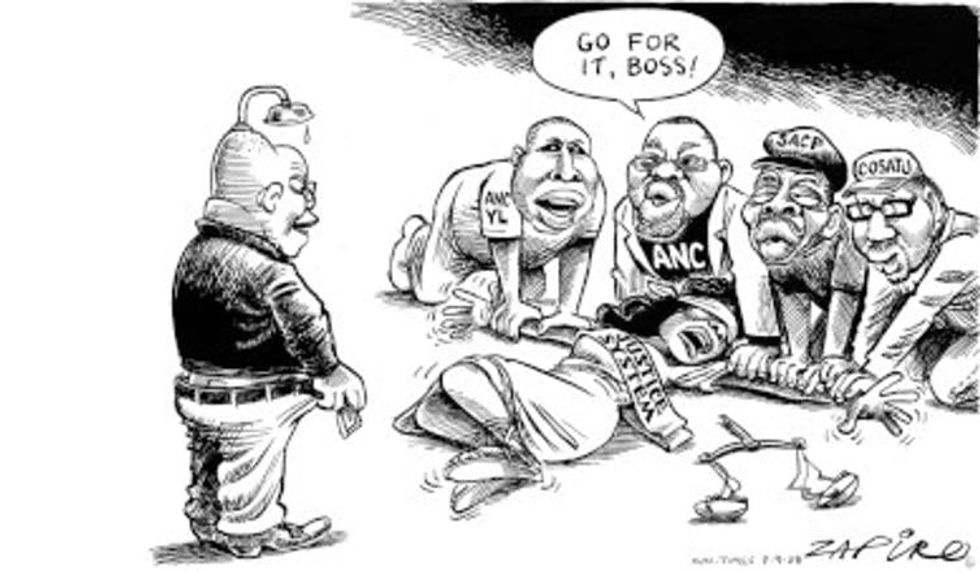
Cartoonist Zapiro’s work “Rape of Lady Justice”, for example, depicts former South African President Jacob Zuma preparing to rape a woman labelled “Justice System” who is being held down by members of his party, the African National Congress. A dripping showerhead sticks out of his head in reference to Zuma’s testimony during a 2006 rape trial that he showered after sex to protect himself from HIV.
According to Zapiro, the cartoon represents the “abuse of the justice system” and was inspired by attempts to prevent a corruption case against Zuma reaching court.
The cartoon about Jacob Zuma that caused controversy.
Wikipedia
The cartoon quickly generated controversy, with complaints made to the Human Rights Commission that it was defamatory, racially loaded and insensitive in a country where rape is “rampant”.
But even if these metaphors of rape satirise power, they are also creating further power imbalances.
Zapiro deliberately plays upon Zuma’s previous rape case, using the experiences of the victim to make a wider political point. The violation of the plaintiff becomes the violation of the entire justice system. She is transformed into the figure of Lady Justice at the same time as her violation is employed as a satirical vehicle. She is doubly exploited, first as a rape victim and then as a metaphor.
Satirising #metoo
When Brett Kavanaugh was appointed to the US Supreme Court in 2018, despite accusations that he had sexually assaulted psychology professor Christine Blasey Ford when they were both teenagers, a cartoon appeared depicting Lady Justice being held down by male arms bearing the Republican logo.
Similarly, Lady Justice was depicted unconscious behind a dumpster as a reference to the shockingly lenient six-month sentence handed to US student Brock Turner for sexually assaulting an unconscious woman at Stanford university in 2015.
These images could be seen as fitting for the terrible crimes they portray, but the power dynamics at play in the metaphor are still skewed.
In Daryl Cagle’s depiction of the Turner case, the focus is actually Aaron Persky, the judge who decided on the sentence. He is the only labelled figure in the image and the only one to speak. The victim in the cartoon is recognisable as Lady Justice – not the real-life victim, Chanel Miller.
By using a metaphorical female figure, the image no longer represents Miller’s suffering but the wider corruption of the American legal system and the moral bankruptcy of Persky as a judge. She is obscured by this wider metaphor.
These images of violation are not about assault at all. They only use rape to symbolise wider corruption. The suffering of individual women becomes little more than a device. These cartoons are not actually about women, but men.
Fresh ideas, please
Zapiro claimed that his controversial cartoon could not be considered hate speech as it does not “incite harm”. He also referenced the freedom of the “jester’s space”, in which cartoonists should be allowed to “portray events and public personalities” in a potentially offensive way.
However, the repetition of images of violation can do social harm by reinforcing damaging gender roles. In these cartoons, male power is repeatedly associated with sexual domination. Women are also continually presented as vulnerable victims.
They are meant to satirise male power but these cartoons actually reproduce unequal gender relations that play into wider rape culture. In the wake of #metoo and #timesup movements, it is hard to comfortably associate the subject of rape with an unquestioned “jester’s space”.
It is time to stop using a violated female body as our go-to symbol for political exploitation. We need to find new ways of critiquing male power in which the punchline is the man and not female victims.
The United States signed a landmark peace agreement with Taliban militants on Saturday aimed at bringing an end to 18 years of bloodshed in Afghanistan and allowing U.S. troops to return home from America's longest war.
Under the agreement, the US would draw its forces down to 8,600 from 13,000 in the next 3-4 months, with the remaining US forces withdrawing in 14 months.
The complete pullout, however, would depend on the Taliban meeting their commitments to prevent terrorism. The signing could help President Donald Trump fulfill a key campaign promise to extract America from its “endless wars.”
President George W. Bush ordered the US-led invasion of Afghanistan in response to the Sept. 11, 2001 attacks. Some US troops currently serving there had not yet been born when the World Trade Center collapsed on that crisp, sunny morning that changed how Americans see the world.
It only took a few months to topple the Taliban and send Osama bin Laden and top al-Qaida militants scrambling across the border into Pakistan, but the war dragged on for years as the United States tried establish a stable, functioning state in one of the least developed countries in the world. The Taliban regrouped, and currently hold sway over half the country.
The US spent more than $750 billion, and on all sides the war cost tens of thousands of lives lost, permanently scarred and indelibly interrupted. But the conflict was also frequently ignored by US politicians and the American public.
US Secretary of State Mike Pompeo attended the ceremony in Qatar, where the Taliban have a political office, but did not sign the agreement. Instead, it was signed by US peace envoy Zalmay Khalilzad and Taliban leader Mullah Abdul Ghani Baradar.
The Taliban harbored bin Laden and his al-Qaida network as they plotted, and then celebrated, the hijackings of four airliners that were crashed into lower Manhattan, the Pentagon and a field in western Pennsylvania, killing almost 3,000 people.
Pompeo had privately told a conference of U.S. ambassadors at the State Department this week that he was going only because President Donald Trump had insisted on his participation, according to two people present.
An 'endless war'
Dozens of Taliban members meanwhile held a small victory march in Qatar in which they waved the militant group's white flags, according to a video shared on Taliban websites. “Today is the day of victory, which has come with the help of Allah,” said Abbas Stanikzai, one of the Taliban's lead negotiators, who joined the march.
Trump has repeatedly promised to get the U.S. out of its “endless wars” in the Middle East, and the withdrawal of troops could provide a boost as he seeks re-election in a nation weary of involvement in distant conflicts.
US. troops are to be withdrawn to 8,600 from about 13,000 in the weeks following Saturday's signing. Further drawdowns are to depend on the Taliban meeting certain counter-terrorism conditions, compliance that will be assessed by the United States.
Trump has approached the Taliban agreement cautiously, steering clear of the crowing surrounding other major foreign policy actions, such as his talks with North Korea.
Last September, on short notice, he called off what was to be a signing ceremony with the Taliban at Camp David after a series of new Taliban attacks. But he has since been supportive of the talks led by his special envoy, Zalmay Khalilzad.
Under the agreement, the Taliban promise not to let extremists use the country as a staging ground for attacking the US or its allies. But US officials are loath to trust the Taliban to fulfill their obligations.
Afghanistan's future in the balance
The prospects for Afghanistan's future are uncertain. The agreement sets the stage for peace talks involving Afghan factions, which are likely to be complicated. Under the agreement, 5,000 Taliban are to be released from Afghan-run jails, but it's not known if the Afghan government will do that. There are also questions about whether Taliban fighters loyal to various warlords will be willing to disarm.
It's not clear what will become of gains made in women's rights since the toppling of the Taliban, which had repressed women and girls under a strict brand of Sharia law. Women's rights in Afghanistan had been a top concern of both the Bush and Obama administration, but it remains a deeply conservative country, with women still struggling for basic rights.
There are currently more than 16,500 soldiers serving under the NATO banner, of which 8,000 are American. Germany has the next largest contingent, with 1,300 troops, followed by Britain with 1,100.
In all, 38 NATO countries are contributing forces to Afghanistan. The alliance officially concluded its combat mission in 2014 and now provides training and support to Afghan forces.
The US has a separate contingent of 5,000 troops deployed to carry out counter-terrorism missions and provide air and ground support to Afghan forces when requested.
Since the start of negotiations with the Taliban, the US has stepped up its air assaults on the Taliban as well as a local Islamic State affiliate. Last year the US air force dropped more bombs on Afghanistan than in any year since 2013.
Seven days ago, the Taliban began a seven-day “reduction of violence" period, a prerequisite to the peace deal signing.




 AFP / NOEL CELIS Recent official data indicated Chinese manufacturing activity in February was the lowest on record
 AFP / NOEL CELIS Wenzhou is among the worst-hit by the contagion, with 504 cases of coronavirus infections
 AFP / NOEL CELIS Most factories remain closed or barely operating in Wenzhou, with rows of supplier businesses shuttered and silent
 AFP / NOEL CELIS Independent analyses say only about one-third of China's factory workers had returned
 AFP / NOEL CELIS The virus first emerged in China, where the economy has been battered by the epidemic
 AFP / Roberto SCHMIDT President Donald Trump said the United States is prepared to handle the coronavirus outbreak, and that there is 'no reason to panic at all'
 AFP / Frederic J. BROWN The coronavirus outbreak has disrupted travel across the globe
 AFP / FRANCK FIFE The coronavirus outbreak has impacted a number of major sports events, including top-level football matches in Europe