Rappers Kendrick Lamar and Drake led Grammy Award nominations on Friday, but Cardi B, Lady Gaga, Brandi Carlile and American newcomer H.E.R helped make it a female-dominated line-up for the year’s top prizes in the music industry.
Ten-time Grammy winner Taylor Swift, Beyonce, Ariana Grande and Camila Cabello were among the biggest snubs in top categories that were dominated by hip-hop and R&B.
Canada’s Drake, the most-streamed artist of 2018, won eight nominations, including album of the year for “Scorpion,” and both song and record of the year for his single “God’s Plan.”
Five of the expanded eight nominees in the album of the year race were women - Cardi B’s “Invasion of Privacy,” Janelle Monae’s “Dirty Computer”, folk singer Brandi Carlile’s “By the Way, I Forgive You,” country singer Kacey Musgraves’ “Golden Hour” and newcomer H.E.R.’s self-titled “H.E.R”.
Rapper Post Malone’s “Beerbongs & Bentleys” and the soundtrack to hit movie “Black Panther,” which was produced by Lamar, round out the album of the year field.
Lamar, the first rapper to win a Pulitzer Prize for music, Drake, Cardi B and Carlile also garnered nominations for record of the year.
The Recording Academy, whose members choose the Grammys, this year expanded to eight from five the number of nominees in the top four categories - record, song and album of the year, and best new artist - to allow a more diverse line-up.
The Academy also expanded its membership and set up a diversity task force after an uproar over the low number of female nominees, winners and performers on the televised ceremony in January.
Six of the eight best new artist nominees on Friday were women, including H.E.R., Chloe x Halle, British pop star Dua Lipa, and Bebe Rexha.
Cardi B, coming off a phenomenal year, Lady Gaga, actor Donald Glover’s music moniker Childish Gambino, and country-pop star Maren Morris each had five nominations overall.
Lady Gaga’s nominations came mostly from her single “Shallow” with actor-director Bradley Cooper from their movie “A Star is Born,” which won five Golden Globe nods on Thursday.
In the biggest snub, Swift, one of the world’s most successful singers, was shut out of the major awards, getting just one nomination in the pop category for her best-selling album “Reputation.”
Grande, who on Thursday won Billboard’s Woman of the Year accolade, and Cuban-born Cabello were relegated to two apiece in the pop album and pop single categories. Beyonce had to make do with just three, all of which she shared with husband Jay-Z - music video “Apeshit”, R&B performance “Summer” and urban contemporary album “Everything is Love.”
The Grammy Awards will be handed out at a ceremony in Los Angeles on Feb. 10.
Reporting by Jill Serjeant; Editing by Franklin Paul and Bernadette Baum and Tom Brown
A U.S. appeals court handed President Donald Trump a defeat on Friday when it refused to allow his order barring asylum for immigrants who enter the country illegally to take effect, while a court challenge proceeds.
Trump cited an overwhelmed immigration system for his recent proclamation that officials will only process asylum claims for migrants who present themselves at an official entry point. Civil rights groups sued, arguing that Trump’s Nov. 9 order violated administrative and immigration law.
A San Francisco judge last month issued a temporary restraining order against the asylum rules, which applied nationwide. The U.S. Department of Justice called that ruling “absurd” and asked the 9th U.S. Circuit Court of Appeals to allow Trump’s policy to take effect while the lawsuits proceed.
Trump has often attacked the 9th Circuit, which has more judges appointed by Democrat presidents than Republicans, accusing it of frustrating his policy initiatives, particularly on immigration.
The split 9th Circuit ruling on Friday was written by Judge Jay Bybee, an appointee of Republican president George W. Bush. Bybee agreed with the lower court that Trump’s policy likely exceeds his authority.
“The Executive has attempted an end-run around Congress,” Bybee wrote.
A Justice Department spokesman declined immediate comment, but reiterated a previous statement that the policy is a “well reasoned exercise” of Trump’s authority.
9th Circuit Judge Andrew Hurwitz, an appointee of Democrat President Barack Obama, joined Bybee’s ruling while Edward Leavy, an appointee of Republican President Ronald Reagan, dissented.
Reporting by Dan Levine; Editing by Sandra Maler and Daniel Wallis
Amazon.com Inc has agreed not to sell foie gras in California from birds that have been force fed and pay $100,000 in penalties and costs as part of a lawsuit settlement, a prosecutor said Friday.
The lawsuit filed by prosecutors in Los Angeles, Monterey and Santa Clara counties accused the world’s largest online retailer of violating a 2004 state law banning sales of the fatty duck and goose liver if it was produced by force-feeding poultry.
A judge approved the settlement on Thursday between Amazon and the three prosecutors, Los Angeles County District Attorney Jackie Lacey said in a statement.
Amazon declined comment.
To produce foie gras, ducks and geese are force-fed over a period of days by having metal pipes pushed down their throats so grain and fat can be pumped into their stomachs. Prosecutors said the process was cruel and painful.
Prosecutors contacted Amazon several years ago regarding their concerns and the company took step to stop foie gras sales. As the parties were in negotiations, the foie gras industry launched a lawsuit against California’s ban and a U.S. court blocked it in 2015.
A federal appeals court overturned that ruling in 2017 and said the state was free to enforce it. North American foie gras producers have now asked the U.S. Supreme Court to take up their case.
Reporting by Andrew Hay in New Mexico; editing by Bill Tarrant and G Crosse
China launched a rover early Saturday destined to land on the far side of the moon, a global first that would boost Beijing's ambitions to become a space superpower, state media said.
The Chang'e-4 lunar probe mission -- named after the moon goddess in Chinese mythology -- launched on a Long March 3B rocket from the southwestern Xichang launch centre at 2:23 am (1823 GMT), according to the official Xinhua news agency.
The blast-off marked the start of a long journey to the far side of the moon for the Chang'e-4 mission, expected to land around the New Year to carry out experiments and survey the untrodden terrain.
"Chang'e-4 is humanity's first probe to land on and explore the far side of the moon," said the mission's chief commander He Rongwei of China Aerospace Science and Technology Corp, the main state-owned space contractor.
"This mission is also the most meaningful deep space exploration research project in the world in 2018," He said, according to state-run Global Times.
AFP / STRThe Chang'e-4 lunar probe mission, named after the moon goddess in Chinese mythology, launched on a Long March 3B rocket from the southwestern Xichang launch centre
Unlike the near side of the moon that is "tidally locked" and always faces the earth, and offers many flat areas to touch down on, the far side is mountainous and rugged.
It was not until 1959 that the Soviet Union captured the first images of the heavily cratered surface, uncloaking some of the mystery of the moon's "dark side".
No lander or rover has ever touched the surface there, positioning China as the first nation to explore the area.
"China over the past 10 or 20 years has been systematically ticking off the various firsts that America and the Soviet Union did in the 1960s and 1970s in space exploration," said Jonathan McDowell, an astronomer at the Harvard-Smithsonian Center for Astrophysics.
"This is one of the first times they've done something that no one else has done before."
- Next up: humans -
It is no easy technological feat -- China has been preparing for this moment for years.
A major challenge for such a mission is communicating with the robotic lander: as the far side of the moon always points away from earth, there is no direct "line of sight" for signals.
As a solution, China in May blasted the Queqiao ("Magpie Bridge") satellite into the moon's orbit, positioning it so that it can relay data and commands between the lander and earth.
AFP/File / GREG BAKERChang'e-4 is being sent to the Aitken Basin in the lunar south pole region -- known for its craggy and complex terrain
Adding to the difficulties, Chang'e-4 is being sent to the Aitken Basin in the lunar south pole region -- known for its craggy and complex terrain -- state media has said.
The probe is carrying six experiments from China and four from abroad.
They include low-frequency radio astronomical studies -- aiming to take advantage of the lack of interference on the far side -- as well as mineral and radiation tests, Xinhua cited the China National Space Administration as saying.
The experiments also involve planting potato and other seeds, according to Chinese media reports.
Beijing is pouring billions into its military-run space programme, with hopes of having a crewed space station by 2022, and of eventually sending humans to the moon.
The Chang'e 4 mission is a step in that direction, significant for the engineering expertise needed to explore and settle the moon, McDowell said.
"The main thing about this mission is not science, this is a technology mission," he said.
- 'National pride' -
Chang'e-4 will be the second Chinese probe to land on the moon, following the Yutu ("Jade Rabbit") rover mission in 2013.
Once on the moon's surface, the rover faces an array of extreme challenges.
During the lunar night -- which lasts 14 earth days -- temperatures will drop as low as minus 173 degrees Celsius (minus 279 Fahrenheit). During the lunar day, also lasting 14 earth days, temperatures soar as high as 127 C (261 F).
The rover's instruments must withstand those fluctuations and it must generate enough energy to sustain it during the long night.
Yutu conquered those challenges and, after initial setbacks, ultimately surveyed the moon's surface for 31 months. Its success provided a major boost to China's space programme.
Beijing is planning to send another lunar lander, Chang'e-5, next year to collect samples and bring them back to earth.
It is among a slew of ambitious Chinese targets, which include a reusable launcher by 2021, a super-powerful rocket capable of delivering payloads heavier than those NASA and private rocket firm SpaceX can handle, a moon base, a permanently crewed space station, and a Mars rover.
"Our country's successful lunar exploration project not only vaults us to the top of the world's space power ranks, it also allows the exploration of the far side of the moon," said Niu Min, an expert on China's space programme.
The project, he said in an interview with local website Netease, "greatly inspires everyone's national pride and self-confidence".
Russian Foreign Minister Sergei Lavrov said on Friday that the detention of Chinese technology giant Huawei’s HWT.UL chief financial officer in Canada was an example of “arrogant” U.S. policy abroad.
Speaking at a news conference in Milan, Lavrov said the detention showed how Washington imposes its laws beyond its jurisdiction.
Huawei CFO Meng Wanzhou, 46, who is also the daughter of the company founder, was arrested on Dec. 1 at the request of the United States. The arrest, revealed by Canadian authorities late on Wednesday, was part of a U.S. investigation into an alleged scheme to use the global banking system to evade U.S. sanctions against Iran, people familiar with the probe told Reuters.
Reporting by Crispian Balmer; writing by Tom Balmforth and Maria Kiselyova; Editing by Peter Graff
But the president’s wish was not realized. Feeling betrayed when Sessions recused himself from the investigation of Russian interference in the 2016 election, Trump turned Sessions into a regular target for his Twitter assaults.
The office of attorney general is not mentioned in the Constitution. It was created when the First Congress passed the Judiciary Act of 1789.
That act called for the appointment of a person “learned in the law, to act as attorney general for the United States.” It said that the attorney general’s duty “shall be to prosecute and conduct all suits in the Supreme Court in which the United States shall be concerned, and to give his advice and opinion upon questions of law when required by the President of the United States, or when requested by the heads of any of the departments.”
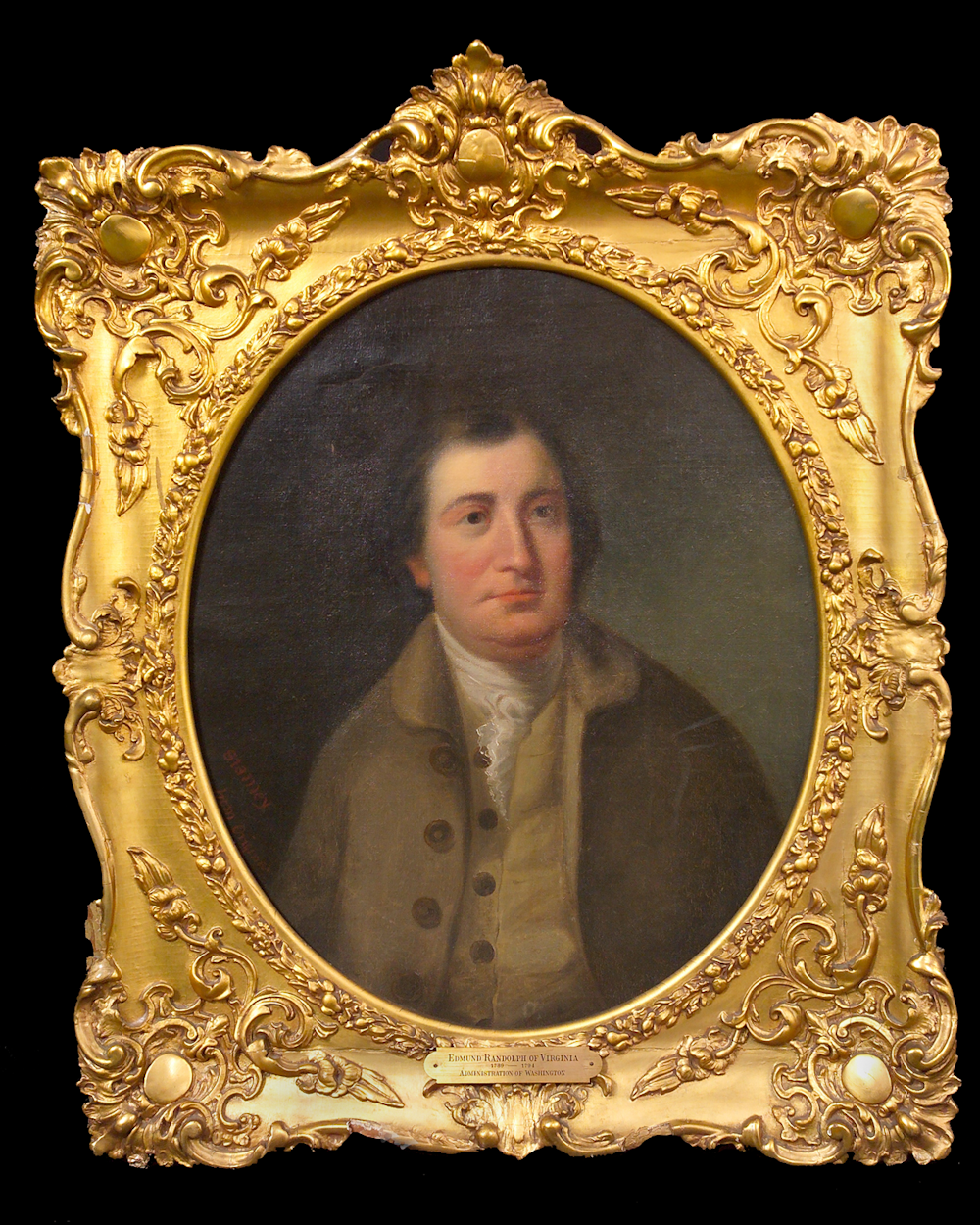
The first attorney general of the U.S., Edmund Jennings Randolph, who was close to President George Washington.
The act gave the attorney general limited duties relating strictly to matters of law. In fact, the attorney general was to be a part-time official, carrying out quasi-judicial functions, but responsible to the president who appointed him.
Two days after the Judiciary Act became law, George Washington appointed Edmund Jennings Randolph to be the first attorney general of the United States.
Randolph had been a delegate to the Constitutional Convention and Virginia’s attorney general. He was “learned in the law,” but he was also Washington’s confidante and close political ally, having served as the general’s chief of staff and personal secretary in 1775.
Thus, “from the beginning,” writes law professor Susan Low Bloch, “there were questions about whom the attorney general represented, who should and would control the incumbent attorney general, and what it means to represent the ‘interests of the United States.‘”
Some have followed in Randolph’s footsteps, serving as close political allies of the president. Others have seen themselves as different from the rest of the president’s Cabinet and kept their distance from the president. They acted primarily as defenders of the rule of law.
In the 20th century, President Franklin Roosevelt’s attorneys general regularly helped him in political battles. Some of those battles involved the Justice Department and some did not.
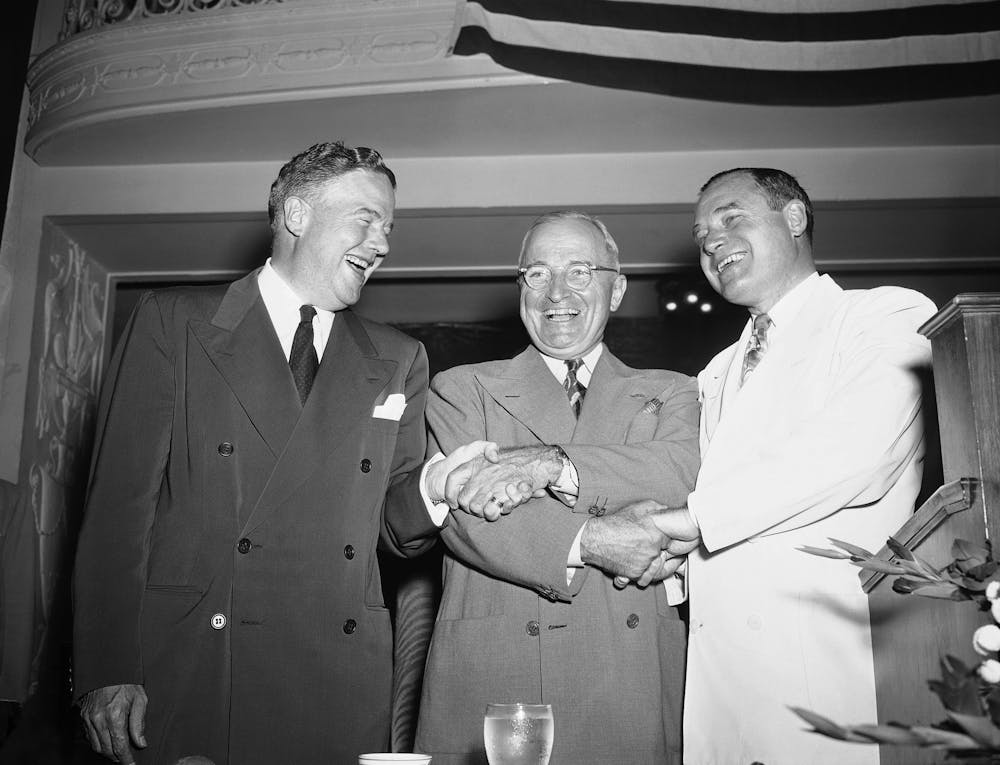
President Harry S. Truman with his new attorney general, J. Howard McGrath, right, and William M. Boyle, Jr., who took over from McGrath as Democratic Party chairman, in Washington, 1949.
Attorneys general who have tried to eschew a clearly political role and be bureaucratic servants of the rule of law include, in the early 19th century, William Wirt.
Wirt was attorney general from 1817-1829 under Presidents James Monroe and John Quincy Adams. He insisted that the attorney general should not be drawn into partisan activities and should adhere to what he called “the strict limits prescribed for… [that office] by law.’”
Both of them came to office in the wake of scandals. Stone took office after the Teapot Dome scandal and Levi after Watergate. Each restored integrity to the Justice Department by instituting new guidelines designed to limit political interference in its work.
Throughout American history, when presidents have appointed political cronies to be attorney general, they were looking for people only to help them pursue a policy agenda. President Nixon’s efforts to enlist Attorney General John Mitchell in the Watergate cover-up and get one of Mitchell’s successors, Elliot Richardson, to fire the Watergate special prosecutor stand out as important, but rare, exceptions.
But that is exactly what Trump’s vision of the attorney general’s role seemed to entail. Like Nixon, he wanted more than a political ally. What he wanted from his attorney general posed a serious threat to the rule of law. With his appointment of Barr, perhaps that will change.
This story has been updated to reflect the nomination of William P. Barr as attorney general.
The United States has dropped a bid to hold a UN Security Council meeting on North Korea's human rights record after failing to garner enough support for the talks, diplomats said Friday.
The decision to scrap the meeting held every year since 2014 also comes as the United States is seeking a second summit between President Donald Trump and North Korean leader Kim Jong Un.
North Korea had written to council members last month to urge them to block the US request for the meeting that shines a spotlight on Pyongyang's dismal record.
The US has, every year since 2014, garnered the nine votes needed at the council to hold the meeting, despite opposition from China.
But diplomats said that only eight countries supported the US request this year, with non-permanent member Ivory Coast refusing to bow to pressure to lend its backing.
China, which has strong expanding ties in Africa, has argued that the Security Council is not the venue to discuss human rights as a threat to international peace and security.
Every year, China had requested a procedural vote but failed to derail the meeting due to the nine "yes" votes secured by the United States.
"They don't have the numbers this year," a Security Council diplomat told AFP. "Cote d'Ivoire is not on board," he added, using the official name of Ivory Coast.
The meeting had been tentatively set for Monday.
- Swimming against the current -
North Korean Ambassador Kim Song last month told council members that criticism of Pyongyang's human rights record would "swim against the current trend" of rapprochement and "stoke confrontation."
A historic summit between Trump and Kim in June opened up dialogue on denuclearization of the Korean peninsula between the two countries after months of military threats.
A second summit is expected to be held next year, but North Korea has taken few concrete steps to abandon its nuclear and ballistic missile programs.
The Security Council has slapped a series of tough economic sanctions on North Korea over its nuclear tests and ballistic missile firings.
The United States maintains that UN sanctions will remain in place until North Korea has fully scrapped its weapons programs.
A landmark 2014 report by a UN Commission of Inquiry documented human rights abuses on an appalling scale in North Korea, describing a vast network of prison camps where detainees are subjected to torture, starvation and summary executions.
The report accused leader Kim Jong Un of atrocities and concluded that he could be prosecuted for crimes against humanity.
North Korea has rejected the report as a fabrication, based on testimony from dissidents living in exile.
U.S. President Donald Trump on Friday said he would nominate State Department spokeswoman Heather Nauert as the next U.S. ambassador to the United Nations, choosing a former TV anchor with little policy experience to lead U.S. diplomacy at the international organization.
Nauert, whose nomination requires U.S. Senate confirmation, is a former Fox News Channel correspondent.
Trump also told reporters at the White House that he would make another staffing announcement on Saturday involving the Joint Chiefs of Staff, but gave no other details.
Reporting by Roberta Rampton; Writing by Susan Heavey; Editing by Chizu Nomiyama
German Chancellor Angela Merkel on Friday offered a staunch defence of her moderate course during 18 years as party leader, as her Christian Democratic Union chose between a loyal deputy and a longtime rival to succeed her.
Accepting a lengthy standing ovation from delegates, many tearful and holding "Thanks, boss" placards aloft, a visibly moved Merkel said the party had won four national elections under her by holding fast to its principles.
"In difficult times we shouldn't forget our Christian and democratic stance," she said.
Pointing to the rise of populism worldwide and what she called a breakdown of shared Western values, Merkel said the order she had championed was at risk.
"Whether it's the rejection of multilateralism, the return to nationalism, the reduction of international cooperation to deal-making or threatened trade wars... hybrid warfare, destablisation of societies with fake news or the future of our EU -- we Christian Democrats must show in the face of all these challenges what we've got," she said.
AFP / Odd ANDERSEN CDU Secretary General Annegret Kramp-Karrenbauer, known as AKK, is a close collaborator of Merkel and seen as someone to maintain her legacy
The two main candidates, CDU general secretary Annegret Kramp-Karrenbauer, known as AKK, and corporate lawyer Friedrich Merz are locked in a battle over whether to embrace or break with the veteran chancellor's legacy.
A third contender, Health Minister Jens Spahn, 38, an outspoken critic of Merkel's 2015 decision to welcome more than one million asylum seekers to Germany, is running a distant third.
- Refugee policy -
Merkel surprised the country and her party in late October when she announced she would not seek reelection as CDU leader at the party conference in Hamburg after a series of poll setbacks rooted in controversy over her liberal refugee policy.
The contest's outcome is expected to be crucial in deciding whether the influential leader can realise her stated goal of completing her fourth term in 2021 and then leaving politics.
"I hope we emerge from this party conference well-equipped, motivated and united," Merkel said. "I am confident we will succeed."
Merkel has led Germany since 2005, and moved her party steadily toward the political centre. More generous family leave, an exit from nuclear power and an end to military conscription are among her signature policies.
- 'Seeking revenge' -
While Kramp-Karrenbauer, 56, is viewed as similar to Merkel with an even temper and middle-of-the-road policies, Merz, 63, has become the torchbearer for those seeking a more decisive break from the chancellor.
This week, Merz -- who has insisted in the face of widespread scepticism that he could work well with Merkel -- won the backing of powerful former finance minister Wolfgang Schaeuble, now the parliamentary speaker.
AFP / John MACDOUGALL The other front-runner is former CDU parliamentary group leader Friedrich Merz, an old rival of Merkel
Both men are seen as harbouring longstanding grudges against the chancellor, after she thwarted Schaeuble's ambition to become German president and Merz's desire to remain CDU parliamentary group leader several years ago.
"The Merkel era is palpably coming to an end," political journalist and AKK biographer Kristina Dunz said. "Merz could be tempted to see his revenge and lunge for power (as soon as next year)."
National broadsheet Sueddeutsche Zeitung said Schaeuble's move signalled that the CDU's long-festering divisions, thinly veiled by unity behind Merkel, could well break out in the open after the conference.
"The CDU of the Merkel years is falling apart," it said. "Opposing camps are forming."
Few observers have dared to predict how the 1,001 delegates -- political and party office holders -- will vote.
- 'Opened the floodgates' -
AKK is believed to have Merkel's strong backing but much will depend on how deep and widespread the longing is for a more conservative profile.
Whoever wins will face towering challenges for the party, which is currently drawing roughly 30 percent at the polls, far below the around 40 percent it enjoyed during Merkel's heyday.
AFP /Angela Merkel has been party leader for 18 years and won four national elections
It has bled support to the right, in the form of the upstart anti-immigration Alternative for Germany party, and to the resurgent Greens on the left.
Armin Laschet, premier of Germany's most populous state North Rhine-Westphalia, said the CDU needed to begin projecting an image of unity ahead of European elections next May.
"We can't afford another year like 2018 when we fought so much," he told public broadcaster ZDF.
Facebook is in crisis mode, but the company can take major steps to fix itself – and the global community it says it wants to promote. Facebook founder, CEO and majority shareholder Mark Zuckerberg need not wait for governments to impose regulations. If he and other industry leaders wanted to, they could make meaningful changes fairly quickly.
Facebook, Twitter, Google and other social media companies are causing society-wide damage. But they tend to describe the problems as much smaller, resulting from rogue individuals and groups hijacking their systems for nefarious purposes. Our research into how social media can be exploited by manipulative political operatives, conducted with Joan Donovan at the Data & Society research institute, suggests the real problem is much larger than these companies admit.
We believe the roots lie in their extremely profitable advertising systems, which need a major overhaul. We have identified some key changes that these giant powerhouses could make right away. These moves could reduce opportunities for political manipulation and limit the harm to democratic societies around the world.
Users’ minds in the crosshairs
Facebook, Google, Twitter and other social media companies have built an enormous digital influence machine powered by user tracking, targeting, testing and automated decision-making to make advertising more effective and efficient. While building this supercharged surveillance system, companies have promised users and regulators that targeted advertising is mutually beneficial for both consumers and advertisers.
In this bargain, users are supposed to receive more relevant ads. Facebook, for instance, explains that its “interest-based advertising” serves users who “want to see ads that relate to things they care about.” It’s true that these methods can identify ads that connect with users’ actual interests. But the very same data-driven techniques that tell a surfer about a new board design can also identify strategic points where people are most vulnerable to influence.
In particular, the leading social media advertising systems let political operatives experiment with different ads to see which are the most effective. They can use these tools not only to see if certain issues resonate with particular targets but also test for fears or prejudices that can be invoked to influence political behavior.
This misleading ad impersonated racial justice activists to urge black Americans not to vote for Hillary Clinton.
One key way to do this is to make people feel that someone else represents an emotionally charged threat to their identity. In 2016, for instance, Russia-linked operatives bought thousands of Facebook ads targeted to specific audiences suggesting Hillary Clinton had insulted their group’s dignity or threatened their safety. Some ads alleged Clinton espoused disrespect for specific occupations, like coal miners, or racial groups, like African-Americans. Others claimed she would confiscate guns or supported radical political movements seeking to overturn familiar ways of life.
Targeting political ads is not unique to online advertising, but the tools of digital ad systems are vastly more powerful than traditional mass media. Advertisers can try out several versions of an ad simultaneously and receive almost instant feedback on which ones most effectively drive specific audiences to share, like or comment on them. This digital feedback loop helps political operatives refine their tactics, probing for just the right images, words and emotions to influence very specific subgroups of citizens.
Based on our analysis, here are some steps companies could take right away – on their own. These moves may hurt the firms’ finances, but would demonstrate serious and lasting commitment to limiting their platforms’ usefulness in political manipulation campaigns.
As their first move, social media companies could stop allowing their ad services to be used as freewheeling experimental laboratories for examining their users’ psyches. Just as marketers and academic researchers must obtain permission from their test subjects, political advertisers that run online ad experiments could get informed consent in advance from every user who is involved. Companies should ask for users’ consent in specific notifications about ad experiments and not penalize users for opting out by limiting their access to services. We suspect many users would opt out of these tests if given the choice, but in any case this policy would help draw public attention to the hidden manipulation tools that platforms offer to their real customers: the political and commercial advertisers who pay the bills.
Make targeted political advertising transparent
To increase transparency and limit the ability of special interests to secretly influence politics, social media companies could refuse to work with so-called dark money groups. All political advertisers should be required to disclose their major donors in a format users can easily access.
A new policy banning dark money ads would respond to evidence that political operatives have used impersonation and manipulative ad tactics to stir in-fighting or sow division among coalitions of their adversaries. Impersonation clearly work best when ad sponsors are able to hide their identities and motives. Anonymous ads are also more likely to violate ethical standards simply because no one fears being held responsible for them.
Make platforms more democratic
A more significant change social media companies could make would be to introduce democratic oversight of how they collect and use people’s data.
Facebook’s Zuckerberg recently took an initial step in this direction, announcing that he will create independent review panels to handle users’ appeals against the company’s removal of content it judges inappropriate. He explained that he wanted to ensure “these decisions are made in the best interests of our community and not for commercial reasons.”
Whatever you think about this plan – and it has been greeted with plenty of skepticism – Zuckerberg’s reasoning acknowledges that because social platforms have become so central to democratic life, their own policies and design decisions require democratic accountability.
A more ambitious vision would let independent ethics panels representing diverse communities of users set enforceable policies for ethical political advertising. Similar sorts of groups are common in medicine and are emerging in artificial intelligence, among other fields. The details of how such committees operate will be critical to their success. If these committees are set up in partnership with nonprofit organizations with proven records of advocating for democratic communication and campaign finance transparency, perhaps they could help social media companies earn greater public trust by prioritizing democracy over maximizing their profits.
Ecuador's president said Thursday that conditions have been met for WikiLeaks founder Julian Assange to leave the country's embassy in London, which would end a six-year standoff with British authorities.
"The way has been cleared for Mr Assange to take the decision to leave in near-liberty," President Lenin Moreno told reporters, explaining that he still had to answer in Britain for violating the terms of his bail.
Moreno, however, said Britain had guaranteed that the 47-year-old Australian would not be extradited to any country where his life would be in danger.
Ecuador has been seeking a way to terminate Assange's stay for several months, amid souring relations with its embassy guest, who recently sued Quito for restricting his internet access.
Assange, who gained international renown by publishing huge caches of hacked State Department and Pentagon files, has repeatedly expressed fear that Britain would extradite him to the United States to face charges there.
The 251,000 classified cables from US embassies around the world -- released by WikiLeaks in 2010 and published by leading international newspapers -- embarrassed the Bush administration in Washington and caused ructions in its bilateral relations with other countries.
US prosecutors last month inadvertently revealed the existence of a sealed indictment against Assange, according to WikiLeaks, but it was not known what the actual charges were.
The possible indictment suggested that Washington will seek Assange's extradition if he leaves the embassy.
AFP / RODRIGO BUENDIAEcuador's President Lenin Moreno said Britain had guaranteed that Julian Assange would not be extradited to any country where his life would be in danger
There is speculation that the US interest in Assange is connected to the investigation by Special Counsel Robert Mueller into Russian interference in the 2016 election that brought President Donald Trump to office.
Britain's the Guardian newspaper last month reported that Trump's former campaign chairman Paul Manafort held secret talks with Assange, whose organization is accused of leaking thousands of emails allegedly stolen by Russian hackers from the Democratic campaign of Hillary Clinton.
In July, Mueller charged 12 Russian spies with conspiring to hack the Democratic National Committee computers, stealing and publishing data in an effort to sway the election.
- Years in embassy refuge -
Assange took refuge in the Ecuadoran embassy in London in 2012 to avoid extradition to Sweden to face questioning in two alleged cases of sexual assault.
Sweden has since dropped that case, and Ecuador says there are no pending extradition requests against the WikiLeaks founder.
"The British government sent us an official communication indicating that the constitution of Great Britain bars extradition of a person to a place where his life would be in danger," Moreno said.
That could be an issue in the case of the United States because it has the death penalty.
His lawyer Carlos Poveda said last month that Assange was prepared to surrender to British police if he receives assurances he will not be extradited.
Ecuador's foreign minister Jose Valencia said at the time that Britain was merely asking him to appear in court to answer for having broken his bail conditions, and that he was likely to get a sentence of no more than six months.
"We do not see the British changing their point of view, they continue to insist that he appear before the courts," said Valencia.
Images of dozens of high-school pupils kneeling with their hands behind their heads during mass round-ups sparked an outcry Friday as France braces for more violence at "yellow vest" protests this weekend.
Leftwing politicians have expressed outrage at the videos, which have gone viral on social media, showing the teenagers kneeling as riot police barked orders at them.
"Whatever wrong was done, nothing justifies this filmed humiliation of minors," Socialist leader Olivier Faure tweeted.
"There is no need to pour even more oil on the flames."
The students were detained Thursday in the Paris suburb of Mantes-la-Jolie, in unrest that has spread to dozens of schools during three weeks of anti-government demonstrations.
AFP / Céline AGNIELA total of 146 people were arrested outside the high school in the Paris suburb of Mantes-la-Jolie, after protesters clashed with police and burned two cars
A total of 146 people were arrested outside the town's Saint-Exupery high school after protesters clashed with police and burned two cars.
Laurent Saint-Martin, a senior member of the ruling Republic On The Move (LREM) party, said around 40 of the students were masked and carrying equipment to be used in vandalism and arson.
But he too described the videos as "shocking", telling Franceinfo radio: "It's right to be angry, looking at these images."
Protests at some 280 schools against stricter university entrance requirements have added to a sense of general revolt in France as the "yellow vest" protests rumble on.
AFP / REMY GABALDADozens of people wearing face masks threw Molotov cocktails, torched rubbish bins and clashed with police outside schools in several cities Thursday
Dozens of people wearing face masks threw Molotov cocktails, torched rubbish bins and clashed with police outside schools in several cities Thursday.
- Paris set for lockdown -
The "yellow vest" protests, named after the safety jackets worn by demonstrators, came to a head in Paris last weekend with the worst rioting the capital has seen in decades.
The protests began on November 17 in opposition to rising fuel taxes, but have since swollen into a broad movement against Emmanuel Macron and the biggest challenge of his presidency.
AFP / ALAIN JOCARD"Yellow vest" protesters are furious at rising costs of living blamed on high taxes
The protesters are furious at rising costs of living blamed on high taxes, and accuse former investment banker Macron of favouring the rich with his policies.
Hailing mostly from rural and small-town France, they say Macron is out of touch with ordinary people. Many are calling on him to resign.
Farmers have also called for demonstrations every day next week, while two truck driver unions plan an indefinite sympathy strike from Sunday night.
AFP / REMY GABALDAAbout 200 high schools and colleges were blocked or disrupted on Thursday
Four people have died in accidents during the "yellow vest" protests and political leaders from across the spectrum have appealed for calm.
But many "yellow vests" are urging fresh protests this weekend, saying a string of government concessions are not enough.
An interior ministry official told AFP that authorities were bracing for "significant violence" Saturday, based on indications that protesters on both the far right and far left are planning to converge on Paris.
The Eiffel Tower and scores of shops on the Champs-Elysees will be closed Saturday as a precaution, as will major museums including the Louvre.
The closures are likely to cost thousands of euros in lost revenues as shoppers stay clear for a second consecutive weekend in the run-up to Christmas, following scenes of burning barricades and cars last Saturday.
Six Ligue 1 football games, one involving Paris Saint-Germain, have been postponed.
- 'Brink of insurrection' -
The government this week scrapped planned fuel tax hikes planned for January -- one of the protesters' core demands -- and announced a string of other measures designed to help low-income families.
AFP/File / Philippe LOPEZThe Eiffel Tower and scores of shops on the Champs-Elysees will be closed Saturday as a precaution, as will major museums including the Louvre
The climbdown over the fuel tax -- intended to help France transition to a greener economy -- marks a major departure for Macron, who has previously vowed not to be swayed, like previous presidents, by large street protests.
Prominent "yellow vest" Benjamin Cauchy has urged Macron to meet a delegation of protesters to defuse a situation that he said had brought France "to the brink of insurrection and civil war".
AFP / REMY GABALDAThe protests began on November 17 in opposition to rising fuel taxes, but have since swollen into a broad movement against President Emmanuel Macron
"We're asking him to meet us to negotiate on spending power, which is what underpins all this anger," Cauchy told AFP.
Macron, who has not commented publicly on the crisis since Saturday, is due to speak about the protests early next week.
Prime Minister Edouard Philippe said the government was ready to consider "any measure which would allow us to boost spending power".
But Macron's office has said he will stick to his decision to cut a "fortune tax" on high-earners, abolished last year in a bid to boost investment.
That decision is deeply unpopular with protesters and, along with a string of comments deemed insensitive to ordinary workers, has led critics to label Macron a "president of the rich".
An Air New Zealand advertisement released for the Christmas season this week takes a dig at U.S. President Donald Trump by portraying an American boy wearing a “Make Christmas Great Again” red cap being laughed at by other children on Santa’s “naughty” list.
The three-minute advert beckoning travelers with a Christmas greeting from “the nicest place on earth” sees Santa accidentally emailing his 2018 list of naughty children to a student in New Zealand named Elvis Anderson instead of his elves at the North Pole.
Sitting in detention, Anderson gets the idea of gathering the naughty kids from around the world to fix the problem, and calls on New Zealand’s national carrier to help transport the children to the summit on the country’s North Island.
Each child representing a country makes promises to change their behavior for the better by eating more vegetables, reducing flatulence and cutting down on hair-pulling.
The American boy, dressed in a two-piece suit and red sloganed cap, says he is not naughty at all and is the nicest person he knows, provoking laughter from the other children, reminiscent of the reaction to Trump’s speech to the U.N. General Assembly in September, when he spoke about the achievements of his administration.
“I didn’t expect that reaction, but that’s okay”, the boy adds in the advertisement, the same words Trump used at the United Nations.
Further pledges to be good from Anderson, including one to be nicer to neighboring Australia made with his fingers crossed behind his back to suggest he doesn’t intend to keep the promise, pushes a meter to “Nice” for the children, and confetti rains down as they celebrate.
Watch Ad Below
Writing by Karishma Singh, Editing by Michael Perry




 AFP / STR
 AFP/File / GREG BAKER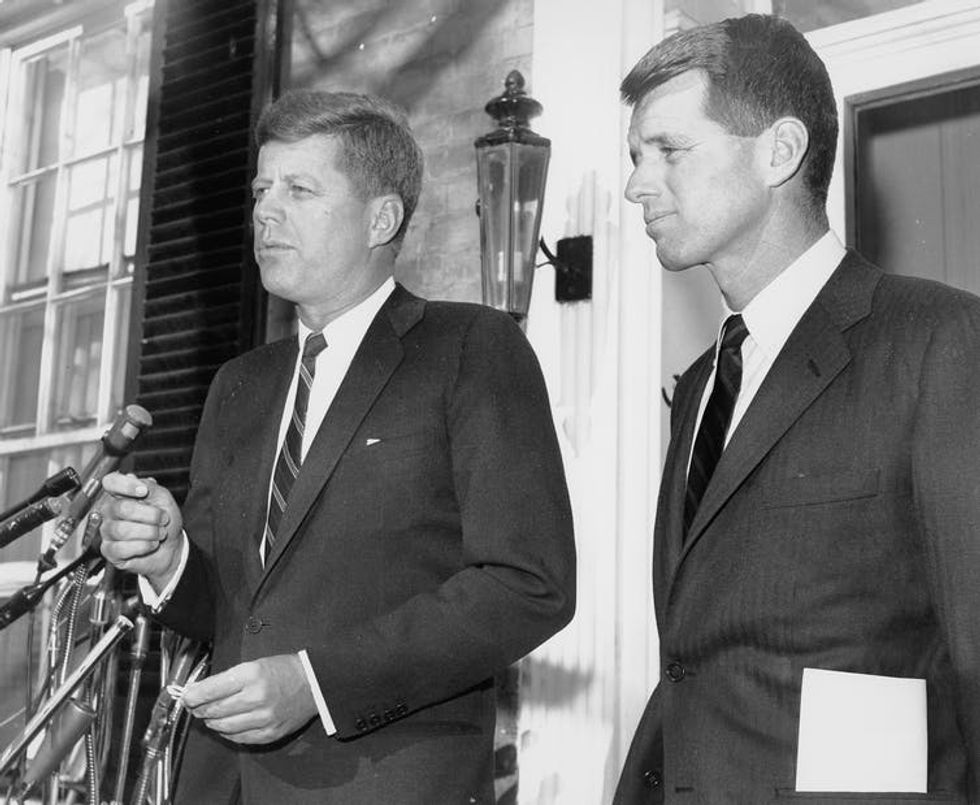

 AFP / Odd ANDERSEN
  AFP / John MACDOUGALL
  AFP /
AFP /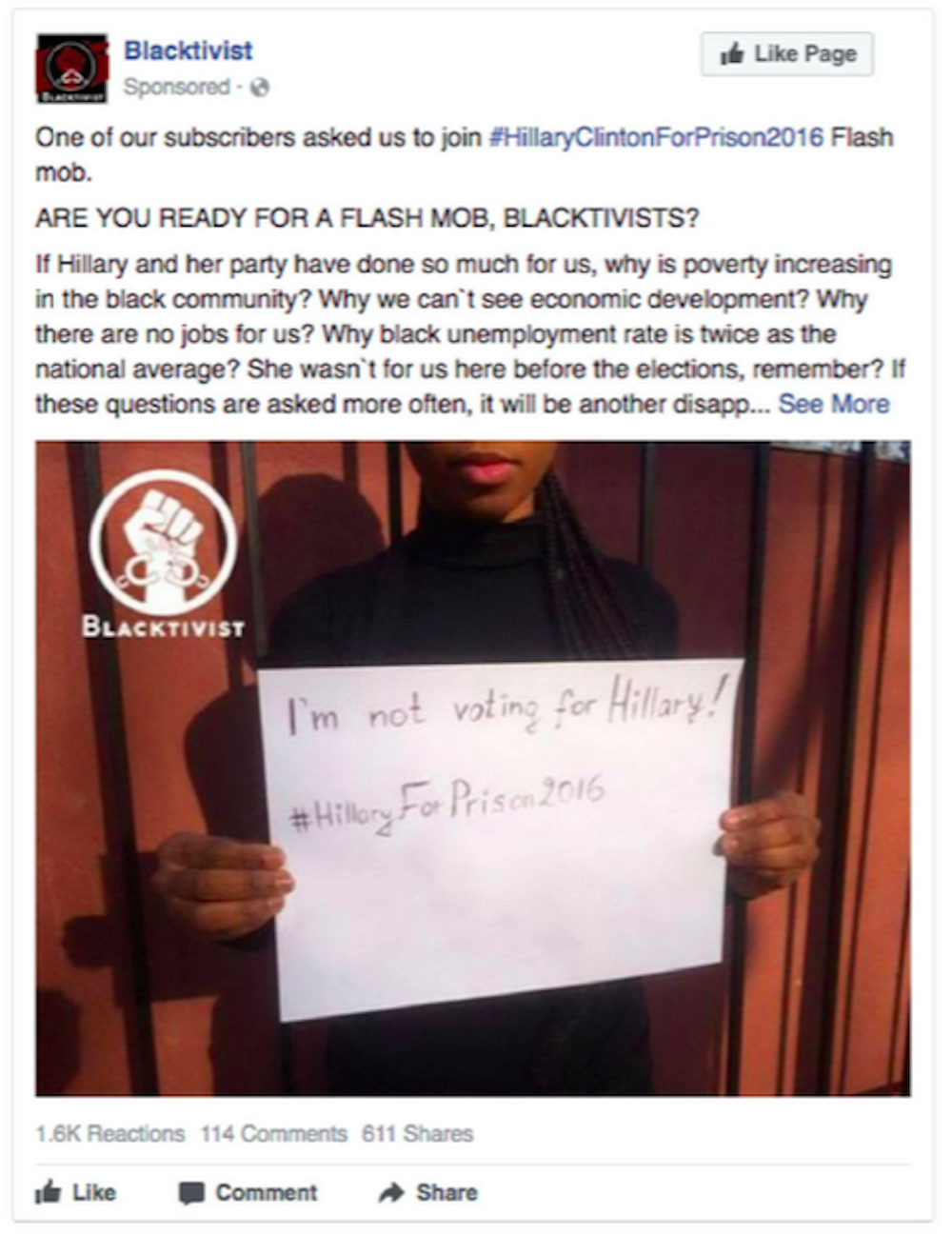

 AFP / RODRIGO BUENDIA
 AFP / Céline AGNIEL
 AFP / REMY GABALDA
 AFP / ALAIN JOCARD
 AFP / REMY GABALDA
 AFP/File / Philippe LOPEZ
 AFP / REMY GABALDA