




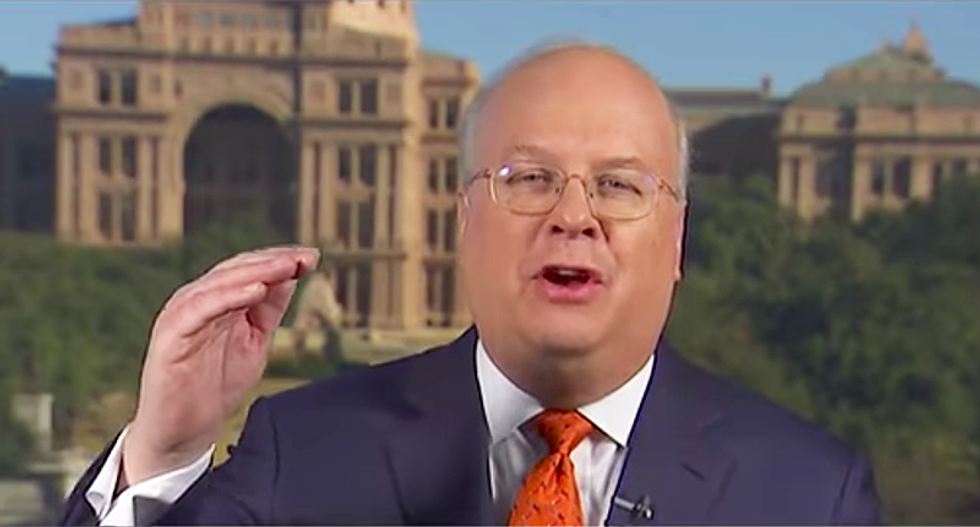
Things aren't looking good for the Republican Party in 2018, much less 2020. So, President Donald Trump is taking a page out of the Karl Rove playbook to find a way to gin up right-wing support and get his voters to the polls.
A Monday report from Politico, reveals that Trump is thinking of putting right-wing conservative issues on ballots in key swing states to get out the vote for conservatives. As a George W. Bush strategist, Rove used the tactic in 2004 as frustration over the Iraq and Afghanistan wars was beginning. He put dozens of laws on the ballot that banned same-sex marriage in not only red states but swing states. Rove then worked to get a slate of anti-LGBT candidates to run for office and specifically campaign against not just marriage but LGBT people. The tactic helped motivate a massive get-out-the-vote effort to get 10 million evangelical voters to the poll helped Bush win.
However, Trump's White House aides are less concerned with issues and getting them policy matters on the ballot that lash out against LGBT people or women and more concerned with taxes. Sources told Politico that since Trump has little chance of passing tax reform in the Republican-led Senate, he might take it to the ballot.
While Rove targeted 11 swing states, Trump wants to go after Democratic senators in Montana, North Dakota and Missouri. They think they can do it easily because it costs so little to buy advertising in those states. While the Republican Party owns the majority in the House, the Senate and the White House, Trump's toxic coat-tails, combative style and lack of legislative knowledge has prevented him from being able to pass any of the legislation he promised his supporters. Issues like tax reform hinged on the Affordable Care Act being repealed and when it didn't happen it prevented both laws. Trump's aides thinks if he can gain more Republican allies in the Senate he'll be able to pass the laws he promised.
Republican strategist Gerry Gunster is the one organizing the philosophy. He was part of the team that ran the Brexit campaign in the UK. Trump first met him after the November election when he and Brexit leader Nigel Farage visited Trump Tower. After an outbreak of voter-regret, Farage has since quit in disgrace. He was also found to have longstanding ties to Julian Assange.
Gunster met with GOP operatives and Vice President Mike Pence's chief of staff to pitch the ballot initiative concept, but it's unclear if Trump is on board. The departure of political strategist Steve Bannon has also complicated things, but as an external force at Breitbart and funded by Robert Mercer's money, it could happen outside of Trump.
The effort would go up against many liberal ballot initiatives seeking to legalize marijuana that are already scheduled to be on the ballot for 2018. Another problem is that Trump and the GOP must hurry to mobilize. Getting issues on the ballot require state campaigns, gathering signatures and sometimes legal battles.
After Bush used the tactic in 2004, some questioned whether it was actually effective. According to a report from the Pew Research Center, issues on the ballot might have impacted Ohio, where the vote was extremely close, but it likely didn't impact any other state. The 10 million evangelical voters that were mobilized to the polls likely did much more.
