




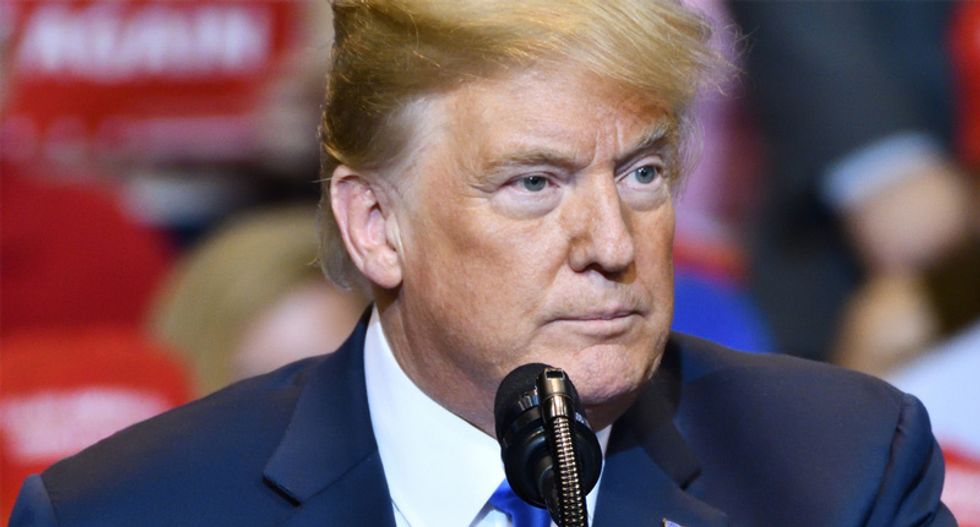
According to a report in the Washington Post, a group of states are banding together to form a pact that could change how they allocate electoral votes -- which could have a far-reaching impact on presidential elections and might have kept Donald Trump out of the Oval Office.
At issue is the National Popular Vote Interstate Compact — that could possibly award the 2020 presidency to whoever wins the popular vote if enough states sign on.
As of now, there are 172 electoral votes from the 12 states (Rhode Island, Vermont, Hawaii, Connecticut, Maryland, Massachusetts, Washington, New Jersey, New York, Illinois, California and the District of Columbia) that are in play. More states are needed to reach the 270 electoral votes at which point the pact would be implemented.
As the Post explains it: "Under the Constitution, states have the power to determine how they award their electoral votes in national elections. Today, many states have winner-take-all laws, which award all of its electoral votes to the presidential candidate who receives the most votes within the state."
According to John R. Koza, chairman of National Popular Vote, that could all change under the compact.
“When we hit 270, all these bills take effect simultaneously. Then there’s a pool of 270 electoral votes that’s going to go to whomever gets the most votes in all 50 states,” he explained.
According to Making Every Vote Count, changing how the Electoral Votes are parceled out could increase voter turnout, with in-house studies showing turnout jumping by 20 million to 80 million if voters believe their vote matters.
“This is a new American demographic, which shows that the electoral system of the 18th century doesn’t work anymore,” Reed Hundt, chairman and co-founder of Making Every Vote Count explained. “No one at the time the Constitution was written thought that 80 percent of the population would be irrelevant.”
According to Hundt, the additional states needed might be difficult to bring on board -- particularly Republican-leaning strongholds.
“The problem with the compact is getting another dozen states to sign on,” Hundt explained, “Republican states haven’t embraced it yet.”
You can read more here.
