




Can science tell us how we should behave?
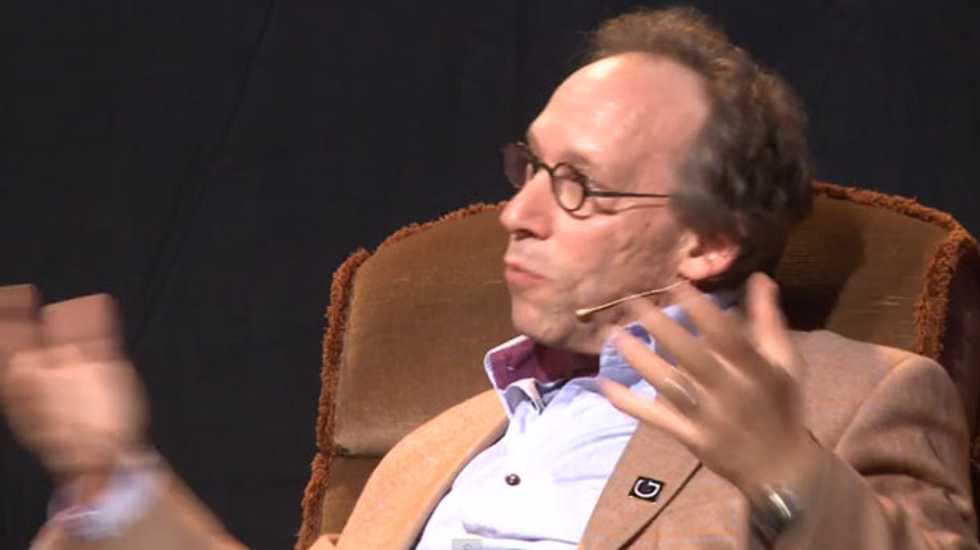
Philosophers Daniel Dennett and Massimo Pigliucci, along with theoretical physicist Lawrence Krauss, debated that question last month during a discussion on the "Limits of Science" in Belgium.
Krauss claimed ethics was impossible without science. He said empirical observation was necessary to understand the consequences of one's actions. Ethics were derived from genetic predispositions and rational decision making, Krauss continued, not from "a book of revelations" like the Bible.
"Ultimately, I think the whole question of ethics comes down to scientific questions," he concluded.
Dennett and Pigliucci both disagreed. Science can help inform our decisions, but it can't tell us how to live, the two philosophers said.
Dennett argued that ethics and science existed in two distinct domains of thought. Ethics was concerned with normative propositions -- what one ought to do -- while science was concerned with declarative propositions -- statements that are either true or false. Dennett said science couldn't test a normative claim such as "Canasta is a better card game than Bridge," though it could investigate various factual aspects of both games.
Pigliucci added that not all systems of ethics were based on the consequences of one's actions. Consequentialism was only "one way of looking at ethical problems," he explained. "It is by no means the universally agreed upon way."
Watch video, uploaded to YouTube, below:
