





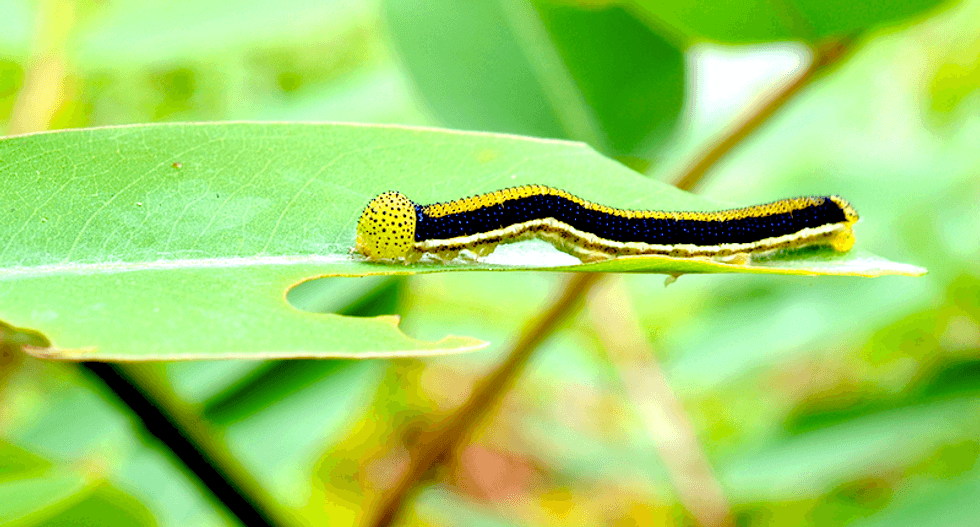
Plants can sense when a predator is eating their leaves, and they take steps to stop it.
Researchers at the University of Missouri conducted a study using thale cress, which is closely related to broccoli, kale, mustard greens, and cabbage, reported Modern Farmer.
The plant, which is known by the Latin name Arabidopsis, is the most popular plant for experimentation because it was the first to have its genome sequenced.
The scientists made an audio version of the vibrations made by caterpillars when they eat leaves, based on their theory that plants can feel or hear these.
They also created vibrations that resembled other natural phenomena, such as wind or insect songs, that plants might sense.
The study found that when plants felt (or heard) the caterpillar-like vibrations, they sent out mustard oils -- which are mildly toxic when ingested -- through their leaves to chase away the predators, although the response takes hours or even days.
The plants did not react when they sensed the other vibrations.
“There are maybe 400,000 species of plants, and what are the chances that we just happened to pick the one species that has this ability to detect vibration?" said Rex Cocroft, a Missouri researcher. "The ability for plants to pick up sound is pretty clear, but the advance from this study is unique."
The researchers haven't determined exactly how plants distinguish the vibrations, but their cells have proteins called mechanoreceptors embedded in the membranes that send signals when moved in certain ways, which may sense the vibrations.
Additional studies are planned to determine how perception and detection works in plants.
Scientists cautioned that more research must be done to determine what the findings mean, but the study opens some fascinating possibilities – such as using sound waves to encourage crop growth or production of pest-resistant oils.
