





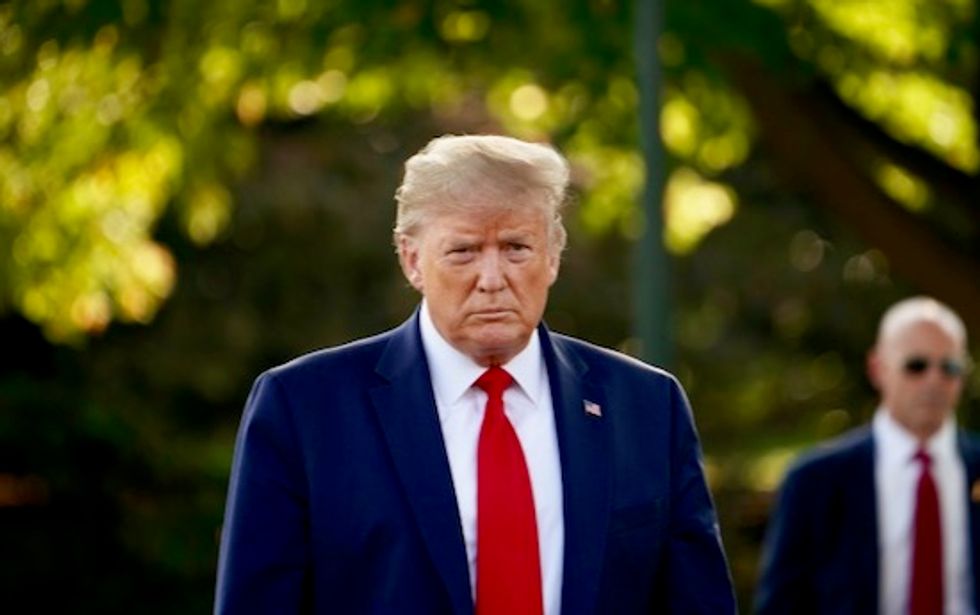
On Tuesday, President Donald Trump is scheduled to give his speech before the United Nations General Assembly.
But as Politico noted, the logistics of the lineup conspicuously put Trump in the middle of a long list of brutal dictators who are also scheduled to speak.
Before Trump on the schedule is Jair Bolsonaro, the recently elected president of Brazil who is linked to paramilitary gangs and has claimed that the only problem with his country's former military dictatorship was that it maybe should have killed even more dissidents.
Then after Trump finishes, he will be followed by Egyptian President Abdul Fattah el-Sisi, whose regime has rolled back human rights reforms by executive fiat, imprisoned rivals, and conducted massacres, as well as Turkish President Recep Tayyip Erdoğan, who routinely arrests people for making fun of him and who recently held a sham referendum to rewrite his nation's constitution.
"The initial speaking order at the world’s top diplomatic gathering is a coincidence," stressed Politico, "and yet it serves as a vivid reminder of democracy’s declining fortunes around the world. It’s also already drawing attention to Trump’s repeated encouragement, and occasional emulation, of authoritarian leaders."
Politico noted that Trump has "spoken of his 'love' for North Korea’s Kim Jong Un, praised Russia’s Vladimir Putin as 'strong,' downplayed Saudi Arabia’s killing of U.S.-based journalist Jamal Khashoggi, spoken warmly of China’s Xi Jinping and reportedly referred to Egypt’s Sisi as 'my favorite dictator.' (On Monday, ahead of their bilateral meeting in New York, Trump called Sisi 'my friend' and called him 'a real leader' who has 'done some things that are absolutely amazing in a short period of time.')"
"Even if Trump does speak extensively Tuesday about promoting democracy, his past actions and comments are likely to undermine his credibility on the issue, observers say," the article continued. "What’s in little dispute is that democracy has suffered setbacks globally in recent years, the result of rising populist sentiments and crushed democratic rebellions, among other factors."
