





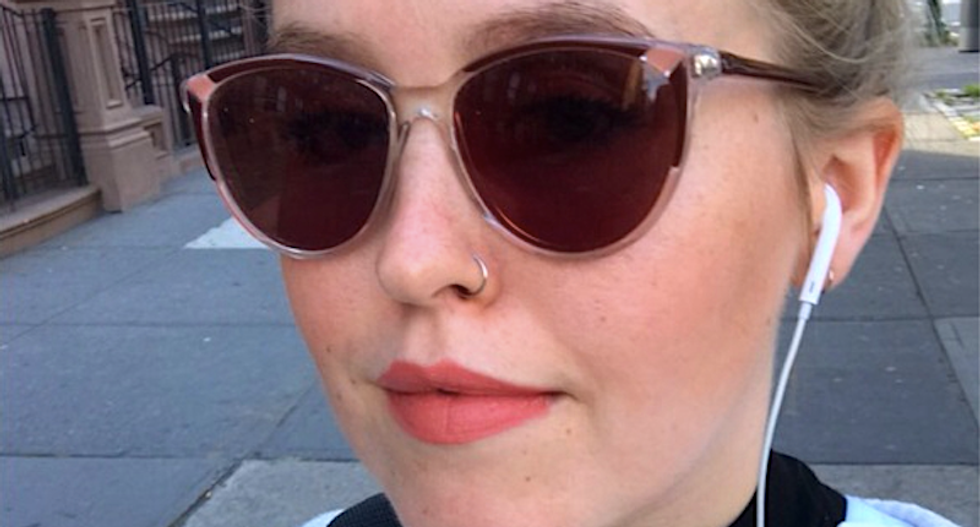
A 26-year-old yoga instructor learned the hard way that even younger, fitter people can suffer greatly from coronavirus.
Fiona Lowenstein developed symptoms -- a fever and headache -- a few hours after deciding March 13 to socially distance herself to help halt COVID-19's spread, and she described her harrowing experience in a New York Times column.
"I tried not to assume the worst, but just in case, my partner and I decided to sleep in separate bedrooms," she writes. "By the next morning, I had a cough. On [March 15], I started to feel better and my fever was gone. I felt thankful that even if this was coronavirus, I’d most likely be able to ride it out at home, as I’d heard people like myself had little to worry about. I began planning the work I’d catch up on the next day, and the much-needed shower I’d take."
But that night she woke up with chills, vomiting and shortness of breath, and the following day she could barely speak without gasping for air.
"I’m 26," she writes. "I don’t have any prior autoimmune or respiratory conditions. I work out six times a week, and abstain from cigarettes. I thought my role in the current health crisis would be as an ally to the elderly and compromised. Then, I was hospitalized for COVID-19."
Lowenstein didn't want to go to the hospital for a number of reasons, and had been advised after falling ill that people with coronavirus symptoms should stay home, but finally her condition worsened to the point that treatment was necessary.
"After I was admitted, I was told that there was a 30-year-old in the next room who was also otherwise healthy, but who had also experienced serious trouble breathing," she writes. "The hospital staff told me that more and more patients my age were showing up at the E.R. I am thankful to my partner for calling the hospital when my breathing worsened, and to the doctor who insisted we come in. As soon as I received an oxygen tube, I began to feel slight relief. I was lucky to get to the hospital early in the crisis, and receive very attentive care."
Lowenstein begged other millennials to stick with social distancing to protect vulnerable groups -- but she warned other younger and healthier people they were not immune from COVID-19's threat.
"Unfortunately, much of our generation — and some of those younger than us — is not taking this public health crisis seriously enough," she writes. "We’re continuing to gather in groups, travel internationally, and see quarantine as an extended spring break. As a generation with a supposed commitment to social justice, we should be stepping up in our role as allies to more vulnerable populations. Yet, somehow the message of staying home still isn’t permeating our ageism and ableism."
"Millennials, if you can’t be good allies, at least stay home to protect yourselves," Lowenstein adds. "Our invulnerability to this disease is a myth — one I have experienced firsthand."
