




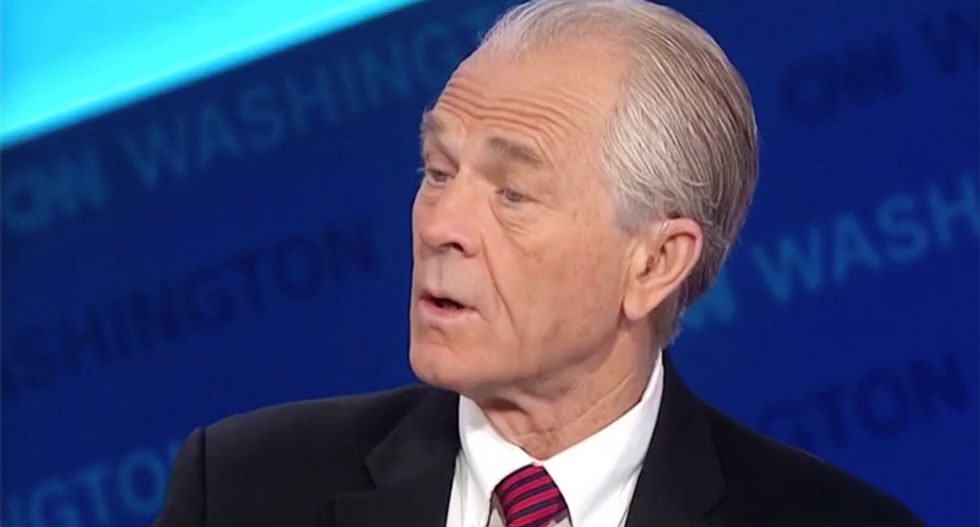
White House trade adviser Peter Navarro is pressing President Donald Trump to exploit the coronavirus crisis to drastically cut foreign imports and ramp up increased domestic production.
Other senior administration officials are pushing back because they fear the "Buy American" policies would have disastrous consequences during the massive public health and economic crisis, but they said Trump seems receptive to Navarro's pitch, reported The Daily Beast.
“The president warmly received it and told Peter to get to work on it,” said one administration official. “[Navarro] is not freelancing this ... This is something the president [repeatedly] said he wanted done.”
Food and Drug Administration representatives and trade officials voiced their objections to Navarro last week during an interagency meeting, arguing that an executive order intended to curb foreign imports would do more harm than good by restricting medicines and other supplies needed for coronavirus patients.
The Daily Beast obtained a draft of Navarro's proposed order, which is similar to the president's April 2017 "Buy American Hire American" executive order, and calls for reductions in imported goods and increased production of American medicines, raw materials and vaccines.
Navarro is a longtime China hawk, and his involvement in the coronavirus response shows that Trump still views the outbreak as an economic crisis.
Treasury Secretary Steve Mnuchin and economic adviser Larry Kudlow warned the order could make the crisis worse, and industry executives have also strongly criticized the policy, which experts believe could disrupt already vulnerable supply chains.
“The crisis has revealed there are lots of vulnerabilities in, specifically, medical supply chains, and thinking through what the U.S. policy should be is a good thing,” said Geoffrey Gertz, a fellow at the Brookings Institution. “The question is how best to do this in a crisis. If there isn’t an ability to ramp up productions of those goods, then it doesn’t really work. You can’t instantly flip the switch and have factories start pumping out these goods. At the moment where there is huge demand from medical goods. You want to source them from as wide a range of suppliers as you can.”
“This seems like they’re running ahead with policy without understanding the real source of risk,” he added.
