The Covid-19 pandemic has taken a heavy toll on dozens of industries with fears of a global economic recession to rival the Great Depression. But for a few companies, business is booming as the pandemic triggers a surge in demand for their products.
In supermarkets, shelves have been emptied of goods such as rice, pasta and bread as people in lockdown stock up on staples. The panic-buying of toilet paper has been reported the world over and Procter & Gamble, one of the world’s largest toilet paper manufacturers, has reported a 10 percent surge in US sales this year.
People being forced to stay indoors has also increased demand for home entertainment and Netflix has been one of the biggest beneficiaries.
Some 15.8 million people signed up to the streaming service in the first quarter of this year, more than double the company’s own projections.
Others have sought alternative ways to keep themselves occupied at home during the coronavirus pandemic.
Cannabis sales soared by more than 50 percent in March in several US states where the drug is legal, according to figures from Flowhub.
Adult toy makers from countries including Denmark, Colombia and New Zealand have said sales are booming.
“The last week has been crazy. We have increased the sale by approximately 100% in all Scandinavian countries. So I think it's because now we are used to the new normal and now we need to have a bit more fun actually in our lives,’ Mathilde Mackowski, co-owner of Danish company Sinful, told Reuters.
Few businesses, though, can match the performance of online retail giant Amazon.
The company has seen ‘unprecedented demand’, according to analysts, as people across the world under lockdown measures turn to online shopping.
Amazon’s market value surged to a record high of $1.2 trillion in recent weeks, increasing the wealth of owner and the world’s richest man, Jeff Bezos, by around $24 billion this year, according to Bloomberg.
Saudi Arabia has urged Muslims to delay their plans for the hajj, amid speculation that the obligatory pilgrimage may be canceled this year due to the coronavirus.
But as a scholar of global Islam, I have encountered many instances in the more than 1,400-year history of the pilgrimage when its planning had to be altered due to armed conflicts, disease or just plain politics. Here are just a few.
The Qarmatians were said to have killed scores of pilgrims and absconded with the black stone of the Kaaba – which Muslims believed was sent down from heaven. They took the stone to their stronghold in modern-day Bahrain.
Hajj was suspended until the Abbasids, a dynasty that ruled over a vast empire stretching across North Africa, the Middle East to modern-day India from A.D. 750-1258, paid a ransom for its return over 20 years later.
Political disputes
Political disagreements and conflict have often meant that pilgrims from certain places were kept from performing hajj because of lack of protection along overland routes into the Hijaz, the region in the west of Saudi Arabia where both Mecca and Medina are located.
Their political tug-of-war kept various pilgrims from Mecca and Medina for eight years, until A.D. 991.
Then, during the fall of the Fatimids in A.D. 1168, Egyptians could not enter the Hijaz. It is also said that no one from Baghdad performed hajj for years after the city fell to Mongol invasion in A.D. 1258.
Indeed, for much of the 19th century and the beginning of the 20th century, cholera remained a “perennial threat” and caused frequent disruption to the annual hajj.
So did the plague. An outbreak of bubonic plague in India in 1831 claimed thousands of pilgrims’ lives on their way to perform hajj.
In fact, with so many outbreaks in such quick succession, the hajj was frequently interrupted throughout the mid-19th century.
Recent years
In more recent years, too, the pilgrimage has been disrupted for many similar reasons.
While a decision to cancel the hajj will surely disappoint Muslims looking to perform the pilgrimage, many among them have been sharing online a relevant hadith – a tradition reporting the sayings and practice of the prophet Muhammad – that provides guidance about traveling during a time of an epidemic: “If you hear of an outbreak of plague in a land, do not enter it; but if the plague breaks out in a place while you are in it, do not leave that place.”
Many Americans may be surprised and confused to see farmers dumping milk down the drain or letting vegetables rot in their fields.
Why would they be destroying food at a time when grocery stores and food pantries struggle to keep pace with surging demand during the coronavirus pandemic?
As sociologists with a specialty in agriculture and food, we study how the structure of the food system affects people’s lives and the environment. Seeing food destroyed at a time when people are going hungry highlights both short- and long-term problems with this system.
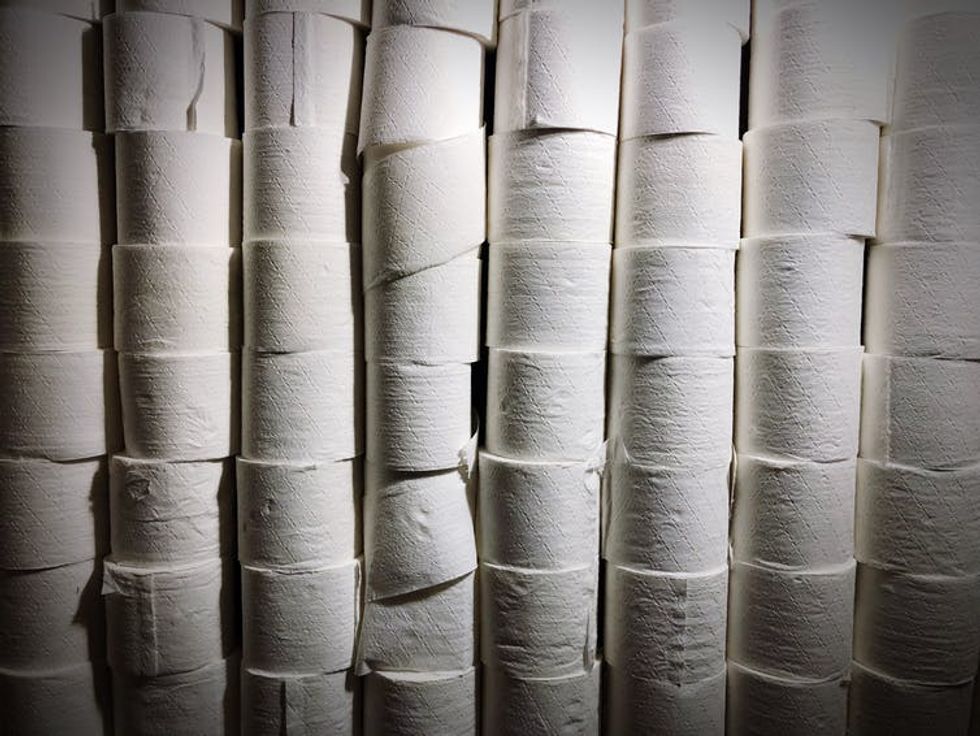
Food and toilet paper have more in common than you think.
Rodney Stubina/EyeEm/Getty Images
A tale of two supply chains
Surprisingly, the supply chain for food bears a striking similarity to that of another product that has experienced shortages: toilet paper.
Like the toilet paper market, the food industry has two separate supply chains for consumer and commercial use. On the consumer side are grocery and convenience stores that focus on small purchases. The commercial side represents restaurants and institutions such as schools, prisons, hospitals and corporate cafeterias that purchase large quantities of foods in bulk. Ultimately, commercial institutions purchase in sizes that exceed the storage capacity of most households and food pantries.
While the commercial and the consumer supply chains are different, there are some commonalities: Both are complex, cover long distances and rely on just-in-time production. Both are also increasingly concentrated, meaning that there are only a few companies between farmers and consumers that process and distribute raw agricultural goods into edible food. For example, on the commercial side, Sysco and U.S. Foods control an estimated 75% of the market for food distribution.
These characteristics make the supply chains more vulnerable to disruptions.
Meat plant closures has created a bottleneck for processing.
AP Photo/Charlie Neibergall
Where the supply chains diverge
To understand why this food can’t readily be diverted to consumers, let’s take a closer look at the supply chains for meat, vegetables and milk. With each category, there are different reasons.
Vegetable farmers, for example, have a lot of crops growing in their fields intended for commercial buyers like schools, restaurants and cruise lines, which are no longer purchasing these products.
But a worseninglabor shortage makes it a lot harder to harvest or pick their crops and package them for consumers.
So a combination of plunging commercial demand, not enough low-wage yet skilled laborers, falling prices and a short window in which to pick vegetables means it has become cheaper to simply let them rot in the fields.
As for meat, restaurants typically order larger cuts and use more of the pricier parts like tenderloins. In contrast, much of the meat purchased on the consumer side is sold in “case-ready” packages, and ground beef is far more common.
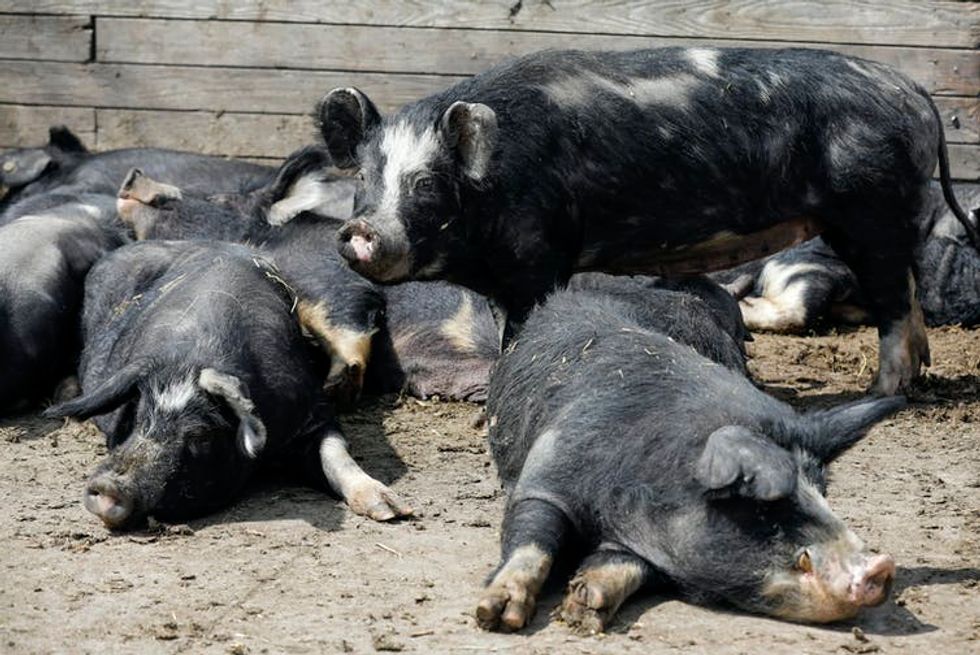
So in general, commercial buyers tend to buy parts of the cow or pig that consumers simply don’t prepare at home. But what’s more, meat plant closures due to COVID-19 outbreaks are creating a bottleneck for slaughtering and processing animals, which also have a short window before they’re past their prime. As a result, producers, particularly pork farmers, are debating whether to feed and care for their animals past their prime or simply euthanize them.
Milk is even more complicated when it comes to how it flows along the food chain.
First, there’s no stopping cows giving milk; udders that are full must be emptied daily. The only question is where that milk will go.
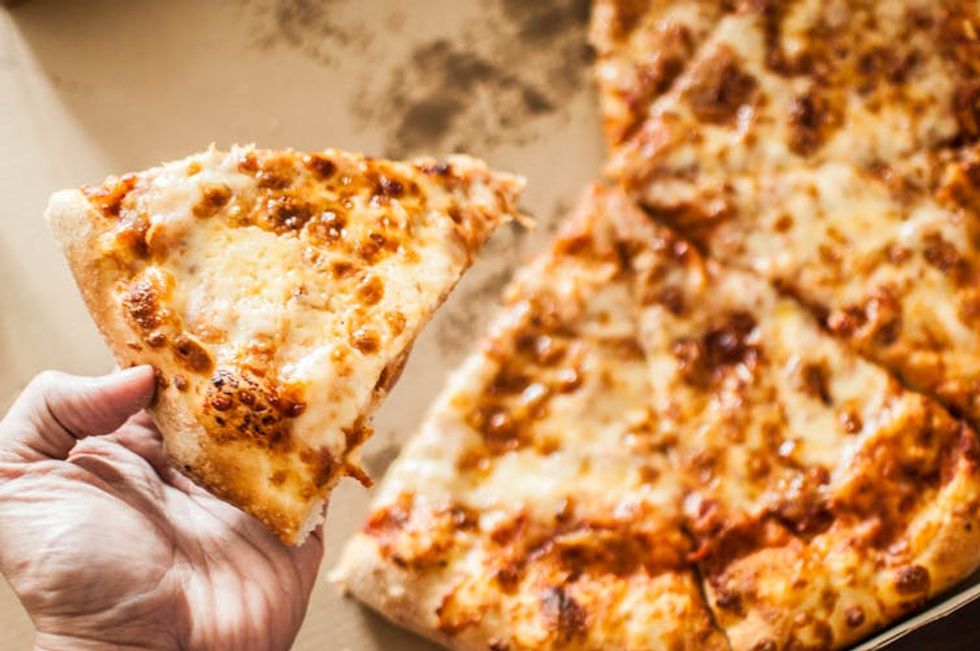
Restaurants and organizations like schools purchase nearly half of all milk, butter and other dairy products processed in the U.S. Pizzerias alone take nearly a quarter of all U.S. cheese production.
With many of these customers closed or cutting their purchases, there’s lots of excess milk. Unfortunately, processors do not have the equipment to package that milk into smaller containers for grocery stories and retail use.
As for converting more milk into dairy products with longer shelf lives like cheese, there was already a glut of mozzarella and other cheese plugging up cold storage space. And despite a rise in takeout pizza, overall demand for cheese has “dropped like a rock,” according to trade industry sources.
That has left dairy farmers with little choice but to dump excess milk into manure ponds and ditches.
A quarter of all cheese makes its way to a pizza.
Karl Tapales/Getty Images
A longer-term problem
Many states are working on short-term solutions to bridge the gap between the two supply chains.
Nebraska is temporarily allowing restaurants to sell unlabeled packaged foods to customers, Texas is pushing restaurants to prepare food care packages for at-risk families, and many other states have changed their health regulations to allow restaurants to repackage products into smaller quantities to sell to the public.
In addition, the U.S. Department of Agriculture plans to begin purchasing US$3 billion in fresh produce, dairy and meat to support farmers and eventually distribute it to food pantries and other organizations feeding Americans in need.
Although helpful in the short term, we believe a longer-term problem that needs to be addressed is how concentrated food supply chains have become, which has made them less nimble in adapting to disruptions like a health pandemic.
The new coronavirus pandemic could severely disrupt access to anti-malaria nets and drugs in sub-Saharan Africa, the World Health Organization said Thursday, warning that malaria deaths risked doubling if efforts are not urgently scaled up.
The UN health agency called on countries in sub-Saharan Africa, where nearly 95 percent of all the world's malaria cases and deaths occur, to rapidly distribute malaria prevention and treatment tools now, before they become too overwhelmed with novel coronavirus cases.
"Severe disruptions to insecticide-treated net campaigns and access to antimalarial medicines could lead to a doubling in the number of malaria deaths in sub-Saharan Africa this year compared to 2018," the WHO warned, citing new modelling analysis.
The analysis, it said, considers nine scenarios for potential disruptions in access to core malaria control tools during the pandemic across 41 countries, and the resulting possible increases in cases and deaths.
Under the worst-case scenario, in which all campaigns to distribute insecticide-treated nets are suspended and there is a 75-percent reduction in access to effective antimalarial medicines, "the estimated tally of malaria deaths in sub-Saharan Africa in 2020 would reach 769,000," WHO said.
That is twice the number of deaths reported in the region in 2018, it stressed, adding that such an increase would mean returning to malaria mortality levels not seen in two decades.
The hike would have particularly dire consequences for young children, with those under five making up more than two-thirds of all malaria deaths in 2018.
- 'Critical window' -
WHO stressed that so far, sub-Saharan African countries had reported relatively few cases in the COVID-19 pandemic, which has killed more than 180,000 people globally and infected more than 2.6 million.
But the agency, which has long warned that weak health systems in the region risked becoming seriously overwhelmed as cases increase, said the disease was picking up pace there.
"This means that countries across the region have a critical window of opportunity to minimise disruptions in malaria prevention and treatment and save lives at this stage of the COVID-19 outbreak," it said.
"Mass vector control campaigns should be accelerated, ensuring protection for both health workers and communities against COVID-19 transmission," it said.
In a separate statement Thursday, the WHO also reiterated its call to maintain immunisation services worldwide to ensure the measures taken to halt the pandemic do not end up sparking a resurgence of vaccine-preventable diseases like measles and polio.
"While the world strives to develop a new vaccine for COVID-19 at record speed, we must not risk losing the fight to protect everyone, everywhere against vaccine-preventable diseases," WHO chief Tedros Adhanom Ghebreyesus said in the statement.
"These diseases will come roaring back if we do not vaccinate."
Oxford University is launching a human trial of a potential coronavirus vaccine, with the daunting aim of making a successful jab available to the public later this year.
Of the more than 100 research projects around the world to find a vaccine -- described by the United Nations as the only route back to "normality" -- seven are currently in clinical trials, according to the London School of Hygiene and Tropical Medicine.
Such trials are already underway in China and the United States and are due to begin at the end of this month in Germany, where the federal vaccine authority gave the green light on Wednesday.
The British government strongly supports Oxford University's work, and the first human trials were to start on Thursday, Health Minister Matt Hancock said.
He hailed the "promising development", pointing out that it would normally take "years" to reach such a stage of vaccine development.
In its first phase, half of 1,112 volunteers will receive the potential vaccine against COVID-19, the other half a control vaccine to test its safety and efficacy.
The volunteers are aged between 18 and 55, are in good health, have not tested positive for COVID-19 and are not pregnant or breastfeeding.
Ten participants will receive two doses of the experimental vaccine, four weeks apart.
Professor Sarah Gilbert's team hopes for an 80 percent success rate, and plans to produce one million doses by September, with the aim of making it widely available by the autumn if successful.
But the teams carrying out this research say on their website that this timetable is "highly ambitious" and could change.
The government's chief medical officer Chris Whitty acknowledged on Wednesday that the likelihood of getting a vaccine within the year was "incredibly small".
"If people are hoping it's suddenly going to move from where we are in lockdown to where suddenly into everything is gone, that is a wholly unrealistic expectation," he warned.
- Financial gamble -
The strategy of not waiting for each step to be completed before launching production is a financial "gamble", according to Nicola Stonehouse, professor of molecular virology at the University of Leeds.
But the current crisis makes it a necessary gamble, she told AFP.
The Oxford vaccine is based on a chimpanzee adenovirus, which is modified to produce proteins in human cells that are also produced by COVID-19.
It is hoped the vaccine will teach the body's immune system to then recognise the protein and help stop the coronavirus from entering human cells.
The adenovirus vaccine is known to develop a strong immune response with a single dose and is not a replicating virus, so cannot cause infection, making it safer for children, the elderly and patients with underlying diseases such as diabetes.
The government, under fire in the media over its handling of the crisis, set up a task force last weekend to coordinate research efforts and to develop capability to mass-produce a vaccine as soon as it is available, wherever it comes from.
It is also supporting research at Imperial College London, which hopes to start clinical trials in June.
Their research focuses on a vaccine exploiting a different principle, using RNA, the messenger molecules that build proteins in the cells, to stimulate the immune system.
Finding a vaccine is the only possible way to bring the world back to "normality", UN Secretary-General Antonio Guterres warned last week, calling for an acceleration of projects.
The UN on Monday adopted a resolution calling for "equitable, effective and rapid" access to a possible vaccine.
A pharmaceutical maker jacked up the cost of its only FDA-approved drug immediately after asking the federal government to expand its use as a coronavirus treatment.
Jaguar Health more than tripled the price of the antidiarrheal medication Mystesi shortly after asking the Food and Drug Administration to authorize emergency use for COVID-19 patients, reported Axios.
The list price of a 60-pill bottle of Mytesi was $668.52 going into this year, but on April 9 the company hiked the cost to $2,206.52.
Jaguar Health had asked the FDA on March 21 to approve the drug, which is typically prescribed to HIV/AIDS patients who are on antiretroviral drugs, for coronavirus patients suffering from diarrhea associated with certain antiviral treatments.
The FDA denied the request April 7 for unspecified reasons, but Jaguar Health remains in discussions with the National Institute of Allergy and Infectious Diseases about evaluating the drug's effectiveness against the coronavirus.
The company's CEO told Axios that Jaguar Health decided to raise the cost in December because it was losing too much money, and she insisted the cost increase would have been held off if the FDA had approved it for emergency use.
However, CEO Lisa Conte admitted the cost "likely" would have jumped after the emergency use period lapsed.
Nobel Prize-winning economist Paul Romer told CNN's John Berman on Thursday that there is absolutely no reason that the United States cannot produce a sufficient number of COVID-19 testing kits needed to safely reopen the American economy.
While appearing on CNN, Romer explained the need to develop a mass testing program for the country as a key measure to control the disease.
"We need to test everybody because then everybody will have the information they need to be safe," he said. "Am I at risk of infecting my children or my colleagues? Are my colleagues at risk of infecting me? If we knew who was infected, then we take the protections to stop the spread of the virus."
Romer then challenged President Donald Trump's assertion that we can't manufacture enough tests to handle the crisis.
"I personally am advocating for 30 million tests a day, not a week," he said. "Let's think about whether that's feasible. This nation produces 350 million cans of soda every day. If we can produce 350 million cans worth of soda a day, we can produce 30 million tests a day."
President Donald Trump's erratic response to the COVID-19 pandemic has unnerved the United States' European allies, as they are no longer looking to America for leadership amid a global crisis.
In interviews with the New York Times, Europeans said they have been shocked at how poorly the United States has responded to the pandemic, both in terms of lives lost and economic damage.
"We are all stunned," said Henrik Enderlein, president of the Berlin-based Hertie School. "Look at the jobless lines. Twenty-two million."
"I feel a desperate sadness," said Timothy Garton Ash, a professor of European history at Oxford University.
And political scientist Dominique Moïsi tells the Times that the pandemic has exposed major holes in the United States, ranging from a health care system whose high costs have left Americans wary of going to the hospital, as well as having a president who disregards the advice of scientists.
"America has not done badly, it has done exceptionally badly," he said. "It raises the question: Has America become the wrong kind of power with the wrong kind of priorities?"
Italy began conducting antibody tests in one northern region on Thursday seeking information about coronavirus immunity to help guide authorities as they reopen the long locked-down country.
Lombardy, the region hardest-hit by the coronavirus crisis in Europe's worst-affected country, is betting that the science about "herd immunity" derived from the blood tests will help the prosperous industrial region return to work faster and safer.
Nearly 13,000 people have already died of the virus in densely populated Lombardy, whose capital is Milan -- or more than half of Italy’s total dead.
Although Germany has already started nation-wide antibody tests and countries such as Finland and Britain have announced plans to roll them out, many questions remain about how reliable data derived from the tests will be.
Health authorities have said 20,000 tests would be performed every day in Lombardy. First to be tested are those in the worst-hit provinces: health workers, those under quarantine showing coronavirus symptoms and those they have been in contact with, as well as others with mild symptoms.
Authorities hope to roll out the tests to the wider region after April 29.
The head of Italy’s National Health Council, Franco Locatelli, said last month antibody tests would help authorities determine the spread of the coronavirus.
Data would also provide “very relevant information on herd immunity” which would useful in developing strategies to help restart the country, he said, such as who could be allowed to go back to work.
The kits, made by Italian biotech firm DiaSorin, look for the presence of antibodies in the blood. Such antibodies indicate that the person has been exposed to the virus, pointing to some level of immunity.
They differ from the more common swab tests, which test molecules from nasal secretions to determine whether a person currently has the virus.
Lombardy's swab testing has revealed that 24 percent of those tested have the virus.
- Risks remain -
Immunity to the virus is little understood and hopes about its efficacy possibly exaggerated. Lacking data, virologists and epidemiologists must extrapolate information from past coronaviruses to make predictions.
Experts believe at least 60 to 70 percent of a population must be immune to the virus in order to gradually wipe it out. But recent studies, such as one conducted in March and April by France's Institut Pasteur, have found that so-called "herd immunity" was harder to attain than believed.
At a high school in the Oise department, site of one of the country's first outbreaks, researchers found only 26 percent of students, teachers and their families carried antibodies.
Moreover, it is not known for how long immunity to coronavirus lasts, meaning there is a risk those deemed "immune" may be re-infected and pass along the virus to others.
In the 2002-2003 Sars epidemic, those who had contracted the virus but recovered were immune for two to three years on average, according to Francois Balloux, director of the Genetics Institute at London's University College.
"One can certainly get reinfected but the question is, after how much time? We won't know until retroactively," Balloux told AFP.
Even more risky, a person who has developed antibodies can still carry traces of the virus, and thus be contagious. Therefore, experts such as Italy's Locatelli say antibody tests should be accompanied by swab testing.
Immunologist Jean-Francois Delfraissy, who heads France's scientific council formed to fight coronavirus, said many doubts remain.
"We're currently asking the question whether someone who has had COVID-19 ... is as protected as we think," said Delfraissy.
Scientists must wait until more reliable data is available, said Saad Omer, director of the Yale Institute for Global Health.
"It's too premature," Omer told AFP. "We should be able to get clearer data very quickly -- in a couple of months -- when there will be reliable antibody tests with sensitivity and specificity."
MSNBC's Joe Scarborough unleashed a furious tirade against President Donald Trump on Thursday after watching footage of the president claiming that it was possible that the coronavirus would simply disappear by the fall.
The "Morning Joe" host said that Trump's rosy predictions about the virus were similar to the ones he made earlier this year when he claimed that the virus would "disappear" in April.
"This is not breaking news!" Scarborough yelled. "How could the president not learn from his mistakes and still ignore his doctors, when every medical person will tell you, the pandemic could be the worst -- the worst! -- during flu season?!"
Scarborough then recounted how the president earlier this year had plenty of warnings about the spread of the disease, but he ignored them in favor of magical thinking about miracle cures.
"Everybody in his administration that this was coming!" he fumed. "Even [trade adviser Peter] Navarro warned him, 500,000 people could die. The president ignored it! He didn't prepare! 50,000 people are dead now because of it, right? He didn't prepare. There should have been a lot less people dead!"
Dr. Rick Bright has retained an attorney and will be filing a whistleblower complaint after the Trump administration fired him from his position as head of the federal agency charged with developing a COVID-19 vaccine. Dr. Bright was moved to a different agency with a narrower focus after he raised concerns over President Donald Trump's obsession with promoting hydroxychloroquine, a malaria drug recent studies found doubles the death rate in coronavirus patients.
"The Administration’s removal of Dr. Bright from his position as director of BARDA is retaliation plain and simple," Bright's attorneys, Debra Katz and Lisa Banks, said in a statement, CNNWhite House Correspondent Jeremy Diamond reports.
"The results from the Administration’s refusal to listen to the experts and to sideline those like Dr. Bright who point out any errors in the government’s response will continue to be catastrophic for the American people," Bright's attorneys add. "We will request that the Office of Special Counsel seek a stay of Dr. Bright’s termination and that Dr. Bright be permitted to remain in his position pending the OSC and IG’s investigation of this unlawful forced transfer."
Dr. Bright says he was removed "in response to my insistence that the government invest the billions of dollars allocated by Congress to address the Covid-19 pandemic into safe and scientifically vetted solutions, and not in drugs, vaccines and other technologies that lack scientific merit.”
“I am speaking out because to combat this deadly virus, science — not politics or cronyism — has to lead the way.”
Dr. Bright has spent his entire career developing vaccines.
Harvard University said Wednesday it would not take millions of dollars it received from a coronavirus relief fund, following a backlash led by President Donald Trump.
Harvard, the globe's wealthiest university, was allocated $8.6 million under the federal CARES Act, a government stimulus package meant to cushion the US economy from the COVID-19 fallout.
On Tuesday, Trump called on the Massachusetts-based university to pay the money back, saying it was intended "for workers" and not for "one of the richest institutions" in the world.
Harvard later said 100 percent of the funds would be given to students "facing urgent financial needs due to the COVID-19 pandemic."
But on Wednesday, it announced that it would not take the money after all.
"Harvard has decided not to seek or accept the funds allocated to it by statute," it said in a statement.
"We will inform the Department of Education of our decision and encourage the department to act swiftly to reallocate resources previously allocated to Harvard."
Harvard added that it "remains fully committed to providing the financial support that it has promised to its students."
The university had been under fire over the funds, even before Trump's comments.
"The last time Harvard got this much money out of the blue, they had to accept Jared Kushner," joked Comedy Central's The Daily Show on Twitter, referring to Trump's son-in-law, on Monday.
The Department of Education was to receive $30.8 billion to support schools and universities, which are closed across the country, under the $2.2 trillion stimulus package passed last month.
The Harvard Crimson reported Tuesday that the university's endowment, the largest of any in the world, was last valued in 2019 at $40.9 billion -- though it cited administrators as saying that may have declined to the "mid 30-billion range" as a result of the pandemic.
The coronavirus is hitting the United States' largest Native American territory hard, with a spike in cases bringing long-standing disparities to the fore in a land marked by the trauma of past waves of disease.
With its towering sandstone mesas, majestic canyons and ancient ruins, the Navajo Nation is home to about 175,000 people in an area that straddles three southwestern states and is roughly the size of Scotland.
The reservation saw its first COVID-19 case on March 17 and the number has since exploded to 1,206 -- a per capita infection rate just behind the worst-hit states of New York and New Jersey.
Overall deaths remain relatively low right now at 48, but that figure is expected to increase in the coming weeks as the disease takes its toll on those who are seriously ill.
Officials and experts cite a range of factors, from chronic underfunding of the medical system that caters to Native Americans, to poor phone and internet connectivity exacerbating information gaps.
One of the starkest reasons: A lack of access to the running water health authorities have repeatedly stressed is necessary to keep the virus at bay through hand washing.
Up to "30 percent of our citizens do not have access to running water and have to haul water from 20 to 30 miles away for their drinking water and livestock," Navajo Nation President Jonathan Nez told AFP.
"Right here in the middle of the most powerful nation, the United States of America, our citizens don't have the luxury of turning on a faucet to wash your hands with soap and water."
GETTY IMAGES NORTH AMERICA/AFP/File / SPENCER PLATT A man from the Navajo Nation collects water from a public water pump on June 7, 2019 in the town of Gallup, New Mexico; up to 30 percent of Navajo Nation households dont have clean running water
That's because many native lands were passed over when the US expanded its running water and sanitation infrastructure a century ago, according to a recent report by water nonprofit DigDeep.
Native Americans are also disproportionately affected by poverty-linked health conditions that lead to more serious forms of the COVID-19 illness, such as heart disease and asthma, said Matthew Heinz, a doctor at Tucson Medical Center who has been treating members of the Apache and Tohono O'odham tribes.
In particular, they have a greater chance of having diabetes than any other US racial group, according to the Centers for Disease Control and Prevention -- a factor that has been linked to an abnormal and often deadly autoimmune response in coronavirus patients.
- Promises broken -
AFP/File / MLADEN ANTONOV Rock formations are seen behind the American flag at Gouldings Lodge and Trading Post in Monument Valley Navajo Tribal park, Utah, in 2014
The Navajo Nation was established by a treaty in 1868, after its inhabitants, who also call themselves "Dine," returned to the ancestral land they were forcibly deported from four years earlier.
Like other Native American peoples, they gave up enormous tracts in land in exchange for federally supported free health care and education in perpetuity, said Allison Barlow, director of the Johns Hopkins Center for American Indian Health.
It's a promise that's never been adequately fulfilled.
A case in point: there are only 12 health care facilities across the Nation's 27,000 square miles (70,000 square kilometers).
The Indian Health Service which provides care is also dramatically under-resourced.
"The IHS average per capita spending per user today is $3,333 compared to $12,744 for Medicare (a state program for the elderly) and $9,404 for veterans' medical spending," said Barlow.
Congress has earmarked substantial relief for the tribes hit by the pandemic, with $8 billion to be released soon, "but the challenge now is to be able to spend it on what is needed, given the global shortages in supply of health care equipment and personnel," she added.
- Spotlight -
AFP/File / Eric BARADAT The sun rises over the Monument Valley in April, 2018
Another challenge: the Navajo often live in overcrowded conditions with multiple generations of family members living under one roof.
"Here, we have not just our immediate family, not just our extended family," explained Nez. "We have a clan family."
With the tribe's language endangered, elders are held in sacred esteem adding to psychological stress over fears of losing them.
Native Americans have borne the brunt of past pandemics -- the group's mortality rate during the H1N1 (swine flu) pandemic of 2009 was four times higher than all other racial categories combined, a CDC report found.
Entire communities were likewise decimated by the Spanish flu of 1918.
Since the arrival of the first European conquistadors, "they have experienced waves of decimation from 'novel viruses,' some systematically used by the colonists as germ warfare to wipe out their peoples," said Barlow.
Her organization and other non-profits are stepping in to help fill the resource gap by improving local health facilities and delivering care packages to those in need, as well as vital Personal Protective Equipment.
For Nez, the increased attention during this crisis is long overdue.
"We are the first citizens of this country, but usually we would be ignored," he said, adding that his sovereign nation was open to working with other countries.







 GETTY IMAGES NORTH AMERICA/AFP/File / SPENCER PLATT
  AFP/File / MLADEN ANTONOV
  AFP/File / Eric BARADAT