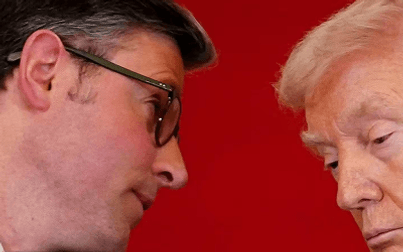
Donald Trump speaks in the Oval Office. REUTERS/Evelyn Hockstein

New reporting shows how President Donald Trump ignored explicit warnings about attacking Iran, briefly basked in adulation at its initial success and then privately stewed as those gloomy projections came to pass.
Days before launching the war with Iran in February, the president summoned then-Director of National Intelligence Tulsi Gabbard to the Oval Office to ask whether a full-scale attack was wise, according to a Wall Street Journal report drawing on accounts from people familiar with the meeting.
Gabbard warned him that killing Iran's supreme leader would likely install a more hard-line regime open to pursuing nuclear weapons, motivate Tehran to close the Strait of Hormuz and lead to military strikes on U.S. forces and partners in the region. Top military leaders separately warned of casualties, strained weapons stockpiles and readiness problems.
Trump ordered the attack anyway on Feb. 28, urging Iranians to overthrow their government and predicting the war would end within six weeks. Nearly six months later, it continues with no resolution, and the since-departed Gabbard's warnings have largely come to pass, as Iran's Revolutionary Guard Corps now controls the country and fires on ships traversing the Strait of Hormuz under a new supreme leader, Mojtaba Khamenei.
Vice President JD Vance reportedly urged a diplomacy-first approach, arguing Iran's collapsing economy made negotiations less risky than war.
Trump instead was swayed by Pentagon officials, including Defense Secretary Pete Hegseth and Joint Chiefs Chairman Gen. Dan Caine, who pitched "decisive" strike options and dismissed the warnings, telling Trump they would "navigate any complications."
The Journal's reporting also describes the mood swings that followed.
When Israel killed Iran's supreme leader Ali Khamenei on the war's opening night, Trump was at a Mar-a-Lago fundraiser and had the news announced to applauding guests, "soaking in the praise" with his arms crossed and chest puffed out, according to people familiar with the event.
That triumph faded as battlefield losses mounted, oil markets spiraled after Iran shut the strait, and Gulf leaders and Republican lawmakers pressed the White House to end the fighting.
Trump "privately fumed" at the backlash, officials said, and by mid-April reportedly asked a friend whether he should "bomb the s—" out of Iran, but the friend talked him out of it.
A June 17 interim deal to reopen the strait came after internal polling showed nearly 80 percent of Americans wanted the war over "no matter its contents." Iran resumed strikes on shipping soon after, which Trump considered a betrayal.
In late July, he ordered what he called the biggest assault since World War II, then pulled back under pressure from regional leaders.
With nuclear talks now lapsed, the administration has pivoted to an economic-pressure campaign, "Operation Economic Outcast," aimed at collapsing Iran's regime.
"This was all predictable and predicted," said Eric Brewer of the Nuclear Threat Initiative.
A White House spokeswoman stated Trump "will never allow Iran to have a nuclear weapon."
Report typos and corrections to corrections@rawstory.com.
For customer support contact support@rawstory.com.