Zebrafish are a scientist’s favorite for early-stage research – especially to study human blood disorders
In the Espín Lab at Iowa State University, we study the early stages of blood development, particularly the birth of blood stem cells, which happens only once during embryonic development. We focus on a specific set of genes that play a significant but somewhat elusive role in the molecular pathways involved in this process. Although we want to understand how these genes work in the context of human blood development, testing on human embryos is obviously ethically impossible. To circumvent these challenges, we use zebrafish instead.

The National Institute of Child Health and Human Development houses the largest zebrafish facility in the U.S. Each tank contains live zebrafish used in research. Ernesto del Aguila III/NHGRI via Flickr
Zebrafish as a model organism
Zebrafish have several traits that make them excellent model organisms.
For one, one female zebrafish can produce hundreds of embryos per week. This is important to scientists because having larger sample numbers strengthens the accuracy of the data they collect in their experiments.
Zebrafish embryos are also able to develop quickly. One day of development in zebrafish is equivalent to approximately 90 days of human development. This means that researchers can save time and observe the different stages of development much sooner than with other organisms.
This time-lapse video shows the first 22 hours of zebrafish development after fertilization, with blood vessels labeled green. Blood has already formed at this stage of development.
Another useful quality of zebrafish is that they are translucent during early development. As soon as their embryos are fertilized, scientists can observe cells and tissues form and clearly see the effects of modifying different genes.
Perhaps the most important feature of zebrafish for scientists is their genetic makeup. Approximately 70% of zebrafish genes have similar analogs in people, allowing researchers to study how certain genes work.
Studying blood disorders with zebrafish
Beyond sharing a significant percentage of genes with people, zebrafish are especially useful to blood development research because they produce the same types of blood cells. Just like people, zebrafish have erythroid, lymphoid and myeloid cell types that are responsible for numerous roles in the body, like circulating oxygen and regulating inflammation and immunity. Mature blood cells are derived from blood stem cells. Therefore, studying how these stem cells are made would aid in developing treatment for numerous blood disorders that rely on blood stem cell therapies, such as leukemia, lymphoma and anemia.
Labs like ours use zebrafish to study how specific cell signaling pathways contribute to the birth, development and maturation of these blood stem cells. This knowledge provides context for how healthy cells work and communicate, because cells rely on signals from other cells to know which genes they need to turn on to produce specific proteins and molecules.
For example, we have previously shown how inflammatory signaling pathways are needed for zebrafish to properly develop the hematopoietic stem cells that produce multiple kinds of blood cells. We are currently exploring how these inflammatory pathways produce human blood stem cells. While most cells receive certain signals that trigger them to express certain genes, stem cells are capable of developing into multiple types of cells in an organism. Stem cells are undifferentiated, meaning that they are not yet limited to expressing or following only certain parts of the DNA like more mature, differentiated cells.

This image shows blood cells (magenta) in blood vessels (yellow) on the yolk of a 2-day-old zebrafish embryo, which is roughly the size of a grain of rice. Daniel Castranova/National Institute of Child Health and Human Development, NIH via Flickr
For patients with blood-related disorders like leukemia, there are currently limited treatment options. Bone marrow transplants are among these options. But there is a shortage of matching donors, and the procedure can be risky because of graft-versus-host disease, in which the donor’s healthy immune cells attack the recipient’s body cells.
A possible solution is to use a special kind of stem cell called an induced pluripotent stem cell. To make these cells, scientists use a special set of proteins called Yamanaka factors to turn on specific genes that revert a mature, differentiated cell into an immature, undifferentiated cell. From this point, the cells can be manipulated to express certain genes at specific times, told which part of their DNA to read or which signals to follow.
However, to properly direct these stem cells, researchers need a more complete understanding of the molecular signals involved and how they contribute to early blood development. To bridge these gaps, labs like ours rely on zebrafish to test their theories about the roles that certain genes and proteins play in development.
Model organisms like zebrafish are what allow scientists to get one step closer to solving real-world problems every day.
Gabrielle Dubansky, Master's Candidate in Molecular, Cellular and Developmental Biology, Iowa State University and Raquel Espín-Palazón, Assistant Professor of Genetics, Development and Cell Biology, Iowa State University
This article is republished from The Conversation under a Creative Commons license. Read the original article.





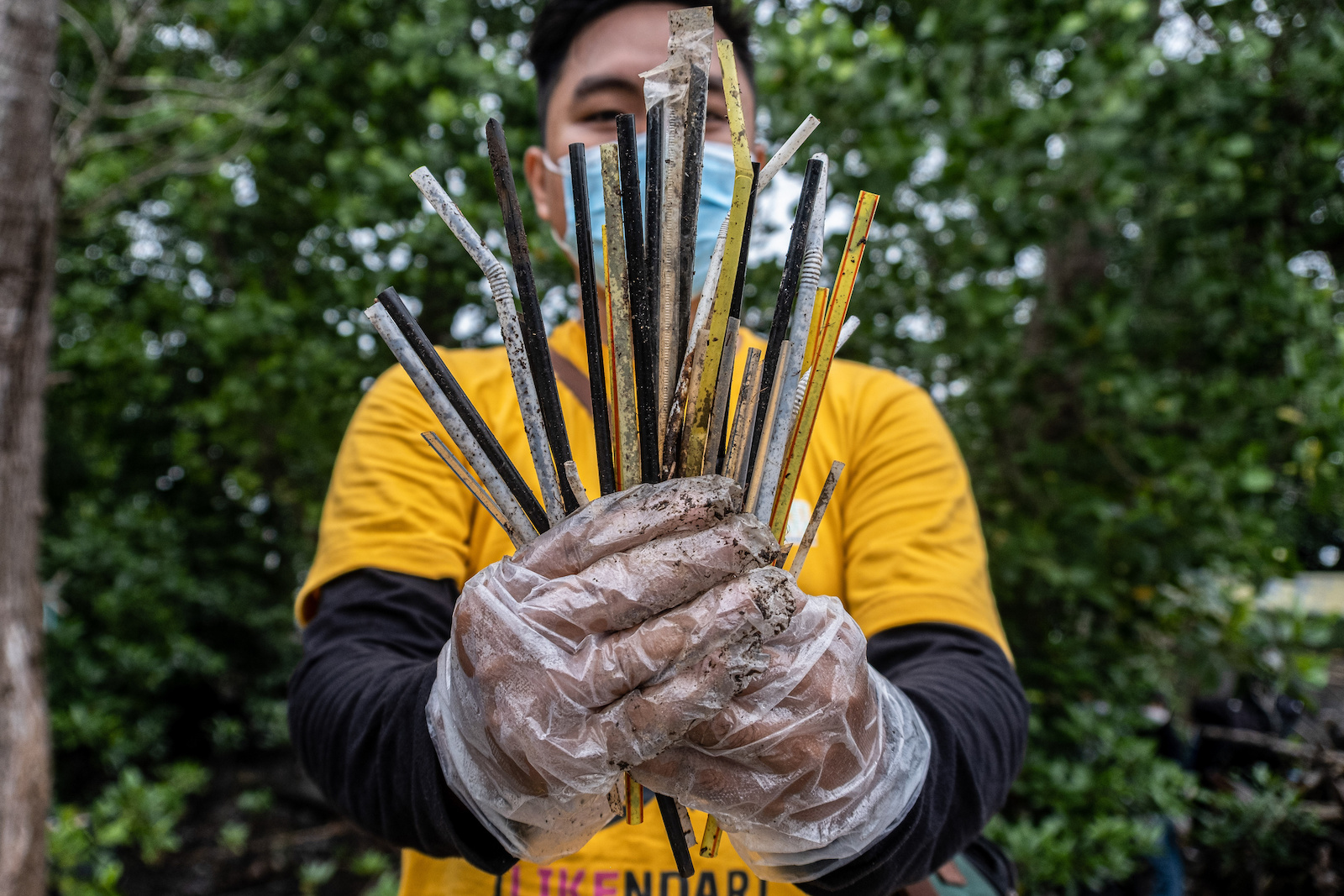 A volunteer holds plastic straws picked during the World Clean-Up day activity in Kendari, Indonesia.
Andry Denisah / SOPA Images / LightRocket via Getty Images
A volunteer holds plastic straws picked during the World Clean-Up day activity in Kendari, Indonesia.
Andry Denisah / SOPA Images / LightRocket via Getty Images Milo Cress, founder of the Be Straw Free campaign, photographed in Niwot, Colorado on August 7, 2012.
Mark Leffingwell / MediaNews Group / Boulder Daily Camera via Getty Images
Milo Cress, founder of the Be Straw Free campaign, photographed in Niwot, Colorado on August 7, 2012.
Mark Leffingwell / MediaNews Group / Boulder Daily Camera via Getty Images A flat, plastic lid that does not need a straw is shown on a cup of Starbucks iced tea on July 9, 2018 in Sausalito, California.
Justin Sullivan / Getty Images
A flat, plastic lid that does not need a straw is shown on a cup of Starbucks iced tea on July 9, 2018 in Sausalito, California.
Justin Sullivan / Getty Images San Francisco’s Boba Guys tests alternatives to plastic straws made of metal, bamboo, and reusable plastic ahead of a 2018 vote that would ban plastic straws in the city.
Carlos Avila Gonzalez/The San Francisco Chronicle via Getty Images
San Francisco’s Boba Guys tests alternatives to plastic straws made of metal, bamboo, and reusable plastic ahead of a 2018 vote that would ban plastic straws in the city.
Carlos Avila Gonzalez/The San Francisco Chronicle via Getty Images A plastic straw and lid is among the trash washed up on a beach in Santa Monica, California.
Citizen of the Planet / Education Images / Universal Images Group via Getty Images
A plastic straw and lid is among the trash washed up on a beach in Santa Monica, California.
Citizen of the Planet / Education Images / Universal Images Group via Getty Images Shoppers leave excess packaging at the entrance to a Brussels supermarket as part of a “plastic attack” designed to to emphasize the over-usage of plastic in supermarkets.
NICOLAS MAETERLINCK / AFP via Getty Images
Shoppers leave excess packaging at the entrance to a Brussels supermarket as part of a “plastic attack” designed to to emphasize the over-usage of plastic in supermarkets.
NICOLAS MAETERLINCK / AFP via Getty Images