A new study in Personality and Individual Differences sheds light on who is vulnerable to fake news and what can be done to help people falling for it. The findings indicate that those with more schizotypal, paranoid, and histrionic personality traits tend to have trouble detecting fake news. In addition, these individuals suffered more anxiety and engaged in more cognitive biases. Study authors Alex Escola-Gascon and colleagues recommend combating the Barnum Effect and teaching critical thinking skills to buffer against vulnerability to fake news effectively. Challenges in critical thinking l...
A series of three studies showed that, when facing uncertainty, women become more attracted to men with tougher facial features. Under same conditions, men are more attracted to women with more tender facial features. The study was published in the European Journal of Social Psychology. From pandemics to financial crisis and political revolutions, uncertainty is a fundamental aspect of human life. Researchers distinguish between aleatory uncertainty (uncertainty due to random and unpredictable nature of life events) and epistemic uncertainty (lack of confidence in one’s knowledge). People tend...
One of the fastest growing diet trends has less to do with what you eat or how much, but when you eat. Restricting meal times, a practice sometimes called intermittent fasting or time restricted eating, comes in many forms, but it generally involves limiting when you eat to certain windows.
Intriguingly, fasting isn't merely about weight loss. A great deal of research suggests that this behavior can spur a whole host of health benefits, from improved mental state to more restful sleep. Weight loss, of course, is the benefit often most hyped. The Reddit forum for intermittent fasting, for example, has over 860,000 members, many of which share before and after photos of massive weight loss.
Simply restricting eating to an 8 to 10 hour window can change the way our genes express themselves, which has broad implications for human health.
But while intermittent fasting has been linked to a myriad of health benefits, researchers still have many questions about it — such as how it compares to counting calories, how different populations respond, even some fundamental questions about safety and side effects. One of the biggest questions is how it works. On a molecular level, why does changing the times we eat seem to have such a dramatic effect on our bodies?
Dr. Satchidananda Panda, a biology professor at the Salk Institute for Biological Studies, has spent considerable time researching the underlying mechanisms of intermittent fasting. He says simply restricting eating to an 8 to 10 hour window can change the way our genes express themselves, which has broad implications for human health.
In a recent study in the journal Cell Metabolism, Panda and his colleagues gave two groups of young, male mice the same obesogenic diet, meaning it was high in sugar and fat. One group was permitted ad libitum feeding, which is eating whenever they wanted. The other group could only eat during restricted hours, a form of intermittent fasting called time restricted feeding.
The difference between time restricted feeding and intermittent fasting is that people who do intermittent fasting are also counting calories. With time restricted feeding, you can generally eat whatever and as much as you want, just sticking between those 8 to 10 hours. In the experiment, the mice on the ad libitum schedule gained weight and experienced metabolic dysfunction, whereas the mice on time restricted feeding did not. This is remarkable given they were both on the same diet.
Next, Panda and his colleagues analyzed the organs of the mice, looking for genetic changes in 22 different organ and brain regions, screening for more than 21,000 genes from over 1,000 samples. Importantly, they took samples at different periods throughout the day and night. Gene expression can change throughout the day, depending on their function.
"Our genes are not static. So you just can't look at one time one morning or evening and figure out what's going on," Panda told Salon. "To our surprise, we found that almost every organ that we looked at experienced a huge impact from time restricted eating."
More than 80 percent of the organs looked at had some level of change in the genes that code for proteins, which means time restricted feeding could alter metabolic efficiency. In simpler terms, constraining the time when you eat could make the entire way your body processes energy more flexible, which translates into other health benefits.
On the surface, this isn't an entirely surprising result. Intermittent fasting has previously been linked to improved liver function, insulin sensitivity and even hormone regulation. It seems to have a broad effect across many different systems in the body, but some of these organs, especially the brain, have been looked at a lot less than others.
"We are seeing a signature of gene expression changes that are indicating that people who have chronic kidney disease may benefit from this."
Of course, this research was in mice, and only male mice to boot. This may not translate directly to humans. But the research provides a "transcriptome map" which gives researchers a good idea of where to start looking next when researching intermittent fasting. Potential targets include metabolic disorders, neurodegenerative diseases and cancer.
"I think this is a good blueprint for what diseases can be treated," Panda said. "This study is giving us clues, for example, in the kidney. We are seeing a signature of gene expression changes that are indicating that people who have chronic kidney disease may benefit from this."
Panda has studied the effects of intermittent fasting in humans as well, such as an experiment with 15 Australian men with obesity who were kept on a time restricted diet for eight weeks.
"We took their biopsy. A little bit of belly fat was taken out, almost like a mini liposuction," Panda explained. "What we found were good changes in gene expression in these individuals which now gives us some idea what to expect when people with obesity do time restricted eating."
"Our adipose tissue or fat is almost like a hormone-producing organ. It produces a lot of different hormones good and bad," Panda added. "Time restricting actually improves the production of good hormones."
Studying intermittent fasting could also open the door to new therapies, such as drugs designed to target these gene expressions, maybe no time restricting required. Already, drugs that target certain metabolic pathways and can reduce weight in some individuals are becoming all the rage on social media. Semaglutide, also known by the brand names Wegovy or Ozempic, is a diabetes drug sometimes used for weight loss. It's become so popular that it's caused shortages in some areas, encouraging some patients to seek out risky alternatives or attempt brewing it up at home using raw chemicals. It should go without saying you shouldn't try to make your own weight loss drug.
However, the long-term effects of semaglutide for weight aren't well known. Many folks seem to gain back lost weight once they stop taking the drug, which can come with its own set of side effects like indigestion and nausea.
New, more effective medications to meet the demand for treating obesity and diabetes are necessary and studying intermittent fasting could help produce them. This is somewhat how metformin, a commonly prescribed drug for diabetes, was discovered. Although initially synthesized in the 1920s, it wasn't until 1957 that metformin was first used to treat diabetes. The reason for this multi-decade gap is because scientists didn't fully understand the mechanisms it uses to lower blood sugar levels. Unfortunately, despite metformin's widespread usage today, it still comes with some side effects that can be serious, even life-threatening. Alternative drugs would certainly be useful for some people.
But there will be no silver bullet for any of this. Medications or intermittent fasting alone can't form the foundation of a healthy lifestyle, Panda said.
"We have to keep in mind that medication is not going to give us long-term benefits. It will help us to reverse our disease," Panda said. "But to stay healthy for very long term, we have to adopt at least two out of the three foundations of health: that's sleep, exercise and nutrition."
The full extent to which intermittent fasting can help people, or even backfire, is not entirely known. Few things are as complex as how human bodies turn food into energy. More detailed research into how time restricted eating works will help us better understand the ways to make it useful for promoting good health.
NASA is partnering with a Pentagon research agency to develop a nuclear-powered rocket engine in preparation for sending astronauts to Mars.
NASA Administrator Bill Nelson said Tuesday that the US space agency will team up with the Defense Advanced Research Projects Agency (DARPA) to "develop and demonstrate advanced nuclear thermal propulsion technology as soon as 2027."
"With the help of this new technology, astronauts could journey to and from deep space faster than ever –- a major capability to prepare for crewed missions to Mars," Nelson said in a statement.
DARPA is the Pentagon's research and development arm and has played a role in many of the notable innovations of the 20th century including the internet.
NASA said nuclear thermal rockets can be three or more times more efficient than conventional chemical propulsion and would reduce transit time, essential for an eventual mission to Mars.
In a nuclear thermal engine, a fission reactor is used to generate extremely high temperatures.
Heat from the reactor is transferred to liquid propellant which is then converted into gas, which expands through a nozzle and provides thrust.
"DARPA and NASA have a long history of fruitful collaboration," DARPA director Stefanie Tompkins said, citing the Saturn V rocket that took the first astronauts to the Moon.
"The nuclear thermal rocket program will be essential for more efficiently and quickly transporting material to the Moon and, eventually, people to Mars," Tompkins said.
NASA conducted its last nuclear thermal rocket engine tests more than 50 years ago but the program was abandoned due to budget cuts and Cold War tensions.
Declines in populations of big carnivores like lions, tigers and wolves may be driven more by rapid human economic development than habitat loss or climate change, according to a new study Tuesday.
The researchers hope the findings could help to improve policies for protecting carnivore populations, which have been driven to the brink of extinction in many parts of the world.
The study found that faster economic development was linked to a quicker decline in carnivore populations.
"In the midst of rapid development, people appear to become less tolerant of carnivores, conflicts explode, and we suspect that incidences of poaching and persecution rocket," lead author Thomas Johnson said in a press release.
Some carnivores are poached for their meat or for the wildlife trade, while others like lions may be killed if they pose a threat to someone's livelihood -- such as their cattle -- or their life, Johnson told AFP.
"These human elements are actually having a far greater impact than the habitat loss elements," Johnson said.
Traditionally, habitat loss has been considered the primary threat to carnivore populations, but the researchers said that was "dwarfed" by human development.
The study, published in Nature Communications, concluded that as human communities become wealthier and socioeconomic growth slows, carnivore populations can recover.
The authors said this was partly due to better habitat protection, but mainly because people start to care more about the animals and have less of a desire -- and need -- to kill them.
"What you want is this growth to slow before [the carnivore population] completely vanishes, so there's at least an opportunity to recover," Johnson said.
Wolf rebound
Grey wolf populations have already rebounded in Europe, growing 1,800 percent since the 1960s thanks to an improved quality of life and slower economic development on the continent, according to the researchers from the University of Reading.
That recovery is not only happening in protected parks but also in wild areas.
Brown bears and lynxes are also starting to recover in Europe, Johnson said, while tiger populations in India have similarly started to rebound.
But several parts of Africa did not support the overarching findings -- the continent has not seen rapid development but its carnivore populations have declined -- and Johnson said this may be because much of the population decline occurred decades ago under colonial regimes.
The findings present an inherent tension between prioritizing human development versus protecting carnivores, and Johnson suggested that wealthier nations -- responsible for much of large carnivore decline -- could support less developed nations through targeted financial support.
This could include paying communities in biodiversity hotspots enough to earn a living, while promoting conservation.
"If you lock people into poverty, people will never live alongside biodiversity," Johnson said, adding that he hopes policy will move beyond treating carnivore loss as a narrow issue.
"My real hope is we start thinking about this as a socioeconomic problem, as well as an environmental problem."
The work looked at 50 species of carnivores in over 80 countries over the last 50 years.
Carnivore populations have seen dramatic declines globally in the last century, with lions and tigers absent from more than 90 percent of their historic range.
In the United Kingdom, many local carnivore species such as lynx, wolf and bear have already been hunted into extinction.
Egyptian archaeologists said Tuesday they had discovered an 1,800-year-old "complete residential city from the Roman-era" in the heart of the southern city of Luxor.
The city, dating to the second and third centuries, is the "oldest and most important city found on the eastern bank of Luxor," according to Mostafa Waziri, head of Egypt's Supreme Council of Antiquities.
Archaeologists discovered "a number of residential buildings", as well as "two pigeon towers" -- a structure used to house pigeons or doves -- and a "number of metal workshops," Waziri said in a statement.
Inside the workshops, researchers found a collection of pots, tools and "bronze and copper Roman coins."
It is a rare archaeological find in Egypt, where excavations –- including on Luxor's west bank, where the famous Valley of the Queens and Valley of the Kings lie -- are most commonly of temples and tombs.
In April 2021, authorities announced the discovery of a 3,000-year-old "lost golden city" on Luxor's west bank, with the archaeological team calling it "the largest" ancient city ever uncovered in Egypt.
Egypt has unveiled several major archaeological discoveries in recent years.
Critics say the flurry of excavations has prioritized finds shown to grab media attention over hard academic research.
But the discoveries have been a key component of Egypt's attempts to revive its vital tourism industry after years of political unrest, as well as after the Covid pandemic.
The government's plans -- the crowning jewel of which is the long-delayed inauguration of the Grand Egyptian Museum at the foot of the pyramids in Giza -- aim to draw in 30 million tourists a year by 2028, up from 13 million before the pandemic.
The country of 104 million inhabitants is suffering from a severe economic crisis, and Egypt's tourism industry accounts for 10 percent of GDP and some two million jobs.
Researchers at Justus Liebig University Giessen recently investigated the relationship between moralized language used in a tweet and hate speech found in the replies. Their findings indicate that the more moralized words are used in a tweet, the more likely the replies to the tweet will contain hate speech. This research may provide clues to what triggers the expression of hate speech in social media contexts. Before social media, hate speech was usually limited to people one knew or discriminatory acts or words in movies or television shows. Today the act of disparaging fellow humans through...
Cochlear implants are among the most successful neural prostheses on the market. These artificial ears have allowed nearly 1 million people globally with severe to profound hearing loss to either regain access to the sounds around them or experience the sense of hearing for the first time.
However, the effectiveness of cochlear implants varies greatly across users because of a range of factors, such as hearing loss duration and age at implantation. Children who receive implants at a younger age may may be able to acquire auditory skills similar to their peers with natural hearing.
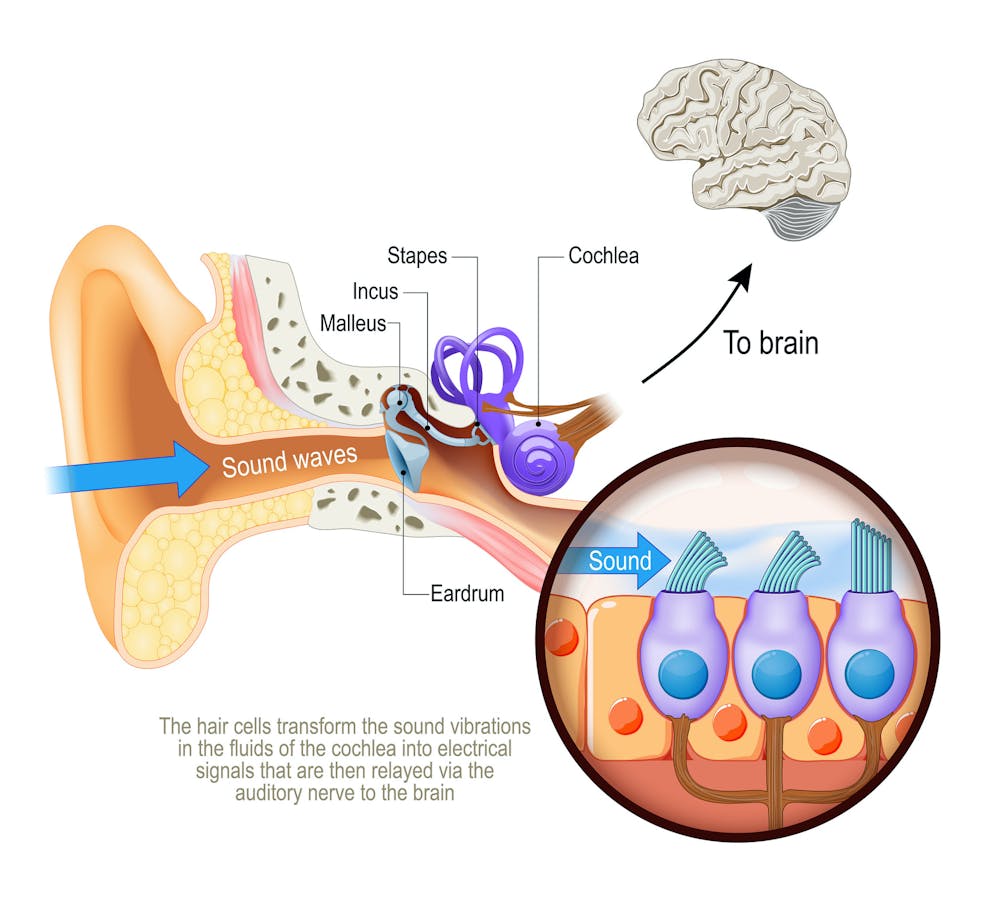
In fully-functional hearing, sound waves enter the ear canal and are converted into neural impulses as they move through hairlike sensory cells in the cochlea, or inner ear. These neural signals then travel through the auditory nerve behind the cochlea to the central auditory areas of the brain, resulting in a perception of sound.
People with severe to profound hearing loss often have damaged or missing sensory cells and are unable to convert sound waves into electrical signals. Cochlear implants bypass these hairlike cells by directly stimulating the auditory nerve with electrical pulses.
Sound travels through the ear canal and is converted by hair cells in the cochlea into electrical signals that enter the brain. ttsz/iStock via Getty Images Plus
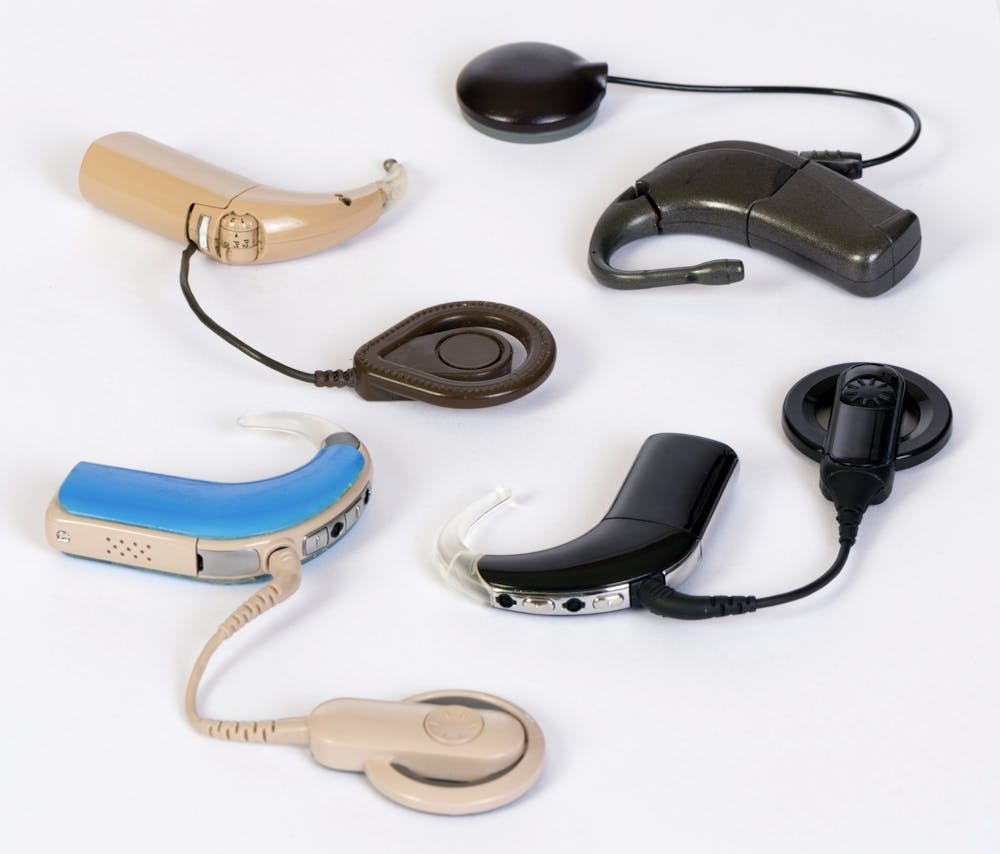
Cochlear implants consist of an external part wrapped behind the ear and an internal part implanted under the skin.
The external unit, which includes a microphone, signal processor and transmitter, picks up and processes sound waves from the environment. It divides sounds into different frequency bands, which are like different channels on a radio, with each band representing a specific range of frequencies within an overall spectrum of sound. It also extracts information about amplitude, or loudness, from each frequency band.
It then transmits that information to the receiver in the internal unit implanted in the cochlea. The electrodes of the internal unit directly stimulate the auditory nerve with electrical pulses based on amplitude information. Electrodes at the base of the cochlea transmit electrical signals containing high-frequency auditory information while electrodes at the top transmit electrical signals containing low-frequency information to the brain, mimicking the frequency analysis in a fully-functioning ear.
Where cochlear implants fall short
While people with cochlear implants are able to detect sounds and perceive speech in quiet environments reasonably well, they often have great difficulty understanding speech in noisy environments, enjoying music and localizing sounds, that is, figuring out which direction a sound is coming from.
Cochlear implants are fundamentally limited by their poor ability to tell the difference between sound frequencies and transmit rapid variations in sound amplitude over time. For example, current cochlear implant systems use only 12 to 22 electrodes to stimulate surviving auditory nerve fibers, whereas natural hearing has 30,000 auditory nerve fibers to encode detailed information about incoming sounds. Furthermore, electrode stimulation inside the cochlea excites a large group of auditory nerve fibers without much precision.
These factors result in poor frequency resolution. Picture it like painting with a thick brush that can show only an overall shape without the fine details, or only blurry details.
The hearing experience from cochlear implants differs from that of natural hearing.
There are a variety of factors that can affect the number of healthy auditory nerve fibers available to transmit acoustic information to the brain. Cochlear implant users with better survival of their auditory nerve fibers may have improved frequency and timing representations of sounds represented by electrical stimulation, which can lead to better speech and pitch perception.
Neural health is not the only factor that contributes to variability in cochlear implant effectiveness. One 2012 study of 2,251 cochlear implant users found that speech recognition varied greatly, and only 22% of the difference could be explained by clinical factors like length of experience with the implant and cause of hearing loss. Furthermore, it is challenging to directly assess the effects of neural survival on the performance of cochlear implants. This suggests that other factors also play a role in determining the success of speech recognition with cochlear implants.
For instance, research has found that cognitive skills like working memory can influence the extent to which a person can understand speech after implantation. Cochlear implants increase cognitive load, or the amount of mental effort required to perform a task, as the sound quality users hear is often lower than that of natural hearing. Aging may also negatively affect cognitive processing skills, including attention deficits and slower processing speed on listening tasks.
Furthermore, most of the implant’s electrode arrays don’t reach the top of the cochlea where low-frequency information is conveyed in natural hearing. This leads to mismatches between the frequencies conveyed by the implant and those of natural hearing, resulting in reduced sound quality.
Scientists are investigating a number of potential ways to improve the effectiveness of cochlear implants.
Hearing sound through electrical stimulation is a new experience for those used to hearing without an implant. Auditory training exercises can help familiarize users with this new form of hearing and may even enhance overall speech and music perception. However, even with training, conventional cochlear implants may not fully replicate the rich experience of natural hearing.
Researchers are studying the potential use of light beams instead of electrical pulses to obtain better frequency resolution. This is done by genetically modifying the auditory nerve fibers to make them sensitive to light. Because light beams are able to more selectively stimulate auditory neurons compared to electrical pulses, this tactic may result in more precise frequency information. The research team behind this approach aims to start clinical trails in 2026.
Another approach involves inserting electrodes directly into auditory nerve fibers instead of the cochlea. By increasing the number of available electrodes, this strategy may enhance the sound frequency and timing information of the implant, and improve speech understanding in noisy environments and music perception.
Lastly, another development uses magnetic stimulation to transmit acoustic information via small, implantable microcoils. This approach allows for finer stimulation patterns than the widespread electrical activation of traditional electrodes, potentially leading to more precise sounds representation.
Research on new technologies may provide solutions to further improve the hearing experience for those struggling with hearing loss.
A vast amount of rocks and other material are hurtling around our Solar System as asteroids and comets. If one of these came towards us, could we successfully prevent the collision between an asteroid and Earth?
Well, maybe. But there appears to be one type of asteroid that might be particularly hard to destroy.
Asteroids are chunks of rocky debris in space, remnants of a more violent past in our Solar System. Studying them can reveal their physical properties, clues about the ancient history of the Solar System, and threats these space rocks may pose by impacting with Earth.
Mainly concentrated in the asteroid belt, asteroids can be classified into two main types.
Monoliths – made from one solid chunk of rock – are what people usually have in mind when they think about asteroids. Monolithic-type asteroids about a kilometre in diameter have been predicted to have a lifespan of only a few hundred millions of years in the asteroid belt. This is not long at all given the age of our Solar System.
Artist concept of catastrophic collisions between asteroids located in the belt between Mars and Jupiter. NASA/JPL-Caltech, CC BY
The other type are rubble pile asteroids. These are entirely made up of lots of fragments ejected during the complete or partial destruction of pre-existing monolithic asteroids.
However, we don’t really know the durability, and therefore the potential lifespan, of rubble pile asteroids.
Sneaky and abundant rubble piles
In September 2022, NASA’s DART mission (Double Asteroid Redirection Test) successfully impacted the asteroid Dimorphos. The goal of this mission was to test if we could deflect an asteroid by impacting it with a small spacecraft, and it was a resounding success.
Like other recent asteroid missions by the Japan Aerospace Exploration Agency (JAXA) to visit asteroids Itokawa and Ryugu, and by NASA to asteroid Bennu, close-up images have shown that Dimorphos is yet another rubble pile asteroid.
The much-studied Ryugu asteroid – classified as potentially hazardous – is also a rubble pile.JAXA/Hayabusa2, CC BY
Those missions showed us that rubble pile asteroids have a low density because they are porous. Also, they are abundant. In fact, they are very abundant, and since they are the shattered bits of monolithic asteroids, they are relatively small, and thus hard to spot from Earth.
Hence, such asteroids represent a major threat for Earth and we really need to understand them better.
Learning from asteroid dust
In 2010, the Hayabusa spacecraft designed by JAXA returned from the 535-meter long, peanut-shaped asteroid Itokawa. The probe brought with it more than a thousand particles of rocks, each one smaller than a grain of sand. Those were the first-ever samples brought back from an asteroid!
As it then turned out, the pictures taken by the Hayabusa spacecraft while it was still orbiting Itokawa demonstrated the existence of rubble pile asteroids for the first time.
Early results by the team at JAXA who analyzed the returned samples showed Itokawa formed after the complete destruction of a parent asteroid which was at least 20 kilometers large.
In our new study, we analyzed several dust particles returned from asteroid Itokawa using two techniques: the first one fires an electron beam at the particle and detects electrons that get scattered back. It tells us if a rock has been shocked by any meteor impact.
The second one is called argon-argon dating and uses a laser beam to measure how much radioactive decay happened in a crystal. It gives us the age of such a meteor impact.
Giant space cushions that last forever
Our results established that the huge impact that destroyed Itokawa’s parent asteroid and formed Itokawa happened more than 4.2 billion years ago, which is almost as old as the Solar System itself.
That result was totally unexpected. It also means Itokawa has survived almost an order of magnitude longer than its monolith counterparts.
Such an astonishingly long survival time for an asteroid is attributed to its shock-absorbent nature. Due to being a rubble pile, Itokawa is around 40% porous. In other words, almost half of it is made of voids, so constant collisions will simply crush the gaps between the rocks, instead of breaking apart the rocks themselves.
So, Itokawa is like a giant space cushion.
This result indicates rubble pile asteroids are much more abundant in the asteroid belt than we once thought. Once they form, they appear to be very hard to destroy.
This information is critical to prevent any potential asteroid collision with Earth. While the DART mission was successful in nudging the orbit of the asteroid it targeted, the transfer of kinetic energy between a small spacecraft and a rubble pile asteroid is very small. This means they are naturally resistant to falling apart if impacted.
Therefore, if there was an imminent and unforeseen threat to Earth in the shape of an incoming asteroid, we’d want a more aggressive approach. For example, we may need to use the shockwave of a nuclear blast in space, since large explosions would be able to transfer much more kinetic energy to a naturally cushioned rubble pile asteroid, and thus nudge it away.
Should we actually test a nuclear shock wave approach, then? That is an entirely different question.
Findings from a massive psychology study suggest that character strengths have a positive influence on many aspects of our health. Zest, hope, and self-regulation were the qualities most consistently associated with positive health outcomes. The study was published in the Journal of Research in Personality. Character strengths are positive qualities that have a favorable impact on our lives and the lives of others, such as kindness, creativity, and bravery. Psychology research has largely revealed that these qualities are associated with beneficial outcomes like greater life satisfaction and i...
For years, scientists have known bird flu kills every black swan it infects. This means if the disease made it to the Australian continent, it would be an existential threat to this iconic Aussie species.
A new study published today in Genome Biology finally reveals the gene contributions that make black swans particularly prone to falling victim to infectious diseases.
The relative geographic isolation of the black swan (Cygnus atratus) may have resulted in a limited immune toolbox, making them more susceptible to the infectious avian diseases Australia has been largely shielded from.
Mute swans are the iconic white species found throughout the Northern Hemisphere, while black swans are native to Australia. Paul Wishart/Shutterstock
A DNA puzzle
Unlike mallard ducks (Anas platyrhynchos) and the white-colored mute swan (Cygnus olor), the black swan is extremely sensitive to highly pathogenic avian influenza or HPAI, commonly known as “bird flu”.
In May 2021 a collaborative effort between University of Western Australia and University of Queensland mapped the DNA puzzle of the black swan, which was released open-source through DNA Zoo.
To understand whether the geographically-isolated black swan has a different immune gene repertoire compared to its relatives, for the past two years we have worked on comparing the black swan genome to that of the closely related – yet genetically distinct – Northern Hemisphere mute swans. This work was done by a large team of scientists from Australia, New Zealand, Sweden, Germany, Japan, USA and UK.
Harnessing the power of high-performance computing, we mapped and compared tens of thousands of genes between the two species, to better understand why black swans fall victim to the virus so easily while mute swans do not. Such work is akin to finding a needle in a haystack.
Our work has now provided insights into how these species diverge genetically in response to the deadly bird flu and other viruses in the same family.
Black swans aren’t just a different color from the white ones – the differences in genome run much deeper. Parwinder Kaur, Author provided
Some missing genes
Notably, we found the black swan showed undetectable gene expression in toll-like receptor (TLR-7), a class of proteins responsible for the immune system’s reaction to foreign viruses. In other words, they have the gene for it, but it’s not turning on for some reason.
Dr Parwinder Kaur pictured with a black swan in Matilda Bay, Perth. The birds are the subject of a major collaboration in genome comparison studies. Parwinder Kaur, Author provided
The TLR-7 family has been extensively studied in humans, as it is known to play a role in virus and tumor cell recognition. A 2021 study showed TLR-7 is crucial to the pattern recognition receptors (the molecules that can detect pathogens) of SARS-CoV-2 in humans.
In infected endothelial cells – the cells lining blood vessels and the heart – of the black swan, we found a dysregulated (abnormal) pro-inflammatory response. When the immune system reacts to a threat, some inflammatory response is normal, but it’s possible it can cause a more severe reaction if dysregulated.
Risking a wipe-out
Our work has also found the black swan genome was contractive. This means that from their last common ancestor with mute swans, black swans lost more genes in total than they gained.
Specifically, 39 immune-related gene families of the black swan were contractive as compared to the mute swan. This could be because being relatively isolated in Australia, they were less exposed to infectious bird diseases.
The data gathered by this sequencing project indicate the immune system of the black swan is more susceptible to any avian viral infection if it were to arrive in its native habitat. In other words, bird flu could even risk wiping out this species.
Now that we understand the potential underlying mechanism for black swans’ susceptibility to bird flu – and given TLR-7 is such an extensively studied gene in humans – there are several ways we can save our precious swans.
One way would be to look for natural variation that exists for this particular gene family in different black swan populations across Australia, Tasmania and New Zealand. There are likely to be individuals with higher resistance to bird flu, and we could use them to develop a strategic breeding program for this species.
Otherwise – and a more expensive path – would be to develop immunotherapy treatments, such as we have developed for humans. The good news is we now know what could be done to protect these swans.
Many of us are returning to work or school after spending time with relatives over the summer period. Sometimes we can be left wondering how on earth we are related to some of these people with whom we seemingly have nothing in common (especially with a particularly annoying relative).
However, in evolutionary terms, we all share ancestors if we go far enough back in time. This means many features in our bodies stretch back thousands or even millions of years in our great family tree of life.
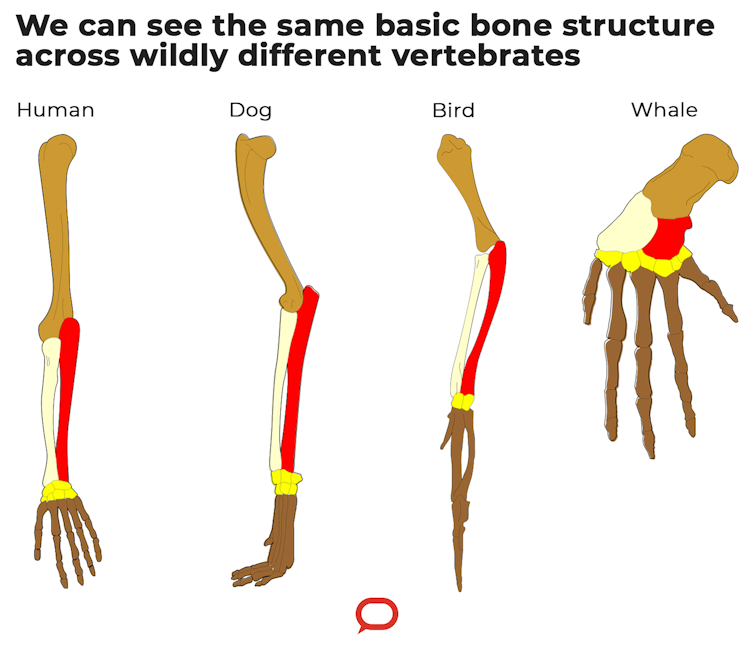
In biology, the term “homology” relates to the similarity of a structure based on descent from a shared common ancestor. Think of the similarities of a human hand, a bat wing and a whale flipper. These all have specialist functions, but the underlying body plan of the bones remains the same.
Волков Владислав Петрович/Wikimedia Commons, CC BY-SA
This differs from “analogous” structures, such as wings in insects and birds. Although they serve a similar function, the wings of a dragonfly and the wings of a parrot have arisen independently, and don’t share the same evolutionary origin.
Here are five examples of ancient traits you might be surprised to learn are still seen in humans today.
One step ahead
What makes us human? This question has plagued scientists and scholars for centuries. Today it seems relatively straightforward to tell who is a human and who is not, but looking through the fossil record, things very quickly become less clear.
Does humanity begin with the origins of our own species, Homo sapiens, from 300,000 years ago? Or should we stretch things back more than three million years to ancestors such as “Lucy” (Australopithecus afarensis) from eastern Africa? Or even further back to our split from the other great apes?
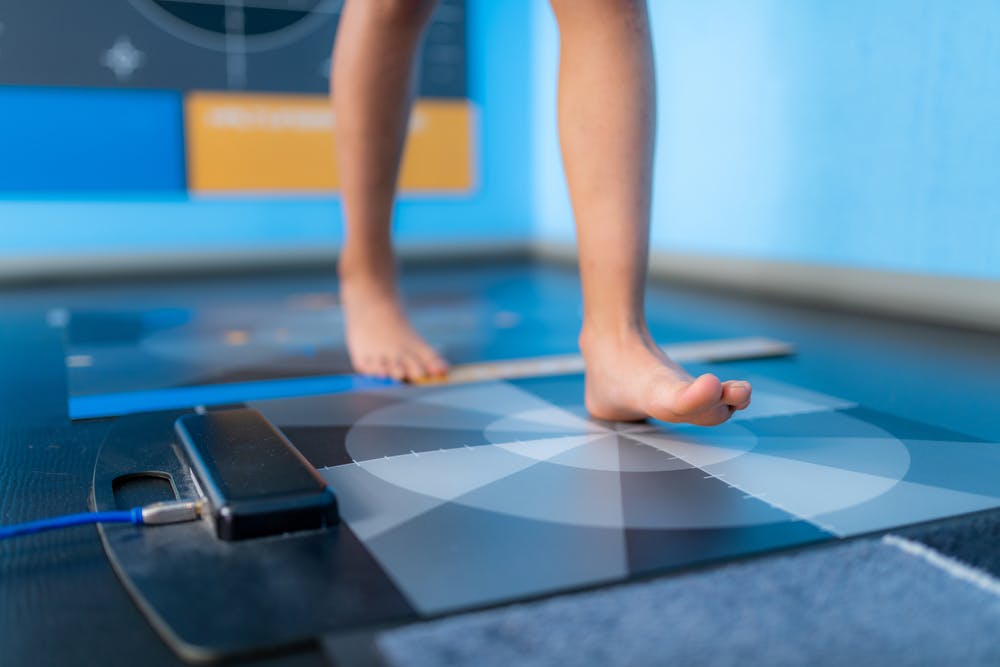
Whatever line you draw in the sand to pinpoint the birth of humanity, one thing is certain. The act of habitually walking around on two legs, known as “bipedalism”, was one of our ancestors’ greatest steps.
It’s hard to overestimate the importance of bipedalism in human evolution. Microgen/Shutterstock
Almost every part of our skeleton was affected by the switch from walking on all fours to standing upright. These adaptations include the alignment and size of the foot bones, hip bones, knees, legs, and vertebral column.
Importantly, we know from fossil skulls that rapid increases in our brain size occurred shortly after we started walking upright. This required changes to the pelvis to allow for our larger-brained babies to fit through a widened birth canal.
Those big brains of ours then fueled an explosion of art, culture and language, important concepts when considering what makes us human.
A hole in your head
In addition to your eyeballs sitting in their orbits, you may be surprised to learn that you have other large holes (known as fenestrae) in your skull.
Animals with this single window in their skulls are known as synapsids. The word means “fused arch”, referring to the bony arch found underneath the opening in the skull behind each eye.
Today all mammals, including humans, are synapsids (but reptiles and birds are not).
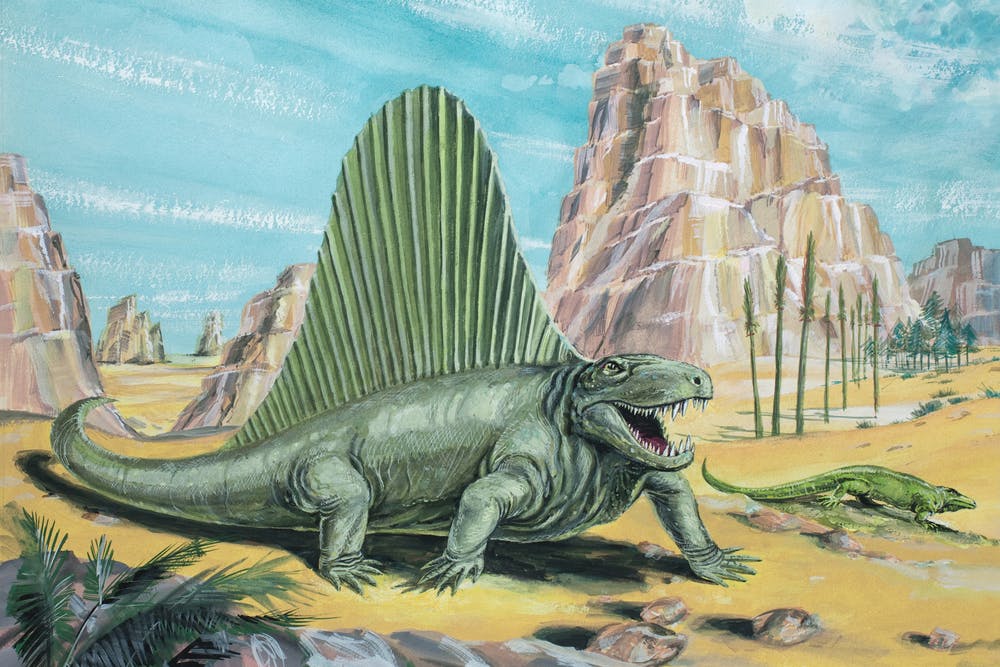
Other famous synapsids from prehistoric times include the often misidentified Dimetrodon. The sail-backed ancient reptile is commonly mistaken for a dinosaur. However, with its sprawling limbs and single temporal fenestra it instead belongs to a lineage sometimes referred to as “mammal-like reptiles”, although we prefer the more accurate term of synapsid.
Artist’s impression of a Dimetrodon, a long-extinct animal that was not a dinosaur. David Roland/Shutterstock
10 little fingers and 10 little toes
I am typing this article on my computer using ten of my digits (fingers and thumbs; digits also refer to toes but mine don’t reach the keyboard).
This pattern of five digits in the human hand or foot, known as a “pentadactyl limb”, is found in most amphibians, reptiles, birds and mammals.
But fish don’t have fingers and toes, so when was it that digits first evolved?
A recent study by myself and colleagues actually described the first digits found preserved within a fish fin. We used powerful imaging methods to peer inside a 380-million-year-old fossil called Elpistostege from Quebec, Canada, to reveal the oldest fish fingers!
Somewhat surprisingly, the first fish to evolve digits still retained fin rays around them so these bones would not have been visible on the animal externally.
The earliest tetrapods (four-limbed animals with a backbone that eventually moved out of water and onto land) “experimented” with the number of digits, sometimes being found with six, seven or eight of them.
These earliest tetrapods were likely still living in the water. It wasn’t until tetrapods became truly terrestrial that the five-digit limb arrived. This arrangement most likely arose as a practical solution to weight bearing on land.
Long in the tooth
Does your mind wander when you brush your teeth? Well, have you ever considered how evolutionarily old your pearly whites are?
In 2022 a team of palaeontologists described isolated fossil fish teeth from Silurian age rocks in Guizhou province, China. This remarkable discovery pushed the minimum age of teeth back a further 14 million years from previous findings. This means our dentition now harks back to a whopping 439 million years ago.
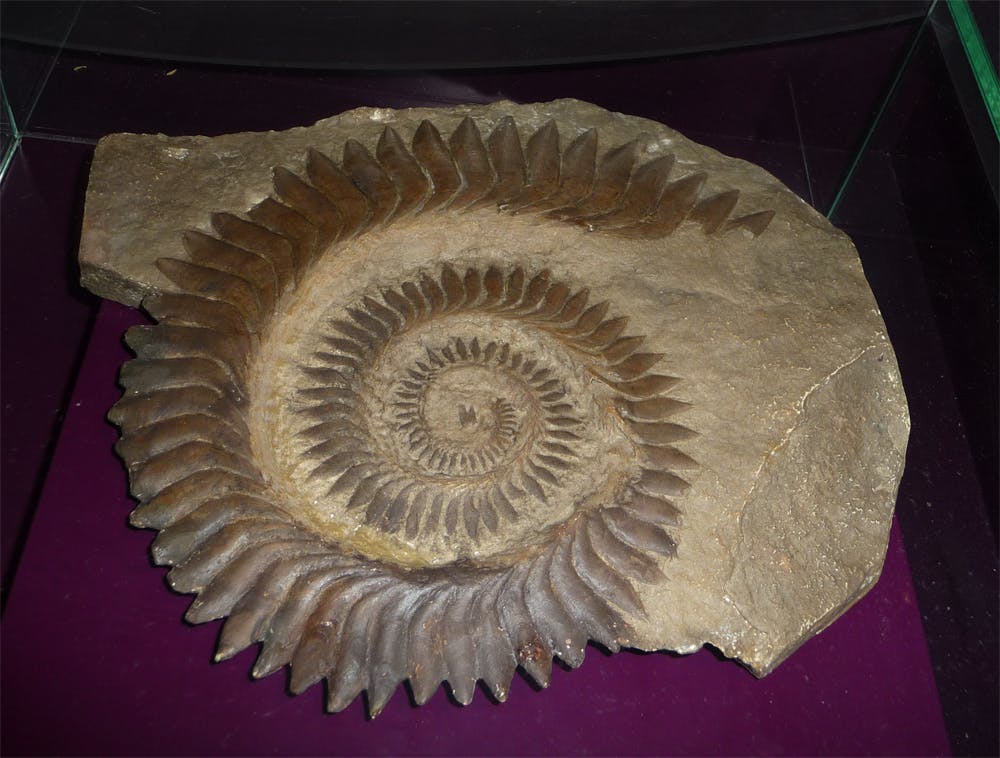
That new fish, a very early jawed vertebrate, was named Qianodus duplicis and is only known from isolated specialised teeth known as “whorls”. A tooth whorl is a bizarre row of teeth that curls in on itself in a spiral pattern (most famously present in the buzz-saw shark, Helicoprion).
Nevertheless, the teeth in the Chinese jawed fish have a number of features found in other modern jawed vertebrates, which highlight their relevance in understanding the evolution of our very own gnashers. Chomp on that!
Grow a spine
To “grow a spine” means to become emboldened and confident. The first animals to do just that must have surely been courageous to venture out into the perilous ancient seas 500 million years ago.
First, these worm-like animals evolved a “notochord” – a rod built of cartilage running along the back of the body. This enabled the attachment of segmented muscle blocks and a long tail extending beyond the anus. All animals with a notochord are called chordates, and includes everything from sea squirts to sea gulls, comprising more than 65,000 living species.
To get an idea of the first chordates, today we can look to animals such as the lancelet (known as Amphioxus or Branchiostoma). Lancelets look a bit like tiny, primitive fishes without fins. They swim by undulating their body from side to side.
Next come those with well organised heads (craniates), and those in which the notochord is replaced by a backbone in adults (vertebrates).
A backbone is built of individual segmented bones (vertebrae) which fit together in a specific interlocking pattern. We have a few tantalising fossils representing the earliest known examples of vertebrates, such as Metaspriggina known from Canada, or Haikouichthys from China in rocks more than 500 million years old.
So, whether it be your large brain and broad pelvis from walking around upright, skull with a single opening and bony arch, your fingers, toes, teeth or spinal cord, we humans share many ancient features in our bodies.