Top Stories Daily Listen Now
RawStory

Science

Planet spiraling into star may offer glimpse into Earth's end

For the first time astronomers have identified a planet that is spiraling towards a cataclysmic collision with its aging sun, potentially offering a glimpse into how Earth could end one day.

In a new study published on Monday, a team of mostly US-based researchers said they hope the doomed exoplanet Kepler-1658b can help shed light on how worlds die as their stars get older.

Keep reading... Show less

Large-scale brain lesion study identifies networks linked to greater risk or resiliency for depression symptoms

New research has mapped lesions to specific brain regions to risk of depressive symptoms. The findings, published in the journal Brain, suggest that two brain networks might be important targets for new therapies to treat depression. “It is well documented that brain lesions can lead to depressive symptoms, but not in everyone,” study author Nicholas T. Trapp, assistant professor and director of the Interventional Psychiatry and Psychiatric Neuromodulation Program at the University of Iowa. “The literature suggests that lesioning certain brain regions can place patients at a greater risk of de...

Scientists freeze Great Barrier Reef coral in world-first trial

By Jill Gralow

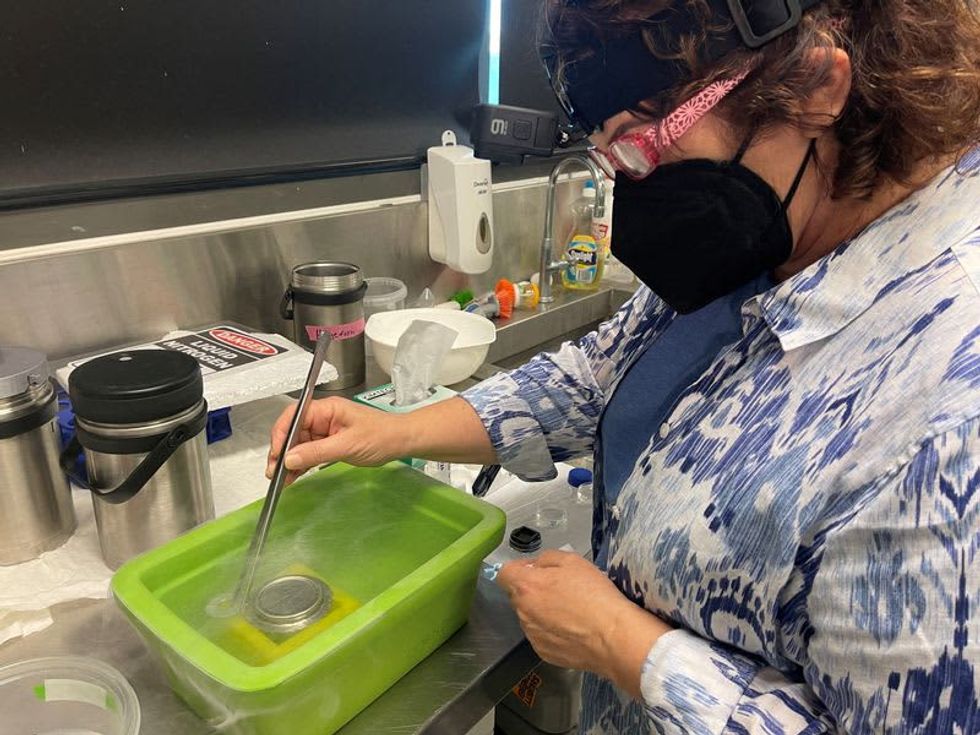
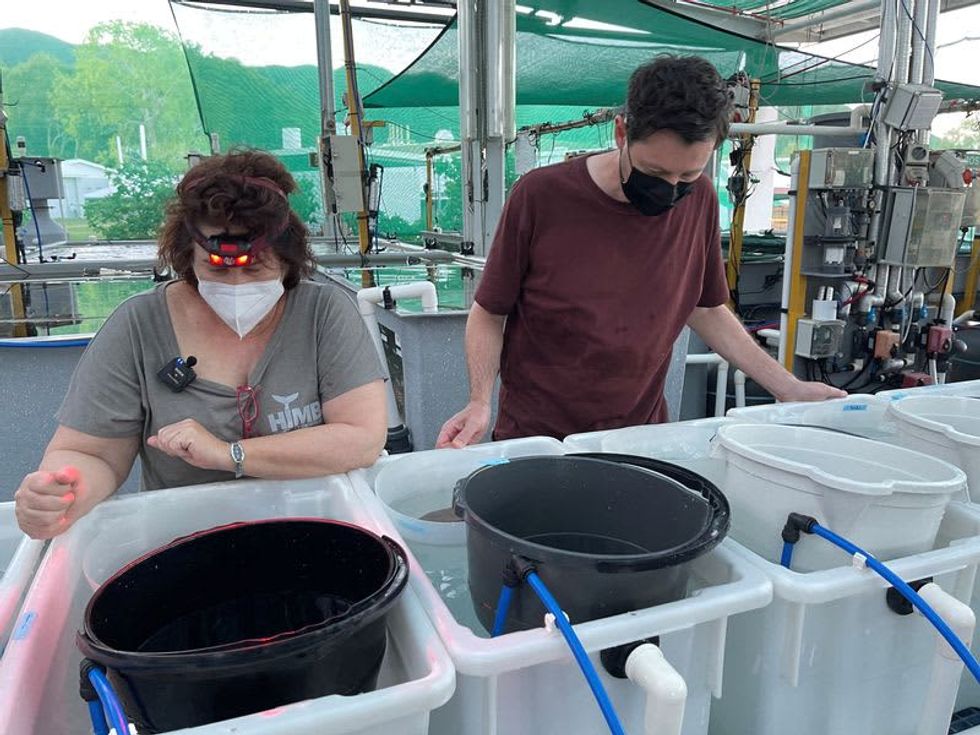
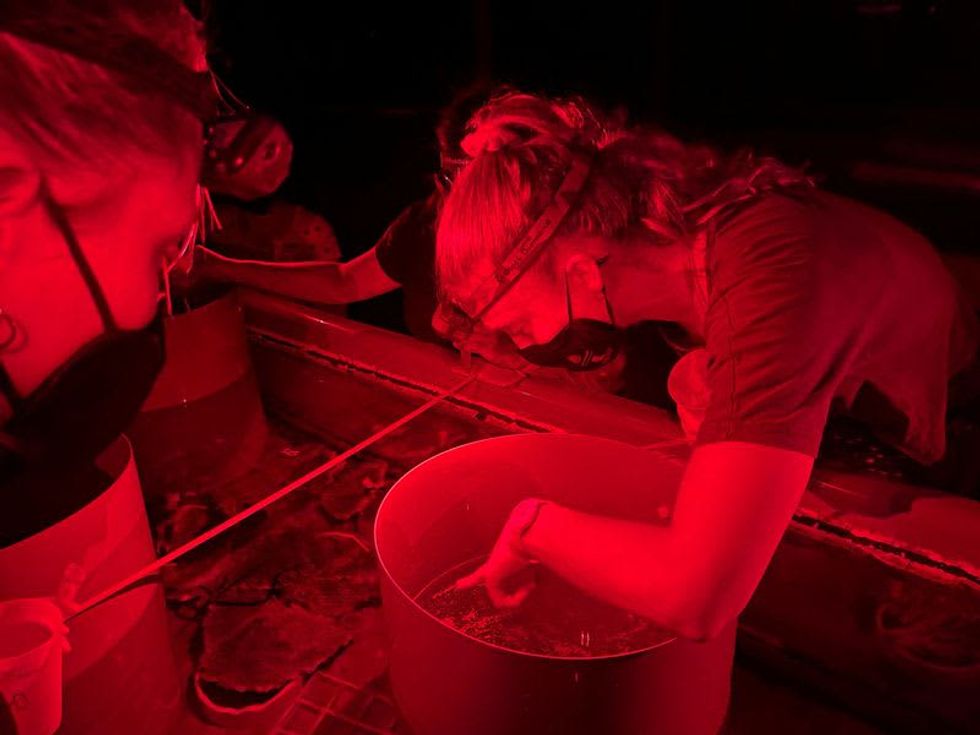
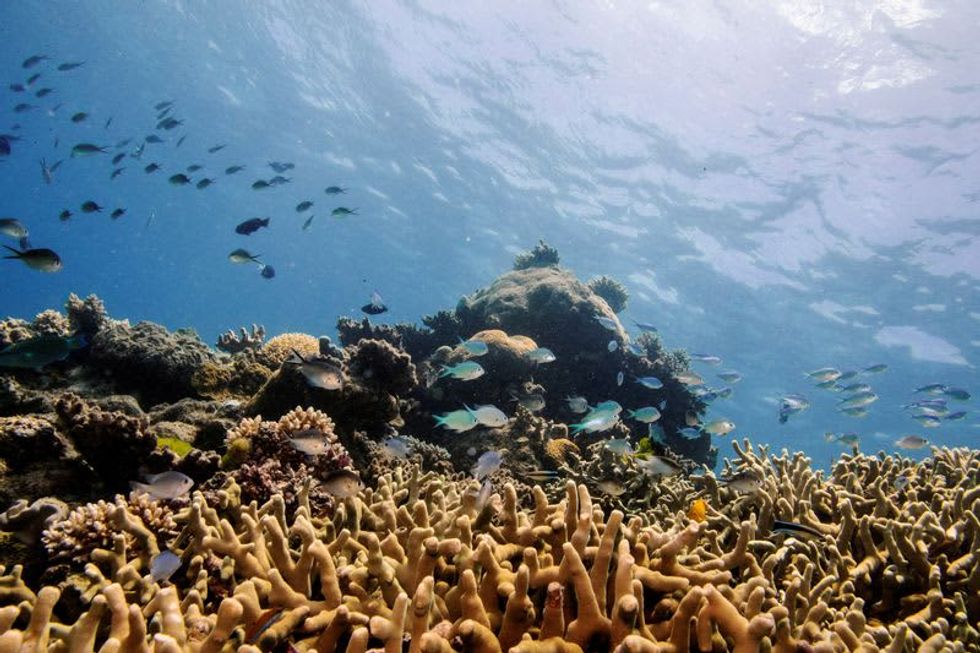
SYDNEY (Reuters) - Scientists working on Australia's Great Barrier Reef have successfully trialled a new method for freezing and storing coral larvae they say could eventually help rewild reefs threatened by climate change.

Keep reading... Show less

'Absurd but also dangerous': WaPo Editorial Board torches Ron DeSantis

On Sunday, The Washington Post Editorial Board published a brief piece blasting Florida's Republican Governor Ron DeSantis for waging a political war against mRNA COVID-19 vaccines despite their overwhelming success at saving lives as well as their proven track record for safety.

"DeSantis last week demanded a grand jury investigate 'criminal or wrongful activity in Florida' involving the 'development, promotion and distribution' of coronavirus vaccines. As public opinion shows vaccine hesitancy is growing, Mr. DeSantis’s move is not only absurd but also dangerous," the Board wrote.

Keep reading... Show less

Nature at risk of 'cascading' species extinction: study

Climate change and habitat degradation will cause extinctions that cascade through communities of animals and plants and drive dramatic biodiversity loss, according to new research published on Friday.

The study, in the journal Science Advances, found that chain-reaction extinctions are unavoidable and predicted Earth's ecosystems will see average biodiversity loss of between six and 10 percent by 2050, depending on different carbon emissions scenarios.

Keep reading... Show less

Robot plant grows, wilts on fate of UN nature talks

It's not always easy to make sense of the complex environmental diplomacy taking place at a UN summit billed as humanity's last hope to save nature.

That's why a scientist and artist have teamed up to build a large, data-driven robotic plant that withers or flourishes depending on countries' policy commitments: a tangible demonstration of how human actions will impact the world's threatened species.

Keep reading... Show less

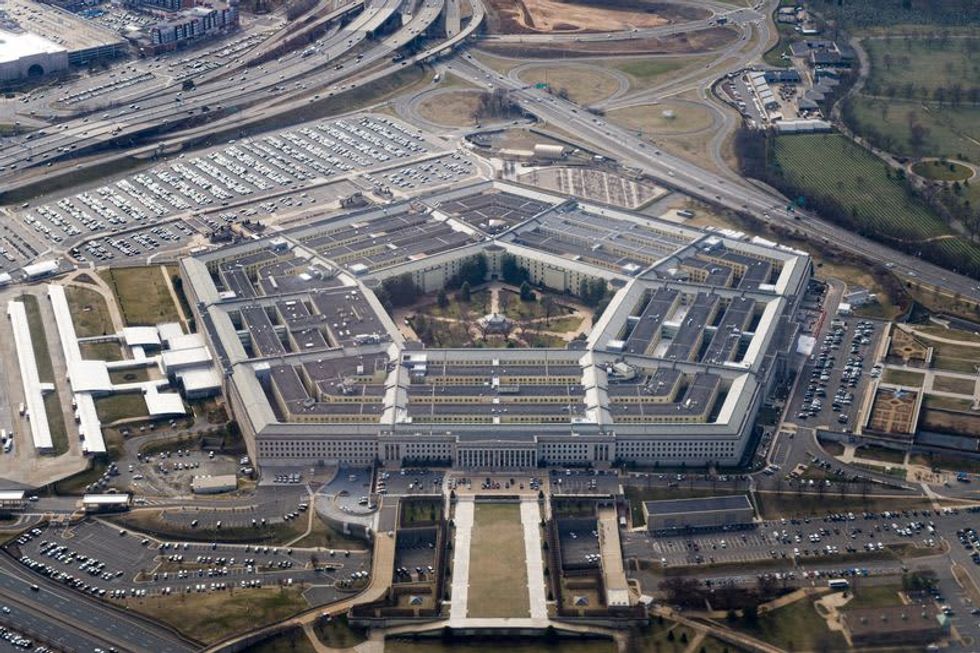
No evidence of space aliens so far in the Pentagon's UFO deep-dive

By Phil Stewart and Idrees Ali

WASHINGTON (Reuters) - The Pentagon's new push to investigate reports of UFOs has so far not yielded any evidence to suggest that aliens have visited Earth or crash-landed here, senior military leaders said on Friday.

Keep reading... Show less

Students with trauma are not more likely to be triggered when reading potentially disturbing content, study finds

Modern academic literature often contains trigger warnings – statements intended to warn readers about potentially disturbing materials that might exacerbate their distress related to a previous trauma. However, a new experiment on U.S. students showed that reading passages about physical and sexual assault did not lead to much distress, regardless of trauma history, trigger warning type, and students post-traumatic disorder scores. The study was published in the Journal of American College Health. Trigger warnings are meant to allow individuals who have experienced trauma to be warned in adva...

New Cannabis Research Institute will study the effects of marijuana and how best to manage it

CHICAGO — A new cannabis research center in Chicago will explore the effects of the plant and how best to manage the industry, officials announced Thursday. The Cannabis Research Institute is expected to do work on crop production, health benefits and risks, worker training and advocacy on policy issues such as social equity. Likely topics include the impacts of cannabis legalization, demographic gaps of medical cannabis programs and effects on medical conditions, such as anxiety and inflammation. It’s a joint project between the state and city, to be operated by the Discovery Partners Institu...

How the James Webb Space Telescope has revealed a surprisingly bright, complex and element-filled early universe – Podcast

If you want to know what happened in the earliest years of the universe, you are going to need a very big, very specialized telescope. Much to the joy of astronomers and space fans everywhere, the world has one – the James Webb Space Telescope.

In this episode of “The Conversation Weekly,” we talk to three experts about what astronomers have learned about the first galaxies in the universe and how just six months of data from James Webb is already changing astronomy.

The James Webb Space Telescope successfully launched into space on Dec. 25, 2021. After about six months of travel, setup and calibration, the telescope began collecting data and NASA published the first stunning images.

One of Webb’s nicknames is the “first light telescope.” This is because Webb was specifically designed to be able to see as far back as possible into the earliest days of the universe and detect some of the first visible light.

You can see these galaxies in the images NASA has released. Jonathan Trump, an astronomer at the University of Connecticut, is on one of the teams working on some of the early James Webb data. He was watching the release of the first images live and noticed some things many nonastronomers might have missed. “In the background, behind these beautiful arcs and spirals and massive elliptical galaxies are these tiny, itty-bitty red smudges. That’s what I was most interested in, because those are some of the first galaxies in the universe.”

Two images showing a suite of galaxies with small boxes around faint red smudges.

This compound image shows some of the earliest galaxies ever seen, highlighted by the small boxes in the images on the left and right, and shown up close in the images in the center.

NASA, ESA, CSA, Tommaso Treu (UCLA), CC BY-SA

To see any of these galaxies from the earliest days of the universe would be exciting, but right off the bat, Jeyhan Kartaltepe, an astronomer at the Rochester Institute of Technology, found something exciting when she started digging into the data.

“One of the things we’ve learned is that there are more of these galaxies than we expected to see.” In addition to working on identifying these early galaxies, Kartaltepe has been using Webb’s incredible resolution to study their structure and shape. “We expect there to be discs because discs form pretty naturally in the universe whenever you have something that’s rotating. But we’ve been seeing a lot of them, which has been a bit of a surprise.”

In addition to noting the shape of the galaxies in the early universe, astronomers like Trump are starting to be able to assess the chemical composition of these galaxies. He does this by looking at the spectrum of light James Webb is collecting. “We look at these distant galaxies and we look for particular patterns of emission lines. We often call them a chemical fingerprint because it really is like a particular fingerprint of particular elements in the gas in a galaxy.”

The universe started with just hydrogen and helium, but as stars formed and fused elements together, bigger, heavier elements started to emerge and fill in the periodic table as it is today. And just like Kartaltepe, Trump is finding evidence that things were happening faster in the early universe than astronomers expected. “I would’ve guessed that the universe would have struggled to make the periodic table and build up things. But that’s not what we found. Instead, the universe seems to have proceeded pretty rapidly.”

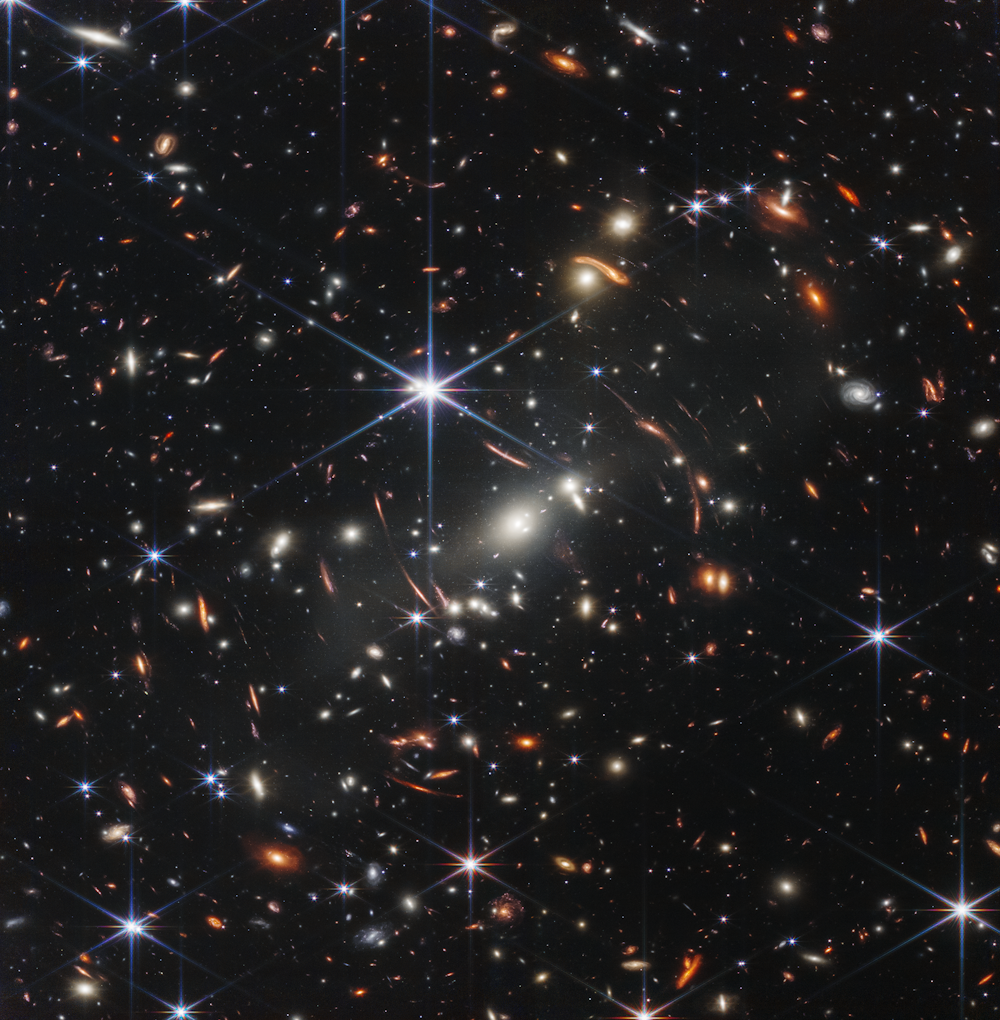
A photos showing thousands of galaxies in a night sky.

This photo shows Webb’s first deep-field image, a long exposure of a small part of the sky revealing thousands of galaxies, many of which are too faint for even Hubble to detect.

NASA/STScI

The discoveries coming out of James Webb are already changing how astronomers think of the early universe and challenging much of the existing theory. But the truly exciting part is that we are just beginning to see what this telescope is capable of, as Michael Brown, an astronomer at Monash University, explains.

“I’ve been on science papers that have used literally just a couple of minutes of data,” Brown says. “The image quality is just so good that a couple of minutes can do amazing things.” But soon Webb will begin to do follow-up surveys, take deep-field images and stare at parts of the sky for days and even weeks. Over the coming months, years and decades, Webb is going to keep giving astronomers plenty to work on, and astronomers like Brown are excited. “There is just all this complexity there, and we are barely scratching the surface. This will be the stuff that people who are students now are going to devote their careers to. And it’s going to be marvelous.”

Keep reading... Show less

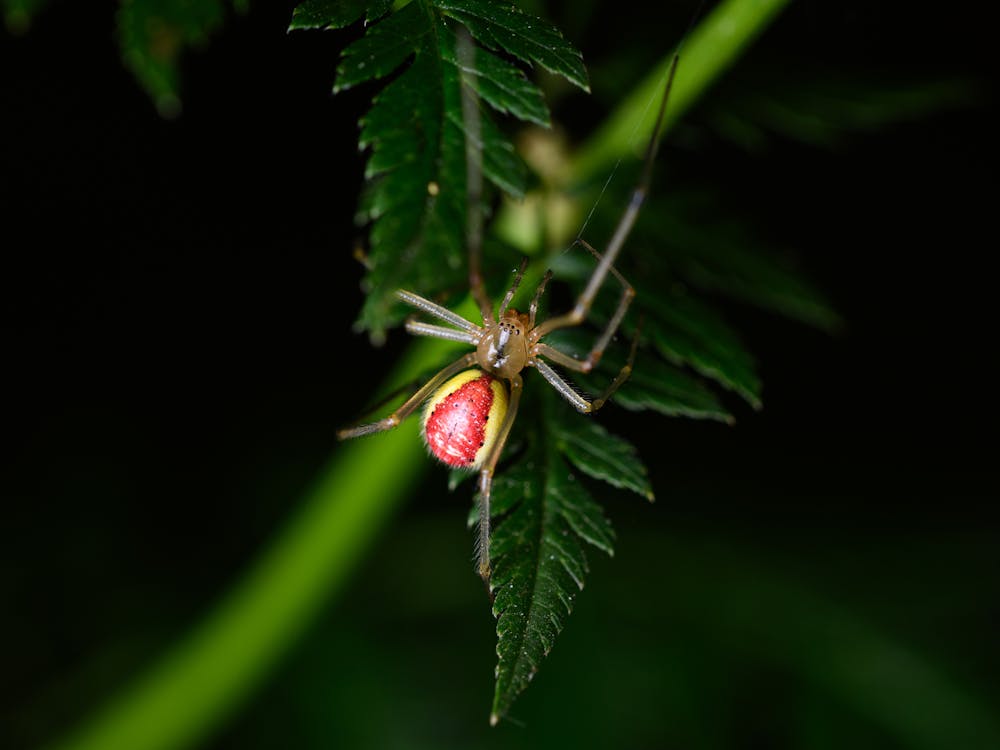
Punk hairstyles and pirouettes: why there’s more to spiders than people think

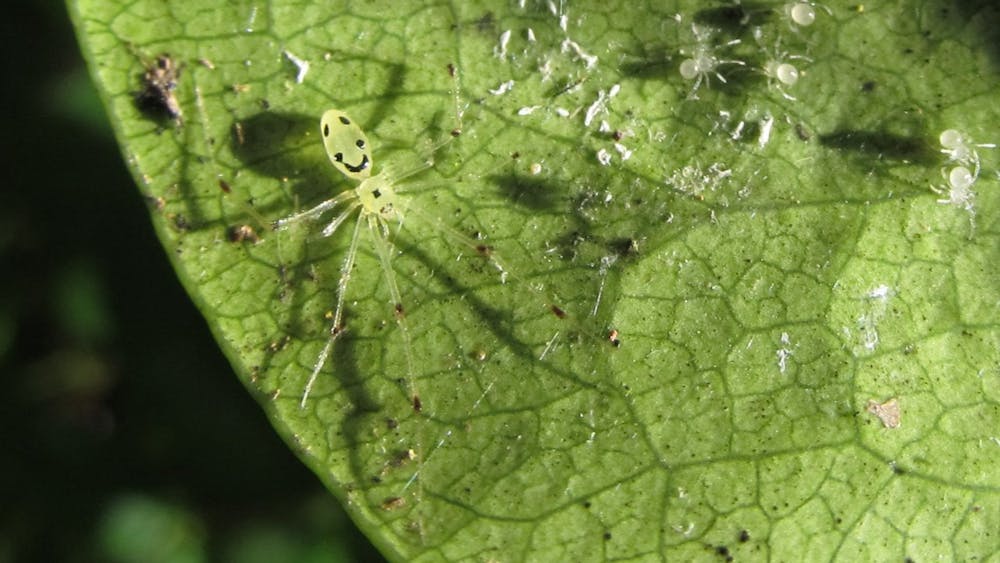
Spider scientists are an optimistic crowd. Perhaps it’s just that we see things from a different angle to arachnophobes. If you don’t believe me, look up Theridion grallator. Researchers from my field call this Hawaiian species the happy-face spider because of the smile-like curves on its back.

Spiders have a reputation for inspiring fear. But working with them puts me in a good mood, given how much scientists have learned from their study.

Keep reading... Show less

Tiny meteorite may have caused coolant leak from Soyuz capsule

Russian and NASA engineers were assessing a coolant leak on Thursday from a Soyuz crew capsule docked with the International Space Station (ISS) that may have been caused by a micrometeorite strike.

The coolant leak forced the last-minute cancellation of a spacewalk by two Russian cosmonauts on Wednesday and could potentially impact a return flight to Earth by three crew members.

Keep reading... Show less

Timing matters for medications – your circadian rhythm influences how well treatments work and how much they might harm you

All living organisms on Earth are exposed to a 24-hour day-night cycle. This cycle is the reason why people rest during the darkness of night and are active during the light of day. Consequently, all human body functions also follow this daily rhythm, and the timing of behaviors like exercise or food intake can significantly influence your health. For example, eating at night can lead to weight gain over time because while daytime food intake is used for activities, food intake at night leads to increased fat storage because the body expects to be at rest.

When you take your medications is also influenced by your circadian rhythm. Many drug targets in the body follow a 24-hour cycle. This means that the specific proteins a drug is designed to modify can react differently to the medication over the course of a 24-hour time period. Because how the body responds to a medication can differ depending on whether it is taken during the day or at night, it logically follows that taking medications at specific times could help increase their effectiveness and reduce unwanted side effects.

Keep reading... Show less