Microalgae have been used by the Chinese for medicinal and nutritional purposes for thousands of years in the belief they could cure almost any health condition. The idea that microalgae have extraordinary healing powers isn’t as far-fetched as some might think. Though the ancient Chinese believed the microalgae was responsible for health-improving benefits, we now know that it was in fact the biochemical compounds produced by these microscopic creatures that provided the “magic”.
There are approximately 100,000 species of microalgae, each with their own distinct set of properties. This diversity allows microalgae to flourish in almost every environment on Earth. Mostly they exist in aquatic habitats such as fresh or wastewater, but they have been found in moist soil – and even snowbanks too.
Microalgae are usually described as being green, and this is true for species such as B. braunii and C. vulgaris. But there are other species, such as C. officinalis, which is red or F. spiralis, which is brown. Each classification produces different types or quantities of biochemical compounds, making some more useful for certain applications than others.
Over the past few decades research has demonstrated the huge potential of microalgae, especially in the production of biofuel – fuel that is created from plant material or animal waste. I wanted to review this research to provide a framework to establish the most suitable microalgae species for large-scale biofuel production that can ultimately rival oil and gas giants and reduce our reliance on fossil fuels.
The magic of micoalgae
Microalgae have a unique ability to convert sunlight and carbon dioxide into a wide range of biochemical compounds. Despite being classed as animals, they metabolise the same way as plants, producing oxygen to replenish what we humans consume. This cycle acts as a carbon capture system, whereby harmful CO₂ in the atmosphere is converted to useful oxygen. Microalgae also produce a wide range of other compounds found inside the cells, and these are what make microalgae so good at combating the effects of global warming.
Generally, the products from microalgae can be grouped into three classes: proteins, carbohydrates and lipids (fats). But research has found that there are several other high-value biochemical compounds that have significant applications in a wide range of different industries. For example, microalgae produce compounds known as carotenoids, more commonly known as dyes or pigments. These compounds are responsible for giving salmon its pink colour, as the food they eat contains high quantities of carotenoids.
Another high-value class of compounds are polyunsaturated fatty acids (PUFA). These compounds are part of the lipid family and play a vital role in supplying the cells with energy. Microalgae have been deemed one of the richest sources of these compounds, which help treat the effects of diabetes and arthritis.
But how is it possible for these organisms to produce oil that can be used in cars? The petrol and diesel currently used is derived from crude oil that was formed millions of years ago from dead sea creatures. But modern biofuel is produced from living organisms on a real-time basis.
How biofuel is produced
Biofuel made from microalgae is currently one of the most promising fossil fuel alternatives to sustain the world’s energy demand. This is no easy task, especially having to compete with a highly profitable industry that has been established for more than a century. But unlike oil, which is non-renewable, biofuel is a renewable and sustainable source of fuel. Unfortunately, the economics of biofuel can’t yet compete with traditional fossil fuels. It all boils down to the bottom line, and currently the scale-up technology required isn’t here yet.
Microalgae don’t directly produce biofuel – they produce lipids (fats). To make biofuel these fats must be converted through a process known as transesterification. The process involves removing as much water as possible, known as dewatering, but this requires significant amounts of energy, resulting in high operating costs. As a result, the overall process becomes too expensive to compete with the oil and gas industry, despite its positive environmental impact.
Economics aside, the future for microalgae cultivation and lipid extraction is extremely promising. The development of hybrid technologies will accelerate the global shift to reducing our reliance on fossil fuels. These include cell factories that use gold nanoparticles – subatomic particles similar to atoms that form the building blocks of physical matter – to increase production rates and increase efficiencies.
Another potential solution is a process known as “milking”. Traditional cultivation methods for microalgae mean they are destroyed after the cultivation period has ended, which limits the full potential of what each cell can offer. Just like milking a cow, the process can be repeated without killing the cow, and the same goes for microalgae. By repeatedly removing high-value compounds from the same culture of microalgae, the high production cost issues can be removed, resulting in a sustainable and scalable process for the future.
This would result in biofuel becoming cost competitive with current fossil fuels, helping to accelerate the shift towards alternative energy sources. Unfortunately, the prospect of competitive biofuel production has some way to go before it can rival fossil fuel prices and quantities. But these developing technologies have the potential to speed up the transition needed to help the world reach its 2050 emissions targets.
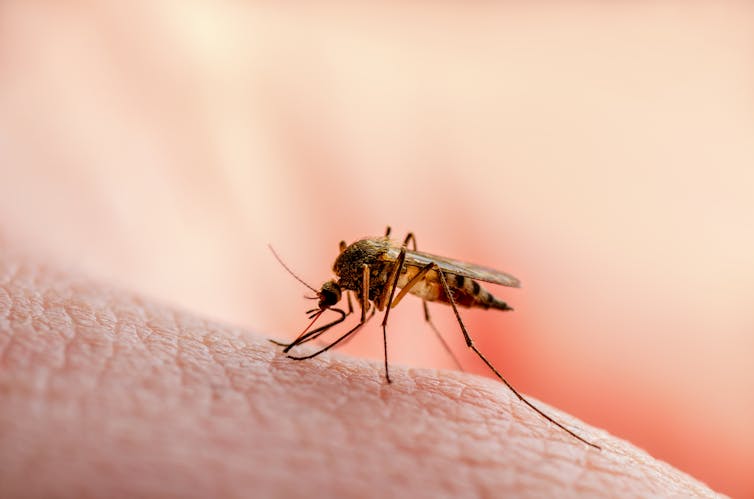
There’s no question that finding yourself covered in mosquito bites quickly takes the shine off a pleasant summer evening. But mosquitoes are more than a nuisance. They’re also the deadliest creatures on Earth, owing to the diseases they spread.
A lot of research on mosquitoes is dedicated to understanding their behaviour and preferences for who they bite. Vision is an important sense in biting insects, including mosquitoes. Although they don’t rely on their vision alone – smell and temperature work with visual cues to help mosquitoes locate a host.
Previous research has sought to link particular colours (or the wavelengths of light which we see as distinct colours) to mosquitoes’ host-seeking behaviour. However, the results have been mixed, with the same mosquito species showing preferences for different colours in different studies.
A recent study published in the journal Nature Communications is the latest to explore mosquitoes’ attraction to different colours. Could this research tell us how to avoid being bitten simply by adjusting the colours we wear? Let’s take a look.
The researchers conducted a series of experiments on three disease-spreading mosquito species: primarily Aedes aegypti, but also Anopheles stephensi and Culex quinquefasciatus.
In one experiment they used a wind tunnel equipped with cameras to track the mosquitoes’ flight patterns. The tunnel was designed to encourage them to behave as naturally as possible.
On the floor of the tunnel were two small coloured spots; one to represent the colour (wavelength) of interest and a control (white). Some of the colour samples were chosen to mimic different skin tones, including one to represent the colour of tanning lotion.
In mosquitoes, only the females bite, because in most species they require a blood meal to complete the reproductive process. So 50 mated but unfed female mosquitoes were released into the wind tunnel, where they would naturally search for a host.
After an hour carbon dioxide (CO₂) was released into the wind tunnel. CO₂ is exhaled by humans and other mammals. While it’s odourless to us, mosquitoes can smell it and use this scent to help guide them to a source of blood.
Seeing red
Before the odour stimulus was released, the Ae. aegypti mosquitoes largely ignored the coloured circles on the floor, instead exploring the ceiling and the walls of the tunnel. But once CO₂ had been introduced they started to investigate the coloured circles, particularly as the wavelength increased from 510 nanometres (nm) to 660nm.
These longer wavelengths represent colours in the orange and red end of the spectrum, though the Ae. aegypti mosquitoes were most attracted to the red, and then black. Notably, these orange to red wavelengths are the same as those given off from human skin tones. Blue, green and violet weren’t any more attractive to the mosquitoes than the control.
When the skin tone spots were used, they were more attractive to the mosquitoes than the control, but no preference was observed for any particular skin tone.
The researchers wanted to explore the role of colours in attracting mosquitoes.
Previous experiments have shown mosquitoes are more attracted to contrasting colours, like a chequerboard pattern, than one solid colour. The researchers also showed the mosquitoes different spots against both similar and contrasting backgrounds. Ae. aegypti were more interested in spots with a high contrast to the background. Scientists believe this helps the mosquitoes distinguish between an object (person) and the background, even in low light. The contrast was more important in attracting the mosquitoes than the colour itself.
Similar to Ae. aegypti, An. stephensi were attracted to black and red, with little interest in the lower wavelengths. Cx. quinquefasciatus showed interest in violet/blue and red (interestingly, opposite ends of the tested spectrum).
The researchers conducted a separate experiment in insect cages to explore the mosquitoes’ attraction to real skin tones. Six volunteers from different ethnic backgrounds were recruited to help with this test. The control was a white glove in one window and the volunteers’ hands were held one at a time in the other window to see if the mosquitoes were attracted to any particular skin tone.
The mosquitoes were more attracted to the hands than the white glove, but as with the dots, there wasn’t a preference for a particular skin tone.
What does this all mean?
This study shows that mosquitoes are attracted to the colours found in human skin, but only in the presence of CO₂, suggesting the smell of human or mammal respiration may act as the initial cue. This confirms previous research which has found CO₂ attracts mosquitoes.
The researchers found that colour and contrast were important factors for Ae. aegypti who showed a preference for red, then black. An. Stephensi were interested in colours similar to Ae aegypti, though preferring black over red. Meanwhile, Cx. quinquefasciatus were interested in a range of colours.
As the researchers recognised, their experiments didn’t account for some of the other factors that affect mosquitoes’ choice of host. These include chemicals released from human skin, the temperature of the skin, and sweat on the skin. It would be interesting for future experiments to include these factors.
So what does this mean for the average person who doesn’t want to get bitten? You could try wearing white, blue or green and avoiding black, red and orange. Definitely avoid red and black checked patterns.
While adjusting your clothing may reduce your risk of being bitten, there’s no guarantee it will, or how effective this will be, particularly given the apparent variation in colour preferences between species. But these findings do suggest that with more research, colour could potentially be used as a tool in mosquito control.
Scientists at a nuclear fusion lab in the UK just broke the world record for the amount of energy produced in a single fusion reaction. In this episode of The Conversation Weekly, we ask two experts what this means, and how long it’ll take before we can switch on the world’s first nuclear fusion power plant.
And we talk to a social psychologist about new research into the societal pressure some people feel to be happy.
Scientists first demonstrated the ability to fuse two atoms in lab experiments in the 1930s. Nuclear science has come a long way since then, but we still haven’t managed to harness the energy produced by nuclear fusion to generate electricity.
In early February, scientists at the Joint European Torus (JET) lab in Oxfordshire in the UK announced they’d broken the world record for the amount of energy produced in a nuclear fusion experiment. They produced 59 megajoules of heat energy in a single fusion “shot” that lasted for five seconds. This doubled the previous world record set by JET in 1997, but was still only enough to heat about 60 kettles of water.
So how excited should we be about the latest news? How much closer does this world record take us to getting electricity from fusion power – and what would success mean for the planet’s future energy mix?
The JET experiment is the world’s biggest nuclear fusion device. It uses an approach called magnetic confinement to fuse nuclei at very high speeds and temperatures inside a doughnut-shaped container called a tokomak.
Livia Casali, assistant professor in nuclear engineering at the University of Tennessee, Knoxville in the US, says the latest result from JET confirms some of the choices made for the fusion reactors of the future – particularly around the materials used to line the inside walls of the tokomak. “These results also confirm that we can achieve fusion energy using a deuterium and tritium fuel mix, which is the same fuel mix that we are planning to use for future fusion devices,” she says.
In particular, JET’s results are a proof of concept for ITER, a huge fusion reactor under construction in southern France and due to be ready by 2026.
“To make a fusion reaction is very easy, but that doesn’t mean that we’re able to produce energy,” says Angel Ibarra Sanchez, a research professor in fusion technology at the Centre for Energy, Environmental and Technological Research in Madrid, Spain’s national fusion laboratory.
Like JET, ITER won’t produce electricity – that will only happen once a demonstration reactor is built. Ibarra says the hope is that the first demo fusion reactor in Europe will be available around 2050. If these demo reactors are shown to work, he predicts the first generation of fusion power reactors could arrive in the 2060s or 2070s. “It will probably not be much faster than this,” he says.
Once fusion power arrives, Ibarra believes the energy it will generate – which releases no carbon dioxide and is dubbed “clean energy” – will be transformational. But he warns us not to pin all our hopes on fusion. “To think that the energy production in the future will be based in a single type of energy sources is not feasible. It’s not realistic,” he says. Instead, Ibarra thinks the energy mix of the future should be “a mix of solar energy, wind energy, and hopefully fusion energy”.
In our second story in this episode, we find out that living in a country that scores highly on global happiness rankings might not be all that it’s cracked up to be. Brock Bastian, professor of psychological sciences at the University of Melbourne in Australia, just co-authored new research showing increased social pressure to feel happy in countries that come top of these rankings. And for some people, this social pressure can be linked to poor mental health. “When a lot of people seem to be doing well and happy, it can exacerbate for some people those feeling of low mood,” says Bastian. (Listen from 27m)
And finally, Eric Smalley, science and technology editor at The Conversation in Boston, recommends some recent analysis on the technology dimensions of the unfolding Ukraine war. (Listen from 37m20)
This episode of The Conversation Weekly was produced by Mend Mariwany and Gemma Ware, with sound design by Eloise Stevens. Our theme music is by Neeta Sarl. You can find us on Twitter @TC_Audio, on Instagram at theconversationdotcom or via email. You can also sign up to The Conversation’s free daily email here.
You can listen to The Conversation Weekly via any of the apps listed above, download it directly via our RSS feed, or find out how else to listen here.
Vision is often regarded as first among the human senses, as our eyes are the way most of us come to know the world. However, vision has its limits.
Even now, as you use your eyes to read this, other senses are in operation that open up a greater appreciation of the world. Perhaps the most powerful of these is listening - audition.
Sound carries cues about the world we might otherwise miss. And with the development of new technologies and the work of dedicated scientists and artists, we can today listen to what was previously unimaginable, from the inner workings of plants to catastrophes in distant galaxies.
In my own work, currently exhibited at the Museum of Brisbane, I have made field recordings of environments and creatures around the world. These works take their place alongside an ever-growing collection of recordings revealing the unheard sounds of our world.
The limits of the ear
Humans can only hear a limited range of sounds: those with frequencies between about 20 hertz (low sounds like thunder) and 20 kilohertz (very high sounds like some species of bats). Other sounds exist outside the scope of our auditory capacities.
“Infrasonic” sounds such as the rumble of earthquakes have frequencies too low for us to perceive, although other animals can detect them. There are “ultrasonic” sounds too, with frequencies above the threshold of human hearing.
Strictly speaking, a sound is a vibration in air. But we can also think of other kinds of vibrations, such as electromagnetic waves, as having the potential to be registered as sounds.
With the right kind of technological translation tools, you can hear the electromagnetic sounds emitted by devices like the one on which you are reading this right now.
The ‘Stereo Bugscope’ created by the artist Haco amplifies the sounds of electronic circuitry.
Why should we listen?
Listening is a different way of knowing the world that expands our understanding. Sound travels around corners and through walls, from places that are out of sight.
Our ears are a gateway to a deeper sensing of the world. Take bird calls, for example.
For most, even those of us living in densely populated urban centres, dawn’s arrival is trumpeted by a chorus of bird calls. These voices, that seemingly splay out in all directions suggest acts of territorial dominance, of the seeking and discovery of food and other fundamental activities of animal species. A variation of the chorus occurs again, as the sun vanishes over the horizon.
Today we are listening to more of the world, and beyond, than ever before, with the growth of disciplines such as bio-acoustics, radio telescopy, and more philosophical fields such as sound studies.
The proliferation of technologies such as hydrophones (underwater microphones) and electromagnetic receivers has also increased the reach of our ears.
It’s this combination of intellectual, scientific and artistic curiosity, matched with technological developments and availability that have resulted in the capture of some incredible sound events that exist well beyond the visual plane.
Just a quarter of a century ago it seemed like science fiction that we might be able to capture the sound of two black holes colliding in space – but scientists did it in 2015.
These discoveries and others like them have fostered new research programs that aim to undertake the deepest and most concentrated galactic listening to date.
As above, so below
We have made many discoveries closer to home, too.
We have known for a long time that the underwater world is rich in sounds, but it has been underrepresented in dedicated research. This trend is changing, with numerous studies highlighting the rich acoustic diversity of rivers, oceans and reefs.
Plants may use the sound of water to guide the growth of their roots.
Shutterstock
On land, the Australian researcher Monica Gagliano has explored plant audition. She demonstrated how plants can use sound to find water – so next time your plumbing is blocked by a plant’s roots, keep in mind they have been listening to the water flowing through the pipes.
Equally profound are the studies of bioelectrical sounds emitted by plants carried out by artists such as the Irish “sound ecologist” Michael Prime. For several decades, Prime has catalogued various bioelectric emissions from plants. At times they resemble unsettled but rhythmic avant-garde music.
Field recording
This curiosity for listening into places and those that inhabit them, has also spawned a zone of creative sound practice called field recording. A field recordist is a listener who is primarily focused on capturing the sonic aspects of environments that captivate them.
Once a marginal part of the sound arts canon, field recording has come to be regarded as a critical field of creative engagement. This year artists such as Philip Samartzis have been memorialised in a series of Australian Antarctic postage stamps.
Even if you don’t want to make your own field recordings, you might be interested in listening to the sound walks of Canadian artist Hildegard Westerkamp, or experiencing the situational listening of Japanese artist Akio Suzuki’s Oto Date project.
These works, like my own Site Listening at the Museum Of Brisbane, recognise that the more we listen into the world around us, the more we realise we are yet to hear its true resonances.
Memories are a crucial part of what makes us who we are. Yet we all know it can become more difficult to remember things as we get older. From forgetting why you came into a room, to not being able to recall details of a special family event, to forgetting familiar names.
Forgetting things can even be a way of defining old age. Many people will cry something along the lines of “oh my goodness, I’m getting old” when they can’t remember something that had previously been easy to recall.
This forgetfulness as we get older is easy to demonstrate but harder to explain. An obvious explanation might be that remembering things becomes difficult because something changes in the brain that makes it more difficult to store information.
But a paper published recently in the journal Trends in Cognitive Sciences has presented an alternative explanation for this phenomenon: that our memories remain good, but they get cluttered as we age.
First, it’s important to understand that memory isn’t an accurate recording of life as it happens. Imagine if you remembered every single detail of every minute of every hour of every day. It would be overwhelming, and most of the information you remembered would be fairly pointless.
If you’re remembering what you had for breakfast this morning, is it relevant to be able to remember the shape of the cloud you could see outside the window, or the number of times you blinked while you ate? Instead, we attend to different parts of our environment, and the attention we pay to different parts of our experience shapes our memory.
Reviewing the evidence
The authors of this new study reviewed a range of evidence on this topic. They suggest that instead of a difficulty in storing memories, poorer memory as we get older is a result of being less able to focus our attention on relevant target information, meaning we put too much information into our memory. This is not something we have any control over – it just seems to be a natural consequence of ageing.
Why would focusing on too much information make us worse at remembering it? Think of something you do every day in the same way, like brushing your teeth. You can probably remember whether you brushed your teeth this morning, but can you really remember the difference between the time you brushed your teeth this morning, and the time you brushed them yesterday? Or the day before that? Situations like brushing your teeth are hard to remember as individual events because they have so much in common. They are therefore easy to confuse.
It’s well known that people tend to forget more as they age.
Events which are distinct from one another are more memorable. The less events overlap in terms of their content, the less chance there is to confuse one event for another, or mix up what happened in those different events. For example, it’s easy to remember what happened when you took the dog for a walk and what happened when you went swimming separately. They’re highly unlikely to be confused because they share so little in common.
So, if older people are less focused when they put things into their memories, then their memories will be “cluttered” with information that doesn’t matter. This clutter means there will be more chance for information from one memory to overlap with information from another. This in turn means there will be more chance for memories to be confused with one another, making it harder to remember what happened.
A previous study, which was included in the review, shows this theory in action. An older and a younger group were shown two types of objects (faces and scenes) and told which type of object they would be tested on. The older adults exhibited higher levels of brain activity when they were shown the irrelevant objects later on. Further, the more brain activity they demonstrated in response to these irrelevant objects, the poorer their memory for the objects they were trying to remember.
The review found that not only do older adults add clutter to their memory by taking in too much information from the environment, but they also accumulate information from knowledge gained over many years. This means older people have more material to navigate when trying to access a memory, which can compound the errors we make in memory as we age.
But the news isn’t all bad
According to the researchers, evidence suggests that older people demonstrate preserved, and at times enhanced, creativity as a result of their “enriched memories”.
When we are faced with a novel problem, sometimes we need to come up with a creative solution. This can involve bringing together bits of knowledge we have that may not be obviously connected, or remembering similar (though not identical) previous experiences which might be relevant.
The “clutter” in an older person’s memory might be a strength in this process. Being able to make connections between apparently unrelated memories could allow them to find creative solutions to problems by drawing on a much bigger range of experience.
So perhaps we can stop seeing ageing and the inevitable memory decline that comes with it as only a bad thing.
Our new study, conducted by an interdisciplinary team of 44 researchers based in 12 countries, helps answer these questions. By sequencing and analyzing ancient DNA (aDNA) from people who lived as long ago as 18,000 years, we roughly doubled the age of sequenced aDNA from sub-Saharan Africa. And this genetic information helps anthropologistslikeus understand more about how modern humans were moving and mingling in Africa long ago.
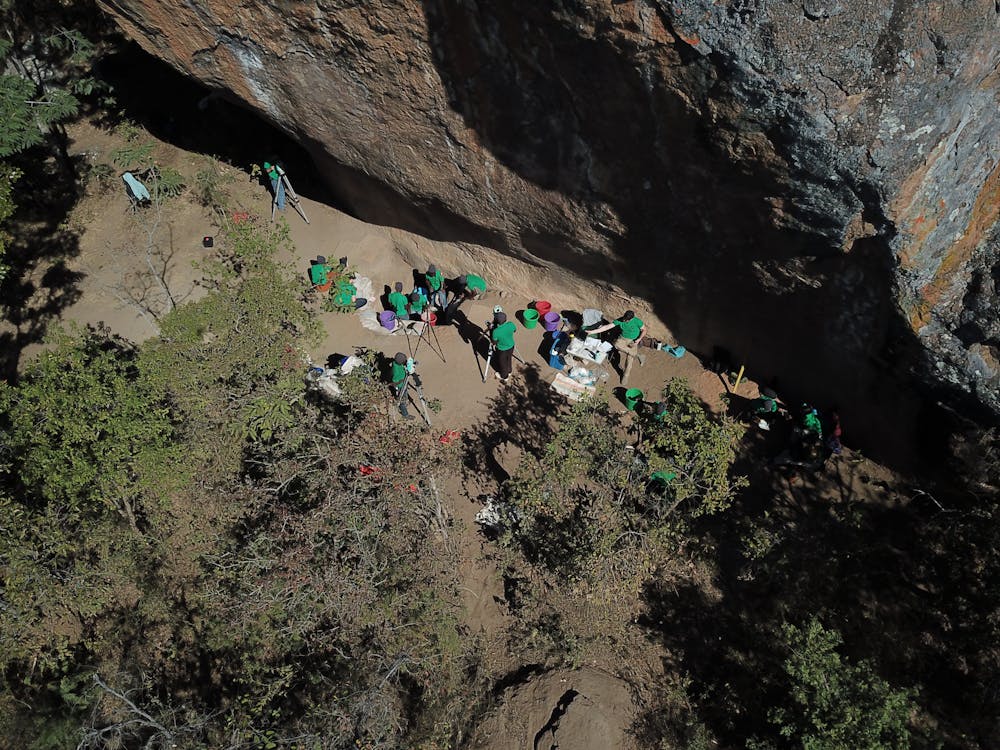
People took shelter in natural rock overhangs, leaving behind an archaeological record of their daily activities – and sometimes their graves. By digging carefully, archaeologists can connect information from aDNA to information about the social lives of these people.
What caused this shift, known as the Later Stone Age transition, has been a longstanding archaeological mystery. Why would certain tools and behaviors, which up until that point had appeared in a piecemeal way across Africa, suddenly become widespread? Did it have something to do with changes in the number of people, or how they interacted?
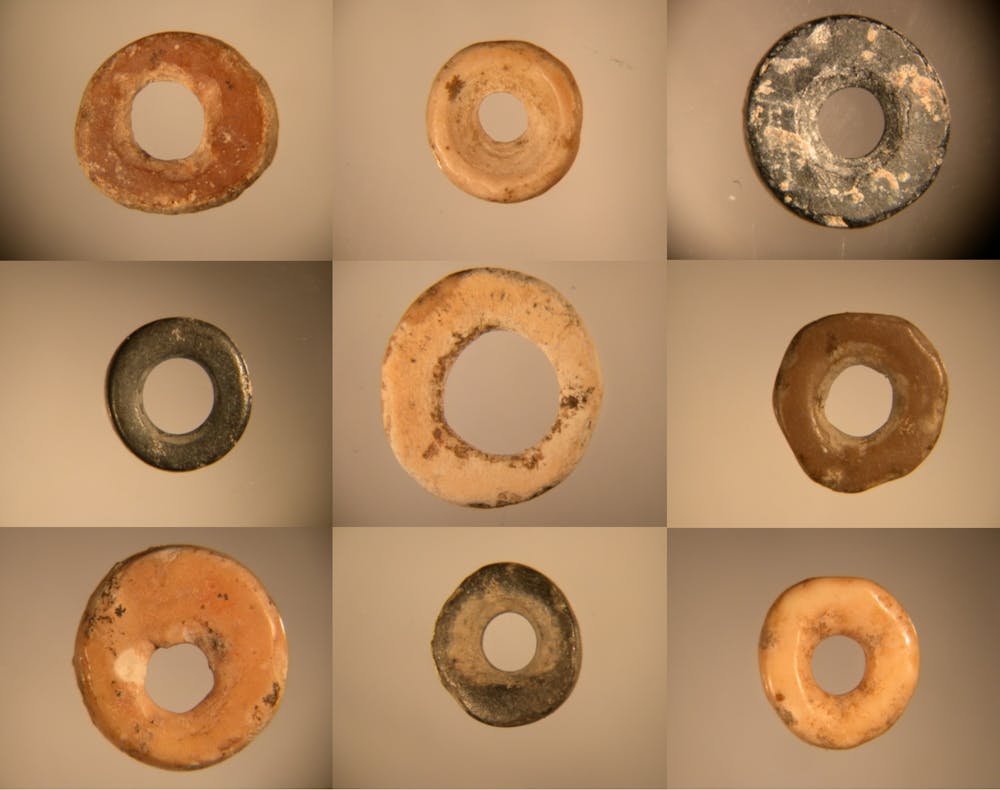
Beads made from ostrich eggshell were hot trade items and can show the extent of ancient social networks.
Archaeologists reconstruct human behavior in the past mainly through things people left behind – remains of their meals, tools, ornaments and sometimes even their bodies. These records may accumulate over thousands of years, creating views of daily livelihoods that are really averages over long periods of time. However, it’s hard to study ancient demography, or how populations changed, from the archaeological record alone.
This is where DNA can help. When combined with evidence from archaeology, linguistics and oral and written history, scientists can piece together how people moved and interacted based on which groups share genetic similarities.
Using present-day DNA to reconstruct ancient genetic landscapes is like reading a letter that was left out in the rain: some words are there but blurred, and some are gone completely. Researchers need ancient DNA from archaeological human remains to explore human diversity in different places and times and to understand what factors shaped it.
Unfortunately, aDNA from Africa is particularly hard to recover because the continent straddles the equator and heat and humidity degrade DNA. While the oldest aDNA from Eurasia is roughly 400,000 years old, all sequences from sub-Saharan Africa to date have been younger than around 9,000 years.
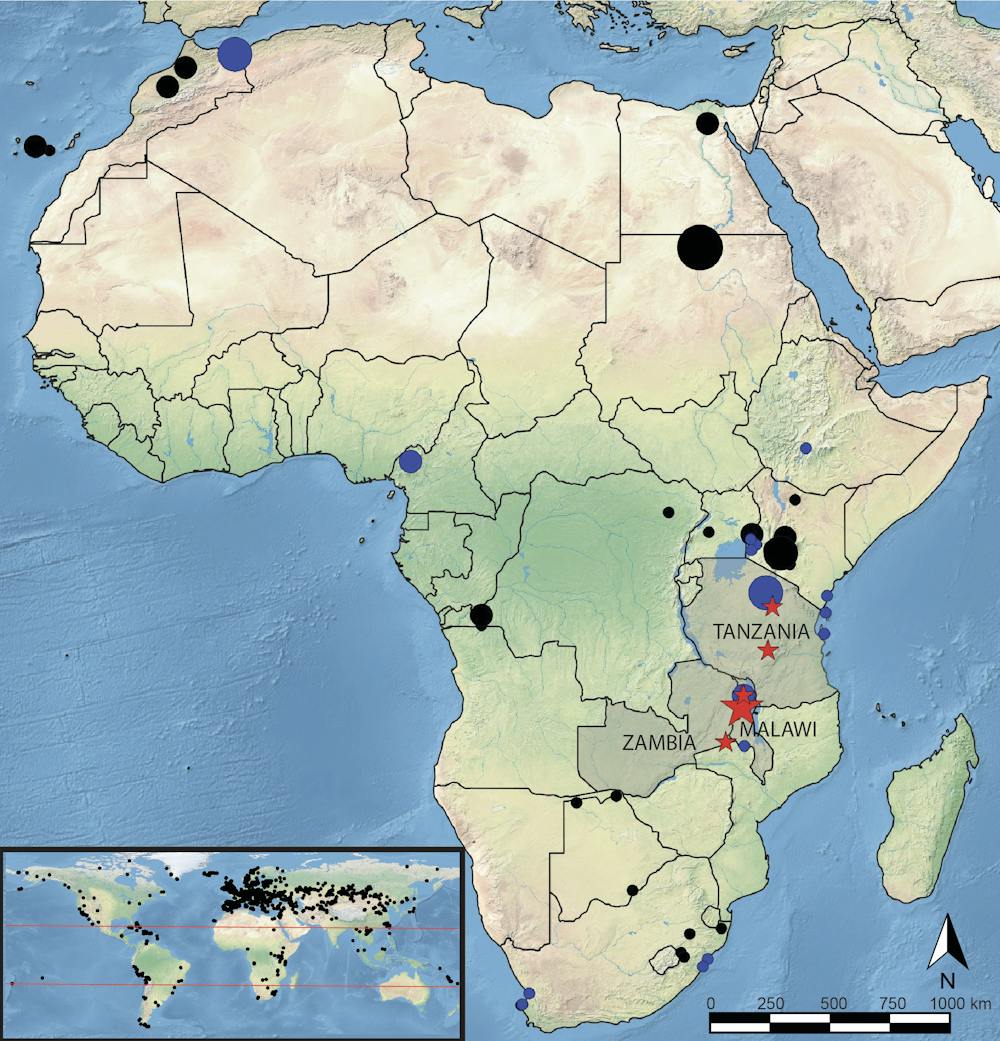
Map of all published ancient genomes, with black dots scaled to the number of individuals’ genomes. Blue dots indicate Later Stone Age foragers comparable to those in our study. Red stars indicate individuals reported for the first time in our study. Inset map underscores the gap between Africa and other parts of the world in terms of published ancient genomes. Ancient DNA preserved between the Tropics of Cancer and Capricorn is rare.
Mary Prendergast; basemaps by Natural Earth, CC BY-ND
Breaking the ‘tropical ceiling’
Because each person carries genetic legacies inherited from generations of their ancestors, our team was able to use DNA from individuals who lived between 18,000-400 years ago to explore how people interacted as far back as the last 80,000-50,000 years. This allowed us, for the first time, to test whether demographic change played a role in the Later Stone Age transition.
Our team sequenced aDNA from six individuals buried in what are now Tanzania, Malawi and Zambia. We compared these sequences to previously studied aDNA from 28 individuals buried at sites stretching from Cameroon to Ethiopia and down to South Africa. We also generated new and improved DNA data for 15 of these people, trying to extract as much information as possible from the small handful of ancient African individuals whose DNA is preserved well enough to study.
This created the largest genetic dataset so far for studying the population history of ancient African foragers – people who hunted, gathered or fished. We used it to explore population structures that existed prior to the sweeping changes of the past few thousand years.
National Museum of Tanzania in Dar es Salaam. Ancient DNA studies in Africa are made possible by the efforts of curators to protect and preserve remains in tropical conditions.
We found that people did in fact change how they moved and interacted around the Later Stone Age transition.
Despite being separated by thousands of miles and years, all the ancient individuals in this study were descended from the same three populations related to ancient and present-day eastern, southern and central Africans. The presence of eastern African ancestry as far south as Zambia, and southern African ancestry as far north as Kenya, indicates that people were moving long distances and having children with people located far away from where they were born. The only way this population structure could have emerged is if people were moving long distances over many millennia.
Genetic data now suggests that people moved and mingled across the eastern African Rift Valley during the Ice Ages.
Additionally, our research showed that almost all ancient eastern Africans shared an unexpectedly high number of genetic variations with hunter-gatherers who today live in central African rainforests, making ancient eastern Africa truly a genetic melting pot. We could tell that this mixing and moving happened after about 50,000 years ago, when there was a major split in central African forager populations.
We also noted that the individuals in our study were genetically most like only their closest geographic neighbors. This tells us that after around 20,000 years ago, the foragers in some African regions were almost exclusively finding their partners locally. This practice must have been extremely strong and persisted for a very long time, as our results show that some groups remained genetically independent of their neighbors over several thousand years. It was especially clear in Malawi and Zambia, where the only close relationships we detected were between people buried around the same time at the same sites.
We don’t know why people began “living locally” again. Changing environments as the last Ice Age peaked and waned between about 26,000-11,500 years ago may have made it more economical to forage closer to home, or perhaps elaborate exchange networks reduced the need for people to travel with objects.
Alternatively, new group identities may have emerged, restructuring marriage rules. If so, we would expect to see artifacts and other traditions like rock art diversify, with specific types clumped into different regions. Indeed, this is exactly what archaeologists find – a trend known as regionalization. Now we know that this phenomenon not only affected cultural traditions, but also the flow of genes.
Recovering and sorting archaeological remains is a slow and laborious process, where even small fragments can tell big stories.
As always, aDNA research raises as many questions as answers. Finding central African ancestry throughout eastern and southern Africa prompts anthropologists to reconsider how interconnected these regions were in the distant past. This is important because central Africa has remained archaeologically understudied, in part because of political, economic and logistical challenges that make research there difficult.
Additionally, while genetic evidence supports a major demographic transition in Africa after 50,000 years ago, we still don’t know the key drivers. Determining what triggered the Later Stone Age transition will require closer examination of regional environmental, archaeological and genetic records to understand how this process unfolded across sub-Saharan Africa.
Finally, this study is a stark reminder that researchers still have much to learn from ancient individuals and artifacts held in African museums, and highlights the critical role of the curators who steward these collections. While some human remains in this study were recovered within the past decade, others have been in museums for a half-century.
Even though technological advances are pushing back the time limits for aDNA, it is important to remember that scientists have only just begun to understand human diversity in Africa, past and present.
A crack widens in the San Rafael glacier in Chile's extreme south, and a ten-story iceberg crashes into the lake by the same name -- a dramatic reminder of the impacts of global warming.
In the lake San Rafael, about 100 icebergs float today, pieces broken off from the glacier that 150 years ago stretched out over two-thirds of the body of water now free of ice cover.
The San Rafael glacier is one of 39 in the Northern Patagonian Ice Field (3,500 square kilometers or 1,350 square miles), which with the Southern Patagonian Ice Field (11,000 km2) in Chile's Aysen region forms one of the world's biggest ice masses.
According to the European Space Agency satellite images show San Rafael to be one of the world's most actively calving glaciers and the fastest-moving in Patagonia, "flowing" at a speed of about 7.6 kilometers (4.7 miles) per year -- "receding dramatically under the influence of global warming."
Glaciers are bodies of slowly-moving ice on land that can be several hundred or several thousand years old.
Seasonal glacier melt is a natural phenomenon that with global warming has accelerated "significantly," Jorge O'Kuinghttons, a regional head of glaciology at Chile's water directorate, told AFP.
'Excellent indicator'
At the moment, Patagonia's glaciers are retreating faster than anywhere else in the world.
"Glaciers are an excellent indicator of climate change," said Alexis Segovia, another government glaciologist who works in the remote region of southern Chile.
All but two of Chile's 26,000 glaciers are shrinking, he said, due to rising temperatures caused by manmade greenhouse gas emissions.
It is a vicious cycle.
Ice-covered surfaces of Earth reflect excess heat back into space, and if these are reduced through melting, temperatures rise even more.
Melting glaciers also add to sea level rise, which increases coastal erosion and elevated storm surges.
And water dammed by glaciers can be released by a sudden collapse.
"Areas are being flooded these days that were never flooded before," said O'Kuinghttons.
To learn more about what to expect in the future, glaciologists study the evolution of Chile's glaciers, which contain a frozen record of how the climate has changed over time.
According to the WWF, more than a third of the world's remaining glaciers will melt before 2100 even if mankind manages to curb emissions from the burning of fossil fuels.
The heat is 'strong'
East of San Rafael, on the lake General Carrera that is shared by Chile and Argentina, small-scale sheep and cattle farmer Santos Catalan has been living on the forefront of the change.
To augment his income, he criss-crosses the lake in a wooden boat with glacier-watching tourists.
Over the last 15 to 20 years, he told AFP, the landscape has become a lot less white as the ice has melted and snow dwindled.
"Things have changed a lot," he said. "The heat is very strong."
According to 13 studies published this week by the journal Nature Human Behavior, the presidency of Donald Trump ushered in a wave of overt racism with the researchers also bluntly stating a person claiming to be a supporter of the former president is likely to express racist views.
As Courthouse News is reporting, "Racial and religious prejudice increased significantly among Donald Trump supporters during his presidency" based on the studies' interviews with more than 10,000 participants.
According to the report in the journal, "These results suggest that Trump's presidency coincided with a substantial change in the topography of prejudice in the United States."
"Regardless of what we controlled for, Trump support remained a robust predictor of increases in prejudice," the report stated.
Asked for comment, Tim Hagle, of the University of Iowa, said attacks on Trump supporters by opponents of the former president likely contributed to their coming out of the closet and spouting racist rhetoric.
“The left didn’t want to just demonize Trump, they wanted to demonize the people who supported Trump," Tim Hagle, an associate professor of political science explained. "If you keep calling people racist, pretty soon they are going to say, 'This is what I believe. You can say anything about me that you want.'”
Author Stephen Farnsworth chimed in, "Trump was able to be a vehicle to express ones' frustration with political correctness and tolerance. He didn’t create it. These hostilities existed before him but he was a vehicle to channel that grievance."
Maybe she had so much money she just lost track of it. Maybe it was all a misunderstanding.
That’s how Anna Sorokin’s marks explained away the supposed German heiress’s strange requests to sleep on their couch for the night, or to put plane tickets on their credit cards, which she would then forget to pay back.
The subject of a new Netflix series, “Inventing Anna,” Sorokin, who told people her name was Anna Delvey, conned over $250,000 out of wealthy acquaintances and high-end Manhattan businesses between 2013 and 2017. It turns out her lineage was a mirage. Instead, she was an intern at a fashion magazine who came from a working-class family of Russian immigrants.
Yet the people around her were quick to accept her odd explanations, even creating excuses for her that strained credulity. The details of the Sorokin case mirror those from another recent Netflix production, “The Tinder Swindler,” which tells the story of an Israeli conman named Simon Leviev. Leviev persuaded women he met on the dating app to lend him large sums of money with similarly unbelievable claims: He was a billionaire whose enemies were trying to track him down and, for security reasons, couldn’t use his own credit cards.
How is it that so many people could have been gullible enough to buy the fantastical stories spun by Sorokin and Leviev? And why, even when “[t]he red flags were everywhere” – as one of Sorokin’s marks put it – did people continue to believe these grifters, spend their time with them and agree to lend them money?
As a social psychologist who has written a book about our surprising power of persuasion, I don’t see this as an unusual glitch of human nature. Rather, I view the stories about Sorokin and Leviev as examples of bad actors exploiting the social processes people rely on every day for efficient and effective human communication and cooperation.
It still might be hard to believe that people in Sorokin’s circle would willingly hand over their money to someone they hardly knew.
Yet psychologists have watched participants hand over their money to complete strangers for many years across hundreds of experiments. In these studies, participants are told they are taking part in various types of “investment games” in which they are given the opportunity to hand over their money to another participant in the hopes of receiving a return on their investment.
What’s fascinating about these studies is that most participants are cynical about ever seeing their money again – let alone any returns on their investment – and yet they still hand it over. In other words, despite deep reservations, they still choose to trust a complete stranger.
Simon Leviev wooed women on the dating app Tinder before persuading them to give him access to cash and credit cards.
There’s something deeply human about this impulse. Humans are social creatures, and trusting one another is baked into our DNA. As psychologist David Dunning and his colleagues have pointed out, without trust it is hard to imagine endeavors like Airbnb, car shares or a working democracy having any success.
Lies are the exception, not the norm
Of course, Sorokin’s requests were often accompanied by elaborate explanations and justifications, and you might wonder why so few people seemed to doubt the veracity of her claims. Yet just as trust is a default of human interaction, a presumption of sincerity is a default expectation of basic communication.
This maxim of communication was first proposed by Paul Grice, an influential philosopher of language. Grice argued that communication is a cooperative endeavor. Understanding one another requires working together. And to do that, there must be some ground rules, one of which is that both parties are telling the truth.
Sorokin – then known to her acquaintances as ‘Anna Delvey’ – appears, far right, at a fashion award ceremony in New York City in 2014.
In an era of “truthiness” and “fake news,” such a premise may seem absurd and naϊve. But people lie far less than you might think; in fact, if the default assumption were that the person you were talking to was lying, communication would be nearly impossible. If I challenged you on whether you read every book you claimed to have read, or whether the steak you had last night was really overcooked, we’d never get anywhere.
Researchers have found experimental evidence for what is sometimes called the “truth default.” In one series of studies, researchers asked participants to evaluate whether statements were true or false. Sometimes the participants were interrupted so they couldn’t fully process the statements. This allowed the researchers to get at people’s default assumption: When in doubt, would they default to belief or disbelief?
It turns out that when participants weren’t able to fully process statements, they tended to simply assume they were true.
A reluctance to accuse
Even if Sorokin’s marks were to doubt her story, it’s unlikely that they would have called her out on it.
The sociologist Erving Goffman’s classic theory of “facework” argues that it is as uncomfortable for us to call someone else out – to suggest they aren’t who they are presenting themselves to be – as it is to be the person called out. Even when people see someone doing something they disagree with, they’re loath to say anything.
As much as you’d like to believe that if you were in the shoes of Sorokin’s and Leviev’s targets you would have been emboldened to blow the lid off the whole charade, chances are that rather than make things uncomfortable for everyone, you’d simply go along with it.
The tendency to trust, believe and go along with other people’s explanations of events may seem disadvantageous. And it’s true, these inclinations can expose people. But without trust, there is no cooperation; without assuming others are telling the truth, there is no communication; and without accepting people for what they present to the world, there is no foundation on which to build a relationship.
In other words, the very features that look like glitches when exploited are in fact the very essence of what it means to be human.
SYDNEY (Reuters) - Australia will spend just over A$804 million ($578 million) to buy drones and helicopters and set up mobile stations in Antarctica to strengthen Australia's national interests, Prime Minister Scott Morrison said on Tuesday. Morrison said the funding, to be used over the next 10 years, would bolster Australia's strategic and scientific capabilities as China looks to step up its presence in the frozen continent. "The money we are investing ... will enable us to explore areas of East Antarctica's inland that no country has ever been able to reach before," Morrison said in a sta...
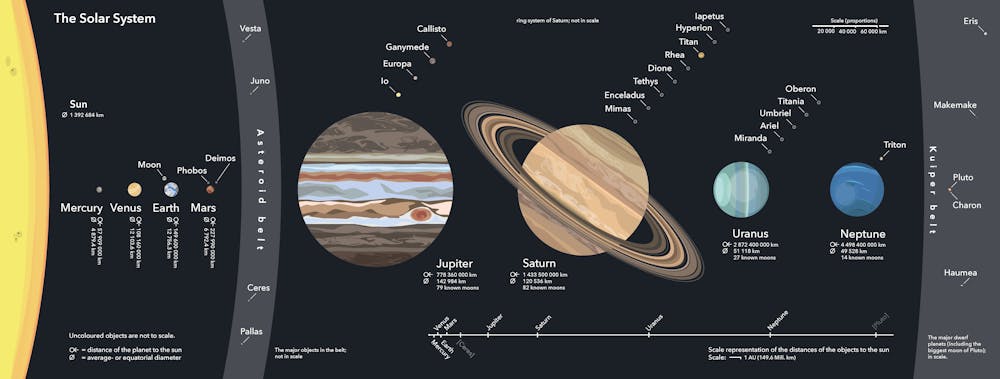
The giant planets – Jupiter, Saturn, Uranus and Neptune - are some of the most awe-inspiring in our Solar System, and have great importance for space research and our comprehension of the greater universe.
Yet they remain the least explored – especially the “ice giants” Uranus and Neptune – due to their distance from Earth, and the extreme conditions spacecraft must survive to enter their atmospheres. As such, they’re also the least understood planets in the Solar System.
Our ongoingresearch looks at how to overcome the harsh entry conditions experienced during giant planet missions. As we look forward to potential future missions, here’s what we might expect.
Jupiter is about ten times as large as Earth – with a 69,911km radius (compared to Earth’s 6,371km radius).
Beinahegut
But first, what are giant planets?
Unlike rocky planets, giant planets don’t have a surface to land on. Even in their lower atmospheres they remain gaseous, reaching extremely high pressures that would crush any spacecraft well before it could land on anything solid.
There are two types of giant planets: gas giants and ice giants.
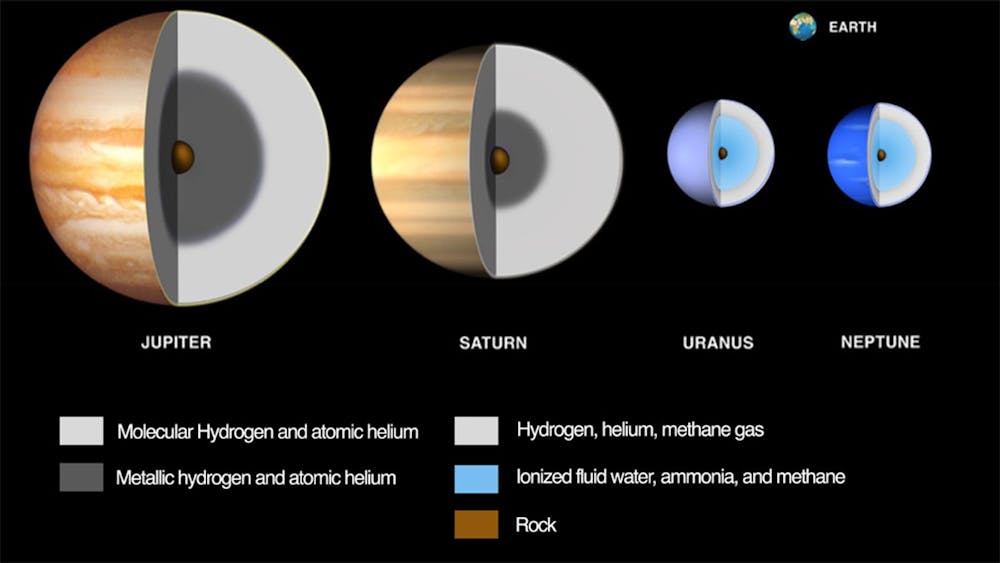
The larger Jupiter and Saturn are gas giants. These are mainly made of hydrogen and helium, with an outer gaseous layer and a partially liquid “metallic” layer below that. They’re also believed to have a small rocky core.
Uranus and Neptune have similar outer atmospheres and rocky cores, but their inner layer is made up of about 65% water and other so-called “ices” (although these technically remain liquid) such as methane and ammonia.
Relative size and composition of the giant planets in our solar system (with Earth also shown for comparison).
JPL/Caltech (based on material from the Lunar and Planetary Institute)
Slingshots to the edge of the Solar System
Any giant planet mission is extremely difficult. Still, there have been some past missions sent to the gas giants.
NASA’s 1989 Galileo mission had to slingshot around Venus and Earth to give it enough momentum to get to Jupiter, which it orbited for eight years. The 2011 Juno mission spent five years in transit, using a flyby around Earth to reach Jupiter (which it still orbits).
Similarly, the Cassini-Huygens mission run by NASA and the European Space Agency (ESA) took seven years to reach Saturn. The spacecraft spent 13 years exploring the planet and its surrounds, and launched a probe to explore Saturn’s moon, Titan.
Flight times get even longer for the two ice giants, which are much further from the Sun. Neither has had a dedicated mission so far.
A complex journey
The last and only spacecraft to visit the ice giants was Voyager 2, which flew by Uranus in 1986 and Neptune in 1989.
Voyager 2, the only spacecraft ever to have visited Neptune, took a photo of the planet in 1989.
NASA/JPL
While momentum is building for a return, it won’t be simple. If we launch during the next convenient launch windows of 2030–34 for Uranus and 2029–30 for Neptune, flight times would vary from 11 to 15 years.
A major issue is power. The Juno spacecraft is the most distant object from the Sun to have used solar panels. It orbits Jupiter, which is five times further away from the Sun than Earth is. Yet, where Juno’s solar cells would generate 14 kilowatts of continuous power on Earth, they only generate 0.5kW at Jupiter.
Meanwhile, Uranus and Neptune are 20 and 30 times further away, respectively, from the Sun than Earth is. Power for these missions would have to be generated from the radioactive decay of plutonium (the power source for both the Galileo and Cassini missions).
This radioactive decay can damage and interfere with instruments. It is therefore reserved for spacecraft which really need it, such as missions operating far away from the Sun.
Fighting the heat
The massive scale of giant planets means orbit speeds for incoming spacecraft are incredibly fast. And these speeds greatly heat up the spacecraft.
The Galileo probe entered Jupiter’s atmosphere at 47.5 kilometres per second, surviving the harshest entry conditions ever experienced by an entry probe. The shock layer which formed at the front of the spacecraft during entry reached a temperature of 16,000℃ – around three times the temperature of the Sun’s surface.
Even so, the distribution of the heat shield’s mass was found to be inefficient – showing we still have a lot to learn about entering giant planets.
Proposed future probe missions to Uranus and Neptune would occur at slower entry speeds of 22km/s and 26km/s, respectively.
For this, NASA have developed a tough but relatively lightweight material woven from carbon fibre, called HEEET (Heatshield for Extreme Entry Environment Technology), designed specifically for surviving giant planet and Venusian entry.
While the material has been tested with a full-scale prototype, it has yet to fly on a mission.
It’s planned NASA’s HEEET material will be used for future ice giant entry missions.
NASA
The next steps
In 2024, NASA’s Europa Clipper mission will launch to investigate Jupiter’s moon Europa, which is believed to house an ocean of liquid water below its icy surface, where signs of life may be found. The Dragonfly mission, planned to launch in 2026, will similarly aim to search for signs of life on Saturn’s moon Titan.
There are plans for a joint NASA-ESA mission to visit one of the ice giants within the upcoming launch window. But while there has been extensivepreparation, it’s undecided which ice giant will be visited.
A single mission to both planets is being considered. An entry probe is planned, too. But if the mission visits both planets, it’s undecided which planet’s atmosphere the probe would explore.
If we want to meet the upcoming launch window, it’s expected mission concepts will need to be finalised by 2025, at the latest. In other words, crunch time is coming.
Should a mission go forward, the two most important goals for NASA’s scientists will be to determine the interior makeup of ice giants (exactly what they are made of) and their composition (how they are formed).
Other objectives will include studying their magnetic fields, which are very different to gas giants and all other types of planets.
They’ll also want to study the heat released by both Uranus and Neptune, which both have average temperatures of around -200℃. All giant planets are meant to be very slowly cooling down, as they release energy gained during their formation.
This heat release can be detected for Jupiter, Saturn and Neptune. Uranus, however, doesn’t seem to release heat – and scientists don’t know why.
Earlier last fall, another celebrity’s COVID-19 vaccine comments drew even more attention, similarly divided. In September, when Nicki Minaj tweeted about her cousin in Trinidad, some ridiculed it, while others — including the White House — offered to put her in touch with medical experts who could correct her misconceptions.
Both types of response are equally futile.
Notice that both responses assume reason (and only reason) is responsible for human behaviour. Both responses assume a failure of reason; the only difference is the source of the failure.
The mockery assumes that some people lack the cognitive capacity or education to draw the correct inference from the data. The correction of misinformation assumes a lack of accurate information is preventing a rational conclusion.
As a cognitive neuroscientist who studies reasoning, I want to suggest that both of these responses make the same two mistakes.
The first mistake is a misunderstanding of the type of reasoning involved in making vaccine decisions. The second is more fundamental. It is based on an incomplete model of human behaviour.
The first mistake is obvious and can be quickly set aside. Most of us are not capable of “doing our own research” on COVID-19 vaccines. We do not have the training plus years of postdoctoral experience specializing in viruses and vaccines to seriously evaluate the primary literature, much less generate our own research. Even my family doctor, neurologist and cardiologist depend on the research produced by immunologists and vaccinologists.
The only thing most of us can do is follow the advice of specialists. “Doing our own research” simply amounts to making a decision on whom to believe. Do we believe the celebrities offering shocking and entertaining — but uncorroborated — opinions, the next-door neighbour, or the specialists at the Centers for Disease Control who have spent their lives studying viruses and vaccines?
This is an appropriate question to approach with reason. But our overly abstract notion of reason as detached from biology is a myth.
The tethered mind
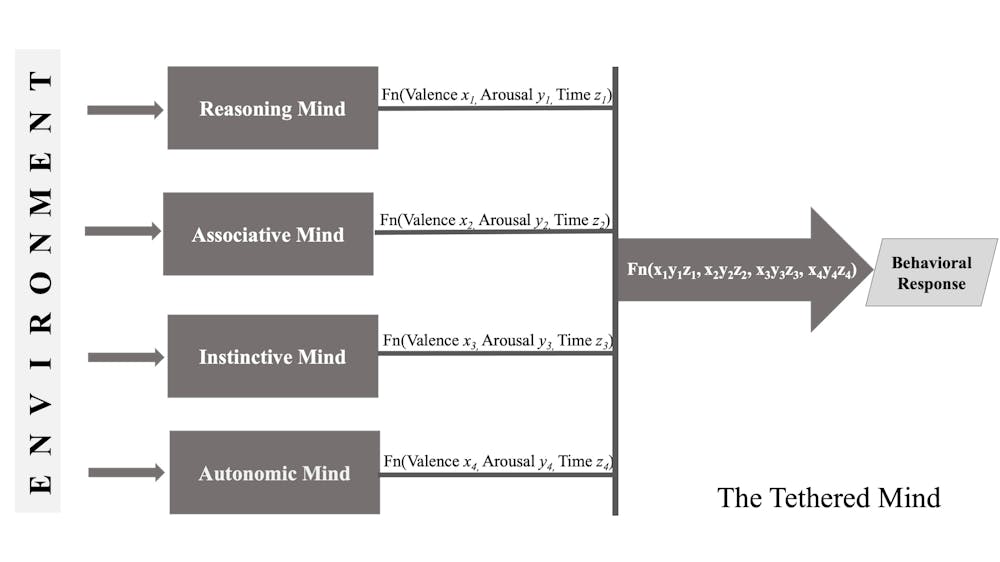
A more realistic conception of the human mind is one where we are reasoning creatures, but the reasoning system is interconnected — or tethered — to other biological systems that evolved earlier and function without our conscious input or awareness. Some examples are autonomic, instinctive and associative systems. This is a common-sense idea with deep implications developed in my book Reason and Less: Pursuing Food, Sex and Politics. What it means is that human behaviour is affected by all of these systems — not just reason, as is often assumed.
Reason is not the only factor in determining behaviour. Instinctive, automatic and associative systems also play a role.
(V. Goel), Author provided
How these systems interact is guided by feelings: pleasure and displeasure. In some situations, the same action may be triggered by multiple systems. In other situations, different systems trigger different — even contradictory — actions. The overall response is guided by the principle of maximizing pleasure and minimizing displeasure, determined by combining the individual system responses
In-groups and out-groups
Deciding who to believe activates in-group/out-group systems. The in-group is always good and righteous. The out-group is of questionable virtue and held in lower regard. This bias is often regarded as based in belief or reason. If this were the case, we should be able to change it by changing beliefs, but we cannot.
I argue in my book that in-group bias is actually an instinct. Instinctive systems involve very different conceptual and neural mechanisms than reasoning systems. Instinctive behaviours, belonging to older brain systems, are automatically triggered and not easily changeable, certainly not by changing beliefs and desires.
So, if the real issue is who to believe — and we are subject to in-group/out-group instincts — and if we believe scientists belong to the in-group, this instinct will push us in the same direction as reason and enhance the pleasure/satisfaction associated with a decision based solely on reason.
Instinctive behaviours involve very different conceptual and neural mechanisms than reasoning systems, and are not easy to change. This can add to the challenge of addressing anti-vaccine views.
(AP Photo/Rebecca Blackwell)
If, however, scientists belong to the out-group, then the instinct pushes us in the opposite direction: they are evil and trying to deceive and harm us. In this case, if the pleasure we derive from exercising the in-group instinct is greater than that derived from other contributing forces, then we will be among the vaccine hesitant.
This makes it even more difficult to overcome the instinctual bias. Any information to the contrary, no matter how clear or factual, will be less effective because it is pushing in the opposite direction to the instinct.
Notice that the same mechanisms and procedures are at play in both the vaccinated and the vaccine hesitant. The only difference is group membership. This is not a flaw in the system. This is how the tethered mind works.
Changing behaviour
Within this tethered mind model, how does one address vaccine hesitancy? Assuming that the vaccine hesitant lack reason or just need more information about vaccines and viruses is not correct or helpful. We need to factor in the non-reasoning systems that also drive behaviour and decisions.
According to tethered rationality, the following three strategies may be more successful:
Get the vaccine hesitant to expand their in-group to incorporate vaccine scientists. However, this is difficult because human in-group formation can be arbitrary and disjointed. For example, if the scientists are lumped with government, Big Pharma or other out-groups, assimilation into the in-group will be difficult for many.
Enable the vaccine hesitant to feel the severity of COVID-19 on a more visceral level, similar to the way anti-smoking campaigns from the ‘70s and ‘80s used graphic pictures of diseased lungs and emotional videos of dying cancer patients. These campaigns were more effective at changing behaviour than the earlier approach of printing the surgeon general’s health warning on cigarettes packs (appealing to reason alone).
Offer sufficient reward or penalty to tip the balance away from the pleasure associated with in-group membership.
Notice that none of these strategies targets reason. Reason is not the stumbling block. The stumbling block is the reality that reason is tethered to evolutionarily older systems that also have a say in behaviour. The first step in successfully changing a behaviour is having an accurate model of it.
Australia is losing its birds at an alarming rate – one in six species are now threatened with extinction, predominantly due to climate change, land clearing and worsening bushfires.
Last year, when we met in a Darwin cafe to discuss Anthony’s PhD on the impact of environmental art on conservation, we wondered if his project could contribute to saving threatened birds.
Could we, perhaps, harness the beauty of birdsong to help Australians care about what they were losing?
Our idea was to let the threatened birds speak directly to those who might help them.
Teaming up with renowned bird recordist David Stewart, we created a CD for the music charts consisting entirely of bird calls, titled Songs of Disappearance. For the title track, the Bowerbird Collective’s Simone Slattery arranged a fantasy dawn chorus of 53 threatened species.
The ARIA chart-topping recording of pure birdsong. Animation by Mervyn Street and Bernadette Trench-Thiedeman.
Among the stars
Launched on December 3, 2021, the album debuted at No.5 on the ARIA charts, in part because the conservation organisation BirdLife Australia alerted its supporter base to a wonderful Christmas present that would also help bird conservation.
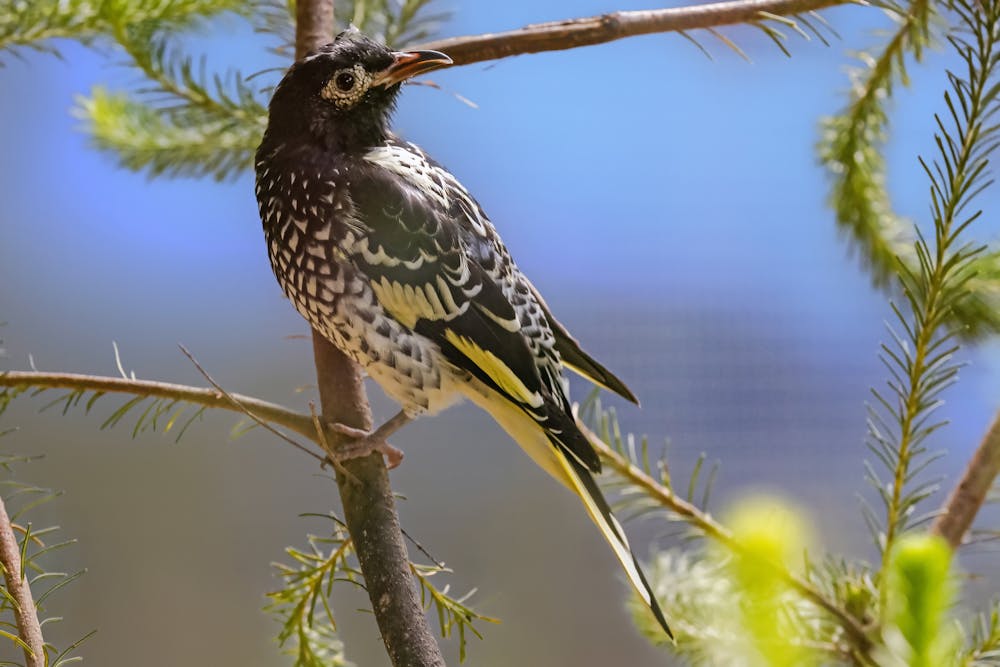
Some calls on the CD are astonishing for their rarity. Night parrots, critically endangered with a bell-like call, were lost for a century before they were rediscovered in 2013. Regent honeyeaters are now so scarce that young birds lack models from which to learn their soft, warbling calls.
Others are poignant cries of a disappearing landscape - the creaking calls of gang-gangs, buzzing bowerbirds and the mournful cry of the far eastern curlew.
Gang-gang cockatoos are endemic to south-eastern Australia.
Shutterstock
Some purchasers of the CD have written to say they have the 53 calls on loop.
Two weeks after its release, the CD reached number 3, ahead of such artists as Taylor Swift, Mariah Carey and Michael Bublé.
“I’m very happy to have birds flying above me!” Paul Kelly told us when Songs of Disappearance displaced his Christmas Train album.
Suddenly, retail giants wanted our album in their stores. Media requests flowed in from around the world. Our CDs are being manufactured and distributed for release in the United States.
Now it’s at number 2 on the ARIA charts – a pretty good result for threatened species from a project with a zero marketing budget. It may also be the first time, anywhere in the world, that a university research project has hit the music charts.
Will the calls be answered?
In December last year, more than 300 of Australia’s leading ornithologists released the Action Plan for Australian Birds 2020. It found 216 Australian birds are now threatened with extinction, mainly due to climate change.
The devastating findings of the action plan are what spawned our idea. The resulting combination of research, conservation, and creativity told a story that has resonated globally, something the action plan alone would never have achieved.
The endangered far eastern curlew is the largest wader that visits Australia.
Certainly the profits, which go to BirdLife Australia, will be put to good use. However, the 200 Australian bird taxa identified in the action plan need far more assistance to survive than one CD can provide.
The question is, can art help change population trajectories? Or, as cultural policy expert Christiaan De Beukelaer writes, will these haunting bird calls just “naturalise the awful future it wishes to avert”, like other climate apocalyptic art?
The answer is that we do not know - hence our ongoing research. However, we do know that, 60 years ago this year, the fear of losing birdsong implied by conservationist Rachel Carson’s book Silent Spring helped launch the environmental movement.
Regent honeyeaters are losing their song culture, as there are fewer birds from which to learn them.
Shutterstock
Where will the songs lead us?
Songs of Disappearance now presents a fascinating opportunity to understand whether it can catalyse some of the same impetus for change.
Those who purchased the album have been invited to complete a survey to help us understand whether this project and others like it can have a lasting effect on conservation outcomes.
We wish to know, for example, whether the CD has affected people emotionally. Conservation, like art, is a belief system driven by deep emotions. As 2020 research suggests, empathy for wildlife is strongly linked to a sense of moral justification for preventing extinctions.
So, has the CD changed behaviour? We know bird song, like music, boosts mental well-being. But can it turn intention into action? And if so, what sort of action? We also aim to learn lessons from this experience that might be transferred to other projects involving the arts and conservation.
The disappearance of Australian bird song is by no means inevitable. How wonderful if the songs of the birds themselves can help secure their future.