Former Center for Disease Control chief Dr. Thomas R. Frieden told the New York Times that he's concerned leaders are making decisions based on the upcoming election.
"We’re not reopening based on science,” said Dr. Frieden. “We’re reopening based on politics, ideology and public pressure. And I think it’s going to end badly.”
Millions of Americans have filed for unemployment protection as businesses large and small shut down in the coronavirus crisis. While some states are following the CDC guidelines for reopening, President Donald Trump has ranted that states following those guidelines are doing so to hurt his reelection.
"The reopenings will proceed nonetheless. The question now, scientists say, is whether the nation can minimize the damage by adopting new tactics," said the Times.
If Americans are all willing to wear masks, there stands to be a greater possibility of stopping the transmission as reopening continues. But as the United States advocates reopening, the city of Wuhan, China, believed to be the epicenter of has seen a resurgence of the virus as they reopen. It doesn't bode well for the U.S. that never fully shutdown the way Wuhan did.
"But while it may still be possible to blunt the effect of the reopenings, the nation is finding even this goal difficult," said the Times. "And the lockdowns have become entwined in partisan politics, with some libertarian extremists, gun-rights advocates and antivaccine activists painting them as an infringement of personal freedoms."
Previously, scientists have turned to llama antibodies for research into HIV, influenza, severe acute respiratory syndrome (SARS) and Middle East respiratory syndrome (MERS). Now they are studying whether llama antibodies could be used to neutralize the coronavirus.
Findings published in the science journal Cell on Tuesday found that llama antibodies showed promise as a means of neutralizing the novel coronavirus. The group of researchers, who hail from Belgium's VIB-UGent Center for Medical Biotechnology and the University of Texas at Austin, previously studied camelid antibody responses to SARS and MERS.
"Because of the current lack of treatments for MERS, SARS, and COVID-19 and the devastating effects associated with pandemic coronavirus outbreaks, both prophylactic and therapeutic interventions are sorely needed," the researchers stated in the paper. "It is our hope that because of their favorable biophysical properties and their potent neutralization capacity, MERS VHH-55, SARS VHH-72, and VHH-72-Fc may serve as both useful reagents for researchers and as potential therapeutic candidates."
Researchers are hopeful the antibody could eventually be used as a prophylactic treatment. This means that it could be injected in someone who is not yet infected, but at a high risk, like a healthcare worker. Notably, the protection against coronavirus wouldn't be permanent, according to the New York Times report; rather, it would last a month or two before additional injections were needed.
While such antibody treatments aren't quite the same as a vaccine, one advantage to an approach like this is that it would provide immediate protection — though of shorter duration. Unlike vaccines, which compel the immune system into creating their own antibodies for a given pathogen, with antibody treatments patients are being given the antibodies directly, though they will not create new ones.
The most vulnerable groups, such as the elderly, often mount a modest response to vaccines, which means that their protection may be incomplete. Healthcare workers or people at increased risk of exposure to the virus can also benefit from an immediate protection. Hence, this type of antibody medicine may be a crucial tool in fighting the current pandemic.
As reported by the New York Times, the llama antibodies were harvested from a four-year llama named Winter. Llamas' antibodies are a good candidate for the coronavirus because they can be easily manipulated and remain stable. They are also shorter and lack light-chain proteins. Whereas in humans, antibodies are made of both heavy and light-chain proteins that form a Y shape, the smaller antibodies of llamas enable them to access smaller crevices on spike proteins — the proteins that allow the coronavirus a means to infect.
As Salon has previously reported, novel coronavirus immunity, and exactly how it is conferred, is still a subject of intense research. For other coronavirus-family members like SARS and MERS, antibody defense is present in survivors for around two years, according to separate studies. South Korean health officials say at least 91 people who had been infected with the novel coronavirus tested positive for it again, after testing negative. Yet that finding is controversial, as some scientists think this subgroup may have received a false negative in the middle of an ongoing infection.
While the sci-fi approach of injecting llama antibodies into humans is likely several months away, researchers are moving toward clinical trials.
"There is still a lot of work to do to try to bring this into the clinic," Dr. Xavier Saelens, a molecular virologist at Ghent University in Belgium told the New York Times. "If it works, llama Winter deserves a statue."
President Donald Trump and Republican governors have said that they will reopen whether it endangers the lives of their citizens or not. While many Americans are exhausted and overwhelmed from living in lockdown, others are terrified to step outside and risk their health or the health of others.
"Instead of preventing COVID-19, we should let people infect each other to achieve herd immunity," Wen quoted an excuse. It's a philosophy that some Fox News hosts and other far-right Republicans have promoted. Herd immunity only really works if you have a vaccine. Until there's a vaccine, it'll just be people getting the coronavirus and people dying. One of the other questions scientists have had about the coronavirus is whether you can get it a second time and if that second time is actually worse. There are only about two weeks of data that show this, but the experts aren't sure if you're immune from it after getting it once. Still, these influencers want people to risk it.
"Most cases of COVID-19 are mild," was Wen's second misnomer that uneducated activists seem to be spouting as an excuse. It's ridiculous. There are perfectly healthy people in their 30s and 40s dying of heart attacks and strokes from COVID-19. So, while some people are asymptomatic and aren't suffering as considerably as others, there's no way of knowing which perfectly health person will die and which won't. Who wants to risk it?
The third thing Wen cited from people trying to justify reopening is: "People are getting sick and dying from other illnesses in greater numbers than COVID-19."
It's true; there are far more people dying of heart attacks and strokes in a year than there are COVID-19 cases. In those cases, people generally take medication to prevent it, they lose weight, have surgery, and other ways to prevent dying of such diseases. One would assume that people would also protect themselves against COVID-19 in the way they do with those diseases.
One of the most heartbreaking ideas Fox News and Texas Republicans had was to sacrifice the lives of others to try and salvage Trump's economy. Until Sean Hannity and Tucker Carlson start licking doorknobs or taking their elderly family members out and about in New York City, no one should listen. Anyone willing to sacrifice the lives of others should step up first.
"We've been in lockdown for more than a month, and cases aren't declining; social distancing doesn't work," is one of the excuses Wen has heard that is often misunderstood by people. In fact, social distancing does work, as evidenced by states likes New York and New Jersey, where people socially distanced and were able to drop their numbers so significantly it has changed the U.S.'s average. The states that haven't taken it seriously are the ones seeing no decrease in cases.
Finally, one of the things Republicans have said to justify reopening is "we can't keep the country in lockdown until a vaccine is developed, which could take years." It's nothing anyone is actually arguing, but Republicans seem to be justifying a grand reopening by taking it to an illogical extreme.
"Reopening criteria set out by the White House's own coronavirus task force have not been met. Removing restrictions too soon would have predictably grim results," explained Wen. "In reopening against public-health guidance, officials and others across the country have effectively decided to give up on trying to contain the coronavirus. This is a dangerous decision that is certain to lead to many preventable deaths. Let's stop using misleading arguments to justify it."
White House economic adviser Kevin Hassett revealed on Sunday that he fears going to work in the White House because of the novel coronavirus pandemic.
"Testing is a key component of it, but even testing doesn't remove all risks," Hassett told CBS host Margaret Brennan. "The interesting or sad thing about my dear colleague who was stricken with the coronavirus this week is that we were getting testing -- because we're close to the president every day -- and even with that, she tested negative one day and then positive the next day. And she's going to work in a community where people are being tested."
"This is a very, very scary virus," he added. "People are going to go back to work and they're going to be worried about things and it's going to take a while for things to get back to normal, I assume."
"When it comes to your work environment you just described," Brennan wondered, "do you wear a mask, are you going to continue to show up for work at the White House?"
"I've got a mask right here," Hassett said, holding his mask up to the camera. "The fact is I practice aggressive social distancing and I'll wear a mask when I feel it's necessary."
"It is scary to go to work," he admitted. "I think I would be a lot safer sitting at home than I would be going to the West Wing."
Hassett described the White House as a "small, crowded place" that is "a little bit risky."
"You have to do it because you have to serve your country," he remarked.
The number of coronavirus cases worldwide topped four million as some of the hardest-hit countries readied Sunday to lift lockdown restrictions despite concern about a second wave of infections.
Governments around the world are trying to stop the spread of the deadly disease while scrambling for ways to relieve pressure on their economies, which are facing a historic downturn with millions pushed into unemployment.
Despite the intense political pressure to reopen, nations are also keen to avoid second waves of infections that could overwhelm healthcare systems, with reminders over the weekend of the threat posed by the virus.
AFP / World toll of coronavirus infections and deaths as of May 9 at 1900 GMT
In the United States, media reported Saturday that the nation's top infectious disease expert, Anthony Fauci, was among three members of the White House coronavirus task force who will self-isolate after potential exposure.
And in South Korea, the capital Seoul shut all bars and clubs on Saturday as more than 50 cases were linked to a man who tested positive after spending time in one of the city's busiest nightlife districts.
Despite the risks, some governments in hard-hit Europe have said are signs of progress that justify cautious steps towards normality.
Officials in France on Saturday said the day's death toll of 80 was the lowest since early April, while nursing home fatalities also fell sharply as the nation prepared to relax curbs on public movement imposed eight weeks ago.
AFP / Odd ANDERSEN Antje Roesler cleans a table at the reopened Cafe Prag in Schwerin, northeastern Germany on May 9, 2020. The traditional cafe and restaurant welcomed eat-in customers after two months of closure
The easing, to begin Monday, has brought mixed reactions.
"I've been scared to death" about the reopening, said Maya Flandin, a bookshop manager from Lyon. "It's a big responsibility to have to protect my staff and my customers."
French health officials have warned that social distancing must be kept up even as restrictions are eased.
In Spain, about half the population will be allowed out on Monday for limited socialisation, and restaurants will be able to offer some outdoor service as the country begins a phased transition set to last through June.
AFP / Pavel Korolyov Across Europe, commemorations marking 75 years since Nazi Germany's surrender were cancelled or scaled down because of coronavirus fears
With lingering fears of a resurgence, authorities excluded Madrid and Barcelona -- two COVID-19 hotspots -- from the first phase.
Belgium is also easing some restrictions on Monday, and in some parts of Germany, bars and restaurants reopened on Saturday with further easing set for Monday.
In Britain, Prime Minister Boris Johnson is expected Sunday to lay out a plan for the nation to emerge out of its current lockdown.
Media reports have suggested that Britain may introduce a mandatory 14-day quarantine for international arrivals to stop the spread of the virus.
- 'Absolute chaotic disaster' -
Global economic figures are pointing to the most acute downturn in nearly a century, with businesses forced to shut and supply lines badly disrupted, and pressure is growing on leaders around the world to find a way out as the worldwide death toll topped 277,000 and infections crossed four million.
AFP / MICHAEL DANTAS Ulisses Xavier, who has worked for 16 years at Nossa Senhora cemetery in Manaus, Brazil, prepares to place crosses on graves during his shift on May 8, 2020
In the United States, the country with the highest death toll and where more than 20 million people have lost their jobs, President Donald Trump has insisted that next year would be "phenomenal" for the economy, urging reopening despite the virus still claiming well over 1,000 lives daily in the country.
The scale of the challenge was brought in sharp focus over the weekend as US media reported that top disease expert Anthony Fauci, who has become the trusted face of the government response to the pandemic, is going to self-isolate after possible exposure to an infected White House staffer.
Fauci told CNN that he will undergo a "modified quarantine" as he had not been in close proximity to the staffer, the network reported. He will remain at home teleworking, and will wear a mask for two weeks.
AFP / William WEST Protesters in Melbourne demanded an end to the coronavirus lockdowns in Australia, presenting a number of conspiracy theories which officials have dismissed as 'nonsense'
Robert Redfield, the director of the Centers for Disease Control and Prevention, and Stephen Hahn, the commissioner of the Food and Drug Administration, will also self-isolate, CNN added.
All three will still testify at Tuesday's Senate coronavirus hearing, with Redfield and Hahn participating via video link, according to Senator Lamar Alexander, chairman of the chamber's health committee.
It is believed Fauci will attend wearing a mask, CNN reported.
President Trump has faced sharp criticism from his predecessor Barack Obama, who said on a leaked tape that Trump's handling of the crisis was an "absolute chaotic disaster".
- 'Complete nonsense' -
With people wearying of being indoors and under economic pressure, anti-lockdown protests have been held in a number of countries in recent weeks, with some demonstrators arguing that such restrictions violate their rights and others promoting conspiracy theories about the pandemic.
Ten people were arrested and a police officer injured in Melbourne, Australia, on Sunday in the latest such protest, where around 150 people gathered to demand an end to the shutdown.
Participants were promoting a number of conspiracy theories, such as linking 5G cellular communications to the disease.
Australian chief medical officer Brendan Murphy said there was "a lot of very silly misinformation out there", including the 5G allegation.
"I have unfortunately received a lot of communication from these conspiracy theorists myself," he said.
"It is complete nonsense. 5G has got nothing at all to do with coronavirus."
"We now have multiple studies across the globe and reports from treating physicians regarding the safety and efficacy of hydroxychloroquine," Ingraham during a Wednesday segment. "Along with hundreds of thousands of lupus and rheumatoid arthritis patients who've been taking the drug for decades without complications. Time for the FDA — the president himself — to pull back on the misguided and unnecessary warning that was issued a few weeks ago."
Ingraham floated the idea in the context of a recent study from French microbiologist Dr. Didiet Raoult, the only medical expert whom she regularly invokes on the topic. The Fox News host's comments came hours before the largest study published to date, in the New England Journal of Medicine, found that the drug failed to help coronavirus patients.
"We don't think at this point, given the totality of evidence, that it is reasonable to routinely give this drug to patients," Dr. Neil Schluger, chief of the division of pulmonary, allergy and critical care medicine at Columbia, which led the research, said. "We don't see the rationale for doing that."
Government officials have also repeatedly cautioned the public against the unproven treatment, citing "potentially significant side effects," including death.
On April 1, Ingraham featured testimony of another expert — Dr. Stephen Smith, founder of the Smith Center for Infectious Diseases and Urban Health — who claimed that the recent science around hydroxychloroquine heralded "the beginning of the end of the pandemic."
Fox News personalities including Sean Hannity and their guests like Dr. Mehmet Oz advocated strongly for the drug, which was reportedly first brought to Trump's attention by primetime host Tucker Carlson. Network stars have largely eased off after the NIH issued a public warning in April, but Ingraham has recently ramped back up her outspoken opinions about the drug. She is a political commentator — not a doctor.
"They might do emergency authorization," she told viewers late last month. "Hydroxychloroquine was approved decades ago."
Her campaign, however, hinges largely on Raoult's work, which has been roundly criticized, including from the very journal that published his first study.
The study Ingraham cited Thursday, published in late April, retrospectively analyzed 1,061 patients treated with a combination hydroxychloroquine and azithromycin, and claimed to find a "good clinical outcome and virological cure in 91.7 percent of patients" with only eight deaths and a "handful" of side effects.
Ingraham hailed this research over muted footage of the doctor, which seems pulled from an interview where Raoult, who is white but claims to have been born in Senegal, cites what he claims is his African heritage for his success in treating COVID-19 patients.
"Maybe I was capable of responding to this situation, because I'm part African and part of my ancestry leave me with the idea that we should treat infectious diseases," he said.
"We have to be careful, Laura, that we don't assume something works based on an anecdotal report that's not controlled," he said. "And I refer specifically to hydroxychloroquine. There's a lot of buzz out there on the Internet — on the social media — about that. We need to look at it in a scientific way."
Scientists the world over are scrambling to perfect an anti-viral treatment for the novel coronavirus, and following what might seem to be some unusual trails.
Belgium's top researchers insist that their efforts to isolate an anti-body grown in a llama -- the Andean beast of burden -- is based on a solid lead.
Professor Xavier Saelens of the Flemish Institute of Biotechnology (VIB) in Ghent told AFP, that if it works it would not be the first time the camel-like beast has helped out.
"There's already a drug on the market that came from a llama antibody," he said, citing caplacizumab, used in the blood disorder thrombotic thrombocytopenic purpura.
Now he believes his team are on the threshold of another "great breakthrough" in the hunt for a treatment, this time for those caught in the coronavirus pandemic.
Saelens and his Belgian colleague Nico Callewaert are working with a US team from the University of Texas Austin, led by professor Jason McLellan.
A female llama called Winter has been injected with a protein present on the surface of the novel coronavirus, first detected in China last year, and has reacted by developing antibodies.
These in turn appear capable of playing a role in shielding the carrier and neutralizing the threat of the virus.
"The llama had an immune response to this protein," said VIB researcher Dorien De Vlieger.
"Our goal is to produce an anti-viral treatment would would involve directly administering these antibodies to patients," she said.
The first testing on human patients could begin "before the end of the year."
Researchers elsewhere are working on possible vaccines against the virus, which would trigger recipients to develop their own antibodies against the disease.
- 'Secret location' -
But this could take a long time and would not be useful for patients already infected with COVID-19.
An anti-viral treatment based on llama antibodies would not end the crisis, but it is a promising route towards a way of helping the already sick and slashing the death toll.
The VIB laboratory has a worldwide reputation in the field and operates independently of the pharmaceutical industry, as an academic institution affiliated with Ghent University.
Its researchers had a head start on the coronavirus, having begun the collaboration with the Texas team in 2016 targeting more general respiratory SARS-type diseases.
But the fast-spreading and deadly new outbreak caused them to step up their endeavors.
The antibody extracted from the llama bonds with a big area of the Severe Acute Respiratory Syndrome Coronavirus 2 (SARS-CoV-2) which causes COVID-19.
This prevents it from penetrating host cells and infecting the victim.
"It's an important breakthrough in the fight against COVID-19," said Saelens.
And what of Winter, the hero of the fight? She is being kept at a secret location within Belgium.
"We're worried about animal rights activists," said De Vlieger. "But we also have to do our best to keep her stress levels down."
Some states desperately waiting for supplies of the drug remdesivir -- which is helpful in the treatment of the coronavirus -- are getting shortchanged by the federal government with the drug mistakenly being shipped by the federal government to other areas that have not been hit as hard by the COVID-19 pandemic.
According to Jonathan Swan of Axios, the White House has not been able to explain the snafu and no one seems willing to step forward and take the blame.
"A complete breakdown in communication and coordinationwithin the Trump administration has undermined the distribution of a promising treatment, according to senior officials with direct knowledge of the discussions," Swan reports before adding, "The drug, remdesivir, hasn't made it to some of the high-priority hospitals where it's most needed, and administration officials have responded by shifting blame and avoiding responsibility, sources said."
Gilead Sciences, which developed the drug which is currently being tested for COVID-19 and has been issued an Emergency Use Authorization in the U.S., donated hundreds of thousands of doses to the federal government which is responsible for distribution.
However, like many pandemic efforts administered by the White House, help is not going where it is most needed.
"More than 32,000 doses of remdesivir were shipped and delivered on Tuesday to Indiana, Massachusetts, New Jersey, New York, Rhode Island, Tennessee and Virginia," Axios reports. "But many of these doses went to 'less impacted counties,' an administration official said."
Asked about the problem that could lead to more COVID-19 patients not getting the treatment they need, one White House official thew up their hands.
"Some went to the wrong places,some went to the right places," admitted one senior official. "We don't know who gave the order. And no one is claiming responsibility."
According to the report, Vice President Mike Pence and Coronavirus Response Coordinator Dr. Deborah Birx were furious when they learned about the problems.
"At Wednesday's meeting of the White House Coronavirus Task Force, Pence personally directed Health and Human Services Secretary Alex Azar to take more ownership for getting remdesivir to the places where it's needed, according to a source familiar with the meeting," Swan reports. "In subsequent conversations with colleagues, Azar said he had not known about the arrangements that led to mass confusion and misaligned shipments the day before.
Azar reportedly distanced himself from the problem, "... despite the fact that one of his top officials, assistant secretary for preparedness and response Robert Kadlec, was intimately involved in the distribution plan."
Every week, it seems, the list of coronavirus symptoms -- ranging from disagreeable to the deadly -- grows longer.
What began as a familiar flu-like cluster of chills, headaches and fever has rapidly expanded over the last three months into a catalogue of syndromes affecting almost all the body's organs, from the brain to the kidneys.
The new coronavirus can also push the immune system into overdrive, unleashing an indiscriminate assault -- known as a cytokine storm -- on pathogens and their human hosts alike.
"Most viruses can cause disease in two ways," explained Jeremy Rossman, a senior lecturer in virology at the University of Kent.
"They can damage tissue where the virus replicates, or they can cause damage as a side-effect of the immune system fighting off the disease."
Doctors suspect, for example, that COVID-19 is behind the hospitalisation in recent weeks of several dozen children in New York, London and Paris diagnosed with a rare inflammatory disorder similar to toxic shock syndrome.
Affecting mainly young children, the painful disease attacks artery walls and can cause organ failure.
Dozens of medical studies in recent weeks have detailed other potentially lethal impacts including strokes and heart damage.
Researchers from the urology department of Nanjing Medical University, writing this week in Nature Reviews, described patients developing severe urinary complications and acute kidney injury.
They also observed "dramatic changes" in male sex hormones.
- '1-in-10,000 still a lot' -
"After recovery from COVID-19, young men who are interested in having children should receive a consultation regarding their fertility," they concluded.
Does that mean that COVID-19 causes a uniquely broad array of symptoms? Not necessarily, virologists and other experts say.
"If it is a common disease, then even rare complications will happen frequently," Babak Javid, a consultant in infectious diseases at Cambridge University Hospitals, told AFP.
There are nearly 3.8 million confirmed COVID-19 cases around the world, but the true number of infections -- taking into account undetected and asymptomatic infection -- "is going to be in the tens, possibly hundreds of millions," he said.
"So if one-in-1,000, or even one-in-10,000, get complications, that is still thousands of people."
Some of the rarer symptoms associated with COVID-19 are also known to have been triggered by influenza, which kills several hundred thousand people worldwide every year, he noted.
For the new coronavirus, frontline general practitioners across the globe have been the first to look for patterns in the unfolding pandemic.
"At the outset, we were told to watch out for headaches, fever and a light cough," recalls Sylvie Monnoye, a family doctor in central Paris for nearly three decades.
"Then they added a runny nose and a scratchy throat. After that, digestive problems, including stomach aches and severe diarrhoea."
The list kept growing: skin lesions, neurological problems, sharp chest pains, loss of taste and smell.
- A feeling of confusion -
"We started to think that we should suspect everything," Monnoye said, dressed from head-to-toe in protective wear.
Some patients were so terrified, she added, that they cowered in the corner of her office afraid to touch anything or get too close to her.
An internal US Centers for Disease Control (CDC) report with a breakdown of symptoms for 2,591 COVID-10 patients admitted to hospital between March 1 and May 1 chimes with such anecdotal accounts.
Three-quarters of the patients experienced chills, fever and/or coughing, with nearly as many showing shortness of breath.
These are, by far, the most common COVID-19 symptoms.
Nearly a third complained of flu-like muscle aches, while 28 percent experienced diarrhoea and a quarter nausea or vomiting, according to the internal report, leaked to the media.
Some 18 percent had headaches, while 10 to 15 percent were hit by chest or abdominal pain, runny nose, sore throat and/or a feeling of confusion.
Less than one percent of the CDC cohort had other symptoms, including seizures, rashes and conjunctivitis.
Health authorities have been slow in alerting the public to this panoply of possible impacts.
- Loss of smell -
Until the end of April, the CDC itself only listed three on it's website: coughing, fever and shortness of breath. The update included only a few more: chills, muscle pain, headaches and loss of smell or taste. France's health officials made a similar update on May 5.
A loss of smell and taste was found in only 3.5 percent of patients included in the CDC report, but experts suspect these symptoms are -- for reasons unknown -- far more prevalent in less severe cases where people were not hospitalised.
Monnoye said it was among the most common of the symptoms she encountered, and agreed that it was "probably linked to a milder form of the disease".
"I don't have any patients with these symptoms who had serious complications," she said.
The loss of taste and smell, experts note, is extremely rare with other types of virus.
Another cluster of symptoms rarely found with in flu patients appears to arise from blood clots.
Heart problems, liver thrombosis, lung embolisms and brain damage in COVID-19 patients have been traced to such clots in a flurry of recent studies. Others have described kidney failure and even gummed-up dialysis machines.
"When one is very sick with COVID, you can have a problem with blood clots forming, and that seems to be much, much more common than with other viral infections," added Javid.
"Compared to influenza, you are much more likely to become seriously ill, and to die."
Chinese scientists have detected coronavirus in the semen of infected men but further research will be needed to determine whether the virus can be sexually transmitted.
The findings from a study of coronavirus patients at a Chinese hospital were published on Thursday in the JAMA Network Open medical journal.
COVID-19 is spread through respiratory droplets or contact and the virus has also been detected in feces, saliva and urine.
Researchers at the Shangqiu Municipal Hospital in China's Henan Province conducted a study to determine whether the virus was present in semen.
They tested the semen of 38 coronavirus patients aged 15 to their 50s.
Genetic material from the coronavirus was found in the semen of six patients -- four of whom were at the "acute stage of infection" and two of whom were "recovering."
The researchers noted that the study was "limited by the small sample size" and further research would be required to determine whether the virus can be sexually transmitted.
"If it could be proved that SARS-CoV-2 can be transmitted sexually in future studies, sexual transmission might be a critical part of the prevention of transmission," the study said.
"Abstinence or condom use might be considered as preventive means for these patients," it said.
The Research Brief is a short take about interesting academic work.
The big idea
The most common type of test for the new coronavirus takes several hours and is uncomfortable; samples are obtained by sliding a swab into the nose or throat.
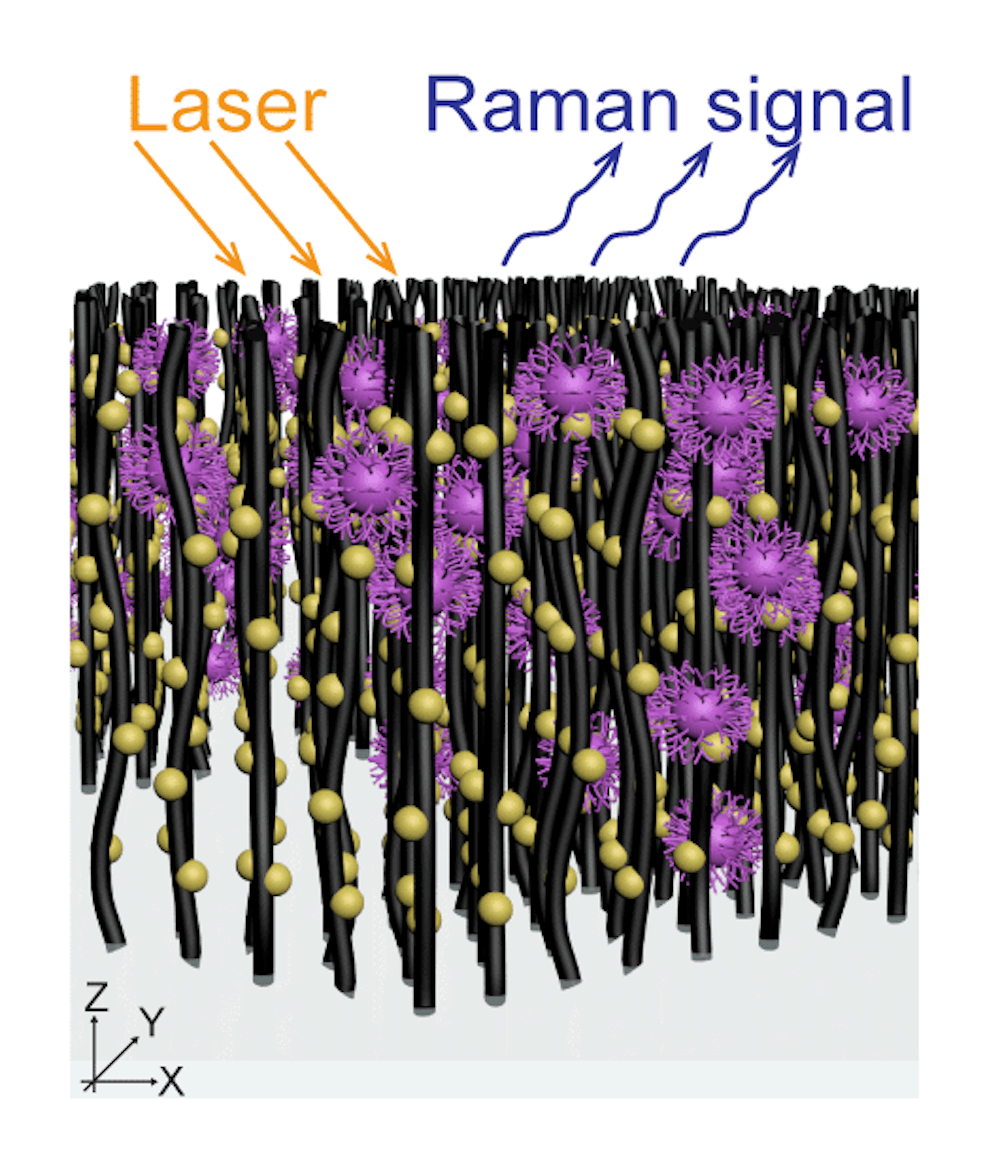
Shining a laser onto virus samples trapped in mesh of carbon nanotubes will produce a signature ‘reflection.’
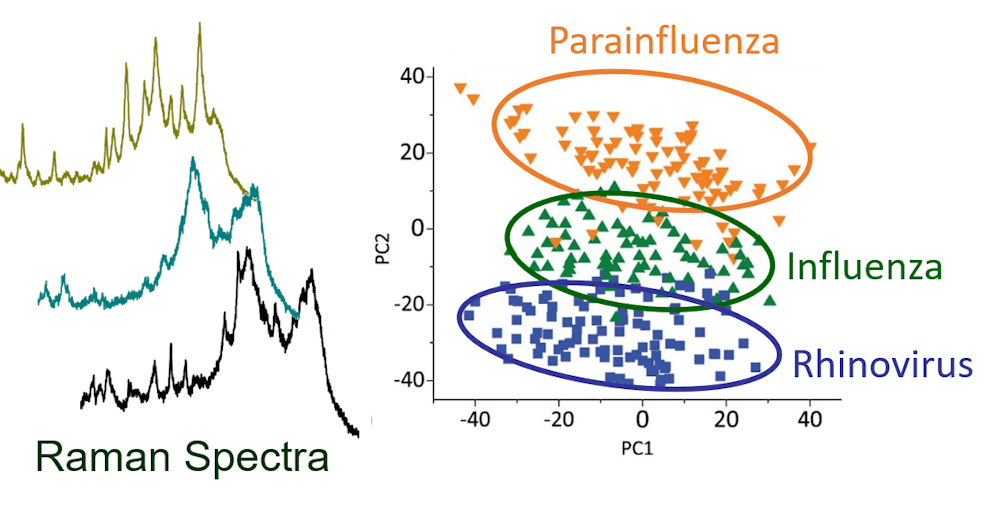
Our approach uses a technique called Raman spectroscopy to identify viruses by shining a light on a disposable cartridge that collects samples from oral cotton swabs or a person blowing through the device. Once a sample is collected, a spectrometer measures the interatomic vibrations that result from shining the light on the collected viruses. Each virus has its own signature vibrations, which act as a sort of optical fingerprint that can distinguish the coronavirus from, for example, the virus that causes influenza.
We could capture viruses from patients’ saliva taken with a swab or by a person blowing through a device, called a microfluidic cartridge. The air and liquid pass an array of carbon nanotubes, cylinder-shape molecules used in different materials.
The diameters of the nanotubes are microscopic, between 10-60 nanometers. Because they are smaller than microbes – flu viruses range from 90-120 nanometers in diameter and coronaviruses range from 125-150nm in diameter – the pathogens collect on the carbon nanotubes. Once trapped by passing through the carbon nanotubes, the viruses can be optically identified by shining a laser on the sample. Shining the light on the carbon nanotubes and pathogens creates a distinctive optical fingerprint, or “Raman peaks.”
After being beamed with lasers, different microbes will give off radiation in different wavelengths that can be measured to identify the pathogen.
After the laser shines on the trapped sample, machine learning algorithms identify the signature spectrum of the virus that results from the light that bounces off the virus particles. With the assistance of machine learning, the identification takes less than two minutes with an accuracy rate of up to 70% to 90%, comparable to state-of-the-art microbiology techniques.
Why it matters
Right now, the rapid and accurate detection of the novel coronavirus is of paramount importance. While Raman spectroscopy has the potential to be enormously helpful in identifying this virus, doctors can also use this technique to test for other illnesses, such as influenza. By identifying the virus easily, quickly and at the point of contact, Raman spectroscopy could significantly halt disease spread.
Compare that to our current methods of analyzing samples; a process that is relatively slow, tedious, labor intensive and requires extensive scrutiny at laboratories. Early and rapid detection with this new device has the potential to save hundreds of thousands of lives every year.
What other work is being done
For the identification of viruses, existing technologies do provide relatively sensitive detection. However, they take several hours and sometime days depending on the quality of the sample collected because low virus concentrations are very difficult to process and results in false negatives.
Unfortunately, both immune- and molecular-based methods, including enzyme-linked immunosorbent assay (ELISA) and polymerase chain reaction (PCR), require prior knowledge of the strains. Another technique known as deep sequencing is another promising new approach, but obtaining sufficient viral reads for it to work well depends on the quality of the sample and its preparation. Processing steps involve incorporating different benchtop equipment, reagents and technical expertise.
We are applying for federal funds to demonstrate that this technology works for SARS-CoV-2, the virus that cause COVID-19, and then build reliable prototypes that can be scaled up for mass production and field deployment. We are also talking with several manufacturers and exploring ways to move the technology forward to help in the current crisis.
We have been successful in capturing human respiratory viruses from clinical samples using this technique. Eventually, we foresee this technology becoming available to anyone visiting their family doctor. Within two minutes, a person would know whether you have a respiratory virus by comparing the result of the spectroscopy test with other results in a database. In the future, this technology could be at hospitals, airports and inside commercial aircraft to avoid outbreaks. And the captured viruses, still viable, can be replicated to develop a vaccine.
Scientists have been tracking changes to the genetic makeup of the new coronavirus to better understand how best to slow its spread. My research on the link between high blood sugar in patients and severity of illness from the virus could provide insight into the nature of different possible types of virus. Specifically, the presence of sugar on the virus’s spike protein could help differentiate them.
Many physicians noticed that people with high blood sugar, not only those with a history of diabetes but also unexplained new diabetes, were showing up in the hospital with the novel coronavirus. This indicated to me that something could be going on with the addition of sugar molecules to the virus, or the receptor it latches onto to infect cells, that influenced the severity of the disease.
I am a medical oncologist at the University of Pittsburgh who treats women with breast cancer. Colleagues of mine at the University of Pennsylvania have trials where we use the drug hydroxychloroqine to try to keep breast cancer from growing in the bone marrow, only to regrow years later. We call this tumor dormancy.
I was therefore very interested in finding out whether there were mutations in the virus that possibly added or subtracted sugar molecules from the virus proteins, and therefore possibly either increased or decreased the severity of disease.
Sequencing novel coronavirus and scanning for mutation
Unlike prior pandemics, we have a new and very powerful tool in 2020. We are able to obtain the RNA sequence of the virus almost in real time, and track the changes in the virus as it moves from place to place.
These coronaviruses do mutate quite a bit. A group of dedicated scientists who are members of a research organization called GISAID have been doing this, and another group called Nextstrain has created a website to allow the public to see the mutations in real time. It is open source, meaning anyone can use it.
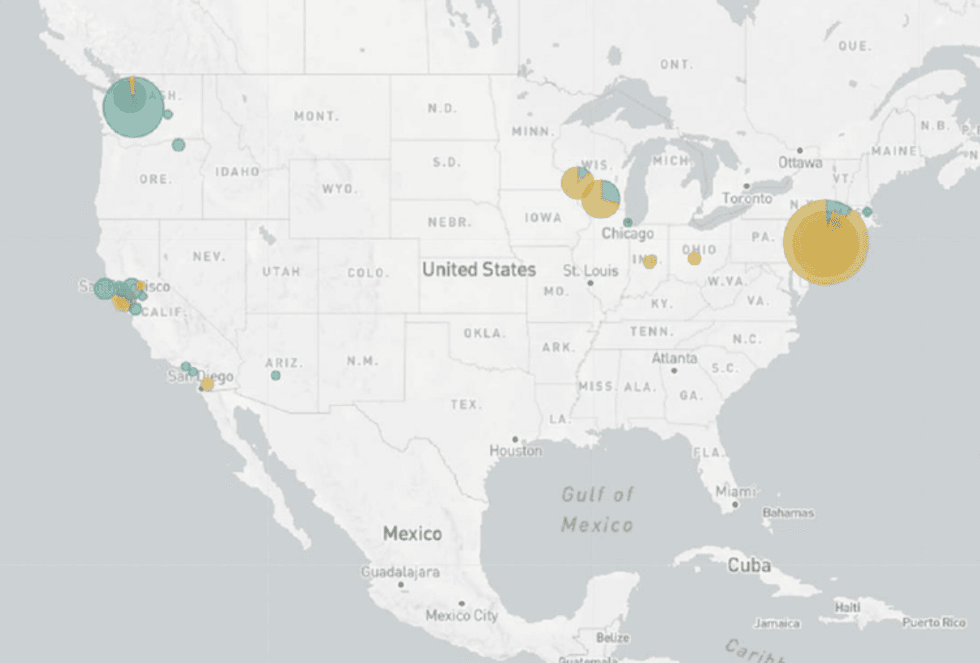
While a causal link between this mutation and more severe disease remains to be proven, this may explain at least part of the difference between the severity of infections on the East and West coasts. A group in China recently found that changes in the spike protein among other mutations of the novel coronavirus taken from various people infected in Wuhan can alter the aggressiveness of the virus in cells grown in the lab. For example, strains of the novel coronavirus in Wuhan that were more similar to those in Washington and California were less aggressive in cell culture than those that were more similar to Europe.
While only a theory, this could mean that the novel coronavirus is trying out various strategies to try to live with us. If a virus is too aggressive, it may burn out too quickly by putting too many people in the hospital so it cannot spread. The milder form of the virus could spread more, and provide more immunity. Therefore, the novel coronavirus could be losing aggressiveness at it continues to move among us. This clearly is crucial to know, and needs to be tested.
Many scientists around the world are trying to figure this out. It’s interesting what a clinical observation can lead to.
A catastrophic loss in biodiversity, reckless destruction of wildland and warming temperatures have allowed disease to explode. Ignoring the connection between climate change and pandemics would be “dangerous delusion,” one scientist said.
The scientists who study how diseases emerge in a changing environment knew this moment was coming. Climate change is making outbreaks of disease more common and more dangerous.
Over the past few decades, the number of emerging infectious diseases that spread to people — especially coronaviruses and other respiratory illnesses believed to have come from bats and birds — has skyrocketed. A new emerging disease surfaces five times a year. One study estimates that more than 3,200 strains of coronaviruses already exist among bats, awaiting an opportunity to jump to people.
The diseases may have always been there, buried deep in wild and remote places out of reach of people. But until now, the planet’s natural defense systems were better at fighting them off.
Today, climate warming is demolishing those defense systems, driving a catastrophic loss in biodiversity that, when coupled with reckless deforestation and aggressive conversion of wildland for economic development, pushes farms and people closer to the wild and opens the gates for the spread of disease.
Aaron Bernstein, the interim director for the C-Change Center for Climate, Health and the Global Environment at Harvard University’s T.H. Chan School of Public Health, said that ignoring how climate and rapid land development were putting disease-carrying animals in a squeeze was akin to playing Russian roulette.
“Nature is trying to tell us something,” Bernstein said.
Scientists have not suggested that climate played any direct role in causing the current COVID-19 outbreak. Though the virus is believed to have originated with the horseshoe bat, part of a genus that’s been roaming the forests of the planet for 40 million years and thrives in the remote jungles of south China, even that remains uncertain.
Scientists have, however, been studying the coronaviruses of southern China for years and warning that swift climate and environmental change there — in both loss of biodiversity and encroachment by civilization — was going to help new viruses jump to people.
There are three ways climate influences emerging diseases. Roughly 60% of new pathogens come from animals — including those pressured by diversity loss — and roughly one-third of those can be directly attributed to changes in human land use, meaning deforestation, the introduction of farming, development or resource extraction in otherwise natural settings. Vector-borne diseases — those carried by insects like mosquitoes and ticks and transferred in the blood of infected people — are also on the rise as warming weather and erratic precipitation vastly expand the geographic regions vulnerable to contagion. Climate is even bringing old viruses back from the dead, thawing zombie contagions like the anthrax released from a frozen reindeer in 2016, which can come down from the arctic and haunt us from the past.
Thus the COVID-19 pandemic, even as it unfolds in the form of an urgent crisis, is offering a larger lesson. It is demonstrating in real time the enormous and undeniable power that nature has over civilization and even over its politics. That alone may make the pandemic prologue for more far-reaching and disruptive changes to come. But it also makes clear that climate policy today is indivisible from efforts to prevent new infectious outbreaks, or, as Bernstein put it, the notion that climate and health and environmental policy might not be related is “a dangerous delusion.”
The warming of the climate is one of the principal drivers of the greatest — and fastest — loss of species diversity in the history of the planet, as shifting climate patterns force species to change habitats, push them into new regions or threaten their food and water supplies. What’s known as biodiversity is critical because the natural variety of plants and animals lends each species greater resiliency against threat and together offers a delicately balanced safety net for natural systems. As diversity wanes, the balance is upset, and remaining species are both more vulnerable to human influences and, according to a landmark 2010 study in the journal Nature, more likely to pass along powerful pathogens.
The casualties are amplified by civilization’s relentless push into forests and wild areas on the hunt for timber, cropland and other natural resources. Epidemiologists tracking the root of disease in South Asia have learned that even incremental and seemingly manageable injuries to local environments — say, the construction of a livestock farm adjacent to stressed natural forest — can add up to outsized consequences.
Around the world, according to the World Resources Institute, only 15% of the planet’s forests remain intact. The rest have been cut down, degraded or fragmented to the point that they disrupt the natural ecosystems that depend on them. As the forests die, and grasslands and wetlands are also destroyed, biodiversity sharply decreases further. The United Nations warns that the number of species on the planet has already dropped by 20% and that more than a million animal and plant species now face extinction.
Losing species has, in certain cases, translated directly to a rise in infectious disease.
Peatland fires in Indonesia in 2018 used to clear forests for palm oil plantations. Deforestation is one of the largest drivers of the emergence of new infectious diseases. (Wahyudi/AFP via Getty Image)
Americans have been experiencing this phenomenon directly in recent years as migratory birds have become less diverse and the threat posed by West Nile encephalitis has spread. It turns out that the birds that host the disease happen to also be the tough ones that prevail amid a thinned population. Those survivors have supported higher infection rates in mosquitoes and more spread to people.
Similarly, a study published last month in the journal Proceedings of the Royal Society B found that as larger mammals suffer declines at the hands of hunters or loggers or shifting climate patterns, smaller species, including bats, rats and other rodents, are thriving, either because they are more resilient to the degraded environment or they are able to live better among people.
It is these small animals, the ones that manage to find food in garbage cans or build nests in the eaves of buildings, that are proving most adaptable to human interference and also happen to spread disease. Rodents alone accounted for more than 60% of all the diseases transmitted from animals to people, the researchers found.
Warmer temperatures and higher rainfall associated with climate change — coupled with the loss of predators — are bound to make the rodent problem worse, with calamitous implications. In 1999, for example, parts of Panama saw three times as much rainfall as usual. The rat population exploded, researchers found. And so did the viruses rats carry, along with the chances those viruses would jump to people. That same year, a fatal lung disease transmitted through the saliva, feces and urine of rats and mice called hantavirus pulmonary syndrome emerged in Panama for the first time, according to a report in the journal Emerging Infectious Diseases.
As much as weather changes can drive changes in species, so does altering the landscape for new farms and new cities. In fact, researchers attribute a full 30% of emerging contagion to what they call “land use change.” Nothing drives land use shifts more than conversion for farmland and feedstock — a result of the push to feed the planet’s 7.8 billion people. As the global population surges to 10 billion over the next 35 years, and the capacity to farm food is stressed further again by the warming climate, the demand for land will only get more intense. Already, more than one-third of the planet’s land surface, and three-quarters of all of its fresh water, go toward the cultivation of crops and raising of livestock. These are the places where infectious diseases spread most often.
Take, for example, the 1999 Nipah outbreak in Malaysia — the true-life subject matter adapted for the film “Contagion.” Rapid clearcutting of the forests there to make way for palm plantations drove fruit bats to the edge of the trees. (Separate research also suggests that climate changes are shifting fruit bats’ food supply.) They found places to roost, as it happens, alongside a hog farm. As the bats gorged themselves on fruit, they dropped pieces of food from the branches, along with their urine, into the pigsties, where at least one pig is believed to have eaten some. When the pig was slaughtered and brought to market, an outbreak is believed to have been spread by the man who handled the meat. More than 100 people died.
The U.S. Centers for Disease Control and Prevention says that fully three-quarters of all new viruses have emerged from animals. Even the 2014 Ebola outbreak in West Africa is believed to have begun when a boy dug into a tree stump that happened to be the roost of bats carrying the virus.
As Christine Johnson, the associate director of the One Health Institute, an interdisciplinary epidemiological program at the University of California, Davis, puts it, global health policymakers have a responsibility to understand how climate, habitat and land use changes lead to disease. Almost every major epidemic we know of over the past couple of decades — SARS, COVID-19, Ebola and Nipah virus — jumped to people from wildlife enduring extreme climate and habitat strain, and still, “we’re naive to them,” she said. “That puts us in a dangerous place.”
Once new diseases are let loose in our environment, changing temperatures and precipitation are also changing how those diseases spread — and not for the better. Warming climates increase the range within which a disease can find a home, especially those transmitted by “vectors,” mosquitoes and ticks that carry a pathogen from its primary host to its new victim.
A 2008 study in the journal Nature found nearly one-third of emerging infectious diseases over the past 10 years were vector-borne, and that the jumps matched unusual changes in the climate. Especially in cases where insects like infection-bearing mosquitoes are chasing warmer temperatures, the study said, “climate change may drive the emergence of diseases.”
A mosquito in a laboratory of the Friedrich-Loeffler Institute in Germany. Scientists say at least 500 million more people, including 55 million more Americans, will be susceptible to mosquito-borne diseases as the climate warms. (Steffen Kugler/Getty Images)
Ticks and mosquitoes now thrive in places they’d never ventured before. As tropical species move northward, they are bringing dangerous pathogens with them. The Zika virus or Chikungunya, a mosquito-spread virus that manifests in intense joint pain, were once unseen in the United States, but both were transmitted locally, not brought home by travelers, in southern Texas and Florida in recent years.
Soon, they’ll be spreading further northward. According to a 2019 study in the journal PLOS Neglected Tropical Diseases, by 2050, disease-carrying mosquitoes will ultimately reach 500 million more people than they do today, including some 55 million more Americans. In 2013, dengue fever — an affliction affecting nearly 400 million people a year, but normally associated with the poorest regions of Africa — was transmitted locally in New York for the first time.
“The long-term risk from dengue may be much higher than COVID,” said Scott Weaver, the director of the Institute for Human Infections and Immunity at the University of Texas Medical Branch in Galveston. “It’s a disease of poor countries, so it doesn’t get the attention it deserves.”
The chain of events that ultimately leads to a pandemic can be long and subtle, steered by shifts in the ecosystem. The 1999 West Nile outbreak in the U.S., for example, came after climate-driven droughts dried up streams and rivers, leaving pools of stagnant water where mosquitoes bred unhindered. It turns out the loss of water also killed off their predators — dragonflies and frogs that depend on large watering holes were gone.
The next several months could bring hurricanes, floods and fire, on top of the pandemic currently raging through the country. How do you shelter in place during an evacuation?
Coronaviruses like COVID-19 aren’t likely to be carried by insects — they don’t leave enough infected virus cells in the blood. But one in five other viruses transmitted from animals to people are vector-borne, said U.C. Davis’ Johnson, meaning it’s only a matter of time before other exotic animal-driven pathogens are driven from the forests of the global tropics to the United States or Canada or Europe because of the warming climate. “Climate is going to shift vulnerability to that,” Johnson said, “and I think some of these regions are not prepared.”
The changing climate won’t just affect how the diseases move about the planet, it will also shape how easily we get sick. According to a 2013 study in the journal PLOS Currents Influenza, warm winters were predictors of the most severe flu seasons in the following year. The brief respite in year one, it turns out, relaxed people’s natural defenses and reduced “herd immunity,” setting conditions for the virus to rage back with a vengeance.
Even harsh swings from hot to cold, or sudden storms — exactly the kinds of climate-induced patterns we’re already seeing — make people more likely to get sick. A study in the journal Environmental Research Letters linked the brutal 2017-18 flu season — which killed 79,000 people — to erratic temperature swings and extreme weather that winter, the same period in which a spate of floods and hurricanes devastated much of the country. If the climate crisis continues on its current trajectory, the authors wrote, respiratory infections like the flu will sharply increase. The chance of a flu epidemic in America’s most populated cities will increase by as much as 50% this century, and flu-related deaths in Europe could also jump by 50%.
“We’re on a very dangerous path right now,” said the University of Texas’ Weaver. Slow action on climate has made dramatic warming and large-scale environmental changes inevitable, he said, “and I think that increases in disease are going to come along with it.”
Twelve months before the first COVID-19 case was diagnosed, a group of epidemiologists working with a U.S. Agency for International Development project called PREDICT, or Pandemic Influenza and other Emerging Threats, was deep in the remote leafy jungle of southern China’s Yunnan province hunting for what it believed to be one of the greatest dangers to civilization: a wellspring of emerging viruses.
A decade of study there had identified a pattern of obscure illnesses affecting remote villagers who used bat guano as fertilizer and sometimes for medicine. Scientists traced dozens of unnamed, emerging viruses to caves inhabited by horseshoe bats. Any one of them might have triggered a global pandemic killing a million people. But luck — and mostly luck alone — had so far kept the viruses from leaping out of those remote communities and into the mainstream population.
The luck is likely to run out, as Yunnan is undergoing enormous change. Quaint subsistence farm plots were overtaken by hastily erected apartment towers and high-speed rail lines, as the province endured dizzying development fueled by decades of Chinese economic expansion. Cities’ footprints swelled, pushing back the forests. More people moved into rural places and the wildlife trade, common to such frontier regions, thrived. With every new person and every felled tree, the bats’ habitat shrank, putting the viruses they carried on a collision course with humanity. By late 2018, epidemiologists there were bracing for what they call “spillover,” or the failure to keep a virus locally contained as it jumped from the bats and villages of Yunnan into the wider world.
In late 2018, the Trump administration, as part of a sweeping effort to bring U.S. programs in China to a halt, abruptly shut down the research — and its efforts to intercept the spread of a new novel coronavirus along with it. “We got a cease and desist,” said Dennis Carroll, who founded the PREDICT program and has been instrumental in global work to address the risks from emerging viruses. By late 2019, USAID had cut the program’s global funding.
USAID did not respond to a detailed list of questions from ProPublica.
The loss is immense. The researchers believed they were on the cusp of a breakthrough, racing to sequence the genes of the coronaviruses they’d extracted from the horseshoe bat and to begin work on vaccines. They’d campaigned for years for policymakers to fully consider what they’d learned about how land development and climate changes were driving the spread of disease, and they thought their research could literally provide governments a map to the hot spots most likely to spawn the next pandemic. They also hoped the genetic material they’d collected could lead to a vaccine not just for one lethal variation of COVID, but perhaps — like a missile defense shield for the biosphere — to address a whole family of viruses at once. (In fact, the gene work they were able to complete was used to test the efficacy of remdesivir, an experimental drug that early clinical trial data shows can help COVID-19 patients.)
Carroll said knowledge of the virus genomes had the potential “to totally transform how we think about future biomedical interventions before there’s an emergence.” His goal was to not just react to a pandemic, but to change the very definition of preparedness.
If PREDICT’s efforts in China had the remote potential to fend off the current COVID pandemic, though, it also offered an opportunity to study how climate and land development were driving disease.
But there has been little appetite for that inquiry among policymakers. PREDICT’s staff and advisers have pushed the U.S. government to consider how welding public health policy with environmental and climate science could help stem the spread of contagions. Climate change was featured in presentations that PREDICT staff made to Congress, according to U.C. Davis’ Johnson, who is now also the director of PREDICT, which received a temporary funding extension this spring. And until 2016, leadership of New York-based EcoHealth Alliance, the research group working under PREDICT funding in Yunnan, was invited several times to the White House to advise on global health policy.
Since Donald Trump was elected, the group hasn’t been invited back.
“It’s falling on deaf ears,” said Peter Daszak, EcoHealth Alliance’s president.
A White House spokesperson did not respond to an emailed request for comment.
What Daszak really wants — in addition to restored funding to continue his work — is the public and leaders to understand that it’s human behavior driving the rise in disease, just as it drives the climate crisis. In China’s forests, he looks past the destruction of trees and asks why they are being cut in the first place, and who is paying the cost. Metals for iPhones and palm oil for processed foods are among the products that come straight out of South Asian and African emerging disease hot spots.
“We turn a blind eye to the fact that our behavior is driving this,” he said. “We get cheap goods through Walmart, and then we pay for it forever through the rise in pandemics. It’s upside down.”




 AFP / World toll of coronavirus infections and deaths as of May 9 at 1900 GMT
 AFP / Odd ANDERSEN Antje Roesler cleans a table at the reopened Cafe Prag in Schwerin, northeastern
  AFP / Pavel Korolyov Across Europe, commemorations marking 75 years since Nazi Germany's surrender were cancelled or scaled down because of coronavirus fears
 AFP / MICHAEL DANTAS Ulisses Xavier, who has worked for 16 years at Nossa Senhora cemetery in Manaus, Brazil, prepares to place crosses on graves during his shift on May 8, 2020
 AFP / William WEST Protesters in Melbourne demanded an end to the coronavirus lockdowns in Australia, presenting a number of conspiracy theories which officials have dismissed as 'nonsense'