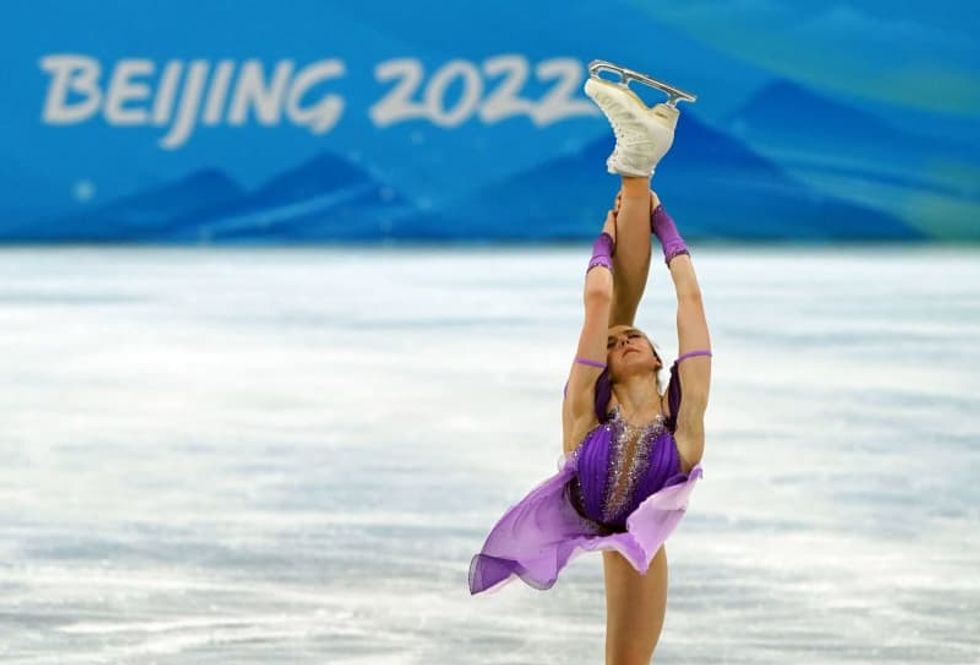
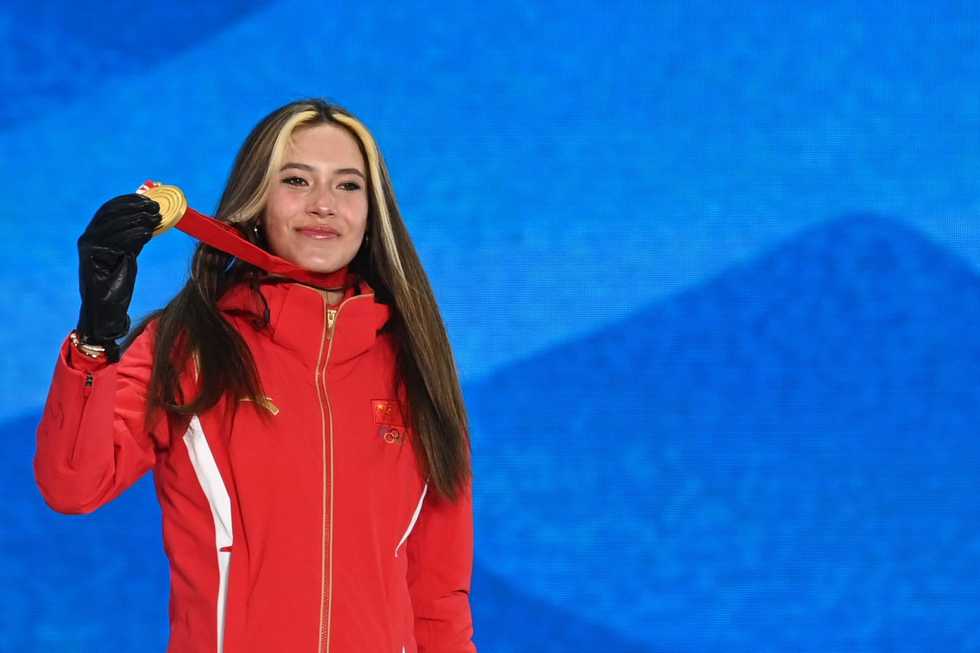
Teenagers Eileen Gu and Kamila Valieva became faces of the Beijing Winter Olympics that ended on Sunday for very different reasons.
The 18-year-old California-born Gu delighted hosts China with two golds and one silver in freestyle skiing and as a social media hit, building some bridges between the two countries which have a strained political relationship.
Russian Valieva, 15, stunned as the first woman to stand a quad jump at the Games en route to first place in the team event but the news of a positive doping test in December then turned her world upside down and she finished fourth in the women's competition after she was controversially allowed to compete there.
International Olympic Committee (IOC) president Thomas Bach made headlines Friday by sharply criticising Valieva's entourage led by coach Eteri Tutberidze for "the tremendous coldness" Valieva received from them after the competition, adding it did "not give me much confidence in the closest entourage of Kamila."
This was rebuked by the Russians who like last year in Tokyo were competing without their national symbols because of sanctions related to doping practices.
Bach had by comparison seemed more lenient with hosts China after their organizing committee spokeswoman Yan Jiarong had denounced reports on the treatment of the Uighur minority in the Xinjiang province as "lies" and also insisted that Taiwan was a part of China.
He said organizers and the IOC "restated the unequivocal commitment to remain politically neutral, as it is required by the Olympic Charter.”
However, a diplomatic boycott led by the United States highlighted the trouble around the Games, and although athletes were largely happy with the facilities Human Rights Watch bluntly said: "These Games that were a dream for the China of Chinese President Xi Jinping, but a nightmare for human rights."
Beijing had partly landed the Games against the only other candidate of Almaty in Kazakhstan because it pledged to bring 300 million people to winter sport - becoming the first host of summer and winter Games after the summer edition 2008.
Gu meanwhile was an import who decided to compete for the birth country of her mother, and she won the hearts on each side of the Pacific with big air and halfpipe gold plus slopestyle silver.
"I am proud of my heritage and equally proud of my American upbringing. Through skiing, I hope to unite people, promote common understanding, create communication, and forge friendships between nations,” she said.
Mikaela Shiffrin was far from that glory as the American two-time gold medallist and six time world champion crashed out in the slalom, giant slalom and combined, was no threat in the super-g and downhill, and had to settle for fourth in the concluding mixed team.
But Johannes Thingnes Bö took home four biathlon golds and one bronze to be the most successful athlete of the Games, with his last gold in Friday's mass start also making Norway the first country to get 15 golds at one Games.
Compatriot Marte Olsbu Röiseland and Russian cross country skier Alexander Bolshunov also got five medals each in freezing conditions.
Norway topped the medal table with a final tally of 16-8-13 even though their Nordic combined skier Jarl Magnus Riiber was among several top stars sidelined at least for some events owing to the coronavirus which China largely managed to contain in a strict bubble environment.
Germany were second on 12-10-5, winning nine of the 10 golds in the sliding sports, and China enjoyed their best-ever Winter Games in third with a 9-4-2 haul.
Organizing committee president Cai Qi named the Games "fantastic, extraordinary and excellent" on Sunday and their spokesperson Zhao Weidong added: "We have staged an Olympic Games that will go down in history."