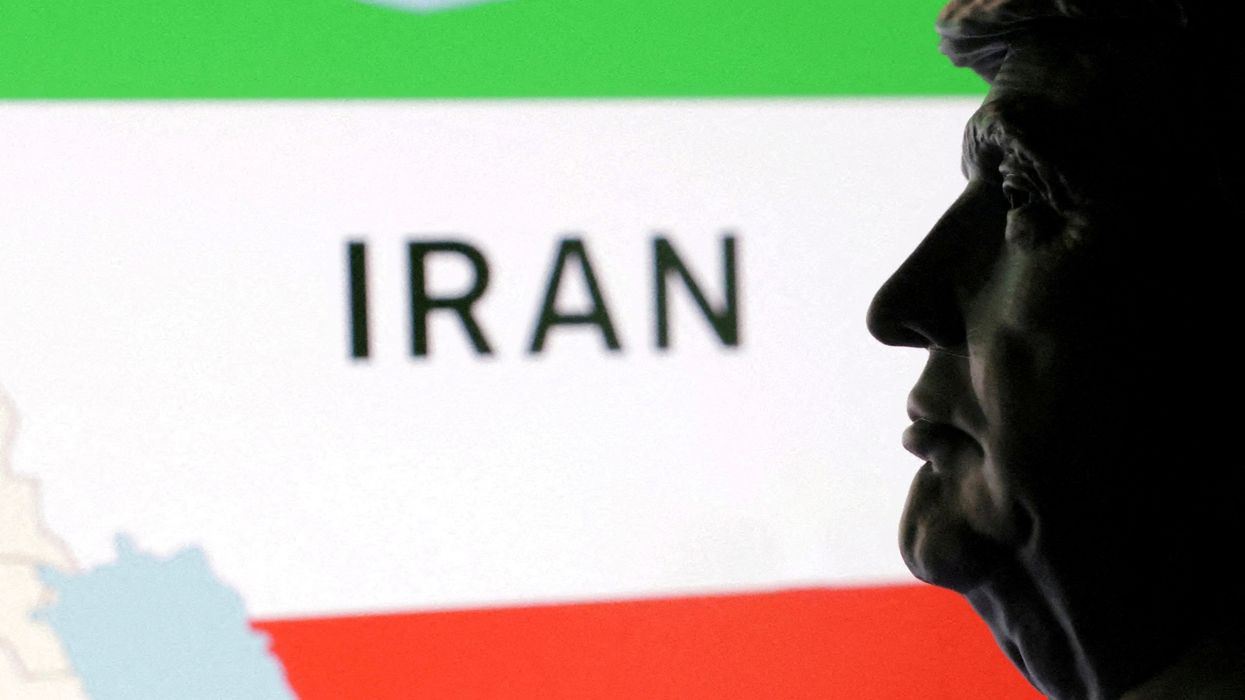
FILE PHOTO: 3D printed miniature of U.S. President Donald Trump's face and map of Iran are seen in this illustration taken June 23, 2025. REUTERS/Dado Ruvic/Illustration/File Photo/File Photo

Conservative commentator and journalist Saagar Enjeti sounded the alarm Monday over the United States’ dwindling supply of crude oil reserves, which, should the U.S. war against Iran continue, could bring about “literal shortages” in a matter of weeks, he warned.
The U.S.-Iran ceasefire collapsed earlier this month, and both sides have exchanged fire over the past week, with analysts increasingly doubtful a diplomatic resolution is still possible. As a result, the cost of oil surged this past week by more than 15%, and, according to the financial data company Barchart, the U.S. supply of crude oil has reached a 45-year low with just “43 days” of supply remaining.
“You need that slack to have confidence in the market that it'll be there when you order what you have – when all that gets taken away, and if it runs to zero, that's when stuff gets absolutely bonkers,” Enjeti said Monday on his political video podcast “Breaking Points.”
“It would be basically no confidence in the market – that's when export bans might come into play, literal shortages. This is the reason the Strategic Petroleum Reserve exists in the first place, and to now be at the lowest level since 1983, you just have no runway!”
Exacerbating fears of economic turmoil further, the Yemeni military organization the Houthis announced a new maritime blockade Monday on Saudi Arabia, putting at risk “the flow of millions of barrels” of oil. And China, which significantly reduced its oil imports after the United States first attacked Iran in February, is expected to “resume buying soon as it draws down its stockpiles.”
“There are two main reasons why gas is still not at catastrophic levels, although as of this morning, gas is right back to $4 a gallon nationally. One was Saudi Arabia: approximately 4.5 million barrels per day were coming out of the Bab Al Mandeb strait. That's roughly 3-4% of the world's oil supply, which the Houthis now say they will blockade,” Enjeti said.
“And then secondary is China: Chinese imports are beginning to rebound sharply. China was importing roughly 12 million barrels per day right before the war began. That plummeted below 6 million barrels per day after the outbreak of the war. A resumption means it will put significant pressure on the global oil market.”
Enjeti continued, “So, if you have two primary shocks that are already coming into a shocked system – the five-month closure of the Strait of Hormuz – things can get catastrophic very quickly.”
Report typos and corrections to corrections@rawstory.com.
For customer support contact support@rawstory.com.