




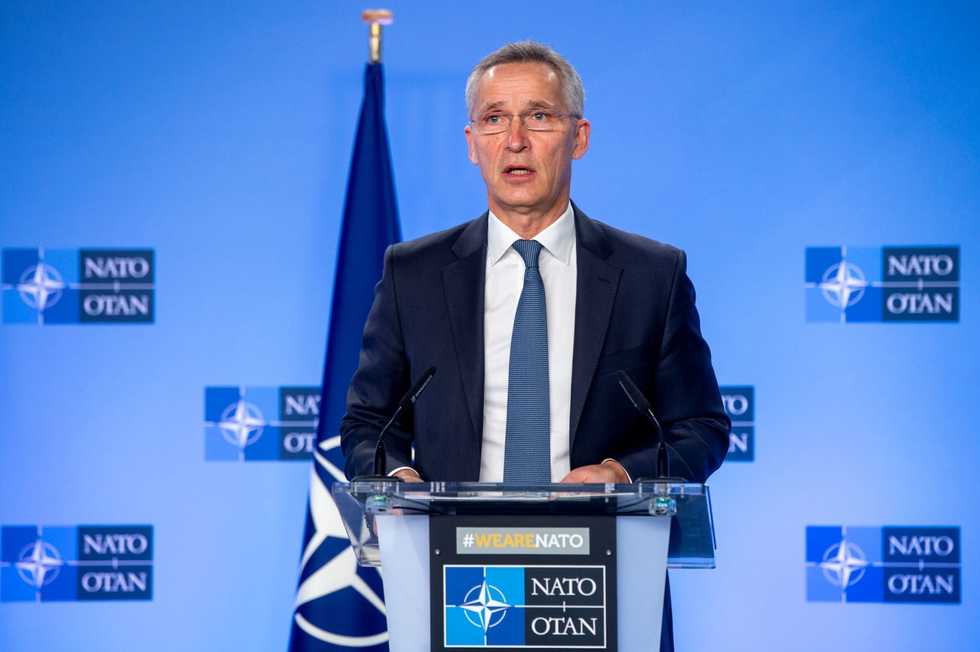
Some 30,000 Russian combat troops are expected to amass in Belarus in the coming weeks, NATO Secretary General Jens Stoltenberg said on Thursday, expressing concern about the build-up of Moscow's military presence on Ukraine's doorstep.
"This is the biggest Russian deployment there since the Cold War," Stoltenberg said in Brussels, adding that combat aircraft, nuclear-capable Iskander missiles, S-400 air defence systems and special units of the military intelligence agency GRU were involved in the build up.
There were now "well over" 100,000 Russian troops near Ukraine, Stoltenberg said.
Moscow is planning a military manoeuvre in Belarus, its close ally, in mid-February, and has indicated that fewer than 13,000 Russian soldiers will be involved.
Western allies fear that Moscow may be planning an incursion into Ukrainian territory. The Kremlin vehemently denies this and in return accuses NATO of stoking tensions in the region.
Among the various possibilities suspected by western intelligence sources would be for Russia to enter through Ukraine's Donbass region, which is controlled by pro-Russian separatists. Another is for Russia to invade from Belarus, which is close to the Ukrainian capital Kiev.
NATO countries have been moving more ships, aircraft and troops into the Baltics and Eastern Europe in recent weeks.
The United States announced on Wednesday that it would redeploy around 3,000 additional troops to Eastern Europe, a move that has been strongly criticized by Russia.
"We call on our American partners not to further escalate tensions on the European continent," Kremlin spokesperson Dmitry Peskov said on Thursday in Moscow, according to the Interfax news agency.
Noting that NATO had responded to Russian proposals for talks on a new security architecture for Europe by stationing more soldiers in Eastern Europe and increasing arms deliveries to Ukraine, Peskov warned that Moscow would take measures "to ensure its own security and interests," but gave no further details.
Meanwhile, European leaders have been continuing their attempts to mediate in the crisis, with German Chancellor Olaf Scholz pushing for the so-called Weimar Triangle of France, Germany and Poland to spearhead fresh mediation efforts with Russia.
Scholz and his government have been accused by Ukraine and several other of its Eastern European allies of exerting too little pressure on Russia. Scholz plans to travel to Moscow shortly for a face-to-face meeting with Russian President Vladimir Putin.
French President Emmanuel Macron has spoken twice with Putin in recent days and is due to have separate phone calls with Putin and Ukrainian President Volodymyr Zelensky on Thursday evening.
Internationally, Brazilian President Jair Bolsonaro raised some eyebrows domestically when it became known that he was planning to travel to Russia in two weeks' time "to improve trade relations, in light of the Ukraine crisis."
