WASHINGTON — Turns out, Secretary of State Marco Rubio and Defense Secretary Pete Hegseth aren’t very good actors.
Congress doesn’t agree on much, but when it comes to Venezuela and U.S. military strikes on purported drug smugglers, on Tuesday Congress was basically all questions, even after receiving classified briefings from the two members of the Trump cabinet.
Only after President Donald Trump took to Truth Social in the evening, to announce "a total and complete" blockade of oil tankers entering and leaving Venezuela, did Congress finally get the clarity lawmakers had demanded.
Now members of Congress say they know the real goal of U.S. intervention in Venezuela — and lawmakers on both sides of the Capitol are vowing to hold President Trump accountable.
‘More questions than answers’
Rubio and Hegseth, along with a phalanx of aides and security, traversed the U.S. Capitol, trying to sell Congress on President Trump’s war footing in the waters off Venezuela.
“This briefing left me with more questions than answers,” Sen. Richard Blumenthal (D-CT) told reporters after a classified briefing.
It was the same on the other side of the Capitol, where lawmakers complained the two powerful secretaries provided “no real answers about whether or not what we’re about to enter into is a war in Venezuela,” Rep. Gregory W. Meeks (D-NY), the ranking member of the House Foreign Affairs Committee, told reporters after his own chamber’s briefing.
“If this is about regime change, it seems to me that the administration should say that’s what it is, and should come to Congress to ask for that authorization, which has not taken place.”
It wasn’t just Democrats who were left confused as to what the Trump administration is trying to accomplish with regards to Venezuelan President Nicolás Maduro.
“Most Americans want to know what’s gonna happen next. I want to know what’s gonna happen next. Is it the policy to take Maduro down? It should be,” Sen. Lindsey Graham (R-SC) told reporters.
“If it’s not, and if he goes, what’s gonna happen next? I’d like a better answer as to what happens when Maduro goes.”
For his part, Secretary Rubio told the congressional press corps the briefings were on the “counter-drug mission” that is “killing Americans, poisoning Americans.”
For his part, Secretary Hegseth tried to tamp down criticism as he promised to let members of the House and Senate Armed Services Committees view a controversial video of a second missile strike on alleged drug smugglers in the Caribbean Sea, on Sept. 2.
“This is the 22nd bipartisan briefing on a highly successful mission to counter designated terrorist organizations, cartels, bringing weapons — weapons meaning drugs — to the American people and poisoning the American people for far too long,” Hegseth told reporters.
But last night, when President Trump announced a blockade of Venezuelan oil — arguing the South American nation is “completely surrounded by the largest Armada ever assembled in the History of South America” — lawmakers got the clarity they’d been seeking.
And many weren’t happy.
‘Unquestionably an act of war’
While Congress is demanding answers to more questions, many members also feel lied to, if not duped.
“Trump is threatening a naval blockade of Venezuelan oil, an act of War,” Rep. Nydia Velazquez (D-NY) wrote on X.
“We have seen this playbook before. This is not about drugs or making America safer; it’s about regime change.
“Americans do not want war with Venezuela. Congress must act now and stop this.”
While the administration likened targeting alleged drug smugglers to going after pirates of old — thus evoking all the lenient maritime laws regarding marauders on the high seas — Democrats say the gig is up.
They’re demanding the administration halt intervention unless Congress explicitly grants the president war powers.
“A naval blockade is unquestionably an act of war,” Rep. Joaquin Castro (D-TX) wrote. “A war that the Congress never authorized and the American people do not want.
“On Thursday, the House will vote on Rep. Jim McGovern (D-MA), Rep. Thomas Massie (R-KY), and my resolution directing the President to end hostilities with Venezuela.
“Every member of the House of Representatives will have the opportunity to decide if they support sending Americans into yet another regime change war.”
The Supreme Court is poised to overturn a 90-year-old decision protecting the heads of independent federal agencies from firing by the president — a move more significant in the court’s rightward march than the 2022 decision to overturn the right to abortion in Roe v. Wade, alarmed legal experts tellRaw Story.
“This is the most important case of the decade,” said Seth Chandler, professor at the University of Houston Law Center.
Following oral arguments in Trump v. Slaughter last week, most observers predict the Court will side with President Donald Trump in his firing of Federal Trade Commissioner Rebecca Slaughter.
Trump v. Slaughter revisits a 1935 case, Humphrey's Executor v. United States, which concerned President Franklin D. Roosevelt’s firing of an FTC commissioner over disagreements about New Deal policies.
The Supreme Court ruled that Congress could enact laws limiting the president’s ability to fire independent agency officials.
Now, Dec. 8 arguments in front of the current, right-wing-dominated Court made it clear there’s likely no “path for Humphrey's Executor to survive,” Chandler said.
“You're really changing the structure of government and a precept of law on which Congress has relied for 90 years and delegated immense power to these so-called independent agencies, and if these independent agencies are no longer independent, but are basically subject to loyalty tests from the president, that really changes the way that our government functions.”
Harold Krent, professor at the Chicago-Kent College of Law at the Illinois Institute of Technology, agreed that “Humphrey’s Executor is mostly dead.”
“For the most part the idea of an independent-expert-type agency will be over,” Krent said. “It's incredibly significant. It gives the president even more powerful control over these agencies.”
Along with the FTC, agencies likely to be affected are the Securities and Exchange Commission (SEC), the National Labor Relations Board (NLRB), the Occupational Safety and Health Administration (OSHA) and the Federal Energy Regulatory Commission (FERC), Krent said.
“It’s just a wide array of agencies which would almost for sure fall in the wake of the Slaughter case,” he said.
“It just means that there's more of a political edge to all agency investigations and policymaking, and so there is less of a check.”
Chandler said Justice Elena Kagan, a liberal appointed by President Barack Obama, questioned whether “Congress would ever have given so much power to the agencies if it knew that they were going to be subject to the political control of the president.”
“In a post-Humphreys Executor world where Congress felt the people who took leadership positions in these agencies were immune from political firings by the president, they were willing to grant enormous powers to these agencies and basically make them a fourth branch of government,” Chandler said.
“But, now we have half of the deal being taken away. We have that the agencies are now subject to the political desires of the president, but they still have all the power that they did originally.”
‘Out of control’
Legal experts predict that the Court will rule 6-3 in Trump’s favor in Slaughter, along ideological lines.
“I think the majority is going to say Humphrey’s Executor was very dubious when it was enacted and that the agencies look quite different from the way they were conceived,” Chandler said.
The process of weakening Humphrey’s Executor was already in motion, Chandler said, pointing to a 2020 decision, Seila Law LLC v. Consumer Financial Protection Bureau, which allows the president to remove the leader of a single-headed agency at will.
It’s likely the same logic will apply to a multi-person commission, Chandler said.
“I think they're going to say that in some sense the die has already been cast, that Humphrey's Executor has been on life support for a decade, and that it's now time to pull the plug,” Chandler said.
Humphrey’s Executor was an explicit target of Project 2025, the hard-right leadership plan from the Heritage Foundation, Graves said.
Noting that the Court had already “chipped away” at Humphrey’s Executor, Project 2025 said: “The next conservative Administration should formally take the position that Humphrey's Executor violates the Constitution's separation of powers.”
Trump’s claim on the campaign trail that he had no involvement with Project 2025 “misled the American people grossly,” Graves said, adding that the Court has since matched Trump’s “aggression in trying to destroy long-standing rules.”
“That the Supreme Court is playing along with this and actually eagerly embracing it is a sign of how out of control and arrogant the Roberts Court is, because the easiest thing for this Court to do would be to uphold the lower courts that are following those long-standing precedents,” Graves said.
“Instead, it has sought to combine its counter-constitutional edict, giving Donald Trump immunity from criminal prosecution, which swept him back into the White House.
“It's been seeking to combine that ruling, giving Trump extraordinary, unprecedented and unwise powers, with a whole series of rulings through the shadow docket, and now through the primary docket, that further expand presidential power, and I would say so, expand it recklessly.”
‘Loyalty pledges’
After Trump v. Slaughter, Chandler said, he anticipates Trump will seek to extend his firing power to lower-level agency employees, because if the Supreme Court determines “the Constitution vests all executive power in the president, and you take that literally, then it's hard to see why the decision wouldn't extend all the way down the federal bureaucracy.
“President Trump has not been shy about insisting that loyalty to him, personally and to his ideas, is extraordinarily important in government … even with Humphrey's Executor on life support, so I don't see why he would show any restraint once it's killed off,” he said.
“Could he require, essentially, loyalty pledges from mid-level clerks at the NLRB? Why couldn't he insist that they're part of the executive branch and that they are just acting as his delegates, and if they're unwilling to commit to him, why should they have a job?”
FILE PHOTO: A view of the U.S. Supreme Court in Washington, U.S. June 29, 2024. REUTERS/Kevin Mohatt/File Photo
Krent agreed.
“The Heritage Foundation, that's what they had recommended in terms of giving the president absolute power over all federal employees, and there is the extreme version of the unitary executive.
“I don't think the Court's going to go there in this particular case, but that's certainly within the goals of the Trump administration, and so it's something the Court may have to face at a future date.”
Graves called giving the president the power to fire independent agency heads at will “a recipe for corruption.”
“The corruption that Trump is engaged in is manifesting on a daily or weekly basis,” she said.
“The idea that the president would be controlling the decisions of the FTC, which relate to an array of matters about corporate conglomeration, as he's basically trying to orchestrate who gets control of a major swath of media, including CNN — it’s extraordinary.”
Warner Bros. Discovery, the parent company of CNN, is preparing to undergo a merger with Netflix or Paramount. Trump has called for selling CNN to new owners.
‘Rampant corruption’
Commissions leading federal agencies typically have split-party representation — which could also disappear following a ruling for Trump in Slaughter, Krent said.
“This whole idea of a balanced independent agency thinking about energy policy or labor policy, banking policy, consumer relations policy, that seems to be done,” Krent said.
That would allow Trump to enact his policies, such as tariffs, as he pleases.
“If he wants to just start changing even tax policy or energy policy or labor policy, he'll be able to do it by saying, ‘This is what I want you to do, or I fire you,’” Krent said.
“It would have all sorts of ramifications across the economy.”
Congress could theoretically limit the power of agencies by defunding them, “but not in reality,” Chandler said.
“It's just something that we took for granted, that you could have, in effect, a fourth branch of government in which immense power had been vested, and when you take that away, and you say it's all subject to the president's control, and you don't undo the prior delegations of power, that is a huge deal,” Chandler said.
A ruling in Trump’s favor will give him “far more power than the founders ever anticipated,” Chandler said.
Krent said overturning Humprey’s Executor “cuts against not only history, but precedence.”
“That could lead to the end of the civil service,” he said.
Graves said: “This would be yet another instance of the Roberts Court handing Donald Trump extraordinary powers that no president should have, and the presidents before him did not.
“This would return, in some ways, the United States to a previous era, which was really disreputable, where civil service appointments … were handed out as a part of a political spoils system, which was rampant with corruption.
“That's why the modern civil service system came to be over 100 years ago, to try to make sure that we would have people serving us at all levels of federal agencies who were well-qualified for those positions and not merely supplicants to the president.”
Krent said overturning Humphrey’ Executor would lead to “increasing politicization of policymaking across the government,” to “the detriment of the American people.”
“It may mean that you're going to have less expertise in government, less political party balance in terms of how these agencies work, and ultimately, that's against the congressional design.
“Regulation and policymaking will just be infused with the president's brand of whatever is politically convenient at the moment.”
WASHINGTON — President Donald Trump spoke the “unvarnished truth” when he openly complained about immigrants from “sh–hole” countries, one senior U.S. House Republican told Raw Story, amid outcry over the president’s spate of racist remarks.
“Trump tells the truth,” Rep. Ralph Norman (R-SC) said at the Capitol. “He tells unvarnished truth. I have no problem with what he's saying. He rallies the troops like no other.”
Asked what he thought about Trump being accused of being racist, Norman, 72, was unabashed: “People say what they want. This man has brought this country back in less than 11-and-a-half months.”
In a cabinet meeting last week, Trump, 79, attacked Somalian Americans in virulent terms, including calling Rep. Ilhan Omar (D-MN), a leading progressive, “garbage.”
This week, in a speech in Pennsylvania, Trump attacked Omar again. He also said he had “announced a permanent pause on third-world migration, including from hellholes like Afghanistan, Haiti, Somalia, and many other countries.”
Answering a supporter’s shout of “sh–hole”, the president said: “I didn't say sh–hole, you did.”
But referring to a scandal from 2018, in his first term, he admitted it: “Remember I said that to the senators, they came in, the Democrats, they wanted to be bipartisan.
“So they came in and they said, ‘This is totally off the record. Nothing mentioned here. We want to be honest.’ Because our country was going to hell.
“And we had a meeting. And I said, ‘Why is it we only take people from sh–hole countries?’ Right? Why can't we have some people from Norway? Sweet and just a few. Let us have a few from Denmark, ‘Do you mind sending us a few people? Send us some nice people. Do you mind?’
“But we always take people from Somalia, places that are a disaster, right? Filthy, dirty, disgusting, ridden with crime. The only thing they're good at is going after ships.”
Rep. Derrick van Orden (R-WI) knows a thing or two about ships, having been a Navy Seal. Telling Raw Story he had lived in Africa, specifically Djibouti, he backed Trump too.
Asked to respond to Trump’s “sh––hole countries” remarks, Van Orden said: “Listen.
“The President of the United States is in charge of foreign policy. And the President of the United States has affected more positive changes in foreign policy than any president in my lifetime, with maybe the exception of Reagan…
“So I have the utmost confidence in the President of the United States and [Secretary of State] Marco Rubio getting foreign policy in a way when it's a benefit to America.”
It fell to Rep. Michael McCaul (R-TX), a former House Foreign Affairs Committee chair, to provide a more conventional GOP take on Trump’s “sh–hole countries” remarks.
“It's not a good message,” McCaul said, adding that “there are some who argue, ‘Hey, we did away with all of our soft diplomatic power’” thanks to Trump’s cost-cutting as well as his frequent racist invective.
McCaul said he was “briefed by Rubio's chief of staff yesterday about things we are doing to deal with soft power in a different model paradigm.”
“Is that hard when the president’s calling them ‘sh–hole nations’?” Raw Story pressed.
“He said that in the first term,” McCaul answered.
“But they denied it then and now he said it publicly,” Raw Story pressed again.
Choosing not to engage, McCaul continued to talk about ways to advance U.S. soft power despite crippling cuts to foreign aid via Elon Musk’s Department of Government Efficiency, or DOGE.
‘Ignorance, racism, xenophobia’
Among Democrats, Rep. Omar lamented rising “ignorance, racism, xenophobia” and said Trump was more open in his second term about his use of racial invective because “he feels more comfortable being a racist.
“His base [is] basically raising money for a woman who gets fired for calling people the N word. What is there more to be surprised” about?
Omar was referring to a high-profile story from Wisconsin, in which a woman employed by Cinnabon was filmed subjecting a Somali couple to brutal racist abuse.
Crystal Wilsey, 43, was fired but has since benefited from crowd-funding efforts.
Rep. Bennie Thompson (D-MS) is one of the longest-serving Black members of Congress. That means that when it comes to Trump deploying racist language, he’s seen it all before.
“It's par for the course,” Thompson, 77, told Raw Story when asked about Trump’s “sh–hole countries” remark. “He lies on the regular.
“He has some kind of tendency to talk about countries and people of color … and he makes no bones about it. When he apologizes for insensitive statements, he comes right back and repeats.”
Raw Story cited a recent National Parks Service decision to drop free admission on holidays dedicated to Dr. Martin Luther King Jr. and Juneteenth, but to provide it on Trump’s birthday.
“Why are you trying to erase things that people of color have contributed to just because you disagree with them?” Thompson asked, rhetorically.
‘It’s very frightening’
Unlike Thompson, first elected in 1993, Rep. Adelita Grijalva (D-AZ) is new to Congress, sworn in just last month.
“This can't be the new normal,” she said of Trump’s remarks. “That's what we're here for, fighting against it…
“I see it every day now, where people are openly discriminated against, people threatening their neighbors because they don’t like something that they're doing. It's very frightening.”
Proudly announcing herself as a “wife, daughter and sister of librarians,” Grijalva lamented “the dismantling of public education” through Republican attempts to ban books and change school courses to reflect a conservative view of U.S. history, particularly on grounds of race.
“Generations won't hear history,” Grijalva said, “because this administration is deciding that it hurts their feelings to talk about how oppressive they [white people] were and what we did too, right? Native American, indigenous people, I mean. We have to talk about that stuff.
“I'm very afraid, and I'm a mom with three kids. So [does] this country look like the one we grew up in? Right now it doesn't.”
Increased arrests by immigration enforcement agents under the second Trump administration have created a “chilling effect” on the child care industry, resulting in a decrease in workers and in turn less mothers in the workforce, according to a new report from New America, a progressive Washington think tank.
In 2025, mothers’ labor force participation declined by 3 percent, Herbst said.
In an industry where one in five workers are immigrants, there was a decrease of 39,000 foreign-born child care workers during the same time period.
“Because immigration enforcement has made it more difficult for foreign-born workers to do their jobs, their native-born counterparts who depend on their immigrant colleagues have suddenly found that it's more difficult to do their jobs as well,” Herbst said.
While the majority of foreign-born child care workers are in the United States legally, the increase in arrests by U.S. Immigration and Customs Enforcement (ICE) has still created fear for those working in the industry — especially after widespread coverage of ICE detaining a Chicago daycare worker last month.
There’s been a “pretty big” reduction in the number of Hispanic or Mexican U.S.-born individuals in the child care industry as well, Herbst said.
“These are individuals who should not be afraid of ICE,” Herbst said.
“They are not eligible to be deported, and yet they are also leaving the child care sector, and I think for that reason, one of the potential explanations we have is that they've been chilled out of the labor force.”
‘Fear and confusion’
Herbst, a professor at Arizona State University, said the report provides “some of the very first empirical evidence on the labor market consequences of the recent escalation in immigration enforcement.”
“We think the time is right for this kind of report,” Herbst said, as employment figures for child care workers and mothers of preschool-age children are “particularly important in the context of immigration enforcement.”
“We think that mothers’ employment may be particularly vulnerable to immigration enforcement insofar as it causes disruptions in the child care industry,” Herbst said.
President Donald Trump notably rescinded a directive under former President Joe Biden that protected child care centers, nursery schools and preschools from ICE activity, Herbst said.
The report found that workers in child care centers, rather than private homes, were more likely to have their work affected by immigration enforcement.
“The center-based sector, this is the formal sector. These individuals, as a result, may feel more exposed,” Herbst said.
“Their wages are reported for tax purposes. Child-care centers are often visited unannounced by state child care regulators, and I think the sort of fear and confusion that the ICE has created may have been felt more deeply by those employed in the center-based sector, and they have maybe moved from centers to private households in an attempt to be less visible and feel more protected.”
Herbst said the report’s “estimates may understate the magnitude” of the effects of ICE arrests on child care workers and mothers.
“What I hope this report does is start a conversation about the potential tradeoffs associated with this kind of immigration policy,” Herbst said.
“The administration has talked a lot about the potential benefits. I don't think that we as a country have really started to reckon with the potential downsides of this kind of policy, and I hope what this report does is start a conversation about those downsides.”
With ICE receiving more than $170 billion over four years for increased enforcement activities, Herbst said, “we as researchers need to stay on the case in terms of uncovering what are the potential impacts of all of this new enforcement energy.”
“I would anticipate in the months and years ahead that we will begin to have kind of a full reckoning of the sort of trade-offs associated with this kind of policy.”
Over the coming months, Herbst said he expects the “disruptive effects” of increased immigration enforcement on mothers and child care workers to be “much greater.”
“Even if you look at just sort of the chilling effects alone, I think people are feeling an unprecedented amount of fear and confusion in this new environment.”
WASHINGTON — Thursday is the long-awaited health-care day in the U.S. Senate, but that doesn’t mean Congress has a plan to avert massive spikes in health premiums in the New Year.
To counter Senate Minority Leader Chuck Schumer’s proposal to extend COVID-era Affordable Care Act (ACA) subsidies for three years — which most Republicans say is too long — on Tuesday, Majority Leader John Thune announced the GOP would offer a new measure to replace subsidies with health savings accounts.
“We need to fix it. It's broken. It's a piece of sh––,” Sen. Tommy Tuberville (R-AL) told Raw Story of the ACA, commonly known as Obamacare.
While many in the GOP are glad the party finally has an alternative to the ACA to rally behind, more middle-of-the-road Republicans are upset with the competing messaging bills at a time when Americans are desperate for a solution.
“How are you feeling about this [new GOP] health-care measure?” Raw Story asked Sen. Lisa Murkowski (R-AK), a rare moderate in GOP ranks.
“Bad,” said Murkowski. “We haven't resolved anything, so we're going to have votes? Good deal. What have you got? What are you going to get out of it?”
With no bipartisan solution in sight, the American people aren’t expected to get anything from Thursday’s dueling health-care measures — setting up a key battle in next year’s midterm elections.
‘Not a serious proposal’
This fall, throughout the longest government shutdown in U.S. history, Democrats demanded the GOP sit down and find a way to prevent the pending health insurance premium spikes.
The GOP refused, leaving rank-and-file Republicans scrambling to craft a counter offer.
“The 1.6 million people approximately that will lose their subsidy, I've got sympathy for those folks,” Sen. Ron Johnson (R-WI) told Raw Story. “They're going to be left paying enormous Obamacare premiums.”
“And your party might get blamed for that?” Raw Story asked
“Totally. We get blamed for everything,” Johnson said. “But Democrats should be blamed for destroying that individual insurance market with Obamacare.”
Democratic leaders say their three-year extension is essential for families struggling under the weight of inflation induced by President Donald Trump’s tariffs — but the measure is bound for defeat.
“That’s not a serious proposal, because they know there’s billions of dollars in fraud,” Sen. John Husted (R-OH) told Raw Story. “That’s not going to be tolerated.”
Earlier this year, under the guise of rooting out “fraud,” Republicans cut more than $1 trillion from Medicaid and SNAP benefits, or food stamps, in their “One Big Beautiful Bill.”
That’s something you only hear Democrats mention these days.
“Why not promote the changes you guys made to Medicaid in the ‘One Big, Beautiful Bill’ as Republican health reform?” Raw Story asked Sen. John Kennedy (R-LA). “You guys just did sweeping reform, just to Medicaid.”
“Well, it's a possibility,” Kennedy told Raw Story.
“It seems like you guys don't want to own that and make that a part of the debate?” Raw Story pressed.
“No, I think your conclusion is wrong,” Kennedy said.
While the GOP scrambles to save face on the Senate floor, Republicans continue to rally around unraveling Obamacare — but not much else.
“At the end of the day, we got to get the federal government out of it,” Sen. Tuberville said. “To do that, we got to have a lot of smart minds putting it together where it'll help everybody and not only just a few.”
With little to no guidance from party leaders, four competing GOP Senate measures have emerged, including a new proposal from Sens. Susan Collins (R-ME) and Bernie Moreno (R-OH), to extend ACA subsidies two years.
While that is likely to attract Democratic support, GOP leaders refuse to bring it to the floor and instead are promoting health savings accounts.
It’s almost as if GOP leaders don’t want to solve the pending health-care cost crisis, even as the party desperately tries to portray itself as serious about health care.
“We need to put something forward. We need to show America what we're for,” Sen. Roger Marshall (R-KS) told Raw Story.
“This is just a springboard. This bill that we're voting on now is a springboard to a hopefully bipartisan bill that truly addresses all of health care in January.”
But as the New Year quickly approaches, the clock is ticking.
“Nothing happens around here without a deadline,” Husted said.
So far, Republicans haven’t gotten much of any direction from President Trump.
“Would it be helpful for Trump to say: ‘This is the plan that I want, the one I prefer?” a reporter asked Sen. Kennedy.
“Sure,” Kennedy replied. “But I don't think the White House is going to do that, nor do I think that they're prepared to do that. I think the White House is concerned about what, if anything, the House would do, as am I.”
‘Get to 60’
Trump and House Speaker Mike Johnson remain mum, even as swing-state Republicans are freaking out.
At the same time, Minority Leader Schumer’s putting forward a three-year extension despite opposition from most all Republicans.
With a mere two legislative weeks before the end of the year, it seems as if the two parties are campaigning past each other instead of trying to find a path to a filibuster-proof majority of 60 senators.
“Is that all this week is,” Raw Story asked Sen. Murkowski, “just politics on both sides?”
“That’s what it seems like,” Murkowski replied. “It takes both sides. Sixty. Neither side has 60. We need to get to 60.”
Murkowski’s one of the few senators willing to cross the aisle. While she remains undecided as to how she’ll vote Thursday, she says she knows the outcome.
“See, the thing is, how I vote doesn't matter, because either one, the public gets nothing, right?” Murkowski said. “So I can say I support the Republican agenda. I can say I support the Democrat [bill]. I can say I support either, but the results are the same.”
WASHINGTON — Rep. Jasmine Crockett (D-TX) finally settled weeks of speculation on Monday by announcing her candidacy for U.S. Senate — but for the time being, at least, Texas' two Republican senators do not feel threatened by her.
Asked for comment by Raw Story, Sen. John Cornyn, the senator currently seeking reelection, said, "I welcome her to the race."
Cornyn, who faces a serious threat in his own primary by Texas Attorney General Ken Paxton, added that he doesn't consider her a substantive candidate.
"No, are you kidding? Has she actually passed anything?" said Cornyn. "I think that's where the Democratic Party is today. Getting a guy like Colin Allred to bow out because he's afraid of losing the primary is all you really need to see."
Sen. Ted Cruz had a similar assessment of his colleague's competition.
"The Democrat Party has decided to be the party of crazy, and I can't think of a better frontman for the job," Cruz told Raw Story. "I don't think Texas is terribly eager to be represented by a hard-left radical. And [Zohran] Mamdani may be elected in Manhattan, but I don't think that Texas is going down the same road."
Crockett, one of President Donald Trump's most outspoken detractors in Congress, has said she wants to focus on driving Democratic base voter enthusiasm, but has also speculated in a recent interview she could compete for some lower-propensity Trump voters: "We are going to be able to get people that potentially have voted for Trump, even though I obviously am one of his loudest opponents, because at the end of the day, they vote for who they believe is fighting for them. It's about moving people, and I've got a track record of doing that."
With former Rep. Colin Allred (D-TX) bowing out of the Senate race to run for a congressional district in Dallas, Crockett's main primary opponent will be James Talarico, an Austin-area state representative and Presbyterian seminarian.
Growing up in an ultraconservative Mormon family, Jennie Gage said, she was primed to become a Christian nationalist and supporter of Donald Trump’s Make America Great Again movement — or MAGA.
But about two years ago, at 49, Gage had a reckoning, realizing she had been “literally a white supremacist from birth,” based on teachings from the Book of Mormon.
Gage said she came to see Mormonism as “the OG Christian nationalist church.”
So, she flipped her life upside down, leaving organized religion and the Republican party.
“I would have never said, ‘I'm white supremacist. I'm Christian nationalist,’” Gage told Raw Story. “I would have just said, ‘I'm traditional, and I'm conservative because I believe in church and family and America.’”
But when Trump ran for president in 2016, Gage embraced MAGA.
“I will never forget him on my big-screen TV, saying the words, ‘Make America Great Again,” Gage said.
“The first time I heard that, I literally started crying … and I pictured Norman Rockwell.”
What came to mind was the painter’s “Freedom from Want” — ”The grandma putting the turkey on the table, the Thanksgiving dinner, the beautiful home and just that American traditional family and conservatism," she said.
“Obviously, I hated brown people. I hated all the illegal immigrants. I hated that our country was being overrun with lesbians and feminists, women who worked instead of being in their proper place in the home, gay people — they are like the biggest sinners in Mormonism — and baby killers, all of that,” Gage said.
“When [Trump] said, ‘Make America Great Again,’ what I pictured was this businessman not only is going to save our economy, but he's also going to get rid of all of that stuff that people are doing that's destroying our country, and we're going to return to the 1950s where life was great and everything was simple, and he's going to make America great again.”
‘God’s president’
Gage’s family, she said, took Mormonism to “next-level insanity,” as much of her childhood revolved around The Church of Jesus Christ of Latter-day Saints.
“It is a cult without walls,” Gage said.
She attended Brigham Young University, the flagship Mormon college, for two years, taking classes including early childhood development, as well as dating and marriage.
“Even going to Mormon college, I was just indoctrinated also,” Gage said.
As treasurer of the BYU Young Republicans, she canvassed for President George H.W. Bush when he ran against Bill Clinton in 1992.
“It was devastating to see this evil Democrat Bill Clinton get elected,” she said.
As Gage had children, she became less politically involved. Her interest revived when Mitt Romney ran for president.
She remembered thinking, “‘We're gonna have a Mormon boy,’ and then that's probably gonna usher in the Millennium, so it's gonna be Mitt Romney and then Jesus.”
Gage began watching Fox News, listening to conservative commentators and reading books by Republican politicians. When Trump announced his run, Gage was familiar with his reality TV show, The Apprentice, and his books, The Art of the Deal and The Art of theComeback.
“The Apprentice was actually my pipeline into MAGA. It was just really interesting, as we had a business and were really wealthy,” Gage said.
“That sucked me into … completely buying into it because NBC, The Apprentice and his ghost-written books, they showcased him as this really savvy entrepreneur, and that spoke to me because I was this conservative Christian wife of an entrepreneur.”
Gage said she liked the idea of a “businessman” running America, instead of “slimy politicians.”
She became more active on social media and engaged in arguments defending Trump. She recalls one verbal fight with her 10-year-old nephew.
She told him, “Donald Trump to America is going to be what Napoleon was to France. He is going to free us, and generations to come are going to thank God that Donald Trump was voted in office.”
When Trump beat Hillary Clinton in 2016, Gage thought: “President Trump is God's president.”
‘A major shift’
Gage began to upend her life in October 2018. One day at church, she “literally stopped believing.”
“I Googled my own religion for the first time,” she said. “I had never researched Mormonism outside of books that I would go to the Mormon bookstore and read. And so I resigned from the church.”
The church’s history of polygamy pushed her away. Simultaneously, she said, she ended her 24-year marriage, due to infidelity.
She “plunged pretty headlong into Christianity, and in a way, that kind of kept me stuck in that traditional conservative Americana,” she said.
But she continued “deconstructing” her beliefs, and by the time of the 2020 election had seen “a major shift” in her values.
She was prepared to vote for Trump, but on the way to the voting booth, Gage said, “my MAGA started to crack.
“I remember sitting there in the car, and I just felt sick thinking about Donald Trump because some of the debates that year, he started to seem a little bit unhinged, and the MAGA crowd was just no longer aligning with me.”
Gage and her partner decided not to vote for either Trump or Joe Biden.
Gage returned to her computer, to research political issues.
“I’m like ‘Oh s—. There's not one f—- thing that the Republicans are doing that I support. Not one. I'm a Democrat,” Gage said.
“I literally support everything that most of the Democratic leaders are currently doing, and the entire Democratic platform speaks to me so much.”
Gage said she began “really stepping into my true, authentic self.”
While it was “extremely unsettling” and “terrifying” to change her beliefs,” her life in Tucson, Ariz., now looks far different than her life in MAGA.
She has a diverse group of friends, is an atheist feminist, and calls herself an “anarchist” and “white apologist,” for her ancestors’ roles in massacres of Native Americans.
“I am moving farther and farther away from everything that originally made me lean into MAGA,” she said.
‘American Gestapo’
To Gage, Trump is now “f— reprehensible” and “so hateful.”
“Donald Trump is the president of only the people he gives a f— about,” Gage said.
“Everybody else is just out. He's more of a mob boss, and he is a president, and that's not the way that America is supposed to work.”
During the 2024 election, Trump accused Haitians in Springfield, Ohio, of eating cats and dogs. Gage called that the “a straw that broke the camel's back.”
“I wouldn't want him to be in charge of our PTA. I wouldn't vote for him for the president of our homeowners’ association,” Gage said.
“Listening to the debates and the hatred in some of the rallies, I felt like I was having an out-of-body experience, and it made me panic because I'm like, ‘Oh, now what? I hate Donald Trump, and the whole entire MAGA movement no longer aligns with who I am.’”
Gage now calls Trump administration immigration enforcement agents an “American Gestapo.”
“The whole point of the Gestapo was to be this police force out there terrorizing people,” Gage said.
“Sure, deport illegals if they're a threat, but to drag people down the street, the masks, the fear-mongering, the scare tactics, is absolutely reprehensible.”
‘It’s going to re-brand’
Gage is starkly concerned about Trump and the GOP’s quickening push toward Christian nationalism.
“I wasn't just Christian nationalist for logistical reasons,” she said. “It was part of my religion.
“I believed Jesus had written the Constitution and that the American government was just the interim government until Jesus came back, and then Jesus was going to rule America, and the rest of the world from America.
“The Charlie Kirk people … or Christian nationalists, honey, they ain't got nothing on the Mormons. We took Christian nationalism next-level. I believed all of that 100 percent.”
A college student wearing a “Make America Great Again” cap looks on at a Turning Point USA event, held at University of Florida in Gainesville, Florida on Nov. 13. REUTERS/Octavio Jones
Gage likens Christian nationalism to “a virus,” particularly as it gains a platform with Turning Point USA, the youth nonprofit founded by Kirk, who was killed in September.
“My worry is that these religious institutions and these political movements … are targeting the people that they need to target in a way that's effective enough that they are always going to be 10 steps ahead of us, and they're specifically targeting those emerging young adults,” Gage said.
“I'm afraid that conservative Christian nationalism will not die out, that just like a very smart virus, it's going to adapt. It's going to re-brand. It's going to emerge on the other side, maybe a little bit different than the 2020 MAGA movement, but it has a vested interest in protecting itself.
“They have the money, they have the power. They don't want to let that go, so they're going to fight to the death.”
While awaiting sentencing in a county jail in the Sierra Nevada foothills, a 36-year-old woman described as a leader of a “transnational terrorist group” has “continued to coordinate” with members of her group “and other white supremacist attackers via letters, phone calls and video calls,” the U.S. government says.
Dallas Erin Humber, who led Terrorgram Collective alongside codefendant Matthew Robert Allison from July 2022 until her arrest in September 2024, is scheduled to be sentenced in federal court in Sacramento, Calif. on Dec. 17.
Humber pleaded guilty to multiple charges, including conspiracy, solicitation to murder federal officials, and distribution of information relating to explosives and destructive devices.
The U.S. Department of Justice accuses the 36-year-old of seeking to establish a white ethnostate by igniting a race war and “accelerating” the collapse of the federal government.
Humber, the DOJ says, aimed to achieve her goals by “targeting and radicalizing vulnerable teenagers; by grooming them to commit hate crimes; terrorist attacks on infrastructure, and assassinations; and by providing them technical, inspirational, and operational guidance to plan, prepare for, and successfully carry out those attacks.”
Humber describes herself as a “ruthless neo-Nazi terrorist” and “accelerationist martyr and icon,” according to a sealed presentence report cited in the government’s sentencing memorandum.
The report says that 15 months in pretrial detention “has only served to validate, reinforce and galvanize” Humber’s commitment to white supremacist accelerationism.
Citing the report, the government claims Humber is “proud of her ‘legacy’ of death and destruction, and her only regret is not personally murdering anyone before her arrest.”
Based on Humber’s personal history, the severity of her crimes, the need to protect the public and provide adequate deterrence, the report found that a 40-year sentence would be appropriate.
The government and Humber reached a plea agreement for a range of 25 to 30 years.
‘Ongoing security risk’
Federal prosecutors argue the court should accept the plea agreement to hasten Humber’s transfer to a federal facility where her ability to coordinate with fellow terrorists will be more constrained.
“Given the defendant’s history of radicalizing others and grooming them to commit attacks on her behalf, her continued pretrial detention at a county-run facility without adequate rules and resources to prevent her from doing so poses an ongoing security risk,” prosecutors wrote in the sentencing memorandum last week.
“This is another reason this court should accept the plea agreement and sentence the defendant: so she can be transferred to a secure [Bureau of Prisons] facility with restrictions in place to prevent her from continuing to engage in the same conduct that landed her there in the first place.”
Humber’s lawyer did not respond to requests for comment.
Since May, Humber has been a housing unit orderly at Wayne Brown Correctional Facility in Nevada City, Calif. The role involves cleaning microwaves, bathrooms and showers, vacuuming the day room, and occasionally cleaning up vomit and feces from other inmates’ cells.
In a letter submitted to the court, Jail Commander Bob Jakobs described Humber “as having a good attitude, being dependable, respectful, helpful,” and “one of the most reliable orderlies.”
“I appreciate Ms. Humber’s willingness to help my staff keep our facility clean and to take on tasks that other inmates aren’t always willing to do,” Jakobs said.
The government’s sentencing memorandum credits Humber’s “early and full acceptance of responsibility for her crimes,” and says her guilty pleas “allowed the government to focus its limited time and resources on bringing to justice other members of the Terrorgram Collective domestically and abroad.”
But Matt Kriner, executive director of the Institute for Countering Digital Extremism, told Raw Storyhe wasn’t surprised the government would be concerned about Humber coordinating with Terrorgram members.
Although the group is “dormant,” Kriner said, “The threat is only paused while the government goes through its criminal process against the leaders.”
‘Struggled with self-hate’
Humber’s lawyer is arguing for a sentence of 25 years, to account for her experience of “extreme physical, emotional, and verbal abuse.”
“Ms. Humber was groomed from a young age to get attention from men in a way that she has clung to throughout her life,” her sentencing memorandum reads.
“She has struggled with self-hate in myriad forms, including drug addiction, anorexia, suicide attempts and remaining in violent relationships.”
At 14, Humber operated a LiveJournal account presented as a forum for “the personal insights of a fascist dictator in training,” according to an exposé by Left Coast Right Watch in March 2023, 18 months before her arrest.
The government claims seven attacks or plots were “inspired or guided by” Humber’s leadership of Terrorgram.
An online relationship between Humber and a 19-year-old Slovak, Juraj Krajčík, is at the heart of the government’s case.
Krajčík was mentored by Pavol Beňadik, a prominent Terrorgram member known as “Slovakbro.”
Following Beňadik’s arrest in Slovakia in May 2022, the U.S. government alleges that Humber and Allison “continued to guide” Krajčík “down ‘the path of sainthood’” — a reference to efforts to sanctify white supremacist mass murder.
‘Dead targets or I don’t care’
Humber promised Krajčík that if he “became a saint,” she would narrate his manifesto, according to the government.
“That’s the cost of admission, so to speak,” Humber reportedly told Krajčík. “Dead targets or I don’t care.”
Humber’s sentencing memorandum indicates she disputes the claim that she “groomed” Krajčík.
On Oct. 12, 2022, outside an LGBTQ+ bar in Bratislava, Krajčík shot three people, killing two and injuring one. He fled, then killed himself.
The government also alleges Humber communicated directly with a Brazilian high-schooler, Gabriel Castiglioni, before he carried out a mass shooting in Aracruz in November 2022, the most lethal Terrorgram-inspired attack, with four students killed.
Humber created “saint cards” to “celebrate and commemorate the mass shootings committed by” Krajčík and Castiglioni, whom she considered “symbolically [her] kids,” the government says, adding that the evidence will be filed under seal for review by the court.
Other attacks or plots the U.S. government claims were “inspired and guided by” Humber’s leadership include:
A stabbing injuring five outside a mosque in Eskisehir, Turkey in August 2024.
Plots to attack electrical substations in New Jersey and Tennessee, disrupted by the FBI in July 2024 and November 2024.
A plot to assassinate an Australian lawmaker, disrupted in June 2024.
A double murder in Wisconsin in February 2025 by a 17-year-old boy against his mother and stepfather, allegedly motivated by his quest for financial resources and personal autonomy to pursue a plot to assassinate President Donald Trump.
Despite the arrests of its leaders more than a year ago, Terrorgram continues to inspire violence, Kriner told Raw Story.
“There’s always going to be individuals who retain influence or keep their adherence to the Terrorgram approach to accelerationism, or mobilize in part through the consumption of the Terrorgram propaganda and publications,” he said, “because they remain persistently available through various online ecosystems.”
WASHINGTON — To end the longest government shutdown in American history, a bipartisan group of U.S. Senators came together and agreed to kick the can.
The can seems to have hit a brick wall.
Unless Congress acts, massive spikes in health-care premiums are coming in the New Year for millions of Americans — the reason Democrats refused to fund the government this fall.
“This whole year we've been moving backwards on health-care because of this administration,” Sen. Andy Kim (D-NJ) told Raw Story just off the Senate floor.
While President Donald Trump and congressional Republicans have yet to offer a policy solution, this week, Senate Minority Leader Chuck Schumer introduced a measure to stave off premium spikes by extending COVID-era health insurance subsidies for three years.
As part of the deal that ended the shutdown, Senate Majority Leader John Thune promised to bring Democrats’ proposal up for a formal vote. That is now scheduled for next Thursday.
But the measure’s fate is all but sealed. Many Republicans say they could stomach a one- or two-year extension but not three, which is why many in the GOP dismiss Schumer’s bill as a show vote aimed at next year’s midterm elections.
“No, not to the people in Nevada. They don't think that's a show vote. They need it,” Sen. Catherine Cortez Masto (D-NV) told Raw Story as she walked through the basement of the U.S. Capitol.
“They need us to extend those subsidies if they're going to be able to afford health care. That's what we should be doing.”
‘We got a health-care crisis’
No one in Washington was really discussing health-care until the shutdown. Now it’s the talk of the town. Cortez Masto says that’s because, unlike in 2024, Democrats are now listening to voters.
“If you just are talking to the American public, we got a health-care crisis,” Cortez Masto said. “Too costly, too high — prices are too high. People can't afford medicine when they need it, so we do need reform.”
For most of the shutdown, the mood was so bitter on Capitol Hill, party leaders refused to talk to each other. But as the shutdown stretched to a record-breaking seven weeks, rank-and-file lawmakers reported productive bipartisan talks on health reform, just way off our screens.
“I had been somewhat hopeful during the shutdown,” Kim, who served in the House until he was sworn in as a Senator in January, said. “I was engaged with a number of House Republicans that were expressing a similar sentiment of wanting to make progress, but Speaker [Mike] Johnson successfully silenced them during the shutdown.”
“Has their tune changed since the government reopened?” Raw Story inquired.
“They're still pissed,” Kim said. “… but I think that they're feeling like … Johnson's just continuing to be obstructionist.”
Kim’s not too optimistic ahead of next week’s vote to extend Obamacare subsidies, in part because the Republican whose opinion matters most has been MIA.
“We’ll see. I'm still engaged with my colleagues on both sides right now,” Kim said. “But right now, what we need to have to actually move this is for Trump to weigh in and get engaged. And so far, he's been not only unwilling but often being obstructionist as well.”
The New Jersey Democrat wonders what happened to Trump’s populist appeal, let alone heart.
“It just boggles my mind. I mean like, the majority of people that are going to be hurt by these tax credits expiring live in states that he won,” Kim said.
“And it just makes no sense. Even if they have thoughts about reforms that they could be doing, none of that can get implemented in the next month, so, like, why not extend this work to try to get some type of reform going forward? It just makes no sense to me. We're just pulling out the rug on these people.”
While the current debate centers around extending Affordable Care Act subsidies, Democrats say that’s just the start.
“That's the first step. There's more that needs to be done,” Cortez Masto said. “We've been fighting this battle against big pharma, against health companies, against PBMs [Pharmacy Benefit Managers].”
Most all small bipartisan efforts, even as health-care remains a bipartisan wedge issue, political leaders love to use to fearmonger and fundraise.
‘The people would reward us’
Many Republicans are itching to rally behind a GOP plan — most any GOP plan to “replace” Obamacare will do, as they didn’t campaign on specifics.
But they need Trump-sized cover and gold spraypainted salesmanship — they need President Trump. Otherwise, Republicans on Capitol Hill aren’t going to walk the legislative plank alone.
“The White House clearly believes that we need to have a solution,” retiring Sen. Thom Tillis (R-NC) told congressional reporters. “That would be very helpful for them to weigh in.”
After refusing to engage with Democrats on health-care subsidies during the shutdown, a growing number of Republicans now say the party should take the lead on health-care reform.
“It's an opportunity. Health-care really hasn't been addressed for years, for decades,” Rep. Troy Nehls (R-TX) told a gaggle of reporters on the Capitol steps.
Nehls is retiring at the end of his term — his twin brother running to replace him — but he says the GOP will be rewarded by voters if they take the lead.
They just need an actual proposal first.
“This is an opportunity for us to do it and address it, because we have a unified government. So everybody gather around President Trump. He's got smart people, very smart people around him. Come up with a good plan,” Nehls said.
“Let's get it done and then get this done in 2026. I think it'd be great. And forget about the 2026 election, it's just good for the American people. It's the right thing to do. It's the right thing to do, and I then believe that the American people would reward us.”
As with all things policy, the devil is the details. And thus far, the GOP’s all over the map.
Sen. Bernie Moreno (R-OH) speaks on Capitol Hill. REUTERS/Evelyn Hockstein
Like many on the right, freshman Sen. Bernie Moreno (R-OH) says Democrats are just calling for a band-aid to keep health insurance premiums from spiking by extending COVID tax credits — aka “five-year subsidies,” because they were passed in 2021 with a sunset at the end of 2025 — instead of addressing cost savings.
Like many in the GOP, Moreno’s touting tax-free health savings accounts. He also wants to end free, $0.00 premium plans offered to qualifying low-income families through Medicare or Affordable Care Act marketplaces.
“We have to fix that eventually. The Democrats are talking about this very hyper-specific five-year subsidy, but I think we can go along with extending it for those two reforms,” Moreno told reporters. “I would like to see the money go into household accounts."
Demands like those have Democrats wary.
‘It really is a mess’
A part of the reason health-care politics have heated up is, the GOP already raided Medicaid to the tune of $1 trillion as a part of their GOP-only Budget Reconciliation Act — aka the One Big Beautiful Bill.
“It really is a mess,” Rep. Glenn Ivey (D-MD) told Raw Story as he rode an elevator up to the House floor during a vote this week.
That’s why many Democrats, especially in the House, aren’t expecting any help from the other side of the aisle.
Rather, they think the issue paints a stark contrast between the parties ahead of next year’s winner-take-all midterms.
“That's our view, because even if they fix the ACA tax credit, you still got the $1 trillion in cuts to Medicaid,” Ivey said.
“And so if they just extend the ACA tax credits, that's a big step in the right direction, helps millions of people, but the Medicaid cuts are putting even more people at risk. And then you're also putting medical institutions at risk, hospitals — especially in rural and urban areas, that sort of thing.”
Then there’s “repeal and replace” — the GOP’s repeated promise to eradicate Obamacare.
“They just want to kill it. They want to repeal but not replace,” Ivey said. “Going back to, like, when pregnancy was a pre-existing condition? I just can't see folks being okay with that. Or your kid, you know, not being able to stay on your insurance until he turns 26?
WASHINGTON — Democratic veterans on Capitol Hill say there’s a dangerous throughline to Pete Hegseth’s dueling scandals, over the use of an unsecured messaging app and boat bombings in the Caribbean and Pacific: The Pentagon chief is endangering US troops.
A new report from the Pentagon inspector general finds Hegseth — a former Army officer who was a Fox News weekend host before he entered government — put troops in danger this spring when he shared Yemen war plans on the commercial messaging app Signal.
"He shared information he shouldn't have in a way that he shouldn't have, and the consequences are that our military could be compromised and the safety of our men and women in uniform could be compromised,” Rep. Chrissy Houlahan (D-PA) told Raw Story. “That's what we know.”
“Is that the kind of person that we want to be the Secretary of Defense?" Houlahan — an Air Force veteran and member of both the House Intelligence and Armed Services Committees — said.
"No one should be using Signal in that way. Nobody should be communicating that information at all. It's just not nobody, it's the Secretary of Defense."
Details from the inspector general report on Hegseth’s use of commercial messaging app Signal — including how the then national security adviser, Mike Waltz, came to add Atlantic editor Jeffrey Goldberg to a group chat ahead of strikes in Yemen — are damning to many in Congress.
But that issue pales in comparison to allegations Hegseth signed off on unlawful military strikes in the Caribbean.
To veterans in Congress, it’s unconscionable that Secretary of Defense Hegseth and President Donald Trump, the commander-in-chief, are seemingly letting their underlings take the blame for the military strikes.
“It is incredibly offensive. And it sends a message to the troops that this President, this SecDef, is willing to throw you under the bus,” Sen. Tammy Duckworth (D-IL) — an Army veteran who lost her legs in Iraq — told Raw Story.
“One of the first things you learn as an Army officer, which, you know, [Hegseth] supposedly was, is that you can always delegate authority, but you never delegate responsibility. The responsibility rests with him.”
Hegseth doesn’t seem to have gotten the memo.
‘No leader worth their salt’
On Monday, the Defense Secretary took to social media to seemingly shift the blame.
“Lets make one thing crystal clear: Admiral Mitch Bradley is an American hero, a true professional, and has my 100 percent support,” Hegseth wrote on X.
“I stand by him and the combat decisions he has made — on this September 2 mission and all others since.”
That was the mission when, the Washington Post first reported, an order was given to carry out a second strike on a boat in the Caribbean, the first having left survivors clinging to wreckage.
The Post said Hegseth ordered the second strike, which most analysts say would constitute a war crime. He denies it.
To Duckworth and many other veterans on Capitol Hill, Hegseth passing the buck is scandalous.
“I've always known that he's not qualified for the job,” Duckworth said. “I worry about the service members being put into jeopardy by this, right? We’re violating international laws of armed conflict, we are putting service members in legal jeopardy.
“My focus right now is what are we doing to our service members? We're putting them in real jeopardy, both legally and also personally. I mean, you know, if we're going to do this in international waters, what's to keep some other country from saying, ‘Hey, we're going to do this to the US’?”
Other senior members of the Armed Services Committees agreed.
"No leader worth their salt pushes responsibility off on a subordinate,” Sen. Tim Kaine (D-VA) told Raw Story.
“And if Hegseth gave a ‘kill everybody’ order — and we have to determine whether, in fact, that's true — that's a clear violation of law, whether or not he gave it before the second strike. A kill everybody order just in and of itself is a violation of the laws of war.”
Kaine says Hegseth has a bad habit of passing the buck.
"The opening salvo of ‘It's all a lie’ and ‘It's journalists who are spinning a fake narrative’ to now, ‘Well, yeah, it's true but you know, it was Adm. Bradley's call, not mine’ — I mean, you know, no,” Kaine said.
‘Legal risk’
Kaine and Sen. Adam Schiff (D-CA) are renewing their calls for Congress to pass an AUMF — or
Authorization for Use of Military Force — before the Pentagon carries out more air strikes off the coast of Venezuela.
"We're seeing realized a lot of the fears members had that this unauthorized campaign would result in blowback to the country, to our troops," Schiff told Raw Story.
"One of the concerns I've had all along has been that we risk putting service members in physical danger, but we also risk putting them at legal risk and that's exactly what's happened."
Hegseth’s Democratic critics say it's the same with “Signalgate.”
"Secretary Hegseth has been a liability to the administration from the moment he was confirmed,” Houlahan of Pennsylvania said. “At what point does the President recognize that and ask for his resignation?"
WASHINGTON — A pair of top Democrats in the House of Representatives slammed President Donald Trump's "deranged obsession" with attacking Somali-Americans on Wednesday.
On Tuesday, Trump said he does not want Somalis in the United States because "they contribute nothing," the AP reported. His most recent attack follows a report by the conservative outlet City Journal that accused Somali Americans of committing fraud in Minnesota, the report added.
"He's a bigoted fool," Omar said. "There's nothing surprising about the president using racist, xenophobic, and Islamophobic rhetoric to attack an entire community."
Omar added that Trump's comments make him look weak to the Somali community she represents.
"They're all mockingly wondering if he's ok, and so am I," she said. "Even the reporters were asking, 'Why are you bringing them up?' It just seems like he has a very deranged and creepy obsession with me and, by extension, the Somali Americans, and it's really off-putting. It puts his mental decline on display in a way that I don't think he's smart enough to recognize."
The Trump administration has since stepped up its immigration enforcement activities against Somali-Americans since the president made his remarks, officials told the AP.
Ocasio-Cortez said the immigration raids show Trump is not aware of the legal complexities of his actions. She warned that his actions could leave him vulnerable to legal action.
"There are so many legal exemptions, from libel laws to slander, that, as an elected official, there are very few protections," she said.
WASHINGTON — President Donald Trump pardoned Rep. Henry Cuellar (D-TX), a conservative Democratic congressman facing bribery, money laundering and conspiracy charges, out of disinterested concern for the politicization of the Department of Justice under Joe Biden, Republican senator Ted Cruz claimed on Wednesday.
“The Constitution gives the pardon power exclusively to the President,” Cruz told Raw Story at the Capitol, when asked about the Cuellar pardon, which Trump announced on social media. “It's his decision how to exercise it.”
Raw Story asked if Cruz was worried, given the seriousness of the charges against Cuellar, that the Trump White House was nonetheless setting “a bad example for politicians writ large?”
“The Biden Department of Justice, sadly, was weaponized and politicized,” Cruz said. “And I think President Trump is rightly concerned about the politicization of the Department of Justice.”
Trump made the same claim in his statement announcing the Cuellar pardon.
In reality, Trump has been widely criticized for politicizing the Department of Justice himself, not least through direct public orders to Attorney General Pam Bondi to indict political enemies such as former FBI Director James Comey and New York Attorney General Letitia James.
Trump's use of the pardon power has also been widely criticized, from issuing pardons and other acts of clemency to more than 1,500 people charged in relation to the Jan. 6, 2021 attack on Congress to rewarding domestic and international allies — this week including a former president of Honduras convicted of drug trafficking, which Trump also claimed was a case of victimization under Joe Biden.
Cuellar has been in Congress since 2005. He was indicted by a federal grand jury in Houston in May 2024, when Joe Biden was president.
According to the DoJ, Cuellar and his wife Imelda Cuellar “allegedly accepted approximately $600,000 in bribes from two foreign entities: an oil and gas company wholly owned and controlled by the Government of Azerbaijan, and a bank headquartered in Mexico City.”
The DoJ alleged that the bribes were “laundered, pursuant to sham consulting contracts, through a series of front companies and middlemen into shell companies owned by Imelda Cuellar,” while “Congressman Cuellar allegedly agreed to use his office to influence U.S. foreign policy in favor of Azerbaijan …and to advise and pressure high-ranking U.S. Executive Branch officials regarding measures beneficial to the bank.”
Earlier this year it was widely reported that the DoJ had decided to move forward with the case, despite Trump indicating support for the Cuellars.
On Wednesday, announcing the pardon on Truth Social, Trump said he pardoned Cuellar because he had been victimized for “bravely [speaking] out against” the Biden administration on immigration policy.
After a rambling complaint about supposed Democratic bias at the Department of Justice during the Biden administration, Trump said: “Henry, I don’t know you, but you can sleep well tonight — Your nightmare is finally over!”
Before the Cuellar pardon became public, Michael Wolff, a leading Trump biographer, described how even the disgraced financier and sex offender Jeffrey Epstein worried about how Trump would use the pardon power.
"Jeffrey Epstein had a kind of riff about this,” Wolff told the Daily Beast, “because even before Trump became president, [Epstein] would talk about, 'If Donald became president and he had the pardon power ... Trump … often … talked about this in a kind of wide-eyed incredulity. 'I can pardon anyone. No one can do anything about it. If I pardon them. I have absolute power.'
"Epstein had focused on this and said … he loves showing the power that he has, and he said he would do it in a childlike way.”
Trump's relationship with Epstein remains the subject of a broiling Capitol Hill scandal, concerning the release of files related to Epstein's arrest and death in 2019.
At the Capitol on Wednesday, Raw Story also caught up with Sen. John Cornyn (R-TX).
“What do you make of this full unconditional pardon of your colleague, Mr. Cuellar?” Raw Story asked.
“It's entirely within the President's prerogative and Congress doesn't have a role,” Cornyn said.
All presidential pardons are political.
Cornyn pointed to political realities, saying: “I've known Henry a long time and had a very productive working relationship. He's I guess one of the last of the 'Blue Dogs' that are quickly becoming extinct, Democrats that actually will work with Republicans.”
“What do you make of the charges against him?” Raw Story asked, listing bribery, money laundering and conspiracy.
“That's the Department of Justice,” Cornyn said. “I don't have anything to do with that.”
George Retes, a 26-year-old U.S. citizen and Army veteran, isn’t staying quiet — five months after he says he was assaulted and detained by immigration agents on his commute to work as a security contractor outside Los Angeles.
“Your voice matters,” Retes told Raw Story. “Calling your representatives, calling your people in charge, letting your voice be heard: it matters.”
Retes is the face of a new $250,000 ad campaign from Home of the Brave, a nonprofit focused on portraying what it calls the “catastrophic harm” of President Donald Trump’s second administration.
In the one-minute ad, “The Veteran Who ICE Abducted — and Is Fighting Back,” Retes recounts how he was stopped by a line of “hostile” ICE agents who shattered his car window, pepper sprayed him in the face and threw him to the ground before detaining him over a weekend.
Meant as a direct response to recruitment and self-deportation ads from the Department of Homeland Security, the Home of the Brave ads will air on streaming services where DHS ads have appeared.
“It's important to tell my story now because of everything that's still going on,” Retes said.
“Even though everyone doesn't see it every day, doesn't mean it's not happening.”
Close to 200 U.S. citizens have been detained by ICE since Trump returned to power in January, ProPublica reported.
Retes, who served a tour in Iraq, said DHS has continually called him a “liar.”
In response to an op-ed he wrote for the San Francisco Chronicle, DHS accused Retes via an X post of being violent and refusing to comply with law enforcement, leading to arrest for assault.
As CBP and ICE agents were executing criminal search warrants on July 10 at the marijuana sites in Camarillo, CA, George Retes—a U.S. citizen—became violent and refused to comply with law enforcement. He challenged agents and blocked their route by refusing to move his vehicle… pic.twitter.com/aKS2voKU3j — Homeland Security (@DHSgov) September 17, 2025
Two weeks later, a DHS press release again claimed Retes was arrested for assault.
Retes said he “100 percent” rejects claims that he was violent and he was never charged with any such crimes during the interaction with immigration agents.
“Something that the current administration is refusing to do is just take accountability,” Retes said
“Lying on my name, lying on people. It's terrible.”
The new ad proves it, he said — by showing footage of his vehicle being swarmed by a line of immigration agents and then him being pinned to the ground.
“I take it with a grain of salt when they come out with these Tweets,” Retes said. “The proof is all there. If now you want to make stories, the court’s right there.”
‘F-----g do your job’
In an extended three-minute version of the video, Retes further explains how he was tear-gassed and how immigration agents zip-tied him and knelt on his back and neck while he was on his way to work security at a state-legal cannabis farm that ICE raided.
Retes is also working with a nonprofit public interest law firm, Institute for Justice, to sue the Trump administration under the Federal Tort Claims Act for the treatment he endured at the hands of federal immigration officers.
“It's all out there, the footage, and they're just imposing their version of reality,” Anya Bidwell, senior attorney at the Institute for Justice, told Raw Story.
While in detention, Retes was put on suicide watch.
But “the most upsetting” part of the ordeal, he said, was that he missed his daughter’s third birthday celebration.
He told Raw Story he slept on a concrete bed in a room with a “tiny window” and lights switched on “24/7.”
He wasn’t allowed a shower, despite his “body essentially being on fire,” Bidwell said.
Retes said he was naked but for a hospital gown and “wasn't able to flush the toilet on my own.”
“It was just an overall terrible experience, and it was something I would never want to relive, and I hope no one ever goes through,” Retes said.
Retes said he was suspended from his job with Securitas, a national security guard contractor, for three weeks following his detention.
“They basically said I had to prove I was innocent before I could go back to work,” Retes said.
The experience left “a bad taste in my mouth,” Retes said, so he quit the Securitas job and is looking for new employment while sharing his story.
Retes said his message to Trump, Homeland Security Secretary Kristi Noem and other government leaders was simple: “F—–g do your job.”
“Make this country better … right now,” Retes said, lamenting “prices going crazy. People are divided. Agents just doing whatever they want, violating rights.”
Holding out hope for Trump to stop “constantly trying to divide the country” is “scary,” Retes said.





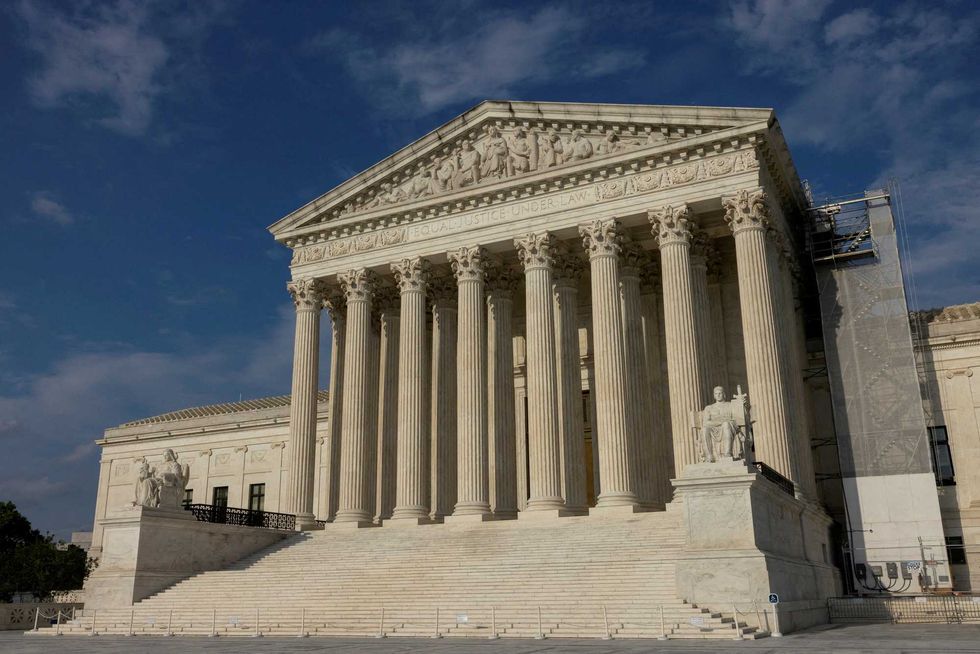 FILE PHOTO: A view of the U.S. Supreme Court in Washington, U.S. June 29, 2024. REUTERS/Kevin Mohatt/File Photo
 A college student wearing a “Make America Great Again” cap looks on at a Turning Point USA event, held at University of Florida in Gainesville, Florida on Nov. 13. REUTERS/Octavio Jones
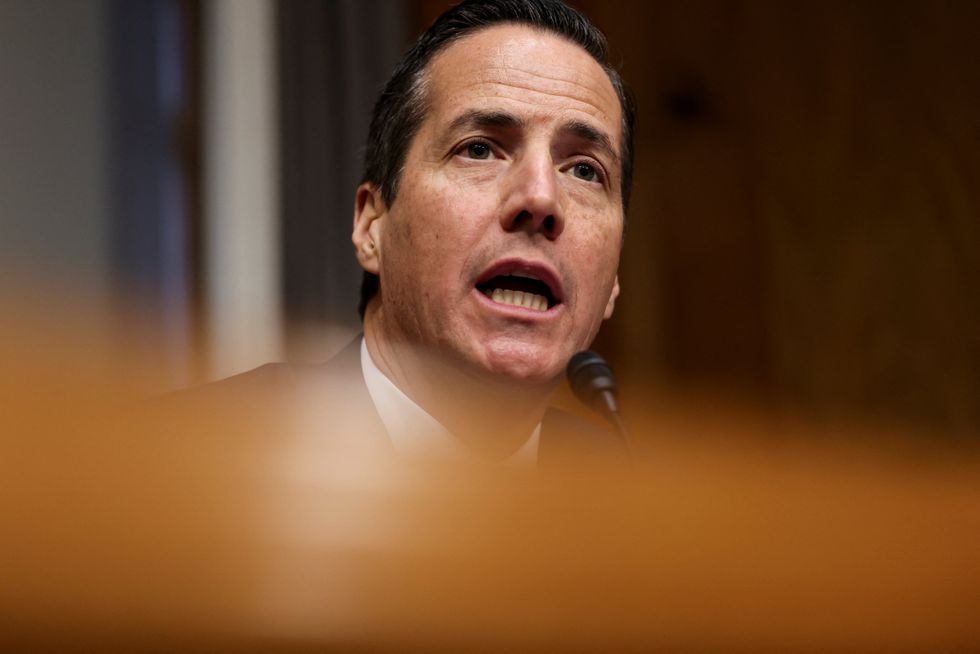 Sen. Bernie Moreno (R-OH) speaks on Capitol Hill. REUTERS/Evelyn Hockstein