Download Our App

ACLU

Racial Justice and Civil Liberties: An Inseparable History at the ACLU
ACLU

Racial Justice and Civil Liberties: An Inseparable History at the ACLU

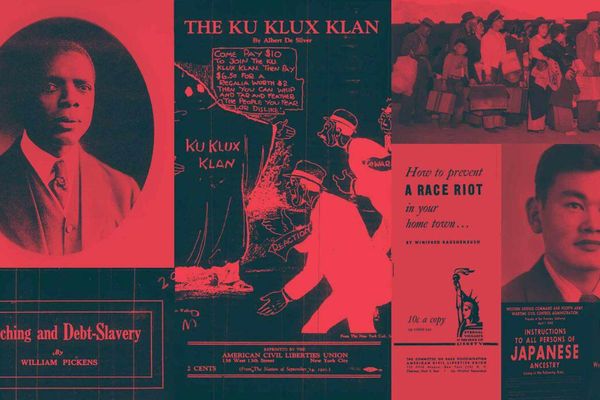
After World War I, it quickly became clear that the war to make the world “safe for democracy" had not made America safe for equality. Anti-Black race riots ripped through Chicago, New York, Washington D.C., and even Elaine, Arkansas. In October 1919, after Black sharecroppers in Elaine convened a union meeting, newspapers labeled the effort a “Negro uprising." The state mobilized troops and mobs to quell the rebellion. The result was “possibly the bloodiest racial conflict in the history of the United States," concluded the Encyclopedia of Arkansas History & Culture.

The American Civil Liberties Union's origin story is tied inextricably to the xenophobic Palmer Raids, but the lesser-known events in Elaine, Arkansas were also formative. Racial violence was an unavoidable issue for any organization dedicated to the rights and liberties of everyone. Ten years earlier, the NAACP had been established to advance justice in the wake of the Springfield, Illinois race riot. During its first summer, the ACLU denounced the lynching of three Black men in Duluth, Minnesota who had allegedly raped a 17-year-old white girl. ACLU co-director Albert DeSilver wrote to Minnesota's governor volunteering assistance in “the preservation of civil liberty."

Weeks later, Minnesota Gov. Joseph A. A. Burnquist informed DeSilver that several men had been arrested in connection with the lynching. He did not tell DeSilver that none was convicted of anything serious. ...

Student Debt is a Racial Justice Issue. Here’s What President Biden Can Do to Help.
ACLU

Student Debt is a Racial Justice Issue. Here’s What President Biden Can Do to Help.

Student loan debt burdens more than 44 million Americans, and prevents millions from buying homes, starting businesses, saving for retirement, or even starting families. This debt is disproportionately affecting Black families, and Black women in particular.

Higher education has long been held as a critical gateway to getting a job and achieving economic stability and mobility. But because of long-standing systemic racial discrimination, Black families have far less wealth to draw on to pay for college, creating barriers for Black communities to access higher education and build wealth. Black families are more likely to borrow, to borrow more, and to have trouble in repayment. Two decades after taking out their student loans, the median Black borrower still owes 95 percent of their debt, whereas the median white borrower has paid off 94 percent of their debt.

Students of color pursue higher education in a social and economic system built on racist ideologies that is set up to work against them and perpetuate racial wealth and income and achievement gaps. To redress this systemic inequality, the ACLU, Center for Responsible Lending (CRL), and more than 300 other organizations are calling on the Biden-Harris administration and Secretary of Education Miguel Cardona to use their authority under the Higher Education Act to cancel $50,000 of student debt per borrower, and Congress must act as well. ...

The Racial Wealth Gap is a Civil Liberties Issue
ACLU

The Racial Wealth Gap is a Civil Liberties Issue

As far back as the 1930s, the ACLU affirmed that economic justice was essential to achieving racial justice. In its 1931 Black Justice report, the organization's first on the civil liberties of Black Americans, the ACLU reported that more than 3,555 Negroes had been lynched since 1882, averaging 74 per year or more than one per week. According to the forward, written by Broadus Mitchell of Maryland, Black Justice's purpose was to answer “Why these gross discriminations against the Negro?" Mitchell replied to that crucial question with remarkable clarity: “The Negro has been oppressed because he has a low standard of living and little economic independence. And the other way around, he is economically servile because he has been oppressed."

Whether or not he knew it, Mitchell was making an important constitutional observation: The Constitution's promises of liberty and equality are linked. In 2003, in Lawrence v. Texas, the Supreme Court held that equal protection and “substantive guarantee of liberty are linked in important respects." Subsequently, Justice Kennedy, author of the Lawrence opinion, explained that the government has a “legitimate interest … in ensuring all people have equal opportunity regardless of their race." While we have historically thought of equality in the narrow terms of equal protection and due process, we take Mitchell's forward as a call to consider how our present definition of rights, and actions to defend those rights, are tied to past discrimination, especially economic discrimination.

Though much has changed since the publication of Black Justice, the economic position of Black Americans relative to white Americans remains precarious at best. When President Lincoln signed the Emancipation Proclamation in 1863, former slaves owned 0.5 percent of the nation's wealth. Over 150 years later, the descendants of those slaves own just 1 percent of the nation's total wealth. In other words, even emancipation, civil rights, increases to education, and improved employment have not substantially advanced Black people's democratic participation in our economic system. The power of inherited wealth is in fact so pronounced that economists Darrick Hamilton and Sandy Darity concluded intergenerational transfers “account for more of the racial wealth gap than any other demographic and socioeconomic indicators." ...

Latest ACLU News

Your Friendly Neighborhood Bank: The Post Office
ACLU

Your Friendly Neighborhood Bank: The Post Office

One in four Americans are unbanked or underbanked. This is in part because because banks across the country are closing branches, or penalizing those who don't have large savings. This means that 64 million Americans — disproportionately Black and Brown people — can't easily access basic financial services and are forced to pay thousands a year in fees for alternatives.

But one solution to this disparity is within our reach, it's actually just down the street from you: the post office.

The U.S. Postal Service has the infrastructure to provide basic financial services at all of its branches. With an office in every ZIP code nationwide and trust within the community, banking at the most accessible institution in America could create a public option needed to put millions of families in greater control of their finances. ...

To End Systemic Racism, Ensure Systemic Equality
ACLU

To End Systemic Racism, Ensure Systemic Equality

Over the past four years, we grew accustomed to a regular barrage of blatant, segregationist-style racism from the White House. Donald Trump tweeted that “the Squad," four Democratic Congresswomen who are Black, Latinx, and South Asian, should “go back" to the “corrupt" countries they came from; that same year, he called Elizabeth Warren “Pocahontas," mocking her belief that she might be descended from Native American ancestors. But as outrageous as the racist comments Trump regularly spewed were, the racially unjust governmental actions his administration took and, in the case of COVID-19, didn't take, impacted millions more — especially Black and Brown people.

To begin to heal and move toward real racial justice, we must address not only the harms of the past four years, but also the harms tracing back to this country's origins. Racism has played an active role in the creation of our systems of education, health care, ownership, and employment, and virtually every other facet of life since this nation's founding.

Our history has shown us that it's not enough to take racist policies off the books if we are going to achieve true justice. Those past policies have structured our society and created deeply-rooted patterns and practices that can only be disrupted and reformed with new policies of similar strength and efficacy. In short, a systemic problem requires a systemic solution. To combat systemic racism, we must pursue systemic equality. ...

Top Videos

‘Any idea what you just did?’ Jon Stewart revels at Trump walking into ‘60 Minutes’ trap

‘Any idea what you just did?’ Jon Stewart revels at Trump walking into ‘60 Minutes’ trap

“The Daily Show” host Jon Stewart had nothing but praise for “60 Minutes” personality Ross Douthat for his follow-up questions with Donald Trump in an interview aired Sunday night.

But what he really enjoyed was getting the president defending making money hand over fist with a question asked about former President Joe Biden, often called “Sleepy Joe” by Trump when he attempts to malign the former president’s mental acuity.

In the clip, at about the 6:45 minute mark, Douthat brought up reports that Trump now has a net worth of about $3 billion as he makes business deals while sitting in the Oval Office....

MAGA senator’s comeback now a ‘mathematical impossibility’: legal expert

MAGA senator’s comeback now a ‘mathematical impossibility’: legal expert

An election lawyer fresh from a deep-red state's ballot count says one embattled MAGA senator has hit a dead end.

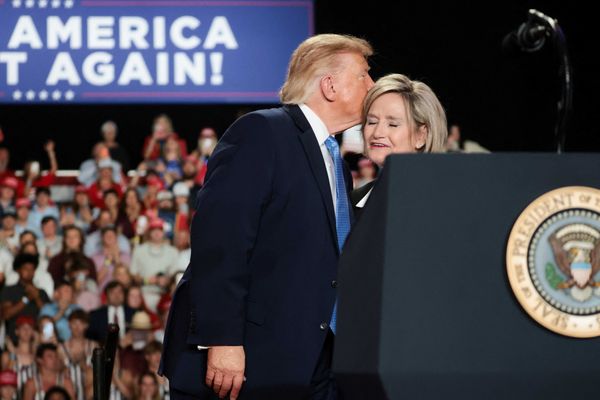
Norm Eisen, the former White House ethics czar who served as counsel to House Democrats during President Donald Trump's first impeachment, told progressive commentator Brian Tyler Cohen in a Saturday episode of his YouTube show that Sen. Cindy Hyde-Smith (R-MS) has no realistic path left to beat Democratic challenger Scott Colom. "It's a mathematical impossibility at this point for Senator Hyde-Smith," Eisen said.

Eisen, who said he spent three days in Mississippi and planned to head back the next day, pegged Colom's lead as "approaching a 3,000-vote margin." He compared the count to the 2000 Florida recount he worked on, when the gap bounced around in the hundreds....

Defiant Trump just exposed the 'trap' lurking beneath Hegseth impeachment: GOP analyst

Defiant Trump just exposed the 'trap' lurking beneath Hegseth impeachment: GOP analyst

President Donald Trump's defiant attitude when he was asked about Defense Secretary Pete Hegseth's potential impeachment revealed a "trap" lurking beneath the entire gambit, according to one GOP analyst.

Trump was asked during a bizarre press conference with Ultimate Fighting Championship CEO Dana White whether he would stand by Hegseth during the impeachment push, which was kicked off Monday when Rep. Thomas Massie introduced eight articles against the secretary. The question seemed to trigger Trump, who lashed out at reporters after being asked.

"He's won two wars!" Trump raged. ...

Top Stories Recommended For You