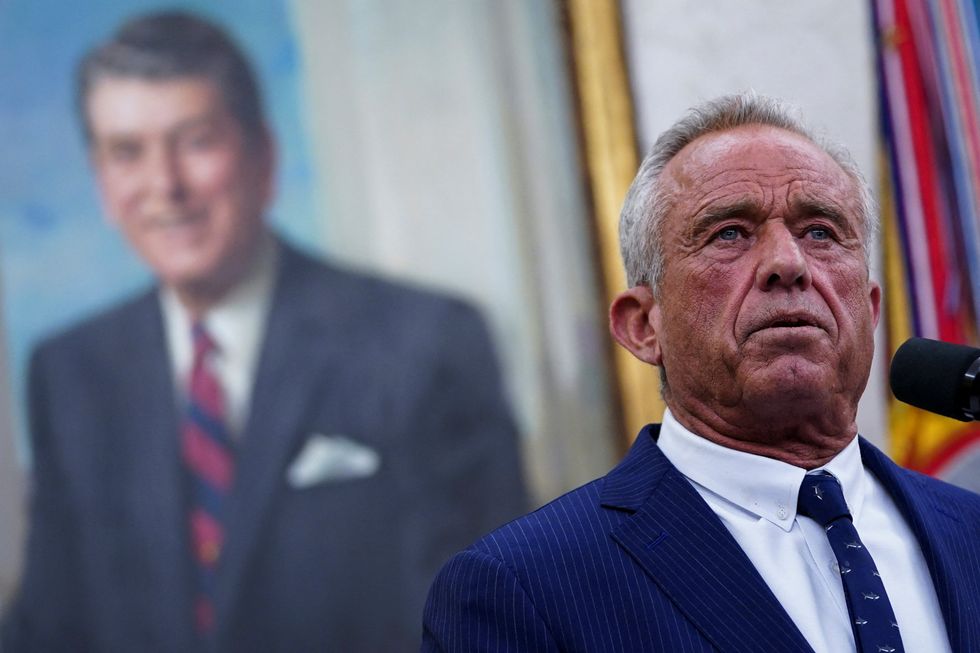
Autism researchers, advocacy groups and scientific organizations are sounding alarms over a 336-page federal research roadmap crafted by advisers handpicked by Health Secretary Robert F. Kennedy Jr., warning it could steer government funding toward unproven fringe therapies and away from genetic research.
The Guardian reports the draft strategic plan comes from the Interagency Autism Coordinating Committee, which Kennedy overhauled in January, replacing established experts with several anti-vaccine advocates who have promoted remedies including chelation therapy and industrial bleach. The plan just completed a public comment period and could reshape federal autism policy for years if adopted by the Trump administration.
"So much of the plan is fringe science that is absolutely not ready for prime time," said Helen Tager-Flusberg, an emeritus Boston University professor who previously sat on the IACC before Kennedy's overhaul.
She singled out a proposed $15 million toward folate biology research tied to leucovorin, a therapy Trump and Kennedy promoted last year despite scant evidence it helps autism beyond a narrow subset of patients with a rare condition the FDA has approved it for.
The plan also calls for "supported-living models," including "farmstead or campus-based communities," language that has triggered fears among autism self-advocates of a return to institutional confinement.
The Autistic Self Advocacy Network said the draft "says policies should change to put more autistic people in institutions," and was scathing about the farmstead proposal specifically: "Farmsteads are still institutions. They still keep autistic people separate from non-disabled people. They still take away autistic people's freedom."
Those fears were amplified by a Justice Department memo issued in June arguing states no longer must provide community-based care for people with disabilities.
The American Association of People with Disabilities told NPR at the time that such a shift would "drag our nation back to a dark and shameful era of ignorance and cruelty."
The Guardian also raised conflict-of-interest questions around IACC member Dr. Dan Rossignol, whose private practice is a leading provider of leucovorin and who holds an equity stake in a company developing folinic acid autism therapies. Rossignol said he complied with federal ethics guidelines and did not personally set the plan's funding figure.
The plan additionally proposes "rigorous testing" of fecal microbiota transplants for autism-related gastrointestinal issues, despite a since-removed 2019 FDA safety alert tied to a patient death, and backs "partner-assisted communication" for non-speaking autistic people — an approach the rival Independent Autism Coordinating Committee says has been repeatedly shown to convey "the thoughts and words of the partner, not the autistic person."
A Health and Human Services spokesperson defended the plan, saying it reflects the "scale and complexity" of autism and connects "evidence to federal authority."