





The Trump White House waged a behind-the-scenes pressure campaign on the obscure federal board responsible for shielding government workers from unfair firings, ultimately securing a ruling that could hand the president sweeping power to purge the civil service and install loyalists throughout the government, according to a New York Times investigation.
The report centers on the Merit Systems Protection Board, an independent agency whose job is to act as a neutral arbiter between federal agencies and dismissed workers. In a March ruling the Times described as landing "like a thunderbolt" in legal circles, the board broke with decades of precedent and embraced the White House's argument that Article II of the Constitution gives President Donald Trump the power to fire officials without due process.
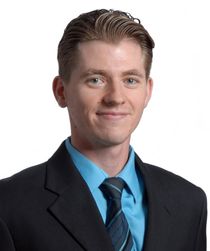
According to the Times, the decision came after a concerted pressure campaign waged both publicly and privately — an effort the paper likened to "calling a federal judge and telling him how to rule." That private push, the report said, was led by James Sherk, a special assistant to the president who has spent years focused on making it easier to quickly fire federal workers.
At the center of the account is a late-November meeting at the Eisenhower Executive Office Building, after which the board's acting chair, Henry Kerner, gathered a small group of staff and appeared "shaken and unsure how to proceed," per the Times. Kerner reportedly recounted that administration officials had conveyed their belief that the board was bound to follow the Justice Department's Office of Legal Counsel opinion on the Article II cases.
The White House disputed that characterization. Officials said the meeting's primary purpose was to interview Kerner for a possible nomination as permanent chair and insisted he was not told how to rule — which a White House official said showed the idea of a pressure campaign was "categorically false."
A White House spokeswoman, Allison Schuster, defended the underlying philosophy in stark terms.
"There can constitutionally be no independent executive branch agencies because independence from the president would mean independence from the voters who elected him," Schuster told the Times.
Legal experts saw the ruling very differently. Nicholas Bednar, a University of Minnesota law professor who studies the federal civil service, said the revelation of White House involvement undermines the decision's legitimacy.
"Knowing that it was made with influence from the White House means the decision was not based on positions of law," Bednar told the Times, adding that it "reflects the same ideological considerations that is driving the evisceration of the federal civil service."
The Times noted the striking internal logic of the ruling: for the first time in its history, the board embraced a constitutional argument that, taken to its conclusion, would invalidate its own existence — since the board itself is a product of the same Civil Service Reform Act that Article II theory would override.
Former board members underscored the magnitude. Raymond Limon, who left the board in February of last year, called it "a monumental decision, reversing years of board law and determining who and who does not get board protections." He added: "It is seismic."
Some federal employment specialists, the Times reported, equated the ruling to the overturning of Roe v. Wade. The full Federal Circuit has since agreed to review the case, an unusual step that highlights its significance.
The report closed on a telling scene from this month, when Sherk stood in the Oval Office as Trump signed an executive order stripping job protections from nearly 8,000 workers in policy-making roles. Told the order was Sherk's idea, Trump summoned him to the Resolute Desk.
Sherk explained that the order treated policymakers like private-sector workers: "If they're messing up, they can be removed quickly."
"That's great," Trump replied, according to the Times. "And you were very much involved in this?"
"I was, sir," Sherk said, according to the reporting.
