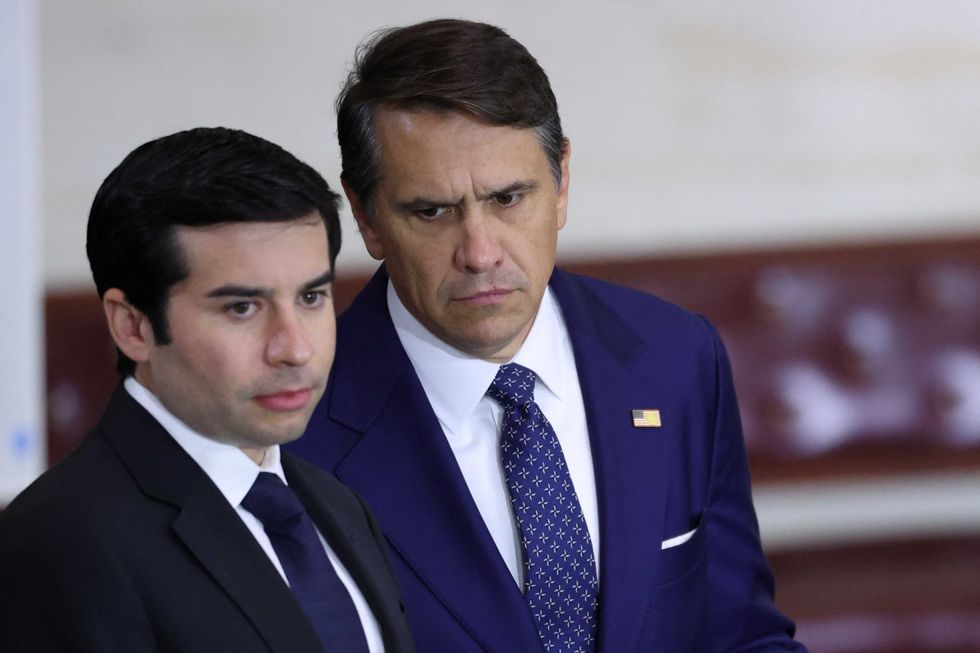
Acting U.S. Attorney General Todd Blanche attends a memorial tribute for the late U.S. Sen. Lindsey Graham (R-SC) in the Rotunda of the U.S. Capitol on July 28, 2026, in Washington, D.C., U.S. Win McNamee/Pool via REUTERS

The Justice Department tied itself in knots trying to justify to a federal judge why it didn't follow proper procedure in the New York Times subpoena order.
The DOJ moved to seize information from New York Times reporters after the paper revealed the Trump administration was pausing use of the 747 gifted from the Qatari government due to security failures. But federal prosecutors withdrew the subpoenas under withering questioning from Judge Arun Subramanian of the Southern District of New York.
A new summary of the arguments provided by Lawfare's Anna Bower revealed a particularly humiliating moment for Sean Buckley, Chief Counsel to the U.S. Attorney for the Southern District of New York, as he tried to justify the DOJ's actions.
According to the synopsis, Subramanian wanted to know "why this was ever a question of case law in the first place," because the DOJ's own rules under 28 C.F.R. § 50.10(e) state that members of the press must get “reasonable and timely notice” when the attorney general subpoenas their phone or business records.
In response, Buckley noted that the regulation makes an exception for circumstances in which the attorney general has found "such notice would pose a substantial threat to the integrity of the investigation, risk grave harm to national security, or present an imminent risk of death or serious bodily harm."
But when Subramanian immediately followed this up by asking if acting Attorney General Todd Blanche made any such determination, Buckley hesitated and finally said, “Your Honor, I can’t get into that.”
Subramanian ultimately made clear the DOJ had to withdraw the subpoenas, or he would issue an order quashing them anyway. Since that move, he has continued to hound the Trump administration for more information on how these decisions were made.
Report typos and corrections to corrections@rawstory.com.
For customer support contact support@rawstory.com.