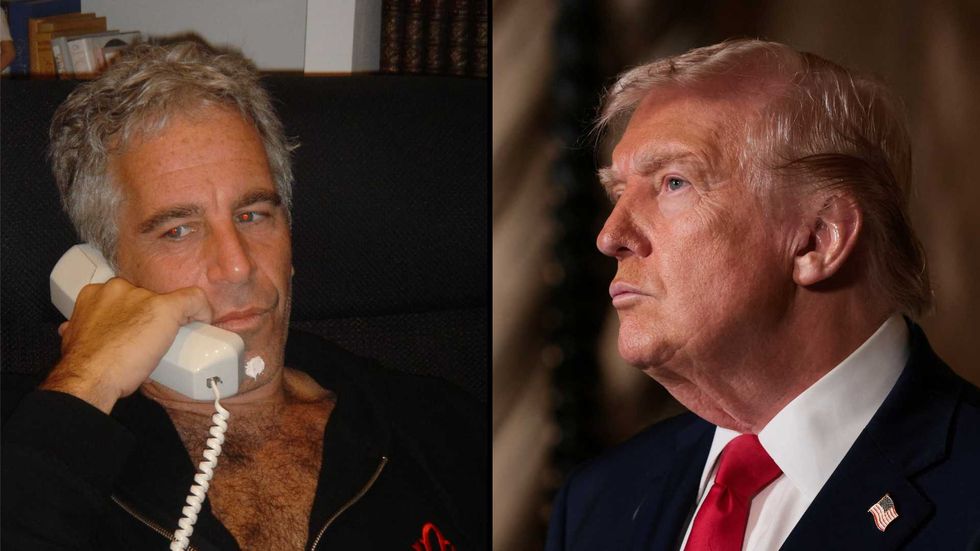
A key aide to deceased financier and child trafficker Jeffrey Epstein revealed she helped put him in touch with President Donald Trump, Politico reported on Tuesday — though she denied this happened while he was actually president.
The aide, former secretary Lesley Groff, "is on Capitol Hill to speak to the Oversight committee as part of its ongoing Epstein investigation," said the report. Although Trump has denied any wrongdoing in connection with Epstein and claimed to have severed ties with him years ago when he got wind of his abuse of children, "Democrats have repeatedly questioned whether the administration has worked to cover up evidence of a continued relationship" — a claim the timeline provides some evidence for.
Groff, for her part, said she arranged "multiple" phone calls between Trump and Epstein before the former became president, but also reportedly told lawmakers these calls weren't terribly frequent.
All the same, Democratic lawmakers suspect Groff, who played a huge role in scheduling Epstein's child trafficking schemes, wasn't entirely truthful in her testimony — not least because she denied any direct knowledge of what he was doing in the events she scheduled.
“He was a registered sex offender, and she arranged young women for massages with a registered sex offender, and I just question whether, whether she can rightfully and truthfully maintain that she saw nothing improper,” said Rep. Stephen Lynch (D-MA). Rep. James Walkinshaw (D-VA) agreed, telling Politico it was not "remotely plausible" she knew nothing.
The Epstein case files have been a major focus since Trump retook office. He and his aides had initially pledged to release them, only to resist doing to against mounting public pressure until an overwhelming bipartisan congressional vote compelling their release. Even then, Justice Department officials are accused of illegally slow-walking those releases.