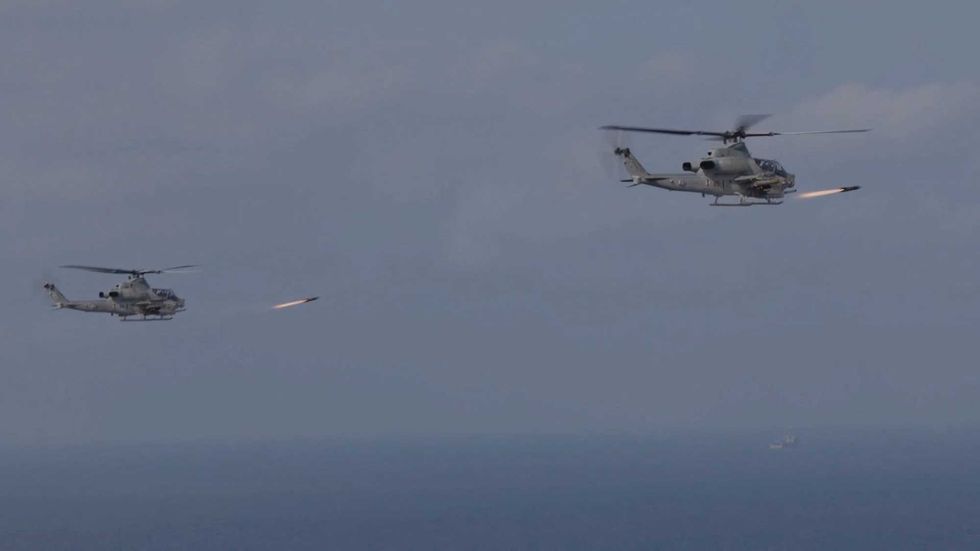
U.S. forces in the Middle East are ready to launch major new military operations against Iran “within 96 hours of receiving” an order from President Donald Trump, and that order most likely won’t come until after the midterm elections.
Two U.S. officials told CNN that enough forces are now in the region to carry out the attacks. They said the operations would likely go well beyond the limited strikes on radars and launchers that the U.S. has carried out since Trump halted full combat operations earlier this year.
“It will be a big effort,” one official said.
Some current and former officials familiar with the planning say it is a question of when, not if, Trump gives the go-order. They believe it could come any time before the end of the year, but most likely after the Nov. 3 midterms.
Officials said Trump hasn’t made a final decision but appears to be leaning toward major action. They also cautioned that he has backed away from similar moves at the last minute before.
Central Command and Pentagon leaders have drawn up a wide-ranging target list that includes Iranian energy infrastructure, military sites and nuclear facilities. Officials acknowledged that Iranian forces now know U.S. tactics better, which would make it harder to destroy every target.
The White House declined to comment. A senior Pentagon official said the department “is a planning organization” whose job is to carry out options ordered by the president.
The risks to Americans are already rising. According to an Oct. 23 memo from Director of National Intelligence Jay Clayton, “Iran has substantially increased efforts to target US personnel,” and plots “have reached advanced stages in both the Middle East and certain other countries.” U.S. intelligence expects Iran and the Houthis to retaliate immediately against American personnel and facilities if they are attacked.
The U.S. Embassy in Riyadh is already under ordered departure, and other embassies in the region are expected to follow or cut staff. Nonessential troops scheduled for the next rotation to the Middle East have been told they are no longer going.
One official called the current standoff around the Strait of Hormuz “untenable.” The U.S. is maintaining a blockade on Iranian ports, and oil prices remain high. Officials say that is one reason Trump may turn to force, even though it’s unclear whether the White House has a broader strategy for ending the conflict.
Israeli Prime Minister Benjamin Netanyahu pushed for a joint attack before the U.S. elections, according to an Israeli security source, but Trump did not give a green light. Netanyahu’s office called that “fake news.”
“The plans are ready, waiting for Trump’s approval, could be after the midterms,” the source said.