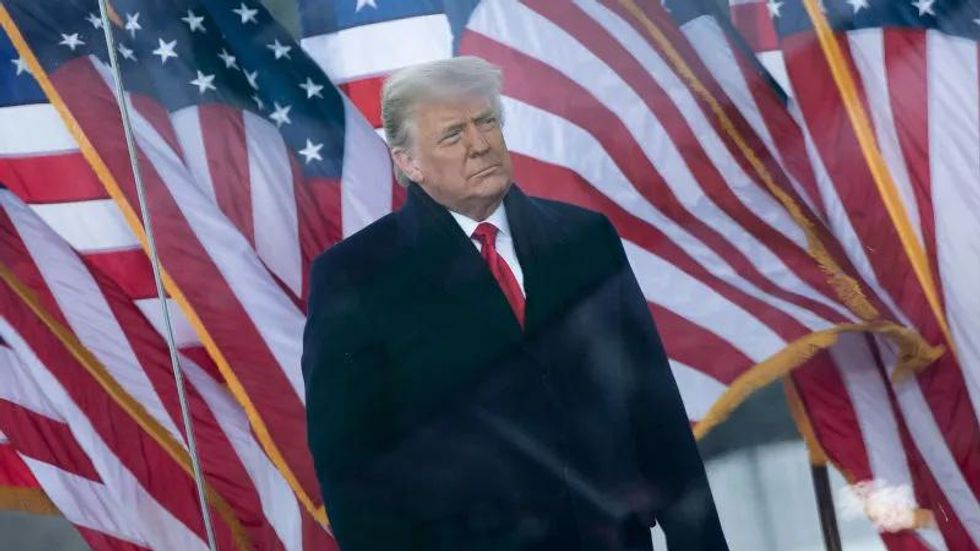
President Donald Trump speaks to supporters from The Ellipse near the White House on January 6, 2021, in Washington, DC. (Brendan Smialowski / AFP)

An MSNBC legal analyst quickly reviewed what's different in the new superseding indictment handed down by a Washington, D.C. grand jury to the previous indictment filed last year by special counsel Jack Smith.
Two decisions by the U.S. Supreme Court complicated the existing indictment, even though the charges between the two remain the same. So, the grand jury handed Smith another option.
One decision from the high court dealt with levels of presidential immunity. While the justices left most of the decisions around it up to the lower courts, the new filing removes any mention of evidence that could be construed as part of official business.
Read also: Ron Johnson finally admits Jan. 6 was violent — then blames it on 'outside agitators'
The second case is the Fischer vs. United States decision, in which a Jan. 6 rioter was charged with obstructing an official proceeding. The court ruled that "the government must establish that the defendant impaired the availability or integrity for use in an official proceeding of records, documents, objects, or other things used in an official proceeding, or attempted to do so," SCOTUS Blog explained.
Looking at the original indictment, legal analyst Lisa Rubin said: "I'm reading from my screen, the defendant's attempt to leverage the Justice Department to use deceit to get state officials to replace legitimate electors and electoral votes with the defendant. This is the whole component of the indictment that has to do with a former Department of Justice official who worked in the civil division who was plucked by Scott Perry and brought to the former president's attention because he was willing to draft a letter saying to state legislatures, you don't have to accept this lying down. You can replace your state's slate of electors by convening a special legislative session. And Jeff Clark drafted a letter that was supposed to go out on Department of Justice letterhead."
ALSO READ: Rudy Giuliani finds a new low: platforming a Nazi
DOJ official Jeffrey Rosen and his deputy Rich Donahue, stopped him, resulting in the "Oval Office showdown," she said. Trump asked, "Why shouldn't I make Jeffrey Clark the acting attorney general and allow him to send that instruction to the states."
That piece was removed, she said.
"You recall I said a few moments ago that one concrete example the Supreme Court gave in its July decision of what had to go from the indictment was the former president's interactions with the Department of Justice officials with respect to putting a DOJ thumb on the scale for former president Trump," she described. "It appears to me now that all of those allegations are now out of this superseding indictment."
One of the reasons that this is happening now is that Judge Tanya Chutkan asked that all filings be submitted by Friday, which would determine how this case would move forward.
Rubin also said there needs to be an arraignment on the superseding indictment, but the court has already indicated that Trump doesn't have to appear for it.
Chutkan will tell each side what she wants next.
See the comments here or at the link here.
- YouTube youtu.be
Report typos and corrections to corrections@rawstory.com.
For customer support contact support@rawstory.com.